
How to Fix iPhone Error 75 When Updating or Restoring Your iPhone

Nov 04, 2026 • Filed to: Phone Repair Solutions • Proven solutions
 TL;DR:
- Phone still works: back up, check the cable and computer app, and free storage only if the phone reports it is low.
- Phone will not boot: use the model-specific Recovery Mode steps and choose Update first; entering the mode is not the same as erasing the phone.
- Error keeps returning: record the exact message and stop repeated flashing. Restore erases data; you can seek Apple service without first buying software or agreeing to a wipe.
Ask AI for a summary
 ChatGPT
 Perplexity
 Gemini
 Claude
 Grok
iPhone Error 75 means an update or restore did not finish. You may see it in iTunes, Finder or Apple Devices, or encounter ERROR: Unable to restore iDevice (-75). in 3uTools. The number alone does not establish a cable, software or hardware cause.
Start with a known-good USB connection, restart the devices and update the computer-side Apple app. If the iPhone is stuck on the recovery screen, try Recovery Mode Update before choosing an erasing Restore. Dr.Fone Standard Repair is an optional guided software-repair route, not a prerequisite for Apple recovery or service.
- What iPhone Error 75 Means During Update or Restore
- Quick Decision Guide for Error 75
- How to Fix Error 75 on iPhone
- Method 1: Recheck USB Cable, Port, and Internet Connection
- Method 2: Restart Your iPhone and Computer
- Method 3: Free Up Storage Before Updating
- Method 4: Update iTunes, Finder, or Apple Devices
- Method 5: Close Background Apps That May Interrupt the Restore
- Method 6: Check Firewall, Antivirus, and Security Software
- Method 7: Restore Stock iOS If the Device Was Modified
- Method 8: Repair the iOS System with Dr.Fone - System Repair (iOS) (Standard Repair)
- Method 9: Use Recovery Mode or DFU Mode (Data Loss Risk)
- Method 10: Contact Apple Support or Inspect for Hardware Issues
- FAQs about iPhone Error 75
What iPhone Error 75 Means During Update or Restore
Use the exact error text and the app that displayed it to choose a troubleshooting path. A failed update and an erasing restore are different operations.
1. What is iPhone Error 75?
iPhone Error 75 is a reported failure during an iPhone update or restore. It does not, by itself, tell you which part of the process failed or whether the phone has a hardware fault.

Apple's update and restore error guidance does not give a code-75-specific cause or a dedicated fix. Treat connection, computer software and device-state checks below as general troubleshooting, not a guaranteed cure for this number. Similar messages can also occur with iPad updates, but the iPhone button sequences below are not iPad instructions.
2. Exact messages you may see
- The iPhone could not be updated. An unknown error occurred (75).
- The iPhone could not be restored. An unknown error occurred (75).
- iTunes error 75 / Apple Devices error 75
- ERROR: Unable to restore iDevice (-75).
- Variants that include 75 067e.004b
Keep the whole message, suffix, app name and failure stage. Error 75 is not the same as an update stopping at 75 percent, a battery reading of 75%, or a different error such as 1109.
3. What to Check When Error 75 Appears
These are categories to check, not confirmed causes of every Error 75:
- Connection or download conditions: an unreliable cable, USB hub, port or network.
- Computer software: an outdated Apple app or a conflict with another device-management app.
- Security software: a third-party product interfering with Apple connections.
- Device state: insufficient space for an update on a bootable phone, a failed installation, or modified system software.
- Hardware or physical damage: something a technician may investigate after reviewing the symptoms; the code does not identify a failed component.
How to Fix Error 75 on iPhone
Choose the checks that fit the phone's state. Back up first whenever it is accessible. You do not need to try every method, purchase a repair tool or erase the phone before asking Apple for help.
Quick Decision Guide for Error 75
| Your situation | What it changes | Do this next |
|---|---|---|
| Error75 during an update; iPhone still starts | Start with reversible connection and computer checks | Check USB/network; update the Apple app |
| Unable to restore iDevice (-75) in 3uTools | A third-party flash failed; record its exact log | Follow the -75 checks, then try Apple Update |
| Phone starts and reports low storage | Storage cleanup is accessible | Offload or export files |
| Phone stays on the recovery screen | Settings-based cleanup is not available | Use Recovery Mode Update |
| You want a guided software-repair alternative | Compare Standard Repair's scope, price and data risk | Review Dr.Fone Standard Repair |
| Same failure after controlled checks, damage, or important unbacked-up data | Stop and obtain help rather than repeat wipes | Prepare an Apple service request |
Method 1: Recheck USB Cable, Port, and Internet Connection
A connection test can narrow down an update failure without changing the iPhone's data. Do not assume a particular USB type is a code-75 cure.
- Connect directly to a USB port on the computer, not a hub or keyboard. Try another Apple USB cable and another port.
- If the phone can be unlocked, unlock it and accept Trust when prompted. A phone already in Recovery Mode may not show that prompt.
- Confirm the computer has internet access, then make one controlled Update retry with the current Apple app.

If the failure returns, note the result and try a different trusted computer on a different network. If that also fails, use the phone-state branch in the decision guide rather than endlessly reconnecting or flashing.
Method 2: Restart Your iPhone and Computer
Restarting is a low-risk way to reset an unresponsive app or device. It is not a factory reset. Do not unplug the phone during an update or restore that is still progressing.
Step 1: Restart a responsive iPhone. Open Settings > General.

Tap Shut Down, move the power slider, wait for the phone to switch off, then hold the Side or Top button to turn it on again.

If the phone is frozen: use the force-restart sequence for your model instead.
- iPhone 8 or later, including iPhone SE (2nd/3rd generation): quickly press and release Volume Up, quickly press and release Volume Down, then hold the Side button. Release it when the Apple logo appears.
- iPhone 7/7 Plus: hold the Side button and Volume Down together; release both when the Apple logo appears.
- iPhone 6s, iPhone SE (1st generation), or earlier: hold Home and the Side or Top button together; release both when the Apple logo appears.
These sequences stop at the Apple logo. For Recovery Mode, you keep holding until the connect-to-computer screen instead.
Step 2: Restart the computer. Save other work, restart Windows or macOS, then open just the Apple app you need and retry Update once. If the phone remains on the recovery screen, continue with Method 9.
Method 3: Free Up Storage Before Updating
This method requires a phone that starts and opens Settings. If it only shows the recovery screen, skip to Recovery Mode Update; you cannot free storage through Settings in that state.
- Open Settings > General > iPhone Storage and review the recommendations.
- Use Offload Unused Apps where offered, or copy important photos/videos elsewhere and verify the copies before deleting originals.
- If a downloaded iOS update is listed in iPhone Storage, tap it and choose Delete Update, then return to Settings > General > Software Update to download again.

Follow Apple's storage and update guidance rather than a universal free-space number; code 75 does not establish a fixed GB requirement. If you prefer computer-assisted cleanup, Dr.Fone - Data Eraser offers iOS junk/large-file cleanup and file export. Choose only the cleanup actions you intend: permanent deletion and Erase All Data are not a no-loss update fix.
Method 4: Update iTunes, Finder, or Apple Devices
Use the right Apple client for the computer. Updating the client is a general restore check, not proof that old software caused Error 75.
On Windows: use Apple Devices if installed and update it from Microsoft Store. If you use iTunes instead, update the Store version there; an Apple-downloaded iTunes installation offers Help > Check for Updates.

On Mac: use Finder on macOS Catalina 10.15 or later, or iTunes on macOS Mojave 10.14 or earlier. Apple Devices is a Windows app, not the Mac restore client. Finder updates come with macOS updates.
On current macOS, open Apple menu > System Settings > General > Software Update. On older layouts, start with About This Mac, as shown below.

Older macOS layout: current versions use System Settings.
In the older About This Mac window, choose Software Update.

Install available updates and restart if requested; the older update window below shows the equivalent Update Now action.

Reconnect the phone and retry Update. If the app cannot complete it or the phone will not start, use the Recovery Mode steps for your model.
Method 5: Close Background Apps That May Interrupt the Restore
For a controlled retry, close other iPhone sync or management apps that you recognize. Save any work first; do not end unknown system services, Apple device services or security processes.
Windows: close the extra app normally. If it is unresponsive, open Task Manager, select that app and choose End task.

Mac: close the extra app normally, or use Apple menu > Force Quit for that unresponsive app.

Keep only the intended Apple update app open and retry once. If the same error returns, record it and continue with the next applicable branch, rather than closing more unfamiliar processes.
Method 6: Check Firewall, Antivirus, and Security Software
Third-party security software can interfere with Apple connections, but Error 75 does not prove that it has. Use Apple's security-software troubleshooting to investigate without making a blanket firewall or antivirus shutdown your first step.
- Check the computer's date, time and time zone, update the operating system and security software, and restart.
- Review alerts from the security product. Ask its provider to help check Apple service access or a specific conflicting configuration. On a work/school computer, ask the administrator instead of changing managed settings.
- Use another trusted computer and network if the configuration cannot be resolved safely. Retry Update there and record whether the result changes.
Windows navigation: older Control Panel layouts open System and Security.

Choose Windows Defender Firewall to review the current status with your provider or administrator, not to switch protection off.

Mac navigation: the older screenshot shows System Preferences > Security & Privacy. Current macOS uses System Settings > Network > Firewall. Review the configuration with support; leave protections enabled.

Method 7: Restore Stock iOS If the Device Was Modified
This branch is only for an iPhone you know has modified system software. Error 75 alone does not show that a phone is jailbroken. Do not install an unknown “jailbreak remover” just to diagnose it.
Step 1: Save an accessible backup. If the phone works, back it up before considering stock-iOS restoration. If it will not boot and the data is important, seek help before authorizing an erase.

Older iTunes backup layout; use the backup control in your current Apple client.
Step 2: Prepare only if you have chosen an erasing factory restore. On an accessible phone, open Settings > [your name] > Find My > Find My iPhone, turn it off and enter your Apple Account password when asked. This is not a general Error 75 diagnostic step.

Step 3: Use the official restore path. Connect the phone, select it in Finder/Apple Devices or the appropriate iTunes client, then choose Restore iPhone only when you accept that its contents will be erased.

Restore erases the phone; this screenshot is not an instruction to erase before trying Update.
If the device cannot start normally, follow the complete Recovery Mode workflow below. It includes the less-destructive Update choice before a deliberate Restore.
Method 8: Repair the iOS System with Dr.Fone - System Repair (iOS) (Standard Repair)
Dr.Fone - System Repair (iOS) brings firmware download and iOS repair together in a guided workflow for software-related system problems. Standard Repair is designed to preserve your personal data while you follow the on-screen repair steps.
Dr.Fone - System Repair (iOS)
A guided Standard Repair workflow for supported iOS system problems.
- Repair software-related startup and system issues, including stuck in recovery mode, white Apple logo and black screen symptoms.
- Standard Repair is designed to preserve personal data.
- Follow guided firmware download, verification and repair steps in one workflow.


Back up your iPhone whenever possible, then connect it by USB and follow the four core steps below. Software repair addresses software faults, not physical damage, and cannot resolve every Error 75. The screenshots are from the current iOS System Repair guide; Mac layouts can differ.
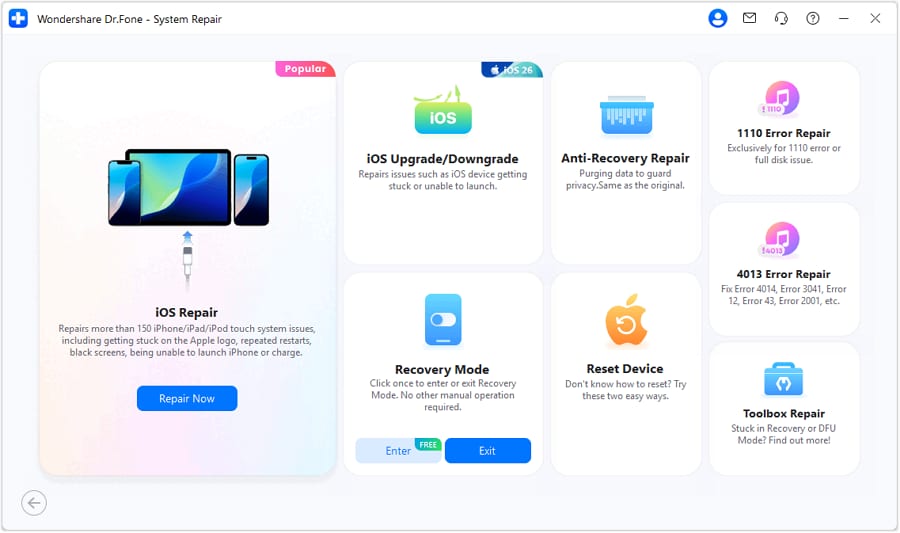
Step 1: Open the repair workflow and select Standard Repair. In Dr.Fone, open Toolbox > System Repair and choose iPhone.
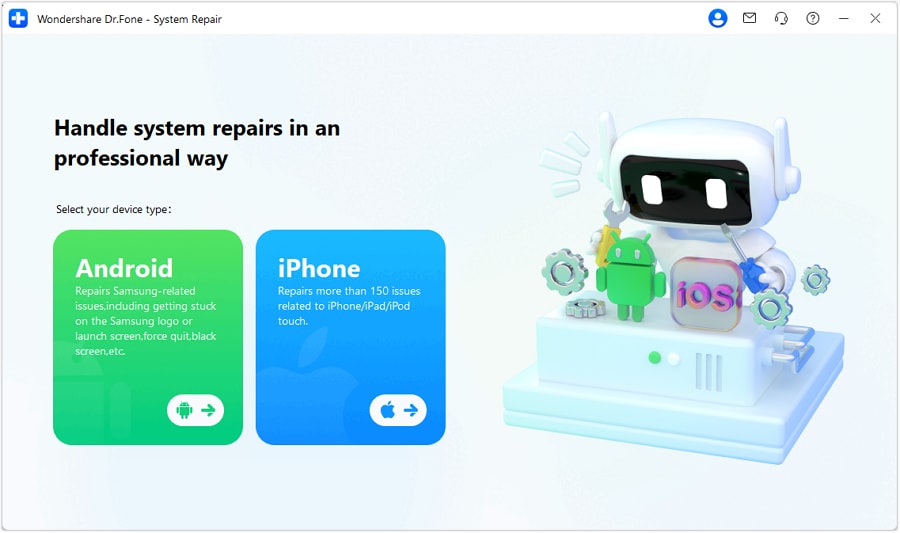
 safe & secure
Choose iOS Repair for the connected iPhone.
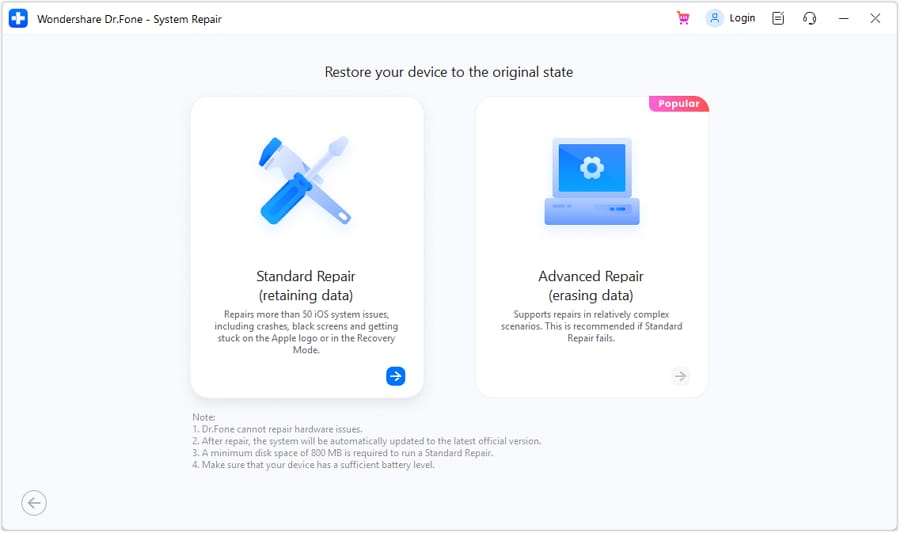
Select Standard Repair when your aim is to retain personal data. Advanced Repair erases device data; do not switch to it without a backup or accepting that loss.
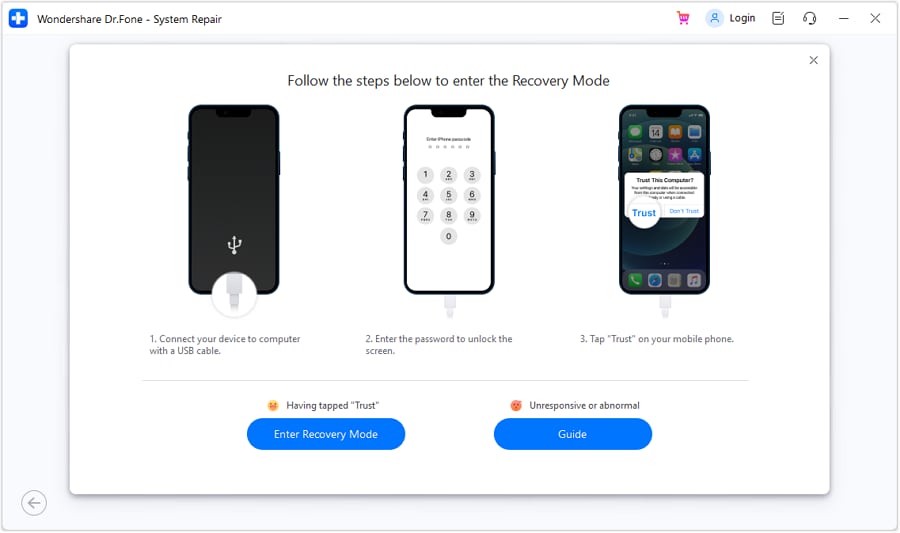
Step 2: Put the iPhone into Recovery Mode. Follow the guide for your model or use Enter Recovery Mode if offered. Keep the device connected.
Step 3: Download and verify the matching firmware. Repair may install the latest compatible iOS version. Check the device details and available compatible iOS package, choose Download, and wait for download and verification to finish.
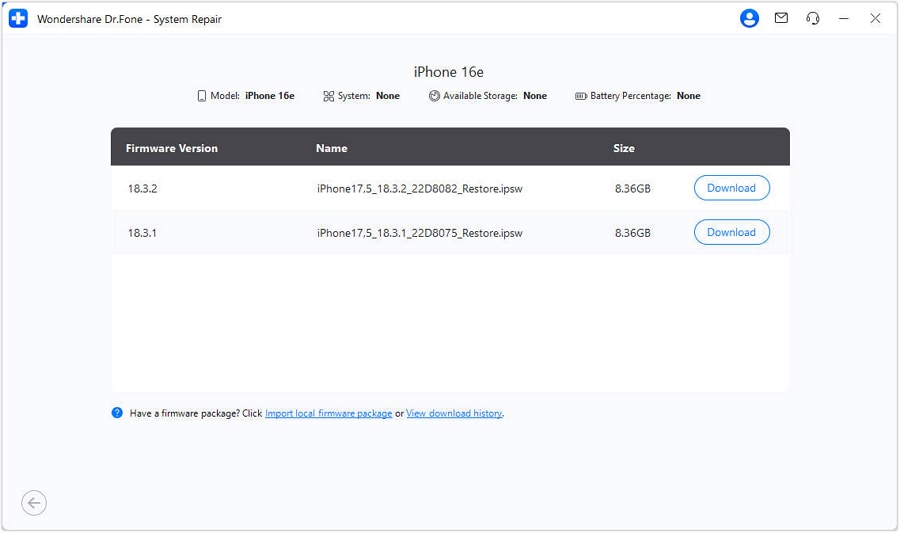
Step 4: Repair and check the result. Full system repair requires a paid license. Choose Repair Now. Keep the cable connected and wait for the process to finish.
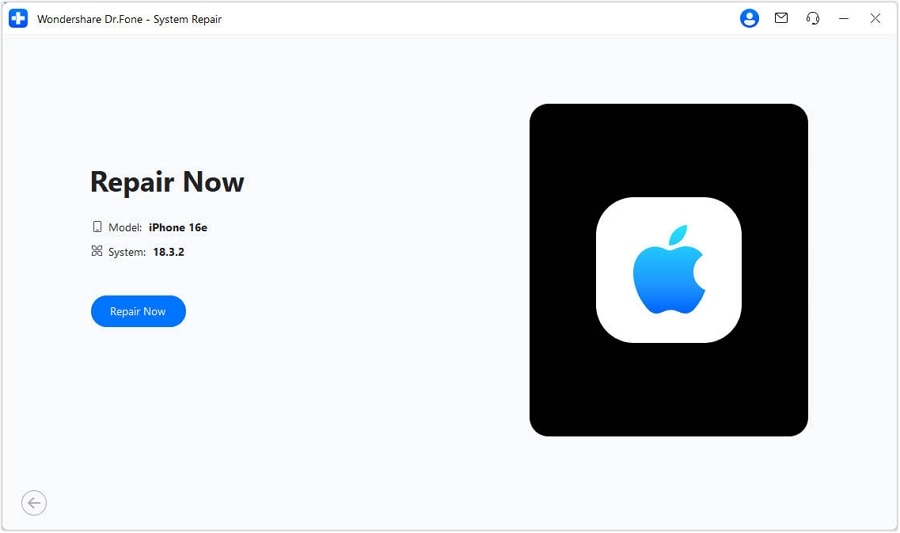
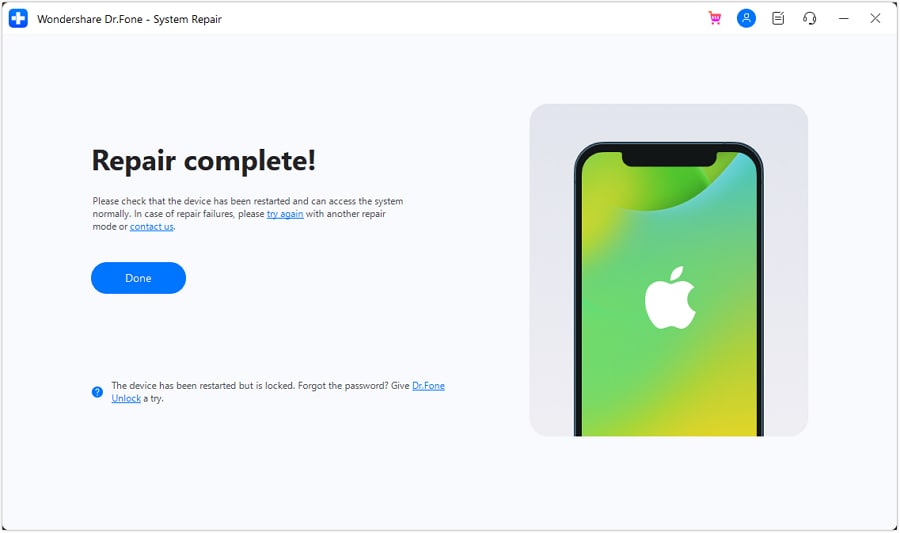
When the tool reports completion, let the phone restart. Confirm it boots, check your important data, and verify whether the original update problem remains. Do not repeat repair cycles if the same failure returns; use the service branch.
Method 9: Use Recovery Mode or DFU Mode (Data Loss Risk)
Try Recovery Mode Update before choosing an erasing Restore. Entering Recovery Mode does not itself erase the phone. Restore does erase it; back up first if possible. If there is no backup and the data is critical, you can stop and seek service before authorizing Restore.
Using Recovery Mode
Step 1: Connect and open the correct app. Connect directly to the computer and open Finder on a current Mac, Apple Devices on Windows, or iTunes where appropriate. See the platform choices in Method 4.
Step 2: Enter Recovery Mode for your iPhone model.
- iPhone 8 or later, including iPhone SE (2nd/3rd generation): quickly press and release Volume Up, quickly press and release Volume Down, then hold the Side button. Keep holding through the Apple logo until the connect-to-computer screen appears.
- iPhone 7/7 Plus: hold the Side or Top button and Volume Down together until the connect-to-computer screen appears.
- iPhone 6s, iPhone SE (1st generation), or earlier: hold Home and the Side or Top button together until the connect-to-computer screen appears.

Step 3: Choose Update first if you have not tried it. When the computer offers Update or Restore, choose Update to attempt an iOS reinstall while keeping personal data.

Choose Update first; Restore is the erasing option.
If the download takes more than 15 minutes and the phone leaves Recovery Mode: let the computer finish downloading, then repeat Step 2 and continue. Do not restart the download from scratch just because the recovery screen disappeared.
Step 4: Decide what to do if Update fails. If a backup is available and you accept erasure, choose Restore and follow the prompts. Otherwise stop and seek help. You do not need to erase the phone to qualify for service.

Only confirm Restore when you accept losing the device's current contents.
Step 5: Check the outcome. After a successful Update, confirm the phone starts and your important data is present. After Restore, complete setup and restore an available backup. If it remains on the recovery screen, the stuck-in-Recovery guide is a supporting resource; repeated identical failures are a reason to contact service.
Optional entry assistance: Dr.Fone offers Enter Recovery Mode if manual entry is difficult. Its Recovery Mode tools guide is separate from the Apple Update/Restore decision; it does not turn an erasing Restore into a data-preserving one.
Using DFU Mode: DFU is a different, more timing-sensitive state. It is not a mandatory step before service, and a DFU restore erases data. If a qualified support workflow specifically calls for it, use the model-specific DFU entry guide rather than mixing DFU timings with the Recovery buttons above.
Method 10: Contact Apple Support or Inspect for Hardware Issues
Contact Apple or an authorized service provider if the same failure persists with a known-good cable and current Apple software, particularly if another trusted computer/network also fails. Seek help sooner for known damage, broken buttons or important unbacked-up data. You do not have to purchase Dr.Fone, complete DFU, or agree to a wipe first.
- Save a screenshot or write down the complete error, including any 067e.004b suffix.
- Record the iPhone model, computer OS, Apple/third-party app and version, Update versus Restore, the failure stage, and whether a backup exists.
- List the cable/port/computer tests already tried. Ask for diagnosis before approving further erasure or parts work.
Apple's update and restore error guidance can help organize the report. Error 75 alone is not evidence that the NAND, battery or battery connector has failed; avoid opening the phone or ordering parts on that assumption.
FAQs about iPhone Error 75
1. What does Unable to restore iDevice (-75) mean in 3uTools?
It reports that the 3uTools restore/flash operation failed; the text alone does not establish why. Stop repeated flashing, save the full log and note whether your data is backed up. First check the direct USB connection, then update and use the correct Apple app. If the phone will not start, follow Recovery Mode Update. Do not assume a third-party -75 log and Apple's 75 always have the same underlying cause.
2. Is iTunes error 75 different from iPhone Error 75?
iTunes error 75 is the name users give to the 75 message shown in iTunes during an iPhone update or restore. “iPhone Error 75” describes the device symptom more broadly. Keep the exact client and message when seeking help; the naming overlap is not a diagnosis.
3. Will Recovery Mode or DFU Mode delete my data?
Entering the mode is not the erasing action. Recovery Mode Update attempts to reinstall iOS while keeping data; Restore and a DFU restore erase the device. Try Update first if you have not already, and read the Recovery Mode decision and steps before confirming Restore. If there is no backup and the data matters, seek help before accepting erasure.
4. Can Dr.Fone fix Error 75 without data loss?
Standard Repair is designed to preserve personal data, but it does not guarantee that every Error 75 can be repaired or that a failing phone's data is safe. Back up if possible. Follow the Standard Repair steps above, including the mode-selection data warning.
5. When should I suspect a hardware problem?
Persistent failure after a known-good connection and current Apple software warrants professional assessment, especially with physical damage or failure on another computer. It does not identify a particular component. Use the service checklist rather than repeated flashing, DIY parts replacement or a mandatory wipe.
Conclusion
iPhone Error 75 calls for a controlled update/restore check, not a fixed hardware diagnosis. Start with the cable, correct Apple app and phone state; use Recovery Mode Update when the phone cannot start. Standard Repair is an optional guided software route, while Restore is a separate erasing decision. Stop repeated identical failures and use Apple service when appropriate.
If you prefer a guided firmware workflow after the basic checks, review Dr.Fone - System Repair (iOS) and the Standard Repair steps before starting.
safe & secure


iPhone Errors
- Errors 0 ... 100
- 1. iPhone Error 6
- 2. iPhone/iTunes Error 9
- 3. iPhone Error 10
- 4. iPhone/iTunes Error 21
- 5. iPhone Error 35
- 6. iTunes Error 40 on iPhone/iPad
- 7. iPhone Error 47
- 8. iPhone Error 69
- 9. iPhone Error 75
- 10. iPhone Error 78
- Errors 1xxx
- 1. iPhone Error 1009
- 2. iPhone Error 1015
- 3. iPhone/iTunes Error 1100
- 4. iPhone Error 1110
- 5. iPhone Error 1667
- Errors 2xxx
- Errors 3xxx
- 1. iTunes Error 3004
- 2. iTunes Error 3014
- 3. iTunes/iPhone Error 3194
- 4. iPhone Error 3503
- 5. iPhone/iTunes Error 3600
- Errors 4xxx
- Other iPhone Errors
- 1. iPhone Error 7005
- 2. iPhone/iTunes Error 9006
- 3. iPhone Error 0xe8000015
- 4. iPhone Cellular Update Failed Error
- 5. iPhone Activation Error
- 6. iPhone SSL Error
- Other iPhone Issues
- ● Manage/transfer/recover data
- ● Unlock screen/activate/FRP lock
- ● Fix most iOS and Android issues
- Free Download Free Download Free Download

 > How-to > Phone Repair Solutions > How to Fix iPhone Error 75 When Updating or Restoring Your iPhone

James Davis
staff Editor
Generally rated4.5(105participated)