Recover photos, messages, WhatsApp, and more — no backup
needed.
Recover photos, messages, WhatsApp, and more — no backup
needed.

 100% Security Verified | No Subscription Required | No Malware

 :
: 
 ChatGPT
 Perplexity
 Gemini
 Claude
 Grok
Grok
Most of your smartphone memories are captured and stored as photos. Losing them on an iOS device can feel irreversible, but understanding how the Apple File System (APFS) works reveals that this isn't always the case. Whether images are deleted by accident, lost due to an unexpected system crash, or wiped during an interrupted iOS upgrade, there are effective ways to recover permanently deleted photos iPhone users thought were gone forever. With the right technical approach, you can restore your valued pictures and prevent future catastrophic data loss.
These solutions range from exploiting hidden built-in features against accidental deletion to deploying professional-grade recovery software capable of deep-scanning unallocated memory sectors. This comprehensive 2026 guide explores proven methods to help you recover permanently deleted photos iPhone devices have seemingly erased. Read on to discover the most effective, step-by-step techniques for restoring your valuable visual memories before they are overwritten permanently.
In this article
- Part 1. Understanding the Term 'Permanent Deleted' in iPhone
- Part 2. Immediate Actions to Take After Deleting Photos
- Part 3. Recovering Permanently Deleted Photos Using Dr.Fone
- Part 4. Alternative Methods – How To Find Permanently Deleted Photos
- Part 5. Safeguard Your Photos on Your iPhone/iPad: 6 Robust Tips
Part 1. Understanding the Term 'Permanent Deleted' in iPhone
Before rushing into the steps of how to recover permanently deleted photos iPhone, it is highly beneficial to understand exactly what 'permanently deleted' means within the iOS architecture. When photos are initially removed from your main camera roll, they are transferred to the Recently Deleted folder, where they act as a safety net for exactly 30 days. Within this grace window, any user can restore them natively with a simple tap. However, after the 30-day period expires—or when the user manually empties this folder—iOS labels these photos as permanently erased.
From a hardware perspective, permanent deletion simply means that the file pointers are removed, rendering the images completely invisible and inaccessible through standard built-in phone features. The actual binary data, however, remains physically imprinted on the iPhone's NAND flash memory sectors. The system just marks that specific storage space as 'available' for new incoming data. This architectural loophole is precisely why it remains technically feasible to restore permanently deleted photos on iPhone using verified data recovery software.
Understanding this underlying concept is crucial because the window of opportunity is directly tied to device usage. The moment new data—like a downloaded app, an incoming text, or even cache files from browsing—is written to the storage drive, those 'available' sectors get overwritten. Once overwritten, recovery becomes fundamentally impossible. Acting rapidly and selecting the correct retrieval method significantly raises the chances of rescuing your lost images intact.
Part 2. Immediate Actions to Take After Deleting Photos
As emphasized previously, your direct actions within the first few hours of realizing the data loss will dictate your overall success rate. Establishing a sterile environment right after the accidental deletion will increase your chances of finding them during a deep scan. Implement the following critical steps to enhance your capacity to retrieve permanently deleted photos iPhone:
- Enable Airplane Mode: Instantly turn on Airplane Mode. This severs all cellular and Wi-Fi connections, preventing background apps, iCloud syncs, and system updates from downloading new data that might overwrite your photos.
- Cease All Device Activity: Immediately stop taking new photos, recording videos, downloading applications, or streaming media. Every byte of new data stored is a direct threat to your deleted images.
- Examine Available Backups: Systematically check if you have an intact media backup stored locally on iTunes/Finder or via a secondary cloud service before attempting aggressive recovery techniques.
- Deploy a Professional Recovery Tool: If no backups are present, halt all usage and connect your device to a computer running specialized data retrieval software. This is your primary defense against permanent data erasure.
Part 3. Recovering Permanently Deleted Photos Using Dr.Fone – Data Recovery (iOS)
 Recovers data after deletion, crashes, or device damage.
- Supports photos, messages, contacts, WhatsApp, and more.
- Supports all major iPhone, iPad, and iPod models.
- Preview and recover only what you need.

When crucial visual memories are purged beyond the standard safety nets, deploying an industry-grade recovery suite is the most effective and reliable strategy. Deep-scan retrieval software drastically amplifies your ability to recover permanently deleted photos iPhone, bypassing standard iOS restrictions even if the incident happened days ago. Among the elite tier of these solutions is Dr.Fone - Data Recovery (iOS), widely recognized as one of the absolute best apps to recover deleted photos iPhone.
Unlike blind backup restorations that overwrite your entire device (and potentially erase newly created files), this advanced software grants you granular control. It empowers you to selectively extract specific images without risking any of your existing content. Built on highly refined algorithms, it boasts an exceptional recovery rate across complex scenarios including accidental purges, boot-loop crashes, and failed iOS 17/18 updates. Thanks to its universal compatibility across all generations of Apple hardware, it stands as the premier pathway to retrieve permanently deleted iPhone photos safely.
Dr.Fone achieves this by interfacing directly with the internal storage framework, illuminating orphaned file fragments that are deliberately hidden from normal user access. Furthermore, it intelligently cross-references available iCloud and iTunes archives, delivering a multi-pronged approach to secure your files. Even if you lack deep technical expertise, the intuitive UI guides you smoothly through the process. Adhere closely to the following rigorous instructions to learn exactly how to find permanently deleted photos on your iPhone:
Step 1 Initiate the Data Recovery Module
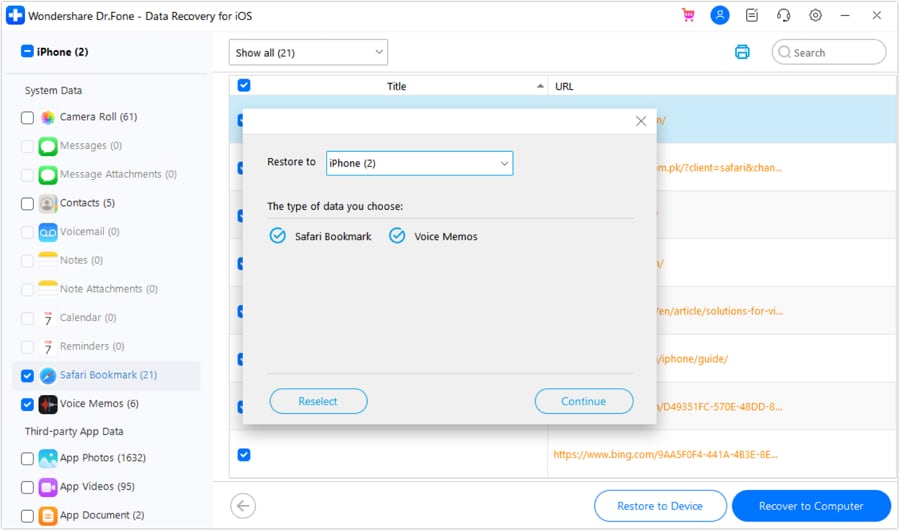
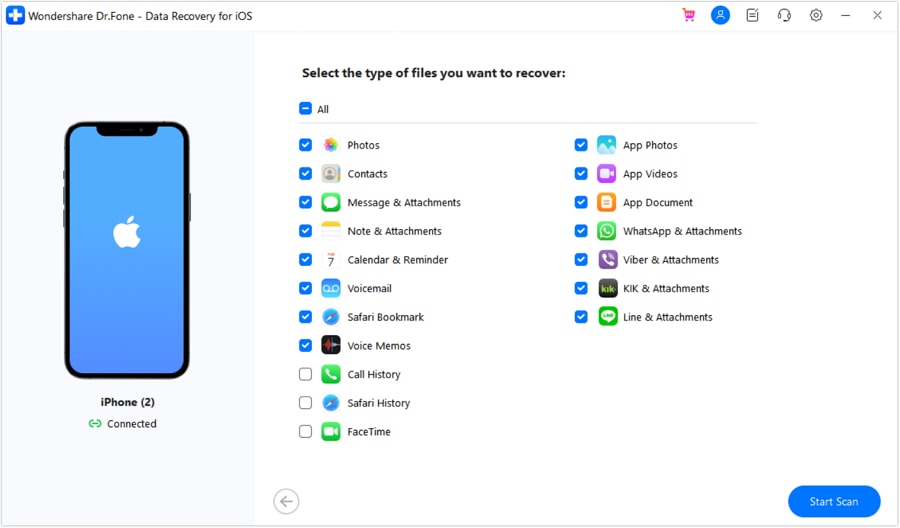
Begin by launching the latest iteration of Dr.Fone on your Windows or Mac workstation. Connect your impacted iOS device using an authentic Apple certified cable to ensure stable data transmission. Navigate to the left-hand panel and click on the 'Toolbox' tab, then select the 'Data Recovery' module. Choose 'iOS' as your designated hardware system. On the subsequent screen, click 'Recover Data from iOS Device' and deliberately check the 'Photos' category, along with any other data classes you wish to restore.
Step 2 Execute a Deep Storage Scan
Once you have isolated your desired file types, click the 'Start Scan' button situated at the bottom right. The software will commence a thorough sector-by-sector analysis of your iPhone's internal memory. Depending on your storage capacity, this may take a few minutes. Upon completion, the interface will populate a structured gallery of retrievable items. Utilize the built-in 'Preview' window to verify the integrity and exact visual content of each photo before committing to the extraction phase.
Step 3 Finalize the Restoration Process
After selecting all crucial images, you face two primary extraction pathways. To inject the photos directly back into your mobile album, choose 'Restore to Device'. A prompt will remind you to temporarily disable the 'Find My' feature to grant the software necessary write permissions. Alternatively, to securely archive the files on your desktop, select 'Recover to Computer'. Assign a secure local directory, and click 'Recover' to instantly execute the localized transfer.




Part 4. Alternative Methods – How To Find Permanently Deleted Photos on iPhone
While Dr.Fone delivers the most comprehensive forensic recovery solution, it is prudent to exhaust all foundational avenues first. Depending on how your cloud synchronizations are configured and the exact timeline of deletion, multiple built-in pathways might still hold copies of your media. Investigating these alternatives allows you to explore every possible vector for returning your pictures. Explored below are three systematic methods detailing how to retrieve permanently deleted photos from iPhone using ecosystem tools:
4-1. Restoring Photos From Recently Deleted Album
This localized folder functions as the absolute first line of defense against erroneous deletions on any Apple handheld. Apple engineered this safety net explicitly so users have a hassle-free mechanism to undo accidental purges. When you tap delete on an image, it doesn't instantly vanish; it migrates to this quarantine zone for exactly thirty days before iOS executes the final wipe. Leveraging this built-in buffer is the fastest way to learn how to recover permanently deleted photos in iPhone via native UI.
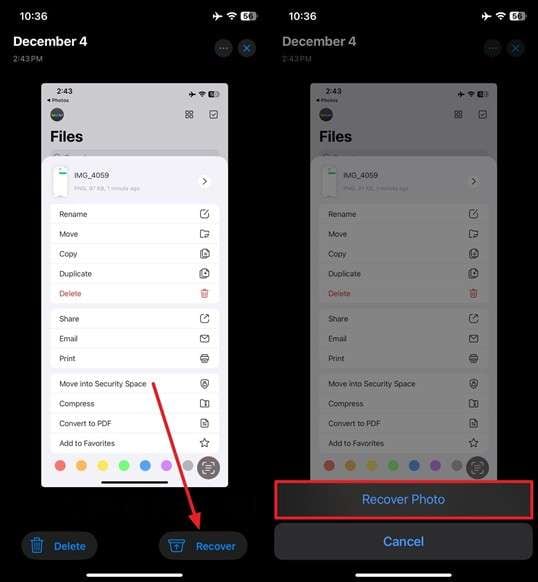
Instructions: Open the default Photos application on your home screen. Tap the 'Albums' tab at the bottom, then scroll completely down to the 'Utilities' segment. Authenticate via Face ID or Touch ID to unlock the 'Recently Deleted' folder. Select your misplaced photos, and tap 'Recover' in the lower corner to instantly return them to your primary camera roll.
4-2. Recovering Images From Alternative Cloud Services
Because native iCloud storage often fills up rapidly, many users actively offload their high-resolution libraries to third-party cloud infrastructure for superior safekeeping and cross-platform sharing. If you installed such an app, it might have quietly backed up your images before they were deleted locally.
A dominant service in this sector is Google Drive (or Google Photos), which securely mirrors your data over Wi-Fi. If you utilized these ecosystem alternatives, follow this targeted workflow to effectively answer how do I recover permanently deleted photos from my iPhone:
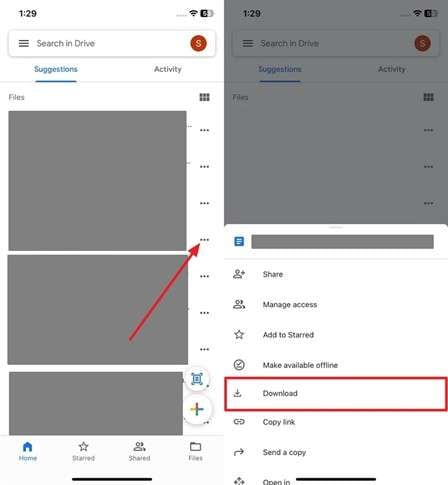
Step 1: Locate and launch the Google Drive or Google Photos application on your iPhone. If your library is vast, leverage the search bar using specific keywords (like dates, locations, or objects) to narrow down the missing media.
Step 2: Once the targeted image or video is confirmed on the server, tap it to open the full-screen view. Tap the three-dot menu icon situated in the top-right corner, and select 'Save to device' or 'Download' to pull a fresh copy back into your local Apple Photos app.
4-3. Extracting Photos via Legacy iTunes or Finder Backups
In the modern iOS era, Apple heavily pushes iCloud Photos, which means local backups often exclude media files to save hard drive space. However, if you explicitly disabled iCloud Photos and routinely plugged your device into a computer, your historical iTunes or Finder backup likely contains a complete physical snapshot of your camera roll. Be warned: restoring via this method will overwrite all current device data with the historical backup state. Use this pathway to answer the ultimate question: 'Can you retrieve permanently deleted photos from iPhone?'
Step 1: Open the latest iteration of iTunes (on Windows or older Macs) or Finder (on macOS Catalina and newer). Connect your iPhone using a high-bandwidth USB-C or Lightning cable. Wait for the workstation to recognize the device, then click the small iPhone icon that appears in the top navigation bar or sidebar.
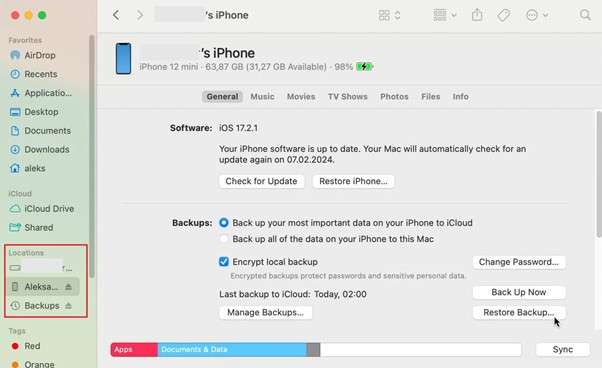
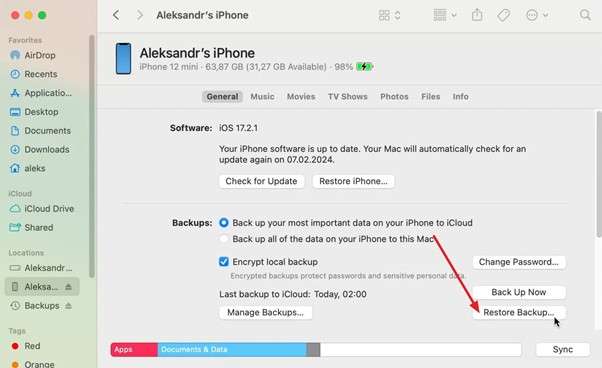
Step 2: Navigate to the 'Summary' or 'General' tab. Locate the 'Backups' sector and click on 'Restore Backup...'. A dropdown menu will prompt you to select the most relevant historical file based on date and time. Finally, hit 'Restore' and leave the device connected until the reboot cycle is completely finished.
Part 5. Safeguard Your Photos on Your iPhone/iPad: 6 Robust Tips
Enduring the panic of a sudden data-loss event highlights the absolute necessity of proactive digital hygiene. By implementing intelligent redundancy strategies and leveraging iOS's native protective mechanisms, you can ensure that your irreplaceable memories remain shielded against accidental clicks and hardware failures alike.
Routinely duplicating your libraries and understanding how sync logic operates can virtually eliminate the threat of permanent erasure. Consider integrating these 6 robust habits into your daily routine to avoid frantically searching for ways to recover permanently deleted photos from iPhone without backup in the future:
- Diversify Cloud Ecosystems: Do not rely solely on iCloud. Supplement your backups with services like Google Photos, Dropbox, or Amazon Photos to create a multi-layered safety net that operates independently of Apple's servers.
- Understand Optimized Storage Limits: While 'Optimize iPhone Storage' brilliantly saves local gigabytes, understand that it pushes full-resolution originals to the cloud. Always ensure strong Wi-Fi before attempting mass exports or edits.
- Implement Cold Storage: Once a month, physically connect your device to a desktop and export critical years or events to an external Solid State Drive (SSD). This 'cold storage' is immune to accidental cloud deletions.
- Utilize Secure Albums: Use the built-in 'Hidden' album feature for sensitive content. As of recent iOS updates, both the Hidden and Recently Deleted folders are cryptographically locked behind Face ID, stopping unauthorized purges.
- Audit App Permissions: Routinely check Settings > Privacy & Security > Photos. Revoke read/write access from untrusted or outdated third-party applications that could maliciously or buggily overwrite your gallery.
- Monitor iCloud Quotas: If your iCloud hits its 5GB or tiered limit, background syncing pauses silently. Regularly verify that you possess adequate free space so that newly captured images are genuinely being uploaded securely.
Conclusion
Losing invaluable memories doesn't have to be a permanent tragedy. By comprehending the technical lifecycle of iOS file allocation and precisely knowing how to recover permanently deleted photos iPhone devices attempt to purge, you can effectively reverse the damage. Immediate verification of the Recently Deleted quarantine, combined with strategic checks of iCloud, Google Drive, or legacy iTunes archives, provides a strong first line of defense.
For scenarios where backups are non-existent and the thirty-day window has collapsed, Dr.Fone - Data Recovery (iOS) proves itself as the premier solution. Its ability to non-destructively parse APFS sectors makes it one of the absolute best apps to recover deleted photos iPhone users can deploy. Moving forward, prioritizing diversified backups and strict device hygiene will ultimately insulate your digital legacy against any future data catastrophes.
FAQ
1. How long do permanently deleted photos stay in the internal storage?
The duration is entirely dependent on device usage rather than a specific timeframe. Once a photo is permanently deleted, the space it occupies is marked as available. The data remains intact in the internal storage until the operating system writes new data (like apps, photos, or cache) over those specific memory sectors. This is why immediately putting the phone in Airplane mode is recommended.2. Can I recover permanently deleted photos without a computer?
Without a computer, your options are strictly limited to native features. You can check the Recently Deleted folder or restore an entire iCloud backup (which requires factory resetting the device). However, to perform a deep sector scan of unallocated memory for files that bypass these methods, connecting the iPhone to a computer running specialized recovery software is mandatory.3. Why can't I find my photos in an iTunes backup?
If you had 'iCloud Photos' toggled on when you created the iTunes or Finder backup, Apple intentionally excludes those photos from the local computer backup to prevent massive file duplication. Your iTunes backup will only contain photos if they were strictly stored locally on the device at the time of the backup.4. Does Dr.Fone require my iPhone to be jailbroken to recover photos?
No, Dr.Fone - Data Recovery (iOS) operates completely within the legal and secure parameters of the iOS architecture. It utilizes advanced, non-destructive scanning algorithms to read the internal memory logs without requiring you to compromise your device's warranty or security through a jailbreak.
 Add Wondershare Dr.Fone as a preferred source on Google