Recover photos, messages, WhatsApp, and more — no backup
needed.
Recover photos, messages, WhatsApp, and more — no backup
needed.

 100% Security Verified | No Subscription Required | No Malware

 :
: 
 ChatGPT
 Perplexity
 Gemini
 Claude
 Grok
Grok
We've all been there: clearing out old conversations to free up storage on our iPhone, only to realize we've accidentally deleted a crucial message. Data loss can also occur due to other issues like a failed iOS update, system crash, or device damage. When this happens, figuring out how to recover deleted text messages on an iPhone becomes a top priority.
If you've just noticed important iMessages or SMS threads are missing, don't panic. There are several effective strategies for iPhone SMS recovery, even on the latest iOS versions. The most important thing is to act swiftly. The sooner you attempt to retrieve your messages, the higher your chances of success. This guide will walk you through the best methods, from using an advanced iMessage recovery app to leveraging your existing backups.
In this article
- Deciding on the Best iPhone Message Recovery Method
- Method 1: Recover Deleted Messages Directly from Your iPhone (No Backup)
- Method 2: Selectively Recover iPhone Messages from an iTunes Backup
- Method 3: Restore Messages Using Official Apple Services (iTunes & iCloud)
- Method 4: Contact Your Phone Carrier as a Last Resort
- Bonus Tips for Managing iPhone Messages
Deciding on the Best iPhone Message Recovery Method
Multiple paths exist to recover deleted messages on your iPhone, but the ideal one hinges on your specific situation. If you lack a recent backup, a dedicated iMessage recovery app is often your most reliable option. Conversely, if you have regularly backed up your device, restoring from iCloud or iTunes is feasible, though it comes with trade-offs. Understanding these differences is key to choosing the most effective approach for a successful iPhone SMS recovery.
To simplify your choice, here’s a comparison of the available solutions for recovering deleted text messages on an iPhone.
| Solution | Best For | Recovery Type | Impact on Existing Data | Success Rate |
|---|---|---|---|---|
| Dr.Fone Direct Recovery | No recent backup available | Selective (choose specific messages) | None (retains all current data) | High |
| Dr.Fone iTunes/iCloud Recovery | Have backups but need specific messages | Selective (choose specific messages) | None (retains all current data) | High |
| Apple iTunes/iCloud Restore | Have a full backup and don't mind a reset | Full (restores entire backup) | Erases all current data | High |
| Contacting Phone Carrier | All other methods have failed | Varies (depends on carrier policy) | None | Low |
Method 1: Recover Deleted Messages Directly from Your iPhone (No Backup)
When you delete a message, it isn't immediately erased from your iPhone's storage. Instead, the space it occupies is marked as available for new data. If you act quickly before that space is overwritten, a specialized tool can scan your device's memory and retrieve the lost information. This is where an advanced iMessage recovery app becomes invaluable.
Before scanning your device, compare iPhone message recovery software by supported message types, backup options, and preview features to choose a tool that fits your situation.
Dr.Fone - Data Recovery (iOS) is a leading solution designed for this exact scenario. It can perform a deep scan of your iPhone's internal storage to locate and recover deleted text messages, photos, contacts, and more. This method requires no prior backup and offers the highest chance of success if the data hasn't been overwritten.
-
Step 1Connect Your iPhone and Launch Dr.Fone
Download and install Dr.Fone on your computer. Open the program and select "Data Recovery" from the main toolbox. Connect your iPhone to the computer using a USB cable and trust the computer when prompted on your device.
-
Step 2Select Data Types to Scan
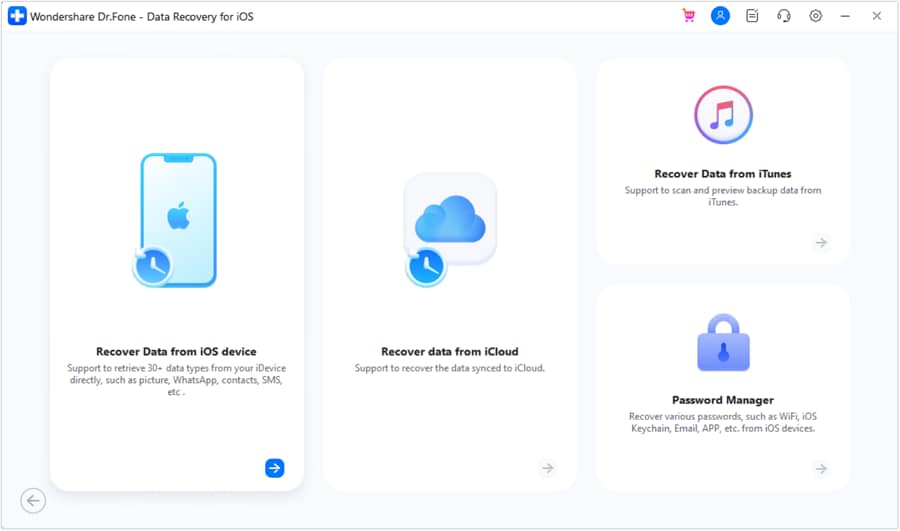
Once your iPhone is detected, choose "Recover from iOS Device" from the left-hand panel. The program will display a list of data types you can recover. To speed up the process, deselect all and check the box for "Messages & Attachments." Then, click "Start Scan" to begin searching for deleted messages.
-
Step 3Preview and Recover Deleted Messages
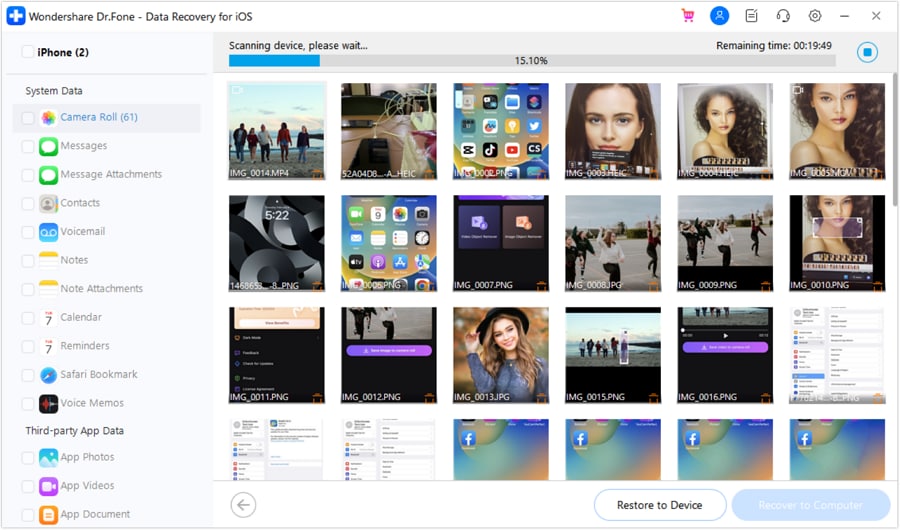
After the scan completes, Dr.Fone will display all found messages, including both existing and deleted ones. You can filter to show only deleted items. Preview the conversations to find the ones you need, select them, and click "Recover to Computer" or "Restore to Device" to save them.
 Recovers data after deletion, crashes, or device damage.
- Supports photos, messages, contacts, WhatsApp, and more.
- Supports all major iPhone, iPad, and iPod models.
- Preview and recover only what you need.
Method 2: Selectively Recover iPhone Messages from an iTunes Backup
If you have previously backed up your iPhone using iTunes (or Finder on newer macOS versions), your deleted messages might be saved in that backup file. While Apple's official method requires you to restore the entire backup and overwrite your phone's current data, Dr.Fone - Data Recovery (iOS) offers a more intelligent solution. It can extract data from your iTunes backup file, allowing you to preview and recover only the text messages you need without affecting any other data on your iPhone.
-
Step 1Select the iTunes Backup File
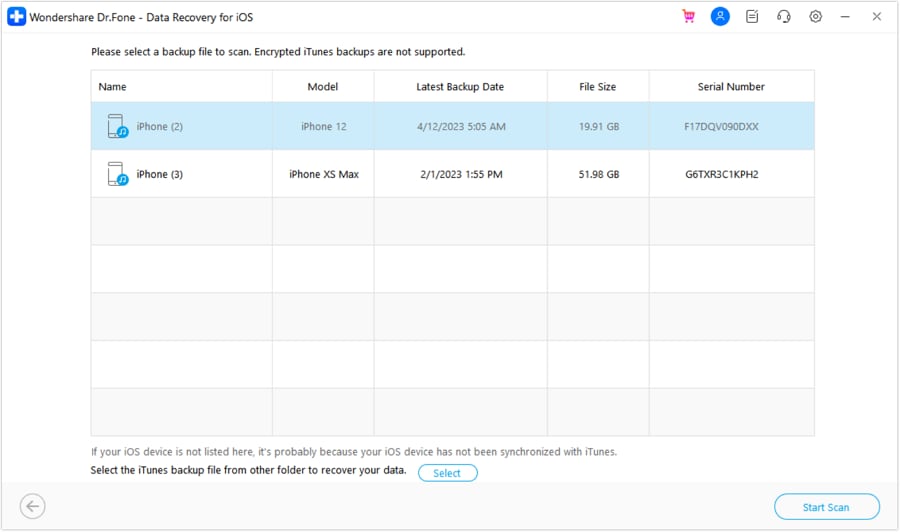
In the Dr.Fone - Data Recovery module, choose "Recover from iTunes Backup File." The software will automatically detect and list all iTunes backup files stored on your computer. Select the most relevant backup file (usually the one created just before you deleted the messages) and click "Start Scan."
-
Step 2Extract and Preview Messages
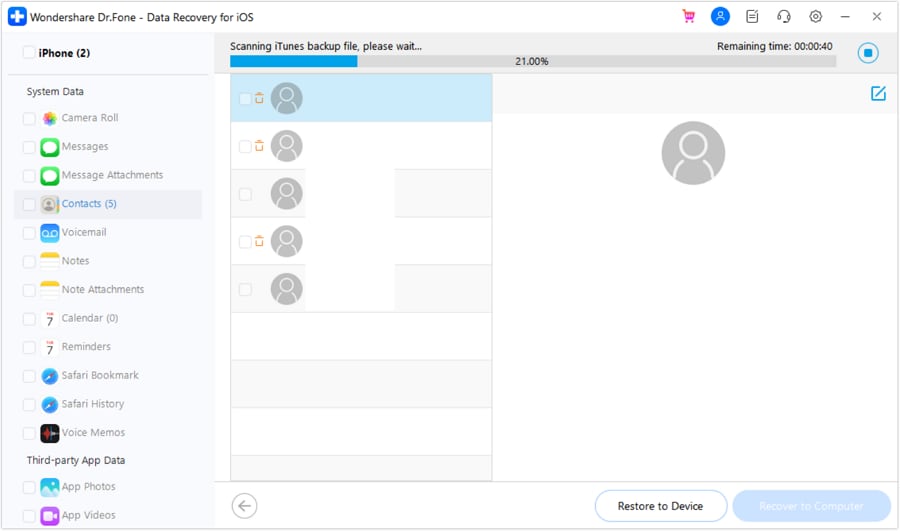
Dr.Fone will begin extracting all data from the backup file. This process may take a few minutes. Once completed, you can navigate through the categories on the left. Click on "Messages" and "Message Attachments" to preview the conversations contained within the backup.
-
Step 3Recover Messages Selectively
Browse through your messages and select the specific threads you wish to recover. Once you've made your selection, you can choose to "Restore to Device" to put them back on your iPhone or "Recover to Computer" to save them as a file for your records.

Method 3: Restore Messages Using Official Apple Services (iTunes & iCloud)
If you prefer using Apple's native solutions and have a recent backup, you can perform a full restore via iTunes or iCloud. This approach is effective but has a significant drawback: it will erase everything currently on your iPhone and replace it with the data from the backup. Any photos, notes, or app data created after the backup was made will be lost.
Restore from an iTunes Backup
Restoring from iTunes is a straightforward process if you regularly sync your device with a computer. However, this method is an all-or-nothing approach.
-
Step 1Connect to iTunes
Open iTunes (or Finder on macOS Catalina and later) on the computer where you stored your backup. Connect your iPhone via USB.
-
Step 2Initiate the Restore
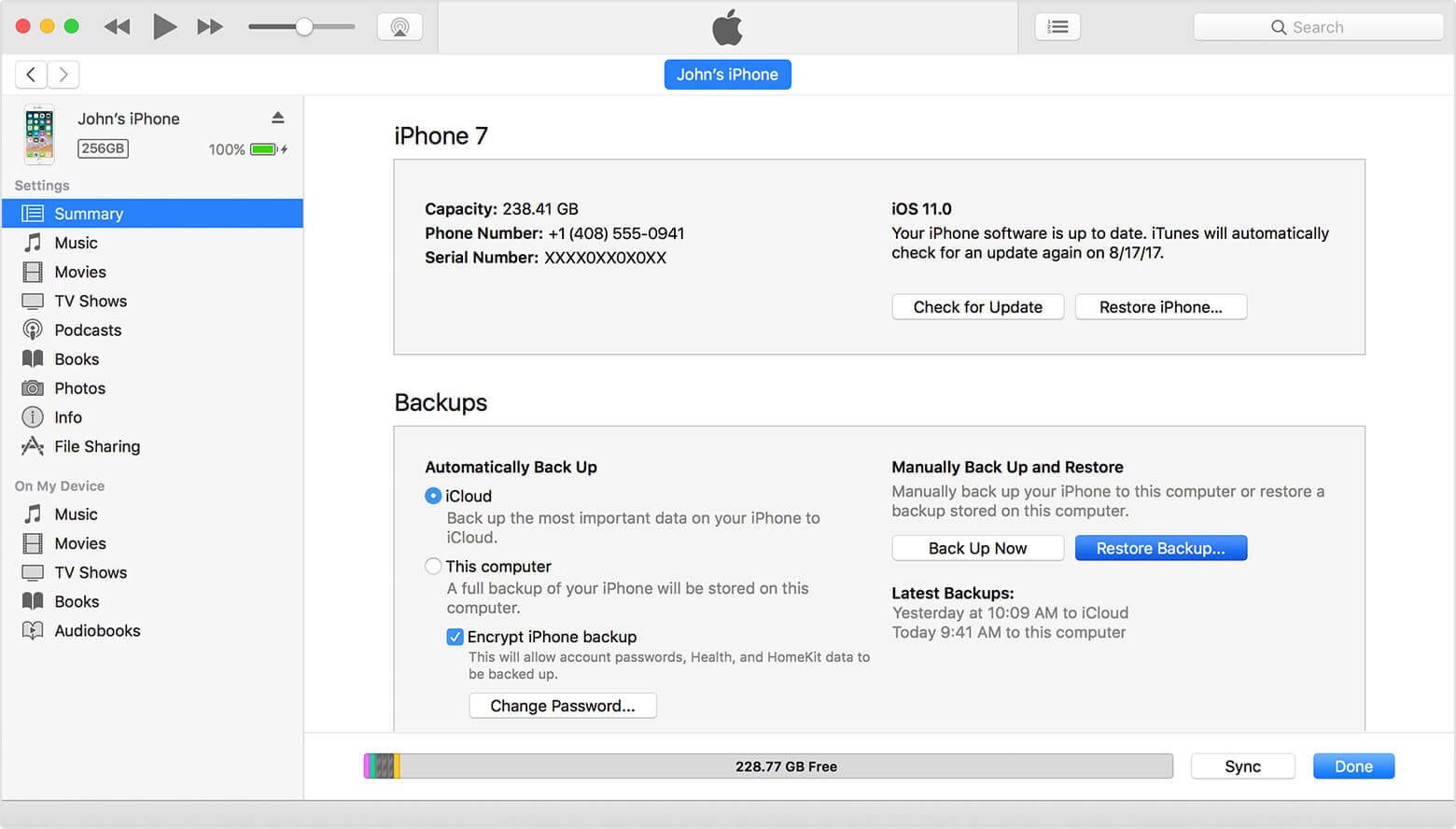
Select your device icon when it appears. In the Summary tab, click "Restore Backup."
-
Step 3Choose a Backup
Select the most recent backup from the list and click "Restore." Keep your device connected until the process is complete and it restarts.
Restore from an iCloud Backup
If you use iCloud for backups, you can restore your device wirelessly. This method also requires a complete wipe of your device before the restore can begin.
-
Step 1Erase Your iPhone
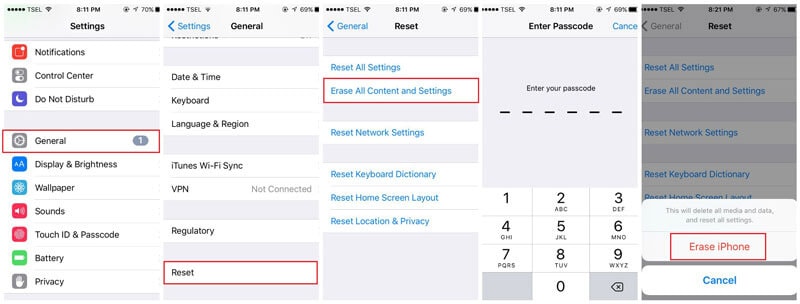
To begin, you must erase all content and settings. Go to Settings > General > Transfer or Reset iPhone > Erase All Content and Settings.
-
Step 2Restore from iCloud
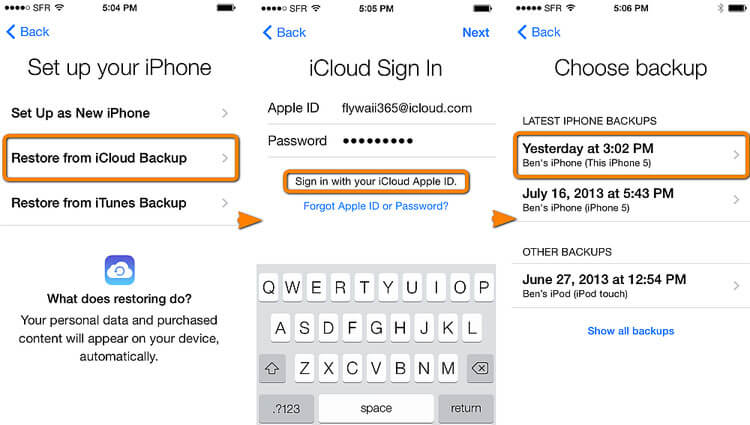
Your iPhone will restart and guide you through the setup process. On the Apps & Data screen, choose "Restore from iCloud Backup." Sign in with your Apple ID.
-
Step 3Select the Backup
Choose the backup that contains your deleted messages. The restore process will begin. Ensure you stay connected to a stable Wi-Fi network.
- Free to use
- Official Apple method
- Restores the device to a previous state
- Erases all current data on your device
- Cannot selectively restore only messages
- Potential for data loss if backup is outdated
Method 4: Contact Your Phone Carrier as a Last Resort
If all other methods fail to recover your deleted messages, there's one final option: contacting your mobile service provider. Some carriers retain records of SMS (but not iMessage) traffic for a limited period. While they may not be able to restore the content of the messages directly to your phone, they might be able to provide a transcript for legal or critical purposes.
The success of this method is not guaranteed and policies vary significantly between carriers. It should be considered a last-ditch effort for iPhone SMS recovery when the information is absolutely essential and cannot be retrieved through other means.
Bonus Tips for Managing iPhone Messages
Once you've recovered your important conversations, you might want to create a physical copy or ensure they are protected against future loss. Here are two useful tips.
Tip 1: Print Your Recovered iPhone Text Messages
For legal records, business documentation, or sentimental reasons, you might need to print your iPhone text messages. Dr.Fone - Data Recovery makes this incredibly simple. After scanning your device or backup, the preview window includes a direct print function.
- After the scan, select the messages you want to print.
- Click the "Print" icon in the top-right corner of the preview window.
- A print preview will appear, allowing you to adjust settings like page size.
- Once ready, click the printer icon again to send the messages directly to your connected printer.

Tip 2: Regularly Back Up iPhone Messages to Avoid Data Loss
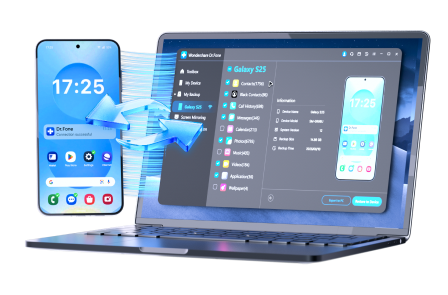
The best way to protect your data is through regular backups. While iCloud and iTunes are options, they have limitations. For a more flexible and user-friendly solution, consider using Dr.Fone - Phone Backup. This tool, part of the Dr.Fone Basic toolkit, allows you to selectively back up and restore data, including your text messages, without overwriting existing files on your device.
With Dr.Fone, you can create backups on your computer with a single click and preview the contents before restoring. This gives you complete control over your data, ensuring that your important conversations are always safe and easily recoverable.
- Effortlessly manage data through preview, delete, export, etc.
- Transfer all data between devices.
- Robust backup solutions for reliable data protection.
- Mirror screens to PC for meetings, teaching, and control.
Conclusion
Losing important text messages can be stressful, but it doesn't have to be a permanent loss. By exploring the methods outlined above, you can find a solution that fits your needs. For situations where you have no backup, or when you need to recover specific messages without erasing your device, a professional iPhone recovery software like Dr.Fone - Data Recovery (iOS) stands out as the most powerful and flexible choice. It provides a safe, efficient, and user-friendly way to perform iPhone SMS recovery, giving you peace of mind and saving you from unnecessary data loss.




FAQ
-
1. Can I recover text messages I deleted years ago?
The chances of recovering very old messages are extremely low. When you delete a message, the space it occupies is marked as reusable. Over time, as you use your phone, new data (apps, photos, updates) will overwrite this space, making the original message permanently unrecoverable. Recovery is most successful when attempted shortly after deletion. -
2. Does iOS have a "Recently Deleted" folder for messages?
Starting with iOS 16, Apple introduced a "Recently Deleted" folder within the Messages app. Deleted messages are kept here for up to 30 days before being permanently erased. You can find this by opening Messages, tapping "Edit" or "Filters" in the top-left corner, and selecting "Show Recently Deleted." If you are on an older iOS version, this feature is not available. -
3. Can I recover deleted messages on my iPhone without a computer?
Recovery without a computer is very limited. If your messages are in the "Recently Deleted" folder (iOS 16+), you can restore them directly on your iPhone. If you restore from an iCloud backup, you can also do this without a computer, but it requires erasing your device first. For recovering messages that are not in a backup and not in the "Recently Deleted" folder, you will need a computer and specialized software like Dr.Fone. -
4. Is it safe to use third-party iMessage recovery apps?
It is safe as long as you use reputable software from a trusted developer, such as Wondershare Dr.Fone. Reputable apps are designed to be read-only during the scanning process, meaning they will not write any new data to your device or alter your existing files. Always download software from the official website to avoid security risks associated with counterfeit or cracked versions.
 Add Wondershare Dr.Fone as a preferred source on Google