Recover photos, messages, WhatsApp, and more — no backup
needed.
Recover photos, messages, WhatsApp, and more — no backup
needed.

 100% Security Verified | No Subscription Required | No Malware

 :
: 
 ChatGPT
 Perplexity
 Gemini
 Claude
 Grok
Grok
While iPhone and iPad devices are generally intuitive and straightforward, encountering unexpected technical hurdles—like accidental data deletion—can make things extremely complicated. One of the most common frustrations is unintentionally losing files and realizing your only safety net is an unreadable iTunes backup. The native iTunes restore process is often flawed because it overwrites your entire device, wiping out your current data just to retrieve a few old messages or photos.
Fortunately, as we enter 2026, there are several powerful free iTunes backup extractors available. These robust software solutions allow you to securely crack open that unreadable database, preview your files, and retrieve exactly what you need without any major effort. In this comprehensive guide, we will explore the top 6 free iTunes backup extractors designed for both Mac and Windows users. If you have been struggling to recover your lost files from an old backup, you will be glad you found these carefully vetted tools.
In this article
1st iTunes Backup Extractor: Dr.Fone - Data Recovery (iOS)
Ranked as the premier tool for iOS recovery, Dr.Fone - Data Recovery (iOS) holds the prestigious title of the world's first tool to extract backup data from iTunes. It supports the seamless extraction of almost every file format, including video, music, app data, contacts, call history, and message data. One of its greatest advantages is that you can actively preview what data was stored in your local iTunes backup file and then choose to extract only the necessary items. In addition to local parsing, you can also use this versatile tool to extract iCloud backup seamlessly. The software's beautifully simple interface and guided step-by-step process make it the absolute top choice amongst global iPhone users.
What truly sets Dr.Fone apart from its competitors in 2026 is its advanced, industry-leading scanning technology. It permits deep searches that recover both existing files and fragments of deleted data. Coupled with essential features like real-time preview before recovery and selective export capabilities, you can be entirely assured that the process is efficient and you only restore what is genuinely needed to your computer or device.
 Recovers data after deletion, crashes, or device damage.
- Supports photos, messages, contacts, WhatsApp, and more.
- Supports all major iPhone, iPad, and iPod models.
- Preview and recover only what you need.
Steps to extract your iTunes backup by Dr.Fone
To help you visualize the process, here is a detailed video tutorial followed by an easy-to-read step-by-step text guide.
-
Step 1 Choose a Recovery Mode
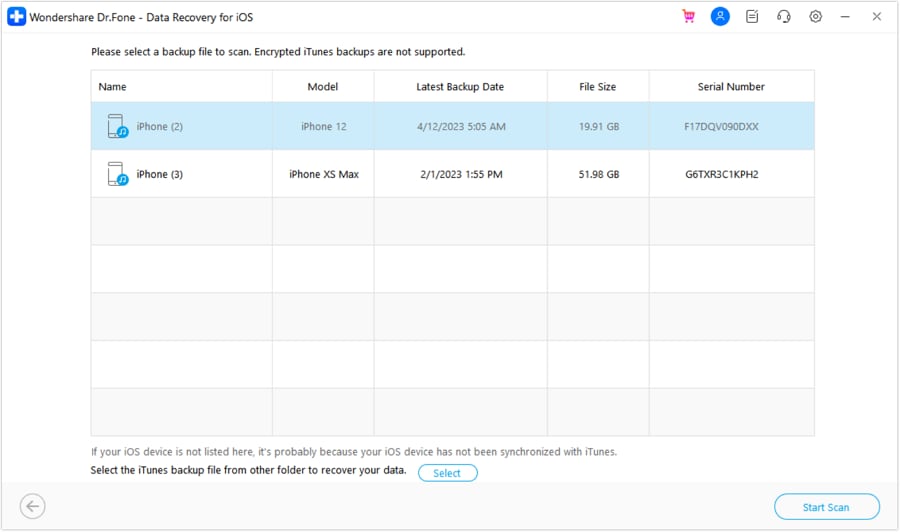
Launch the application and click on the "Data Recovery" module. Dr.Fone - Data Recovery (iOS) provides multiple pathways for retrieving lost information. Since our goal is to extract from a local sync file, select the specific option to recover from iTunes backup files. The tool will instantly auto-detect and display all the iTunes backup files available on your drive. Select the exact backup iteration you want to inspect and click "Start Scan" to initiate the process.
-
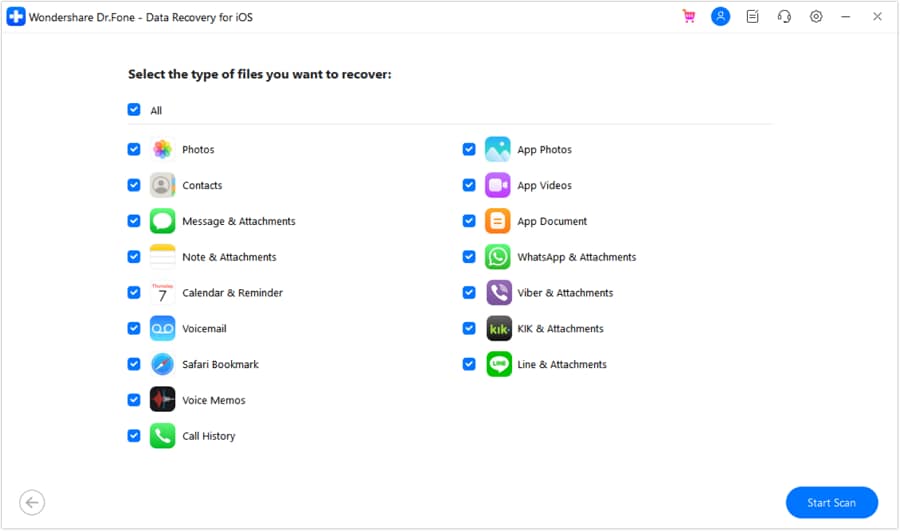
Step 2 Scan iTunes backup files
After clicking "Start Scan", the extractor performs a rapid, deep read of the complex SQLite database files stored by iTunes. It will systematically organize and populate the interface with a categorized list of everything found inside the backup.
-
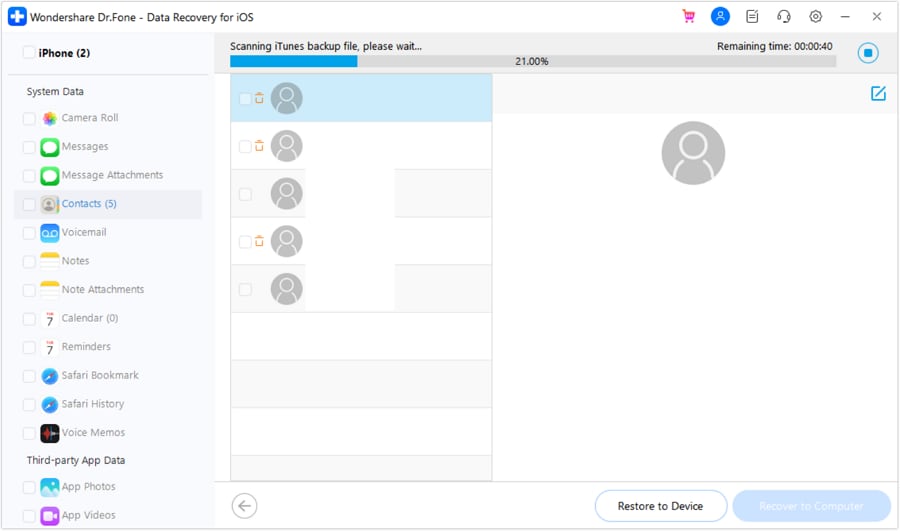
Step 3 Preview and extract iTunes backup files
Once the scan completes, navigate through the sidebar to view the categorized list. Here, you can actively preview the files (such as viewing photos or reading message threads) and tick the specific items you wish to extract. You are provided with two flexible export options: you can restore your files directly back to your connected iOS device, or extract them securely onto your computer for easy access and printing.
2nd iTunes Backup Extractor: Phone Rescue
PhoneRescue stands out as a robust and dynamic iTunes Backup Extractor that provides the highly sought-after advantage of selectively parsing and extracting data from iPhone backups. Designed to confidently handle up to 31 different file types, this utility excels in overall versatility. It efficiently covers a spectrum of content, from critical personal data to complex third-party app information (like WhatsApp or Line chats). High data recovery success rates, coupled with the ability to cleanly export text messages and iMessages into various printable formats, further emphasize its utility in the modern tech landscape. Moreover, the software boasts intuitive navigation, ensuring that even non-technical users find the recovery process relatively painless.
However, when evaluating PhoneRescue objectively, users must consider a few potential drawbacks. There is a slight learning curve involved in mastering its deeper capabilities, and the steep cost associated with its premium features may deter budget-conscious users.

- Fully available and optimized for both Mac and Windows OS.
- Permits direct data export from iPhone, iPad, and iPod touch.
- Reliably extracts from iCloud Backup and iTunes Backup, even successfully bypassing encrypted backups.
- Capable of deep-scanning to recover deleted iPhone data.
- Mandatory upgrade to the Pro version required for actual data extraction. The free tier essentially acts as a read-only viewer for lost or deleted data.
3rd iTunes Backup Extractor: iBackup Extractor
iBackup Extractor remains an excellent, straightforward choice for users seeking a highly versatile and simple utility to process their iTunes backup data. This specific tool effectively converts and extracts your hidden iPhone backup databases into standardized, accessible formats. Whether you want to view calendars, photos, or message threads, it makes exploring and managing your localized backup contents a breeze on any modern PC or Mac.
A highly praised feature of iBackup Extractor is its seamless compatibility with mathematically encrypted iTunes backup files. It respects your privacy and maintains Apple's strict security protocols while still granting you localized access to your protected data, provided you know the backup password.

- Very easy to navigate and handle, perfectly suited for beginners.
- Extracts critical data modules rapidly.
- The trial version generously permits the extraction of up to 50 items.
- The built-in preview screen can be slightly blurry and lacks fine detail.
- Beyond the 50-item limit, the free demo offers limited practical value without upgrading.
4th iTunes Backup Extractor: iBackup View
For those who prefer a minimalistic and highly focused approach to software, iBackup Viewer operates as a streamlined, user-friendly instrument designed purely for managing and extracting data specifically from iTunes backups. Its core strengths lie in its incredibly fast installation setup, straightforward usability, and immediate visibility into essential text-based files like SMS threads, iMessage history, and WhatsApp conversations. Furthermore, users can opt to natively export these message strings into clean PDF documents, significantly enhancing archiving capabilities for legal or personal records.
On the flip side, because the software prioritizes a minimalist design ethos, it deliberately strips away several advanced features that power users might expect. It lacks broader compatibility metrics, rendering it a slightly weaker choice for users searching for a holistic, all-in-one iOS backup resolution.

- Offers a remarkably simple and approachable interface.
- Automatically locates and lists all locally stored iPhone backups hidden deep within computer directories.
- Can safely extract from an iTunes Backup, fully supporting encrypted backup structures.
- Completely lacks support to extract from an iCloud Backup.
- The scanning engine can occasionally run slowly on highly fragmented drives.
- The built-in file previewer misses several critical media extensions.
If your scenario requires you to explicitly recover from iCloud synced file, relying on a robust tool like Dr.Fone - Data Recovery (iOS) will yield much better, comprehensive results.
5th iTunes Backup Extractor: AnyTrans
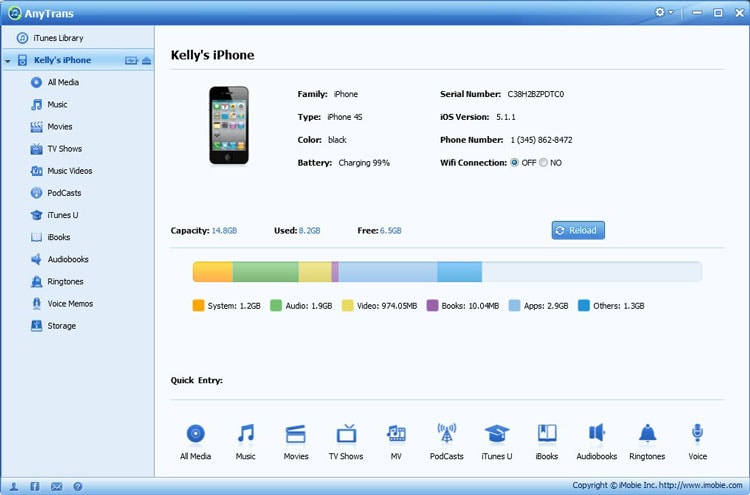
AnyTrans has cemented its reputation as an aggressively multifaceted iOS file management suite, broadly celebrated for both its dynamic backup protocols and deep extraction capabilities. It excels exceptionally by offering consumers the power to retrieve isolated data fragments not merely from old iTunes backups, but also remotely via iCloud and directly from physically linked iDevices. The architecture supports an exhaustive dictionary of file extensions, granting users crystal-clear preview panes to verify data integrity meticulously prior to authorizing any final transfers.
However, an abundance of functionality inevitably introduces clutter. The sprawling user interface, packed with a broad range of sync, transfer, and management tools, might severely overwhelm individuals seeking just a basic, one-click iTunes backup extraction tool.
- Offers clear, full-resolution file previews preceding any extraction command.
- Highly flexible dual-recovery mode: scrape data directly from an active iOS device or pull passively from a dormant iTunes backup.
- Exceptional native transfer protocols moving media between Mac/PCs and varied iOS hardware.
- Frequently requires establishing an active tethered connection with the iOS device before allowing complete background extraction.
- The search index can be inconsistent, occasionally skipping deeply buried obscure file types.
6th iTunes Backup Extractor: iPhone Backup Extractor
Appropriately named, the iPhone Backup Extractor carves a definitive niche for itself through extreme structural simplicity and clinical efficiency. It delivers a hyper-focused method dedicated solely to unpacking rigid iTunes backup database structures. Its broad compatibility covers an impressive timeline of legacy iTunes builds and historic iOS versions, granting users lightning-fast retrieval of everyday core data components—specifically contacts, voicemails, camera roll snaps, and text sequences. Because the software natively implements a robust selective recovery mode, users maintain full granular command over their storage space.
On the downside, its absolute devotion strictly to localized iTunes backups severely limits its appeal for hybrid users who lean heavily on iCloud, Google Drive, or third-party backup mechanisms. Additionally, while the basic interface is incredibly accessible, tech-savvy users might find the visual aesthetics somewhat antiquated compared to premium solutions.

- Successfully parses heavily encrypted files from both iCloud and iTunes pathways.
- Features a dedicated 'Expert Mode' built specifically for deep raw data manipulation.
- The overarching data scanning process can feel ineffective and sluggish.
- Completely lacks an integrated visual preview pane before demanding an extraction sequence.
- The user interface feels notably outdated and aesthetically unpleasing.
Conclusion
Whether your rationale for seeking a dependable iTunes Backup Extractor stems from a tragically lost iPhone, an urgent professional need to access archived business contacts, or simply a desire to transfer selected legacy files to a brand-new 2026 device without overwriting your current system, these featured utilities undeniably provide an invaluable safety net for the iOS community. By leveraging these tools, you open a clear, transparent window into your Apple backups, securing peace of mind that your critical digital footprint is accessible whenever an emergency strikes.
Among this curated list, Dr.Fone - Data Recovery (iOS) confidently emerges as our undisputed primary recommendation. Marrying an exceptionally intuitive interface with remarkably potent data reconstruction algorithms, Dr.Fone consistently delivers a flawless, panic-free environment for cracking open complex iTunes iterations. Whether tackling sudden deletion catastrophes, botched iOS firmware upgrades, or extreme hardware destruction scenarios, Dr.Fone seamlessly bridges the gap between total data loss and total restoration. Do not let unreadable database files trap your memories—click the appropriate operating system button below to instantly download Dr.Fone and preview your backup absolutely free!




FAQ
-
1. What exactly is an iTunes Backup Extractor, and why do I absolutely need it?
An iTunes Backup Extractor is a specialized desktop software designed specifically to safely parse and extract data from your iPhone's unreadable backup database in iTunes. You need it when you want to retrieve independently deleted data, selectively transfer isolated files like photos to a new device, or inspect backup contents without performing a full, destructive factory restore on your current iPhone. -
2. Are these third-party iTunes Backup Extractors genuinely safe for my privacy?
Yes, the highly rated iTunes Backup Extractors listed in this 2026 guide are built by reputable, long-standing developers. They operate entirely locally on your machine, ensuring strictly secure, localized data extraction without uploading your private texts, passwords, or images to external cloud servers. -
3. Can I successfully recover permanently deleted data using a standard iTunes Backup Extractor?
Absolutely. Leading solutions like Dr.Fone possess deep-scanning algorithms that can recover deleted data fragments from your iTunes backup. Because iTunes often archives snapshot metadata, these extractors can piece together deleted messages and photos that are completely invisible or inaccessible through normal Apple interfaces. -
4. Do I require advanced technical skills to operate these Backup Extractors?
Not at all. Modern iTunes extractors are intentionally engineered with highly intuitive, click-through graphical interfaces. Following simple prompts—like selecting a backup, clicking "Scan", and choosing "Export"—allows absolute beginners to retrieve their data securely within minutes, requiring zero coding or database knowledge.
 Add Wondershare Dr.Fone as a preferred source on Google