
Why Is My Android Phone Offline? Troubleshooting Guide

Oct 24, 2026 • Filed to: Phone Repair Solutions • Proven solutions
 TL;DR:
An Android phone displays an "offline" status even with active Wi-Fi or mobile data when it cannot authenticate the internet connection due to DNS conflicts, corrupted app caches, or system-level network failures.
● Resetting your Android's network settings directly resolves IP conflicts and misconfigured APN settings, but you must have your credentials ready as this action permanently wipes all saved Wi-Fi passwords and Bluetooth pairings.
● If the device is offline specifically in browsers despite having full signal bars, clearing Google Chrome's storage data or setting the system date and time to automatic sync will resolve the SSL certificate mismatches and stale DNS data blocking the connection.
● For persistent offline errors caused by deep software corruption, use Wondershare Dr.Fone - System Repair (Android) to download and install a clean firmware package via Download Mode, requiring a full data backup beforehand since the repair process may erase your device data.
Ask AI for a summary
 ChatGPT
 Perplexity
 Gemini
 Claude
 Grok
Grok
If your Android phone suddenly says it's offline, you're not alone — this is one of the most commonly searched Android issues. An Android phone shows "offline" when it loses access to the internet or cannot authenticate a network connection, even if Wi-Fi or mobile data appears active. This guide explains exactly why your phone keeps going offline and walks you through every proven fix, step by step.
Below, we cover all major causes of the "why is my phone offline" problem and provide clear, actionable solutions — whether the issue stems from your connection, your browser, or your device's system. By the end, you'll know exactly how to restore your Android to a fully online state.

Part 1: Why Does My Phone Say Offline?
When your Android phone displays an "offline" status, it means the device cannot establish or maintain a verified connection to the internet — even if your Wi-Fi or mobile data icon is visible. This issue can disrupt web browsing, email, messaging apps, and app updates all at once.

Understanding the root cause is the fastest way to resolve the issue. Here are the six most common reasons why your Android phone says offline:
- Airplane Mode is accidentally enabled
The most straightforward answer to "why is my phone showing offline" is an accidentally activated Airplane Mode. When Airplane Mode is turned on, your Android immediately disconnects from all wireless networks — including Wi-Fi, cellular data, and Bluetooth. This fully cuts off internet access and triggers the "offline" status. It's easy to accidentally toggle it from the Quick Settings panel, especially when using your phone in the dark or with wet hands.
- Weak or unstable internet connection
A poor Wi-Fi signal or fluctuating mobile data is one of the leading causes of the "Why is my phone offline?" error. Android devices require a stable network connection to stay online. If signal strength drops below a functional threshold, or if your carrier experiences temporary congestion or outages, your phone may register as offline even though the Wi-Fi indicator remains on. Moving too far from your router or entering a dead zone can trigger this instantly.
- Software glitches or app bugs
Background app errors — particularly in Google Play Services or system networking components — can falsely report your device as offline even when a connection is active. These glitches can occur after incomplete app updates, system patches, or app cache corruption. The phone's operating system may lose track of network state, causing it to display "offline" incorrectly.
- Firewall or VPN restrictions
An overly strict firewall configuration or an active VPN connection can block your Android phone's access to the internet, making it appear offline. Firewalls are designed to filter network traffic for security, but misconfigured rules can prevent legitimate connections. Similarly, a VPN with DNS leak issues or a dropped tunnel may cause apps to report no connectivity, even though your device has a signal.
- Incorrect date and time settings
This is a frequently overlooked cause of the Android phone offline problem. When your device's date or time is significantly incorrect, SSL/TLS certificates used by websites and apps become invalid from your phone's perspective. This causes browsers and apps to refuse connections and display offline or "no internet" errors. Make sure your phone is set to automatically sync date and time via Settings > General Management > Date and Time > Automatic Date and Time.
- IP address conflict or DNS misconfiguration
If two devices on the same network have been assigned the same IP address, or if your DNS server is unreachable, your Android phone may lose connectivity and go offline. This often happens in crowded networks (offices, public Wi-Fi) or when your router's DHCP table is full. Resetting network settings or switching to a public DNS (such as Google's 8.8.8.8) can resolve this type of issue.
Now that you know why your Android phone goes offline, let's tackle each scenario with a direct fix. If downloads fail to start, Google Play stays stuck on "Loading…", or web pages won't load at all, the problem is most likely a network connectivity issue — continue to Part 2.
Part 2: How To Fix "Phone Offline" With Internet Connection Problem
If your Android phone is genuinely offline — meaning there's a real loss of Wi-Fi or mobile data connectivity — the fixes below address the network layer directly. These solutions work for the most common scenarios: downloads that won't start, Google Play showing "Loading…" indefinitely, or pages refusing to load on any browser.
Try these solutions in order. Each one targets a different layer of the connection stack.
Solution 1: Switch Your Connection From Wi-Fi to Mobile Data
If your Wi-Fi is experiencing outages, dead zones, or authentication errors, switching to mobile data is the fastest way to verify whether the issue is Wi-Fi-specific or device-wide. This single step can immediately answer whether your phone is offline or your Wi-Fi network is the problem.
- Step 1: Swipe down from the top of your screen to access the Quick Settings menu.
- Step 2: Tap the Wi-Fi icon to turn off the Wi-Fi connection.
- Step 3: Tap Mobile Data to turn it on.
- Step 4: Open a browser and try loading a webpage to confirm your connection is restored.
Tip: If mobile data works but Wi-Fi doesn't, the issue is with your router or ISP — not your phone. Proceed to Solution 4.

Solution 2: Toggle Airplane Mode Off and On
Airplane Mode cycling is one of the most effective quick fixes when your phone says it's offline. Turning Airplane Mode on forces your device to drop all wireless connections. Turning it back off triggers a full reconnection handshake with your carrier and available Wi-Fi networks — this often clears temporary network state errors that cause the offline status.
- Step 1: Swipe down from the top of your screen to access the Quick Settings menu.
- Step 2: Tap the Airplane Mode icon to enable it. Wait 5–10 seconds for all connections to fully drop.
- Step 3: Tap the Airplane Mode icon again to disable it and allow your phone to reconnect.
- Step 4: Check if your phone is now online by opening a browser or app that requires internet.
Note: This method is especially useful if your phone went offline after switching between networks (e.g., from office Wi-Fi to mobile data).

Solution 3: Reset Network Settings on Android
Resetting your network settings wipes all saved Wi-Fi passwords, Bluetooth pairings, and cellular settings, giving your phone a completely clean network configuration. This is the go-to fix when misconfigured APN settings, corrupted network profiles, or bad DNS entries are causing your Android to appear offline.
Note: Steps may vary slightly depending on your Android manufacturer (Samsung, Xiaomi, Pixel, etc.), but the general path is consistent.
- Step 1: Open your phone's Settings > Connection & sharing (or "General Management" on Samsung).
- Step 2: Find and select "Reset Wi-Fi, mobile networks, and Bluetooth."
- Step 3: Tap "Reset Settings" and confirm the action to allow your phone to reset all network configurations.
- Step 4: Reconnect to your Wi-Fi network and enter your password again. Then check if the offline issue is resolved.
Warning: All saved Wi-Fi passwords will be erased. Make sure you have your Wi-Fi password available before proceeding.

Solution 4: Restart Your Wi-Fi Router
Sometimes the reason your phone keeps going offline has nothing to do with the phone itself — the Wi-Fi router is the culprit. Routers can develop memory leaks, IP table overflows, or firmware hiccups that cause connected devices to lose internet access. A simple restart flushes the router's temporary memory and re-establishes a clean connection to your ISP.
- Step 1: Locate your Wi-Fi router.
- Step 2: Turn off the router using the power button or unplug the power cable from the outlet.
- Step 3: Wait for at least 30 seconds (not just 10) to allow the router's memory to fully clear.
- Step 4: Plug the router back in or turn it on and wait 60 seconds for it to fully restart and re-establish the ISP connection.
- Step 5: Reconnect your Android phone to Wi-Fi and check if the "Phone Offline" message has cleared.
Pro tip: If restarting the router doesn't help, try connecting another device (laptop or tablet) to the same Wi-Fi. If that device is also offline, the issue is with your router or ISP — contact your internet service provider.
If none of the above solutions resolve the problem, and your phone still shows offline despite an active network connection, the cause may be software-level rather than network-level. Continue to Part 3 for deeper fixes.
Part 3: How To Fix "Phone Offline" Despite Having an Internet Connection
If your Wi-Fi is working (other devices can browse the internet fine) but your Android phone still says it's offline, the problem lies within the phone itself — specifically in your browser, cached app data, or system-level networking components. This is the "offline with internet" paradox that many Android users experience.
The fixes in this section address the question: "Why does my phone say offline on Android?" even when the network connection appears active. Work through these solutions in order from least invasive to most comprehensive.
Solution 1: Clear Google Chrome's Cache and Data
Corrupted or excessively large browser cache files are a common reason why Android phones appear offline in the browser. Over time, Chrome stores temporary website data to speed up loading — but if this cache becomes corrupted or conflicts with updated site certificates, Chrome may refuse to load any pages and display an "offline" error even though the connection is fine.
Clearing the cache forces Chrome to fetch all content fresh from the internet, resolving certificate mismatches, stale DNS data, and corrupted temporary files in a single step.
- Step 1: Open Settings > Apps > Manage Apps.
- Step 2: Locate and tap "Google Chrome" (or your primary browser) from the list of installed apps.
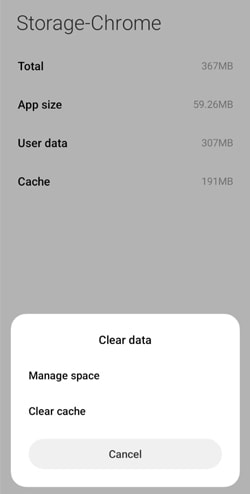
- Step 3: Tap "Storage" and then select "Clear Cache" to remove all temporary files.
- Step 4: Select "Clear Data" to delete all stored app data, including saved passwords and site settings. Confirm when prompted.
After clearing cache and data, restart Google Chrome and attempt to load a webpage. In most cases, this resolves browser-related offline errors immediately.
Solution 2: Reinstall Google Chrome
If clearing the cache and data doesn't restore connectivity, the Chrome app itself may be corrupted — either from a failed update, an interrupted installation, or file system errors on your device. Reinstalling Chrome performs a clean installation, replacing all app files and dependencies with verified, uncorrupted versions from the Google Play Store.
- Step 1: Open the Google Play Store and search for Google Chrome.
- Step 2: Tap "Uninstall" to remove the app completely from your device.
- Step 3: Wait for the uninstall to complete, then tap "Install" to download and install the latest version of Chrome.
- Step 4: Once the installation is complete, open Google Chrome and test your connection by browsing to any website.
Alternative: If you prefer not to uninstall Chrome, you can try using a different browser to isolate whether the problem is Chrome-specific or system-wide.

Solution 3: Repair the Android System to Permanently Fix "Phone Offline"
When software-level fixes fail and your Android phone keeps going offline despite having an active connection, the root cause is often a deeper system corruption — damaged network stack files, corrupted system partitions, or firmware-level errors that standard troubleshooting cannot address.
In these cases, a professional Android system repair tool is the most reliable solution. Wondershare Dr.Fone System Repair is specifically engineered to diagnose and fix system-level issues on Android devices without data loss in most scenarios, making it the recommended tool for persistent offline problems that no other fix has resolved.

Dr.Fone - System Repair (Android)
Fix Android System Issues on Your Own
- Fix various Android system issues like black screen of death.
- High success rate of fixing Android issues. No skills are required.
- Handle Android system to normal within less than 10 minutes.
- Easy-to-follow instructions provided.
Here is how to use Dr.Fone System Repair to fix the Android phone offline problem:
- Step 1: Open Dr.Fone's system repair tool
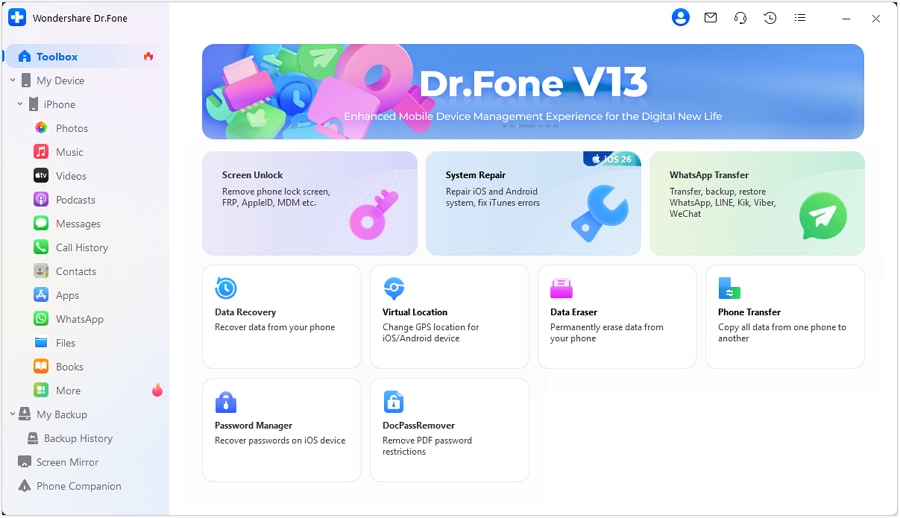
Launch Wondershare Dr.Fone on your computer. Navigate to the Toolbox section, connect your Android device via USB, and select System Repair. Choose Android as your device type to begin the diagnosis process.
 safe & secure
- Step 2: Start the repair
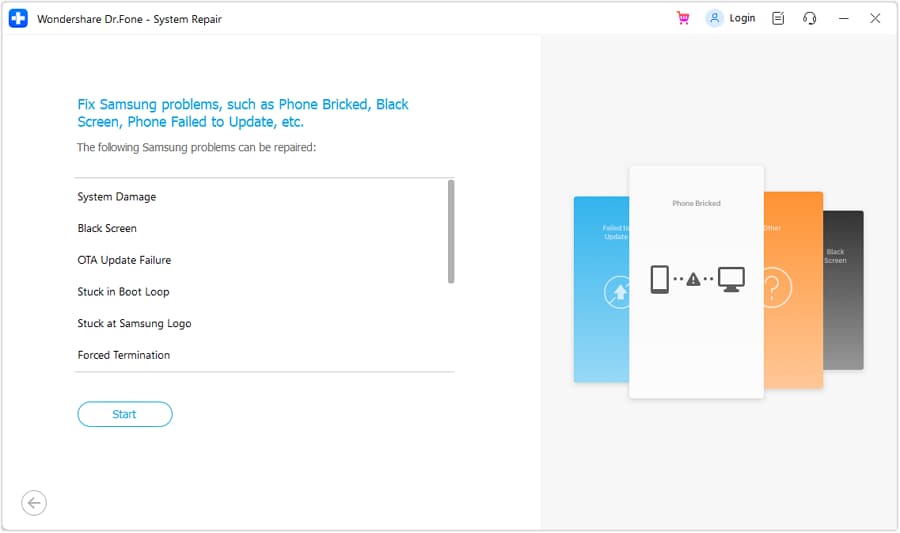
Click Start on the new screen to initiate the repair process. Since you are dealing with a persistent offline or connectivity issue, select System Damage as the repair type. This mode targets corrupted system files and network stack components.
- Step 3: Confirm your device details
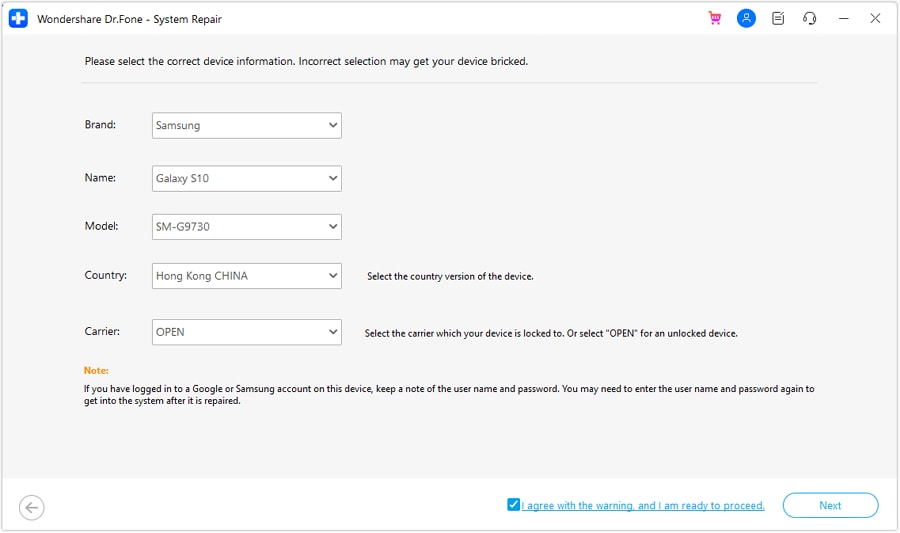
Dr.Fone will automatically detect your Android device's brand. Verify the Name, Model, Country, and Carrier displayed. If your device is carrier-unlocked, select OPEN in the Carrier field. Read and accept the on-screen warning, then click Next to proceed.
- Step 4: Download the correct firmware
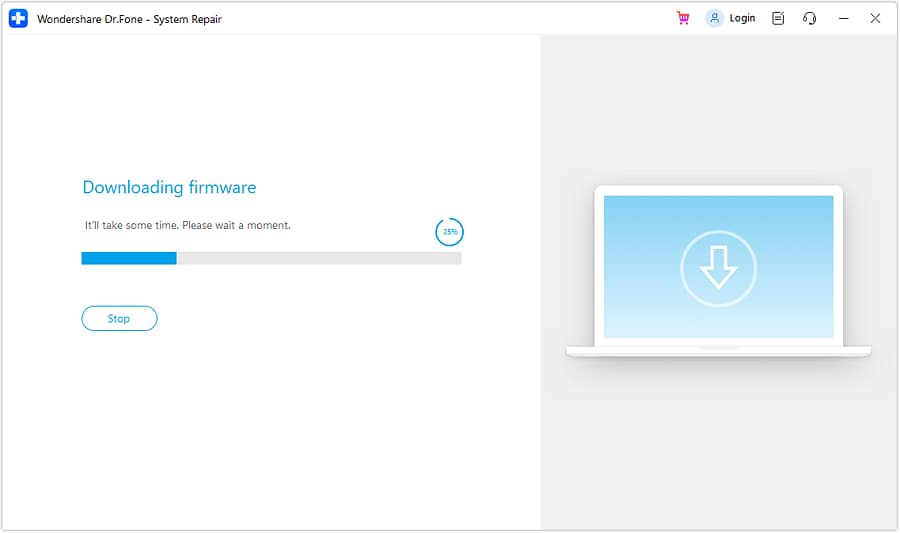
Follow the on-screen instructions to put your Android device into Download Mode. Once in Download Mode, Dr.Fone will automatically locate and download the correct firmware package for your specific device model, ensuring the repair is precise and compatible.
- Step 5: Confirm and complete the repair
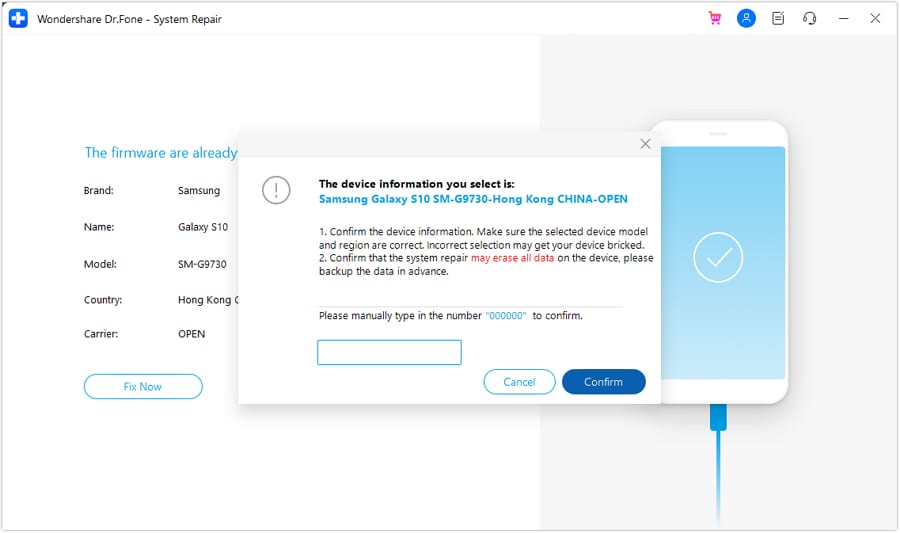
Important: Back up your data before this step, as the repair process may erase device data. Enter "000000" in the confirmation field to authorize the repair. A progress bar will show the repair status. Once complete, click Done — your Android device should now be back online with full system integrity restored.
 safe & secure
Ditch the hassle of multiple apps and simplify your mobile experience with Dr.Fone App, the ultimate all-in-one solution for iOS and Android users. Unlock your device, change your GPS location, and transfer WhatsApp data with ease. Plus, recover lost data from Android devices and transfer files, photos, and music between devices with ease. Fix common system issues and get the most out of Dr.Fone App with our "Tips" section below.
Dr.Fone App (iOS) & Dr.Fone App (Android)
Your One-Stop Expert for Screen Unlock, Smart Clean, Data Recovery, Change Location, and Phone Management of Mobile Devices!
- Effortlessly unlock various locks on your device.
- Instantly free up storage space by smart clean.
- Rapidly recover different kinds of lost phone data and information.
- Easily changes GPS location on Android devices.
- Easily manage cluttered and private device content.



Conclusion
An Android phone showing "offline" is a frustrating but fully fixable problem. The key is identifying whether the issue lies in your network connection, your device's software, or a deeper system-level fault. This guide has covered all major causes — from accidentally enabled Airplane Mode and weak Wi-Fi signals to browser cache corruption, VPN conflicts, and DNS misconfigurations — and provided step-by-step fixes for each.
For most users, toggling Airplane Mode, switching to mobile data, or resetting network settings will resolve the issue within minutes. If the problem persists despite a working internet connection, clearing Chrome's cache or reinstalling the browser typically solves browser-specific offline errors. And for stubborn, recurring offline problems rooted in system corruption, Dr.Fone - System Repair (Android) is the most comprehensive solution — it addresses the root cause rather than just the symptoms, getting your Android device back online with a single, guided repair process.
FAQs
 Q1. Why am I offline on my phone even though Wi-Fi is connected?Q2. Why does my phone keep going offline repeatedly?Q3. How do I fix my Android phone offline problem quickly?Q4. Why would a phone be offline even with full signal bars?


Android Issues
- Android Update
- 1. Download and Use Samsung Odin
- 2. Samsung Phone Stuck in Odin Mode
- 3. Latest Updates in Android 11
- 4. Update Android Oreo 8.1
- Android Not Working
- 1. Solution To Bricked Android Phone
- 2. Fix 'Android Phone Won't Turn On'
- 3. Flash Dead Android Phone
- 4. Fix Phone Keep Turning Off
- 5. Fix Android Bootloop Problem
- 6. Fix Android Phones and Tablets
- Android Errors
- 1. Fix Error 495 While Download Apps
- 2. Fix Error 505 in Google Play Store
- 3. Fixes For Authentication Error
- 4. Fix Error Code 963 on Google Play
- 5. Fix Error Code 920 In Google Play
- 6. Fix Encryption Error
- Screen Problems
- 1. Fix Unresponsive Fire Tablet Screen
- 2. Fix Unresponsive Android Screen
- 3. Fix Android Screen Problem
- 4. Fix Phone Is Stuck on Boot Screen
- 5. Fixes for Tablet Screen Not Working
- 6. Tools for Removing Stuck Pixels
- 7. Fix Android Black Screen of Death
- 8. Fix Android Stuck on Boot Screen
- 9. Fix Android White Screen of Death
- 10.Fix Android Blue Screen of Death
- 11.Fix ONN Tablet Screen Not Working
- 12.Fix Android Touch Screen Proble
- 13.Fix Smartphone With a Black Screen
- 14.Fix Realme Screen Not Responding
- 15.Fix Phone Screen Not Responding
- Android Problems
- ● Manage/transfer/recover data
- ● Unlock screen/activate/FRP lock
- ● Fix most iOS and Android issues
- Free Download Free Download Free Download



Daisy Raines
staff Editor
Generally rated4.5(105participated)