Resolve common problems and system crashes on both iPhone and Android devices.

 100% Security Verified | No Subscription Required | No Malware

 :
: 
 ChatGPT
 Perplexity
 Gemini
 Claude
 Grok
Grok

Why does my phone keep disconnecting from the WiFi? It's so frustrating when I'm in the middle of something important. Is it my phone or my router?
A Concerned User
In our hyper-connected world, a stable internet connection is essential for everything from work meetings to streaming entertainment. When your phone constantly drops its WiFi connection, it can disrupt your entire day. This common problem can be incredibly annoying, leaving you to wonder whether the fault lies with your internet provider, your router, or your device itself.
Fortunately, you don't have to be a tech expert to solve this. There are several potential causes for this issue, and most of them have straightforward solutions. In this guide, we'll explore the common reasons why your phone keeps disconnecting from WiFi and provide ten clear, step-by-step fixes to restore a stable connection.

In this article
- Part 1. Common Reasons Your Phone Keeps Disconnecting from WiFi
- Part 2. 10 Proven Ways to Fix a Phone That Keeps Disconnecting from WiFi
- Fix 1: Perform a Simple Restart of Your Phone
- Fix 2: Review Your Router's Admin Settings
- Fix 3: 'Forget' and Reconnect to the WiFi Network
- Fix 4: Power Cycle Your Router
- Fix 5: Remove Old and Unused WiFi Networks
- Fix 6: Investigate Recently Installed Applications
- Fix 7: Reset Network Settings on Your Device
- Fix 8: Optimize Your Router's Frequency Band
- Fix 9: Adjust Battery Saving Settings
- Fix 10: Update Your Router's Firmware
Part 1. Common Reasons Your Phone Keeps Disconnecting from WiFi
Is your phone constantly dropping its WiFi connection, or is your internet service lagging unpredictably? Before diving into solutions, it's helpful to understand the root cause. Not all connectivity problems stem from your internet service provider; often, the issue lies with your router or the device itself. Here are some of the most common culprits:
Router Malfunctions or Outdated Firmware
Just like any other electronic device, your router can experience glitches. These issues can be caused by a hardware fault or, more commonly, by outdated firmware. Manufacturers release firmware updates to fix bugs, patch security vulnerabilities, and improve performance. If your router's software is old, it can lead to unstable connections.
You're Too Far from the WiFi Router
A frequent answer to "why does my phone disconnect from WiFi?" is simply distance. WiFi routers broadcast signals over a limited area. The further you move from the router, the weaker the signal becomes. Physical obstructions like walls, floors, and large furniture can also significantly degrade signal strength. Once you move out of the effective range, your phone will disconnect automatically.
Signal Interference from Other Devices
Your WiFi signal operates on specific radio frequencies (typically 2.4GHz or 5GHz). Many other household electronics, such as microwave ovens, cordless phones, Bluetooth devices, and even neighboring WiFi networks, can operate on the same frequencies. This creates interference, which can disrupt your connection and cause it to drop unexpectedly.
Network Overload from Too Many Devices
Most home routers have a limit to how many devices they can effectively manage at once. In a modern household with smartphones, laptops, smart TVs, and other connected gadgets, it's easy to overload the router. When the number of connected devices exceeds the router's capacity, it may struggle to maintain a stable connection for all of them, leading to random disconnections.
Unstable Connection from Your ISP
While device-side issues are common, sometimes the problem does originate from your Internet Service Provider (ISP). There could be maintenance or an outage in your area, or the signal quality delivered to your home might be poor. If all your devices are disconnecting, it's a strong indicator that the issue might be with the incoming service rather than your personal equipment.
Part 2. 10 Proven Ways to Fix a Phone That Keeps Disconnecting from WiFi
If you've determined that your internet connection is generally stable but your phone, whether it's a Samsung Galaxy S22 or another Android model, continues to drop the WiFi signal, it's time to troubleshoot the device itself. The following section outlines ten effective solutions to resolve the "WiFi keeps disconnecting Android" problem.
In some cases, persistent disconnection can be a symptom of an underlying system issue on your Android phone. If basic troubleshooting doesn't work, a specialized tool can help repair the operating system without data loss. Dr.Fone - System Repair can resolve various Android system problems that might be affecting your connectivity.
 Fix Android instantly – no skills needed.
- Solve boot loop, black screen, won’t turn on, etc.
- High success rate for all system issues.
- User-friendly interface with easy-to-follow steps.
Fix 1: Perform a Simple Restart of Your Phone
This is often the quickest and easiest fix. Restarting your phone clears temporary files and resolves minor software glitches that might be interfering with your WiFi connection. It gives your device's networking components a fresh start.
-
Step 1 Press and Hold the Power Button
Unlock your phone and hold down the Power button until the power menu appears on your screen.
-
Step 2 Select 'Reboot' or 'Restart'
From the on-screen options, tap on 'Restart' or 'Reboot.' Your phone will turn off and then back on automatically, potentially resolving the connection issue.

Fix 2: Review Your Router's Admin Settings
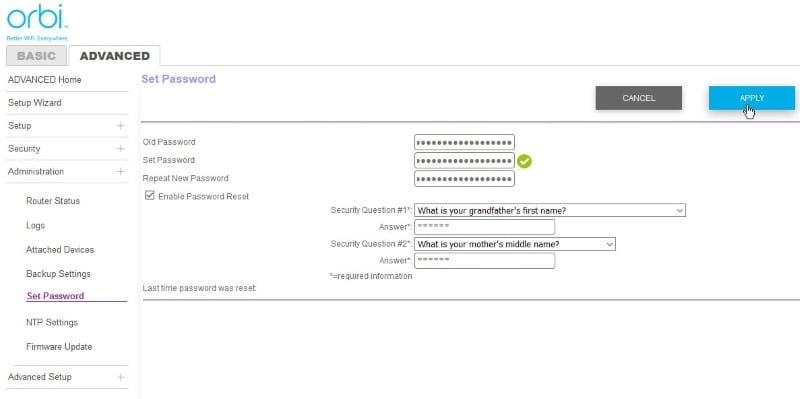
It's possible your phone has been accidentally blocked or blacklisted in your router's settings. This can happen through MAC address filtering features. You'll need to access your router's administrative panel to check.
Log in to your router’s admin interface using a web browser (the address is usually on the router itself, like 192.168.1.1). Look for a section related to 'Connected Devices,' 'Access Control,' or 'MAC Filtering' and ensure your phone is not on a blocklist. If it is, remove it.
Fix 3: 'Forget' and Reconnect to the WiFi Network
Sometimes, the saved network profile on your phone can become corrupted. Forgetting the network and reconnecting forces your phone to create a new, clean connection profile. This often solves persistent disconnection problems.
-
Step 1 Access WiFi Settings
Open your phone's Settings app, go to 'Network & Internet,' and then tap 'WiFi.' Alternatively, long-press the WiFi icon in your quick settings panel.

-
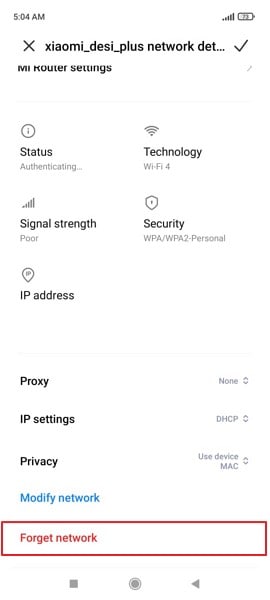
Step 2 Forget the Problematic Network
Tap on the name of the WiFi network you're having trouble with. In the details screen, you'll see an option to 'Forget.' Tap it to remove the network from your phone's memory.
-
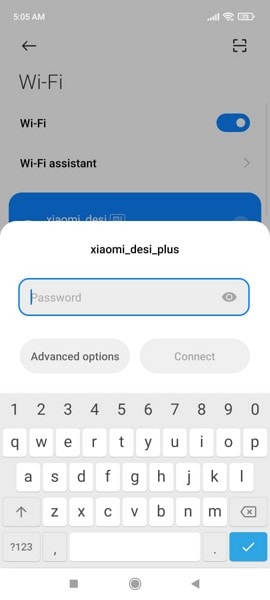
Step 3 Reconnect to the Network
Scan for available networks again. Select your network from the list and enter the password to reconnect.
Fix 4: Power Cycle Your Router
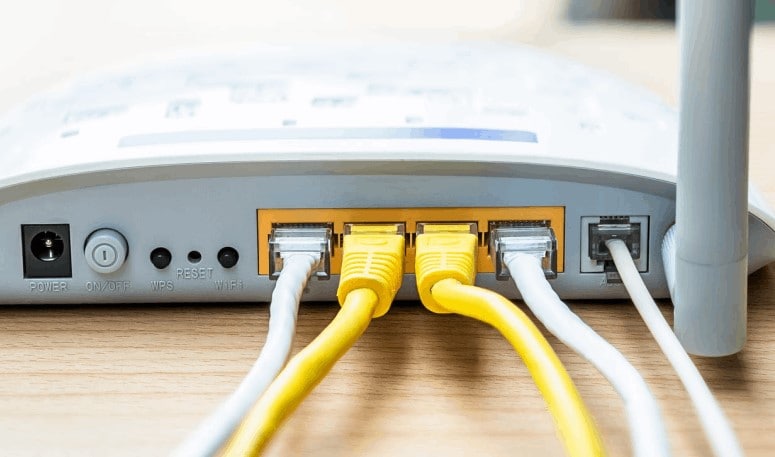
Just like your phone, your router can benefit from a restart. A power cycle clears its temporary memory (cache) and can resolve performance issues that cause dropped connections. This is a crucial step for any network troubleshooting.
Simply unplug your router from the power outlet. Wait for at least 30 seconds to ensure it fully powers down. Then, plug it back in and wait a few minutes for it to boot up and establish a connection with your ISP before trying to connect your phone again.
Fix 5: Remove Old and Unused WiFi Networks
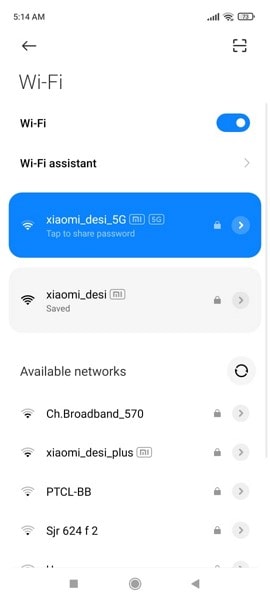
If your phone has a long list of saved WiFi networks, it might constantly scan for and attempt to switch to a network it thinks has a better signal. This can lead to frequent disconnections from your current network. Cleaning up this list can improve stability.
-
Step 1 Open Your Saved Networks List
Navigate back to your phone's WiFi settings menu. Look for an option like 'Saved Networks' or 'Manage Networks'.

-
Step 2 Forget All Unnecessary Networks
Go through the list and remove any networks you no longer use, such as old workplace networks, coffee shops, or public hotspots. Tap on each one and select 'Forget'.
Fix 6: Investigate Recently Installed Applications
Certain apps, especially VPNs, network boosters, firewalls, or even some antivirus apps, can interfere with your phone's WiFi connection. If the problem started after installing a new app, that app is a likely suspect.
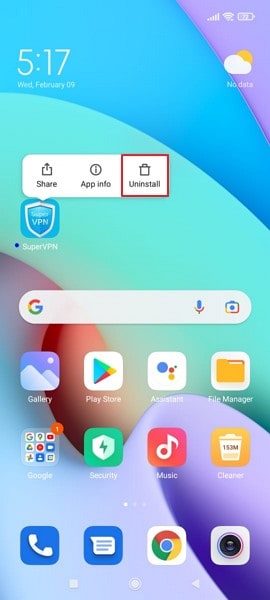
Try temporarily disabling the app to see if the connection stabilizes. If it does, you've found the culprit. You can then either adjust the app's settings or uninstall it completely. To uninstall, long-press the app icon and select 'Uninstall' from the menu that appears.
Fix 7: Reset Network Settings on Your Device
This is a more comprehensive step than just forgetting one network. Resetting network settings will erase all saved WiFi networks, Bluetooth pairings, and cellular data settings, returning them to their factory defaults. It's a powerful way to fix deep-seated software conflicts.
-
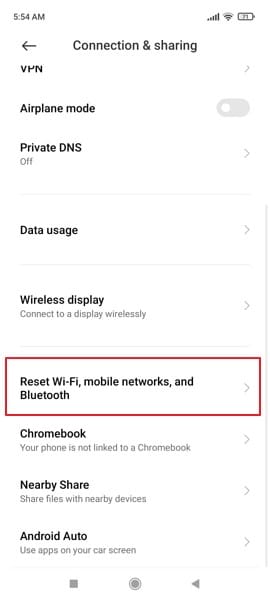
Step 1 Find the Reset Option
Open 'Settings' on your phone. Search for 'Reset' or navigate to 'System' > 'Reset options'. Look for 'Reset Wi-Fi, mobile & Bluetooth' or 'Reset Network Settings'.
-
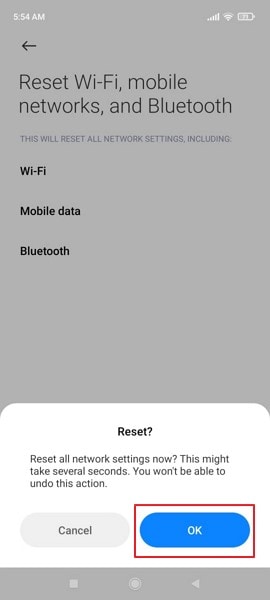
Step 2 Confirm the Reset
Tap the 'Reset Settings' button. You may need to enter your phone's PIN or password for confirmation. A final prompt will appear; tap 'Reset Settings' or 'OK' to proceed.
Fix 8: Optimize Your Router's Frequency Band
Most modern routers are dual-band, broadcasting on both 2.4GHz and 5GHz frequencies. The 5GHz band offers faster speeds but has a shorter range. The 2.4GHz band is slower but covers a wider area and penetrates walls better. If your phone is disconnecting as you move around, it might be struggling to stay connected to the 5GHz band. Try connecting to the 2.4GHz network instead for improved stability and range.

Fix 9: Adjust Battery Saving Settings
Android devices have battery optimization features to extend battery life. Sometimes, these settings can be overly aggressive and may disable WiFi when the screen is off or when the battery is low to conserve power. You can prevent this from happening.
-
Step 1 Navigate to Battery Settings
Go to 'Settings' > 'Battery'. Look for advanced settings or a similar option.

-
Step 2 Enable Persistent Connection
Find a setting like 'Stay connected while asleep' or check app-specific battery optimization settings to ensure WiFi is not being restricted. Turn on this feature to maintain your connection even when the phone is idle.

Fix 10: Update Your Router's Firmware
If all else fails, the issue could be with your router's firmware. Check your router manufacturer's website for the latest firmware version. The update process varies by brand but typically involves downloading a file and uploading it through the router's admin panel. This can fix underlying bugs causing the instability. If you are not comfortable doing this, you may need to contact a professional or your ISP for assistance.
Conclusion
A phone that keeps disconnecting from WiFi can be a significant source of frustration, but it's usually a solvable problem. By systematically working through these ten fixes, from simple restarts to more advanced network resets, you can diagnose and address the root cause of the issue. Whether it's a glitch in your phone, a setting on your router, or an interfering app, these solutions provide a comprehensive guide to restoring a stable and reliable WiFi connection.




FAQ
-
1. Why does my WiFi disconnect only on my phone but works fine on other devices?
If only your phone is disconnecting, the problem is likely specific to your device. This could be due to aggressive battery-saving settings, a recently installed app interfering with the connection, a corrupted network profile, or outdated phone software. Try resetting your phone's network settings or checking for problematic apps. -
2. Can a weak WiFi signal cause frequent disconnections?
Absolutely. When the WiFi signal is weak, the connection becomes unstable. Your phone may disconnect and then reconnect as the signal strength fluctuates. This often happens when you are far from the router or there are physical obstacles like thick walls blocking the signal. Moving closer to the router can help determine if signal strength is the issue. -
3. Does having too many devices on WiFi affect my phone's connection?
Yes, it can. Every router has a limit on the number of devices it can handle simultaneously. When too many devices are connected and actively using the internet, the router can become overloaded, leading to slower speeds and random disconnections for some or all devices, including your phone. -
4. How often should I restart my router to prevent connection issues?
There's no strict rule, but a good practice is to restart your router once every month or two as a form of preventative maintenance. This helps clear its memory and prevent performance degradation over time. If you're experiencing frequent issues, restarting it as a first troubleshooting step is always recommended.
 Add Wondershare Dr.Fone as a preferred source on Google