Resolve common problems and system crashes on both iPhone and Android devices.

 100% Security Verified | No Subscription Required | No Malware

 :
: 
 ChatGPT
 Perplexity
 Gemini
 Claude
 Grok
Grok
The error message "Unfortunately TouchWiz home has stopped" has become a notoriously frequent talking point among Samsung users. TouchWiz is the proprietary front-end user interface developed by Samsung, designed to provide a unique visual and operational experience. However, over the years, Samsung has faced significant criticism from frustrated users due to the inclusion of heavy pre-installed bloatware and stability issues within the TouchWiz Home launcher.
This sluggish performance not only consumes a massive amount of internal storage but frequently leads to sudden crashes and freezing. Consequently, users are abruptly locked out of their home screens, greeted only by the persistent pop-up alerts "Unfortunately TouchWiz home has stopped" or "Unfortunately, TouchWiz has stopped". These constant interruptions suggest underlying flaws in the launcher's programming, causing TouchWiz to become unresponsive. Fortunately, you can easily troubleshoot and resolve these crashes using a few proven workarounds in 2026.
In this article
- Part 1. Common Scenarios When TouchWiz Keeps Stopping
- Part 2. 9 Proven Fixes to "Unfortunately TouchWiz Has Stopped"
- Fix 1. Repair Android System (Highest Success Rate)
- Fix 2. Clear the Cache Data of TouchWiz
- Fix 3. Disable Motion & Gesture Settings
- Fix 4. Change the Window Animation Scale
- Fix 5. Wipe Device Cache Partition
- Fix 6. Enable the Easy Mode Layout
- Fix 7. Boot Your Phone into Safe Mode
- Fix 8. Reset to Factory Settings
- Fix 9. Install a New Custom Launcher
- Conclusion
Part 1. Common Scenarios When TouchWiz Keeps Stopping
Understanding why TouchWiz is not working is the first step toward finding a permanent solution. System environments are complex, but the root cause generally falls into a few predictable scenarios. Check out the following primary triggers:
- After a Recent Android Update: More often than not, TouchWiz keeps stopping right after a major Android OS update. When you upgrade your Samsung firmware, remnants of old data and outdated cache files frequently conflict with the newer TouchWiz architecture, cropping up this messy crash cycle.
- Disabling Built-in Applications: To save space or battery, you might disable some native system apps. Unfortunately, many built-in apps are deeply integrated with the launcher. Disabling them can inadvertently hamper critical background operations, raising the "unfortunately TouchWiz home has stopped" error.
- Installing Unstable Third-Party Apps or Widgets: Modifying your home screen with heavy third-party widgets or parallel launchers can conflict directly with the default TouchWiz home environment. A single glitched or incompatible widget is often enough to force-stop the entire interface.
Part 2. 9 Proven Fixes to "Unfortunately TouchWiz Has Stopped"
If you are continuously interrupted and locked out of basic navigation, here are 9 verified methods to resolve the TouchWiz instability. We recommend starting with the system repair tool, as it guarantees the highest success rate without requiring deep technical knowledge.
Fix 1. Repair Android System (Highest Success Rate)
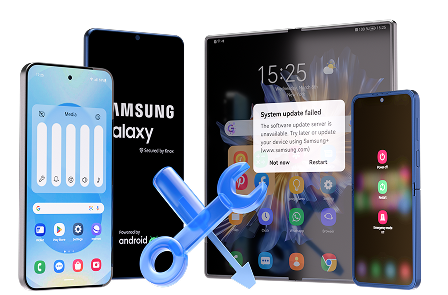
When your TouchWiz keeps stopping aggressively and you cannot proceed past the error screen, the most effective strategy is to repair the core Android system. A corrupted firmware layer is often the invisible culprit. The best utility for this purpose is Dr.Fone - System Repair (Android). This dedicated tool has the unique ability to fix a wide variety of Android OS complications smoothly in just a few minutes, neutralizing the error entirely. You don't need to be a tech professional to use it.
 Fix Android instantly – no skills needed.
- Solve boot loop, black screen, won’t turn on, etc.
- High success rate for all system issues.
- User-friendly interface with easy-to-follow steps.
-
Step 1 Download and Install the Program
The one-click repairing process begins by downloading Dr.Fone from its official website. Follow the standard installation steps. Upon successful installation, launch the tool on your PC to access the main dashboard.
-
Step 2 Connect Your Samsung Device
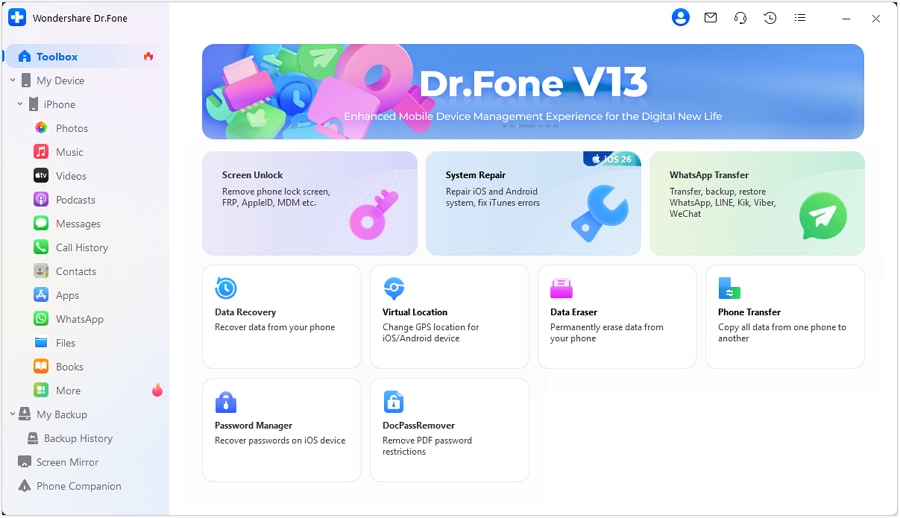
After opening the software, click on the "System Repair" module from the main interface. Using a certified, genuine USB cable, connect your malfunctioning Samsung phone directly to your computer.
-
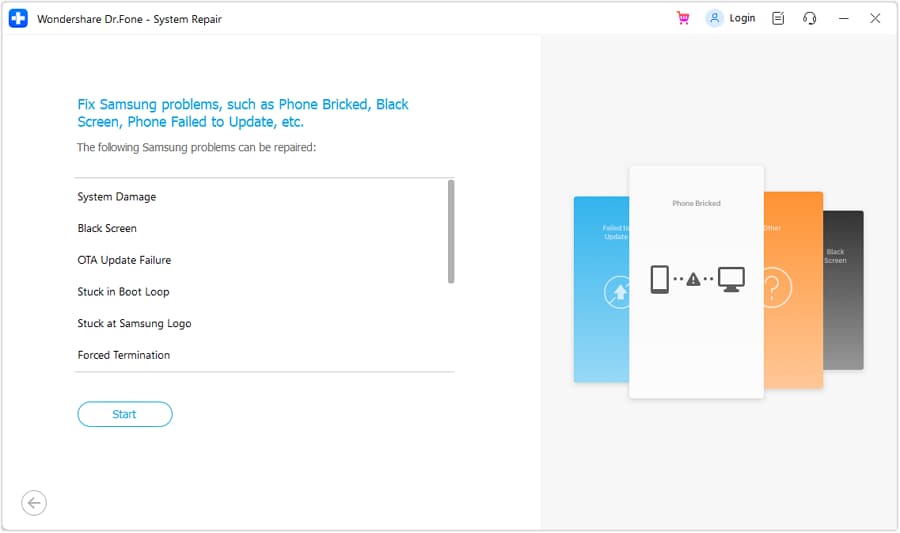
Step 3 Choose the Android Repair Tab
On the next screen, you are supposed to choose the "Android Repair" tab located on the left-hand panel. This specialized mode is designed exclusively for fixing Android system crashes like TouchWiz loops.
-
Step 4 Enter Accurate Device Information
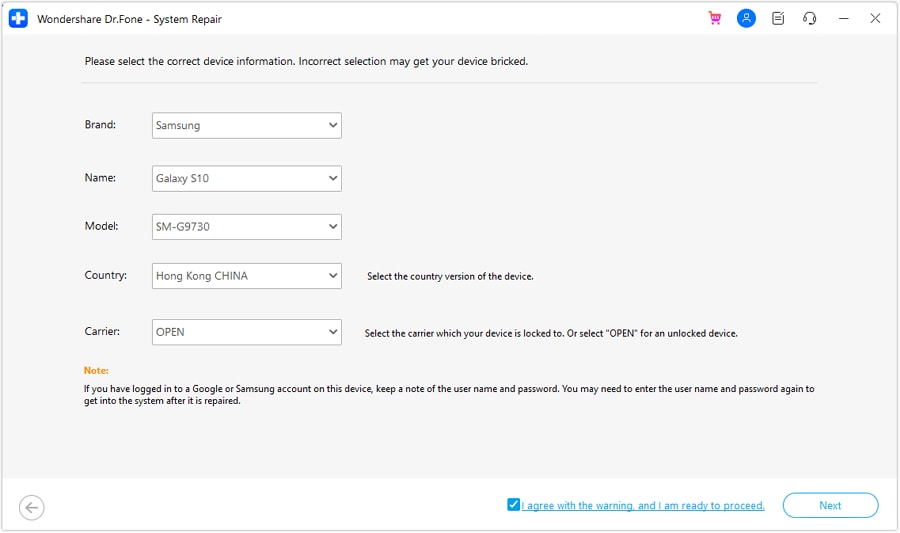
Please keep your mobile details handy. In the following window, you must input the correct brand, model, country name, and carrier details to ensure the tool downloads the exact firmware match for your device.
-
Step 5 Confirm Actions and Backup Data
Flashing system firmware can result in wiping existing data. We strongly recommend backing up your files first.
Tip: You can use Dr.Fone – Phone Backup (Android) to securely backup your Samsung device before proceeding. -
Step 6 Boot Your Device into Download Mode
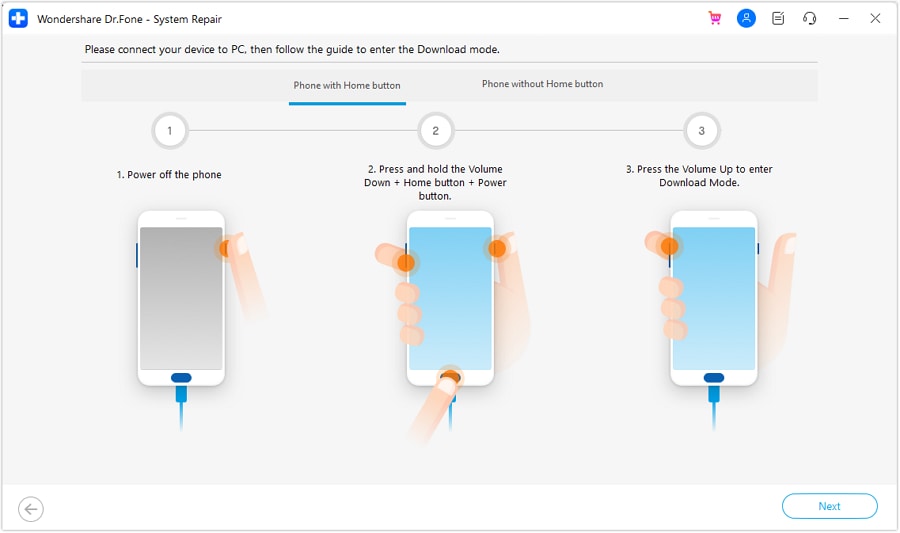
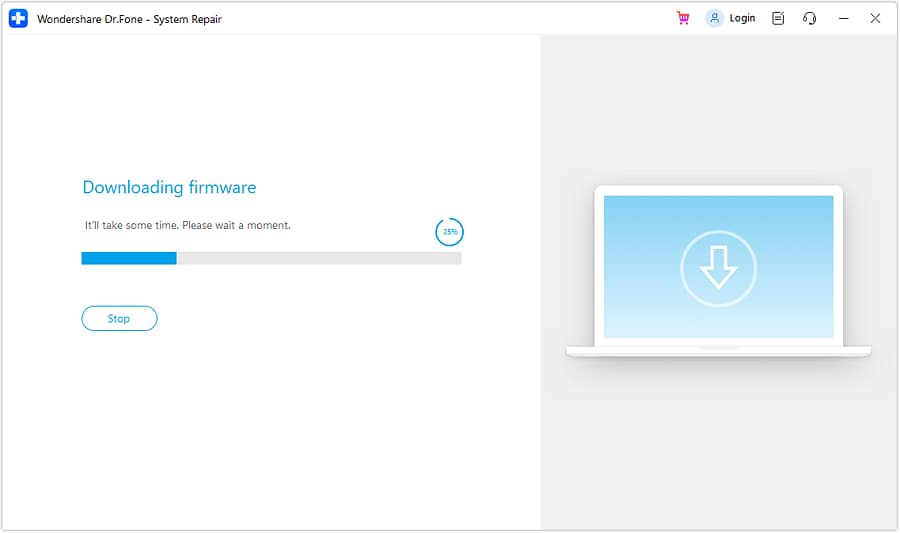
You will receive specific on-screen instructions to put your device into Download (Odin) mode. Follow the button combinations according to whether your phone has a Home button or not, then hit "Next". The program will detect the mode and automatically start downloading the latest secure firmware.
-
Step 7 Finalize the Device Repair
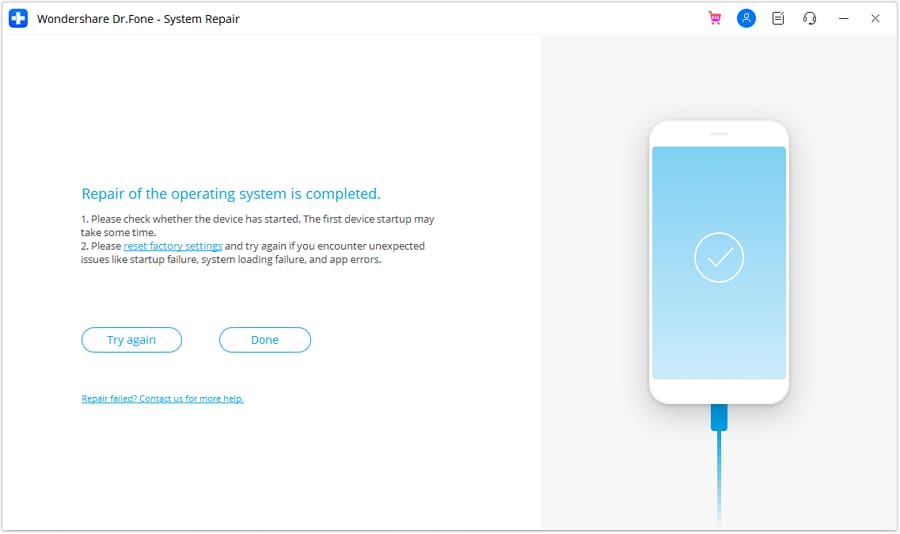
Once the firmware download concludes, Dr.Fone will autonomously begin repairing your device's Android OS. Be patient and ensure the phone remains securely connected until a notification confirms the process is completely finished.
Fix 2. Clear the Cache Data of TouchWiz
While most Android devices automatically delete obsolete cache data upon upgrading to the newest OS, older Samsung models sometimes fail to execute this cleanup. Therefore, TouchWiz starts stopping frequently right after a system update due to corrupted residual files. Clearing the localized cache for the TouchWiz application can immediately restore stability.
-
Step 1 Access the Application Manager
Tap on the "Apps" icon from your Home screen, then launch the "Settings" menu. Scroll down and look for the "Applications" or "Apps" option, and tap on "Application Manager".
-
Step 2 Locate the TouchWiz Process
Once the Application Manager opens, swipe left or right to navigate to the "All" tab so you can view system-level applications. Scroll down to find and select "TouchWiz" (or "TouchWiz Home").
-
Step 3 Clear Cache and Data
Tap the "Clear Cache" button to remove temporary files. Afterwards, tap "Clear Data" followed by "OK" to finalize the reset. Finally, reboot your Samsung device to apply the fresh settings.


Fix 3. Disable Motion & Gesture Settings
In certain scenarios, the intensive hardware sensors tied to Motions and Gestures can overload the system, becoming the primary reason why the TouchWiz home has stopped. Samsung devices running on older Android versions (like Lollipop or earlier) or budget models with modest specifications frequently fall prey to this graphical strain. Disabling these smart features can significantly reduce the launcher's burden.
-
Step 1 Open Motion Settings
Navigate directly to your device's "Settings" app. Scroll down and choose the "Motions and Gestures" option from the main menu.

-
Step 2 Turn Off Smart Features
Inside the menu, systematically disable every single motion and gesture functionality (such as Smart Alert, Mute/Pause, and Palm Swipe to Capture) by toggling their respective switches to the off position.

Fix 4. Change the Animation Scale
The TouchWiz interface incorporates complex screen transition effects that consume a substantially high amount of RAM and memory to maintain smooth graphics. If your device's memory is maxed out, the "unfortunately TouchWiz home has stopped" error will inevitably crop up. Reconfiguring the animation scale in Developer Options reduces the graphical delay and prevents the launcher from timing out.
-
Step 1 Reveal Developer Options
Open "Settings", navigate to "About Device", and tap on "Software info".

-
Step 2 Tap the Build Number
Look for the "Build number" entry. Tap on it rapidly 7 times consecutively until a toast message stating "You are now a developer!" appears on the screen.

-
Step 3 Modify Animation Scales
Return to the main "Settings" menu and open the newly unlocked "Developer Options". Scroll down to the Drawing section and alter the values for Window Animation Scale, Transition Animation Scale, and Animator Duration Scale. Set them to "0.5x" or turn them off completely. Lastly, restart your device.

Fix 5. Clear Cache Partition
If app-level cache clearing didn't figure out the problem, wiping the system-wide cache partition is your next logical step. This method is highly effective for solving minor systemic glitches in Android firmware without deleting your personal files. Wiping the cache partition gives the OS a clean slate to rebuild essential operational data, often resolving the TouchWiz home has stopped dilemma instantly.
-
Step 1 Enter Recovery Mode
Turn off your Samsung device completely. Press and hold the "Volume Up", "Home" (or Bixby), and "Power" buttons simultaneously. Keep holding them until the Android mascot or the Recovery Mode menu appears on the screen.
-
Step 2 Execute the Wipe
Using the Volume down button, scroll through the text-based menu and highlight "Wipe Cache Partition". Press the Power button to confirm the selection. Once the process completes, highlight "Reboot system now" and press Power again to restart your phone safely.

Fix 6. Enable the Easy Mode Layout
For many older generation Galaxy users, enabling "Easy Mode" has proven to be an excellent workaround. This feature is designed to make the user experience more efficient by stripping away complex home screen dynamics, massive widget dependencies, and confusing multi-layered grids. By reducing the overall UI strain, you can often bypass the specific software trigger causing the TouchWiz not working error.
-
Step 1 Locate Personalization Settings
Open the "Settings" application and scroll down to locate the "Personalization" or "Display" section, depending on your Android version.
-
Step 2 Activate Easy Mode
Tap on "Easy Mode" and toggle the selection to apply it. The system will refresh the launcher into a simplified, larger-icon interface.

Fix 7. Boot Your Phone into Safe Mode
As previously mentioned, rogue third-party applications, sketchy icon packs, or heavily coded widgets can aggressively conflict with TouchWiz. Booting your device into Safe Mode temporarily disables all downloaded third-party apps, allowing only factory-installed software to run. This acts as a diagnostic test to verify if an external app is making your TouchWiz keep stopping.
-
Step 1 Initiate the Reboot
Switch off your device completely. Press the "Power" button to turn it back on, holding it until the Samsung logo animates on the display.
-
Step 2 Hold Volume Down
The moment the logo appears, release the Power button and immediately press and hold the "Volume Down" button. Keep holding it firmly until the lock screen appears.
-
Step 3 Verify Safe Mode
You will now witness a translucent "Safe mode" watermark at the bottom-left corner of the screen. If TouchWiz works perfectly here, you must identify and uninstall the problematic third-party apps one by one.

Fix 8. Reset to Factory Settings
If all the previous methods went futile and you are still plagued by crashes, performing a full Factory Reset is the next logical step. A factory wipe essentially reformats your device back to its original out-of-the-box state, eradicating any deep-rooted software corruption or malware that hijacked the TouchWiz process. Please ensure you have completely backed up your data before proceeding, as this deletes all personal files, accounts, and apps.
-
Step 1 Access the Reset Menu
Run the "Settings" app on your device, scroll down to the bottom, and select "General Management" or "Backup & Reset".
-
Step 2 Verify Data Backup
Notice if the "Back up my data" toggle is enabled. If not, turn it on and allow your Samsung or Google account to sync your crucial files to the cloud.
-
Step 3 Execute the Reset
Scroll down to the "Factory Data Reset" option, review the warning, and confirm the action by clicking "Reset Phone" (or "Delete All"). Your device will wipe the storage and automatically reboot after a few minutes.

Fix 9. Install a New Custom Launcher to Replace TouchWiz
If you find that your TouchWiz is not working even after a system wipe, or you simply despise the bloated nature of Samsung's default interface, your ultimate bypass is replacing it entirely. The Google Play Store features dozens of highly optimized, lightweight third-party launchers (such as Nova Launcher, Action Launcher, or Microsoft Launcher) that seamlessly override TouchWiz, providing a significantly faster and crash-free home screen experience.
- Eliminates TouchWiz crash loops permanently.
- Requires far less RAM and battery power.
- Offers extreme grid and icon customization.
- Much smoother scrolling and gesture support.
- May require a learning curve to configure settings.
- Premium customization features often cost money.
- Some original Samsung widgets may become incompatible.
- Updates depend on the independent app developer.
Conclusion
Being locked out of your Samsung smartphone due to the "Unfortunately TouchWiz home has stopped" error is intensely frustrating, but it doesn't mean your device is permanently broken. By systematically applying the 9 fixes detailed above—ranging from simple cache wipes to tweaking developer animation settings—you can quickly bypass the crashes. For users looking to save time and guarantee a fix without losing vital data, running a deep diagnostic with a professional utility like Dr.Fone System Repair remains the safest and most efficient path to fully restore your TouchWiz experience.
FAQ
-
1. Will clearing the TouchWiz data delete my photos or installed applications?
No. Clearing the TouchWiz app data will only reset your Home screen layout, folder arrangements, and widgets back to their factory defaults. It does not touch your personal media, text messages, or third-party applications installed on the device. -
2. Why does TouchWiz continuously stop working right after a software update?
Major Android OS upgrades often leave behind residual system cache from the previous version. When the updated TouchWiz environment attempts to read this outdated, conflicting cache data, it results in a forceful crash. Wiping the cache partition usually resolves this immediately. -
3. Can I permanently uninstall TouchWiz from my Samsung Galaxy phone?
Since TouchWiz is deeply integrated into the Android framework by Samsung, it cannot be permanently uninstalled or deleted without rooting the device. However, you can effectively "replace" it by installing a third-party launcher from the Google Play Store and setting it as your default home application. -
4. Does factory resetting my phone guarantee fixing the TouchWiz error?
While a factory reset has an extremely high success rate because it eradicates deep OS glitches and corrupted files, it is not an absolute guarantee if the issue stems from hardware failure or a fundamentally broken firmware flash. In those rare cases, using a PC repair tool to re-flash the stock firmware is required.
 Add Wondershare Dr.Fone as a preferred source on Google