
Fix Unfortunately Settings Has Stopped on Android Quickly

Oct 30, 2026 • Filed to: Phone Repair Solutions • Proven solutions
 TL;DR:
- Settings will not open: restart without opening Settings, then test in Safe Mode. On a frozen Galaxy, hold Side + Volume Down for more than 7 seconds until it restarts.
- Settings opens long enough to use: clear only its cache, check available storage, and install an available system update. Clearing storage/data is a different, more disruptive action.
- The crash disappears in Safe Mode: a downloaded app is likely involved. Restart normally, remove recently installed apps one at a time, and test again.
- Nothing helps: reserve factory reset and compatible firmware repair for last. A factory reset and the Samsung repair workflow erase device data; verify a backup and account access first.
Ask AI for a summary
 ChatGPT
 Perplexity
 Gemini
 Claude
 Grok
If your Android phone shows the "Unfortunately, Settings has stopped" error, it means the Settings app is crashing before it can load or complete a task. This can prevent you from updating Android, connecting to Wi-Fi, managing apps, changing display settings, or checking device information.
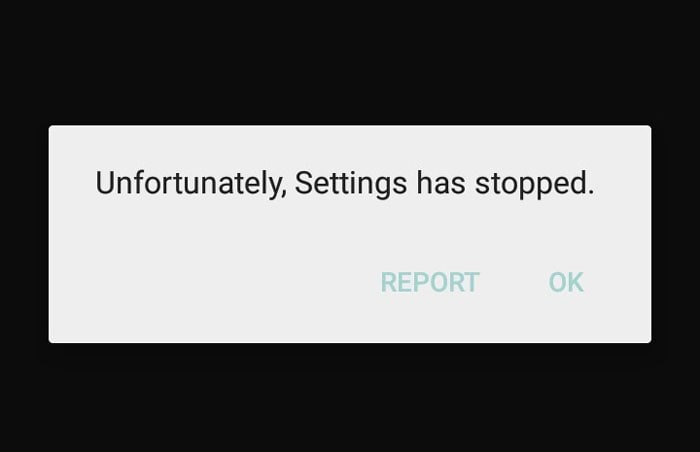
Settings keeps stopping can have several causes, including a downloaded-app conflict, low device storage, or a software problem. The message alone does not identify which one. Start with a restart, then choose a route based on whether Settings opens at all; do not jump straight to a reset or firmware repair.
- Part 1: Clear the cache of Settings and Google Play Service
- Part 2: Close stuck apps and restart instead of repeatedly clearing RAM
- Part 3: Uninstall Google Play Store updates only for a matching Store problem
- Part 4: Check custom ROM compatibility and stock firmware options
- Part 5: Wipe cache partition to restore Settings
- Part 6: Factory reset your Android
- Part 7: Check and update Android OS
The seven original methods below are grouped by topic, not by risk order. Follow this route instead, and test Settings after each change:
| What you can do now | Try next | When to move on |
|---|---|---|
| Settings will not open or the phone is frozen | Restart, then Safe Mode | Retest Settings after the restart and in Safe Mode. |
| Settings can open | Clear Settings cache; check free storage; update Android | Stop when Settings works normally; do not do every method unnecessarily. |
| Play Store also fails after an update | Conditional Play Store troubleshooting | Do not roll back unrelated Google components just because Settings crashed. |
| Basic checks fail on a Samsung with the option available | Wipe cache partition, not data | If the menu lacks that option, skip it. |
| Persistent failure or a modified system | Reset choices or firmware repair | Back up first; stop if the data-loss or device-compatibility conditions are unacceptable. |
Part 1: Clear the cache of Settings and Google Play Service
Clearing the Settings cache removes temporary files and does not delete your photos or messages. It is a reasonable low-impact test, not proof that corrupted cache caused the crash. Clear storage or Clear data is different: it deletes that app's saved data and can reset its preferences.
Use these steps only if you can reach App info. If Settings closes before you can get there, skip to the no-Settings restart and Safe Mode route. On devices that offer it, touching and holding the Settings icon and selecting App info is another way to reach the same system screen; it is not guaranteed to bypass the crash.
- Step 1: Open Settings → Apps (or Apps & notifications / Application manager), then display all apps if needed.
- Step 2: Select Settings. If system apps are hidden, use the app list's system-app filter where available.
- Step 3: Tap Storage or Storage & cache → Clear cache. Reopen Settings and test the action that failed.
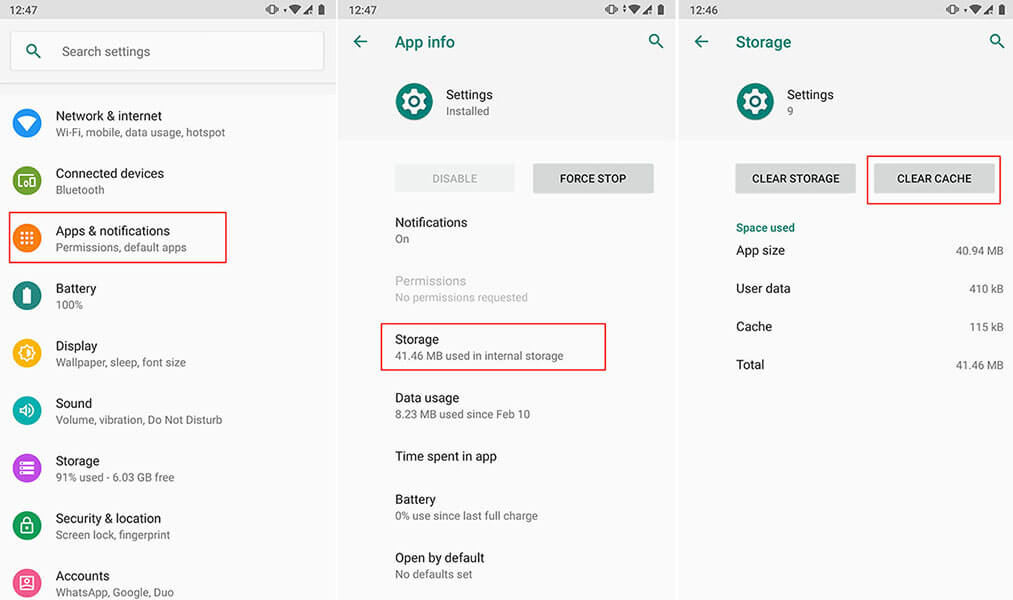
Older Settings App info example. Labels vary by phone; select Clear cache, not Clear storage/data. Force stop is not a required switch that reveals Clear cache.
Google Play services is a separate component. Only try its cache if Google services are also malfunctioning: Settings → Apps → Google Play services → Storage & cache → Clear cache, where available. Do not treat clearing its storage/data as the same safe step: it can remove saved information such as payment or transit cards and require account/payment reauthentication. Google advises leaving that data-clearing step until other troubleshooting options have been tried.
Part 2: Close stuck apps and restart instead of repeatedly clearing RAM
Restarting is more useful as a first test than repeatedly trying to empty RAM. Android normally manages app memory itself; low storage is a separate issue. Google notes that phones can have problems when less than 10% of storage is free.
If one app is stuck, close it from Recent apps using the steps below, then try Settings again. Closing it is a troubleshooting action, not a promise of a particular RAM gain or a lasting fix.
- Step 1: With gesture navigation, swipe up from the bottom and hold briefly to open Recent apps; with button navigation, tap the Recent apps button. Long-pressing Home is not a universal modern shortcut.
- Step 2: Swipe the unresponsive app away. Some Samsung devices also offer Close all. Reopen Settings and check whether it stays usable.
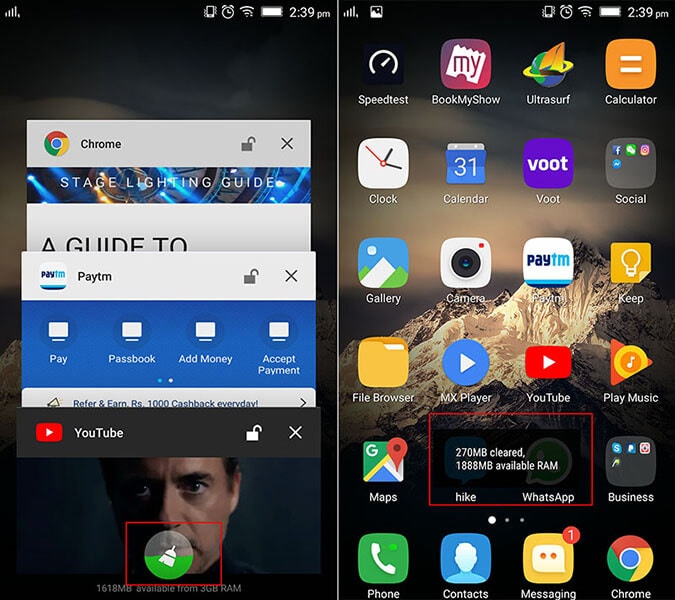
Older Recent apps example. Modern gesture and button layouts differ; no RAM-cleared number is required.
If storage is nearly full, back up important photos/videos or copy accessible files to a computer before deleting anything. A file-manager app can help remove confirmed, unneeded downloads without entering Settings. If Settings opens, check Settings → Storage.
If Settings will not open: restart without the app
If you are asking why is my Settings not opening on Android, first check whether a restart restores access rather than assuming a specific cause. If Settings isn't responding but the rest of the phone works, save any open work and use the power menu.
- Samsung Galaxy: press Side + Volume Down to show the power menu, then tap Restart. If the phone is frozen or the menu does not appear, hold Side + Volume Down for more than 7 seconds until it restarts. This is a restart, not a factory reset.
- Google Pixel: on Pixel 6 and later, hold Power + Volume Up for a few seconds, then tap Restart. If frozen, hold Power for up to 60 seconds and release when the Google G logo appears. Other brands can use different controls.
After the phone starts normally, open Settings and repeat the action that failed. If it still closes, test Safe Mode next.
Use Safe Mode to test downloaded-app interference
Safe Mode temporarily disables downloaded apps. It can help separate a downloaded-app conflict from a problem that persists without those apps; it does not repair every system fault.
| Device | From the power menu | If Settings is inaccessible: powered-off route |
|---|---|---|
| Samsung Galaxy | Open the power menu with Side + Volume Down. Touch and hold Power off, then tap Safe Mode. | Turn the phone off. Turn it on; when the Samsung logo appears, hold Volume Down until startup finishes and Safe Mode appears. |
| Google Pixel | On Pixel 6 or later use Power + Volume Up; on Pixel 5a or earlier hold Power. Touch and hold Power off or Restart, then confirm OK. | With the phone off, press Power. When the startup animation begins, hold Volume Down until the animation ends; look for Safe mode. |
- Once in Safe Mode, open Settings and repeat the same action that caused the crash.
- If it works: restart normally to leave Safe Mode. Uninstall recently downloaded apps one at a time, restarting and testing Settings after each removal. Do not remove every app at once; you need to identify the change that matters.
- If it still crashes: a downloaded app is less likely to explain the symptom. Restart to leave Safe Mode, then try the cache, storage and update checks you can access. Do not treat this result as proof of hardware damage or a specific corrupt file.
Safe Mode can affect widgets or customizations; Pixel may enable airplane mode, which you can turn off if a network test is needed.
Samsung Galaxy A14: if Settings keeps stopping or will not open, use the Samsung restart/Safe Mode route above first. If access returns, clear Settings cache and check Software update. There is no need to install an unofficial Settings APK or assume the A14 needs a different universal fix. If Settings still crashes in Safe Mode, preserve your data before considering the reset/repair choices below.
Part 3: Uninstall Google Play Store updates only for a matching Store problem
A crash appearing after an update does not establish that a Google component caused it. Do not uninstall Google Play services updates or roll back unrelated system apps as a blanket Settings fix. First try a restart, Safe Mode and an available Android update.
If the Google Play Store itself also will not open or update apps, Google provides a Store-only rollback and reinstall sequence. It is troubleshooting for the Store, not a verified cure for every Settings crash. The Store and Google Play services are different apps.
- Step 1: On the Home or app screen, touch and hold Google Play Store, then tap App info. If App info also crashes, stop this route.
- Step 2: Tap More at the top right, choose Uninstall updates, read the prompt and tap OK. Restart and test both the Store and Settings.
- Step 3: Reinstall the Store update: open Play Store → profile picture → Settings → About → Update Play Store. This is the Store's own Settings menu, not an Android OS rollback.
For a crash that started after an Android OS update, use the system-update checks and contact the phone manufacturer if the fault persists. Do not guess firmware versions or treat the timing alone as proof that a downgrade is needed.
Part 4: Check custom ROM compatibility and stock firmware options
If Settings crashes after installing a custom ROM, rooting, or flashing firmware, record the exact model and build and check whether the ROM supports that device. The timing makes compatibility worth investigating; it does not establish a universal cause for every modified phone.
A ROM is not an ordinary app you can uninstall. Returning to stock firmware is a model-specific system operation that can erase data and has risks if the package or procedure is wrong. First review the ROM developer's supported update path. If you cannot confirm a matching, supported route, use manufacturer or qualified repair support rather than guessing a flash procedure.
For a supported software or firmware fault, Dr.Fone - System Repair (Android) provides guided device identification and firmware preparation on Windows, reducing the need to locate and flash a package manually. It is not a hardware repair or a guarantee that every custom ROM can be reversed.

Dr.Fone - System Repair (Android)
Guided firmware repair for supported Samsung, Xiaomi, Redmi and POCO devices
- A guided workflow identifies the device and prepares compatible firmware.
- Android System Repair is available on Windows only, not macOS.
- Samsung repair erases device data. Back up and verify account access before starting.
- The separate supported Xiaomi/Redmi/POCO workflow is designed to preserve data without root; do not apply the Samsung steps to it.
- Download/try the tool to check its workflow and compatibility; a valid license is required for full automated Android system repair.
For device requirements and the separate Xiaomi process, use the feature-specific compatibility list and Xiaomi/Redmi/POCO repair guide. A brand name alone is not confirmation that your exact device/build can be repaired.
How to fix crashing Settings using Dr.Fone - System Repair (Android)
 safe & secure
Samsung workflow: install Dr.Fone on a Windows PC, connect the supported phone using a stable USB cable, and verify a usable backup first. The erase confirmation is part of this workflow. The current Samsung repair guide provides the detailed screen sequence.
-
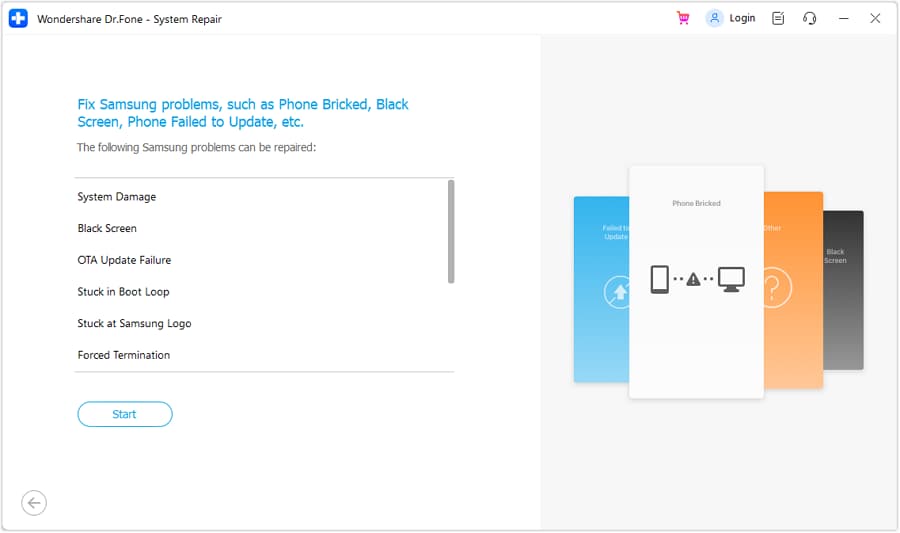
Open and select Samsung repair. In Dr.Fone, open Toolbox → System Repair → Android → Android Repair → Repair Now. Choose Samsung → Start.
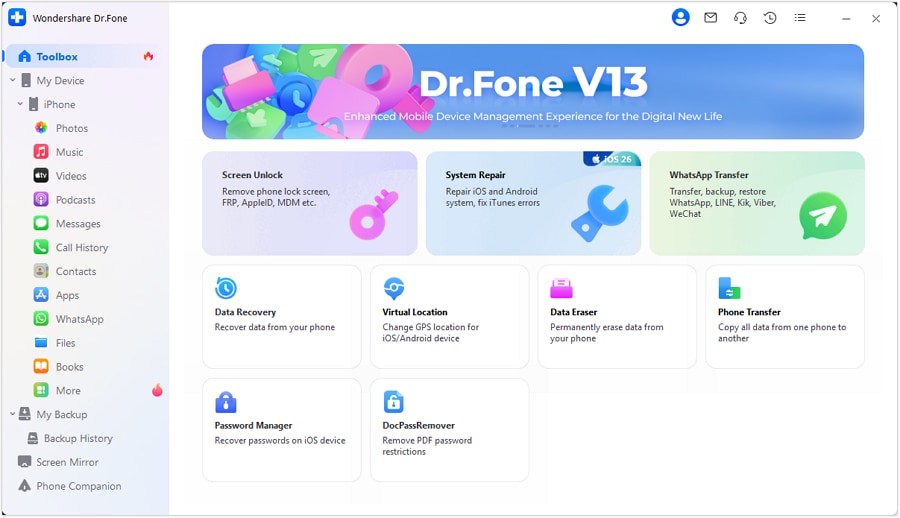
On the Samsung repair screen, read the supported issue list and select Start.
-
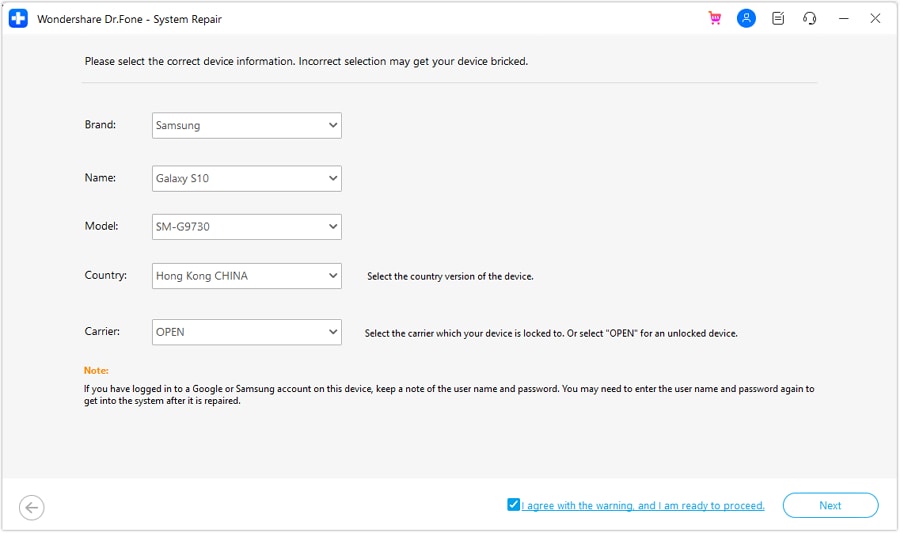
Identify the device accurately. Select the device name/model, country and carrier. Use OPEN if the device is carrier-unlocked, as instructed by the Guide. Check all fields, acknowledge the warning, and choose Next; do not select a similar model to force compatibility.
-
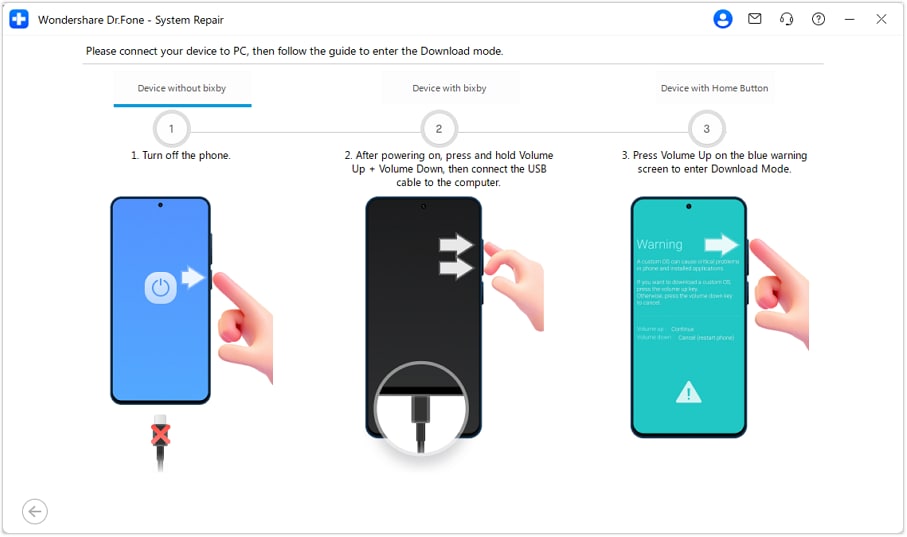
Prepare Download Mode and firmware. Follow the tool's instructions for the exact button layout; Download Mode is not Android Recovery. The example below is the Guide's no-Home/no-Bixby branch; do not use it as a universal combination. Once the device is ready, let the tool download and verify the firmware before continuing.
-
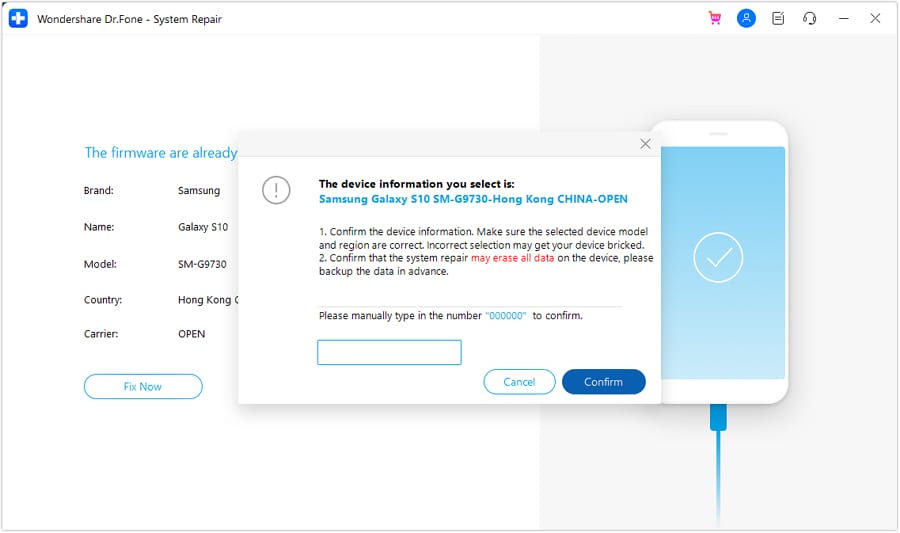
Confirm erasure and complete repair. Review the verified device/firmware, select Fix Now, then enter 000000 and choose Confirm only when ready for the Samsung data erasure. Keep the USB cable connected and do not operate the phone during repair.
Wait for the result. If it reports success, select Done, let the phone restart and test Settings. If it fails, follow the tool's retry/support guidance rather than changing the model fields at random.
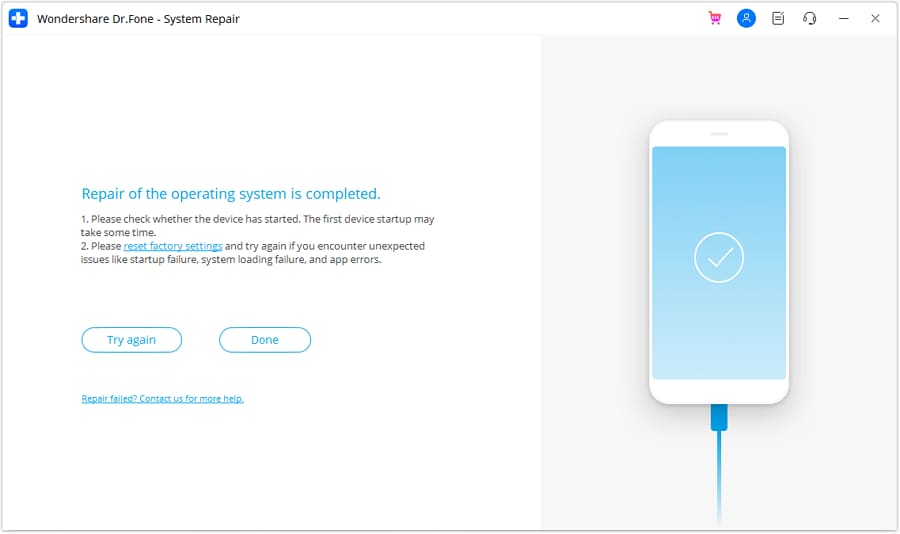
safe & secureConsider this route only after the lower-risk tests, when the device and firmware are supported and the data-loss conditions are acceptable. Persistent crashes after a clean setup, physical damage, or failed device detection may need manufacturer/service diagnosis instead of repeated resets.
Part 5: Wipe cache partition to restore Settings
Use this method only on a device whose Recovery menu actually offers Wipe cache partition. It is not a universal Android feature: A/B update devices do not require a separate cache partition. If the option is absent, skip it rather than selecting a different wipe action.
On supported Samsung devices, wiping the cache partition clears temporary system files rather than personal photos/messages. Wipe data/factory reset is a different, destructive command. Recovery Mode here is also different from the firmware Download Mode used in Part 4.
- Step 1: Turn off the supported phone and use the model-appropriate Recovery entry. Samsung's examples include Galaxy S6/S7: Volume Up + Home + Power (release Power on vibration, then the remaining buttons at Recovery); S8/S9/S10: Volume Up + Bixby + Power (release at the Samsung logo); and Note10/Fold/Z Flip: Volume Up + Side (release at the Samsung logo). These examples do not establish the entry for every newer Galaxy/A14 or other brand. If you cannot reach Recovery using the instructions for your model, stop this method.
- Step 2: In Recovery, use the Volume buttons to highlight Wipe cache partition. If it is not listed, choose the reboot option and return to the other checks.
- Step 3: Press Power to select it, highlight Yes if asked, then press Power to confirm. Do not select Wipe data/factory reset.
- Step 4: When complete, select Reboot system now (the reboot option) and press Power. After normal startup, test Settings again.
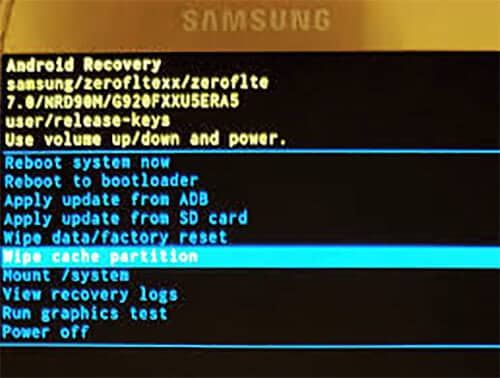
Older Samsung Recovery menu showing Wipe cache partition. Menu availability and entry controls vary by model.
The steps follow Samsung's cache instructions; Android's A/B update documentation explains why a cache partition is not required on that architecture. Missing this menu option is not a reason to perform a factory reset.
Part 6: Factory reset your Android
A factory reset erases the phone's apps and locally stored data. Treat it as a last resort after the restart, Safe Mode, cache, storage and update checks, not as a guaranteed repair. It cannot resolve physical damage.
Before an erasing reset, verify that your Android backup is accessible and contains the files you need. Know the Google Account previously on the phone and its password, plus the screen-lock PIN/pattern/password. Factory Reset Protection can require the linked Google Account after a reset done outside Settings. If you recently changed the Google password, Google advises waiting 24 hours. Charge to at least 70% and have a network available for setup.
- Step 1: If Settings is usable on a Samsung Galaxy, try the less disruptive choice first: Settings → General management → Reset → Reset all settings → Reset settings → Reset. Samsung says this does not erase apps or personal data; it is not a factory data reset.
- Step 2: If that does not resolve the fault and you have accepted erasure, Samsung's factory route is Settings → General management → Reset → Factory data reset → Reset → Delete all. Read the listed data to be removed and complete requested account/lock verification.
- Step 3: On Pixel, the factory route is Settings → System → Reset options → Erase all data (factory reset) → Erase all data; enter the PIN if asked and confirm. After the reset, complete setup and test Settings before reinstalling downloaded apps.
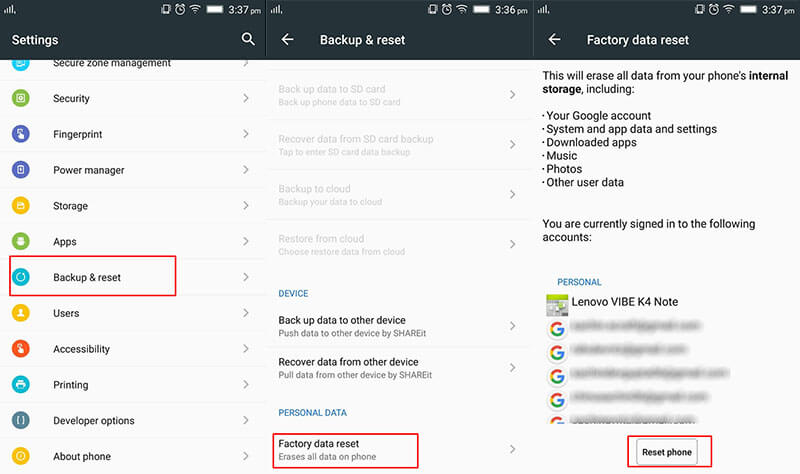
Older Android Backup & reset screen; current Samsung/Pixel paths are given above.
If Settings will not open at all: those in-app reset paths are unavailable. Do not repeat them or guess a universal button wipe. On Pixel 4a and later, including Fold, use a computer and USB cable with Google's Update & Software Repair tool and follow its device prompts: it may offer a manual software update without a factory reset, while its reset option still erases data. If the model or screen controls do not match, use manufacturer assistance for the correct recovery/reset procedure and do not confirm erasure until the backup/account conditions above are met.
Part 7: Check and update Android OS
Check for an available Android update before considering erasing resets or firmware reinstallations. A maintenance update may address a software fault; being up to date does not prove that the remaining problem is firmware corruption.
If Settings keeps stopping on Samsung or another Android phone, use the correct brand path below only when Settings stays open. Connect to Wi-Fi, charge to at least 75%, and follow the device prompts. Older phones may no longer receive every new Android version.
- Step 1: On Samsung One UI 8.0 or earlier, open Settings → Software update → Download and install. On newer layouts, follow the Software update screen for the offered update. On Pixel/standard Android, open Settings → System → Software updates and select the system update option.
- Step 2: Install an offered update using the on-screen instructions. An update notification can also lead to this flow, but it may still open Settings and therefore is not a reliable bypass for a crashing app.
- Step 3: Restart when prompted and retest Settings. If it still cannot open, the Pixel 4a-and-later computer/USB update option is a supported alternative for eligible Pixels; other brands need their own supported update/service route.
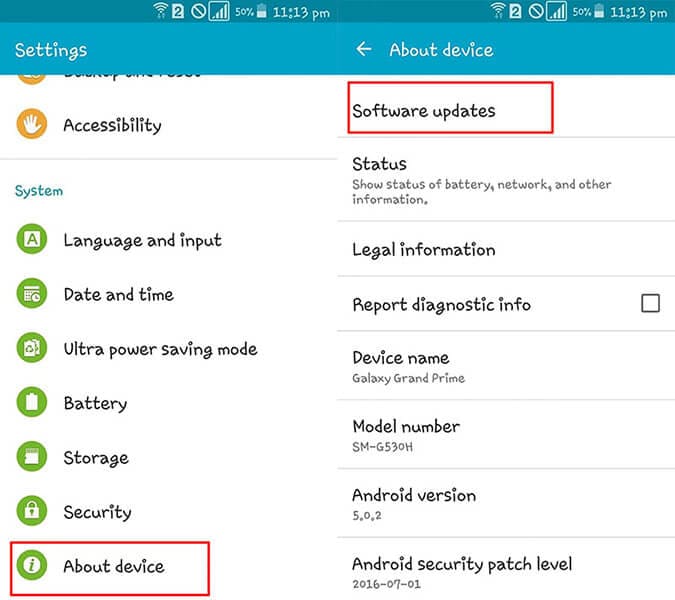
Older Samsung About device → Software updates example; current labels vary. See Google's Android update instructions and the Samsung device guidance linked above.
For ongoing phone maintenance, Dr.Fone offers different mobile apps for Android and iPhone. Choose by the platform and task rather than treating a mobile app as a universal firmware fix.
Dr.Fone App (iOS) & Dr.Fone App (Android)
Android data recovery and phone management; iPhone media and contact cleanup
- Android: Dr.Fone - Photo & Data Recovery offers file-recovery and phone-management features.
- iPhone: Dr.Fone - Clean Up iPhone focuses on duplicate media, screenshots and contact cleanup.
- Some repair and unlock workflows require pairing with desktop software; availability varies by task and platform.
- For Settings crashes, use the troubleshooting and compatible Android repair path above, not an assumption that installing a mobile app repairs Android firmware.
- See the Android app features or iPhone app features before choosing.



If Settings still will not open, preserve your backup and note exactly when it fails: on launch, in one submenu, or only with downloaded apps enabled. Those observations help decide the next supported step; they are more useful than repeatedly clearing everything or assuming the phone needs replacement.
Conclusion
If your phone shows "Unfortunately, Settings has stopped", restart first. If Settings will not open, test Safe Mode without entering the app. If it does open, clear only its cache, check storage and install an available system update. Use Google Play Store rollback only for a matching Store problem and cache-partition wiping only where that option exists.
For a supported software/firmware fault that remains after the lower-risk checks, Dr.Fone - System Repair (Android) offers a guided Windows workflow. Confirm device compatibility and the relevant data-loss conditions before starting; use manufacturer/service help for hardware damage or an unsupported device.
Keep factory reset or firmware reinstallation for last, after verifying the backup and account credentials. Change one thing at a time and test Settings again; this helps identify what actually restores access without needlessly erasing the phone.
safe & secureFAQs
 Q1. Why does my Settings app keep stopping on Android?Q2. How do I fix Settings not opening on a Samsung phone?Q3. Can a software update cause the "Unfortunately, Settings has stopped" error?Q4. What should I do if Settings keeps stopping on Samsung A14?


Android Stopped
- Apps Keep Stopping
- 1. Make Instagram Work Properly
- 2. Fix App Has Stopped Error
- 3. Fixe Gmail Not Working on Android
- 4. Fixe Spotify Keeps Crashing
- 5. Fix Chrome Crashes on Android
- 6. Fix TouchWiz has stopped
- 7. Fix WhatsApp has stopped
- 8. Solve YouTube App Crashing
- 9. Fix Apps Keep Crashing on Android
- 10.Fix Android App Not Installed
- 11.Fix WhatsApp issues on Android
- 12.Fix App Won't Open on Android
- Google Services Crash
- 1. Uninstall Google Play Service
- 2. Fix Google Maps Not Working
- 3. Fix Google Services Has Stopped
- 4. Fix Google Services Won't Update
- 5. Fix Google Play Store Not Working
- 6. Fix Play Store Stuck on Downloading
- Android Services Fail
- 1. Fix Phone Keep Disconnecting
- 2. Fix Android SystemUI Has Stopped
- 3. Fix Process Acore Has Stopped
- 4. Fix Process Media Has Stopped
- 5. the .com.android.phone Has Stopped
- 6. Fix Android Not Receiving Texts
- 7. Fix Bluetooth Not Working
- 8. Fix Home Button Not Working
- 9. Fix SIM not provisioned MM#2 Error
- 10.Fix Phone Has Stopped on Samsung
- 11.Fix Settings Has Stopped on Android
- 12.Fix Video Not Playing on Android
- 13.Fix Wi-Fi Not Working on Android
- 14.Fix Contacts Has Stopped Error
- 15.Fix Android System Crash Issue
- 16.Fix Process System Isn't Responding
- 17.Fix GPS Signal Not Found
- ● Manage/transfer/recover data
- ● Unlock screen/activate/FRP lock
- ● Fix most iOS and Android issues
- Free Download Free Download Free Download



Alice MJ
staff Editor
Generally rated4.5(105participated)