Resolve common problems and system crashes on both iPhone and Android devices.

 100% Security Verified | No Subscription Required | No Malware

 :
: 
 ChatGPT
 Perplexity
 Gemini
 Claude
 Grok
Grok
Why won't my app open after a recent Android update? I tap on the icon, it freezes on a blank screen, and eventually crashes. Are there quick ways to resolve this without losing all my phone data?
Android Community User

It is not a very rare phenomenon where an app won't open, crashes abruptly, or faces severe trouble while launching on an Android device. Many smartphone users encounter the frustrating scenario where they try to launch an app, but it keeps loading infinitely and fails to run smoothly under normal circumstances.
In such a scenario, it is completely obvious for users to actively look for possible solutions. Dealing with random errors preventing your favorite apps from opening disrupts daily routines, making rapid troubleshooting essential.
Many people are also deeply interested in knowing the underlying causes behind why an app won't open or why multiple applications refuse to launch simultaneously. This article will thoroughly answer your query about "why won't my app open on an Android phone" by detailing the most probable causes and delivering complete, step-by-step solutions.
In this article
Part 1: Possible Reasons Why Apps Won't Open
If you are an Android phone user facing problems while trying to launch an application, you will naturally ask yourself, "Why won't my app open?". To provide clarity and explain why an app won't open on your phone, we have identified the most probable and common triggers behind this malfunction.
It is appropriate to acknowledge that our generation relies heavily on smartphones for nearly all personal and professional tasks. Important information such as high-resolution photos, 4K videos, audio files, documents, and emails are continuously stored on our phones. This accumulation leads to a major storage space deficit. A shortage of storage space is undoubtedly one of the main reasons why an app won't open, or why all apps won't open on your Android device. Background processes require temporary storage to run seamlessly, and without it, applications simply crash upon execution.
To check how much of your device's storage is occupied by apps, you can easily navigate to "Settings" and access the "Application Manager" or "Storage" menu.

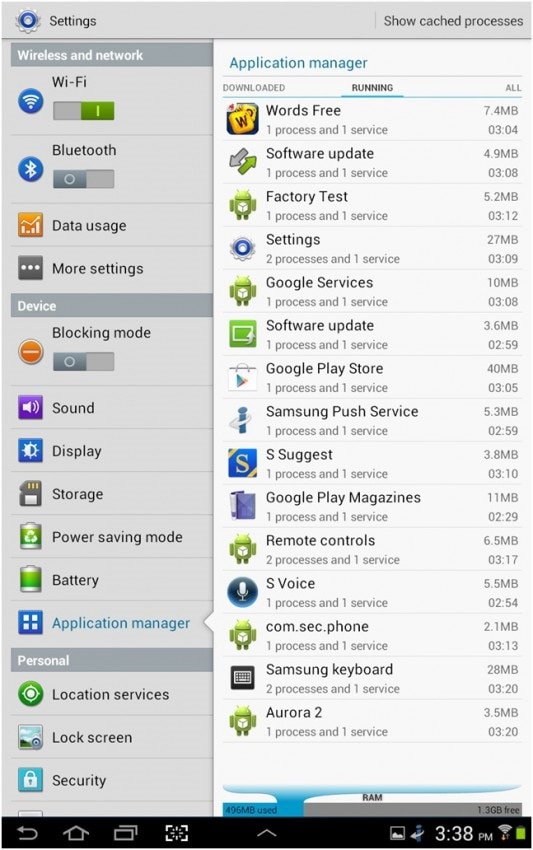
Another highly possible reason for apps to crash unexpectedly is a sudden data crash or corruption. This often occurs due to an unstable internet connection during an app update, or various background software interruptions that interfere with the application's core files.
The causes for this problem are varied, and no single reason can be established as the exclusive culprit for why apps won't open on your Android device. While speculating the causes helps in prevention, it is far more important to focus on how to fix the device if a particular app won't open or if the entire app ecosystem becomes unresponsive.
Part 2: Quickest Solution to Fix Apps Won't Open on Android
Now that you have a fundamental understanding of "why won't your app open?", you might realize that manual troubleshooting can sometimes be tedious. If you are not satisfied with traditional, time-consuming solutions and need a guaranteed fix, specialized system repair software is your best option.
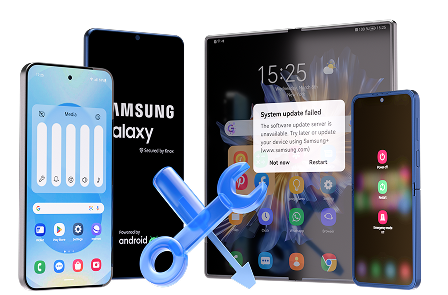
In such cases, Dr.Fone - System Repair (Android) proves to be a true lifesaver. It expertly resolves failed Android system update issues, persistent crashing apps, and the dreaded black screen of death. It can also rescue an unresponsive, bricked, or boot-loop stuck Android device with just a single click, completely eliminating the "apps won't open" glitch at the firmware level.
 Fix Android instantly – no skills needed.
- Solve boot loop, black screen, won’t turn on, etc.
- High success rate for all system issues.
- User-friendly interface with easy-to-follow steps.
Step-by-Step Guide: Fixing Apps That Won't Open Using Dr.Fone

Phase 1: Preparation and Device Connection
Step 1 Launch the Tool and Connect
After successfully installing Dr.Fone on your computer, open the application and click on the 'System Repair' tab from the main interface. Then, connect your faulty Android device using a stable USB cable.
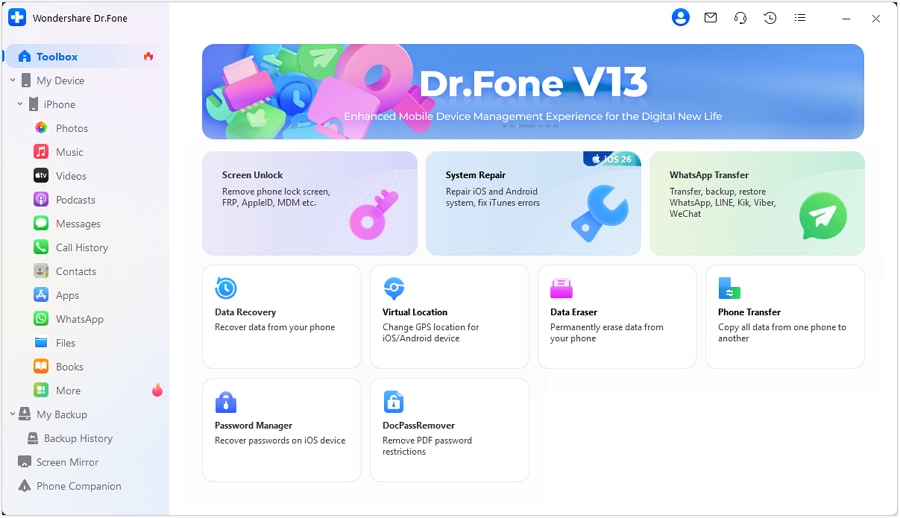
Step 2 Select Android Repair
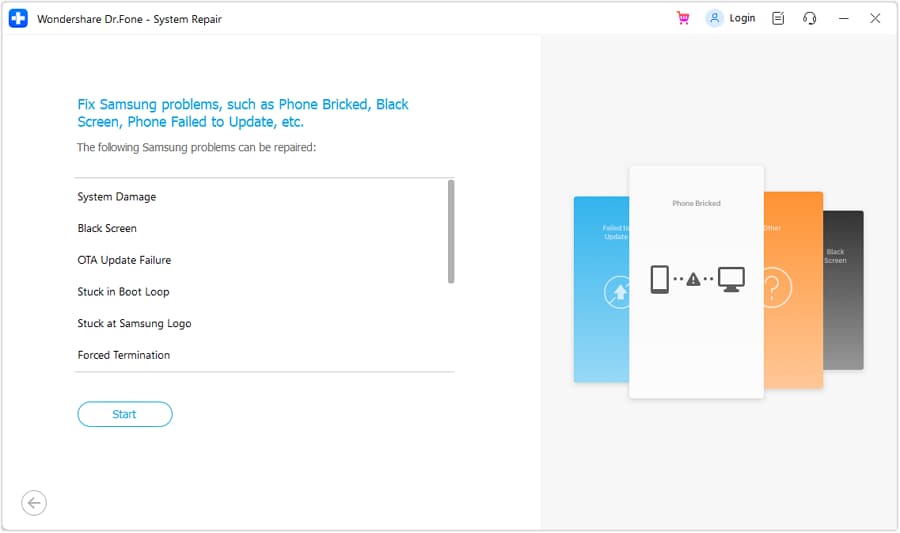
Select the 'Android Repair' option prominently located on the left panel, followed by clicking the 'Start' button to initiate the firmware diagnosis.
Step 3 Input Device Information
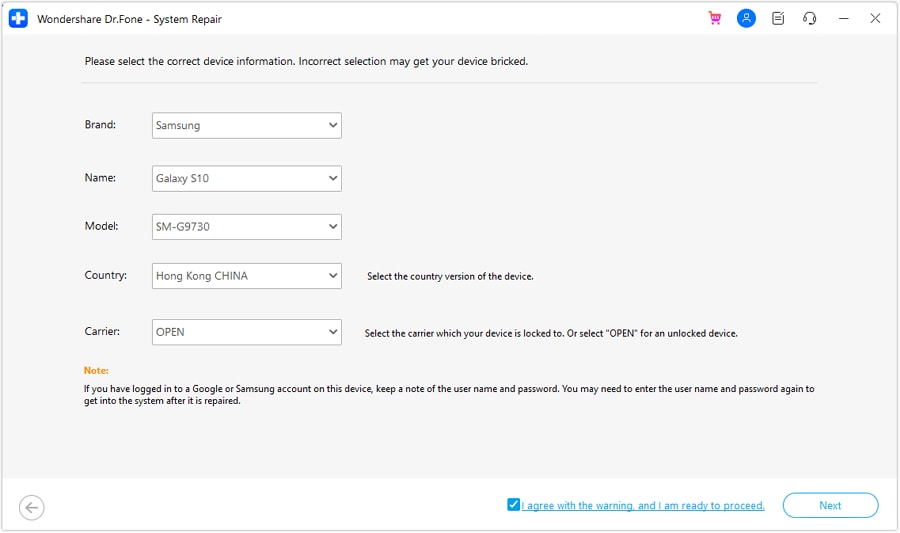
Carefully feed your exact Android device details (brand, name, model, country, and carrier) into the device information screen. Read the warning prompt, type '000000' to confirm, and press the 'Next' button.
Phase 2: Repairing Your Device in 'Download' Mode
Step 1 Boot into Download Mode
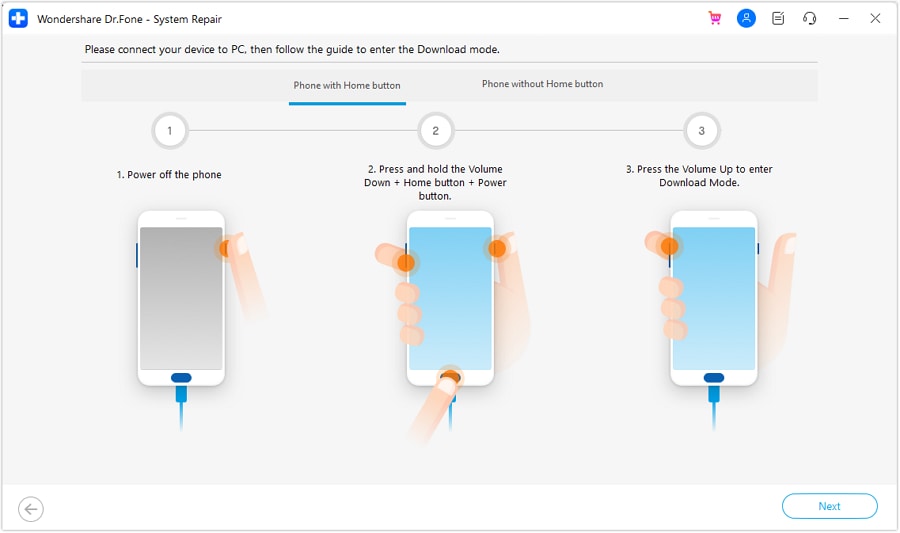
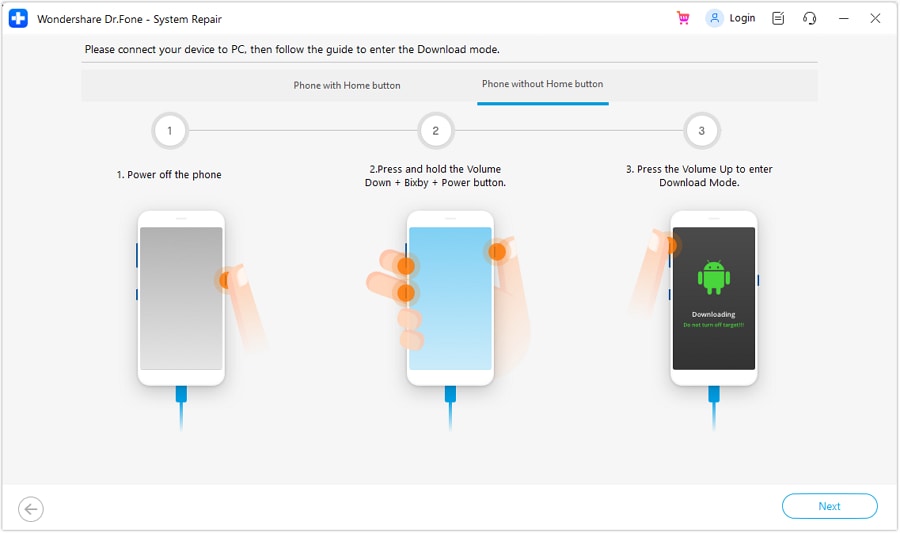
You must boot the Android device into Download mode to allow the firmware flashing process. Follow the on-screen instructions corresponding to your device structure:
- For devices with a 'Home' button: Power off the phone. Press and hold the 'Volume Down', 'Home', and 'Power' buttons simultaneously for 5 to 10 seconds. Release them, then immediately press the 'Volume Up' button to enter Download mode.
- For devices without a 'Home' button: Turn off the device. Keep the 'Volume Down', 'Bixby', and 'Power' buttons pressed for 5 to 10 seconds. Release all buttons and tap the 'Volume Up' button to access Download mode.
Step 2 Download Recovery Firmware
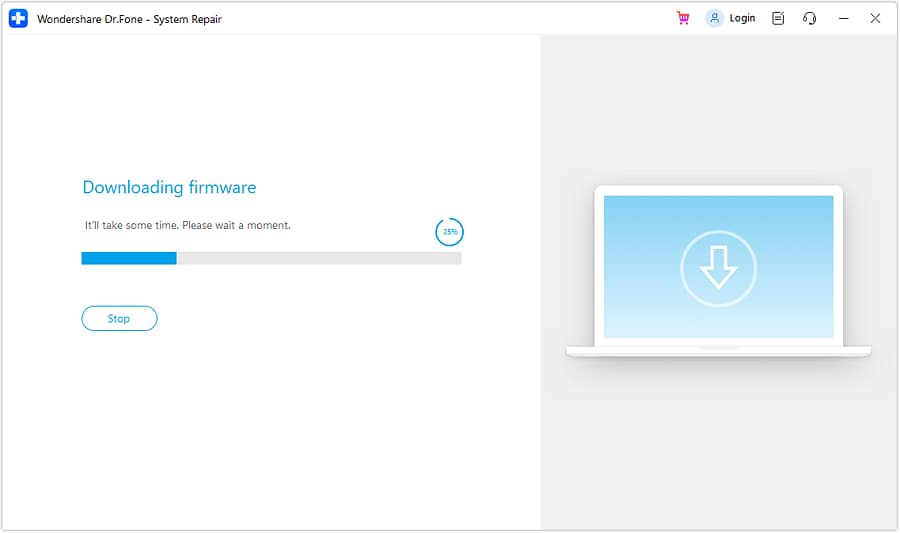
Clicking the 'Next' button prompts Dr.Fone to start safely downloading the official Android firmware tailored to your specific device model.
Step 3 Complete the System Repair
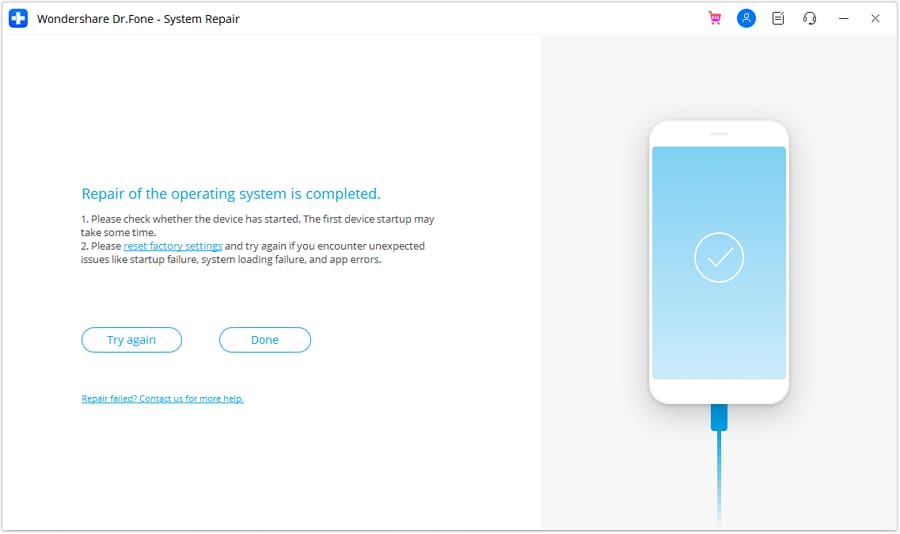
Once Dr.Fone - System Repair (Android) verifies the downloaded firmware to ensure its integrity, it automatically begins fixing the core issues causing your apps to crash or freeze. Within minutes, your device will reboot normally.
Part 3: 3 Common Fixes if a Particular App Won't Open
In this segment, we will extensively discuss the three most reliable manual methods to help you fix the problem when only a particular app won't open, refuses to launch, or takes an indefinite amount of time to load while other apps perform normally.
1. Update the Malfunctioning App
It is universally advisable to keep both your Android OS and your third-party apps up-to-date. Developers frequently release patches to fix bugs that cause apps to crash on specific hardware setups. You must consistently check for any pending updates available in the Google Play Store.
Follow these precise steps to update the specific app that won't open on your phone:
- Launch the Google Play Store application on your Android phone.
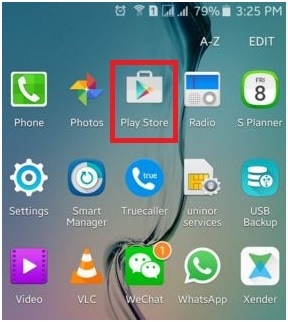
- Tap on your profile icon or the hamburger menu, then select "My Apps & Games" (or "Manage apps & device" in newer UI versions) from the main menu.

- Here, you can either tap on "Update All" to seamlessly update all applications with available patches, or manually scroll through the list and select the specific app you wish to update.

Once the app update completes its installation, completely close all apps and tabs running in your device's background. Now, try to launch the problematic app once again. If it opens successfully, a simple bug was your issue. If it still fails, do not worry—proceed to the next troubleshooting step.
2. Force Stop the App
Sometimes, an app gets caught in an endless loop or a frozen background state. Closing the application completely by forcing it to shut down is an incredibly effective technique. By executing a "Force Stop", you terminate all background operations related to that specific app, resetting its active state.
Doing this is extremely simple. Follow the straightforward steps detailed below:
- Navigate to "Settings" on your Android phone.
- Scroll down and tap on "Apps" or "Apps & notifications" to view a comprehensive list of all applications installed on your device.
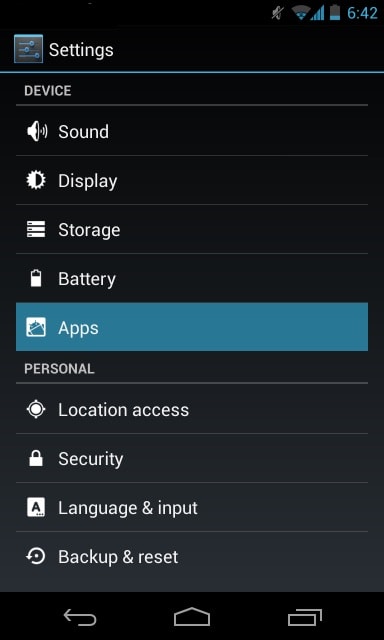
- Scroll through the list and tap on the specific app that refuses to open.
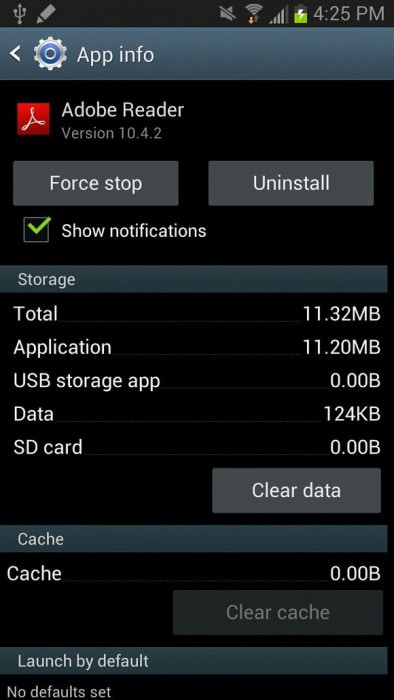
- On the App Info page, simply tap the "Force Stop" button as illustrated in the visual below, and confirm the action.
3. Clear App Cache and Data
Over time, applications store temporary files (cache) to load faster. However, if this cache becomes corrupted, it can instantly prevent the app from launching. This method highly resolves the app crash issue by wiping off unnecessary or glitched app content from your device storage.
Carefully follow these instructions to safely clear all app cache and stored data:
- Go back to "Settings" and select the "Apps" menu.
- From the alphabetical list, select the app that is currently malfunctioning.
- Tap on "Storage" (or "Storage & cache" depending on your OS version).
- Now tap on "Clear Cache" to remove temporary files. If that doesn't work, return and select "Clear data" to completely reset the app back to its default state.

Part 4: 3 Common Fixes if All Apps Won't Open on Android
If you notice that none of the applications on your device are working—or the entire user interface keeps crashing—the issue is likely tied to the core operating system. In this segment, we will explore broad, system-level solutions when all your apps won't open.
1. Check for Android OS Updates
Firstly, it is incredibly important to keep your Android software updated at all times. An obsolete Android OS version might lack the required API protocols, causing it to conflict with newly updated apps and rendering them unlaunchable.
To update your device's software efficiently:
- Navigate to "Settings" and scroll down to the bottom of the menu.
- Select "About Phone" or "System".
- From the available options, tap on "System Updates" or "Software Update".

- If your device prompts you that a new software version is available, follow the on-screen instructions to download and install the update immediately.
Keeping your Android OS updated inherently solves the majority of systemic software clashes. While simple, it works wonders when dealing with widespread app launch failures across your device.
2. Restart Your Phone
Restarting your Android device to rectify a software glitch might sound old-school, but it yields incredibly high success rates when apps refuse to open. A reboot clears the device's active RAM, flushing out rogue background processes that are choking the system.
Restarting your phone is entirely straightforward. Here is what you need to do:
- Long-press the physical Power button on the side of your device.
- When the power menu appears on the screen, tap on "Restart".
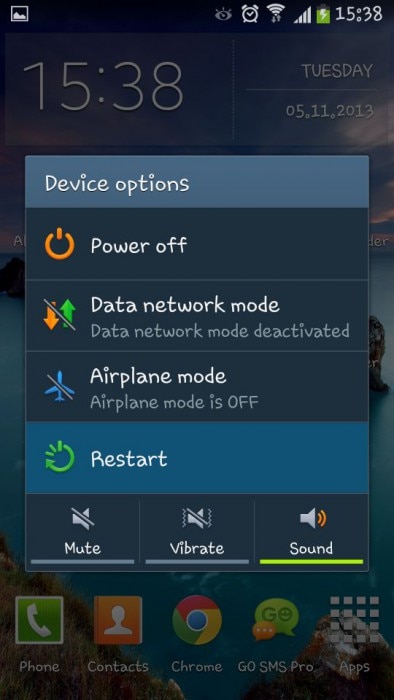
Your phone will automatically shut down and reboot. Once it completes the startup sequence, attempt to launch your apps again. Alternatively, for a hard reset, you can hold down the power button continuously for about 15-20 seconds to force the device to reboot if the screen is frozen.
3. Reset to Factory Settings
This method is considered a drastic, last-resort measure and should only be applied if all other solutions have failed. Performing a factory reset will completely wipe all user data, applications, and settings from your device, restoring it to the exact software state it was in when purchased.
Before proceeding, you must urgently take a comprehensive backup of all vital data stored on your phone.
To Factory Reset your Android phone securely, adhere to the guidelines below:
- Navigate to "Settings" and locate the "Backup and reset" or "General Management" option.
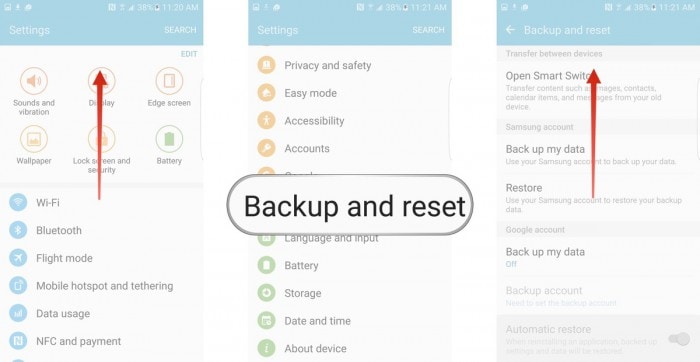
- Next, tap on "Factory Data Reset" > "Reset Device" > "Erase Everything" (the exact phrasing may vary slightly by manufacturer).
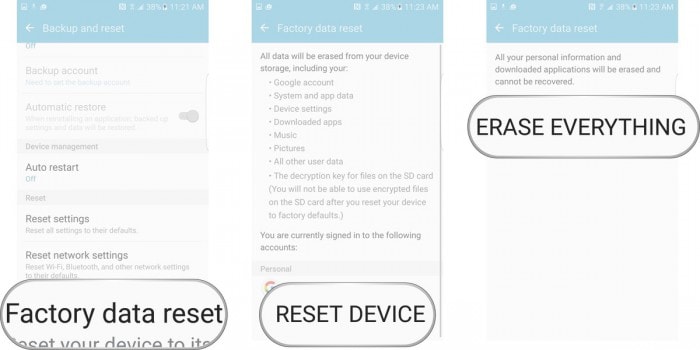
Your smartphone will reboot multiple times during the wiping process. Once finished, you will need to set up the device from scratch, sign into your Google account, and reinstall your applications.
Conclusion
"Why won't my app open?" is a highly common inquiry among Android smartphone users who initially panic, assuming the malfunction is due to a severe virus attack or fatal hardware failure. However, as demonstrated in this guide, the root causes are usually minor software glitches, corrupted caches, or outdated firmware.
These issues can easily be rectified by you, right from your home, without requiring expensive technical support or external intervention. Whether you choose to clear the app cache, update your OS, or utilize an advanced solution like Dr.Fone - System Repair (Android) for persistent system errors, these proven steps will restore your device's optimal performance in 2026. Go ahead and apply these troubleshooting methods today!
FAQ
1. Does clearing app data delete my account information?
Yes, clearing the app data acts like a fresh installation. It removes your login credentials, custom settings, and downloaded files within the app. You will need to log back into the application once you reopen it. Clearing the 'cache', however, only removes temporary background files and preserves your account login.2. Why do my Android apps crash immediately after opening?
If apps crash the second you launch them, the primary culprit is often a conflict with Android System WebView, corrupted app cache, or an aggressive background battery-saver protocol terminating the process. Updating Android System WebView via the Google Play Store is a highly recommended initial step.3. Will restarting my Android phone delete any personal data?
No, restarting (or rebooting) your phone is a completely safe process that simply powers down the hardware and clears active RAM. It does not erase your photos, documents, contacts, or installed applications.4. What is the difference between Force Stop and closing an app normally?
Closing an app normally by swiping it away from the recent apps menu only minimizes it, allowing background processes to continue running. 'Force Stop', performed via the Settings menu, completely kills the application and halts all of its hidden background activities, which is vital for resetting a frozen app.
 Add Wondershare Dr.Fone as a preferred source on Google