
Xiaomi Stuck on Mi Logo/Bootloop: Why It Happens & How to Fix It

Nov 03, 2026 • Filed to: Phone Repair Solutions • Proven solutions
 TL;DR:
Xiaomi bootloop fixes in order
- Logo frozen or restarting: hold Power for more than 10 seconds. Power + Volume Up opens Recovery; Power + Volume Down opens Fastboot, not a universal restart.
- Can start in Safe Mode: test recently installed apps. A phone that cannot load Android may not reach this mode.
- Need to keep data: try non-wipe methods first. Dr.Fone offers a supported Xiaomi/Redmi/POCO repair workflow on Windows, but it is not a guarantee for every device or failure.
- Recovery reset or MiFlash: these are later, conditional options with data-loss risks. If the phone gets abnormally hot, has liquid damage, or still cannot start, use professional diagnosis.
Ask AI for a summary
 ChatGPT
 Perplexity
 Gemini
 Claude
 Grok
If your Xiaomi is stuck on the Mi logo or keeps restarting, start with a Power-button force restart, not Wipe Data or a firmware flash. A frozen logo, a repeating bootloop, and a Recovery or Fastboot screen need different next steps. Work through the non-wipe options below first, especially if your photos or messages are not backed up.

Part 1. What Are the Reasons Behind Xiaomi Being Stuck on the Mi Logo?
A Xiaomi bootloop repeatedly restarts before reaching the lock or Home screen. A phone stuck on one Mi, Redmi, POCO, MIUI, or HyperOS logo without restarting has a different visible symptom, even though some checks overlap. Neither symptom alone identifies a failed update, bad app, or hardware fault.
| What happened or what you see | What it can mean | Useful next check |
|---|---|---|
| It began after a MIUI or HyperOS update | An unfinished installation and a failed boot are not the same. A visible installation/progress screen still changing is not proof of a bootloop. | Do not interrupt an installation that is visibly progressing. If it repeatedly restarts or remains unresponsive with no progress, use the restart check. There is no single waiting time that fits every update and model. |
| It began after installing or changing an app | A downloaded app may be involved if the phone runs normally in Safe Mode. | Enter Safe Mode if reachable, then remove recently installed apps one at a time and retest. |
| It began after flashing or changing a ROM | Wrong device, region, version, or an incomplete flash can prevent startup. Another flash is not automatically safe. | Check the model, firmware, and bootloader prerequisites; do not cross-flash or downgrade as a generic cure. |
| Recovery keeps returning after Reboot to System, or a reset failed | The restart/reset has not resolved the underlying problem. A failed wipe does not prove that another wipe will help. | Separate a reboot from Wipe All Data; if a wipe fails or the phone still cannot boot, seek service. |
| Fastboot appears, buttons stick, or the phone was dropped, wet, or gets abnormally hot | A held Volume Down button can open Fastboot. Other symptoms may require hardware diagnosis rather than another software attempt. | Check the Fastboot branch. For damage or abnormal heat, use service guidance. |
Part 2. How to Fix Mi Stuck on Logo/Xiaomi Bootloop
These six methods move from non-wipe checks to advanced repair and service. Choose by the screen you can reach and whether you can accept losing local data—not by the model name alone.
Which Xiaomi Bootloop Fix Should You Try First?
A Redmi Note 9 stuck on the logo, a Redmi 9 bootloop, and a POCO that keeps restarting do not necessarily share one cause. Use the same symptom checks, but expect button timing and menus to vary by model.
| Phone state or constraint | Try first | Data consequence / next branch |
|---|---|---|
| Mi logo frozen or restarting; buttons work | Power-only force restart | Does not intentionally erase data. If it starts, back up before more changes. |
| Can reach Safe Mode | Test recently installed apps | Safe Mode itself does not wipe the phone. Uninstalling an app can remove its local data. |
| Recovery main menu or Reboot to System loop | Reboot first; separate reset decision | Entering Recovery is not a wipe. Wipe All Data is destructive. |
| FASTBOOT screen or bunny | Release Volume Down; Power-only restart | Entering/exiting the mode alone is not a firmware flash or reset. |
| No computer available | Restart, then Safe Mode if reachable | Recovery reset can be done without a PC, but erases data. Dr.Fone repair requires Windows; a mobile app is not a substitute. |
| Software failure; Windows PC available; data matters | Check supported Dr.Fone firmware repair | Designed to retain data on supported Xiaomi-family workflows; review actual device warnings, not a universal no-loss promise. |
| Bootloop after a previous flash | Review exact firmware and bootloader eligibility | Do not unlock, relock, or flash an arbitrary ROM to rescue unbacked-up files. |
| Abnormal heat, liquid/drop damage, broken buttons, or no response after basic checks | Professional diagnosis | Stop repeated attempts and tell the technician if keeping data is the priority. |
Can you fix it without losing data? Sometimes, but the cause and reachable mode determine the options. First try the Power-only restart and, if Android can start there, Safe Mode. Check existing Google Photos, contacts, Xiaomi Cloud, or app backups from another signed-in device. That checks copies already saved; it does not make a new backup of an unbootable phone.
If it boots again, unlock it and back up immediately. Do not assume a USB cable gives access to files while the phone cannot start or unlock. Before considering Wipe All Data, unlocking, or manual flashing, stop if the only copy of important files is on the phone. Ask service about a data-preserving diagnosis first; neither service nor software can guarantee that every file is recoverable. Xiaomi distinguishes existing cloud copies from lost local-only data.
Fix 1. Force Restart Your Xiaomi Phone
A force restart is a non-wipe first check for a frozen Xiaomi or Redmi. It may clear a temporary hang; it does not prove that damaged firmware or hardware has been repaired. Remove a case that is pressing the buttons, and keep the volume keys released for the first method.
Method 1: Power Button Only — Force Restart
Press and hold Power for more than 10 seconds. Release it when the device responds or restarts, then check whether it reaches the lock or Home screen. If it starts normally, back up important data. If it returns to the same logo or loop, move to the next suitable method rather than restarting indefinitely. This is the Power-only check described by Xiaomi.
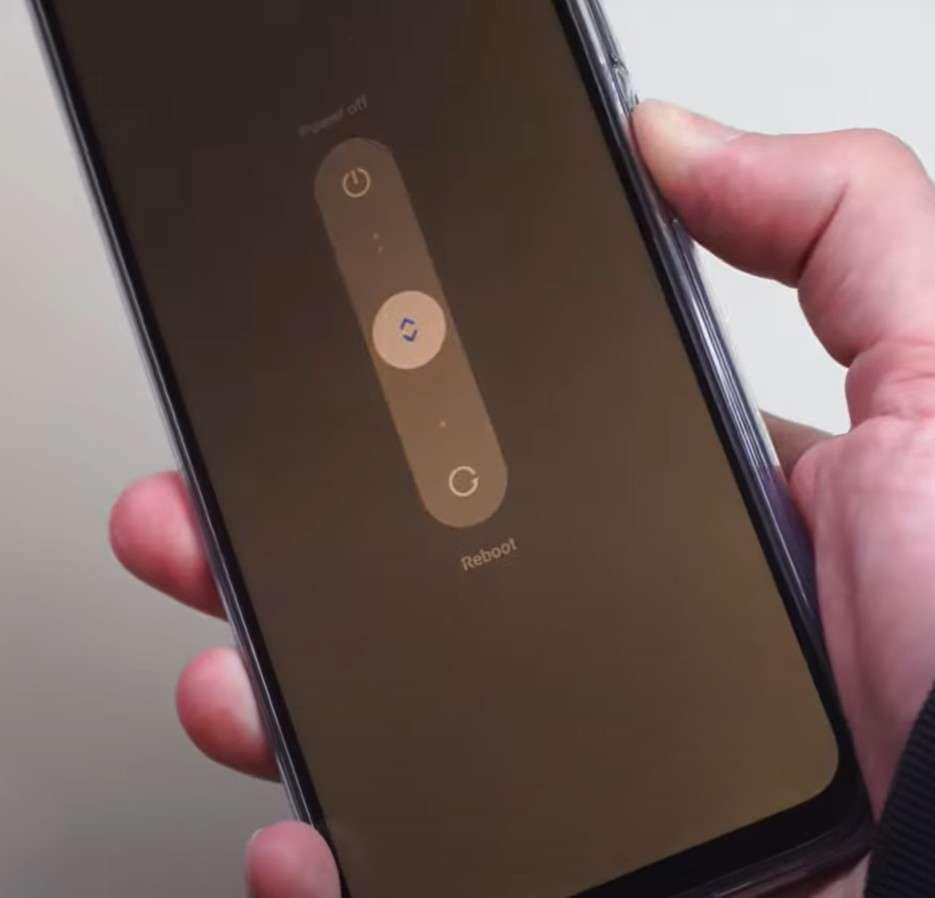
Method 2: Power + Volume Up — Recovery, Not a Generic Restart
From power off, hold Power + Volume Up to enter Recovery on models that support it. If the menu offers Reboot → Reboot to System, select it with the volume keys and confirm with Power. Menu labels vary. Do not choose Wipe Data merely to restart; see the reset decision and full procedure first. Holding Power for more than 10 seconds can also restart from Recovery.
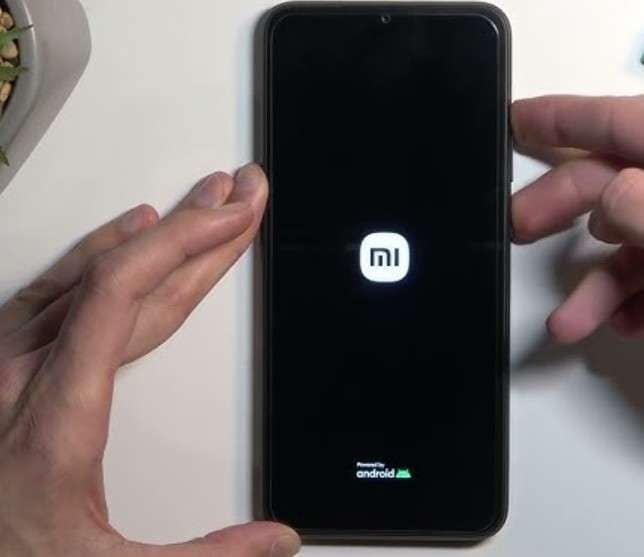
Method 3: Power + Volume Down — Fastboot, Not a Generic Restart
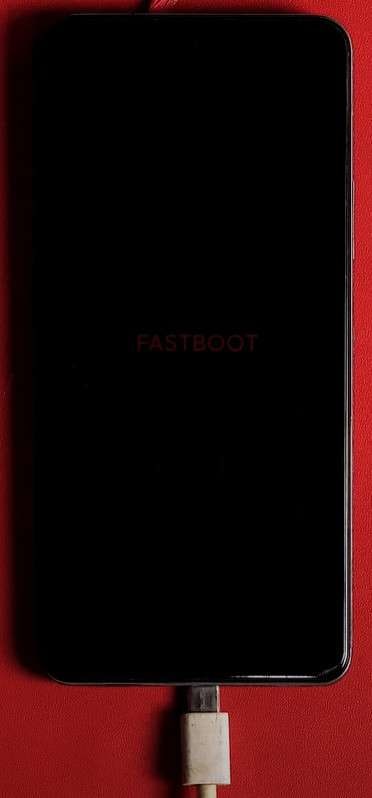
Holding Power + Volume Down together from power off can open Fastboot. A FASTBOOT screen or bunny is a mode screen, not proof that the phone needs flashing. If it appeared unintentionally, release both keys, remove any case pressing Volume Down, and check whether the key sticks. Hold Power alone for more than 10 seconds to force a restart. If it always returns to Fastboot or will not start, seek diagnosis; do not select a random ROM. See Xiaomi's Fastboot guidance.
No response at all? If the phone is dry, undamaged, and not abnormally hot, try its original charger for 15–30 minutes, then the Power-only restart. If charging produces unusual heat with no response, unplug it and use service. Do not keep charging a wet or visibly damaged device.
Fix 2. Enable Safe Mode to Detect Suspicious Apps
Safe Mode temporarily disables downloaded apps so you can test whether one is involved. It is useful only if the phone can actually start in that mode; a device that never gets beyond early startup may not reach it. A failed attempt to enter Safe Mode does not identify the cause.
Step 1. Try the supported entry method for your device. Xiaomi documents this timing for Redmi Note 8 and Redmi Note 14: power off, press Power to start, and when the phone vibrates or the Mi logo appears, release Power and immediately hold Volume Down until startup completes. Look for Safe Mode at the lower left. This is not the same as holding Power + Volume Down together from power off, which can open Fastboot.
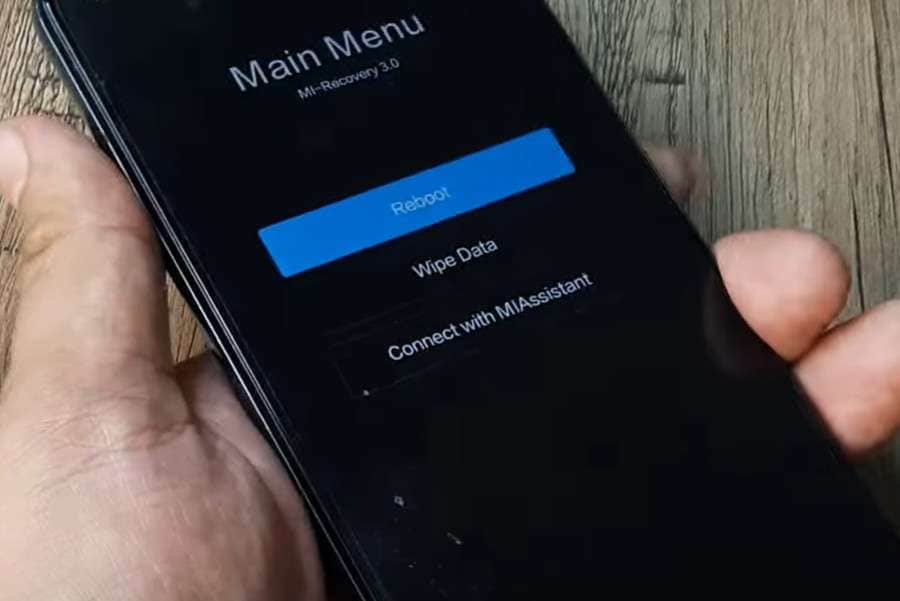
If your actual Recovery menu includes a Safe Mode option, you can select that option instead. The menu screenshot below is an example, not a promise that every MIUI/HyperOS model has it. If it is absent, do not substitute Wipe Data; try the model's documented button method or move to supported repair/service.

Step 2. Test, remove one recent app, and reboot normally. If the phone remains stable in Safe Mode, open Settings → Apps → Manage apps (or the equivalent app list), select an app installed or updated just before the problem, and tap Uninstall. Save any accessible app data first. Restart normally, check whether the loop returns, and repeat one app at a time if necessary. If removing a particular app resolves the problem, avoid reinstalling it until the conflict is resolved.

If the same failure continues in Safe Mode, move on rather than deleting unrelated apps. Restart normally to exit Safe Mode. Work/school-managed or administrator-controlled apps may require your administrator; do not disable security controls just to force an uninstall. Google's app-isolation guidance explains the one-at-a-time retest.
Fix 3. Repair Supported Xiaomi System Issues with Dr.Fone
Dr.Fone - System Repair (Android) provides guided firmware repair for supported Xiaomi, Redmi, and POCO phones and tablets with software-related bootloops, startup failures, or stuck logos. Android System Repair is Windows-only; macOS and the separate mobile apps do not provide this repair workflow.
The supported Xiaomi-family workflow is designed to repair without root or data loss. That is not a guarantee for every model, firmware, damaged storage, or repair outcome. Confirm the exact device and available matched package in the tool, read the displayed data warning, and stop if support is unavailable or the warning conflicts with your need to keep data. It does not fix physical damage or promise access to files after a factory reset. Back up first if the device can still start and unlock.
Dr.Fone - System Repair (Android)
Guided firmware repair for supported Xiaomi, Redmi, and POCO devices on Windows.
- Use the guided Xiaomi system repair workflow; confirm the device and firmware before starting.
- Repair supported software problems such as a stuck boot loop, black screen, or a phone that will not turn on; physical damage needs diagnosis.
- The supported Xiaomi-family workflow is designed to retain data without root; this is not a recovery or success guarantee.
- Android System Repair is Windows-only. Exact model and firmware availability determine eligibility.
- A free installer is not proof that the complete repair is free. Review the license and device-specific warning before confirming repair.


Guide to Fix the Xiaomi Phone Stuck on the Mi Logo with Dr.Fone
Use a Windows PC, the latest Dr.Fone, and a reliable USB connection. The four core steps below combine the current Xiaomi/Redmi/POCO repair Guide without skipping firmware review or confirmation. The screenshots correspond to those core actions; follow any device-specific connection instructions displayed by the tool.
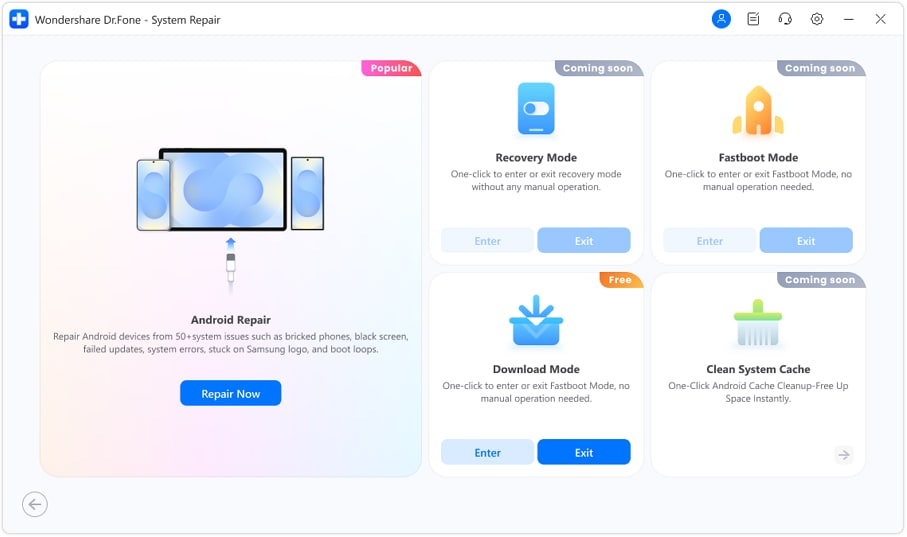
Step 1. Open Android Repair.
Launch Dr.Fone on Windows and connect the phone by USB. Select System Repair → Android → Android Repair → Repair Now. If the device is not detected, check the cable/port and the tool's connection instructions; do not assume detection guarantees compatible repair.
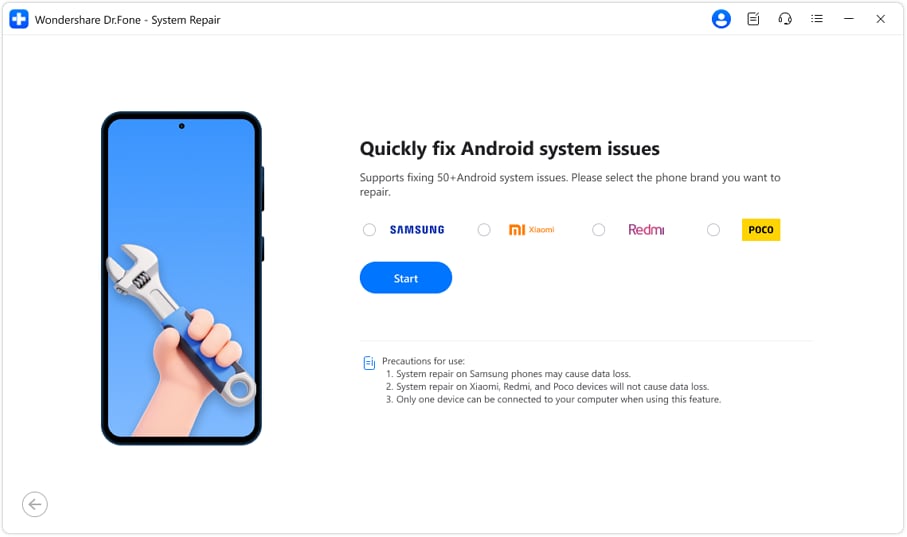
Step 2. Choose the correct brand.
Select Xiaomi, Redmi, or POCO to match the device, then click Start. Continue only if the tool offers a supported path for that device; do not choose a different brand or model to get past an unsupported-device result.
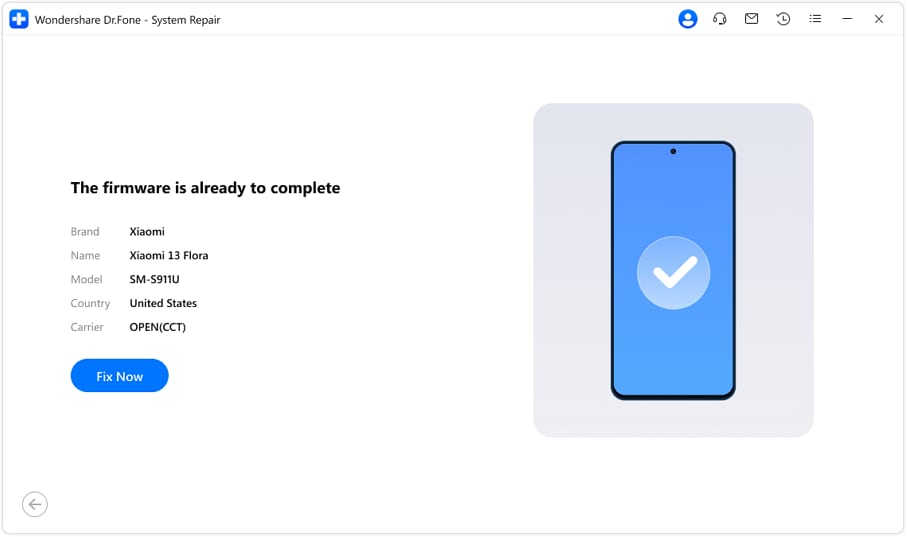
Step 3. Download the matched firmware and confirm repair.
Review the model/current-system details and available firmware, select the matching package, and click Download. Wait for downloading and preparation to finish. Review the device/firmware details and data warning again, then click Fix Now only if they are correct. If there is no matching package, stop rather than substituting another model's firmware.
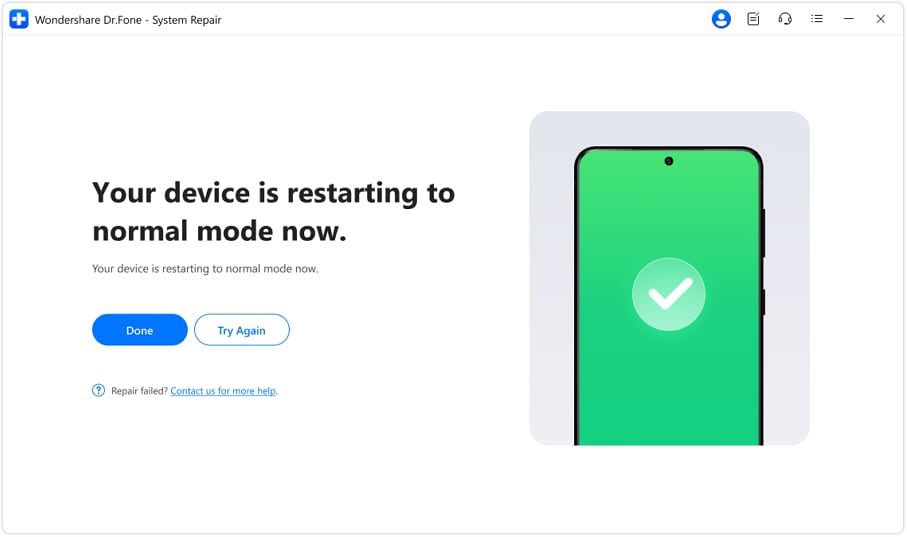
Step 4. Keep connected and check the result.
Do not disconnect or operate the phone while repair is running. Wait for the success screen and reboot, then verify that the lock/Home screen loads and your expected files/apps are available. Back up after a successful boot. If repair reports an error or the loop remains, record the message and contact support or service; do not repeatedly reinstall firmware.
 safe & secure
Fix 4. Wipe All Xiaomi Phone Data
Wipe All Data is a factory reset, not a cache clear. Consider it only after non-wipe checks have failed and you accept losing data stored on the phone. It may resolve some software problems but cannot guarantee a fix for bad firmware or hardware.
If you are already at MIUI/HyperOS Recovery, first try Reboot → Reboot to System. Connect with MiAssistant is not itself a backup, a guaranteed repair, or proof that a PC can read your photos. If the menu returns and the only copy of your data is local, stop before wiping and ask service about a data-preserving assessment.
Before a reset, check existing backups, make sure you know the phone's Google account, Xiaomi account, and screen-lock credentials, and have safe, adequate battery power. Setup may require account verification afterward. Google confirms that a factory reset erases phone data; cloud restore covers only data actually backed up.
Step 1. Enter Recovery and choose Wipe Data only after accepting erasure. With the phone powered off, hold Power + Volume Up until Recovery opens on supported models. Use the volume buttons to highlight Wipe Data or Clear Data, then Power to select. Menu wording differs; the picture below shows one version. If Recovery cannot open or the controls do not work, use service rather than guessing another destructive command.

Step 2. Confirm the wipe, then reboot and set up. Choose Wipe All Data/Clear All Data and confirm the displayed warning only if you are ready to erase local data. Wait for completion without interrupting it. Return to the main menu and select Reboot → Reboot to System if shown. Complete setup with the previous accounts, restore available backups, and check startup again.

If the wipe fails, Recovery returns again, or the phone still loops, do not keep wiping it. Xiaomi recommends after-sales diagnosis when reset cannot complete or does not resolve the failure. Reset does not guarantee recovery of photos/messages that were never backed up.
Fix 5. Flash Your Xiaomi/Redmi Firmware
A firmware reinstall may help a software failure, including a Xiaomi/Redmi bootloop after a bad flash, but manual MiFlash is not the next step for every phone. The older MiFlash screens below illustrate a conditional advanced workflow; labels and supported packages vary. If the phone is locked or its exact supported firmware is uncertain, use the supported guided workflow or service instead of attempting an arbitrary flash.
Eligibility gate: continue only if the bootloader is already unlocked, you have an official Fastboot package explicitly matching the exact model/codename, region, and supported version path, and you accept losing local data. A similar retail name is not enough. Do not cross-flash regions or downgrade as a generic bootloop fix. If you cannot establish those conditions, stop here.
Xiaomi warns that unlocking modern/encrypted devices clears user data and requires account/device preparation. It is not an emergency data-saving shortcut for a phone that cannot boot. Do not use unofficial unlocking/EDL services or relock a device on uncertain firmware.
Step 1. Prepare the exact official Fastboot package. On Windows, obtain the supported MiFlash tool/drivers and the official model/region-matched Fastboot ROM through Xiaomi's support path. A Fastboot archive is commonly .tgz; extract it fully to a simple folder and use the folder containing the package's flashing files, not a Recovery ZIP or the still-compressed archive. The file picture is a legacy example, not a ROM recommendation for your model.

Step 2. Enter Fastboot and connect. With the phone off, hold Power + Volume Down until Fastboot appears. Connect by USB to Windows and install the required device drivers if it is not detected. In MiFlash, refresh the device list if that control is available and confirm that the connected device is the intended one. If it stays undetected or returns an error, stop and resolve that issue before any write operation; ADB authorization is not a substitute for Fastboot detection.
Step 3. Review the folder and erase/relock option before flashing. Use Select to choose the extracted Fastboot ROM folder. Recheck the exact device, package, and bottom-of-window option. Clean All / Flash All erases local data; do not treat “save user data” as a recovery guarantee. Xiaomi notes that a default script can delete data and lock the bootloader, so never click Flash without checking it. Do not use Clean All and Lock as a bootloop troubleshooting shortcut. Proceed only with the supported, deliberately chosen non-relocking path and after accepting erasure; otherwise stop.
If those checks are satisfied, click Flash, keep the connection stable, and wait for the tool's completion result and reboot. Confirm the phone reaches setup/the lock screen. For any error, missing success result, or persistent bootloop, record the error and use service rather than cycling through ROMs or forcing a relock.

Fix 6. Contact Xiaomi Service Center
Choose professional diagnosis if the phone cannot enter Recovery/Fastboot, has no response after the safe charging/restart check, repeatedly fails a wipe/repair, or has a broken Power/volume button. Without working buttons, the button procedures above may not be usable; do not assume an unprepared phone can be controlled by ADB.
Abnormal heat, liquid exposure, swelling, visible damage, or a recent drop are stop signs. Unplug an abnormally hot, unresponsive device and do not keep charging a wet or damaged phone. Avoid hitting, shaking, opening, or repeatedly trying to boot it. A logo loop alone cannot establish whether the fault is software, battery, storage, or the board.
Use Xiaomi's official regional support contacts or the original seller to establish the appropriate repair route. For a Xiaomi/Redmi/POCO imported into the US, confirm whether that model and purchase region qualify for local service; do not assume a US center or warranty coverage is available.
Provide the exact model, purchase region, last update/flash/drop/liquid event, the screen or error shown, and the non-wipe checks already tried. State whether keeping data is the priority and ask before authorizing any reset or flash. Diagnosis, repair cost, warranty, and data preservation depend on the actual device and service terms—not a guaranteed outcome.
Conclusion
For a Xiaomi boot loop or phone stuck on the Mi logo, identify the visible state before changing anything: Power-only restart first, Safe Mode only if reachable, and a clear data-preservation decision before reset or flash. Dr.Fone offers a guided Windows firmware-repair option for supported Xiaomi-family devices; it is not a Mac/mobile repair app or a fix for physical damage. If the same failure persists or hardware warning signs appear, stop repeated attempts and use diagnosis.
Android System Repair requires Windows; macOS is not supported for this feature.
 safe & secure
Frequently Asked Questions
 Q1. Does bootloop damage phone hardware?
Not necessarily, but a bootloop is a symptom—not proof that the hardware is healthy. It may accompany software failure or a hardware problem. If the phone becomes abnormally hot, has liquid/drop damage, or will not respond, stop repeated boot/charging attempts and use professional diagnosis. Do not assume another reset is harmless.
Q2. Are all Xiaomi models prone to a stuck Mi logo?Different Xiaomi, Redmi, and POCO models can show a stuck logo or bootloop, but that does not mean every model is prone to it or shares one defect. Redmi Note 9, Redmi 9, and newer devices should be routed by the actual symptom and last change, not by an unsupported failure-rate claim. Button timing, Recovery options, and firmware support vary; start with the state-based choices.
Q3. Can data be recovered after a bootloop?Sometimes data is still present when the problem is only a failed boot. If a non-wipe fix restores startup, unlock the phone and back it up. Existing Google/Xiaomi/app cloud copies can be restored where available. A factory reset or destructive flash is different: do not expect a recovery app to restore local-only photos or messages afterward. If there is no backup, stop before wiping/unlocking and use the data-preservation branch.
Q4. How long can a Xiaomi phone stay stuck on the Mi logo?There is no single normal waiting time or safe maximum for every Xiaomi model and update. Do not interrupt an update that is visibly progressing just because the logo is taking longer than expected. If there is no installation progress and the phone is unresponsive or repeatedly restarts, try Power alone for more than 10 seconds, then follow the appropriate branch above rather than leaving it looping indefinitely.
A bootloop is not automatically permanent: a temporary hang may clear after a restart, and stability in Safe Mode points toward testing recent apps. There is no universal repair-time or success guarantee. A failed wipe/repair, inaccessible modes, or heat/damage is the point to use service diagnosis instead of repeating resets.


Xiaomi Topics Series
- Xiaomi Screen & FRP Unlock
- 1. Unlock Xiaomi Bootloader
- 2. Mi Account Unlock Tools
- 3. Redmi Note 8 FRP Unlock Tool
- 4. Redmi Note 9 FRP Bypass Tool
- 5. Redmi 9A FRP Bypass
- 6. Remove FRP on Xiaomi/Redmi
- Xiaomi Repair
- Xiaomi Recover
- Xiaomi Reset
- Xiaomi Tips & News
- 1. Xiaomi HyperOS 3.0
- 2. Screen Mirror Xiaomi to PC
- 3. Run Hardware Tests on Xiaomi
- 4. Conduct battery test on Xiaomi
- 5. How Do I Obtain the Security Code Xiaomi
- 6. DND Mode Xiaomi
- Xiaomi Transfer & Backup
- ● Manage/transfer/recover data
- ● Unlock screen/activate/FRP lock
- ● Fix most iOS and Android issues
- Free Download Free Download Free Download


 > How-to > Phone Repair Solutions > Xiaomi Stuck on Mi Logo/Bootloop: Why It Happens & How to Fix It

Daisy Raines
staff Editor
Generally rated4.5(105participated)