Recover photos, messages, WhatsApp, and more — no backup
needed.
Recover photos, messages, WhatsApp, and more — no backup
needed.

 100% Security Verified | No Subscription Required | No Malware

 :
: 
 ChatGPT
 Perplexity
 Gemini
 Claude
 Grok
Grok
A missing phone number may have been deleted, hidden by a contact-list filter, or removed when an account stopped syncing. Before you try recovery, check which account owns the contact: Google Contacts, iCloud Contacts, Outlook/Exchange, another account, or device-only storage. A cloud contact can often be restored from that provider without scanning the phone; a locally saved contact needs a different approach.
Accidental deletion, a changed default account, or a sync interruption can make a phonebook appear empty. If you need to retrieve deleted phone numbers on iPhone or Android, first check the relevant account on the web and confirm whether the contact is actually gone. Avoid making unnecessary changes to the phone until you know what recovery source is available.
This guide explains how to restore contacts from Google, recover Outlook contacts, check iCloud for iPhone contacts, and evaluate an optional device scan with Dr.Fone. The right method depends on where each contact was stored, whether a recoverable copy exists, and your device and software compatibility; no method guarantees every deleted number can be recovered.
In this article
Part 1. Importance of Backing Up Your Contacts Regularly
Sending fast text messages, setting up business meetings, and making quick calls have become incredibly convenient nowadays. All you have to do is bring out your smartphone and tap a few buttons to connect with anyone globally. But of course, this hassle-free routine will abruptly turn into a frustrating chore if you suddenly lose your entire contact list. You never truly know when or how digital disasters are going to happen. Data loss can be caused by an inadvertent mistake, a failed OS synchronization, or even a deliberate malicious action. So while your phonebook is still intact and functional, do your absolute best to protect it. Among the most critical preventive measures you can put in place is to back them up regularly across secure platforms.
Sync can protect contacts stored in the selected account, while a separate export or local backup gives you another copy if you need to undo a large change. Confirm the correct account and check that its contacts are visible on the provider’s website; switching on sync now cannot recreate records already permanently lost. Google and Wondershare Dr.Fone offer different backup paths. The steps below help you verify what has actually been saved.
Back up contacts to Google (For Android)
On Android, contacts assigned to a Google Account can sync to Google Contacts; contacts saved only to a device, SIM, or a different provider may not. Menu names vary by Android version and manufacturer. Check the saved account for a sample contact and confirm it appears at contacts.google.com before relying on sync. The following screens illustrate one possible path through Settings.
- Step 1: Open Settings on your Android phone and check which account the Contacts app uses.
- Step 2: Find Google or Accounts and select the Google Account where your contacts are saved.

- Step 3: Open the account’s Backup or account-sync settings, depending on the menu shown. Device backup and Google Contacts sync are not the same setting.

- Step 4: If your screen shows Google Account Data, open it; otherwise find Account sync or Google Contacts sync.

- Step 5: Enable Contacts sync for that account if needed, then verify existing contacts at contacts.google.com. Contacts stored only on the phone may first need to be moved or exported to the account.

Back up contacts to Google (For iOS)
An iPhone can show contacts from Google, iCloud, Outlook, and other accounts at the same time. Adding a Google Account displays and syncs the Google contacts associated with it; it does not automatically copy contacts held only in iCloud or a different account to Google. Before recovery, check Lists in the Contacts app to identify the source. The menu labels below vary with iOS version.
- Step 1: Open the Settings app from your iPhone's home screen.
- Step 2: Open Contacts > Accounts or Add Account (on some versions, Settings > Apps > Contacts > Contacts Accounts). Older screens may show Password & Accounts or Mail > Accounts.

- Step 3: Select your existing Google account, or tap Add Account and sign in to the Google Account that actually holds the contacts.
- Step 4: Turn on Contacts for the Google Account and open the Contacts app to check sync. This does not restore contacts saved exclusively in iCloud or on the device.

Back up contacts on Android and iOS Using Wondershare Dr.Fone
For an additional copy on a computer, Wondershare Dr.Fone offers phone-backup workflows for supported devices. A backup must already exist to restore from it after deletion; starting a new backup cannot retrieve contacts that are already missing. The Dr.Fone trial can back up and preview supported backup content, while restoring a backup to a device requires the full version. Check the backup’s contact contents and keep a separate copy in a secure location.
- Step 1: Begin by downloading Wondershare Dr.Fone safely from its official website. Install it cleanly on your personal computer by following the intuitive prompt wizard.
- Step 2: Launch the newly installed Wondershare Dr.Fone program on your desktop. After it fully loads its main interface, connect your smart device securely to your computer using a high-quality data cable.
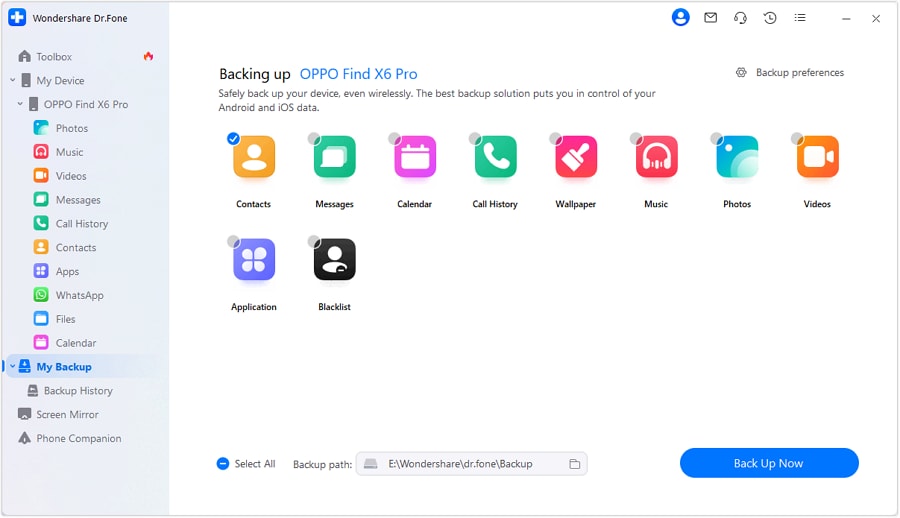
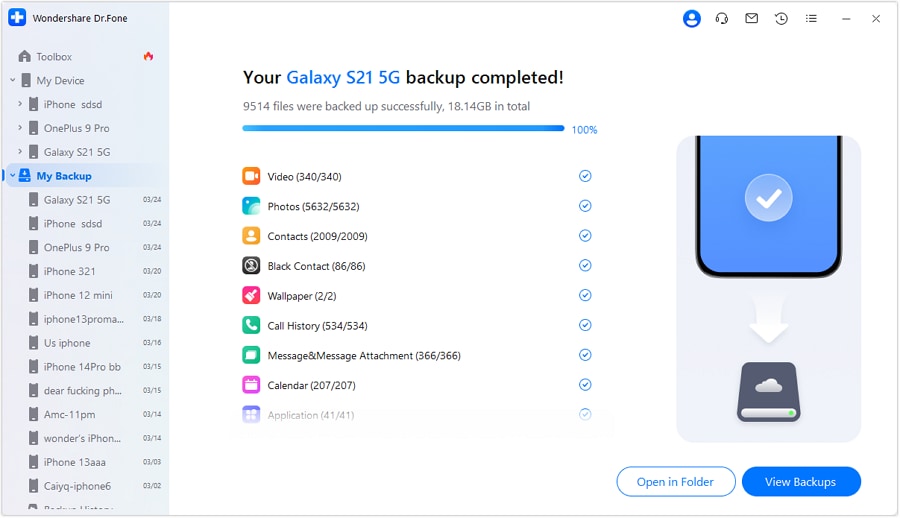
- Step 3: From the left panel choose My Backup, then Back Up Now if those options appear in your installed version. Confirm the correct connected device before starting.
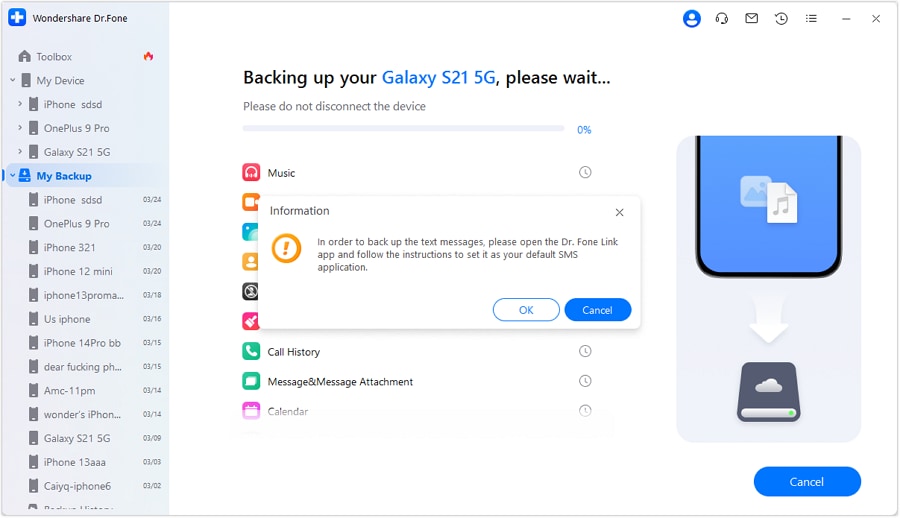
- Step 4: Wait patiently while Wondershare Dr.Fone is intelligently completing the process. Don’t use your mobile device or your computer aggressively to avoid unwarranted interruptions. For Android device users, ensure you follow any quick on-screen instructions that may appear to grant necessary read permissions.
- Step 5: After completion, select Open in Folder or View Backups and confirm the saved backup actually contains the intended contacts.
Part 2. Effective Ways How to Recover Deleted Phone Numbers From Smartphones
Being consistently able to save and intuitively access contacts anytime is an indispensable and very handy feature among modern smartphones. Imagine you can urgently message or call someone with just the literal snap of a finger. So it’s deeply understandable why professionals and general users alike get extremely frustrated and panicked when their primary phonebook is endangered or inexplicably wiped out.
Start with the account where the contact was created: Google’s Trash can restore selected eligible contacts, iCloud offers earlier contact archives, and Outlook has Deleted and Recoverable folders. If the contact was saved only on the device and no usable backup exists, a compatible recovery tool may be worth scanning, but modern device storage and the passage of time can prevent recovery. There is no reliable promise that a deleted contact can be reconstructed from phone storage.
Method 1: Restore Deleted Contacts From Gmail
If the missing record was saved in your Google Account, go to Google’s contact recovery instructions. For a single contact deleted in the last 30 days, check Trash and choose Recover if it is there. The Undo changes route illustrated below reverts all Google Contacts changes for the chosen period (up to 30 days); export contacts added since then first, because the rollback can hide newer additions. Permanently deleted Trash items cannot be recovered through Google Contacts.
- Step 1: Open a browser and go to contacts.google.com (Google Contacts, not the Gmail inbox).
- Step 2: Carefully log in to the specific Gmail account where you have previously linked and synced your iPhone or Android contacts.

- Step 3: Find and click the intuitive nine-dotted menu button (Google apps grid) located next to your profile photo on the top right. And then clearly select Contacts to open your cloud address book.

- Step 4: For selective recovery, check Trash first and select the contact to Recover. If you need to reverse wider changes, click the Settings gear and select Undo changes.

- Step 5: Choose a point within the past 30 days when the contact was present, then Confirm (some versions label the action Undo). Export recent contacts before a bulk rollback if you may need to re-import them.

- Step 6: Check for the contact at contacts.google.com and then in your Android or iPhone Contacts app using the same Google Account with Contacts sync enabled. If it is absent online, waiting for phone sync will not recreate it.

iCloud alternative for iPhone: If the contact belonged to iCloud instead of Google, use Apple’s iCloud contact restore procedure on a tablet or computer: sign in to iCloud.com, open Data Recovery > Restore Contacts, and select an archive dated before deletion if one is available. This replaces the current iCloud contact list across devices using iCloud Contacts, not just one contact. Back up or export recent changes first; iCloud archives the current version before restoring. This will not recover contacts that were only stored in Google, Outlook, or locally on the phone.
Method 2: Recover Deleted Contacts From Outlook
If the missing contact was saved in Outlook.com or an Exchange mailbox, use Microsoft’s recovery procedure for your Outlook version. First inspect People > Deleted; if the contact is no longer there, look for Recover deleted and the Recoverable folder. Retention varies by account and organization policy, so do not assume every contact stays recoverable for 30 days.
These steps apply only when the phone was syncing the relevant Outlook or Exchange contact account. Interface labels may differ in new Outlook, classic Outlook, and Outlook on the web:
- Step 1: Open Outlook.com or your organization’s Outlook on the web and sign in to the account that holds the contact.
- Step 2: Select People and open the Deleted folder to look for the missing contact.
- Step 3: Select the contact in Deleted and choose Restore. If it is not there, continue to the Recoverable folder.
- Step 4: From People > Deleted, select Recover deleted to look for contacts removed from Deleted. In classic Outlook the equivalent is Deleted Items > Recover Deleted Items From Server; availability depends on the mailbox.
- Step 5: Select an available contact and click Restore. In classic Outlook, an item recovered from Recoverable Items may return to Deleted Items first; move it back to Contacts. Then verify the account is syncing on your phone.

Method 3: Restore Deleted Contacts Using Wondershare Dr.Fone
If no usable Google, iCloud, Outlook, exported vCard, or existing device backup contains the contact, a device scan is an optional next step—not proof that the record still exists. Wondershare Dr.Fone has separate iOS and Android recovery workflows that can scan and preview supported contact data. Results depend on the device model, OS version, available recovery mode and whether the data is still accessible; contacts held only in a cloud account should be restored through that account first.
Choose the Dr.Fone module for your platform and check compatibility before installing. According to Wondershare’s trial limitations, you can scan and preview available data with the Data Recovery trial; actually recovering or exporting requires the full paid version. Neither a trial scan nor a paid license guarantees that a deleted contact will appear. The following product box is promotional and its “Without Backup” headline is conditional on recoverable data being found:
 Scan Android phones and tablets directly.
- Preview and recover only what you want.
- Supports WhatsApp, photos, videos, contacts, and more.
- Works with 6000+ Android devices.
Here’s how to use the desktop toolkit for a supported phone. The mobile app buttons above are separate promotional downloads; the desktop USB scanning steps below do not establish that those mobile apps provide the same recovery workflow.
- Step 1: Install and launch Wondershare Dr.Fone on a supported Windows PC or Mac, and review the device/module compatibility shown in the app.
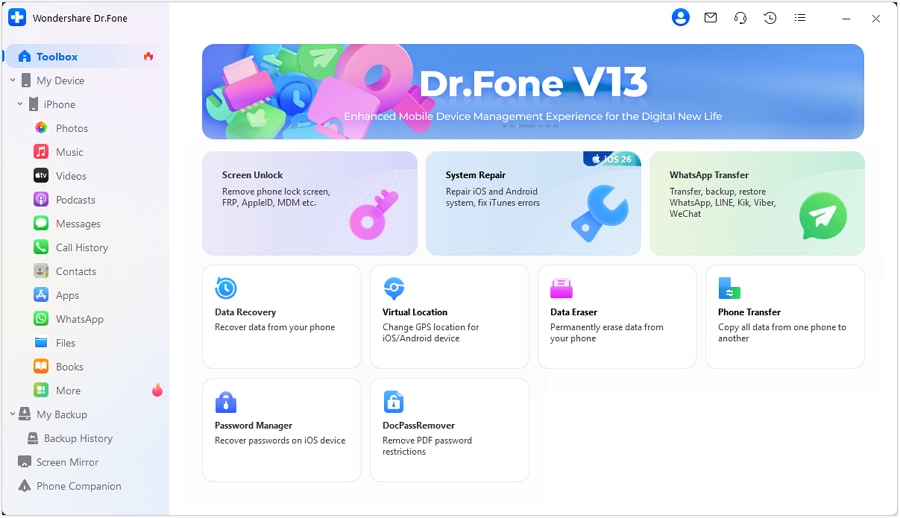
- Step 2: Head directly over to the left panel and then firmly click Toolbox. Right after, click the dedicated Data Recovery module highlighted on the main dashboard layout.
- Step 3: Select iOS for an iPhone or Android for an Android phone. Recovery options and supported contact sources differ between the two modules.
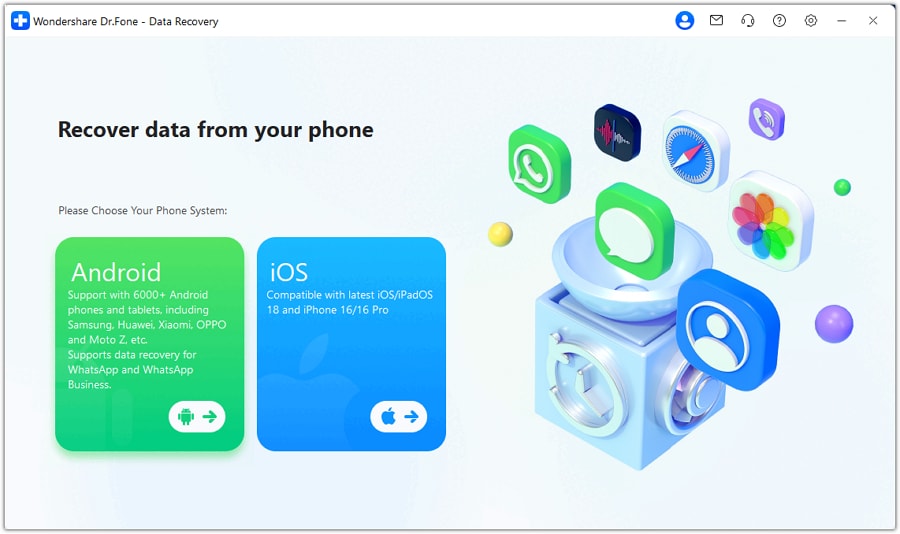
- Step 4: Select Recover Data From iOS (some versions say Recover Data from an iOS device) or Recover Android Data, as appropriate. On iOS, select a supported recovery mode if prompted.
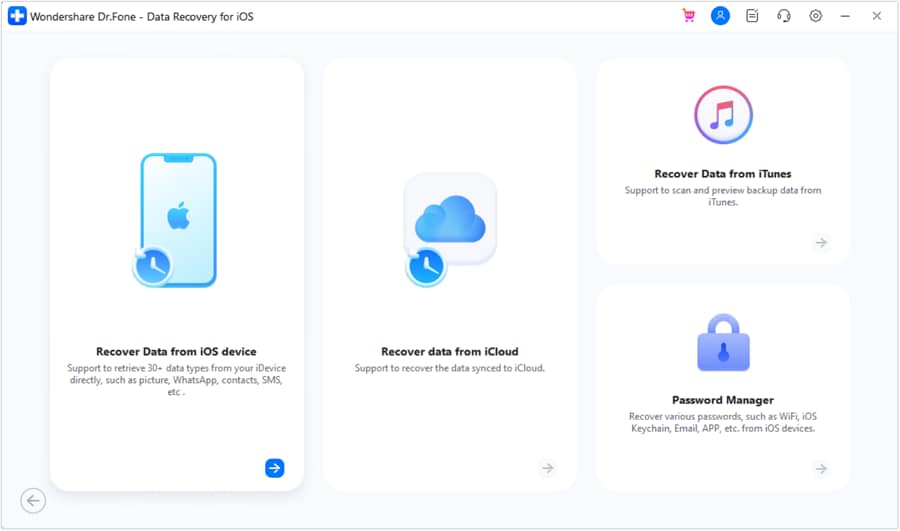
- Step 5: Connect the device with a data-capable USB cable and follow the on-screen trust or permissions prompts. Do not assume the scan can access an offline or inaccessible device.
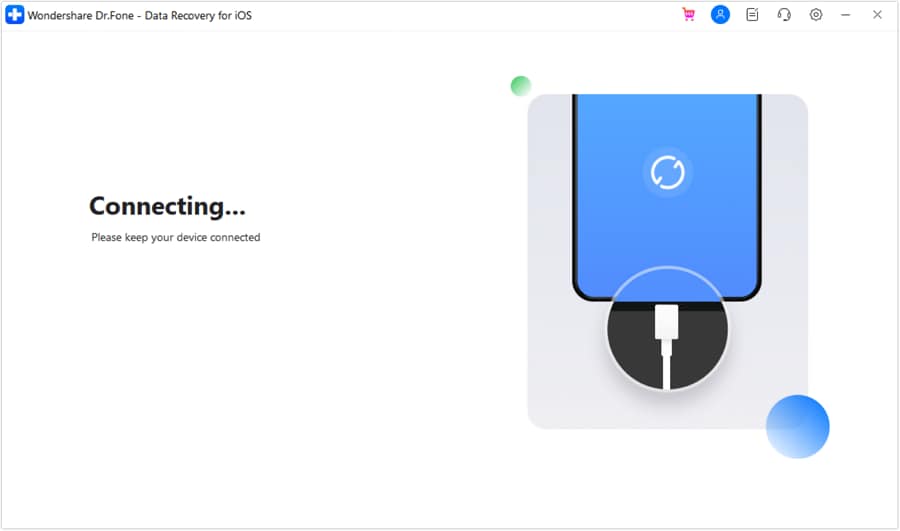
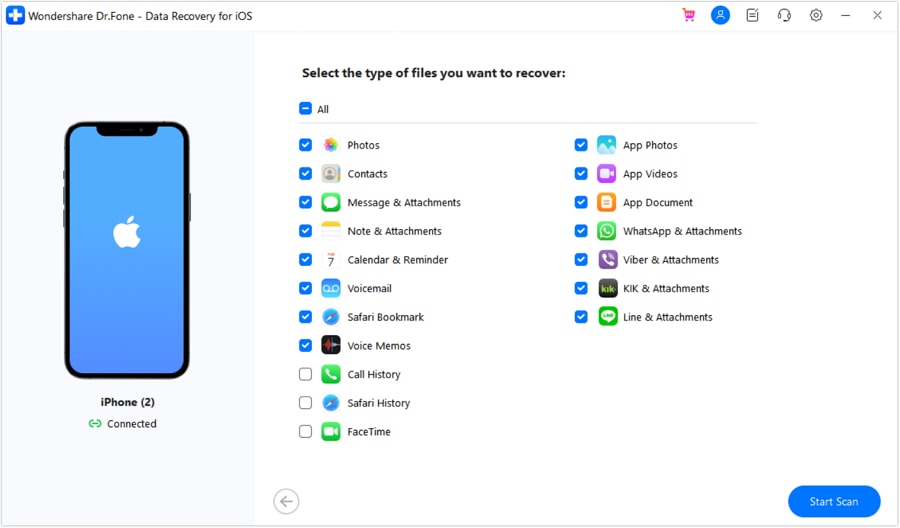
- Step 6: After Dr.Fone recognizes the device, choose Contacts if that file type is available for your device and recovery mode, then click Start Scan. The options displayed may differ from the screenshots.
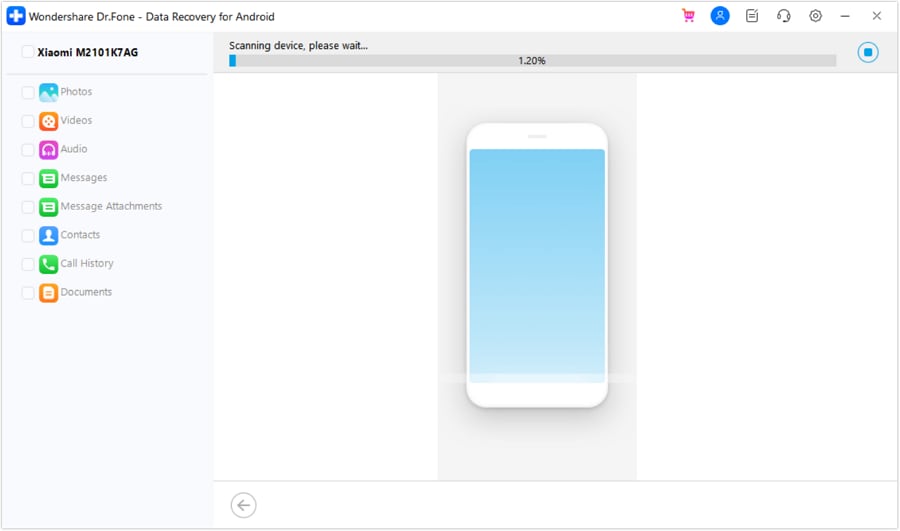
- Step 7: Keep the device connected while Dr.Fone scans accessible data. A scan cannot guarantee that deleted contacts remain in recoverable device storage; avoid unnecessary device activity while evaluating the results.
- Step 8: Review the scan results and filter Contacts to preview any records found. On Android, select the contacts you need and click Recover to save supported results to a computer. On iOS, choose Restore to Device or Recover to Computer when offered for the selected data. The trial permits scan and preview, not recovery.
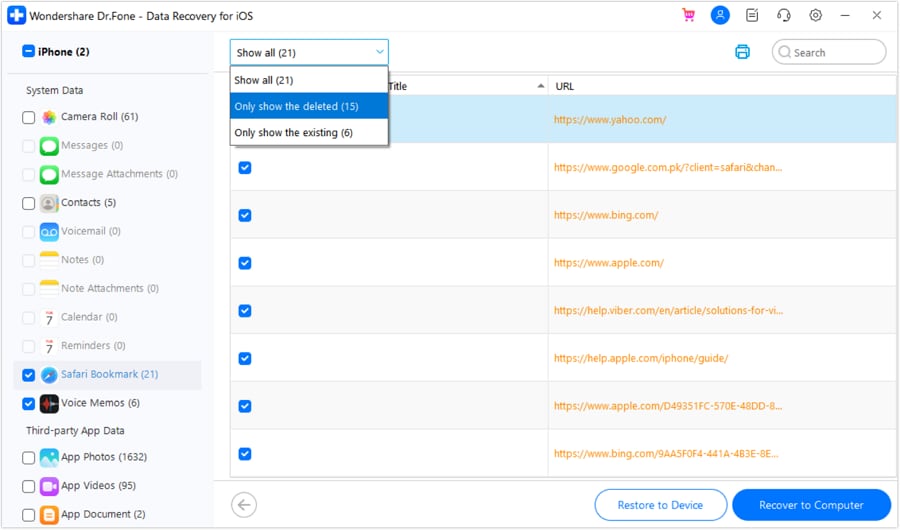
- Step 9: For iOS device restore, select the receiving device and click Continue; disable Find My only if the product explicitly prompts you and you are comfortable with the security implications. For Android computer recovery, confirm the destination folder and click Recover.
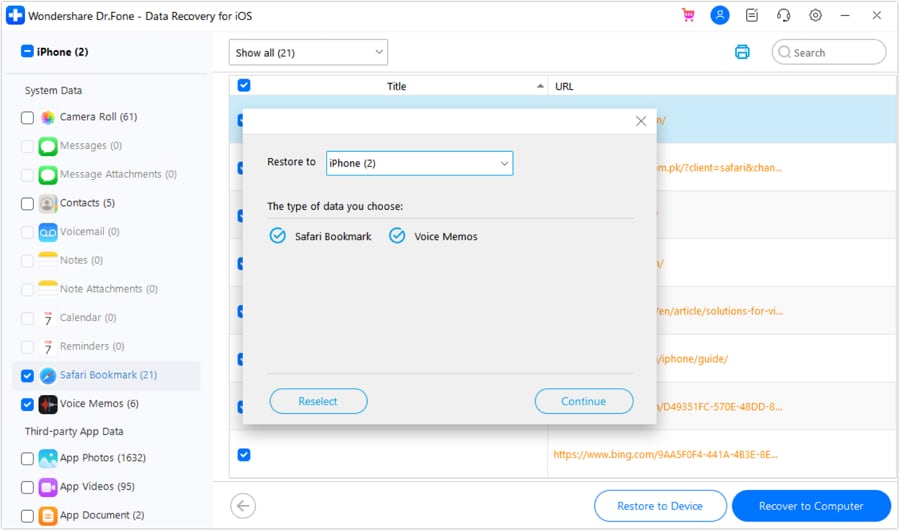
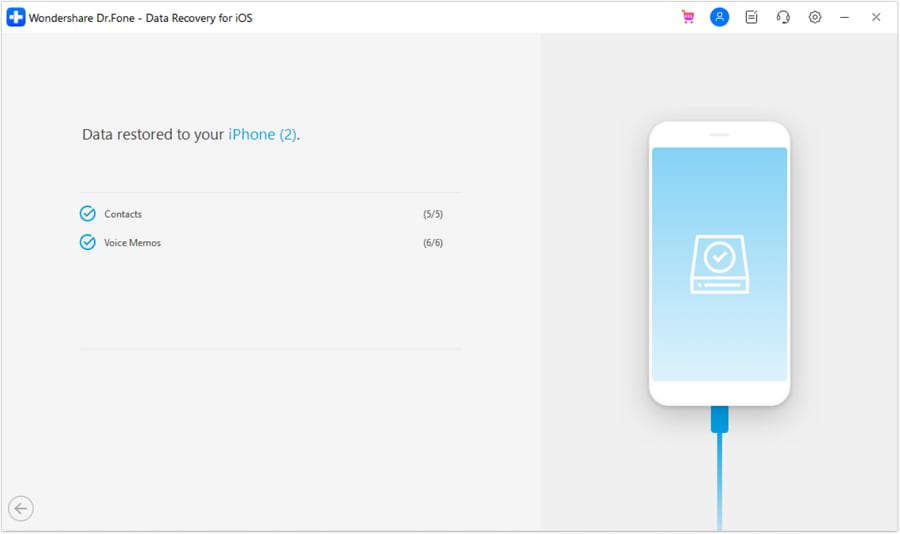
- Step 10: Check the exported files or restored contacts after the operation completes. Android device scans typically save selected results to the computer; if a compatible vCard is produced, import it to the correct phone contact account as needed. Device restore availability differs by platform and data type.




 safe & secure
Conclusion
To recover deleted contacts on Android or iPhone, identify their original storage account before choosing a method: use Google Trash for an eligible individual contact, Google Undo changes only when you accept a bulk rollback, iCloud Restore Contacts for an available iCloud archive, or Outlook People’s Deleted/Recoverable folders for Outlook contacts. A device-only contact with no usable backup may not be recoverable. If you want to evaluate a compatible device scan, Wondershare Dr.Fone. can preview results before purchase; downloading the trial does not include paid recovery, and neither software nor an account provider can guarantee a missing record.
FAQ
-
1. Is it possible to recover deleted contacts from iPhone without any prior backup?
Not necessarily. First check whether the contact is in iCloud, Google, or Outlook and whether that service has a recoverable copy. If it was device-only with no backup, modern iPhone storage and sync behavior mean that direct recovery cannot be promised. A compatible Dr.Fone iOS scan may show accessible records for preview, but an absent record cannot be recreated, and restoring or exporting found data requires a paid license. -
2. How long does Google Contacts keep deleted phone numbers?
Google Contacts generally lets you recover a contact from Trash within 30 days. Its separate Undo changes feature reverses changes made within the past 30 days in bulk and can hide contacts added after the selected time; export recent contacts before using it. Permanently deleted Trash contacts cannot be restored through Google Contacts. These options apply to contacts saved in that Google Account, not iCloud- or device-only contacts. -
3. Can I selectively recover deleted contacts from Android without restoring the whole phone?
Sometimes. For a Google contact, select the individual record in Google Contacts Trash and click Recover if it remains eligible. For device data, Dr.Fone’s Android module may let you preview and select contacts its scan finds and save supported results to a computer; it cannot guarantee deleted records remain available. The Data Recovery trial does not perform the final recovery without a license. -
4. Why are my restored Outlook contacts not appearing on my smartphone?
Check that the contact appears in the correct Outlook/Exchange account on the web. Then verify phone connectivity, Contacts sync for that same account, and whether the Contacts app is filtering out its list. If it is missing online, check People > Deleted and Recover deleted; organizational retention rules may limit what can be restored. -
5. Can I restore one iCloud contact without affecting the rest?
Apple’s iCloud.com Restore Contacts selects an earlier archive for the entire iCloud contact list; the selected version replaces current iCloud contacts across devices with iCloud Contacts enabled. Export or back up recent contacts first. iCloud saves the current version before the restore so you can return to it if needed. -
6. Is Dr.Fone contact recovery free, and what if the scan finds nothing?
The Data Recovery trial scans and previews accessible results; recovering or exporting requires the full paid version. If no deleted contact appears, a purchase does not guarantee that the missing data will become recoverable. Check the original cloud account and any existing backups before paying.
 Add Wondershare Dr.Fone as a preferred source on Google