
iOS 26 Glitches: Common Bugs, Quick Fixes, and What to Do Next

Oct 23, 2026 • Filed to: Phone Repair Solutions • Proven solutions
 TL;DR:
- Update iOS and your apps first, then restart the iPhone.
- If only one app fails, troubleshoot or reinstall that app before repairing iOS.
- For lag or visual glitches, try a force restart and reduce transparency if the interface remains choppy.
- For Wi-Fi, Bluetooth, CarPlay, or FaceTime issues, test the connection first and reset network settings only if needed.
- If the iPhone is stuck on the Apple logo, boot looping, or repeatedly crashing, consider system repair. Dr.Fone Standard Repair is designed to retain user data, while Advanced Repair and an iOS downgrade can erase data, so back up first.
Ask AI for a summary
 ChatGPT
 Perplexity
 Gemini
 Claude
 Grok
Grok
If your iPhone is glitching after the iOS 26 update, start by checking whether the problem affects one app, one connection, or the whole system. Common iOS 26 glitches include lag, freezing, visual glitches, app crashes, battery drain, overheating, Wi-Fi or Bluetooth problems, and restart loops.
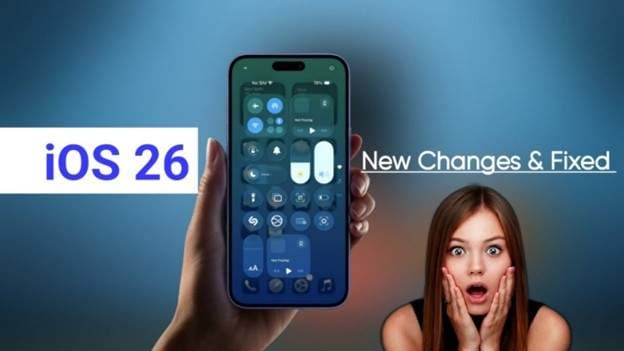
As of September 20, 2026, Apple lists iOS 26.7 as a September 14 security release for iPhone 11 and later. If you are staying on iOS 26, install the newest compatible iOS 26 update offered to your device before deeper troubleshooting. If the problem continues, use the symptom-based fixes below and escalate only when the issue is system-wide or prevents the iPhone from starting normally.
- Part 1. Why Is My iPhone Glitching After iOS 26 Update?
- Part 2. Is iOS 26 Stable Now? Version Status and Quick Diagnosis
- Part 3. Top iOS 26 Glitches and How to Fix Them
- Part 4. How to Fix FaceTime Not Working on iOS 26
- Part 5. Repair iOS 26 or Downgrade Safely

- Part 6. How to Prevent iPhone Glitches After the Latest Update
Part 1. Why Is My iPhone Glitching After iOS 26 Update?
An iPhone can start glitching after an iOS 26 update for several different reasons, so the best fix depends on whether the problem is temporary, app-specific, network-related, or system-wide.
Common causes include:
- Post-update background work: indexing, app updates, photo analysis, and other background tasks can temporarily increase heat or reduce responsiveness after a major update.
- App compatibility: one outdated or unstable app can crash, freeze, or behave incorrectly even when the rest of iOS works normally.
- Settings or connection conflicts: Wi-Fi, Bluetooth, CarPlay, VPN, or network settings can misbehave after a system change.
- Low free storage or interrupted update processes: limited space or an incomplete installation can contribute to update failures, repeated restarts, or boot problems.
- Deeper system or hardware problems: if the same issue survives app updates, restarts, network resets, and a clean system repair, hardware diagnosis may be the next step.
Typical symptoms include screen lag, touch delays, frozen widgets, Bluetooth disconnects, battery drain, overheating, app crashes, and random restarts. The key is to identify the scope of the problem before jumping to a full restore or downgrade.
Part 2. Is iOS 26 Stable Now? Version Status and Quick Diagnosis
There is no single yes-or-no stability answer for every iPhone. Apple released iOS 26.7 on September 14, 2026 for iPhone 11 and later, so advice centered on older releases such as iOS 26.1, 26.2, or 26.3 is now historical. If you are staying on iOS 26, first install the newest compatible iOS 26 update offered in Settings > General > Software Update.
Model-specific searches still matter. For example, iPhone 13 glitching after iOS 26 appears in this page's search demand. However, the model alone does not prove the cause. An iPhone 13 with one crashing app needs a different fix from an iPhone 13 that freezes across the whole system.
Quick check: temporary glitch, software problem, or possible hardware issue?
- Only one app is affected: update or reinstall that app first.
- The whole interface is briefly slow after updating: restart the iPhone, keep it on power and Wi-Fi, and recheck after background activity settles.
- Wi-Fi, Bluetooth, CarPlay, or FaceTime is affected: test another network or accessory before resetting network settings.
- Several apps freeze, the phone restarts, or it cannot boot: treat it as a system-level problem and move to repair or recovery options.
- Display, touch, camera, or charging problems persist after a verified software repair: consider Apple or an authorized service provider for hardware diagnosis.
This triage is more useful than labeling particular supported iPhone generations as universally "high risk" or "low risk," because symptoms, installed apps, storage, battery condition, and update state can differ from device to device.
Part 3. Top iOS 26 Glitches and How to Fix Them
If your phone is glitching after update iOS 26, match the symptom to the smallest useful fix first. Move to system repair only when simpler checks fail or the iPhone cannot operate normally.
1. Battery Drain, Charging Problems, and Overheating
Symptoms:
You may notice faster battery drain, a warmer phone, poor standby life, or unusual background activity after updating.
Quick Fix:
- Open Settings > Battery and check which apps or system activities are using the most power.
- Update all apps from the App Store and install the newest compatible iOS 26 update offered to the device.
- Use Low Power Mode temporarily and limit Background App Refresh for non-essential apps.
- If the phone remains unusually hot or drains rapidly after the initial post-update period, restart it and troubleshoot the highest-usage apps before considering a system repair.
2. Screen Flickering, Display Freezes, and UI Lag
Symptoms:
Visual glitches can include choppy animations, frozen panels, delayed touch response, misaligned interface elements, or occasional screen flickering.
Quick Fix:
- Force restart the iPhone: press Volume Up, press Volume Down, then hold the Side button until the Apple logo appears.
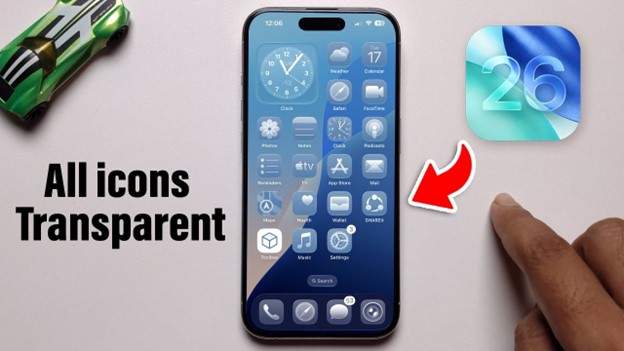
- If transparency effects make the interface feel choppy, go to Settings > Accessibility > Display & Text Size and try Reduce Transparency.
- Remove recently added widgets or animated wallpapers if the glitch appears only on the Home Screen or Lock Screen.
- If visual or touch problems remain after a verified software repair, seek hardware diagnosis rather than repeating resets.
3. Wi-Fi, Bluetooth, and CarPlay Connection Bugs
Symptoms:
Wi-Fi drops, Bluetooth audio interruptions, failed CarPlay pairing, or unstable accessory connections can appear after an update.
Fix:
- Restart the iPhone and the router, vehicle system, or Bluetooth accessory involved.
- Forget and reconnect the affected Wi-Fi network or Bluetooth accessory.
- If multiple connections fail, go to Settings > General > Transfer or Reset iPhone > Reset > Reset Network Settings.
4. Boot Loops and iPhone Stuck on Apple Logo
Symptoms:
If the iPhone freezes on the Apple logo, restarts repeatedly, or cannot finish startup after an update, the problem is more serious than a single-app glitch.
Emergency Protocol:
- Connect the iPhone to a computer with a stable USB cable.
- Enter Recovery Mode by pressing Volume Up, pressing Volume Down, and then holding the Side button until the recovery screen appears.
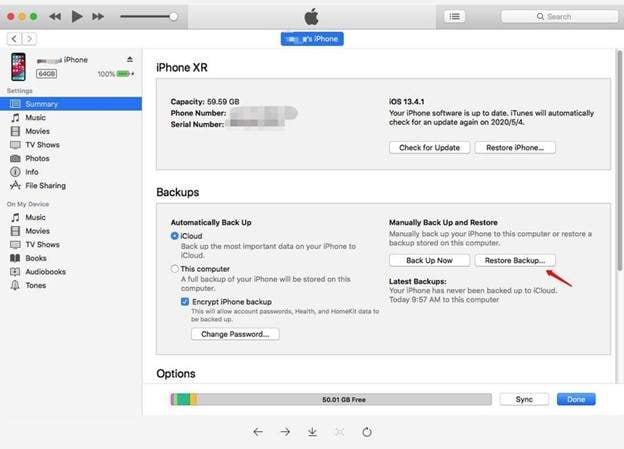
- Use Finder, Apple Devices/iTunes where applicable, or a verified system-repair workflow. Back up first whenever the device is still accessible.
If your device is frozen during startup, you can also check iOS 26 Stuck on Apple Logo.
5. Apps Crashing or Freezing After the Update
Symptoms:
If one app crashes or freezes while the rest of the iPhone works normally, start with the app rather than repairing the whole operating system.
Fix Hierarchy:
- Update the affected app and all other pending apps from the App Store.
- Force close and reopen the app, then restart the iPhone if needed.
- Delete and reinstall the app if the problem continues and its data is safely synced or backed up.
- If several unrelated apps fail together, treat the problem as system-level and continue to the repair options below.
Part 4. How to Fix FaceTime Not Working on iOS 26
FaceTime not working on iOS 26 can show up as calls that do not connect, frozen video, a black screen, or audio interruptions. Treat it as a connection or service issue first unless FaceTime is failing together with broader system freezes or crashes.
How to fix FaceTime not working on iOS 26:
- Install the latest iOS update available to your iPhone.
- Go to Settings > Apps > FaceTime, turn FaceTime off, then turn it back on.
- Check that your phone number or Apple Account is enabled for FaceTime.
- Switch between Wi-Fi and cellular data to see whether the failure is connection-specific.
- Make sure Settings > General > Date & Time > Set Automatically is enabled, then restart the iPhone.
- If FaceTime fails together with Wi-Fi or Bluetooth, consider resetting network settings. If the whole system is unstable, move to system-level repair instead of repeatedly toggling FaceTime.
Apple's current FaceTime troubleshooting guidance also recommends updating iOS, checking FaceTime under Settings > Apps, verifying cellular access, date and time, and restarting the device. See Apple Support: If you can't make or receive a FaceTime call on your iPhone or iPad.
If your issue also affects messaging or calling features, you can continue with these related articles: RCS Messaging Not Working in iOS 26 and iOS 26 iMessage Updates.
Part 5. Repair iOS 26 or Downgrade Safely
If basic troubleshooting does not solve persistent iOS 26 glitches, choose the recovery path based on both severity and data-loss risk. Dr.Fone - System Repair offers Standard Repair, Advanced Repair, and iOS upgrade/downgrade workflows, but they do not have the same data impact.

Dr.Fone - System Repair
Use the repair mode that matches the severity of the iOS problem.
- Standard Repair is designed to fix common iOS system problems while retaining user data.
- Advanced Repair is intended for more severe cases and erases device data, so back up first when possible.
- The downgrade workflow installs an Apple-signed iOS version and normally erases device data.
- Repair workflows cover issues such as a stuck Apple logo, black screen, boot loops, recovery mode problems, and update failures.


1. Repair Common System Problems
If your phone is glitching with iOS 26 across multiple apps or the interface, Standard Repair is the first Dr.Fone repair path to consider because the current guide states that it retains device data while repairing common iOS system problems.
If the iPhone is severely corrupted or Standard Repair does not work, Advanced Repair is the deeper option. The current Dr.Fone guide states that Advanced Repair erases all device data, so use it only after backing up what you can.
2. Downgrade to an Earlier Signed iOS Version
Downgrade is a different decision from Standard Repair. Dr.Fone's current downgrade guide warns that the process normally erases device data and asks users to back up before continuing. It also depends on an older iOS version still being signed and available for the device.
Step 1. Download and install Dr.Fone - System Repair. Launch the program, open Toolbox, choose System Repair, select iPhone, and open the iOS upgrade/downgrade workflow.
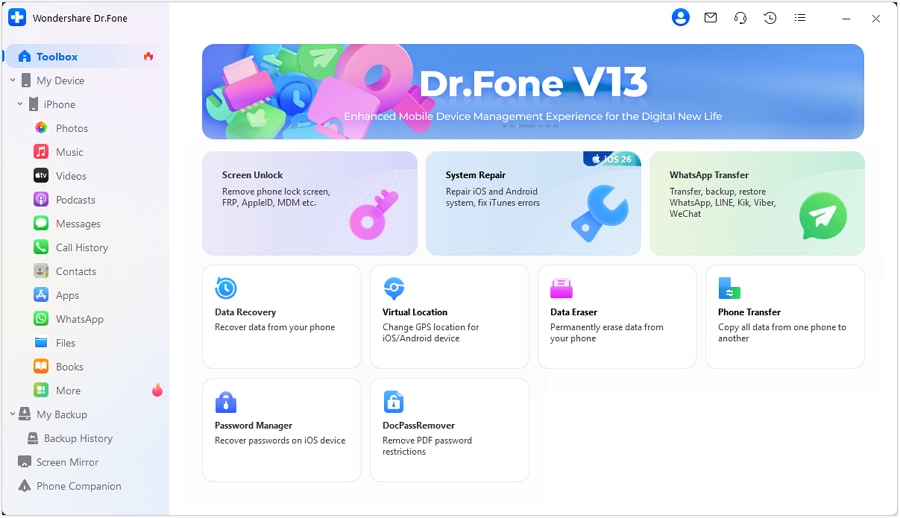
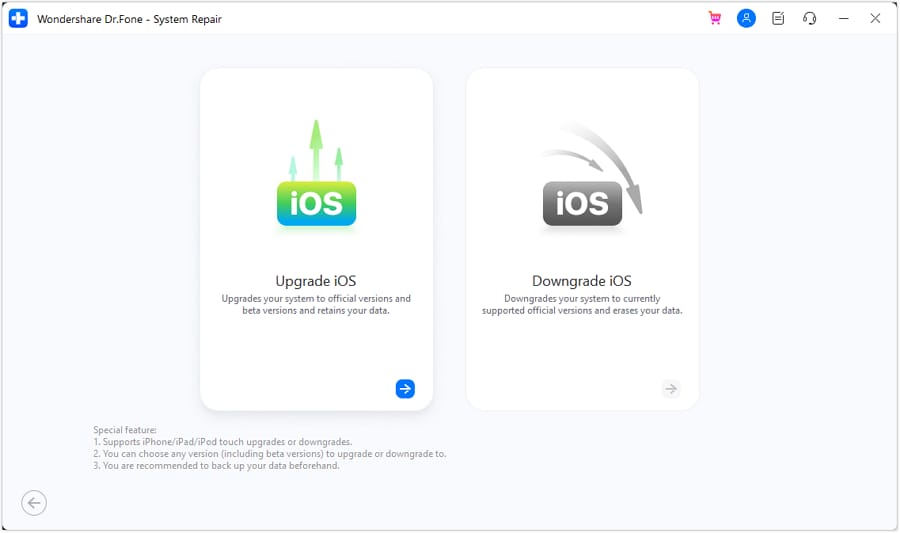
Step 2. Choose Downgrade iOS. Review the backup warning before proceeding because downgrade normally erases device data.
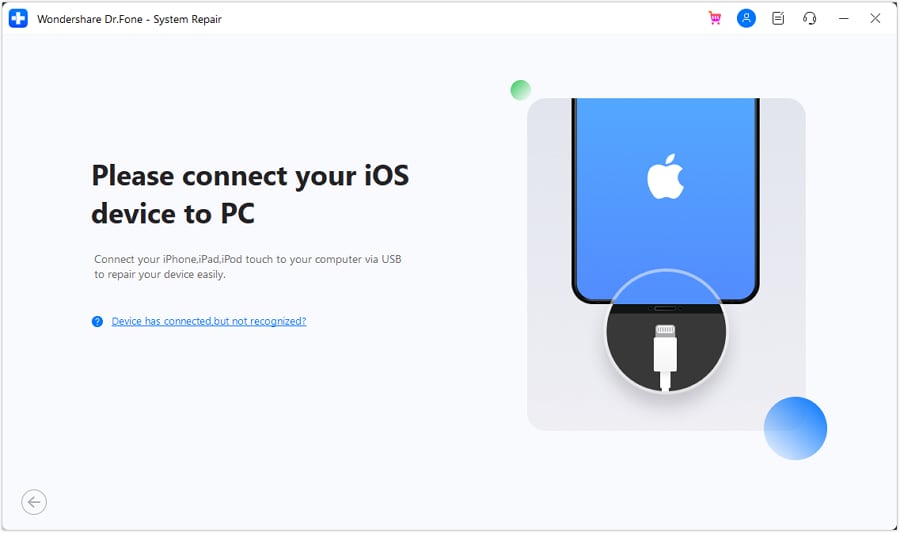
Step 3. Connect the iPhone to the computer with a stable USB cable and wait for Dr.Fone to recognize the device.
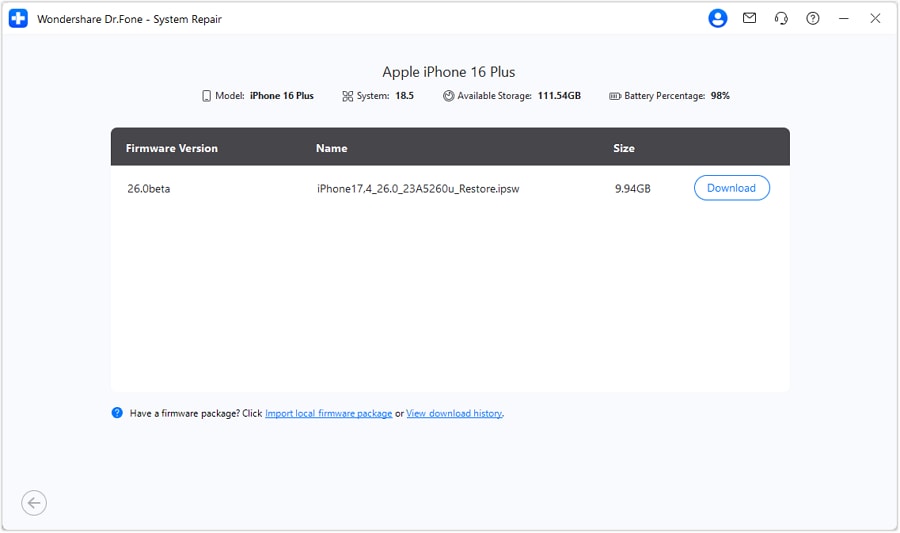
Step 4. Select an available signed iOS firmware version and click Download. Dr.Fone verifies the firmware package before installation.
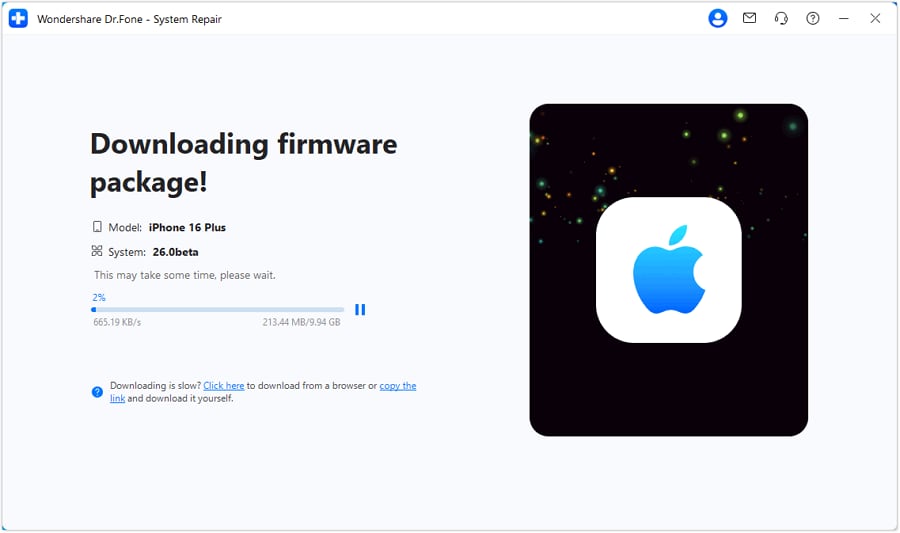
Step 5. After verification, click Repair Now to install the selected iOS version. Keep the device connected until the process finishes.
 safe & secure
4,624,541 people have downloaded it
3. Choose the Right Recovery Path
| Situation | Best first path | Data impact |
|---|---|---|
| System-wide glitches but the iPhone still works | Standard Repair | Designed to retain user data |
| Severe corruption or Standard Repair fails | Advanced Repair | Erases device data; back up first |
| You need an older Apple-signed iOS version | Downgrade iOS | Normally erases device data; back up first |
For a dedicated downgrade walkthrough, see How to Downgrade iOS 26. For related system issues, you can also read: iOS 26 Update Failed, iOS 26 Unable to Check for Update, and iOS 26 Stuck on Install Now.
Part 6. How to Prevent iPhone Glitches After the Latest Update
If you want to reduce future iPhone glitches after latest update, focus on backup, storage, app compatibility, and version freshness rather than assuming a specific iPhone model will always be more or less stable.
Before Updating
- Back up your iPhone: Use iCloud or a computer backup before a major update, repair, or downgrade.
- Free up storage: Leave enough space for the update and post-update system work to complete.
- Update apps first: Current app versions reduce compatibility problems after the system update.
- Use stable power and Wi-Fi: Avoid interrupting an installation in progress.
After Updating
- Install follow-up patches: If Apple offers a newer compatible iOS 26 point release, install it before relying on old version-specific fixes.
- Restart and update apps: This resolves many app-level and temporary post-update problems.
- Check the scope of the problem: Separate one-app failures from network-only issues and whole-system instability.
- Escalate only when needed: Use system repair for persistent system-wide problems and hardware service when software troubleshooting does not change the symptom.
When to Wait Instead of Updating
If your iPhone is business-critical, avoid beta builds on your primary device and confirm that essential apps and accessories support the release before installing a major update. For stable releases, keep a current backup so you have recovery options if an update problem appears.
Conclusion
If your iPhone is glitching after the iOS 26 update, first identify whether the problem affects one app, one connection, or the entire system. Update to the newest compatible iOS 26 release offered to your device, update apps, restart, and apply the symptom-specific fix before using a full-system recovery method.
For persistent system-wide iOS 26 glitches such as boot loops, repeated crashes, or a frozen startup, Dr.Fone - System Repair provides different recovery paths. Standard Repair is designed to retain user data, while Advanced Repair and the downgrade workflow can erase data. Back up first whenever possible, and use hardware service if the same symptom remains after a verified software repair.
safe & secure4,624,541 people have downloaded it
 Q1. Why is my iPhone glitching after the iOS 26 update?Q2. How do I fix FaceTime not working on iOS 26?Q3. Is iOS 26 stable now?Q4. Why is my iPhone 13 glitching after iOS 26?Q5. Will repairing or downgrading iOS 26 erase my data?


iOS 26 Topics
- iOS 26 Downgrade/Upgrade
- iOS 26 Bugs/Issues
- 1. iOS 26 Beta Bugs List
- 2. Fix iOS 26 Glitches
- 3. Unable to Verify Update iOS 26
- 4. Hey Siri Not Responding on iOS 26
- 5. RCS Messaging Not Working in iOS 26
- 6. iOS 26 Beta Battery Drain
- 7. iOS 26 Stuck on Install Now
- 8. iOS 26 Update Not Showing Up
- 9. iOS 26 Unable to Check for Update
- 10. iOS 26 Update Failed
- 11. iOS26 Developer Mode Not Showing
- 12. iOS26 Beta Frozen
- 13. iOS 26 Camera Not Working
- 14. iOS 26 Beta Control Center Bugs
- 15. iOS 26 Stuck on Apple Logo
- 16. iOS 26 Widget Not Working
- 17. iOS 26 Face ID Not Working
- 18. Mail Notifications Not Working
- 19. Taking Forever to Update iOS 26
- 20. iOS 26 Beta Laggy
- iOS 26 Features
- ● Manage/transfer/recover data
- ● Unlock screen/activate/FRP lock
- ● Fix most iOS and Android issues
- Free Download Free Download



James Davis
staff Editor
Generally rated4.5(105participated)