Teleport your device anywhere instantly with one click.


 100% Security Verified | No Subscription Required | No Malware

 :

 ChatGPT
 Perplexity
 Gemini
 Claude
 Grok

Monster Hunter Now spoofing means falsifying the location a game receives instead of playing from your actual position. The official discipline policy explicitly treats GPS location spoofing as cheating. It is not simply an unresolved community preference, and using a different utility or waiting between movements does not make it permitted.
Monster Hunter Now connects hunts and resources to real-world exploration. That can create genuine difficulties for players with limited mobility, time, or safe places to walk. Understanding those difficulties is important, but so is distinguishing accessibility concerns from claims that a tool is compatible, undetectable, or exempt from the rules. This 2026 guide reviews the source's named utilities, gameplay implications, enforcement policy, and reporting route without promising a working game bypass.
In this article
What location spoofing means in Monster Hunter Now
A GPS spoofer attempts to make a phone report a selected map position rather than its real coordinates. In a location-based game, the intended effect is to appear somewhere else or simulate movement without physically taking that route.
Changing a position in a map app does not prove that Monster Hunter Now accepts it. The game can reject simulated data, restrict access, or take account action. A tool's generic GPS features therefore need to be evaluated separately from game compatibility and the game's permission to use them.
Why players try to manipulate their position
Players may want to reach more encounters, reduce travel time, or play while they cannot go outside. Those motivations explain interest in spoofing; they do not establish that it reliably produces resources or that the operator allows it.
A VPN and a GPS-changing app are not equivalent. A VPN primarily changes how network traffic is routed and the IP address a website may see. A GPS tool attempts to change device-reported coordinates. A VPN alone is not evidence that a phone-based game will place your character in another location.
Android mock-location settings and desktop-assisted simulation are examples of technical approaches people discuss. Their existence does not supply a game-approved workaround. Prefer the game's supported features, contact support about access needs, and avoid installing unknown software just because a forum calls it safe.
Common tools discussed in spoofing guides
The original article called its list a top five but actually supplied four app entries. All four are retained here in their original order with corrected sequential numbering. This is a feature-and-limitation review, not a current ranking or an endorsement for use in Monster Hunter Now.
Store listings describe their own utilities, not guaranteed game support. Check the exact developer, device requirements, permissions, and current distribution source before considering any permitted location test. No APK, installer, or game modification was downloaded or tested for this guide.
1. VPNa - Fake GPS Location Go

The official VPNa listing describes choosing a location, starting a mock GPS position, and saving locations for later use without requiring root. It also explicitly warns that games or apps may suspend accounts for falsifying location and says its developers do not support cheating.
Despite its name and a VPN analogy in the listing, those GPS features should not be presented as proof of a bundled encrypted VPN service. The source also noted advertising, no joystick in its described feature set, and unexpected location resets. These are usability concerns rather than advantages or evidence of current Monster Hunter Now compatibility.
2. Fake GPS Location - Hola

The source describes a Hola-branded Android location utility and an APK-based installation route. That description does not establish a trustworthy current download, the identity of every similarly named app, or support across all Android versions. Do not equate the name with verified game compatibility.
Developer options for mock positions and permission to install an unknown app are separate settings. An APK found through a search result should not be treated as safe merely because a guide once mentioned it. If you cannot verify the publisher and distribution source, do not sideload it or grant permissions. There is no need to weaken device protections to resolve an ordinary game-access question.
3. Fly GPS - Location fake/Fake GPS

Fly GPS's store description includes joystick controls, location search, favorites, and recent history, with Android developer/mock-location setup. These describe GPS simulation features. They do not prove that every Android phone from a particular period or every location-based game accepts the output.
The source highlighted ads and instability; current store material also includes advertising-related and functionality complaints. Such reports are individual experiences, not controlled compatibility tests. Avoid converting a changing star rating into a quality guarantee, and do not assume that a joystick can bypass Monster Hunter Now or Pokemon Go checks.
4. Fake GPS Go Location Spoofer

The source's Fake GPS Go entry describes position changes, custom routes, and an adjustable update interval. The corresponding store listing also describes saved places and history, while distinguishing additional paid features. Features can differ by edition and version, so inspect the actual listing rather than assuming every option is included.
The listing describes a no-root mode for Android 6.0 and above, but that is not a promise that every device or game will work. The source's battery-drain and intermittent-position complaints remain possible limitations rather than measured performance findings. A longer feature list or a cooldown chart does not remove the game's rules or account risk.
The account consequences of spoofing
The current official Monster Hunter Now help pages identify the operator as Scopely Explore. The original Niantic help URLs redirect to those pages. Keep the distinction between an app's technical capability and the operator's policy clear before deciding whether to install or use anything.
Spoofing is an explicit rules violation
The original Terms of Service reference opens the official three-strike discipline policy. It names falsifying location through GPS spoofing as cheating, alongside unauthorized access through third-party software or add-ons.
The policy describes an initial warning lasting approximately seven days. It does not characterize a warning as a harmless opportunity to continue. Crucially, players are not always entitled to three strikes: some conduct can lead to immediate termination without advance warning.
Suspension can progress to permanent termination
A second strike can temporarily remove account access for approximately 30 days. The policy describes a login suspension message that cannot simply be bypassed to continue playing. If cheating continues after the first two strikes, a third strike can permanently ban the account.
These are policy descriptions, not an assurance that every case follows exactly that sequence. Using a supposedly more reliable spoofer does not change whether falsifying location is prohibited. If you believe an action was mistaken or your account was compromised, use official support rather than an unofficial bypass service.
Fair play involves more than an individual battle
In a location-based game, access to places, encounters, resources, and time is part of the design. Simulating travel can change those conditions even if the combat interface and an individual monster's reward remain the same.
That is why the operator's rules address location falsification itself rather than only altered combat. The source's argument that other offenses might be worse is not permission to spoof. Fair-play expectations apply to progression and participation as well as direct competition.
How spoofing can affect gameplay and other players
The original article concluded that unchanged monsters and rewards prove spoofing has no gameplay impact. That conclusion does not follow. If location determines which opportunities a player can reach, bypassing travel can affect opportunity and progression even without changing the loot table.
The practical extent depends on the game's current systems and the conduct involved; it should not be exaggerated into a measured effect without evidence. The sounder distinction is that identical battle mechanics do not establish identical access conditions. Players and organizers can reasonably care about that difference.
You can acknowledge unequal access to safe walking routes or leisure time without presenting unauthorized location changes as a neutral feature. Asking for supported accessibility improvements is different from claiming that a personal reason overrides the rules.
What is known about anti-spoofing enforcement
Scopely Explore's published guidelines describe using automated systems and user reports to identify violations. They do not disclose a complete technical recipe for every Monster Hunter Now location check. Claims about exactly which movement pattern, device signal, or cooldown defeats detection should therefore not be treated as confirmed facts.
A network error is also not a reliable diagnosis of anti-cheat action. Connectivity problems, app faults, device conditions, and rejected data can have different causes. If normal play fails, troubleshoot the legitimate app and connection or contact support instead of assuming that another spoofer is the fix.
No timer, modest simulated speed, or waiting period guarantees that spoofing is undetectable or permitted. The absence of an immediate warning is not evidence that the account is safe.
Accessibility concerns and ethical use
Limited mobility, fatigue, disability, and safety concerns can make outdoor games difficult to access. Those are valid issues for developers and communities to address. They do not mean every player has equal ability to travel, and they deserve more than the instruction to simply walk more.
However, wanting to play from home does not create an exception to a published rule. Use supported game options, ask official support about available accommodations or features, and choose a different activity when safe play is not possible. Do not present spoofing as authorized single-player behavior simply because another person is not visible in the encounter.
GPS simulation can be appropriate in a controlled environment where you own the device and have permission to test the application involved. Testing your own location-aware software is materially different from falsifying location in an online game that explicitly prohibits it.
Reporting suspected location spoofing
The source's effortless method link now redirects to the current official reporting article. It directs players to contact support through the app and includes spoofing among reportable conduct.
Step 1Use the official support route
Open the game's support or contact option, or follow the contact-through-the-app route in the official help article. The exact menu labels can change.
Step 2Describe observable facts
Supply relevant in-game identifiers, times, and a concise description if the form requests them. A surprising map position or a network problem alone does not establish that someone cheated.
Step 3Leave enforcement to support
Do not harass the player, publish personal information, or confront them in person. The operator can review reports alongside its other systems.
Conclusion
Monster Hunter Now spoofing is prohibited by the current official policy, not merely an undecided community gray area. The source's four named tools illustrate GPS-simulation features and limitations, but none should be treated as verified game support or a way to avoid enforcement. Distinguish accessibility needs, permitted testing, and online-game rules, and use official support for reports or account concerns.
For a separate, permitted GPS-testing workflow, Dr.Fone - Virtual Location is described below. A product's presence here does not indicate approval from the game operator.
Related GPS simulation with Dr.Fone - Virtual Location
 Set your map route to simulate GPS movement.
- Set your wanted movement speed.
- HD and large map view to check location.
- Fake GPS location to anywhere.
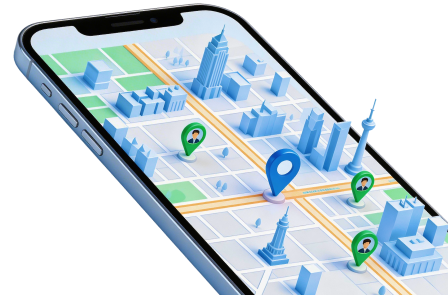
Dr.Fone - Virtual Location offers destination selection, route simulation, configurable movement speed, and map-based controls on supported devices. These functions are useful when the application owner permits location testing; they are not evidence that Monster Hunter Now accepts a simulated position.
The product page's general game references should not be interpreted as a guarantee of current game compatibility or account safety. Its Android section explicitly excludes Pokemon Go, which also illustrates why platform capabilities must be checked separately. Neither that limitation nor generic GPS support establishes Android Monster Hunter Now compatibility.
Step 1Prepare a permitted test
Use your own supported phone and an application you are authorized to test. Open Virtual Location on your computer and follow the connection prompts.
Step 2Select and confirm a destination
Choose Teleport Mode, search for the coordinates or place, inspect the destination, and confirm with Move Here. Keep this separate from a prohibited online-game workflow.
Step 3Verify and restore actual coordinates
Check your map app, finish the authorized test, and follow the tool's restart prompt to restore the actual position. Verify it again before using real-world navigation or location sharing.
No GPS changer can guarantee exemption from the Monster Hunter Now discipline policy. Use official gameplay features for the game and reserve simulation for contexts that allow it.




FAQ
1. Is Monster Hunter Now location spoofing allowed?
No. The current official discipline policy explicitly lists falsifying GPS location as cheating. Personal convenience or accessibility concerns do not create an automatic policy exception.2. Are players guaranteed three warnings before a ban?
No. The policy describes an approximately seven-day warning, an approximately 30-day suspension, and permanent termination, but also allows immediate termination for some conduct.3. Can a VPN alone move my character to another GPS location?
A VPN changes network routing and potentially the visible IP address, not the phone's GPS coordinates by itself. That does not establish game compatibility or permission to falsify location.4. Does a cooldown timer make spoofing safe?
No. A waiting period does not change the rules or guarantee non-detection. Use official support for account questions and permitted testing tools only in authorized contexts.
 Add Wondershare Dr.Fone as a preferred source on Google