Teleport your device anywhere instantly with one click.


 100% Security Verified | No Subscription Required | No Malware


 :

 ChatGPT
 Perplexity
 Gemini
 Claude
 Grok
A Special Trade in Pokemon GO is an exchange involving categories such as Legendary Pokemon, Shiny Pokemon, or an entry the receiving Trainer has not registered. It uses the familiar trading screen, but eligibility, Stardust requirements, and a daily allowance make planning more important than simply choosing two Pokemon.
For a normal nearby exchange, both Trainers must have reached level 10 and meet in person, ordinarily within approximately 100 meters. This 2026 guide separates those local Special Trades from the newer Forever Friends Remote Trade feature, explains the confirmation process, and corrects several common assumptions about cost and GPS-changing tools.

In this article

Part 1: Which Pokemon GO exchanges count as Special Trades?
Think of a standard trade as an eligible exchange that does not trigger a special category. Neither combat strength nor subjective rarity alone decides the category. A common species can become a Special Trade when the recipient has never registered it, while a powerful registered Pokemon may remain eligible for a standard exchange.

The official trading rules list Legendary Pokemon, Shinies, Ultra Beasts, unregistered Pokemon and forms, and Pokemon with certain special features among Special Trades. Purified Pokemon also require special-trade handling. Check the actual selection and confirmation screens: an otherwise eligible Pokemon can still be unavailable because it has already been traded or falls under another restriction.
Special trading is not restricted to the two highest friendship tiers. Good Friends can trade, and raising friendship reduces the Stardust burden. One local Special Trade per day is the usual baseline, but an active event or seasonal bonus may increase that allowance. Read the current in-game bonus rather than assuming a permanent extra trade.
Part 2: Standard versus Special Trade requirements
The distinction has three practical consequences: which Pokemon can enter the exchange, what both participants must pay, and whether the exchange consumes a limited Special Trade. Both players need an eligible selection and sufficient Stardust. A friend having enough resources does not cover your own shortfall.
- Pokemon eligibility: registration status and special categories matter more than a Pokemon's perceived rarity. A new form may require different handling from an already registered form.
- Stardust: the requested amount depends on the Pokemon, registration, friendship, and any active discounts. There is no universal 40,000-Stardust fee for every Special Trade.
- Daily availability: the limited special allowance is separate from ordinary trading. An event offering extra Special Trades does not remove other eligibility rules.
- Friendship: stronger friendship generally makes expensive exchanges more affordable. Agree on the intended Pokemon before meeting so neither person discovers an unexpected cost at confirmation.
Remote Trades now provide a separate official option for eligible Forever Friends. Their rules and unlock requirements differ from local trading, and the official announcement says they do not count as Special Trades. Do not mix that feature with an instruction to complete a local Special Trade from any distance.
Part 3: Complete a local Pokemon GO Special Trade
Arrange a nearby meeting first, confirm that both accounts satisfy the trading requirements, and check that your daily Special Trade allowance remains available. The following four stages retain the original workflow while making the final acceptance explicit.
Step 1 Open the Friends tab
Launch Pokemon GO, select your Trainer portrait from Map View, and open Friends. Make sure you are using the account that owns the Pokemon you intend to exchange.
Step 2 Choose the nearby Trainer
Open your friend's profile and select Trade. Your friend must join the session from their own device; simply opening a profile does not begin a completed transaction.

Step 3 Inspect and select your Pokemon
Choose an eligible Pokemon and inspect the details shown before pressing Next. Traded stats can change; the displayed ranges are not a promise that the received Pokemon will retain its previous values.
Step 4 Review the cost and confirm together
After both selections appear, inspect the Stardust requirement, the receiving Pokemon, and any special-trade notice. Both Trainers must accept. Do not proceed if the fee, Pokemon, or displayed conditions differ from your agreement.
Part 4: GPS simulation is not an approved Special Trade shortcut
 Set your map route to simulate GPS movement.
- Set your wanted movement speed.
- HD and large map view to check location.
- Fake GPS location to anywhere.

Dr.Fone - Virtual Location changes a supported device's reported GPS position and can simulate movement along a chosen route. Its desktop map is useful for controlled location demonstrations and testing where those activities are permitted. It does not award Stardust, raise friendship, increase a Special Trade allowance, or make an ineligible Pokemon tradable.
The original shortcut depended on presenting a false position to a game. That is not equivalent to an official remote-trading entitlement: game services can reject simulated locations, and spoofing may violate their rules or lead to account penalties. Use an in-person exchange or the official Remote Trade feature when eligible, rather than treating a location changer as a guaranteed trading workaround. The software workflow below describes GPS simulation, not a promise that Pokemon GO will accept it.
Step 1 Install the desktop application
Choose the appropriate Windows or Mac installer and complete the normal installation. The original demonstration video remains available below; screen design and labels can differ between releases.
Original Virtual Location walkthrough; interface appearance may vary. Step 2 Connect the phone and start the module
Attach your supported phone to the computer using USB, follow any device trust or connection prompts, and enter Virtual Location. Select Get Started if that label appears in your installed version.
Step 3 Identify the map's current position
Let the application load its map and inspect the reported device position. Use the current-location control if the map is centered somewhere else. This is the position being reported, not independent proof of your physical whereabouts.
Step 4 Search in Teleport Mode
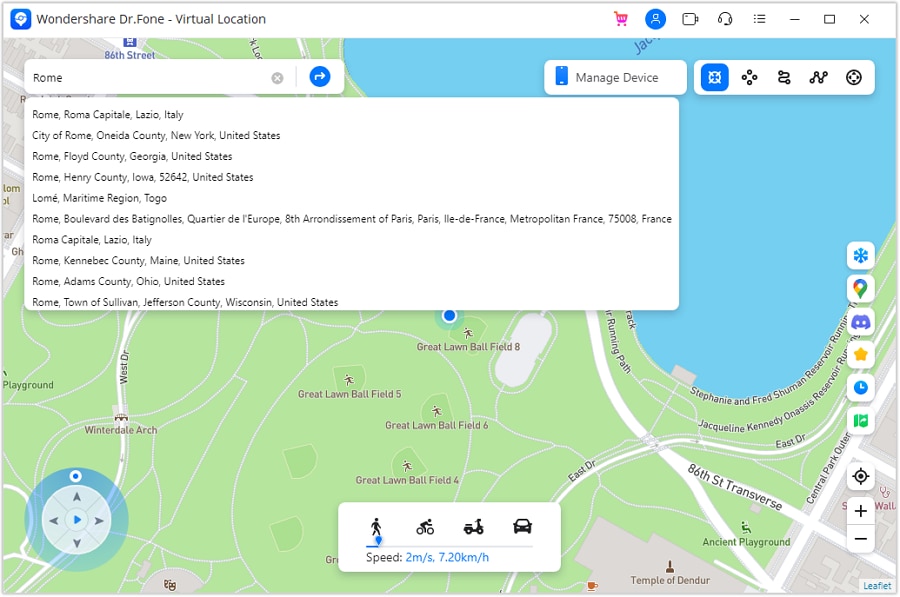
Activate Teleport Mode from the upper-right controls. Enter a destination in the search bar, submit it, and inspect the result. Check the label rather than relying solely on an icon's position in an older screenshot.
Step 5 Apply the selected point
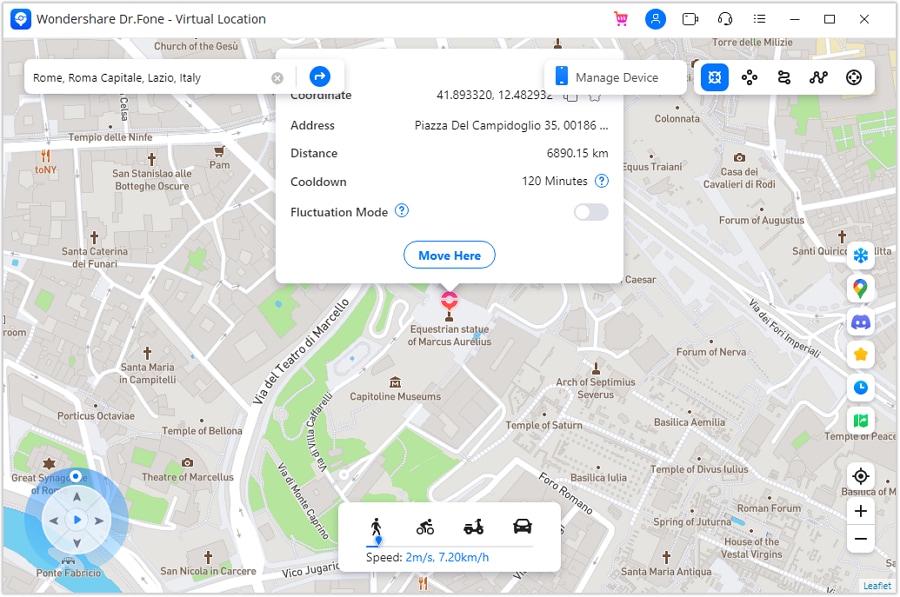
Verify the destination on the map and choose Move Here to apply the simulated GPS position. Confirm the point before continuing, especially when several search results have similar names.
Step 6 Compare the computer and phone maps
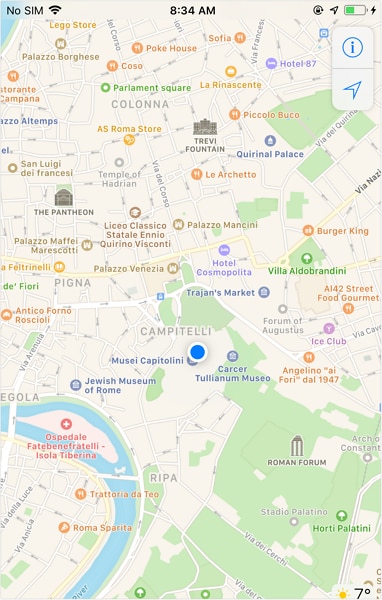
Review the new position on the desktop, then inspect the location reported in the phone's maps application. A matching pin confirms the demonstration's reported position; it does not establish that a game permits or accepts spoofing. Restore the real position when the test ends, following the application's restart prompt where applicable.
These steps finish the GPS demonstration. Return to the game's supported trading options for the actual exchange; a changed map pin does not replace account eligibility, friendship, proximity rules, or the confirmation fee.




Dr.Fone - Virtual Location: understand the GPS tool's role
- Set your map route to simulate GPS movement.
- Set your wanted movement speed.
- HD and large map view to check location.
- Fake GPS location to anywhere.
The location module provides a computer-based map for selecting a simulated destination or route on a compatible iOS or Android device. Route planning, adjustable movement speed, and a larger map address location-testing needs; none of those controls changes Pokemon ownership or server-side trading permissions.
For a permitted test, connect the device, choose the intended point or route, apply it, and verify the reported position before restoring normal location reporting. Check current device compatibility first. The fixed product heading's safety language is not a guarantee of immunity from a game's enforcement or assurance that every app will honor the simulated position.
Conclusion
Prepare for a Special Trade by checking the Pokemon's eligibility, both accounts' Stardust, your friendship level, and the current daily allowance. Then use the trading screen together and accept only after inspecting the final terms. Higher friendship can reduce the cost, but neither a fixed 40,000-Stardust assumption nor a GPS shortcut is a reliable substitute for the requirements shown in the game.
FAQ
1. Can a Special Trade produce a Lucky Pokemon?
Yes. An eligible Special Trade can also be lucky; those labels describe different aspects of the exchange. Lucky status does not remove the need to satisfy the trade's other conditions. For GPS software information, the product reference is Dr.Fone - Virtual Location; that page should not be mistaken for an explanation of Lucky Trade mechanics.2. Does trading a purified Pokemon use a Special Trade?
Purified Pokemon are handled as Special Trades, so check the available allowance and the displayed Stardust requirement. Do not confuse purified Pokemon with Shadow Pokemon, which have different trading restrictions.3. Is Meltan eligible for a Special Trade?
Meltan is Mythical, not Legendary, but it is an exception to the usual prohibition on trading Mythical Pokemon. Meltan and Melmetal can be traded under the applicable special-trade rules. Their Mythical classification should not be renamed a separate 'legendary trade' category.4. How much Stardust does a Special Trade cost?
The fee is not fixed. Pokemon category, registration, friendship, and event discounts affect it. A 40,000-Stardust figure applies to certain expensive new-entry exchanges between Best Friends outside discounts, not every Special Trade. The amount beside Confirm is the figure both players should verify before accepting.
 Add Wondershare Dr.Fone as a preferred source on Google