Teleport your device anywhere instantly with one click.


 100% Security Verified | No Subscription Required | No Malware

 :

 ChatGPT
 Perplexity
 Gemini
 Claude
 Grok
A useful Captain Tsubasa: Dream Team list starts with the card you own and the role your formation needs. Ten well-known character names cannot, by themselves, identify the strongest current squad: releases of the same character can have different positions, skills, and activation requirements. This selection is a role-based shortlist to evaluate in 2026, not a verified live tier ranking or a guarantee of winning.
First check coverage across the pitch, then compare individual candidates against your Team Skills and available development materials. The ten entries below retain the original selection while explaining what to inspect before investing. The final section also separates genuine GPS simulation from unsupported claims about changing nationality or unlocking Captain Tsubasa events.

In this article
Part 1. Set Your Selection Rules Before Comparing Players
Build from a formation rather than from a collection of headline attackers. A squad must move the ball, recover it, and protect the goal as well as finish chances. KLab's official team-building tutorial explains that Team Skills depend on eligibility conditions and that playing someone outside a correct position reduces their effectiveness.
- Cover every function: use FW, MF, DF, and GK slots deliberately. Check who provides distribution, ball recovery, scoring, and saves instead of adding another forward simply because you recognize the name.
- Respect position and formation: view each card's correct positions and your available formation. The right skill on a player occupying the wrong role may deliver less than you expect.
- Budget stamina: compare the cost of the actions you actually use with the player's available stamina. A powerful skill is less useful if your plan depends on repeating it more often than the card can sustain.
- Check the live environment: new releases, revised abilities, and competition rules can change a recommendation. Review current in-game notices before spending currency or rare enhancement materials.

For a fair comparison, record the exact card release, type, maximum development state, Special Skills, and conditions of its passive or hidden abilities. A name-only comparison hides those differences. Keep your opponent and game mode in view too: a balanced squad for one rule set is not automatically best for another.
Part 2. Ten Captain Tsubasa Candidates to Evaluate in 2026
The numbering preserves the selection order; it is not a measured ranking. The source does not identify a complete current card version for every entry, so fixed bonuses and claims of universal superiority should not be inferred. Use these profiles to decide which details to open in your own player collection.
1. Shingo Aoi: Check Interception Conditions and Stamina
For a Japanese-oriented lineup, inspect whether the Aoi card you have supplies the midfield coverage or automatic interception effect you need. Read the actual condition and its resource cost rather than assuming an ability activates on every play. A player who helps recover possession can be useful even when your immediate goal is creating more attacking chances.
The previously cited 30% increase is not a universal Aoi statistic. Confirm the release, time-dependent effects, and eligible teammates in the live card description. Select him because those verified conditions fit your formation, not because a character-level list attaches one percentage to his name.

2. Natureza: Compare Ball-Carrying and Finishing Needs
Natureza belongs in the comparison when your squad needs an attacking option with the appropriate dribbling, speed, or finishing tools. Decide which task you are buying: progressing the ball and taking a decisive shot are related but different jobs. Examine the available actions and the card's correct positions before assigning a role.
Do not assume a current Latin American balance buff merely because an older description mentions one. Check the ability text and current notices, then compare his contribution with another card that qualifies for the same Team Skills. An otherwise strong attacker can be an awkward fit if he breaks the conditions supporting the rest of the lineup.
3. Karl Heinz Schneider: Evaluate the Complete Shooting Package
Schneider is an attacking candidate to assess through shot selection, stamina requirements, and supporting abilities. The source mentions Supreme and Neo Fire Shot; verify their exact names and whether the skill on offer can be used or taught to your specific card. A named shooting move is not proof that every Schneider release includes it.
Also inspect what happens before the shot. If the formation cannot reliably supply him, impressive shooting attributes alone may not solve your attack. Compare dribble and matchup options alongside the cost of your intended finishing move rather than describing any version as unstoppable.

4. Ryo Ishizaki: Inspect Defensive Coverage, Not Just Endurance
If you concede through exposed defensive matchups, compare Ishizaki's available blocking or other defensive actions with the job you need covered. Check stamina together with the relevant skill costs and any passive condition. High endurance is useful only when the card can perform the required actions against the opponents you face.
A defender is not essential for every squad simply because he has a defensive reputation. Verify his correct position, development state, and contribution to your Team Skills before replacing an established member.
5. Juan Diaz: Verify the Passive on the Exact Release
Consider Diaz when comparing attacking movement and dribbling options. Look at how you would create a favorable matchup and how frequently the card can use its most relevant skills. A broad attacking label is less helpful than knowing whether he solves a particular gap in possession or chance creation.
The source associates a 15% increase with a passive called Pedal-to-the-Metal. Do not copy that number onto all Diaz cards: confirm whether your release has that passive, its wording, and its activation requirements. The recommendation is conditional on the card's actual details.

6. Zino Hernandez: Compare Save Skills and Team Eligibility
Hernandez is a goalkeeper candidate, not a promise of perfect saves. Review the specific catching or punching skills equipped on the card, their stamina costs, and the passive conditions relevant to the shots you expect. No keeper wins every matchup purely because of a character name.
Check whether his card meets the same nationality, type, or other requirements as your selected Team Skills. A keeper with a strong individual profile can still be a poor investment if obtaining and developing him leaves the rest of the formation unsupported.
7. Deuter Mueller: Inspect Punching Tools and Their Costs
Mueller offers another goalkeeper comparison, particularly if your available release emphasizes punching. Compare the actual defensive skill set against Hernandez or your existing keeper under the same team conditions. Do not infer a current club affiliation or a highest-in-game statistic from this name-only shortlist.
Review how many important saves the stamina budget can sustain and whether the passive applies to the relevant situation. The better choice is the goalkeeper who fits the squad and expected matchups, not automatically the one with the biggest isolated number.

8. Roberto Hongo: Balance Attack with Support Value
Review Roberto's contribution in two parts: the attacking actions he can perform and any conditional support he supplies to teammates. A support effect matters only when the intended recipients qualify and the ability is actually unlocked. That can make a developed, compatible release more useful to your lineup than an unfamiliar alternative with higher unmodified attributes.
Do not interpret the Brazilian Legend nickname as a tier rating. Check the player details, hidden ability requirements, and the slot he would occupy before investing in his development.
9. Mark Owairan: Confirm Defensive Skills and Recipient Groups
Owairan is a defensive candidate to inspect for your available formation. Read the actual defensive actions and compare them with your weak points, including whether you need coverage against dribbling, passing, or shots. A claimed best defensive statistic needs a card-specific comparison and should not be assumed here.
The source's Inside Master label and Asian-player support claim must be checked against the exact release. Do not treat a passive, a Special Skill, and a team-wide hidden effect as interchangeable systems. Record who benefits and what unlock conditions apply before building around the card.

10. Rivaul: Check Whether the Hidden Ability Fits Your Plan
Rivaul is a candidate for a versatile attacking or support role if the release in your collection provides the necessary positions and skills. Decide what you want him to do on the pitch, then inspect whether his actions and stamina budget support that task.
Hidden abilities require particular attention. KLab's player-development tutorial describes Hidden Ability Evolution and the Skill Field; an effect described in a profile may not yet be unlocked on your card. Plan the required materials before counting that effect as part of your team's strength.
Part 3. Separate GPS Simulation from Regional Event Eligibility
Changing a phone's GPS does not establish access to a Captain Tsubasa regional event or change a player's nationality. Event availability can depend on the rules published by KLab, while account settings and store regions are different from device coordinates. Read an event's actual eligibility notice; no GPS-based matchmaking or event-unlock advantage is verified here.
 Set your map route to simulate GPS movement.
- Set your wanted movement speed.
- HD and large map view to check location.
- Fake GPS location to anywhere.

Dr.Fone - Virtual Location is designed to simulate supported device GPS locations and routes. Its map, destination search, and movement options concern location reporting. They do not edit football cards, transfer a Captain Tsubasa account to another region, or guarantee a different opponent pool.
The following original three-step workflow is useful for an authorized location test on your own supported iPhone, not as evidence of a game exploit. Check current compatibility and the relevant service's rules first. Screen labels may differ from the retained screenshots.
Step 1 Open the module and connect your own device
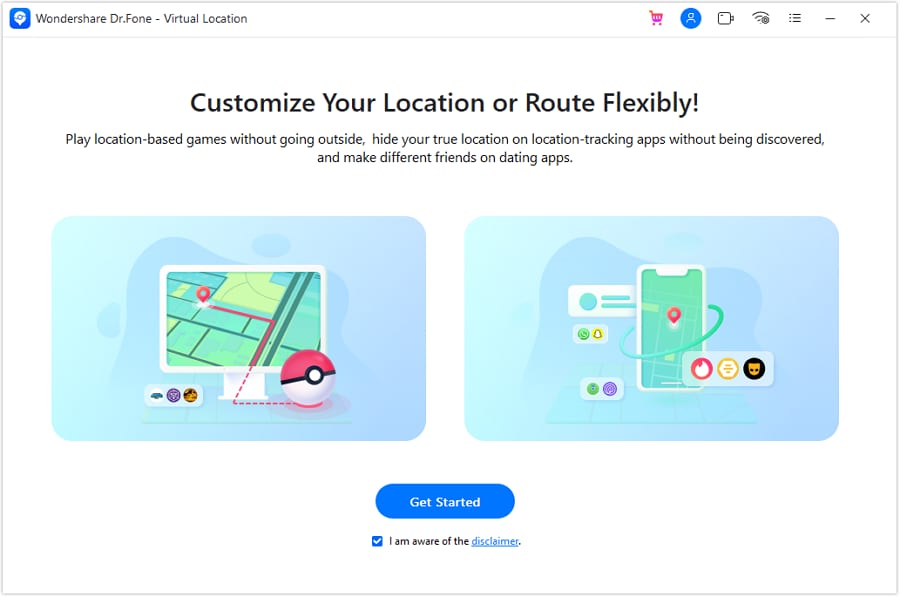
Launch Dr.Fone on the computer and choose Virtual Location. Connect the iPhone using a supported method, complete the device's trust prompts, and continue through the displayed start screen.
Step 2 Locate a permitted test destination
Once the map opens, inspect its current pin. Choose Teleport Mode if that is the mode used by your installed version.
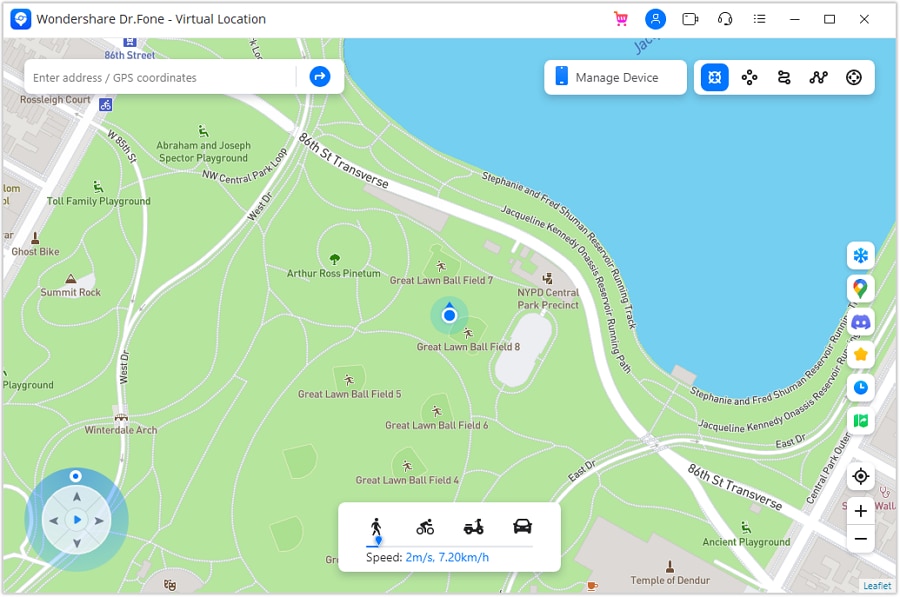
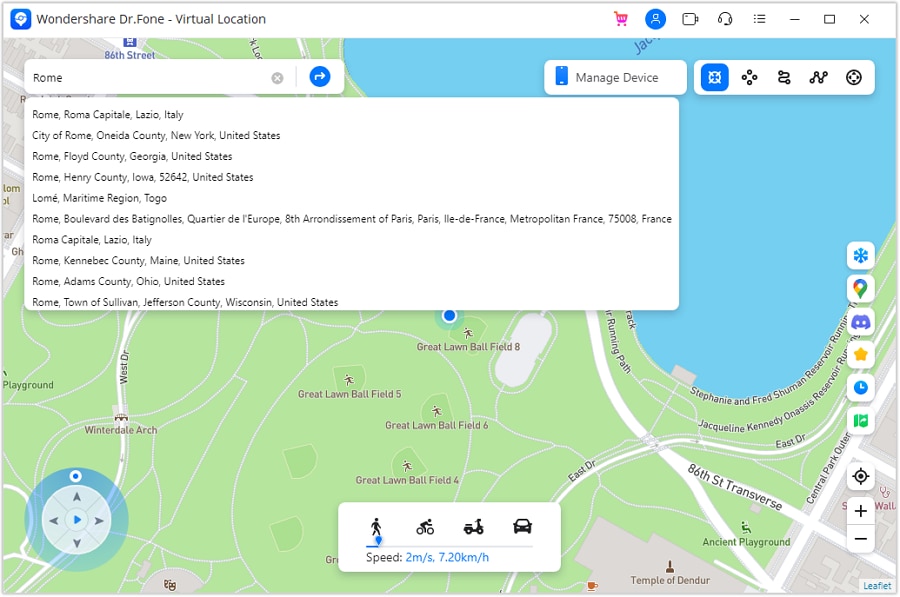
Search by a place name, address, or coordinates, then inspect the selected result. Correct an ambiguous search result before applying the position.
Step 3 Confirm the pin and verify the test result
Zoom in to review the intended point and use Move Here when you are ready. Verify the reported position in your authorized test environment; do not assume every app consumes the same location signal or accepts simulated coordinates.
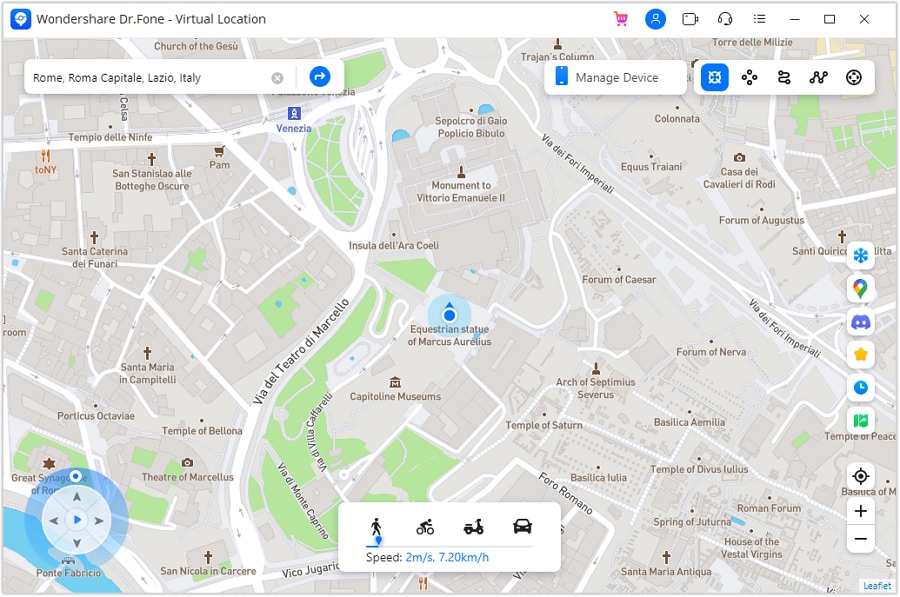
Finish the test, stop the simulation, and confirm normal location reporting before relying on navigation or sharing your position. A vendor's safety wording is not an exemption from game rules. No method is established here for obtaining location-based Captain Tsubasa rewards.




Conclusion
Build your Captain Tsubasa: Dream Team list by asking what each exact card adds to the formation. The ten names above provide candidates across attacking, defensive, goalkeeping, and support needs, but current conditions and development costs determine their usefulness. Keep regional event decisions tied to official eligibility notices. Dr.Fone - Virtual Location addresses permitted GPS simulation, not roster improvement or guaranteed access to international events.
FAQ
1. Is this a definitive live tier list?
No. It is a ten-character shortlist with selection criteria. A reliable live comparison requires the exact card releases, development states, current abilities, and match rules; a character name alone is insufficient.2. Should every player have the same nationality?
Only if that composition fits your selected Team Skills and leaves a workable formation. Mixed squads can be useful, but check every activation requirement rather than assuming nationality alone determines team strength.3. When should I reassess my roster?
Review it after relevant releases, ability revisions, or changes to your competition rules. Confirm details in the live game before spending currency or scarce materials on a recommendation.4. Is changing GPS a low-risk way to enter regional events?
That advantage and risk level are not verified. GPS does not establish eligibility, change a card's nationality, or override KLab's terms. Use the official event notice to determine who can participate.
 Add Wondershare Dr.Fone as a preferred source on Google