Teleport your device anywhere instantly with one click.


 100% Security Verified | No Subscription Required | No Malware


 :

 ChatGPT
 Perplexity
 Gemini
 Claude
 Grok
You can play Pokémon GO without moving for some activities, but you cannot replace every walk with a supported at-home feature. Regular Incense, an accessible lured PokéStop, and eligible remote encounters can provide things to do from one place. Egg distance, Buddy distance, and other movement-based goals remain a different matter.
That distinction is especially important when comparing a Pokémon GO location changer with an official game feature. A tool may simulate coordinates on a phone without being supported by the game. This guide keeps the home-play options, device demonstrations, and account consequences separate so accessibility needs do not get confused with claims of safe or universally compatible spoofing.
In this article
- Part 1 — Why Players Want to Play Pokémon GO Without Moving
- Part 2 — What Pokémon GO Spoofing Can Cost Your Account
- Part 3 — Use Dr.Fone to Play Pokémon GO Without Moving on iOS and Android
- Part 4 — Easy Ways to Play Pokémon GO Without Moving on iOS
- Part 5 — Android Ways to Play Pokémon GO Without Moving
- Part 6 — Practical Precautions for GPS Spoofing Pokémon GO
Part 1. Why At-Home Pokémon GO Play Matters
The map is part of Pokémon GO's design: changing your real location can bring different spawns and put stops or Gyms within reach. Walking can also contribute distance toward Eggs and Buddy progress. Yet being able to travel is not a reasonable assumption for every player on every day.
- Unsafe conditions: severe weather, heat, or poor air quality can make staying indoors the sensible choice.
- Access and health: a disability, injury, recovery period, or other mobility limitation can restrict a route.
- Limited time: work and study may leave only short periods for opening the game.
- Sparse local features: a rural home may have few accessible stops, Gyms, or encounters.
- Time-limited events: an active event does not guarantee that a player can safely leave home during its hours.
Official tools cover part of that gap. Standard Incense can attract encounters to your position, though its effectiveness and event bonuses vary. Remote Raid Passes work for eligible raids under their current rules. These options do not increase your interaction radius or make an inaccessible PokéStop reachable.
Adventure Sync records real activity while the app is closed; it does not manufacture distance while you remain stationary. Daily Adventure Incense is different from standard Incense and requires movement to attract its encounters. Start by deciding whether you want a few home encounters, access to a specific raid, or distance progress: those are different needs, not one universal 'without walking' setting.
Part 2. What GPS Spoofing Can Mean for Your Account
The official Gameplay Fairness Policy explicitly treats falsifying GPS location as cheating. It also covers unauthorized game clients and add-ons. A simulated walk remains falsified location even if the speed looks plausible, the phone is not rooted, or the game installation itself is official.
- Warning: the published first-strike example lasts approximately seven days and can restrict encounters and other gameplay.
- Suspension: a second strike can remove account access for approximately thirty days.
- Termination: continued violations can lead to a permanent ban.
- No guaranteed sequence: the policy says some misconduct can result in immediate termination without all three warnings.
Community discussions often use 'soft ban' to describe symptoms such as fleeing Pokémon or failed stop interactions after location changes. That phrase is not an official promise of a limited punishment. The same symptoms can also have other causes, so a failed catch alone does not establish which enforcement action, if any, occurred.
Likewise, a timer advertised by a tool is not permission from the operator. There is no official assurance that waiting two hours, choosing a walking speed, or staying within a particular distance prevents enforcement. Account safety and tool functionality must be judged separately.
Part 3. Dr.Fone Location Tools: Device Features Are Not Game Support
Two Dr.Fone products appear in the source: a desktop GPS tool and a separate Android app feature. Their existence does not establish Pokémon GO compatibility. In particular, the current Virtual Location product page explicitly states that its Android support does not support Pokémon GO. The inherited navigation label should not be read as a contrary platform promise.
Option 1. Dr.Fone - Virtual Location on a Supported Device
 Set your map route to simulate GPS movement.
- Set your wanted movement speed.
- HD and large map view to check location.
- Fake GPS location to anywhere.

Dr.Fone - Virtual Location is a computer-based tool for choosing simulated GPS positions and routes on supported phones. Its destination, route, speed, and directional controls are useful distinctions when explaining location testing. They are not functions that unlock official at-home play inside Pokémon GO.
The vendor markets iOS location simulation without jailbreaking and Android simulation without rooting, but also expressly excludes the game on Android. iOS game-related marketing does not override the game's rules or prove that a particular current app and operating-system combination works. No feature below should be read as a ban-proof way to collect distance, raid, or catch Pokémon.
What the Desktop Controls Actually Do
- Teleport Mode: selects a different simulated coordinate immediately.
- One-Stop Route: moves the reported point between a start and destination.
- Multi-Stop Route: follows several selected waypoints.
- Speed control: adjusts the simulated rate of travel, not the physical motion of your phone.
- Joystick control: lets you steer the reported position instead of following only a preset path.
- Keyboard input: provides directional controls such as arrows or W, A, S, and D.
- Platform support: depends on the device, software version, and target app; general Android support does not include Pokémon GO.
Five-Step Desktop GPS Demonstration
Use this sequence only to understand the controls on your own supported test device. It preserves the original workflow without claiming that the game will accept the result. Keep Pokémon GO closed during an authorized non-game map test.
Step 1 Establish the device connection
Open the desktop program on your PC or Mac, select Virtual Location, and connect your own phone. Complete any connection and trust prompts shown for that device rather than assuming every model uses identical setup.
Step 2 Inspect a destination in Teleport Mode
Search for the intended address or place, then check the pin on the map. Selecting a result is not the same as confirming it, so review the destination before continuing.
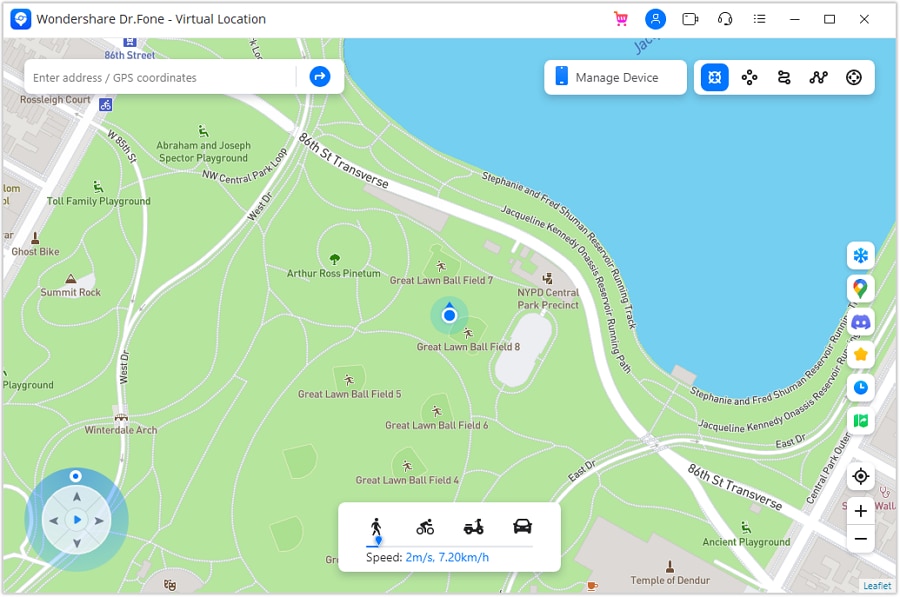
Step 3 Confirm the simulated position
Choose 'Move Here' when the point is correct. Check a suitable map view to see whether the test device reports it; do not infer game compatibility from a successful map demonstration.

Step 4 Compare the two route modes
For a permitted simulation, choose One-Stop for a single destination or Multi-Stop for several waypoints. Set the path and speed, then inspect the reported movement. Simulated travel is not real distance or an officially supported Pokémon GO exercise feature.
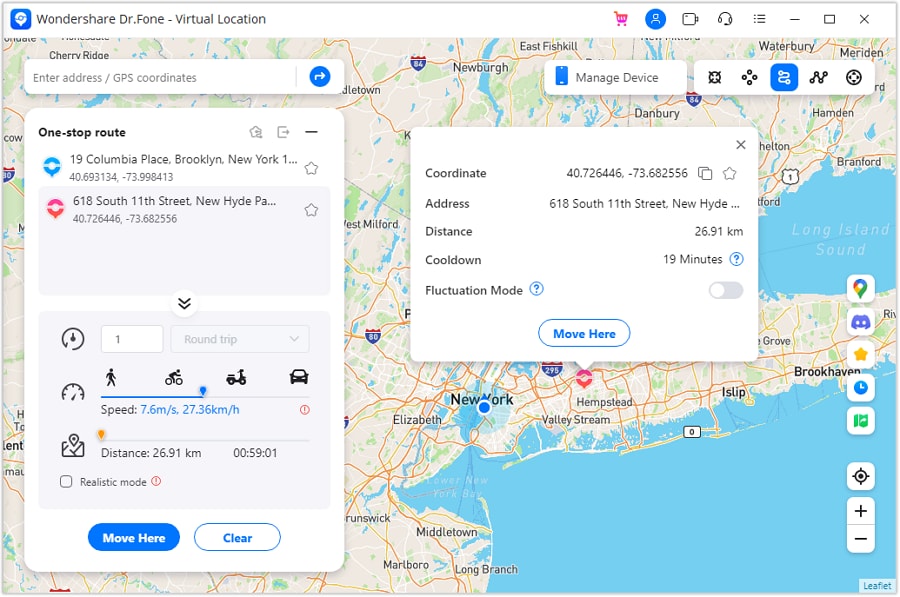
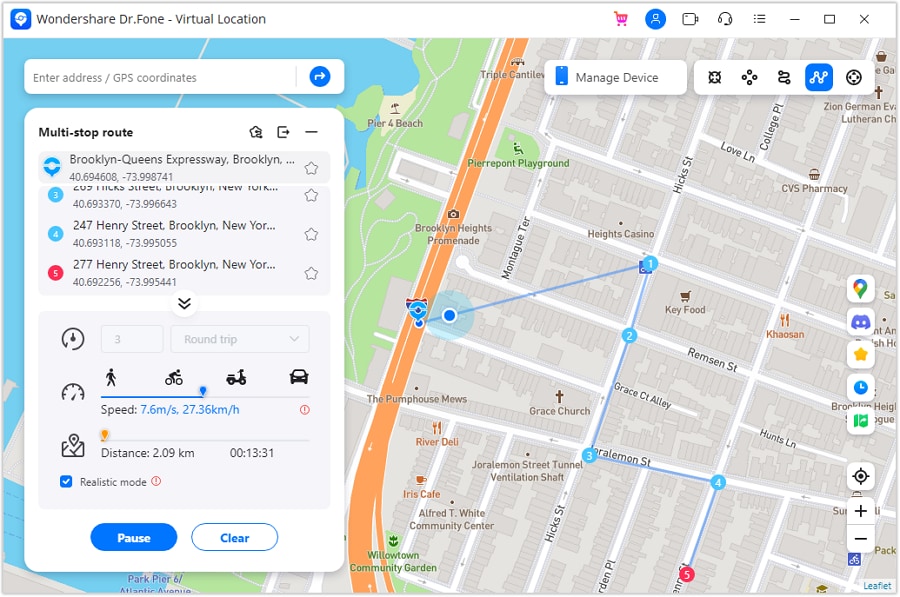
Step 5 Test manual direction and stop the session
Compare the joystick or keyboard controls with a fixed route, then pause or end the simulation when finished. Confirm the real position has returned before using navigation, emergency services, or a location-sharing app.
Option 2. The Separate Dr.Fone Android App Feature
The source also links to Dr.Fone App - Change Location (Android). This is a separate on-device option, not proof that the desktop product's game exclusion disappears. The vendor's Android guide describes opening the toolbox, selecting Change Location under AI Tools, choosing a map point or address, and applying it with the Move control.
That workflow can save a frequently used address with a star and reopen it later. Its convenience is avoiding a computer for the supported location task. Neither the presence of that control nor an Android store button establishes that Pokémon GO accepts its mock coordinates.
Where the Android App Fits
- It operates on a compatible Android phone rather than requiring every action on a PC.
- The location feature selects a reported map position, not a game-authorized travel entitlement.
- Searching an address and selecting a map pin are alternative ways to identify the destination.
- Saved places can reduce repetition in a legitimate test workflow.
- Whether another app uses or rejects the result depends on that app; do not assume universal support.
Virtual Joystick Movement: What Changes and What Does Not
Teleporting sets a point; steering changes that point over time. A joystick offers manual direction, while a saved route provides a sequence of positions. Those are different user controls for the same underlying idea of simulated location, not different levels of permission from Pokémon GO.
- Manual input can change direction rather than simply selecting a destination.
- Speed settings describe the simulated motion, not steps detected from your body.
- Pausing can stop the test point without proving that every app has restored real GPS.
- Switching between a route and steering can help compare test behavior.
- No such combination makes falsified game location compliant or guarantees against detection.
After any device-location test, stop the simulation and verify the phone's actual position. The desktop controls and separate Android feature should be evaluated on their supported uses, not advertised as an Android Pokémon GO workaround or a replacement for official accessibility options.




Part 4. Official iOS Options for Staying Near Your Real Position
The following game features do not require GPS falsification and are also relevant to Android players. Their limits still matter: an item can attract Pokémon or support a reachable stop, but it does not transport your avatar to an arbitrary city.
Way 1. Activate Standard Incense
Standard Incense attracts encounters to the trainer's position. It is not the same item as Daily Adventure Incense. Check the current event bonuses and item description, especially if you plan to remain stationary and want to avoid spending an item on the wrong expectation.
Step 1 Open the main menu
Tap the Poké Ball control from the map.
Step 2 Enter your Item Bag
Choose Items and find the regular Incense entry.
Step 3 Review the selected item
Make sure it is standard Incense rather than the movement-dependent daily version.
Step 4 Confirm activation
Activate it when you are ready to play and watch the displayed timer.
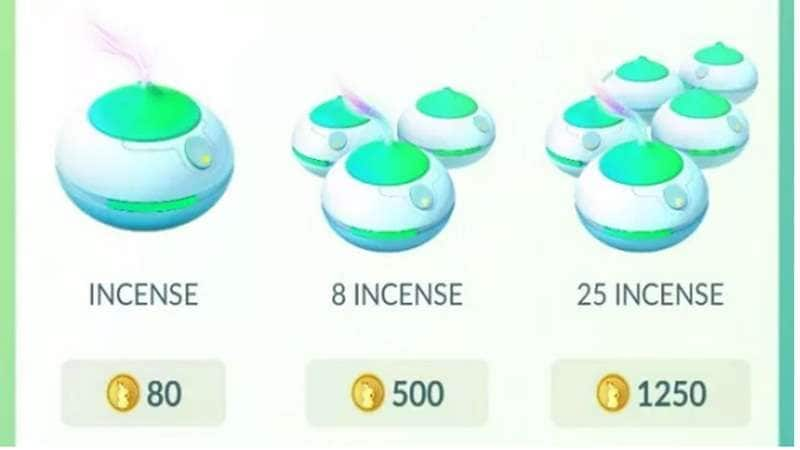
The timer keeps running after activation even if you leave the app. The official Incense explanation distinguishes regular Incense from Daily Adventure Incense, which attracts encounters only while moving in the real world.
Way 2. Plan Around Reachable PokéStops and Gyms
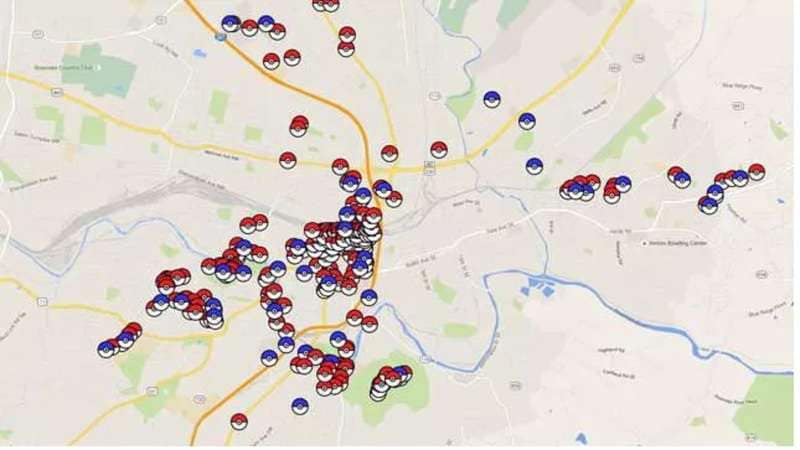
If you can safely get to a nearby accessible venue, you may be able to stay there instead of continuously walking. Inspect the actual in-game range and public access first. A stop visible on the map is not necessarily interactable from the place where you can sit.
Choose somewhere appropriate for your mobility, weather conditions, and transport arrangements. Do not trespass or play while driving; park legally and finish any journey safely before interacting. This is planning around your real location, not a method for extending the game's radius.
Way 3. Use a Lure at an Accessible PokéStop
A Lure is attached to a PokéStop rather than to your trainer. Nearby trainers can benefit, but you still need access to the relevant location. Check whether the stop already has an active module before consuming another item.
Step 1 Select a reachable stop
Open the PokéStop from the map while within the required range.
Step 2 Inspect its module position
Find the module slot near the top of the stop view.
Step 3 Open an empty slot
If a module is not already active, select the empty slot.
Step 4 Choose the appropriate Lure
Select an owned module and confirm its use when you are ready to remain nearby.
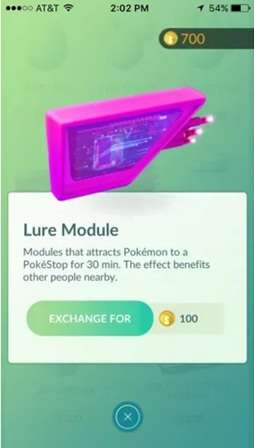
A standard active Lure is commonly indicated by petals; other module types can have different effects. It creates encounters at that stop, not an unrestricted remote-access feature. Android uses the same basic in-game distinction between a personal Incense and a stop-based Lure.
Part 5. Android Mock Location and Modified Clients Are Not Official Home Play
Android's developer tools allow testing location behavior, but accepting a mock-location provider at operating-system level does not mean Pokémon GO accepts it. The game may reject altered positioning, and unauthorized use can violate its rules even if a map test succeeds.
Option 1. Fake GPS Location: A Test Workflow, Not Proven Game Compatibility
The source describes a generic Android mock-location setup. The four stages below explain that mechanism for a test app you are authorized to use, not a way to bypass Pokémon GO checks.
Step 1 Evaluate the test app
For an authorized location test, use a reputable mock-location app from its verified store listing and inspect the requested permissions. An app name alone is not proof of authenticity.
Step 2 Review Developer Options
On many Android phones, tapping Build number seven times enables developer settings. Manufacturer menus and administrator restrictions vary, so use your device's own instructions.
Step 3 Select the permitted mock provider
For that test, choose the app under the mock-location setting. This authorizes a test provider in Android; it does not grant authorization from a game operator.
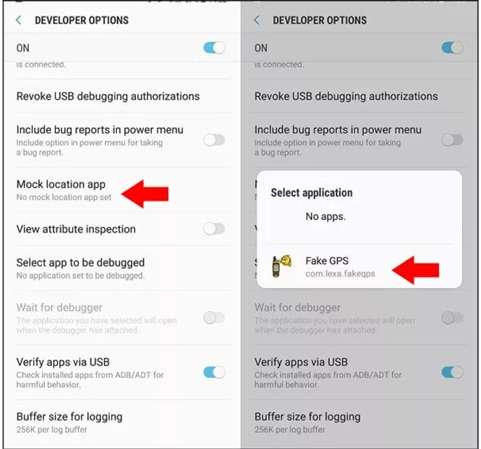
Step 4 Inspect and end the simulation
Select a point in the test app and check it in your authorized test environment. Stop the app and clear the mock provider afterward if no longer needed; do not assume Pokémon GO will use the point or avoid enforcement.
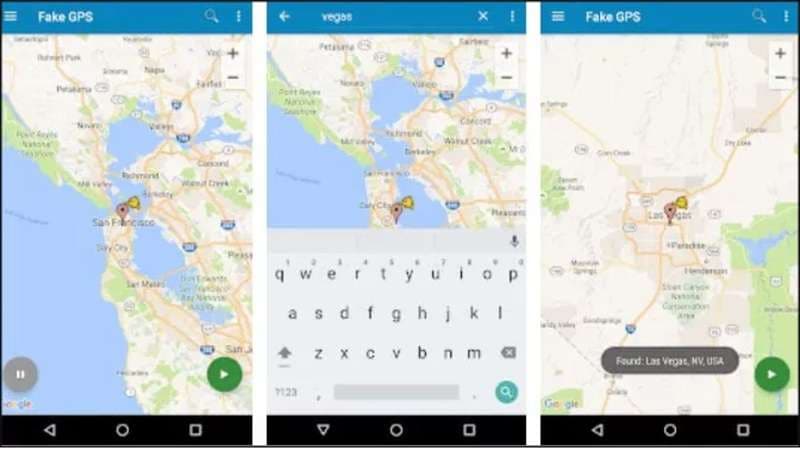
The original assertion that the game 'should read' any chosen position is not reliable. Android mock-location controls establish a technical input, not a supported gameplay method.
Option 2. PGSharp: Understand the Modified-Client Workflow and Exposure
PGSharp is discussed in the source as an unofficial client with virtual movement controls. It should not be presented as a trusted replacement for the official game. The important stages of that proposed workflow each introduce a distinct concern:
Step 1 Unofficial installation
The described process starts with an installer outside the official game distribution. That changes which software you are trusting; do not treat a claimed download site or an APK as automatically safe.
Step 2 Account sign-in
It then asks you to use a game account in that client. This creates account and credential exposure as well as policy risk. The source's simple instruction to sign in should not be mistaken for a security recommendation.
Step 3 Joystick activation
A virtual control may display movement without real travel. Its presence does not establish current compatibility, legitimate distance credit, or permission to falsify your location.
Step 4 Map interaction
The proposed final stage is interacting with distant catches, stops, or Gyms. That is precisely where altered location becomes gameplay, not a harmless private map demonstration. Prefer the official client and its supported features.
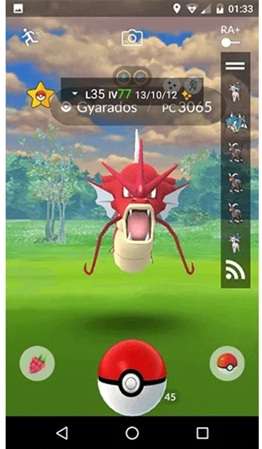
Neither mock-location settings nor a modified client should be advertised as a reliable Android workaround. A failure to load locations is not a reason to disable protections or search for a way around anti-cheat checks.
Part 6. Practical Boundaries Instead of Ban-Proof Claims
Precautions can help you understand a tool, but they cannot turn prohibited behavior into supported play. Use the following distinctions when evaluating advice:
- Cooldown guidance is not official clearance. A community chart or two-hour timer does not guarantee that a later interaction is allowed or undetected.
- Smooth travel is still simulated travel. Teleport sets a point and a route changes it gradually; both can falsify game location. A walking-speed slider is not an account-protection setting.
- Avoid unauthorized clients. Extra joystick features do not cancel the risks of modified software or signing in through an unofficial distribution.
- Separate privacy from GPS. A VPN generally changes network routing and IP information, not the phone's GPS. It is not a substitute for movement or game permission.
- Use support for access needs. Where the official game cannot accommodate an activity, check its current support guidance rather than trusting a vendor's 'zero risk' promise.
Conclusion
For Pokémon GO without walking, start with what the game actually supports: standard Incense, a safely accessible Lure, and eligible remote features. Expect movement-dependent tasks to retain their requirements. A quieter day of permitted play is different from simulating a trip.
Dr.Fone - Virtual Location offers device-GPS controls for supported uses, but its Android page excludes Pokémon GO and no platform claim overrides the fairness policy. Choose tools on that basis, not on the assumption that a realistic route or a long wait guarantees account safety.
FAQ
1. What can I do from home without GPS spoofing?
You can use standard Incense, interact with genuinely reachable map features, and join eligible remote raids under current rules. These features do not grant arbitrary map access, and Daily Adventure Incense still needs movement.2. Can Adventure Sync or a VPN make me walk while stationary?
No. Adventure Sync measures actual activity; a VPN mainly changes network routing and IP information. Neither creates legitimate walking distance or moves your GPS position simply because you remain connected.3. Does a two-hour cooldown or location changer eliminate ban risk?
No. The official policy prohibits GPS falsification and does not guarantee a safe waiting period. A timer, unrooted phone, or particular tool does not prevent warnings, suspension, or termination.4. Is route simulation safer than teleporting for Pokémon GO?
They differ technically: one changes a coordinate immediately and the other moves it along a path. Neither is official game movement, and there is no verified basis here for promising that either avoids enforcement.
 Add Wondershare Dr.Fone as a preferred source on Google