Teleport your device anywhere instantly with one click.


 100% Security Verified | No Subscription Required | No Malware


 :

 ChatGPT
 Perplexity
 Gemini
 Claude
 Grok
A Pokemon Go joystick usually means third-party software that changes a phone's reported GPS position or supplies simulated movement. It is not an official movement control supplied by the game. iPhone desktop tools, Android mock-location apps, and rooted-device utilities work differently, and none is a ban-proof way to play.
If illness, weather, local restrictions, or limited travel make outdoor play difficult, that explains the interest in location tools but does not remove the game's rules. This 2026 walkthrough examines the original three approaches, preserves their illustrated setup sequences, and separates device-level simulation from unsupported promises about catches or account safety.
In this article
Part 1: Why Players Look for a Pokemon Go Joystick
Pokemon Go connects many activities to where the player is physically located. Moving around a neighborhood can reveal different encounters and places to interact, while some activities involve visiting a particular location. People who cannot travel freely may therefore search for a way to control a map position from indoors.
- Local movement restrictions: Stay-at-home requirements were a reason in the original article. They should be understood as a possible circumstance, not a claim that a particular pandemic restriction is active everywhere in 2026.
- A familiar nearby map: A player may have already explored accessible streets and want to see a different area.
- Health or environmental barriers: Illness, mobility limitations, or unsafe local conditions can prevent an outing.
- Unfavorable weather: Extreme heat, storms, or other hazards can make outdoor exploration inappropriate.
- Time and travel constraints: Limited free time or lack of suitable transport can make distant play impractical.
These are reasons for the search, not permission to falsify game location. When outdoor play is unsafe or inaccessible, use whatever official at-home features are currently offered or postpone the activity rather than assuming a joystick is an approved substitute.
Part 2: Account, Compatibility, and Device Risks
Location simulation modifies the coordinates an app may receive; acceptance by Pokemon Go is a separate matter. The game can reject unsupported environments or act on policy violations. There is no verified frequency, travel speed, or waiting period that makes prohibited GPS spoofing safe.
The official player guidelines explicitly list falsifying location and using modified or unofficial software as cheating. Enforcement can include warnings, reduced gameplay, suspension, or permanent termination, sometimes without a prior warning. The older idea that repeated warnings must always come before a ban is therefore not a reliable decision rule.
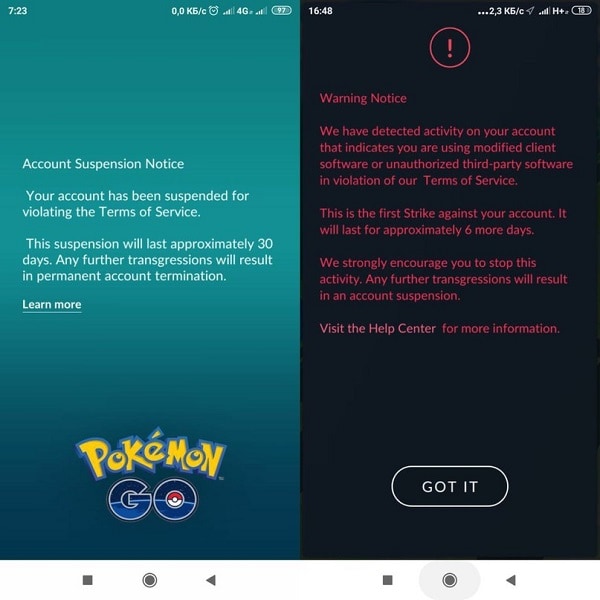
There are also device concerns: a random APK can be different from its advertised app, overlays request extra permissions, and rooting changes Android's security assumptions. No location utility should need your game password merely to select a map coordinate. Review the publisher, permissions, and operating-system support before installing anything.
Part 3: Three GPS Joystick Approaches and Their Setup
The source compares a computer-assisted iPhone workflow, an Android mock-location app, and a rooted-Android utility. The inherited contents label calls these 'foolproof', but that wording should not be read as a compatibility or safety guarantee. The steps below describe GPS-tool operation, not a promise that Pokemon Go will accept simulated movement.
3.1 iPhone GPS Simulation Through a Desktop Tool
 Set your map route to simulate GPS movement.
- Set your wanted movement speed.
- HD and large map view to check location.
- Fake GPS location to anywhere.

Dr.Fone - Virtual Location offers Teleport Mode and route-based movement controls for supported devices. The illustrated iPhone process does not require jailbreaking. Its map lets you choose an address or coordinates, set route points, and adjust movement speed instead of physically following that route.
The source also identifies saved favorite locations, GPX import and export, Jump Teleport, and joystick or keyboard controls. These are location-management features; they neither generate rare Pokemon nor guarantee that any named game or social app will honor the result. Check the installed version's device support and available controls rather than treating historical app examples as current compatibility evidence.
Step 1 Connect the iPhone and open Virtual Location
Attach your own iPhone to the computer and launch the location module. Review the displayed terms, continue with Get Started where shown, and complete any device-selection or trust prompts. Keep the device connected while establishing the initial session.
Step 2 Select and inspect a virtual destination
Once the map recognizes the phone, activate Teleport Mode. Search by place name, address, or exact coordinates. Inspect the returned destination before applying it, particularly when several results have similar names.
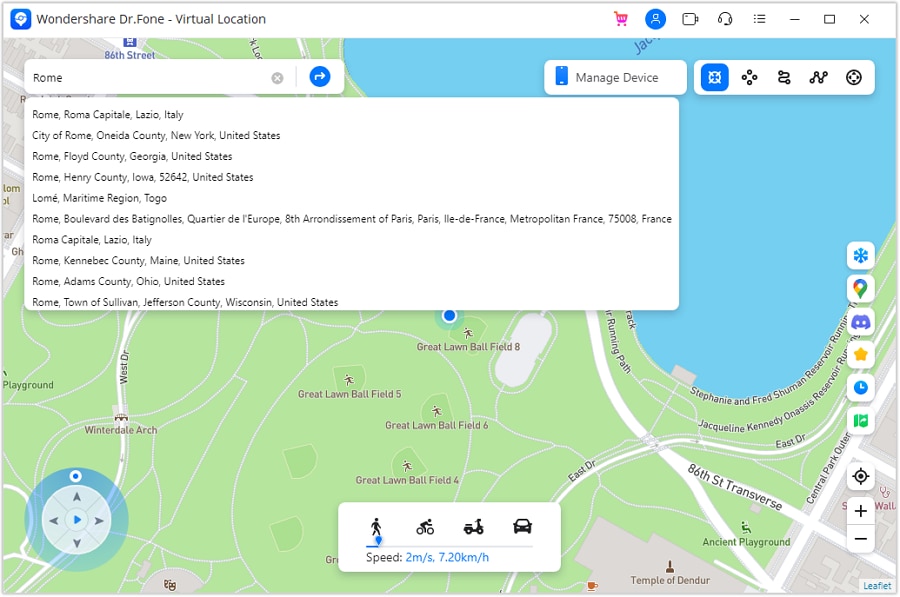
Adjust the marker or zoom level to choose the intended spot, then confirm with Move Here. Verify the changed position in a map app on the phone. This device-level check is distinct from whether a game accepts or updates that location.
Step 3 Configure a route and movement controls
Choose the one-stop or multi-stop option for route simulation. Add the destination or sequence of points to the map, then configure the supported repetition and speed settings. Inspect the proposed path before starting it.
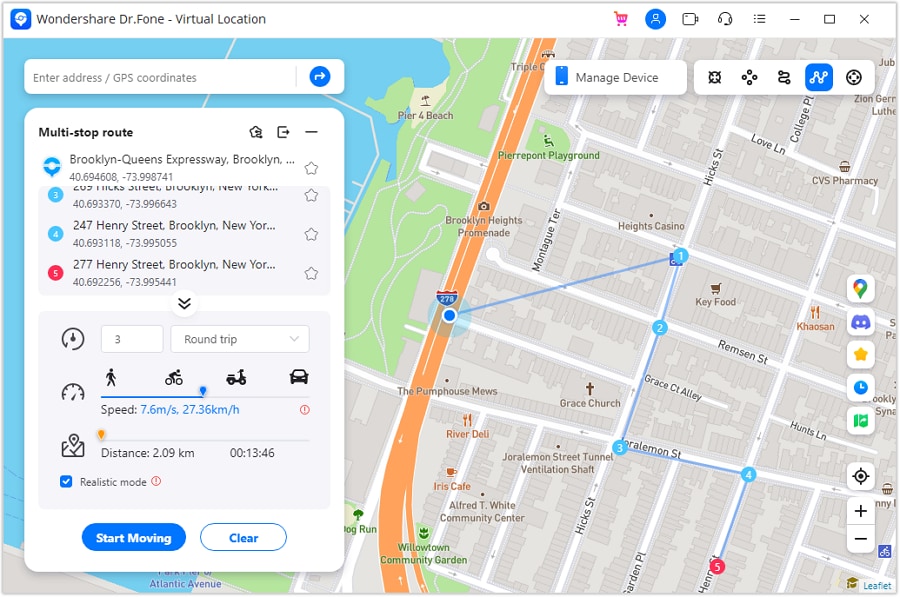
The official guide uses Move Here for One-Stop Route and Start Moving for Multi-Stop Route. Start the configured route using the control in your installed build. Where a joystick is available, use it to change simulated direction, and stop the session when finished. Do not equate smooth animation with game-policy compliance.
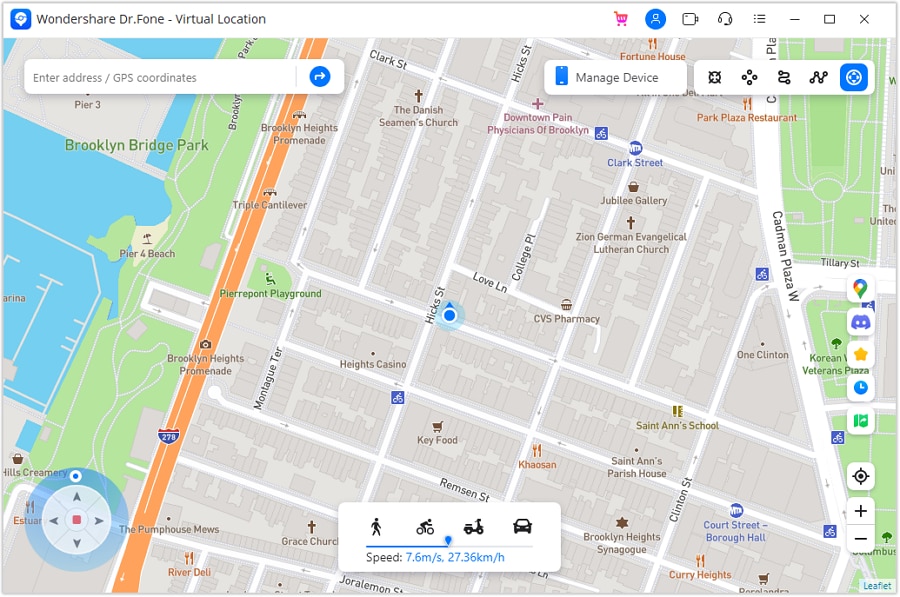
After any permitted location test, stop simulated movement and follow the tool's restore instructions. The official teleport guide describes restarting the connected device to restore the actual location. Recheck a normal map before navigation or another activity that depends on genuine coordinates.




3.2 Android Mock Locations with GPS Joystick by App Ninjas
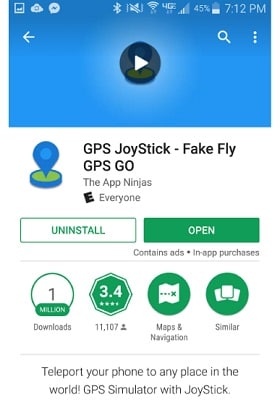
GPS Joystick by App Ninjas is a separate Android location tool, not an official Pokemon Go APK. Its source workflow uses Android's developer setting for a mock-location provider and an overlay to control movement. Modern OS builds and individual apps may restrict or reject that arrangement.
Step 1 Install the verified utility and select its mock provider
Check the app's legitimate store listing and publisher before installation. In Android Settings, locate About Phone and tap Build Number seven times to enable Developer Options if your device follows that layout. Some manufacturers place Build Number under a software-information submenu.
Open Developer Options, locate Select mock location app, and choose the installed GPS utility. This setting permits a mock provider at the Android level; it does not compel Pokemon Go to trust it. Avoid changing unrelated developer settings.
Step 2 Choose coordinates, a map point, and speed
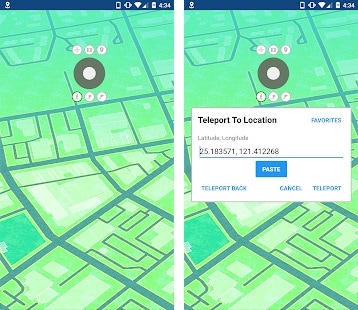
Open GPS Joystick and enter the latitude and longitude for your test location. Confirm that the coordinate order and sign represent the intended part of the world.
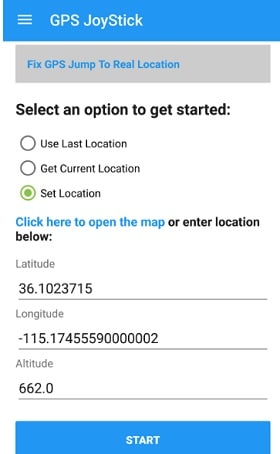
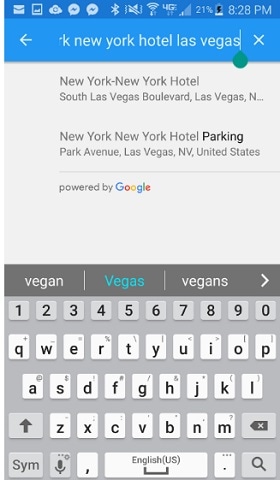
Alternatively, use its map or place search to locate the destination by name or address, then inspect the selected marker.
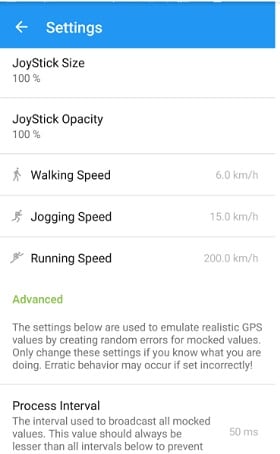
Review the walking, jogging, and running speed preferences before enabling movement. These settings determine the simulation's pace, not an approved or undetectable speed for gameplay.
Step 3 Start, inspect, and stop the simulation
Use the visible start and stop controls and the on-screen joystick to inspect device-level movement. The utility may also let you enter a different coordinate directly. Stop the service and remove the mock provider when your permitted test ends; verify genuine location afterward.
3.3 The Source's Rooted-Android FGL Pro Workflow
FGL Pro is the rooted-device example in the original article. Root status, utility availability, and compatibility are separate questions, and a free download does not establish that a file is trustworthy. Do not root a phone merely because an old game-spoofing walkthrough describes a Root Mode switch.
Step 1 Check prerequisites and the utility's configuration
The illustrated method assumes an Android phone that is already rooted. Verify the current software requirements and obtain the genuine utility only from a source you can authenticate. The older suggestion to use any third-party installer is not a security recommendation.
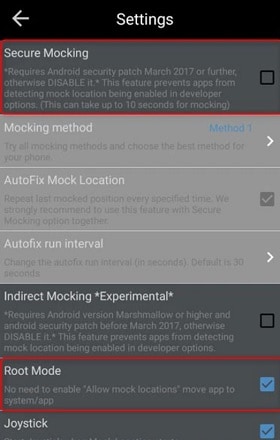
In the source interface, Root Mode is enabled in the utility's settings and FGL Pro is selected as the mock-location app in Android Developer Options. If those controls are unavailable or the OS rejects them, the legacy instructions do not establish a working method for that device.
Step 2 Search a point and inspect movement
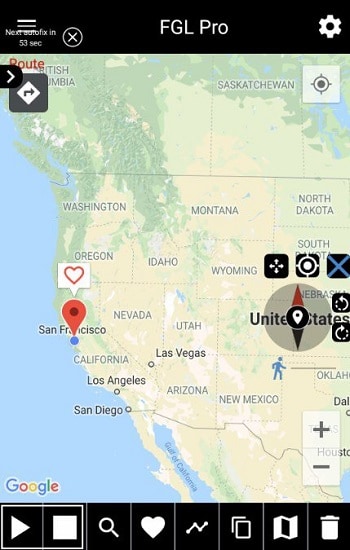
Open FGL Pro's search control, find the intended place, and adjust its marker on the map. The source then starts the location service and uses the joystick overlay to change direction. Test only where you have permission to supply mock GPS data; starting this service does not make it compatible with or permitted in Pokemon Go.
Part 4: What Ban-Avoidance Tips Cannot Guarantee
The reliable way to avoid a spoofing violation is not to falsify location in the game. Several tips in older guides sound protective but lack an official safe-use basis. Evaluate each one before interpreting it as advice:
- Using a tool only two or three times daily: A low session count does not authorize the behavior or create a safe threshold.
- Waiting between distant locations: A pause after a London, Tokyo, or New York map jump does not erase the underlying policy issue.
- Keeping the first move within one district or state: A shorter distance and a few hours of waiting are not an official exemption.
- Choosing a familiar software brand: A genuine installer can reduce download uncertainty, but software reputation is different from permission to spoof.
- Switching accounts after a warning: Do not create another account to continue the same violation or circumvent enforcement. Stop the prohibited activity and follow the service's support process instead.
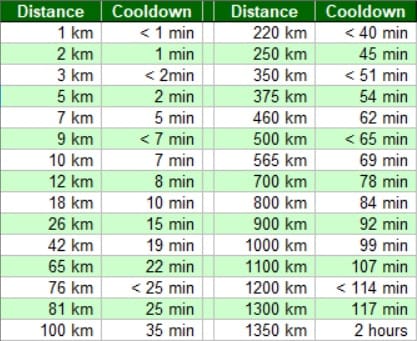
The original cooldown chart is retained below for context. It is not a current official schedule, and no interval in the image should be treated as proof of ban protection.
Conclusion
The three approaches differ in platform and prerequisites: a desktop-connected iPhone tool, an Android mock-location provider, and a legacy rooted-Android workflow. Their shared limitation is that simulated coordinates do not guarantee game support, credited movement, access to encounters, or account safety.
Dr.Fone - Virtual Location supplies the iPhone map and route controls described above for supported location-testing scenarios. Keep GPS-tool capability separate from Pokemon Go's rules, and do not rely on cooldown folklore or a second account to avoid enforcement.
FAQ
1. Is a Pokemon Go joystick an official game feature?
The tools discussed here are third-party GPS utilities. Their map controls are not an official substitute for physical movement, and falsifying game location violates the published player guidelines.2. Does the illustrated iPhone method require a jailbreak?
The desktop workflow described here does not require jailbreaking a supported iPhone. Device and OS compatibility still need checking, and that setup does not guarantee game acceptance.3. Will an Android mock-location setting work in every app?
No. Selecting a mock provider allows that Android test mechanism, but individual apps may reject simulated data or unsupported environments.4. Can a cooldown chart guarantee that an account stays safe?
No. A waiting interval, short route, or low daily usage count does not turn GPS spoofing into authorized gameplay or guarantee protection from suspension.
 Add Wondershare Dr.Fone as a preferred source on Google