Recover photos, messages, WhatsApp, and more — no backup
needed.
Recover photos, messages, WhatsApp, and more — no backup
needed.

 100% Security Verified | No Subscription Required | No Malware

 :
: 
 ChatGPT
 Perplexity
 Gemini
 Claude
 Grok
Grok
Having your iPhone stuck in recovery mode can be an alarming experience. Your device becomes unresponsive, displaying only a 'connect to computer' icon, making it essentially unusable. This situation is frustrating, especially when you realize you might lose precious photos, messages, and other data if you haven't performed a recent backup.
This issue can arise from various causes, such as a failed iOS update, software glitches, or jailbreaking complications. Fortunately, a stuck device doesn't mean it's permanently broken. There are reliable methods to restore an iPhone in recovery mode, and we're here to guide you through them.
This guide provides two clear paths to resolve the problem. We will explain how to restore an iPhone in recovery mode with iTunes, which will erase your data, and how to achieve the same result without iTunes, keeping your data intact. You can also learn How to Recover Data from iPhone in Recovery mode if needed.
In this article
Part 1. Restore iPhone in Recovery Mode with iTunes (All Data Erased)
Using iTunes (or Finder on macOS Catalina and later) is Apple's official method for restoring an iPhone. While effective, it's crucial to understand that this process will completely wipe your device and reinstall the iOS. This is effectively a factory reset. You should only proceed if you have a recent backup or are prepared to lose all your current data.
Ensure you have the latest version of iTunes or your macOS is up to date before you begin.
Step 1 Power Off Your iPhone
First, connect your USB cable to your computer, but leave your iPhone disconnected for now. Next, turn off your iPhone completely. Press and hold the power button until the 'slide to power off' slider appears, then swipe it.

Step 2 Enter Recovery Mode
Now, press and hold the correct button for your iPhone model while immediately connecting it to the computer. Don't release the button yet.
- iPhone 8 or later: Press and hold the Side button.
- iPhone 7/7 Plus: Press and hold the Volume Down button.
- iPhone SE (1st gen) and iPhone 6s or earlier: Press and hold the Home button.
Continue holding the button until you see the recovery mode screen on your iPhone (a computer icon and a cable).

Step 3 Restore Your iPhone via iTunes/Finder
Once your device is in recovery mode, open iTunes or Finder on your computer. A dialog box will pop up, stating, 'There is a problem with the iPhone that requires it to be updated or restored.' Click on the 'Restore' button to begin the process. iTunes will download the latest iOS software for your device and restore it to factory settings. After the restore is complete, you can set it up as new or restore from a backup.

- Official Apple method
- Completely free to use
- Installs a fresh version of iOS
- Erases all data and settings on the device
- Requires a computer with iTunes/Finder
- Process can fail due to connection or software errors
Part 2. How to Restore iPhone in Recovery Mode without iTunes (No Data Loss)
The biggest drawback of using iTunes is the guaranteed data loss. For many users, this is not an acceptable risk. Fortunately, there's a more advanced solution that can fix your iPhone while preserving all your important files: Dr.Fone - System Repair (iOS).
Dr. Fone is a comprehensive toolkit designed to resolve a wide array of iOS system issues without compromising your data. It can safely get your iPhone out of recovery mode, fix devices stuck on the Apple logo, resolve black screens, and more, all while keeping your photos, contacts, and messages intact.
- No Data Loss: Its Standard Repair mode fixes most common iOS issues without erasing any user data.
- High Success Rate: It can resolve over 150 system problems, from recovery mode loops to boot failures.
- User-Friendly: The process is simple, with on-screen instructions that guide you every step of the way. No technical expertise is required.
- Broad Compatibility: It supports all iPhone, iPad, and iPod touch models and is fully compatible with the latest iOS versions.
Follow these steps to safely restore your iPhone without iTunes and without losing data:
Step 1 Launch Dr.Fone and Select System Repair
Download and install Dr.Fone on your computer. Open the program and select 'System Repair' from the main dashboard.
Step 2 Connect Your iPhone and Choose Repair Mode
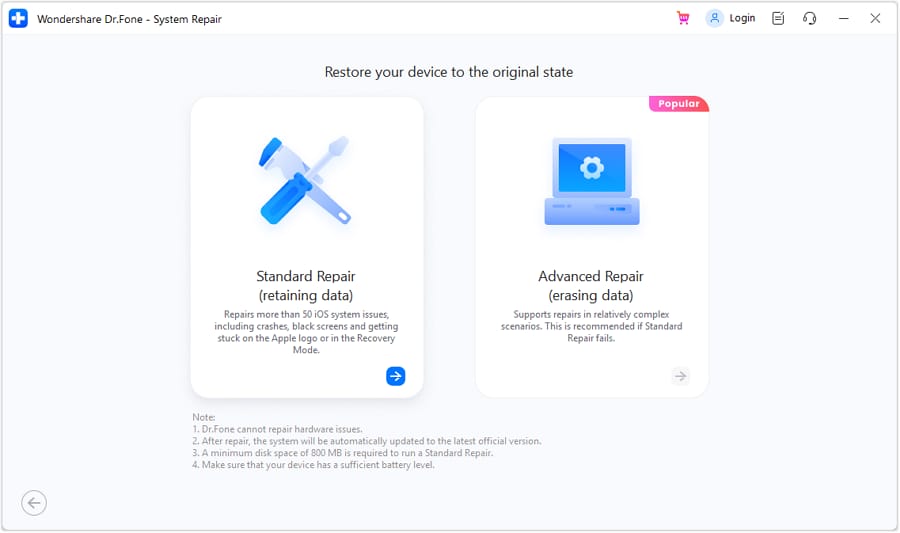
Connect your iPhone to the computer using a USB cable. In the Dr.Fone window, select 'iOS Repair'. You will see two options: 'Standard Mode' and 'Advanced Mode'. Choose 'Standard Mode' to fix your device without data loss.
Step 3 Download the Correct Firmware
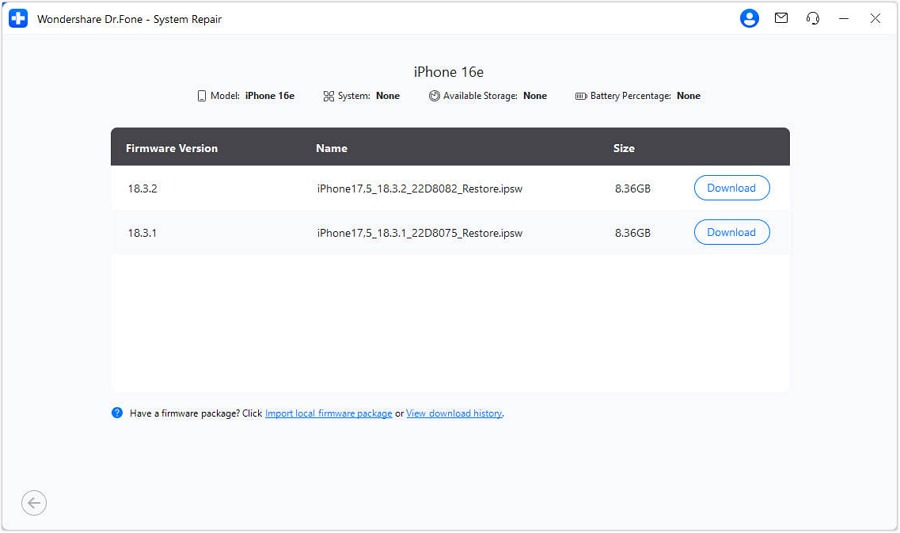
Dr.Fone will automatically detect your iPhone model and display the latest compatible iOS firmware. Verify that the information is correct and click 'Start' to begin the download.
Step 4 Initiate the System Repair
Once the firmware download is complete, Dr.Fone will verify it. After verification, click the 'Fix Now' button to start repairing your iPhone's system. This process will resolve the recovery mode issue.
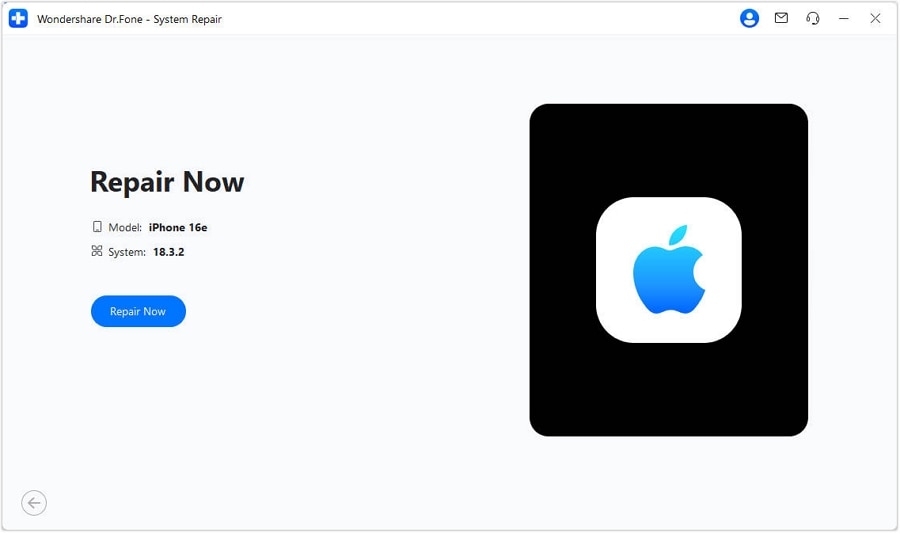
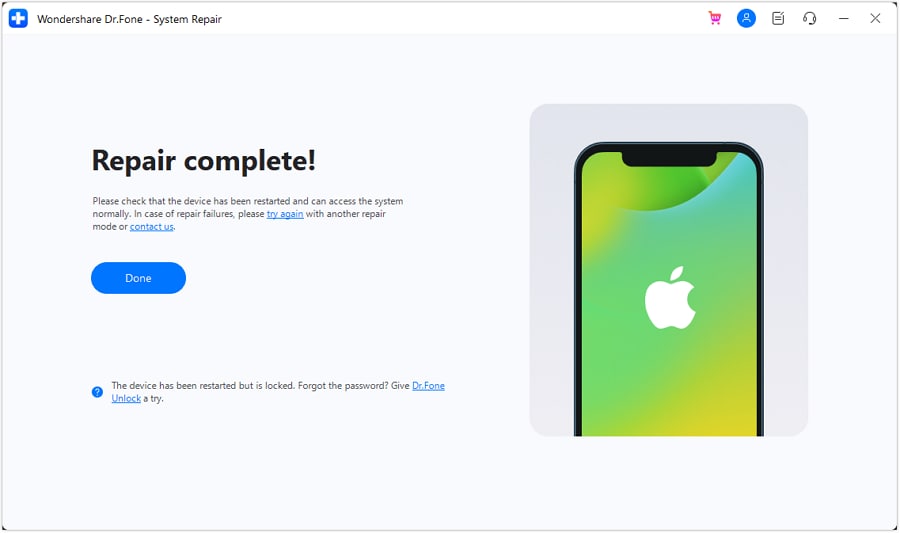
Step 5 Repair Complete
The repair process typically takes a few minutes. Keep your iPhone connected throughout. When it's finished, you'll see a 'Repair of the operating system is complete' screen. Your iPhone will restart automatically and boot into its normal mode, with all your data safe and sound.
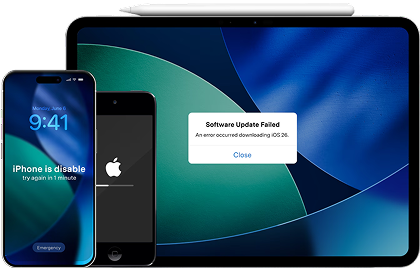
 Fix iOS issues, no data loss.
- One-click repair for all iOS problems.
- Solve recovery mode, Apple logo, black screen, etc.
- Upgrade or downgrade iOS without iTunes
Conclusion
When your iPhone is stuck in recovery mode, you have two clear choices. The iTunes method is Apple's official but destructive approach, leading to a complete data wipe. It's a valid option if you have a recent backup and are comfortable setting up your device again.
However, for a stress-free solution that prioritizes your data, Dr.Fone - System Repair (iOS) is the superior choice. It offers a powerful, reliable, and easy-to-use way to restore your iPhone to normal working condition without losing any of your important information. By following the simple steps outlined above, you can resolve the recovery mode issue and get back to using your device quickly and safely.
FAQ
1. What is iPhone recovery mode?
Recovery mode is a fail-safe state that allows an iPhone to be restored with a new operating system via iTunes or Finder. It's typically used when the current iOS is damaged or corrupted, preventing the phone from starting up normally. You'll know you're in recovery mode when you see an icon of a computer and a charging cable on the screen.2. Will restoring my iPhone in recovery mode delete everything?
It depends on the method you use. If you restore your iPhone using iTunes or Finder, all your data and settings will be completely erased. The phone will return to its factory state. However, if you use a third-party tool like Dr.Fone - System Repair's Standard Mode, you can fix the issue without any data loss.3. How long does it take to restore an iPhone in recovery mode?
The duration varies. Using iTunes, the process involves downloading the entire iOS firmware (which can be several gigabytes) and then installing it. This can take anywhere from 30 minutes to over an hour, depending on your internet speed. With Dr.Fone, the process is often faster, as the firmware download and repair are streamlined, usually taking less than 20 minutes.4. Can I get my iPhone out of recovery mode without restoring it?
In some cases, a simple forced restart might exit recovery mode if the issue was a minor glitch. However, if the device is stuck due to a deeper software problem, a simple restart won't work. Specialized tools like Dr.Fone can sometimes exit recovery mode with a single click, but usually, a system repair (restoration) is necessary to fix the underlying cause.
 Add Wondershare Dr.Fone as a preferred source on Google