Resolve common problems and system crashes on both iPhone and Android devices.

 100% Security Verified | No Subscription Required | No Malware

 :
: 
 ChatGPT
 Perplexity
 Gemini
 Claude
 Grok
Grok

My Safari browser suddenly stopped loading pages on my iPhone. It keeps saying it is not connected to the internet even though my Wi-Fi is working perfectly. How can I fix Safari not working on my device?
Apple Community User
Apple users worldwide rely heavily on the Safari browser as their primary gateway to the internet. It is deeply integrated into the iOS ecosystem, offering a fast and secure browsing experience. However, following recent updates (including iOS 15, iOS 16, and newer iterations), many individuals have encountered frustrating situations where Safari is simply not connected to the internet. Users have increasingly reported unexpected safari crashes, unresponsive web links, and sudden browser freezes.
If you are currently struggling with Safari not working on iPhone or dealing with Safari not working on iPad, the very first step is to verify your foundational system settings. Navigate to the Cellular data options under your Settings app and ensure that the toggle for the Safari browser is switched ON. If this authorization is disabled, Safari will be completely cut off from the mobile network. Additionally, closing out numerous dormant tabs can significantly reduce data redundancy and memory load.
To help you navigate these connectivity and performance hurdles, let us dive deeply into 6 highly effective tips for fixing Safari issues on your iPhone or iPad.
In this article
Tip 1: Re-launch the Safari App
Continuous and heavy usage of the Safari application can occasionally lead to memory deadlocks, corrupted active sessions, or temporary system bugs. When the app gets overwhelmed, it might appear as if Safari is not connected to the internet. To resolve this instantly, one of the most effective quick fixes is to forcibly close and relaunch the Safari app, giving it a fresh start.
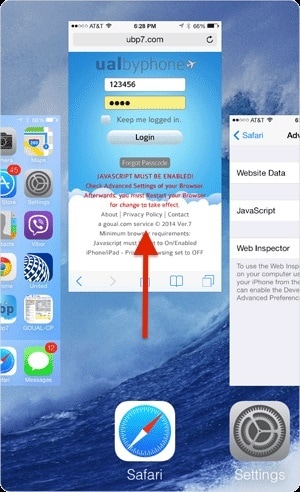
To re-launch the app efficiently, you need to open the App Switcher. If your device has a Home button, double-click it. For newer devices without a Home button, swipe up from the bottom of the screen and pause in the middle. Once you view all the running apps, swipe up on the Safari app preview to close it down entirely. Wait for about 30 to 60 seconds to ensure the background processes are terminated, and then re-launch the Safari app from your home screen. Test a web page to see if this resolves your concern.
Tip 2: Restart the iPhone/iPad
If simply restarting the application did not do the trick, the next logical tip will be to restart the device. This might sound primary, but it remains a highly effective process. Doing so will completely refresh system data, terminate rogue background apps, and release excessively used memory that frequently causes severe delays in app functionality.
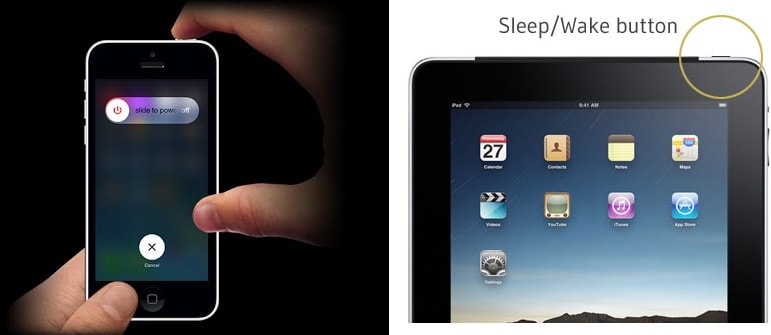
To restart your iPhone/iPad with a Home button, you are required to hold the sleep/wake button until the power slider appears on the screen. Swipe the slider from left to right until the screen turns completely off. Wait for a few moments, then press and hold the sleep/wake button once again until the Apple logo appears to restart your device.
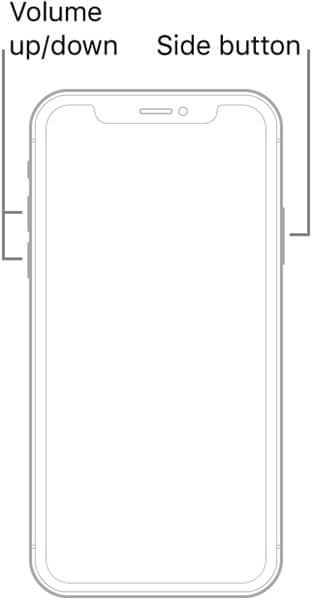
Alternatively, for newer models like the iPhone 13, iPhone 12, iPhone 11, or iPhone X, you must press and hold the side button simultaneously with either the volume up or volume down button to bring up the power off slider.
Tip 3: Update iOS Software
Software bugs within older iOS versions are infamous for causing unexpected network drops. Thus, the third critical tip is to update your iOS to the latest version to avoid persisting bugs. A software update helps the device function smoothly by repairing underlying system anomalies while adding enhanced protection features. Always ensure that your iPhone or iPad is running the most current firmware.
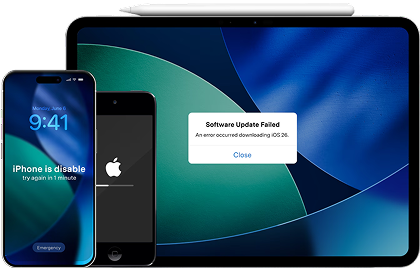
Before proceeding with standard update methods, if you find that your device is severely compromised—perhaps displaying a white Apple logo, suffering a black screen, or getting stuck in recovery mode during an update—you can utilize advanced repair software like Dr.Fone - System Repair (iOS) to restore your device to normal without any data loss.
 Fix iOS issues, no data loss.
- One-click repair for all iOS problems.
- Solve recovery mode, Apple logo, black screen, etc.
- Upgrade or downgrade iOS without iTunes
3-1. How to update iOS software wirelessly
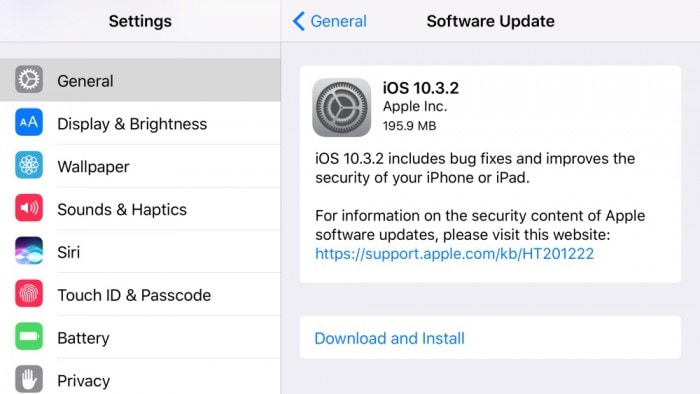
In order to update the software of your iPhone/iPad seamlessly over the air, you need to switch on your internet Wi-Fi connection and ensure sufficient battery life. Go to Settings > select the General option > click on Software Update. Let the device check for updates. If available, click on Download, and after that, click on Install. You will need to enter your Passcode if prompted, and finally, confirm the terms and conditions to initiate the installation.
3-2. How to update iOS software with iTunes
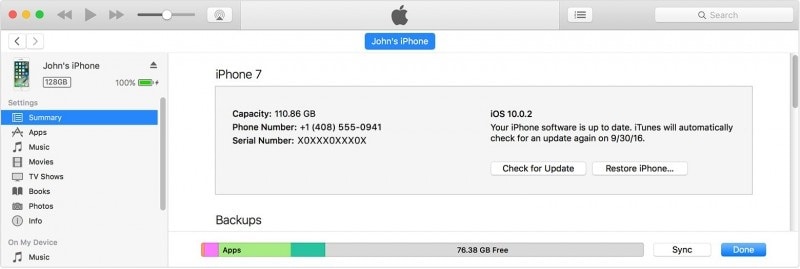
If an over-the-air update fails, you can rely on a computer. In order to update the software with iTunes, first, install the latest version of iTunes on your PC (or use Finder on macOS). Then, you need to connect the device to the computer system using a certified USB cable. Go to iTunes and select your device icon from the top bar. Select the 'Summary' option on the left pane, click on 'Check for Update', and then choose the 'Download and Update' option. Enter the passkey on your device if requested, and confirm.
To know how to update iOS in comprehensive detail, please visit: https://drfone.wondershare.com/iphone-tips/how-to-update-iphone-with-without-itunes.html
Tip 4: Clear History, Cache, and Website Data
Over time, Safari accumulates massive amounts of temporary files. Clearing your device's cache memory or junk data is a brilliant idea, as doing so will make the device run faster and simultaneously resolve unknown bugs or loading errors. When cache becomes corrupted, it can mimic a scenario where Safari is not connected to the internet. The steps to clear this cache are quite straightforward.
4-1. Clearing overall history and data
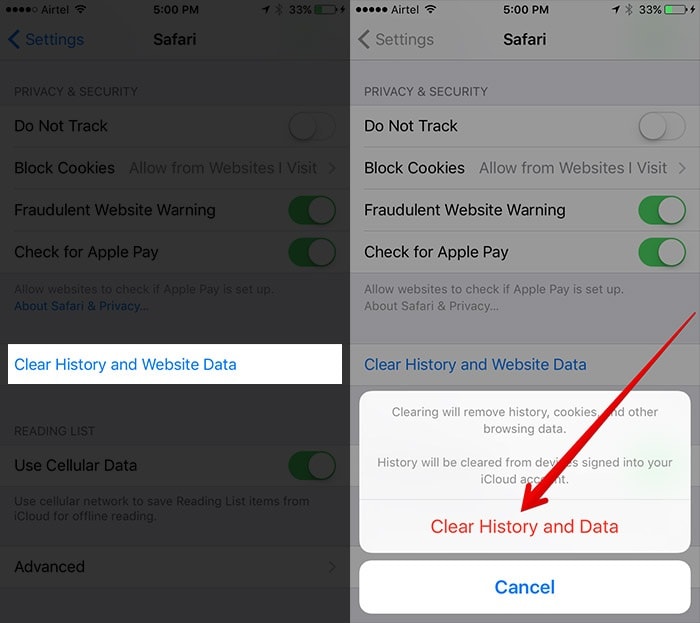
To clear your entire browsing footprint and data, navigate to your device Settings app. Scroll down and select Safari. After that, tap on 'Clear History and Website Data'. A prompt will appear at the bottom of the screen; finally, click on 'Clear History and Data' to confirm the deletion. This will wipe the slate clean.
4-2. Clearing specific browser history
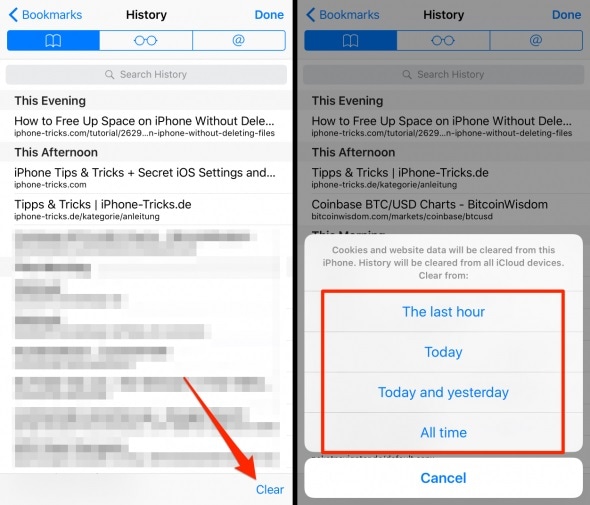
If you prefer not to wipe everything globally, you can handle it from within the app. Open the Safari app, locate the 'Bookmark' button (the open book icon) in the bottom toolbar, and tap it. Click on the Bookmark icon at the top left, then switch to the 'History' tab (clock icon). Tap on 'Clear' at the bottom right. You can then select the time frame: last hour, today, today and yesterday, or all time.
4-3. Removing advanced website data
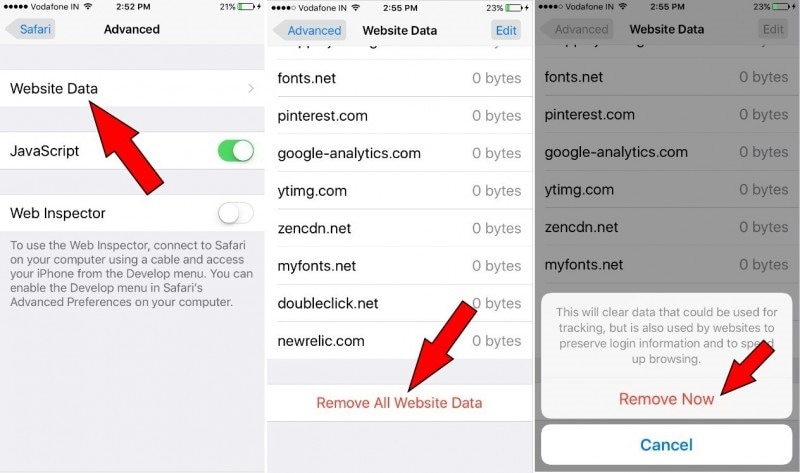
This specific option helps you delete the background website data while keeping your history intact. However, note that you will be logged out of any websites you are currently authenticated with once you choose to remove this data. Go to Settings > select Safari > scroll down and click on the 'Advanced' option at the very bottom. Select 'Website Data', let the list populate, and click on 'Remove All Website Data'. Finally, select 'Remove Now' to confirm.
Tip 5: Disable the Suggestion Option in Safari Settings
Safari Suggestions acts as an interactive content engine that analyzes your input to suggest content about news, articles, app stores, movies, weather forecasts, nearby locations, and much more. While sometimes these suggestions are highly useful, they rely on constant background data retrieval. This might slow down the device's functioning or make the data transfer crash, leading to a stalled browser. Turning this feature off can rapidly increase stability.
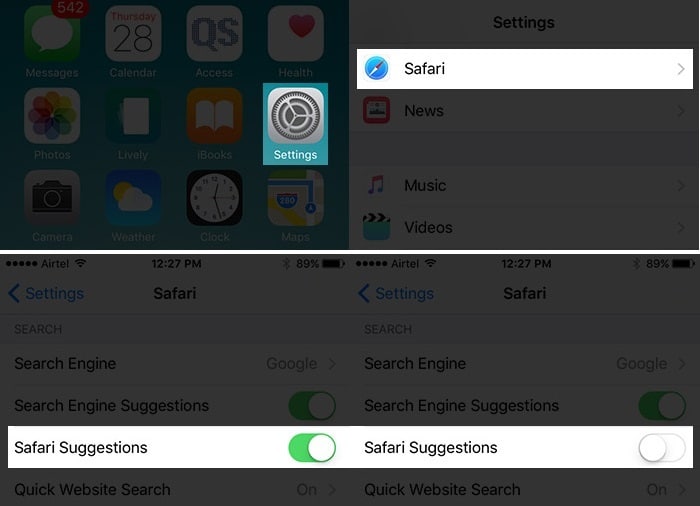
To turn off the Safari Suggestions, you need to go to the Settings app, scroll down and select the Safari option. Find the 'Safari Suggestions' toggle under the Search header and turn it off.
Tip 6: Check for Content Restrictions
Restrictions (now largely managed under Screen Time) serve as the primary parental control feature in iOS, through which you can easily manage app usage and filter the content allowed on the device. There might be chances that this restriction feature was accidentally turned on for Safari, actively blocking internet access and rendering the app useless.
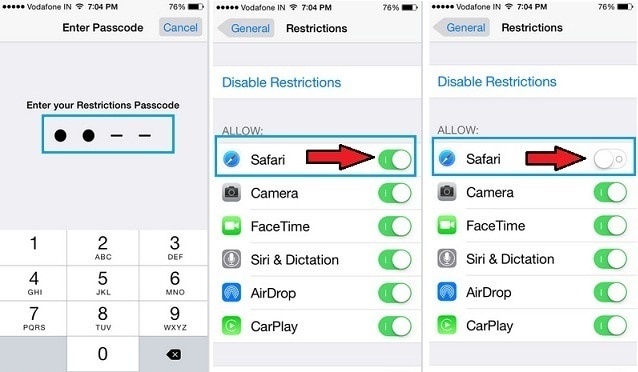
To verify and lift these restrictions, visit the Settings app. Depending on your iOS version, you will either select 'General' > 'Restrictions', or go to 'Screen Time' > 'Content & Privacy Restrictions'. Enter the screen time passkey if requested. Under the 'Allowed Apps' section, find Safari and toggle it ON so that it turns green, permitting the app to function normally.

Conclusion
We are confident that by thoroughly reading through this 2026 updated guide, you have discovered the essential tips needed to resolve the frustrating issue of Safari not working on your iPhone/iPad or Safari failing to connect to the internet.
We have presented these proven methods in a deliberate step-by-step manner. Ensure you follow the sequences carefully. After performing each step—such as clearing the cache or rebooting—take a moment to open Safari and check whether the browsing functions have been successfully restored. Consistent troubleshooting is the key to maintaining a healthy iOS ecosystem.




FAQ
-
1. Why is my Safari browser greyed out in Restrictions?
If the Safari toggle is greyed out under your Screen Time or Restrictions settings, it typically means a master profile, such as an MDM (Mobile Device Management) profile installed by a school or employer, is enforcing web limitations. You must contact your administrator to lift this restriction. -
2. Will clearing Safari data delete my saved passwords?
No, clearing "History and Website Data" exclusively removes your browsing history, cached images, and temporary cookies. Your iCloud Keychain passwords and auto-fill data remain securely untouched on your device. -
3. What should I do if Safari is not connecting to the internet only on cellular data?
If Safari works perfectly on Wi-Fi but fails on cellular networks, head to Settings > Cellular (or Mobile Data) and scroll down to the app list. Ensure the toggle switch next to Safari is explicitly turned ON, permitting it to utilize your carrier network. -
4. Can I reinstall Safari if it keeps crashing on my iPhone?
Safari is a core iOS application deeply baked into the Apple operating system, meaning it cannot be uninstalled or reinstalled like third-party apps. If it continues to crash constantly, you must either update your iOS to patch the core system or restore your device firmware entirely.
 Add Wondershare Dr.Fone as a preferred source on Google