Teleport your device anywhere instantly with one click.


 100% Security Verified | No Subscription Required | No Malware

 :

 ChatGPT
 Perplexity
 Gemini
 Claude
 Grok
If Pokemon Go Routes are not showing up, begin with nearby Route availability and your account's access, then check GPS, the connection and supported software. A missing Routes tab, an empty list and a Route that stops recording are different symptoms. Treating them as one glitch can lead you to change settings that were already correct.
Routes connect the game's map to real walking paths and completion rewards. They still depend on approved local content, a supported phone and reliable position updates. The checks below explain the feature first, then separate the common causes and fixes. No third-party movement utility can create an approved Route, repair a server problem or guarantee completion credit.
In this article
The final directory label comes from the original article. Its DeFit comparison is addressed below as a distinction between fitness records and GPS simulation, not as a guaranteed workaround for Pokemon Go restrictions.
Part 1. Understand how Pokemon Go Routes work
A Route is a predefined path for Trainers to follow while exploring. Some paths come from other Trainers and must pass moderation before becoming available. Submitting a path is therefore different from publishing one immediately: approval and the local discovery list are separate steps. When an approved path is accessible, read its details and follow the in-game starting and completion instructions.
The official Routes FAQ currently distinguishes two forms of access. Following begins at Trainer Level 7, with additional parent-portal settings relevant to child accounts. Creating Routes requires Level 30 or above and is unavailable to child accounts. A missing Create New Route button does not, by itself, explain why an eligible Trainer cannot follow an existing path.
Step 1 Open the game at your actual location
Launch Pokemon Go and let the map and your position finish loading. Stand somewhere safe with a usable data signal before checking nearby content.
Step 2 Open Nearby
Select the Nearby control at the lower-right of the map screen. If the interface has changed, look for the current nearby-exploration menu rather than expecting the inherited screenshot to match every pixel.

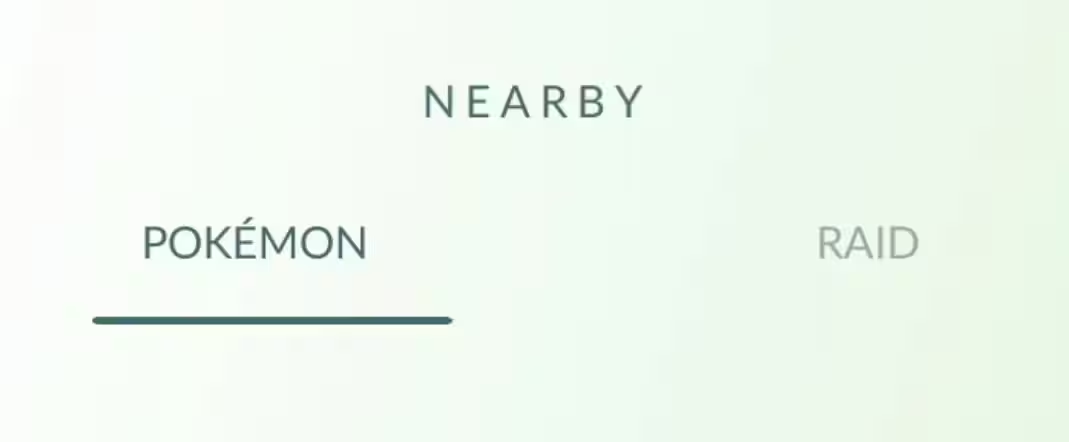
Step 3 Inspect the Routes tab
Open Routes and inspect the available paths. An empty list means no path is being offered at the current position; it is not automatically an installation failure.

Step 4 Choose following or creation
Select an existing Route and review its starting point, or use Create New Route if your account is eligible. For a submission, record an appropriate public path and wait for moderation. Do not enter private or dangerous areas just to make a Route available.
Official reference: Pokemon Go Routes FAQ. Eligibility and interface details can change, so use the current account and help information when diagnosing access.
Part 2. Identify why Routes are missing or failing
First write down what is missing: the tab, the list, the start prompt or progress along a selected path. Check Trainer eligibility and child-account permissions before changing network settings. Also read any account warning: the official fairness policy says a warning can restrict viewing, creating or following Routes. That is not repaired by reinstalling an app.
No approved Route is close enough
The Nearby menu is location-dependent. A path can exist in your city without being close enough to appear at your current position. Walk to another suitable public area and check again, rather than expecting a new installation to populate the same empty list.
Approved content can also change. The official FAQ explains that removing a Route's start or end point can archive the Route, and trying to replay it from an old badge can then fail. A remembered path is therefore not guaranteed to remain available forever.
The game cannot obtain an adequate location
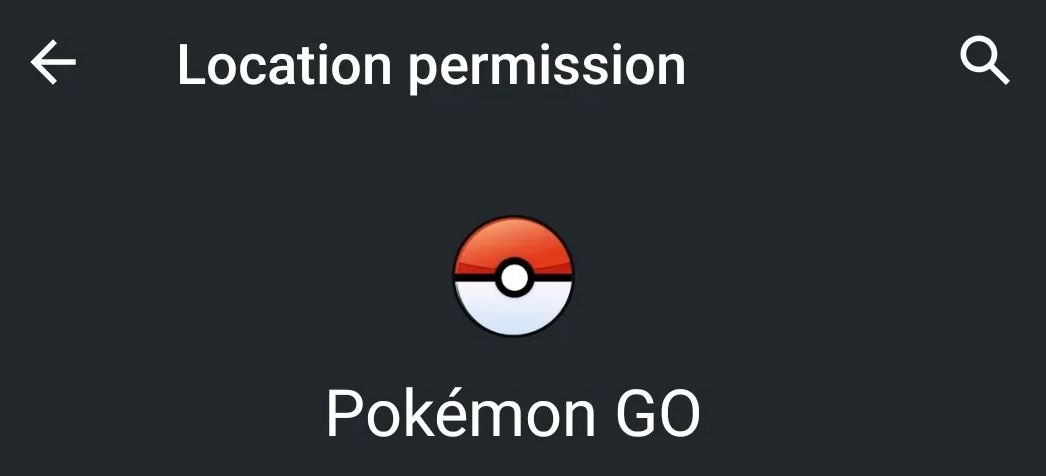
Denied or overly approximate location permission can stop the game from placing you accurately enough to find a Route or register progress. On the phone, open Pokemon Go's permissions and enable the location access the current app requests for play. Where available, check that precise location is enabled.
Then compare your real position with the game's marker. If it drifts badly or never settles, move to a safe outdoor spot with a clearer signal. Do not interpret every inaccurate fix as a Route database problem, and do not grant unrelated permissions simply because a general troubleshooting list says to allow everything.
The data connection is unreliable
Routes need both local position information and online game data. Weak Wi-Fi, a congested mobile network or a connection that drops while you walk can leave a list unloaded or progress apparently stuck. A strong GPS signal does not compensate for an unusable internet connection.
Try a known-working connection and reopen the same menu. If other online game content also fails, connectivity is a stronger suspect than a particular path. If only one Route fails on a stable connection, gather its name and the exact behavior for support.
The installed game is out of date

An old client can lack current fixes or fail to work correctly with present services. Check the official app store for an update, install it and reopen the game. Avoid unofficial modified builds, which add compatibility and account-policy problems instead of providing a dependable fix.
Updating is a troubleshooting step, not proof that the original failure was a version bug. Check the same symptom afterward so you can tell whether the change actually helped.
The phone or OS no longer meets support requirements
The source article's Android 6.0 and iOS 14 figures are outdated. The official supported-devices page currently lists Android 9 or later and iOS 15 or later, with additional hardware, memory, GPS and connection conditions. Rooted or jailbroken devices are unsupported; OS betas may also fail.
Check the complete supported-device requirements, not just the OS number. An operating-system update helps only if the hardware can run a supported configuration. Even meeting the listed baseline does not guarantee every regional device variant works without problems.
Part 3. Apply the fixes in a useful order
Use a short diagnostic sequence instead of repeatedly changing every setting. Keep the game version, phone model, OS version and exact error available. After each change, return to the same menu or path and check whether the original symptom has changed.
- Test a dependable connection. Switch between known-working mobile data and Wi-Fi where practical, then reopen Nearby. If neither works and multiple game features fail, check official service information before making more device changes.
- Update through the official store. Install the available Pokemon Go update and restart the app. Preserve your account credentials so troubleshooting does not turn a map problem into a login problem.
- Review the relevant permissions. Confirm Location Services, Pokemon Go's location access and precise positioning where supported. Verify your actual marker rather than treating a permissions toggle as evidence of accurate GPS.
- Check support before replacing hardware. Compare your existing phone with the current requirements and install supported system updates if available. A newer device is relevant when the present one is unsupported, not the first answer to every empty Routes list.
- Explore another safe public area. Look for approved nearby paths at a different real location. If a known Route was removed or archived, choose another; neither an internet upgrade nor a GPS utility can republish it.
If a selected Route still cannot finish, check that the in-game session is active, you are following the indicated path and the endpoint can be reached safely. Record any pause or error message. Send the Route details and diagnostic information to official support if the issue persists; no one fix is guaranteed to resolve every cause.
Part 4. Dr.Fone - Virtual Location: what GPS simulation can and cannot do
 Set your map route to simulate GPS movement.
- Set your wanted movement speed.
- HD and large map view to check location.
- Fake GPS location to anywhere.
The original comparison to DeFit mixes different mechanisms. Fitness records and a simulated GPS position are not interchangeable, and neither guarantees that Pokemon Go will award distance or accept a Route. Virtual Location is a desktop utility for selecting a position and simulating movement on a map; it is not an official Route-repair tool.
For an authorized location-app test, its One-Stop Route controls let you set a destination, trip pattern and speed. Keep that demonstration separate from Pokemon Go gameplay. The official gameplay fairness policy identifies GPS spoofing as cheating and allows restrictions, suspension or termination; a realistic-looking speed does not remove that risk.
Step 1 Install the desktop utility
Obtain Dr.Fone - Virtual Location from its product page. Check current system and phone compatibility before installation rather than assuming a supported game device automatically supports every desktop tool.
Step 2 Connect your own phone
Launch the software, connect the phone with a data-capable cable and complete the on-screen authorization process. Confirm that the program recognizes the intended device before proceeding.
Step 3 Open Virtual Location
If your installed Dr.Fone version uses the toolbox interface, open Toolbox and choose Virtual Location. Allow any required module resources to finish downloading. The standalone or Mac interface may differ from the original illustrations.
Step 4 Define a one-stop test path
In the map window, select One-Stop Route. The starting point uses the current mapped position; Teleport Mode can set another starting point for the test. Search for a destination or select it on the map, then review the resulting path before starting.
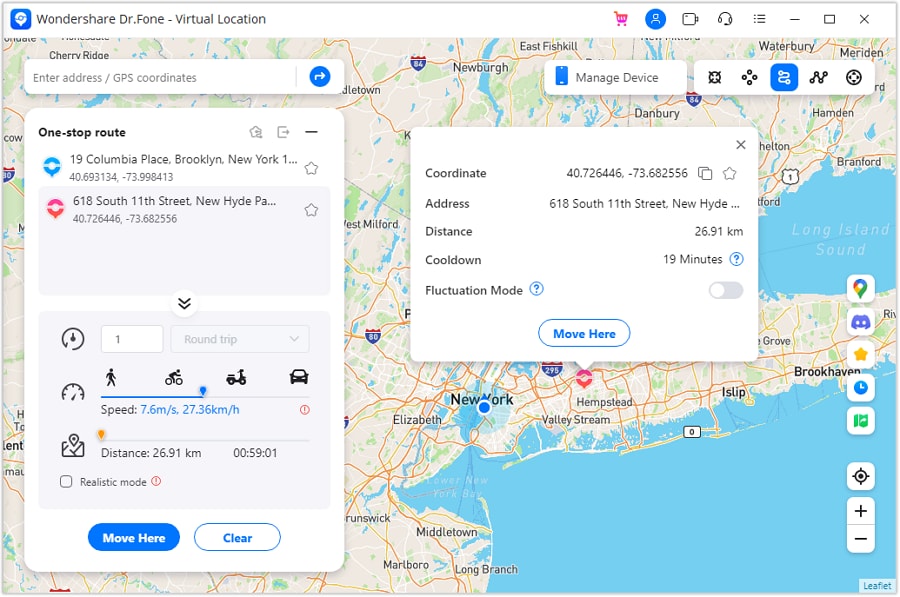
Step 5 Set the movement parameters
Choose the available loop or round-trip option, specify the repeat count and adjust the speed slider. Use Move Here to begin. If you have selected the wrong points, clear the inputs and configure them again instead of treating a wrong destination as an app fault.
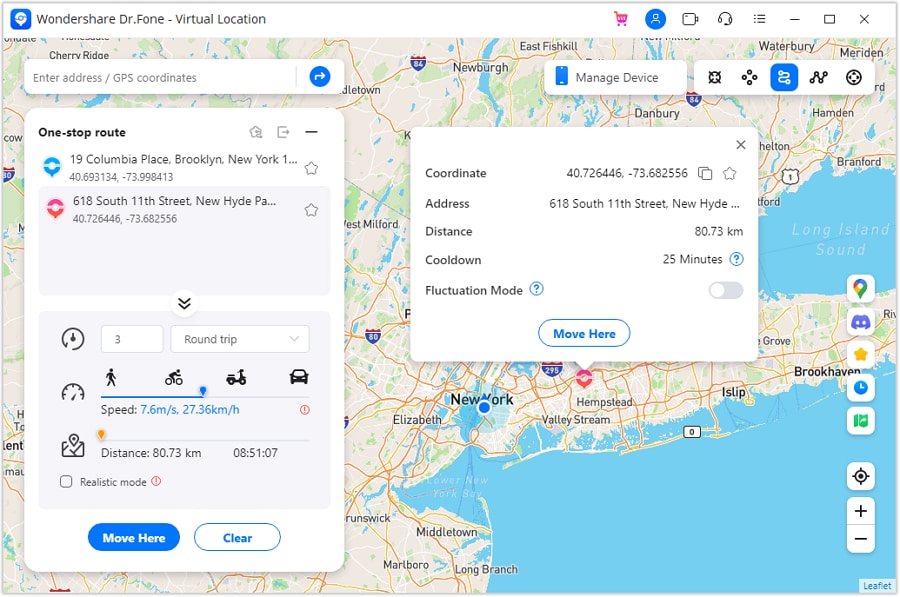
Step 6 Monitor, pause and end the test
Watch the position move on the desktop map. Pause holds the simulation; Clear resets its inputs. These controls belong to Virtual Location and are not the same as starting, pausing or completing an official Pokemon Go Route.
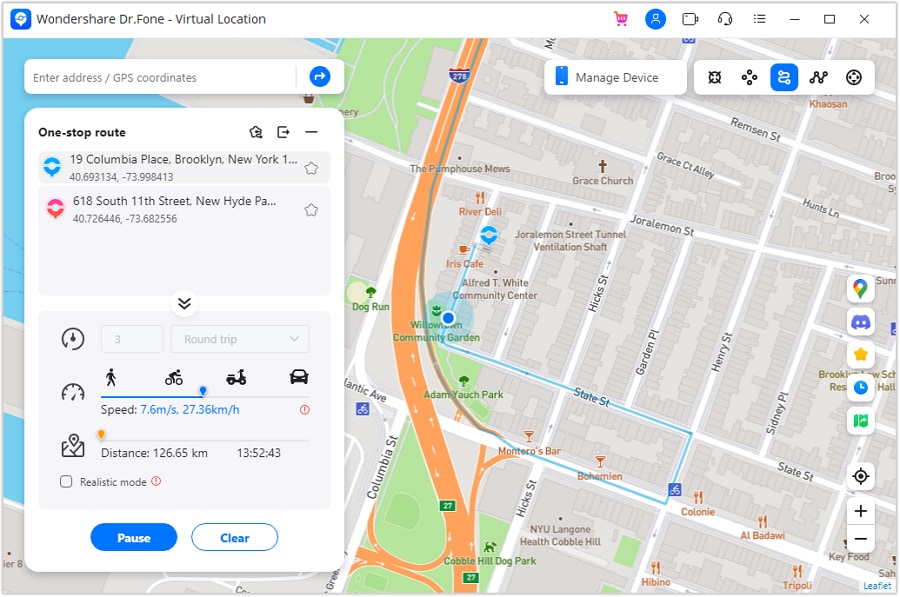
Finish the test, follow the program's restoration instructions and verify the phone's real location before using navigation or resuming legitimate outdoor play. A moving desktop marker does not establish that a game server accepts the movement.




Conclusion
For Pokemon Go Routes not showing up, distinguish access restrictions and missing local content from technical failures. Confirm eligibility, check the real location and data connection, update the game and compare the phone against current support requirements. If one path fails after those checks, document it and contact official support rather than promising that a reinstall will repair it.
Dr.Fone - Virtual Location offers a separate GPS-simulation workflow for appropriate testing. It does not duplicate fitness logging, resolve Route moderation or make location spoofing compliant with the game's rules.
FAQ
1. Why can I follow Routes but not create one?
The official FAQ currently allows following from Level 7 but requires Level 30 or above for creation. Child accounts have additional controls and cannot create Routes. These are separate permissions.2. Why is the Routes list empty even with good internet?
You may not be close enough to an approved path. Check your actual GPS position and explore another safe public area. A good connection cannot supply local content that has not been approved.3. Can a previously available Route stop working?
Yes. The official FAQ says a Route can be archived when its start or end point is removed. An old badge may remain even though replaying that path produces an error.4. Is a GPS simulator a reliable fix for missing Routes?
No. It cannot change account eligibility, approve paths or fix server data. GPS spoofing also breaches the game's fairness policy and can lead to account penalties.
 Add Wondershare Dr.Fone as a preferred source on Google