Permanently erase all iOS & Android data—completely unrecoverable.

 100% Security Verified | No Subscription Required | No Malware

 :
: 
 ChatGPT
 Perplexity
 Gemini
 Claude
 Grok
Grok

Have you ever felt an unsettling sense that your online activities are being watched? In today's highly connected digital landscape, this feeling is a genuine concern rather than mere paranoia. Keyloggers function as invisible digital spies that can quietly infiltrate your system. Operating entirely in the background, a keystroke tracker records every single button you press—capturing your passwords, personal messages, and sensitive financial data without triggering standard alarms.
Fortunately, you do not have to remain defenseless against these stealthy surveillance tools. By arming yourself with the correct information and deploying advanced anti-keystroke software, you can effectively locate and neutralize keyloggers. This comprehensive guide will explain everything you need to know about these hidden threats. We will dive deep into exactly how to detect keylogger activities and explore the best keylogger detector solutions specifically designed for Windows systems.
By the time you finish this guide, you will be fully equipped with the knowledge and the right anti keylogger tool to keep digital intruders far away from your confidential data.
In this article
Part 1. What is a Keylogger?
A keylogger is a specialized piece of software or hardware designed specifically to intercept and record every keystroke made on a computer or mobile device. As a sophisticated keystroke recorder detector would reveal, these programs monitor all inputs, collecting a massive amount of data. This includes everything from everyday emails and search queries to highly confidential information like bank login credentials, social security numbers, and private corporate communications.
While there are legitimate, legal uses for monitoring software—such as parental control programs meant to keep children safe online or corporate tracking tools to oversee employee productivity—malicious hackers heavily exploit keyloggers. Cybercriminals deploy them as a primary weapon for identity theft and financial fraud. Gaining a clear understanding of what a keylogger is and how it silently hooks into your system's operating processes is the crucial first step in discovering how to detect keylogger infections and completely secure your digital environment.
Part 2. How to Detect Keylogger
Finding a keystroke tracker hidden within your operating system can be a daunting task. These malicious programs are intentionally engineered to run covertly, leaving minimal footprints. However, they aren't entirely invisible. If you know what signs to look out for, you can successfully pinpoint a potential breach.
Here are several proven methods and warning signs to help you identify active keylogger infections on your machine:
- Unusual system behavior: Is your computer running noticeably slower than usual? Frequent freezing, delayed keystroke responses on your screen, or unexpected error pop-ups can often indicate that a hidden program, like a keylogger or other malware, is consuming processing power in the background.
- Increased disk activity: Since keyloggers must constantly write the captured keystroke data into a hidden file on your hard drive, you might notice your disk usage spiking even when you are not actively running heavy applications.
- Unexpected network activity: Cybercriminals need to retrieve the stolen data. Many keyloggers are configured to periodically send data logs over the internet. Monitoring your network traffic for unknown, outgoing connections is a great way to catch them.
- Use anti-keystroke software: Running a specialized anti-keylogger tool offers a targeted scan designed to spot the unique behavioral signatures of keystroke logging threats that regular antivirus programs might miss.
- Check running processes: Navigate to your Windows Task Manager and scrutinize the list for any unfamiliar or oddly named background processes. If you find a suspicious entry, research it online to determine if it is a system file or a threat.
- Use antivirus software: Always maintain an updated premium antivirus suite. Regularly scheduled full-system scans are essential for establishing a baseline defense against general malware and keyloggers alike.
- Monitor your firewall: Your firewall is the gatekeeper of your network. Checking its logs can reveal blocked attempts by malicious software trying to phone home with your private data.
- Use a virtual keyboard: If you suspect an infection but need to enter a password immediately, using the Windows on-screen virtual keyboard can sometimes bypass basic hardware or software keyloggers that only monitor physical keyboard inputs.
- Stay alert to phishing attempts: Prevention is key. Keyloggers are predominantly distributed via deceptive phishing emails. Exercise extreme caution before downloading attachments or clicking on links originating from unfamiliar or unverified senders.
By implementing these proactive detection techniques, you drastically improve your chances of catching digital spies red-handed. Coupling your vigilance with a dedicated keystroke recorder detector offers the strongest defense against data theft.
Part 3. Best Keylogger Detector for Windows to Try Right Now
Now that we have covered the fundamentals of how to detect keylogger activities, let's take a closer look at the market's leading defense tools. Here are the most effective and reliable keylogger detector solutions tailored for Windows users. Each program brings unique detection algorithms and features to help you isolate, quarantine, and permanently erase keyloggers.
3-1. Keylogger Pro

iMonitor Keylogger Pro is recognized as a highly robust anti-keylogger suite that delivers comprehensive real-time protection against an array of keylogging scripts and spyware. This premium tool is engineered not just to remove existing infections, but to proactively block any new keyloggers from embedding themselves deep into your system registries.
Key Features: It provides uninterrupted real-time keystroke protection alongside advanced deep-scanning technology to uncover heavily obfuscated trackers. The software updates its virus definitions automatically and operates through an incredibly user-friendly dashboard, ensuring compatibility alongside your existing antivirus programs.
- Offers broad, comprehensive protection targeting multiple generations and variants of keyloggers.
- Includes vital supplementary security features, such as active screen capture blocking and clipboard monitoring.
- Maintains a very lightweight profile, ensuring minimal impact on your system's overall performance.
- The premium tier of this software can be relatively expensive when compared to other alternatives on the market.
Overall, iMonitor stands out as one of the premier keylogger detector choices for Windows users who demand enterprise-grade defense without sacrificing daily computing speeds. Its vigilant real-time monitoring makes it a top recommendation for both home users protecting personal banking and corporate environments securing sensitive data.
3-2. Spy Shelter

Spy Shelter is renowned as a comprehensive, all-in-one privacy suite equipped with top-tier anti-keylogger capabilities. This versatile utility is specifically designed to guard your operating system from a wide spectrum of spyware, extending its reach to detect hidden screen captures and prevent webcam hijacking, making it a robust keystroke tracker detector.
Key Features: It provides multi-layered defenses that evaluate software behavior in real-time. You can customize security rules, apply active locking protection to sensitive applications (like crypto wallets and banking software), and rely on a lightweight core that barely touches your CPU resources.
- Offers extensive, multifaceted protection that goes well beyond stopping simple keyloggers.
- The intuitive interface allows users to easily assign different security levels to different programs.
- Features a highly affordable pricing model given the premium capabilities included.
- Due to its aggressive behavioral detection, users may occasionally experience false positives.
- The sheer number of advanced settings and toggles might overwhelm less tech-savvy users.
Spy Shelter’s rigorous approach to system security establishes it as an elite keystroke tracker detector. Because it grants granular control over what gets monitored or blocked, it caters especially well to power users who want tailored security layers against all spyware categories.
3-3. Zemana Anti Keylogger

Unlike broader security suites, Zemana Anti Keylogger is a highly specialized application laser-focused on defeating keystroke logging threats. This hyper-dedicated approach allows Zemana to refine its algorithms to offer incredibly effective and precise protection specifically against keyloggers.
Key Features: It utilizes advanced keystroke encryption at the kernel level, effectively scrambling the data before a keylogger can even intercept it. It provides dedicated protection for web browsers and email clients, real-time threat hunting, and seamless compatibility with leading antivirus solutions.
- Consistently ranks high in effectiveness for stopping sophisticated keyloggers in their tracks.
- Requires virtually no system resources, meaning zero slowdowns during heavy tasks.
- Features a minimal, user-friendly interface that requires zero configuration out of the box.
- Because it is hyper-focused on keyloggers, it lacks broader malware or virus removal tools.
- A small subset of users have reported intermittent conflicts when running alongside very strict third-party firewalls.
For individuals explicitly seeking the absolute best anti keystroke software to run in tandem with an existing antivirus, Zemana is unmatched. Its specialized design ensures that even deeply hidden keyloggers fail to decipher what you type.
3-4. KL Detector

KL Detector represents an excellent entry point for users wanting a lightweight, straightforward utility specifically tuned to uncover keyloggers on Windows systems. Unlike heavier suites, this free, portable software relies on a very direct approach to identify suspicious logging activities without complicated installations.
Key Features: It provides flexible scanning modes, ranging from quick surface checks to intensive, deep system directory scans. KL Detector looks for behavioral indicators of hidden keyloggers, allowing you to forcefully remove detected threats and keeping its database updated against prevalent signatures.
- Completely free to use, making critical privacy protection accessible to everyone.
- The interface is exceptionally clean and intuitive, perfect for beginners.
- Incredibly low system footprint, allowing it to run smoothly on older Windows machines.
- It primarily operates as an on-demand scanner and lacks continuous, real-time protection protocols.
- May struggle to detect the most advanced, military-grade keyloggers or zero-day threats.
For a no-cost solution, KL Detector performs admirably. If you just need a swift check to detect keylogger threats without committing to a paid subscription, it provides a very solid foundation for basic detection and safe removal.
3-5. Ghostpress

Ghostpress shifts the paradigm from reactive scanning to proactive prevention. Rather than exclusively hunting down infected files, it utilizes state-of-the-art encryption to actively mask your keystrokes. By scrambling the data in real-time, it guarantees that any active keylogger capturing your input will only receive a string of meaningless, unreadable characters.
Key Features: It provides an invisible shield by instantly encrypting keystrokes at the deepest system levels. Ghostpress allows users to designate customized protection for specific programs (like web browsers), functions seamlessly with existing anti-malware software, and maintains an exceptionally low profile.
- Offers a highly proactive methodology, preventing data theft before it can successfully occur.
- Remarkably effective against completely unknown or newly developed zero-day keyloggers.
- The background encryption process produces absolutely no lag while typing.
- It strictly masks inputs; it does not actually locate or delete existing keyloggers from your machine.
Ghostpress introduces a crucial extra layer of security. By functioning as a preventative tool rather than just a scanner, it is ideal for combining with a traditional scanner to achieve ironclad defense against keystroke interception.
Part 4. Permanently Erase Everything on Android: Wondershare Dr. Fone
 Permanently erase all data on iOS & Android — completely unrecoverable.
- Military-grade wiping to fully protect your privacy.
- Generate verified erasure reports to boost device resale value.
- Selectively erase private data and remove junk & large files.
While we have extensively covered Windows keylogger detection, it's vital to recognize that mobile devices are equally vulnerable to stealthy spyware. For Android users demanding absolute certainty that their device is clean, Dr.Fone - Data Eraser delivers an industrial-strength solution for wiping a device safely and permanently.
Wondershare Dr.Fone is a globally trusted mobile management platform tailored for Android and iOS systems. Its Data Eraser module executes much more than a standard factory reset—which often leaves residual data vulnerable to recovery. Instead, it utilizes military-grade shredding algorithms to overwrite existing files, ensuring that photos, passwords, and rogue applications are permanently destroyed and rendered completely unrecoverable.
Although the software isn't inherently designed as a standalone anti-malware scanner, executing a complete wipe via Dr.Fone guarantees the total removal of any deeply rooted keyloggers hiding on your smartphone. By thoroughly purging all storage sectors, you can confidently reset your phone's privacy back to a pristine state.
Follow these simple instructions to execute a permanent wipe using Wondershare Dr.Fone Data Eraser:
-
Step 1 Launch and Connect
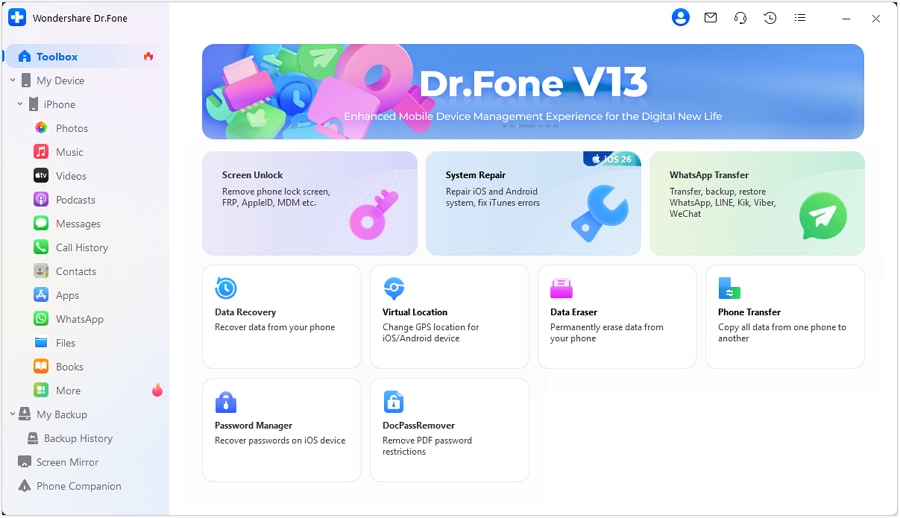
Visit the official Wondershare website to download the Dr.Fone software compatible with your computer. Install it by following the on-screen prompts. Connect your Android phone to the PC using a stable USB cable. Launch the Dr.Fone application and explicitly choose the "Data Eraser" module from the primary dashboard.
-
Step 2 Initiate the Erasure Tool
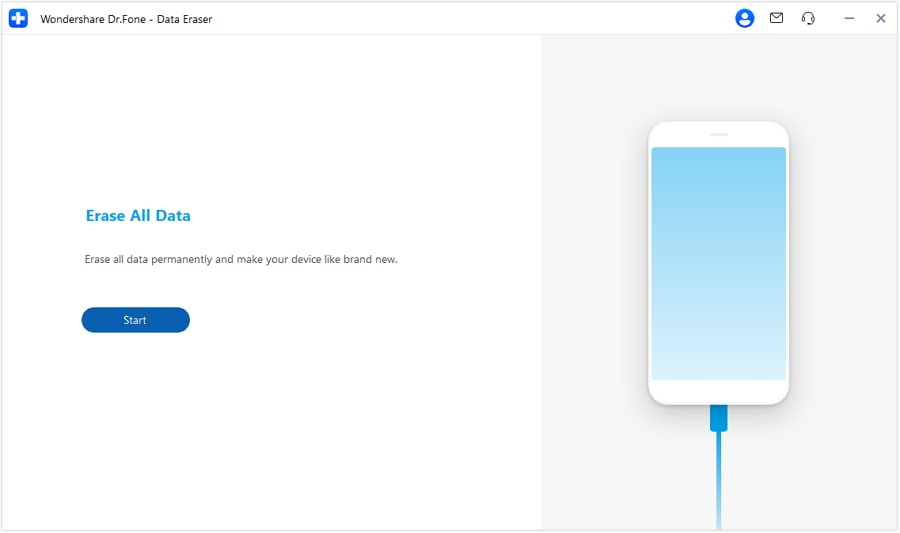
Once the dedicated Data Eraser window opens and properly recognizes your connected Android device, locate and click the prominent "Start" button to proceed to the next critical phase.
-
Step 3 Confirm the Permanent Wipe
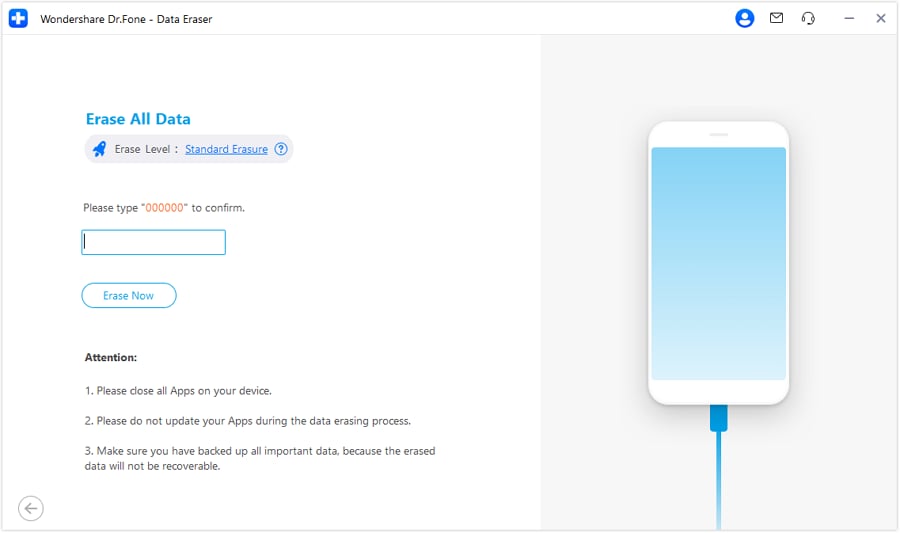
Because this action is permanent, the software requires strict confirmation. You must manually type in the security code displayed on the screen to verify your intent. Once entered, click Erase Now.
-
Step 4 Monitor the Process
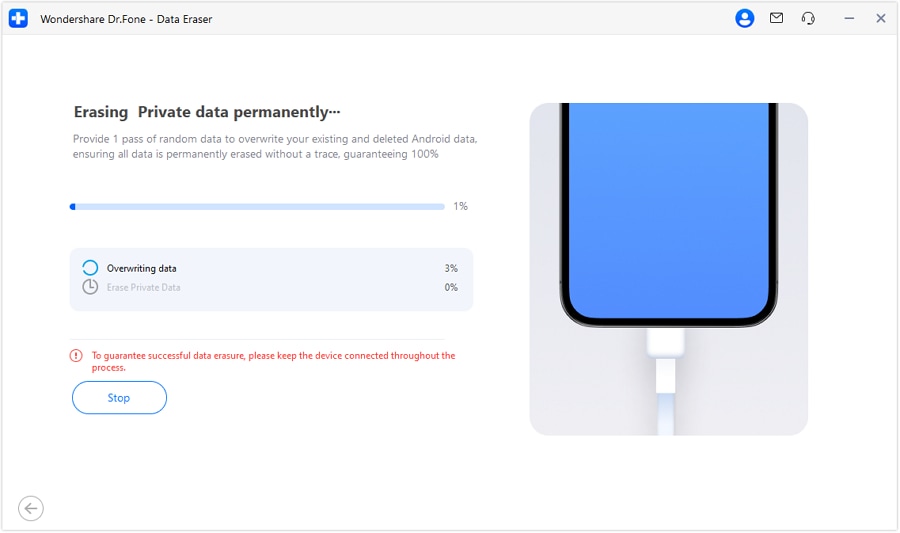
The subsequent interface will display a real-time progress bar. This allows you to view precisely how far along the operation is as it systematically purges different storage sectors. If necessary, you can halt the procedure by clicking the Stop button, though letting it finish is highly recommended.
-
Step 5 Review the Erasure Report
Upon successful completion, a confirmation prompt will appear confirming that the device is now completely clean. You can optionally click Erasure Report to review a detailed log outlining exactly what data categories were permanently destroyed.




Conclusion
Navigating today's highly interconnected digital ecosystem requires an active commitment to personal privacy. Acknowledging the threat of background keystroke recorders and understanding precisely how to detect keylogger software are monumental steps in preventing devastating online fraud. Throughout this article, we analyzed leading keystroke tracker detectors—including iMonitor KeyLogger Pro, Spy Shelter, Zemana Anti Keylogger, KL Detector, and Ghostpress. Each tool brings distinct mechanisms to the table, ensuring you can tailor a defensive strategy that aligns perfectly with your system's needs.
Alongside utilizing an anti keylogger tool, practice strong digital hygiene. Ensure your operating system and security software remain fully updated. Approach unfamiliar email links and unverified downloads with deep skepticism, leverage virtual keyboards for high-stakes passwords, and rely on Wondershare Dr.Fone Data Eraser whenever you need a completely unrecoverable purge of an infected Android device.
By blending vigilance with specialized keystroke recorder detector technology, you fortify your devices and radically reduce the chance of falling victim to malicious data theft.
FAQs
-
1. What is the most effective way to detect a keylogger?
The most effective way to detect a keylogger is to use a multifaceted approach. Begin by implementing a premium anti-keylogger or antivirus application designed specifically for sophisticated spyware detection. Supplement this by constantly monitoring for unusual system behavior, such as sluggish performance, random freezing, or unexplained spikes in network data. Routinely analyzing your Windows Task Manager for suspicious active processes also adds an essential layer of security. Combining your vigilance with a dedicated keystroke recorder detector ensures the most reliable defense network. -
2. Can keyloggers be installed remotely?
Yes, the majority of modern keyloggers are deployed remotely by cybercriminals. They are most commonly distributed through phishing emails bearing malicious attachments or embedded in deceptive hyperlinks. Additionally, visiting compromised websites can trigger hidden drive-by downloads that install a keystroke tracker silently in the background. Certain advanced variants can even exploit unpatched vulnerabilities across a wireless network. To combat these remote installation techniques, establishing a firm firewall perimeter and running an active anti keylogger tool is absolutely vital. -
3. Are free keylogger detectors effective?
Free keylogger detectors, like KL Detector, can be highly effective as basic scanners, particularly for identifying older or widely documented keylogging signatures. They serve as great entry-level tools for on-demand checks. However, free versions routinely lack proactive capabilities, such as real-time threat interception, live encryption, and automated database updates. If your device regularly handles highly sensitive financial or corporate data, upgrading to a specialized, premium anti keystroke software suite is highly recommended for complete peace of mind. -
4. Can anti keystroke software stop all trackers?
While high-quality anti keystroke software drastically diminishes the threat landscape, no single solution offers 100% invulnerability against all possible tracking vectors. Advanced keystroke masking tools like Ghostpress render logged data useless by encrypting the input, which bypasses the need for traditional virus signature detection. However, zero-day exploits or newly developed hardware-based keyloggers can sometimes bypass software defenses. Therefore, layering multiple security protocols—such as real-time monitoring, strong firewalls, and encrypted keystrokes—yields the most resilient protection.
 Add Wondershare Dr.Fone as a preferred source on Google