Teleport your device anywhere instantly with one click.


 100% Security Verified | No Subscription Required | No Malware

 :

 ChatGPT
 Perplexity
 Gemini
 Claude
 Grok
To get a shiny Eevee in Pokemon Go, encounter Eevee through a currently available source and check whether that individual is shiny. There is no ordinary button sequence that guarantees one from the wild. Research, Eggs, and raids are relevant only when Eevee is actually included in the applicable reward or encounter pool.
Eevee's appeal is also its collection potential: the base Pokémon and all eight evolved forms have shiny appearances. This 2026 guide keeps the original visual catalogue and five hunting approaches, but replaces rumors about fixed Egg distances and raid availability with checks you can make before spending time or items.
Recognize Shiny Eevee and Its Eight Evolutions
A shiny is a different-color variant, not a separate elemental type or an automatic increase in strength. Some changes are obvious, while others are subtle enough that lighting or a quick glance can be misleading. Use the shiny marker in the encounter or summary screen as confirmation instead of relying exclusively on color.
The official Shiny Pokémon explanation describes rare random encounters and the shiny icon above CP. It also recommends checking official event information for availability. The collection below keeps the original order and images so you can compare the family without confusing visual preference with battle performance.
Shiny Eevee: Pale Fur Instead of Brown

The familiar brown coat becomes a pale gray or silver tone, while the neck ruff and tail tip appear lighter. Eevee keeps the same recognizable ears, tail, and overall shape. Check the shiny symbol as well as the pale coat before deciding whether to save or transfer an individual.
This base form is the starting point for a shiny evolution collection. Choose an evolution deliberately rather than pressing Evolve simply because the Pokémon is rare; a color you like now may lead to a form you did not intend to obtain.
Shiny Umbreon: Blue Rings on a Dark Body

Umbreon's dark coat remains the visual foundation. The conspicuous change is its ring markings, which shift from yellow to blue, with the eye color also differing. This makes the shiny recognizable without changing the silhouette of the Dark-type evolution.
The color pattern is a collector preference, not evidence that shiny Umbreon has stronger defenses than an otherwise comparable regular Umbreon. Evaluate battle attributes separately from the shiny designation.
Shiny Espeon: A Strong Green Palette

Espeon has one of the family's more dramatic transformations: the usual pale lavender-pink body becomes bright green. Its slender outline, large ears, forehead jewel, and forked tail still identify it as the same evolution.
If you prefer a change visible even at a small size, this form is easier to distinguish than the subtle Glaceon or Leafeon palettes. The difference concerns appearance rather than an extra evolution stage.
Shiny Sylveon: Pink and Blue Accents Trade Emphasis

Sylveon retains its light body while blue replaces much of the familiar pink emphasis around its ears and other accents. The ribbon-like details also use the alternate arrangement of pink and blue. It is a defined shiny palette, not random coloring generated independently for each catch.
Compare the ears, feet, and ribbon details when checking the picture. Do not expect every part of the body to change simply because the form is shiny.
Shiny Glaceon: A Subtle Icy Shift

Glaceon's alternate appearance stays close to the usual icy blue design. Its body looks paler and the blue accents have a different emphasis, rather than becoming an unrelated vivid color. This is a case where the shiny icon is a more reliable confirmation than memory of the standard shade.
Screen brightness and background can make the distinction seem stronger or weaker. Keep the visual comparison in context instead of assuming a pale screenshot alone proves shiny status.
Shiny Vaporeon: Purple in Place of Blue

Vaporeon's aquatic shape and neck frill remain familiar, but the body shifts from blue toward purple or magenta. The change is comparatively easy to see and does not require close inspection of a tiny accent.
Despite that palette change, Vaporeon remains the same Water-type evolution. A purple body is not an indication of a new type, a regional form, or a stronger version.
Shiny Jolteon: Yellow Becomes Green-Toned

Jolteon's usual yellow coat becomes a lime or yellow-green shade, while its spiky fur and pale neck ruff stay recognizable. The contrast is noticeable, although less extreme than Espeon's full green transformation.
The new color does not make it more or less Electric-type. Keep descriptive color language separate from claims about type effectiveness or damage.
Shiny Flareon: Softer Golden-Orange Fur

Flareon's shiny coat is a subtler, more golden or muted orange than the regular orange-red appearance. The original article's stronger-orange description overstates the change. Its fluffy pale ruff and tail still dominate the design.
Because the two versions are similar, verify the shiny marker before drawing a conclusion from a small thumbnail. A modest palette change is still a genuine shiny form.
Shiny Leafeon: Warmer Tones and Subtle Leaf Differences

Leafeon keeps the same cream-and-green identity. The alternate tones are slightly warmer or deeper, including the leaf-like details, rather than a complete seasonal recoloring. At a glance it can look almost identical to the regular form.
Use the screen's shiny identifier for certainty. A difficult-to-see palette difference does not mean you failed to obtain the alternate form.
Five Ways to Check for Shiny Eevee Opportunities
Start by confirming that Eevee is available through the method you intend to use. Availability and shiny eligibility are separate questions; neither a general article nor an old screenshot establishes today's reward pool. More encounters can provide more chances, but they do not guarantee that any particular encounter will be shiny.
Use official in-game news and event announcements for time-sensitive information. No fixed shiny rate is asserted here, and no active Eevee raid, research task, or Egg pool is claimed without a current announcement.
Tip #1: Explore Local Spawn Areas Safely

When Eevee is spawning locally, take a safe walking route and open individual Eevee encounters to check their shiny status. Do not judge only from the ordinary map appearance. Stop somewhere safe before interacting with the screen, and respect private property and restricted areas.
If you find a shiny, catch it using normal game mechanics and verify it in your collection. There is no need to describe it as an easy or guaranteed catch: encounter luck and successful capture are different parts of the process.
Tip #2: Check the Actual Field Research Reward
Field Research is a task system, not simply the name of a one-off event. You can obtain tasks from PokéStops or designated bonus distributions, complete their objectives, and claim the listed rewards. The official research guide distinguishes Field Research from Special and Timed Research.
An encounter reward only helps an Eevee hunt if the applicable task actually awards Eevee and its shiny form is eligible through that encounter. Do not assume every research encounter is Eevee, or that completing a task guarantees a shiny. Check the current event or task information before prioritizing it.
Tip #3: Inspect 5 km and 7 km Egg Contents First

The source's claim that shiny Eevee commonly comes from 5 km and 7 km Eggs is not a permanent rule. Egg contents vary, and a distance label alone does not establish that Eevee can hatch. Open the particular Egg and inspect its possible-hatch list before using an Incubator for this goal.
Official Egg guidance explains that the displayed list applies to that specific Egg. If Eevee is absent, do not spend an Incubator expecting it. If it is eligible, that still does not make the hatch guaranteed or the shiny outcome certain.
For an appropriate Egg, use Pokémon > Eggs, select the Egg, tap Incubate, choose an Incubator, and complete the recorded walking requirement. Adventure Sync can track permitted walking when correctly enabled; location simulation is not presented as an approved hatching method.
Tip #4: Use Lures to Create More Encounters, Not Guaranteed Shinies
A Lure Module at a PokéStop can bring additional encounters, but it does not promise that Eevee will appear or that an encounter will be shiny. Consider the current spawn pool and the particular Lure's behavior before spending one solely for this target.
Also distinguish encounter hunting from evolution conditions. A special Lure associated with an Eevee evolution is not a machine that produces shiny Eevee. Obtaining the shiny base Pokémon and meeting an evolution requirement are separate tasks.
Tip #5: Raid Only When Eevee Is an Eligible Boss

The statement that shiny Eevee will now be available in raids was an unverified rumor in the source, not a current schedule. Check official announcements and the raid boss shown in the game. A raid against a different species will not turn its reward encounter into Eevee.
If Eevee is in the applicable raid rotation and shiny encounters are enabled, a successful raid may offer an eligible encounter; it still does not guarantee a shiny. Decide whether to use a pass based on the actual boss and rewards rather than the possibility suggested by an old guide.
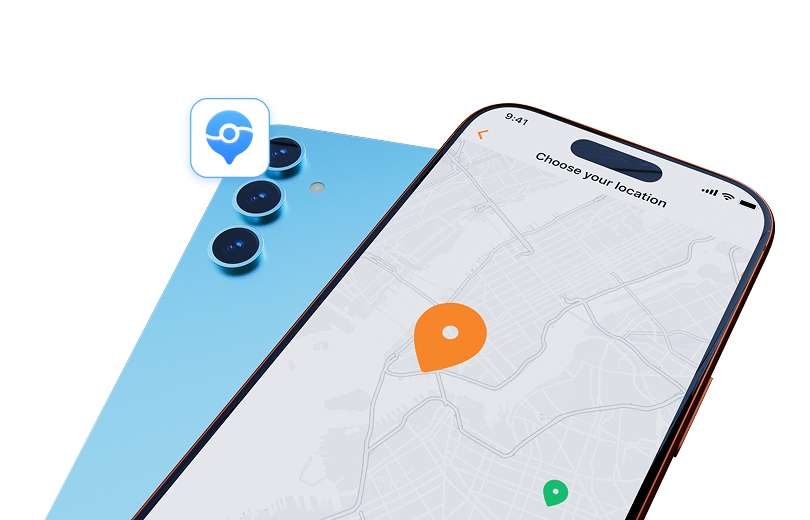
Dr.Fone - Virtual Location: Keep GPS Testing Separate from Shiny Hunting
 Set your map route to simulate GPS movement.
- Set your wanted movement speed.
- HD and large map view to check location.
- Fake GPS location to anywhere.
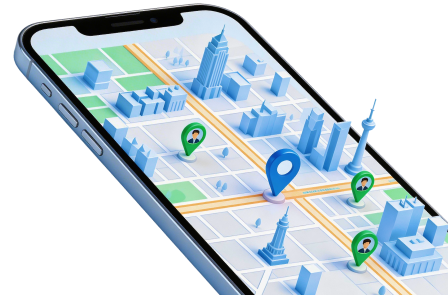
Dr.Fone - Virtual Location can simulate a supported device's reported coordinates or movement for a permitted test. It does not set an encounter's shiny status, change an Egg's possible species, or guarantee an Eevee reward. Moving a virtual pin is not a way to control the server's random outcome.
The product page's Android application statement explicitly excludes Pokémon GO. On any platform, a marketing example does not override the game's rules against falsified locations or guarantee account safety. Keep this workflow to applications and test devices where location simulation is authorized.
Step 1 Prepare the supported device
Open the desktop software, choose Virtual Location, connect your phone, and complete the connection prompts for its operating system.
Step 2 Select a test location
In Teleport Mode, search for a coordinate, inspect the map pin, and confirm Move Here only for your permitted test.
Step 3 Check and stop the simulation
Verify the result in a maps app, then end the session. Follow the program's restart instruction to return the device to real-location reporting.
These steps demonstrate GPS behavior only. They are not a verified Pokémon GO shiny-farming procedure, an Android game workaround, or a promise to hatch Eggs or avoid enforcement.




Conclusion
A shiny Eevee collection begins with an eligible encounter and a lucky result, not a guaranteed shortcut. Use the visual catalogue to choose your favorite forms, then focus on wild spawns, research, Eggs, or raids only when the relevant pool actually includes Eevee. Check the shiny marker, verify current announcements, and avoid spending items on assumptions inherited from old advice.
FAQ
1. Can I guarantee a shiny Eevee by walking to a particular spot?
No. A place with Eevee encounters can provide opportunities, but it does not guarantee shiny status for a particular encounter.2. Do all 5 km and 7 km Eggs contain Eevee?
No. Inspect each Egg's possible-hatch list. The distance category is not a permanent species list, and eligibility would not guarantee a shiny result.3. Which shiny Eevee forms are easiest to recognize?
Espeon's green body, Umbreon's blue rings, and Vaporeon's purple body are conspicuous examples. Glaceon, Flareon, and Leafeon are subtler, so confirm with the shiny icon.4. Can a GPS changer improve the shiny outcome?
No demonstrated feature here controls shiny status. Location tools do not change encounter randomness, and falsifying game location can violate Pokémon GO's rules.
 Add Wondershare Dr.Fone as a preferred source on Google