Resolve common problems and system crashes on both iPhone and Android devices.

 100% Security Verified | No Subscription Required | No Malware

 :
: 
 ChatGPT
 Perplexity
 Gemini
 Claude
 Grok
Grok

My iPhone 15 Pro is stuck on a black screen and won't turn on. I think it's in DFU mode. How can I restore or exit DFU mode without losing my photos?
Sarah Jenkins, Creative Director
A black, unresponsive iPhone, iPad, or iPod touch can be in DFU mode, recovery mode, or a deeper software failure. The safest next step depends on what your computer sees: Apple restore can reinstall the device software, but it erases the device; Apple update should be tried first when it is available; and a dedicated Exit DFU option is useful when the device is already in DFU and you only need to leave that state.
This guide explains how to restore an iPhone, iPad, or iPod from DFU mode, when to use Finder, the Apple Devices app, or iTunes, and when Dr.Fone - System Repair (iOS) is a practical optional route for exiting DFU mode or repairing common iOS/iPadOS system problems.
If you need the separate preparation step, read how to enter DFU Mode. If your device is already stuck, this page focuses on entering and exiting DFU mode safely without turning that adjacent topic into the main restore guide.
In this article
Which DFU or recovery path should you choose?
Before you click Restore, identify the state your device is in. A DFU restore is powerful, but it is not always the first or least risky fix. Use the table below to pick the next action.
| What you see | Most likely state | Best first action | Data risk |
|---|---|---|---|
| Computer/cable recovery screen | Recovery mode | Use Finder, Apple Devices, or iTunes and try Update first | Update keeps data; Restore erases |
| Black screen, but computer detects the device | DFU mode | Try Exit DFU Mode before a full restore | Lower risk if you only exit DFU |
| Update fails or the device loops back to the same screen | System issue or failed firmware update | Use Standard Mode when supported, or restore from Apple tools | Standard Mode is designed to keep data; Apple Restore erases |
| Buttons are broken, device is not detected, or restore repeatedly fails | Possible hardware or connection problem | Try another cable/port/computer, then contact Apple service | Depends on repair path |
Part 1. Restore iPhone/iPad/iPod from DFU Mode with a Computer (Data Loss)
Apple's official restore route uses Finder on Mac, the Apple Devices app on Windows, or iTunes on older setups. If your device is detected and you see Update and Restore, choose Update first when available. Choose Restore only when Update is unavailable or fails, because Restore reinstalls the software and erases the device.

-
Step 1Connect the device to an updated computer
Update your Mac or install the latest Apple Devices app on a Windows PC. If you still use iTunes, update it first. Connect the iPhone, iPad, or iPod touch with a reliable USB cable and keep it connected throughout the process.

-
Step 2Use the correct button sequence for your model
For iPhone 8 or later, quickly press Volume Up, quickly press Volume Down, then hold the Side button until the computer detects the device. For iPhone 7, iPhone 7 Plus, and iPod touch 7th generation, hold the Top/Side and Volume Down buttons. For iPhone 6s or earlier and older iPod touch models, hold Home and Top/Side.
For an iPad without a Home button, quickly press the volume button closest to the top button, quickly press the volume button farthest from the top button, then hold the Top button until the recovery screen appears. For an iPad with a Home button, hold Home and Top together.

-
Step 3Choose Update first, then Restore only if needed
Open Finder, Apple Devices, or iTunes and select the device when it appears. If you see Update and Restore, try Update first because it attempts to reinstall the software without erasing data. If Update fails, choose Restore, confirm the warning, and wait while the computer downloads and installs the firmware.

If the download takes more than 15 minutes and the device exits the recovery screen, let the download finish and then repeat the button sequence. If the computer never detects the device, test another cable, USB port, and computer before assuming the phone itself is recoverable through software.
Part 2. Exit DFU Mode or Repair iOS without iTunes
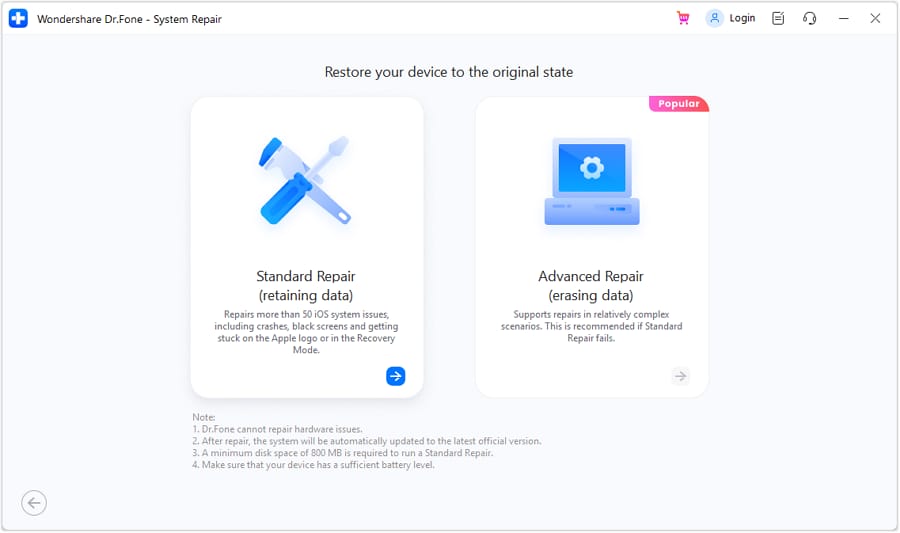
If the device is already in DFU mode and you do not want to erase it, start with the narrowest fix. Dr.Fone - System Repair (iOS) includes a free Exit DFU Mode feature for devices stuck in DFU mode. If exiting DFU does not bring the device back, Standard Mode can repair many common iOS/iPadOS issues without data loss, while Advanced Mode is for more severe cases and may erase data.
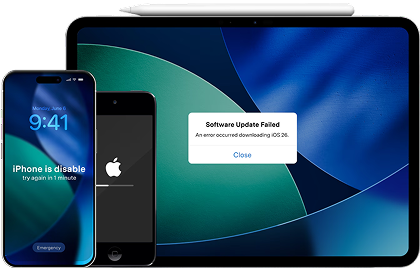
 Exit DFU mode when the device is stuck on a black screen.
- Use Standard Mode for common iOS/iPadOS repair without data loss.
- Fix recovery mode, Apple logo, black screen, frozen screen, and update failures.
- Use Advanced Mode only when deeper repair is needed and you accept data-erasure risk.
-
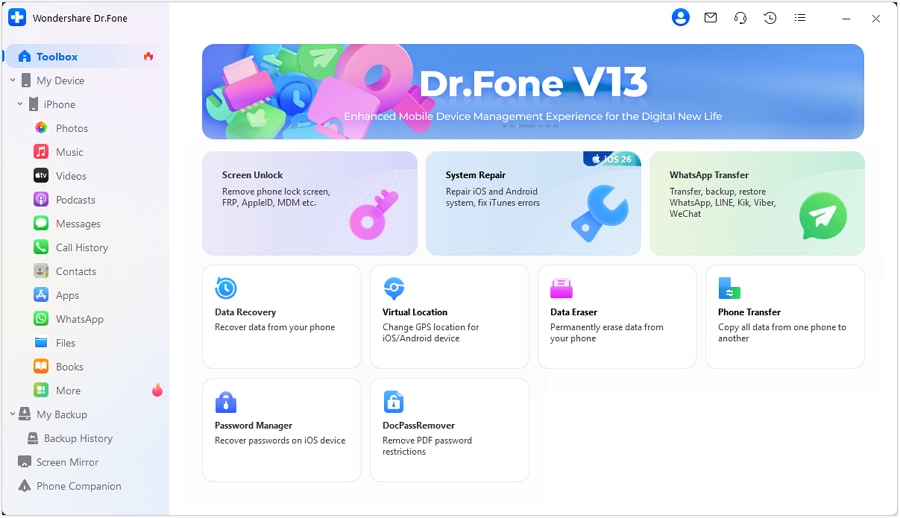
Step 1Open System Repair in Dr.Fone
Install and open Dr.Fone on your computer. From the toolbox, choose System Repair, then select iPhone as the device type.
-
Step 2Choose the right repair route
If the device is only stuck in DFU mode, choose System Repair > iPhone > Toolbox Repair > Exit DFU Mode and follow the on-screen instructions. If the device still will not start after exiting DFU, use Standard Mode for supported system issues before considering data-erasing options.
-
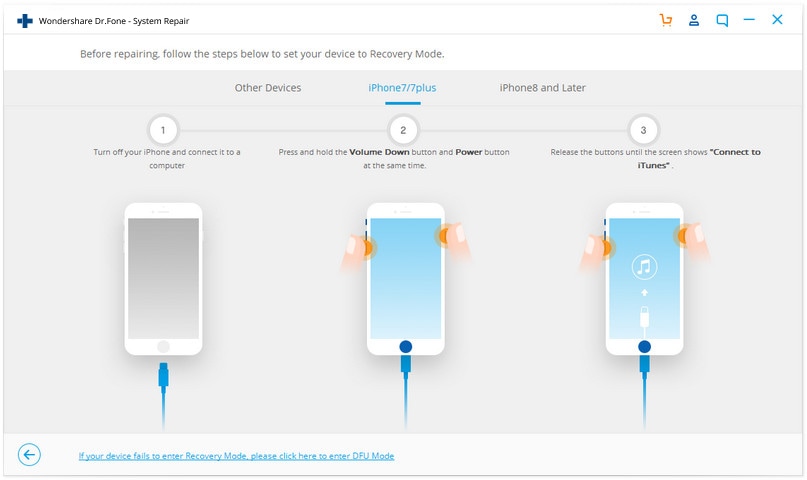
Step 3Follow the on-screen DFU or repair instructions
For Standard Mode repair, keep the device connected and follow the guided steps instead of repeatedly forcing hardware button combinations.
-
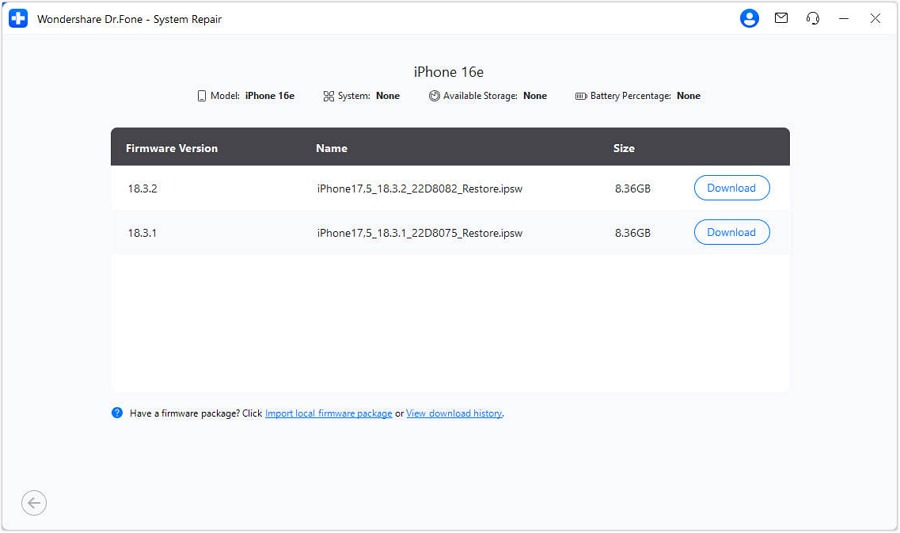
Step 4Confirm the device model and firmware
When Standard Mode needs firmware, confirm the detected device information and download the recommended firmware package. Do not disconnect the device while the firmware is downloading or verifying.
-
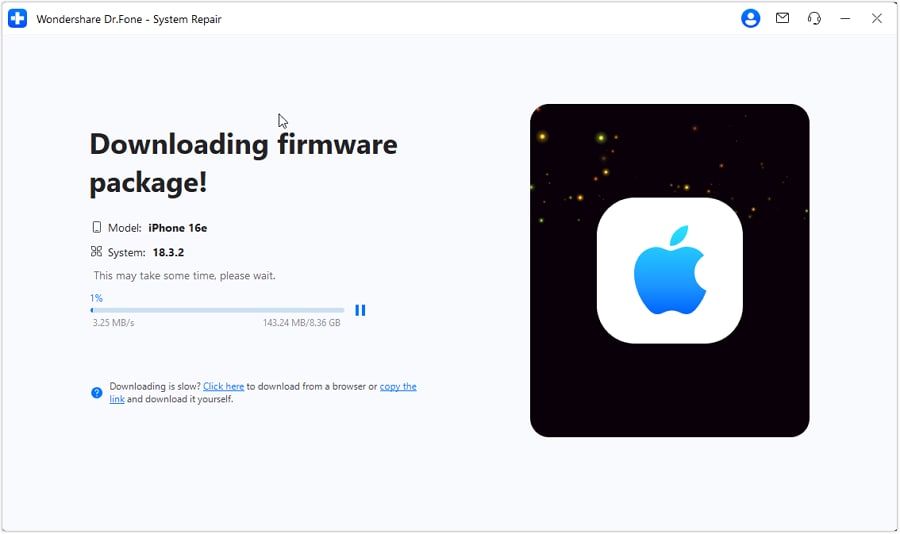
Step 5Wait for firmware verification
Let Dr.Fone complete the download and verification process. A stable USB connection matters here because interruption during firmware handling can leave the device stuck again.
-
Step 6Start Standard Mode repair when needed
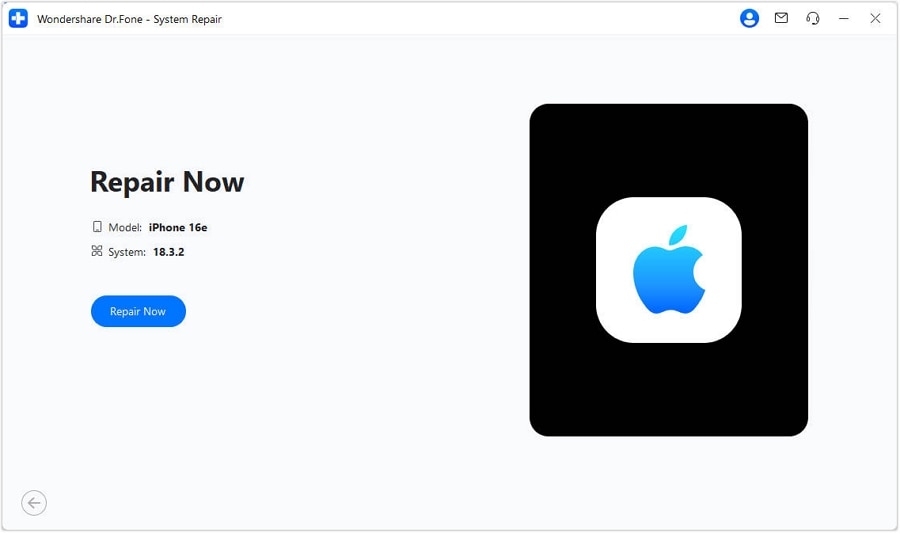
Click Repair Now only after confirming you are using the intended mode. Standard Mode is designed for common system issues without data loss; if you switch to Advanced Mode, review the erase warning first.
-
Step 7Check whether the device starts normally
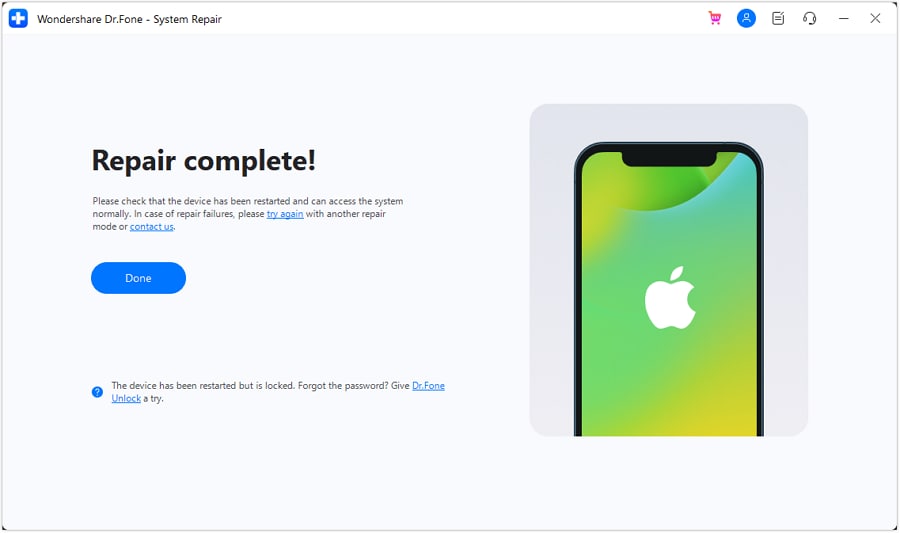
After the process finishes, let the device restart and confirm that it reaches the Lock Screen or Home Screen. If it still will not start, move back to the Apple restore path or service options instead of repeating the same repair indefinitely.
Conclusion
Restoring from DFU mode is the strongest software recovery path, but it is also the path most likely to erase the device. Start by identifying whether you are seeing recovery mode or true DFU mode, try Apple Update before Apple Restore when the option appears, and use a dedicated Exit DFU feature when you only need to leave DFU mode. If software repair still fails or the computer cannot detect the device, hardware service is the safer next step.




FAQ
-
1. What is the difference between DFU mode and Recovery mode?
Recovery mode loads enough of the boot process to show a computer/cable screen and offer Update or Restore in Finder, Apple Devices, or iTunes. DFU mode is deeper: the screen usually stays black while the computer can still detect the device for firmware restore or exit steps. -
2. Does Apple Restore erase my iPhone, iPad, or iPod touch?
Yes. Apple Restore reinstalls the software and removes the information and settings on the device. If the Update option appears, try Update first because it is the lower-risk Apple path. -
3. How do I put an iPad without a Home button into recovery mode?
Quickly press the volume button closest to the top button, quickly press the volume button farthest from the top button, then hold the top button until the recovery screen appears. Keep the iPad connected to the computer while you do this. -
4. Can Dr.Fone exit DFU mode without a full restore?
Dr.Fone - System Repair (iOS) includes an Exit DFU Mode feature for a device stuck in DFU mode. If that does not solve the startup issue, Standard Mode may help with supported system problems; deeper repair modes can involve data erasure, so read the mode warning before proceeding. -
5. Why is my iPhone still not turning on after a DFU restore?
If the restore completed but the device still will not turn on, check the cable, charger, USB port, and computer. A repeated restore failure, broken button, non-detected device, battery problem, or logic-board issue may require Apple service or hardware repair.
 Add Wondershare Dr.Fone as a preferred source on Google