Recover photos, messages, WhatsApp, and more — no backup
needed.
Recover photos, messages, WhatsApp, and more — no backup
needed.

 100% Security Verified | No Subscription Required | No Malware

 :
: 
 ChatGPT
 Perplexity
 Gemini
 Claude
 Grok
Grok
Using the default Calendar application on your modern Android smartphone is undeniably one of the most effective strategies for organizing your personal and professional schedules. As we move through 2026, people rely extensively on this digital assistant to set up crucial reminders for impending birthdays, high-stakes corporate meetings, anniversaries, and an array of daily tasks. If you are among the millions of avid users who depend on these automated alerts, you already recognize the sheer significance of this tool in maintaining daily productivity. Consequently, it is absolutely terrifying and highly stressful when these essential schedules and events abruptly vanish due to a system glitch or accidental tap.
Whether you believe it or not, accidentally erasing Google Calendar reminders remains a highly prevalent issue that countless Android users encounter regularly. If you currently find yourself trapped in this frustrating predicament, you do not need to panic. This comprehensive guide has been tailored precisely to help you out. We are going to explore several highly effective methods to recover Calendar on Android, guaranteeing that you never miss another pivotal meeting or family gathering again.
Regardless of whether your valuable schedule data was wiped out while migrating to a brand-new smartphone, dealing with a botched OS update, or executing a factory reset, the techniques detailed below will empower you to restore your lost records effortlessly and efficiently.
In this article
Part 1: Use Dr.Fone - Recover Calendar on Android Without Backup
Are you desperately trying to retrieve permanently lost files from your smartphone without a predefined backup archive? Allow us to introduce you to Wondershare Dr.Fone - Android Data Recovery, which is recognized globally as your ultimate, go-to desktop utility for extracting valuable digital assets safely. Whether you have mistakenly wiped crucial gallery photos, corporate videos, essential business contacts, or detailed Calendar schedules, the Dr.Fone software toolkit is fully equipped to handle your emergency. With broad compatibility spanning over 6,000 distinct Android devices, ranging from the latest 2026 flagship models to legacy Samsung Galaxy units, this specialized tool ensures you can effectively recover what matters most to your workflow.
 Scan Android phones and tablets directly.
- Preview and recover only what you want.
- Supports WhatsApp, photos, videos, contacts, and more.
- Works with 6000+ Android devices.
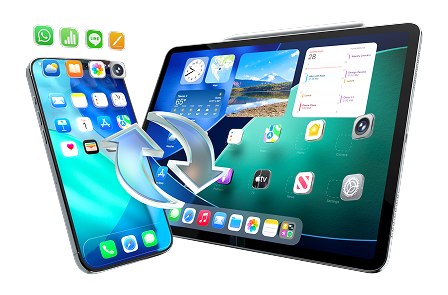
The Dr.Fone desktop software distinguishes itself from standard tools by offering deep-scan algorithms capable of identifying an extensive variety of deleted file formats. Whether you are searching for a cherished memory stored as a JPEG image or a vital task reminder logged in your native Calendar app, you can completely trust Dr.Fone to resurrect it. Furthermore, thanks to its streamlined, user-friendly interface and a logical step-by-step restoration wizard, initiating the recovery process requires zero technical expertise.
By relying on this highly secure desktop solution, you gain unparalleled peace of mind, knowing that a professional recovery engine is always ready to assist you. Below is the comprehensive, step-by-step walkthrough demonstrating how to deploy Dr.Fone to successfully retrieve your appointments.
Step 1 Install the Software and Select the Recovery Module
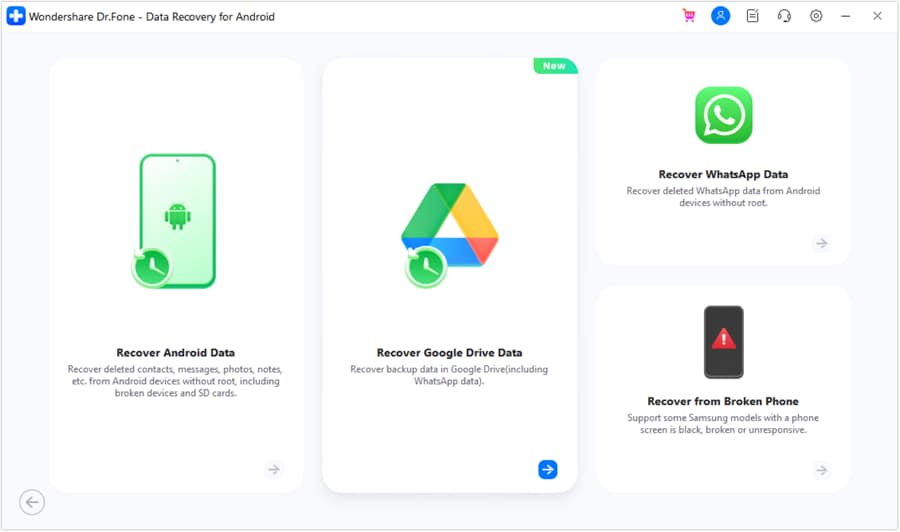
Begin by downloading and installing the Dr.Fone software onto your Mac or Windows PC. Launch the application from your desktop. On the main dashboard, navigate through Toolbox > Android > Data Recovery. When prompted with the data source options, opt for the "Recover Google Drive Data" module if your calendar was synced there, or standard device recovery for local storage.
Step 2 Authenticate Your Google Account
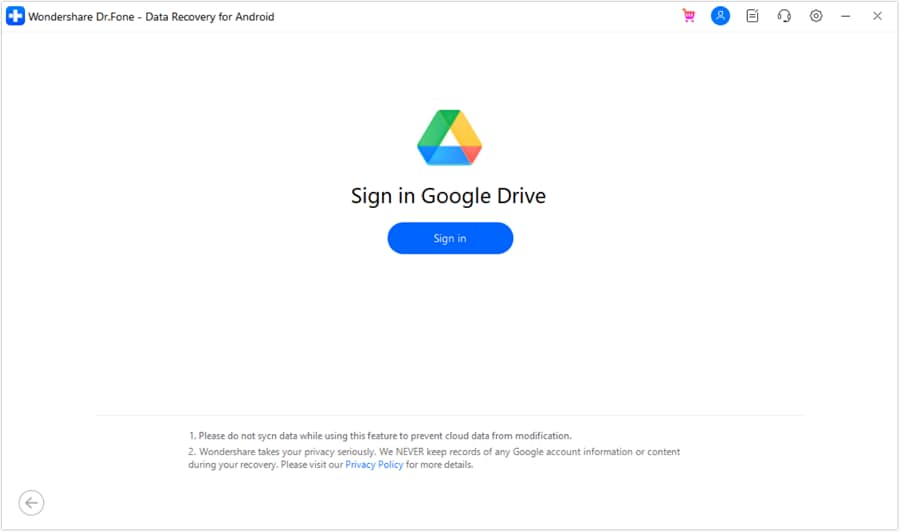
Safely sign into your associated Google Drive account by inputting your verified authentication credentials. Once you are successfully logged in, pinpoint the specific "Recover Device Data" option to proceed with the extraction.
Step 3 Connect Your Phone and Initiate Scanning
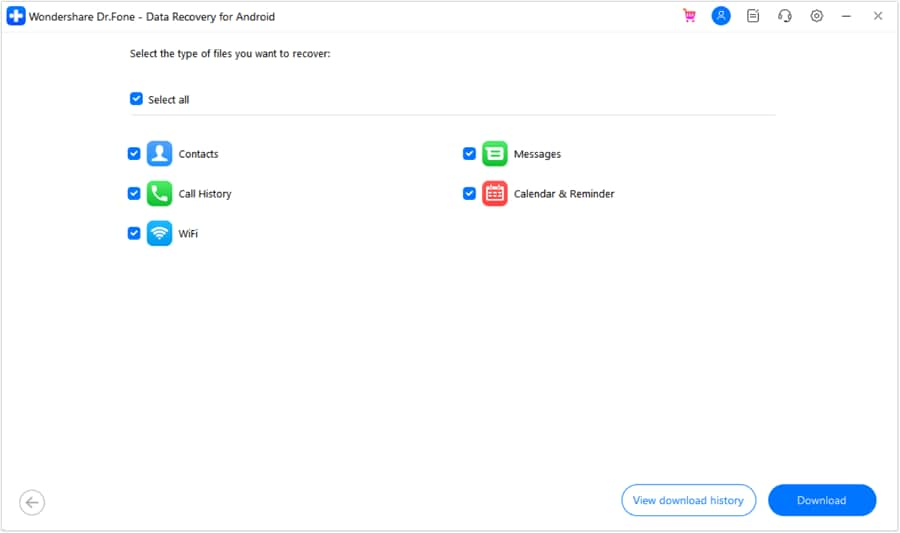
Firmly connect your targeted Android mobile device to the computer using a certified USB cable. After the software detects your phone, carefully check the box labeled "Calendar & Reminders". Hit the Next button to authorize the deep scanning sequence for all vanished schedules.
Step 4 Preview and Execute the Calendar Restoration
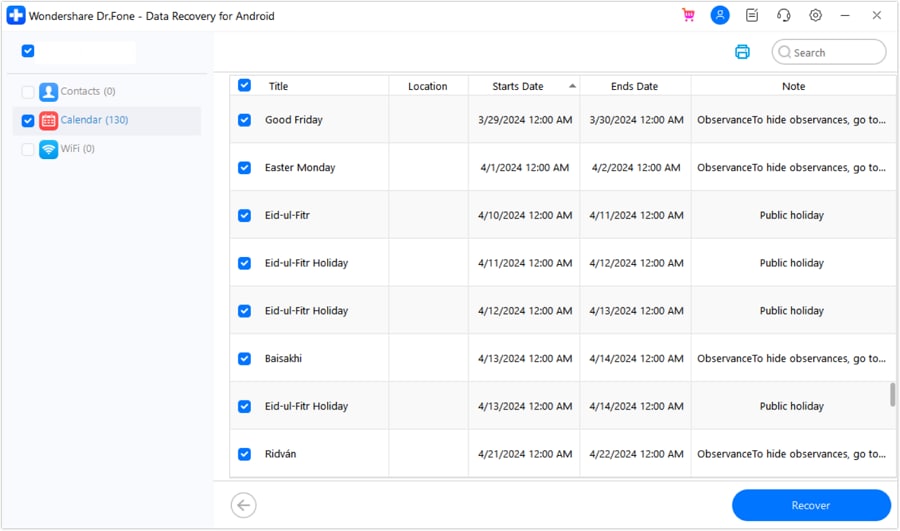
Once the in-depth scan concludes, the interface will generate a detailed preview list containing all your deleted calendar logs. Scrutinize the entries, mark the specific events you desperately need back, and finally, click on the Recover button to securely export them directly to your device.
That is all it takes! You can finally take a massive sigh of relief, confident that your entire itinerary has been restored and you will not inadvertently skip any upcoming crucial commitments.




Dr. Fone App-Data Recovery (Android)

This standalone mobile application empowers users to seamlessly scan and retrieve lost digital files straight from their phone's internal storage, rendering the entire data recovery journey surprisingly straightforward and completely hassle-free. Regardless of whether you have misplaced high-resolution photographs, downloaded videos, or mission-critical corporate PDF documents, the Dr.Fone App ensures you are entirely covered on the go.
By executing just a few simple taps on your touchscreen, you can effortlessly revive a remarkably wide spectrum of data categories. This encompasses everything from voice recordings and extensive contact lists to chronological call logs, SMS text threads, robust WhatsApp chat histories, and even synced Google Drive backups. The mobile app has been meticulously engineered with a highly intuitive user interface, allowing anyone, regardless of tech literacy, to rapidly reclaim what they mistakenly erased. Experience the ultimate peace of mind that arises from knowing your irreplaceable Android data is always just one quick scan away from being perfectly restored.
For quick access, you can scan the QR code below to install the official mobile app immediately.

Part 2: Recover Lost Google Calendar Events Using "Trash"
If you are a dedicated user of the official Google Calendar app, you possess a significant advantage: you can seamlessly recover your recently deleted events directly from the application's built-in "Trash" directory. Whenever you remove an entry from your active Google account ecosystem, the system automatically redirects it into this temporary "Trash" folder, where it is securely retained for a grace period of 30 days. Consequently, if your vital schedule alerts were erased relatively recently, you can simply navigate to this hidden repository and reinstate them immediately, entirely bypassing the need for third-party desktop recovery software.
Here is the standard procedure to locate the elusive "Trash" bin and effectively perform a calendar rescue via your web browser:
Step 1 Access the Web Version of Google Calendar
Launch your preferred desktop web browser, navigate to the official Google Calendar homepage, and sign securely into the platform using the exact Google credentials associated with your Android device.

Step 2 Navigate to the Trash Bin
Locate and click the "Settings" gear icon positioned neatly in the top-right quadrant of the screen. From the resulting dropdown menu, specifically select the "Trash" (or "Bin") option to view your deleted items.

Step 3 Restore the Selected Entries
Your screen will now populate with a chronological list containing all schedules purged within the last month. Methodically check the boxes next to the events you intend to revive, and finally, click the curved "Restore" arrow icon to instantly push them back to your active timeline.

Part 3: Recover Lost Calendar on Android Using a Backup File
It is impossible to overstate the immense value of maintaining routine data backups; they frequently serve as the ultimate lifesaver when unforeseen digital disasters strike. While admittedly not every smartphone owner adheres to this rigorous practice, a substantial number of proactive users routinely export their sensitive information, including intricate Calendar databases, to localized storage drives or external cloud servers. If you classify yourself among these diligent individuals, all you are required to do is manually import those previously generated .ics or .csv backup files straight into the Google platform to successfully retrieve all the lost Calendar events without enduring any undue stress.
Step 1 Log into the Dashboard
Once more, fire up your desktop browser, open the Google Calendar web interface, and ensure you are logged into the correct profile.
Step 2 Open the Advanced Settings
Click on the familiar gear-shaped "Settings" icon situated near the top right, then select the standalone "Settings" parameter from the menu list.
Step 3 Locate the Import Tool
You will immediately be redirected to the comprehensive configuration dashboard. On this page, carefully scan the left-hand navigation sidebar and click on the "Import & Export" category.

Step 4 Upload and Execute the Import
Finally, utilize the upload dialogue to fetch your localized backup file from your computer's hard drive. Once attached, hit the solid "Import" button to execute the transfer.

This automated sequence will rapidly unpack and distribute all the embedded appointments from your chosen archive, making them instantly visible and fully accessible across your synced Android hardware.
Part 4: Enable the "Events from Gmail" Feature in Google Calendar
In addition to the standard practice of manually typing out distinct events into the app's interface, a significant proportion of your agenda might actually be automatically generated via your Gmail inbox. The moment you receive an electronic confirmation containing details about a specific flight, hotel reservation, or corporate webinar, Google's smart algorithms are designed to instantly duplicate those specifics into your Calendar app for effortless tracking. However, it is vital to note that this highly convenient automation only remains functional as long as the backend "Events from Gmail" toggle is actively enabled within your account preferences. If you notice that you are only missing appointments that were originally tied to email confirmations, there is an incredibly high probability that this specific sync feature has been accidentally disabled.
To swiftly rectify this error and re-enable the functionality, head straight back to the primary Google Calendar web Settings menu. Scroll down the left-side navigation column until you spot the "Events from Gmail" option. Verify that all the relevant synchronization checkboxes are firmly ticked. Once activated, the system will refresh, and you should quickly notice all your email-derived itineraries repopulating smoothly within your mobile interface.

Conclusion
Without a doubt, the internal Calendar function reigns supreme as one of the most indispensable organizational applications for any modern Android consumer in 2026. It empowers individuals to establish strict daily reminders, ensuring they arrive at every professional obligation promptly and juggle their chaotic modern lifestyles with relative ease. Under these high-stakes circumstances, it is entirely understandable why anyone would experience immediate anxiety if their meticulously planned agenda were abruptly erased due to an operational error. Thankfully, as demonstrated throughout this guide, there are multiple proven and highly reliable strategies to recover Calendar on Android. Whether you opt to leverage built-in safety nets like the Trash folder or decide to deploy a professional, heavy-duty solution like Wondershare Dr.Fone, retrieving your lost schedule is well within your grasp.
FAQ
1. Where do deleted calendar events go on Android?
When you delete a calendar event from a synchronized Google Calendar on your Android device, it is automatically moved to the "Trash" folder. These deleted entries will remain in the trash for a total of 30 days, giving you ample time to restore them before they are permanently eradicated from Google's servers.2. Can I recover permanently deleted calendar events after 30 days?
Once the 30-day retention period in the Google Calendar Trash bin expires, the events are permanently deleted from the cloud. In such scenarios, your only viable recourse is to utilize a dedicated third-party data extraction tool like Dr.Fone - Data Recovery (Android), assuming the underlying data cache hasn't been heavily overwritten by new files.3. Why did my calendar events disappear randomly?
Sudden disappearance of calendar entries is usually attributed to underlying synchronization errors, particularly after a major Android OS update or a temporary glitch with Google account servers. Additionally, accidentally toggling off the "Sync Calendar" option in your device's account settings can cause local events to temporarily vanish from the app UI.4. Is rooting required to recover calendar events using recovery software?
No, basic recovery of localized calendar caches and app data using advanced tools like Dr.Fone often does not mandate root access, especially when retrieving data synced through cloud backups. However, for deep internal storage extraction on older OS versions, rooting might marginally increase the success rate.
 Add Wondershare Dr.Fone as a preferred source on Google