Recover photos, messages, WhatsApp, and more — no backup
needed.
Recover photos, messages, WhatsApp, and more — no backup
needed.

 100% Security Verified | No Subscription Required | No Malware

 :
: 
 ChatGPT
 Perplexity
 Gemini
 Claude
 Grok
Grok
I accidentally deleted an entire album of my favorite songs while trying to organize my files. I didn't back them up on the cloud. How to recover deleted music from your Android phone without losing audio quality?
Music Enthusiast on Tech Forum

Nothing is more annoying to music lovers than discovering that one or more of your favorite songs is suddenly missing from your curated playlist. At first, you might check to see if it is just your media player glitching out, but often, the actual audio file is completely gone from the system. This frustrating situation can happen for a multitude of reasons, chief among them being accidental deletion, formatting errors, or unexpected OS updates.
If you happen to maintain a regular cloud backup of all your music, then the solution is as easy as simply restoring that backup to your phone. But if you did not back up your files, you need a reliable alternative. In this comprehensive 2026 guide, we are going to explore the best and most effective methods to recover deleted music files on your Android device.
In this article
Part 1. Where is Music Saved on Android Device?
Before diving into complex recovery methods, it helps to understand exactly where your audio files reside. Most Android users will either store their downloaded music on their device's internal storage or rely on an external SD card to save space. The choice typically depends on your smartphone model's capacity and how many high-resolution music files you own.
If you have a massive collection of FLAC or MP3 files, it makes perfect sense to store the files on a high-capacity SD card. By default, regardless of whether you use internal or external storage, there should be a dedicated folder labeled 'Music', 'Audio', or sometimes 'Downloads' where browsers and apps automatically direct saved audio. Understanding these default directory paths is the first critical step when figuring out how to recover deleted music.
Part 2. How to Recover Deleted Music Files from Android?
As we mentioned in the introductory part of this article, unless you had a recent backup of your music files synced to a cloud service or PC, you would need a professional data recovery tool to help you get them back. Once a file is deleted from Android, the system simply marks the storage space as 'available' rather than wiping the file instantly. Therefore, acting fast is crucial.
There are so many data recovery tools on the market today, but by far the most reliable and efficient is Dr.Fone - Data Recovery (Android). This advanced desktop software is strictly designed to safely recover lost data from Android devices, even if the device has suffered a system crash or rooting error. Because of its high success rate and broad compatibility with modern Android versions, it is highly recommended for audio restoration.
 Scan Android phones and tablets directly.
- Preview and recover only what you want.
- Supports WhatsApp, photos, videos, contacts, and more.
- Works with 6000+ Android devices.
How to use Dr.Fone to Recover Your Deleted Music?
Follow these very simple, step-by-step instructions to utilize Dr.Fone for Android to recover your lost music tracks and audio recordings from your mobile device. You can also watch the video tutorial below for a visual walkthrough.
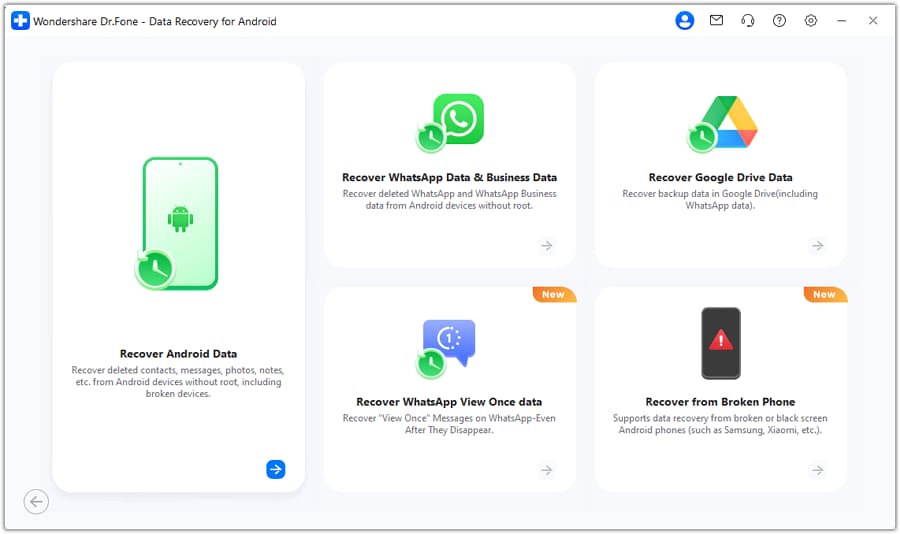
Step 1 Launch Dr.Fone and Connect Your Device
Begin by downloading and installing Dr.Fone to your Windows or Mac computer. Launch the main program interface and then securely connect your Android device to your computer using a compatible USB cable.
Step 2 Enable USB Debugging
If you hadn't enabled USB debugging on your device prior to this, you will receive an on-screen prompt requesting you to do that now. Follow the provided instructions for your specific Android version. If you had already done that, you can safely skip this step.
Step 3 Select the Audio File Type
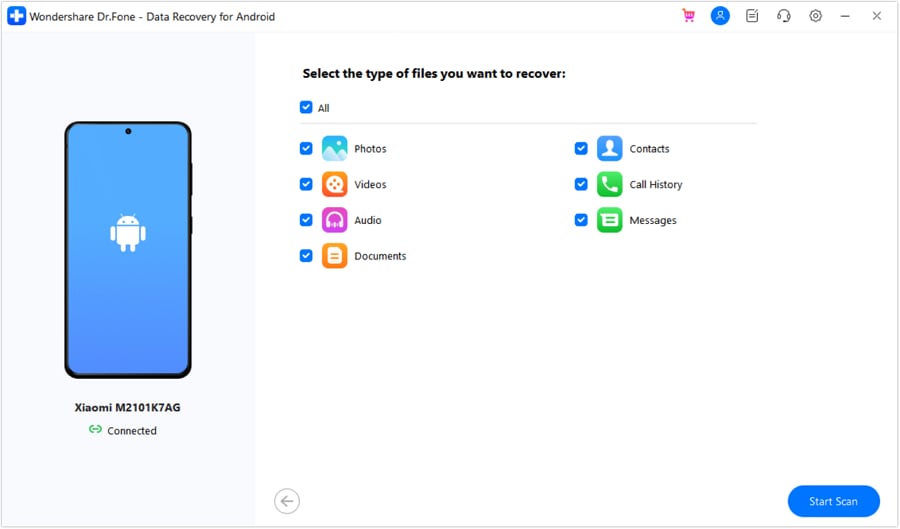
In the next window, the software will ask you to select the exact file types you would like to recover. In this specific case, since we lost our music collection, we need to make sure we select 'Audio' from the presented options.
Step 4 Initiate the Device Scan
Click the 'Start Scan' button at the bottom right. The program will immediately begin a thorough analysis and deep scan of your Android device's storage infrastructure to locate the residual data of your deleted songs.
Step 5 Wait for the Scan to Complete
Allow Dr.Fone some time to complete scanning your device. This process may take a few minutes depending on the total amount of data you have stored on your device. If there is a Superuser authorization request popping up on your phone screen, simply tap 'Allow' to continue the process seamlessly.
Step 6 Preview and Recover Your Music
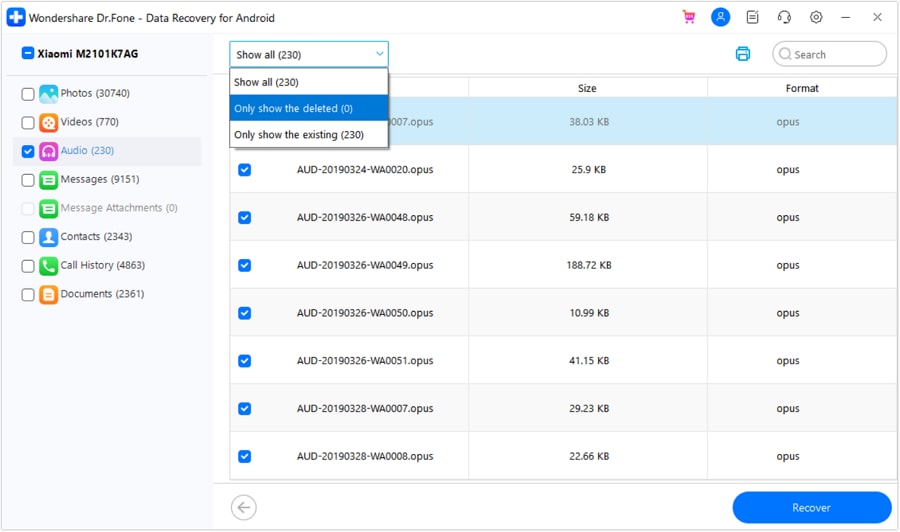
Once the scanning process is entirely complete, you should see the recoverable data that Dr.Fone has found listed neatly in the next window. Select the specific music files you had lost and want to restore, and then click 'Recover' to save them securely to your computer. Once safely saved to your PC, you can effortlessly transfer these audio files back to your mobile device.




Part 3. How to Prevent Music from Deleting on Your Android Device?
Sometimes your cherished music files can unexpectedly disappear from your device out of no fault on your part. Maybe it was due to physical damage to your phone's memory chip, or perhaps a major software firmware update that didn't go according to plan. Whatever the reason, there are reliable ways you can proactively prevent data loss of any kind, not just for music but for all your important media.
- Perform Routine Backups: We know that you hear this advice a lot, but the absolute best way to prevent data loss is to have a backup. Therefore, it is very important that you regularly update your backups on cloud storage or external hard drives. It certainly may not hurt to have an exact mirrored copy of your music library on your home computer.
- Prepare Before OS Updates: Before you undertake any major Android OS software update or attempt a rooting procedure, back up all the critical data on your device. System updates can sometimes reformat partitions or cause unexpected data wipes, so you never know what may happen.
- Keep Devices Safe from Unintended Interactions: As much as you can, avoid letting children play unsupervised with your unlocked device. Many common accidental deletion incidents are caused by children tapping the wrong option in file managers or music apps.
- Use Trusted Download Services: If you want to securely keep your Deezer music offline without risking sudden file corruption, you can also download Deezer music through official or trusted means, and save it directly on your computer or smartphone for offline playback.
As universally important as manual backups are, they are never completely foolproof. But thanks to dedicated tools like Dr.Fone for Android, you now have a rock-solid safety net and a solution for those rare times when you inexplicably lose music files that were not caught on any of your latest backups.
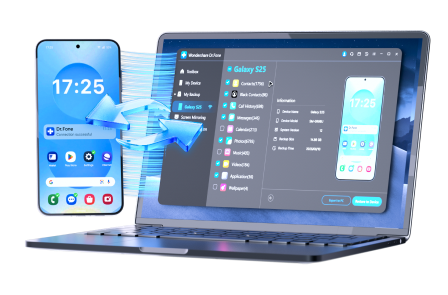
- Effortlessly manage data through preview, delete, export, etc.
- Transfer all data between devices.
- Robust backup solutions for reliable data protection.
- Mirror screens to PC for meetings, teaching, and control.
Conclusion
Losing your meticulously curated music library can initially feel like a disaster, but as this guide has shown, there are dependable ways to fix the problem. By understanding how the Android file system manages deleted data, you can significantly increase your chances of successful recovery. Tools like Dr.Fone - Data Recovery streamline the entire process, bridging the gap between technical complexity and user-friendly restoration. Moving forward, combining these powerful recovery techniques with a solid backup habit will ensure your favorite tracks remain safe, accessible, and ready to play whenever you need them.
FAQ
1. Is it possible to recover music deleted months ago?
The possibility of recovering music deleted months ago heavily depends on device usage. If you have been constantly downloading files or updating apps since the deletion, the audio file data might have been overwritten. However, if the device has seen minimal use or the files were on an untouched sector of an SD card, a deep scan might still retrieve them.2. Can I recover deleted music without using a computer?
There are Android apps available on the Google Play Store designed for data recovery, but they often require root access to perform a deep system scan. For non-rooted devices, using desktop software like Dr.Fone with a direct USB connection yields significantly higher success rates and deeper access to storage partitions.3. Does performing a factory reset permanently delete all my music?
A factory reset securely erases user data and restores the phone's internal storage to its original state. While basic software may struggle to find files post-reset, advanced desktop recovery tools can sometimes locate remnants of the files if the flash storage was not entirely zeroed out.4. Where can I find audio files downloaded from streaming apps like Spotify?
Audio files downloaded via premium streaming apps for offline listening are generally encrypted and stored deep within the app's system data folder (e.g., Android/data/com.spotify.music). These files are not standard MP3s and cannot be recovered and played via standard music players if deleted. You will simply need to re-download them within the app.
 Add Wondershare Dr.Fone as a preferred source on Google