Effortlessly manage data through preview, delete, export, etc.

 100% Security Verified | No Subscription Required | No Malware

 :
: 
 ChatGPT
 Perplexity
 Gemini
 Claude
 Grok
Grok

'My MacBook died. I want to transfer my music on my Ipod Classic, which is synced to the old MacBook, to my new MacBook Pro. New Macbook Pro says content on Ipod will be lost when syncing with it. What to do? Help me out!'
A frustrated Apple user on a tech forum

The iconic iPod Classic remains a treasured device for audiophiles, offering substantial storage capacity to hold an entire music library right in your pocket. However, as modern operating systems evolve and older computers eventually fail, retrieving and safeguarding your carefully curated playlists becomes a pressing challenge. When you connect an iPod to a new computer, the default synchronization behavior usually threatens to erase your existing tracks.
If your device is running out of storage space, or if you simply need a secure backup strategy, you must know how to transfer music from iPod classic to computer safely. Failing to move your files often means you cannot add fresh tracks without risking data loss. Throughout this 2026 updated guide, we will explore the safest and most efficient methods to copy music from iPod classic to computer so your vintage collection is never lost.
In this article
Preparations Before You Transfer Music from iPod to Computer
Before you dive directly into extracting files, it is crucial to understand how Apple's default syncing system operates. By design, when you connect your media player to a computer containing a fresh iTunes or Apple Music library, the software will attempt an automatic sync. This action can instantly wipe out everything stored on the portable device.
To safely transfer ipod classic music to computer, you must override this automated deletion process. Follow these straightforward preparatory steps to configure your system properly:
-
Step 1 Disconnect Devices
Ensure that all iOS and iPadOS hardware, including any iPhone, iPad, or iPod, is entirely disconnected from your computer's USB ports.
-
Step 2 Access Preferences
Open iTunes. For Windows users, navigate to 'Edit' > 'Preferences'. If you are utilizing a Mac with an older OS, head to 'iTunes' > 'Preferences' (or Apple Music Preferences on newer macOS).
-
Step 3 Disable Auto-Sync
Click on the 'Devices' tab within the preferences window. Locate and check the box labeled 'Prevent iPods, iPhones, and iPads from syncing automatically'. Click 'OK' to apply the changes.
-
Step 4 Safely Connect
Now, you can safely connect the hardware via a USB cable. This configuration guarantees that your songs remain untouched as you prepare to transfer music from iPod classic to computer.

Editor's Picks:
Method 1. Transfer Music from iPod Classic to Computer within Few Clicks
If you prefer a hassle-free, intuitive solution that bypasses Apple's restrictive ecosystem, using a dedicated management tool is highly recommended. Dr.Fone - Phone Manager (iOS) is an industry-leading software explicitly designed to help you extract and transfer music from iPod classic to computer without the risk of erasing data.
By employing this utility, you gain granular control over your library. Whether you wish to extract a single rare track or copy music from iPod classic to computer entirely, this software facilitates smooth bidirectional transfers. Beyond classic models, it also empowers users to extract audio files from modern devices effortlessly.
Furthermore, Dr.Fone - Phone Manager (iOS) is not limited strictly to the Classic line. It can easily assist you in managing libraries across an iPod Shuffle, a sleek iPod Nano, or a newer iPod touch straight to your desktop.
 Effortlessly manage data through preview, delete, export, etc.
- Transfer all data between devices.
- Robust backup solutions for reliable data protection.
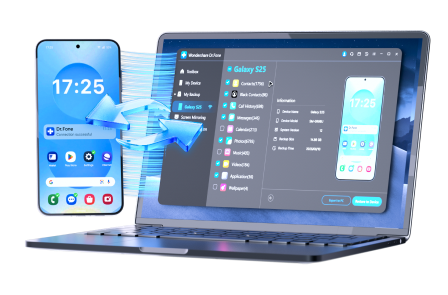
- Mirror screens to PC for meetings, teaching, and control.
How to transfer music from iPod Classic to computer
Below is a clear step-by-step procedure demonstrating how to perform this extraction efficiently:
-
Step 1 Launch Dr.Fone Software
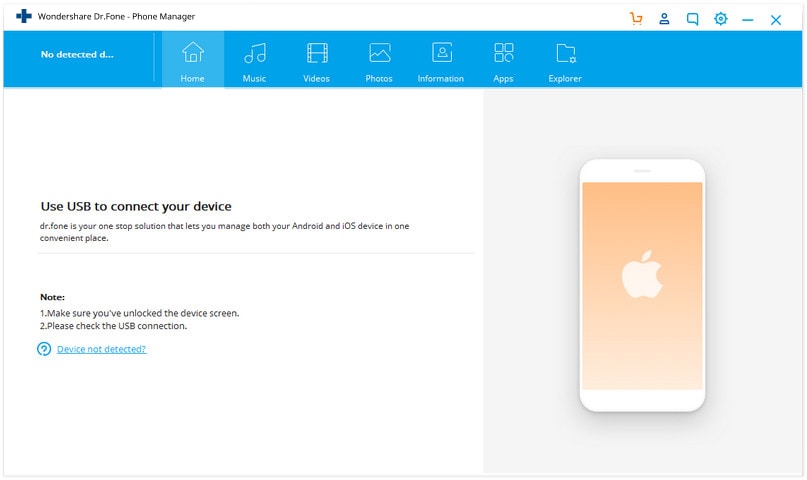
Begin by downloading and installing Dr.Fone on your system. Once launched, select the 'Phone Manager' module. You will be greeted by an interface requesting you to attach your media player.
-
Step 2 Connect the Classic Player
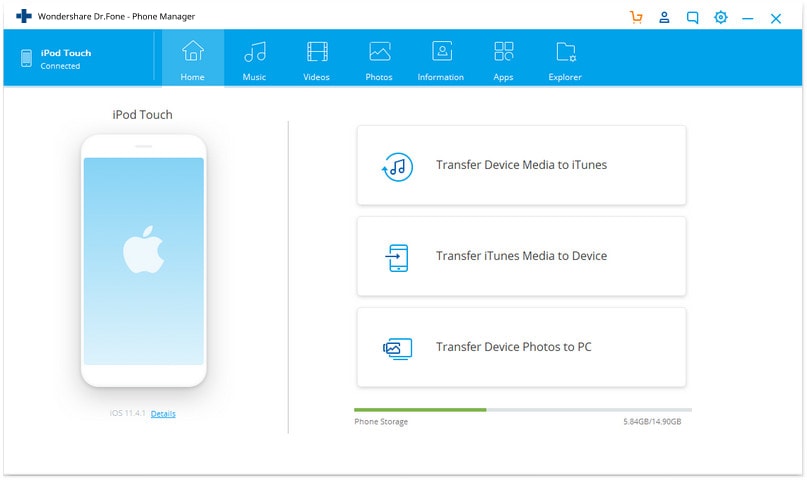
Utilize an original 30-pin USB cable to establish a connection. The software will swiftly detect the hardware, presenting a comprehensive overview including storage capacity and battery status.
-
Step 3 Select the Audio Files
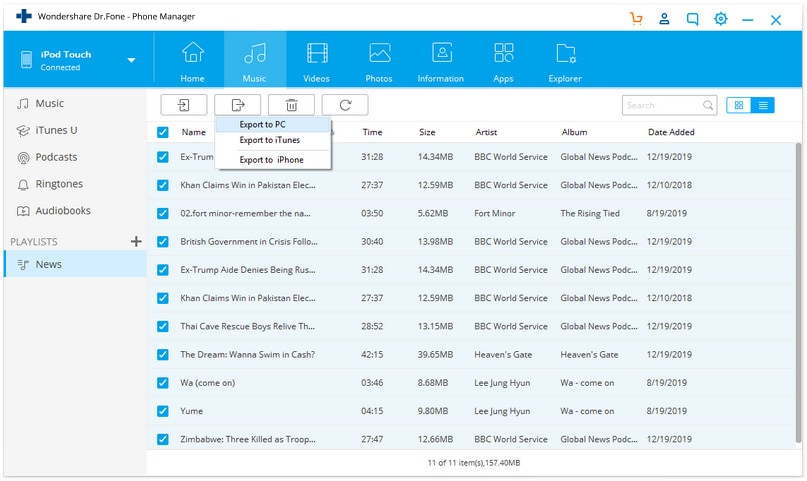
Navigate to the 'Music' tab located on the upper navigation bar. As the library loads, browse through your tracks. Select the specific songs you wish to save, then click the 'Export' button near the top. From the dropdown, choose 'Export to PC'.
-
Step 4 Finalize the Export
A destination dialog will appear. Choose a secure directory on your local hard drive where the extracted files should reside, and hit 'OK'. The program will rapidly and flawlessly complete the transfer process.

Video Tutorial: How to Transfer Music from iPod Classic to Computer




How to transfer music from iPod to iTunes
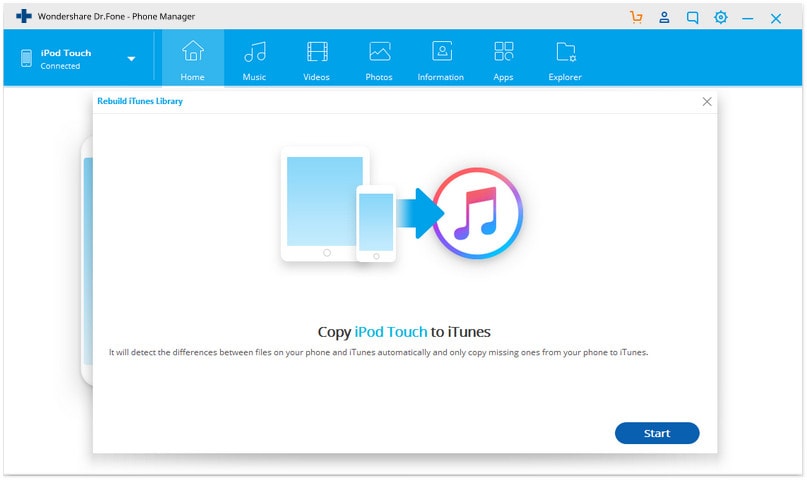
If you prefer rebuilding your media library directly within the Apple ecosystem, this utility functions perfectly as a bridge. By selecting 'Transfer Device Media to iTunes' from the main dashboard, you can push all original playlists directly into the native application without overwriting issues.
In-depth tutorial: How to Transfer Music from iPod shuffle to iTunes
Method 2. Transfer Music from iPod Classic to PC with iTunes
While third-party solutions are incredibly straightforward, it is also technically possible to utilize native tools. In the past, Apple granted users the ability to mount their Classic models as standard removable drives—a feature noticeably absent in modern iPhones and iPads. This unique legacy feature permits a manual workaround to transfer ipod classic music to computer.
Restrictions of using native methods
Before proceeding, it is vital to acknowledge the substantial drawbacks associated with this manual approach. Accessing raw directories can be chaotic, and you might encounter severe metadata issues.
- A degree of technical proficiency is required to navigate hidden system folders securely.
- The extraction process obscures filenames; audio tracks will appear as random four-letter strings.
- ID3 tags (artist, album, track number) might be lost, making the resulting library completely disorganized.
- The overall transfer speed can be sluggish, especially for larger collections containing thousands of songs.
How to transfer music from iPod Classic to computer manually
If you choose to proceed with the manual extraction, closely follow these instructions to copy music from iPod classic to computer without damaging the filesystem:
-
Step 1 Enable Disk Usage
Launch the native application and connect the player. Once recognized, click on the device icon and navigate to the Summary tab. Scroll down to the Options section and check 'Enable disk usage'. Apply the settings. Note: Without enabling this feature, the system will not map the player as a visible drive.

-
Step 2 Access the Drive
Open Windows File Explorer (or 'My Computer'). You should now see the media player listed alongside your standard hard drives as a removable storage device.

-
Step 3 Reveal Hidden Files
Because Apple obfuscates media directories by default, you must alter your view settings. Click on the 'View' tab at the top of File Explorer, and ensure the 'Hidden items' checkbox is selected to expose the system folders.

-
Step 4 Extract the Audio
Double-click the removable drive, navigate to the folder named 'iPod_Control', and open the 'Music' subdirectory. Here, you will find multiple randomized folders containing your tracks. Select all these folders and copy them to a secure location on your local drive.

Editor's Picks:
- How to Transfer Non-Purchased Music from iPod to iTunes Easily
- 2 Methods to Transfer MP3 to iPhone X/8/7/6S/6 (Plus) With or Without iTunes
Sync iPod Music to PC: Which Method to Choose?
Deciding exactly how to transfer music from ipod classic to computer depends heavily on your priorities regarding data integrity, speed, and technical comfort. The comparison table below highlights the vast functional differences between employing an automated third-party manager versus the manual native approach.
| Features for Transferring Library | Dr.Fone - Phone Manager (iOS) | Native iTunes / File Explorer |
|---|---|---|
| Transfer tracks between iOS, PC, Mac without arbitrary limits | ||
| Manage and modify audio without frustrating native restrictions | ||
| Perfectly backup and restore playlists with full metadata | ||
| Create custom mixtapes and export flexibly | ||
| Retain ID3 tags, artist info, and album art upon transfer | ||
| Automatic file format conversion for compatibility | ||
| Ability to fix broken tags and remove duplicate tracks | ||
| Reliably transfer ipod classic music to pc without sync loss |
Conclusion
Preserving your vintage audio collection requires reliable methods to transfer music from iPod classic to computer. While you can manually dig through hidden system folders using disk mode, that process inevitably strips vital metadata—leaving you with thousands of randomly named, disorganized tracks. It is a slow, cumbersome method that requires significant cleanup afterward.
In contrast, leveraging a dedicated management suite like Dr.Fone - Phone Manager (iOS) ensures a seamless transition. By retaining crucial details such as track names, artists, and album covers, it completely eliminates the headaches associated with outdated syncing mechanics. Protect your cherished playlists today and keep the classic listening experience alive on modern hardware.
FAQ
-
1. Will transferring music from my iPod Classic to a new computer delete my songs?
By default, yes. If you allow Apple's native media software to sync your iPod automatically with an empty library, it will overwrite and erase your device's contents. You must disable auto-sync in preferences before connecting, or use third-party transfer tools to ensure your files remain safe. -
2. Can I drag and drop music directly from my iPod to my desktop?
Yes, but with significant caveats. By enabling 'Disk Use,' you can navigate to hidden system folders (iPod_Control) and copy the tracks manually. However, Apple scrambles the filenames into four-letter codes, meaning you will lose all immediate track organization and metadata during the raw copy. -
3. Does Dr.Fone preserve album artwork and ID3 tags when copying music?
Absolutely. When you transfer music from iPod classic to computer using Dr.Fone - Phone Manager, the software automatically reconstructs the file metadata. Your song titles, album art, artists, and track numbers will display perfectly on your PC. -
4. What should I do if my computer doesn't recognize my iPod Classic?
If the computer fails to detect the hardware, try using a different 30-pin Apple certified cable or switching USB ports. Additionally, ensure the connector is clean and verify that disk usage is enabled if you are attempting a manual file extraction.
 Add Wondershare Dr.Fone as a preferred source on Google