Recover photos, messages, WhatsApp, and more — no backup
needed.
Recover photos, messages, WhatsApp, and more — no backup
needed.

 100% Security Verified | No Subscription Required | No Malware

 :
: 
 ChatGPT
 Perplexity
 Gemini
 Claude
 Grok
Grok
A missing Android text may be archived, filtered as spam, in a messaging app’s Trash, or genuinely deleted. Start by checking the app and backup before installing a recovery tool. SMS/MMS and RCS chats do not necessarily follow the same storage or backup path; the options you see depend on the app, device, and version.
To retrieve deleted text messages on Android, first stop unnecessary use of the affected phone: avoid sending new messages, taking photos, installing apps, or resetting it. Check the same conversation on another device, a linked Messages client, or an earlier export, then follow the seven sections below. No method can guarantee recovery from modern encrypted internal storage after a permanent deletion.
In this article
- Part 1. Potential Reasons To Retrieve Deleted Text Messages on Android
- Part 2. Method 1: Check Desktop Recovery Options Without a Backup
- Part 3. Method 2: Check Mobile Recovery Options Without a Computer
- Part 4. Method 3: Check Your Messaging App’s Trash or Recycle Bin
- Part 5. Method 4: Find Erased Text Messages via Notification History
- Part 6. Method 5: Check and Restore an Earlier Google Backup
- Part 7. Google Messages: Archived, Spam, Trash, and Deleted
Part 1. Potential Reasons To Retrieve Deleted Text Messages on Android
The first question is can you retrieve deleted text messages on Android, or did they simply disappear from the main inbox? Identify which messaging app handled the conversation and whether it was an SMS/MMS thread, an RCS chat, or another app’s message. Search by sender and date before treating the thread as permanently deleted.
1. Accidental Deletion
An accidental swipe in Google Messages may archive a thread rather than delete it. Open the app’s Archived and Spam & blocked views, search for the contact, and check Trash if your version offers it. Restore from these locations before attempting a backup or paid scan.
2. Software Updates or Resets
A device migration, app change, update, or factory reset can make an old conversation seem absent. Check the previous phone, linked devices and the Google or manufacturer account used before the loss; an old backup may exist even when the current inbox is empty.
3. Storage Space Constraints
Low storage or an app/database problem may affect what the app displays, but do not assume Android automatically purged SMS to make room. Check the default messaging app, its search and filters, and any older phone before changing system settings.
4. System Glitches or Malfunctions
If a thread disappeared after an app change or software issue, confirm the default SMS app and restart the device only after noting what was lost. For time-sensitive or legally important messages, avoid untested cleanup apps and keep the original device in its present state while checking backups.
Part 2. Method 1: Check Desktop Recovery Options Without a Backup
If you have no older backup and the app’s Trash is empty or unavailable, retrieving deleted Android texts becomes uncertain. The Dr.Fone - Data Recovery (Android) desktop workflow can scan supported devices and preview whatever messages it actually finds. Check model and Android-version compatibility first; a free scan or preview is not a promise of free export, nor proof that permanently deleted SMS remains readable.
Dr.Fone lists Messages among its supported Android data types and provides phone-storage, Google Drive, and supported broken-device recovery routes. These are different workflows: the product’s “No Root Needed” claim applies to its Google Drive and supported broken-phone routes, not automatically to every direct phone scan. Android encryption, permissions, storage changes, and model support can prevent retrieval; there is no verified “highest success rate” for this page.
 Scan Android phones and tablets directly.
- Preview and recover only what you want.
- Supports WhatsApp, photos, videos, contacts, and more.
- Works with 6000+ Android devices.
Before scanning, check Google Messages Trash or the Samsung Messages Recycle Bin if your app offers one; those paths are safer than a device-level scan. If the texts are genuinely gone and no earlier copy exists, a desktop scan is an optional last check, not a deep-scan guarantee. Avoid rooting, unlocking the bootloader, or enabling USB debugging solely because an advertisement implies that these actions will recover erased SMS: some changes can wipe data and debugging alone cannot defeat encryption.
-
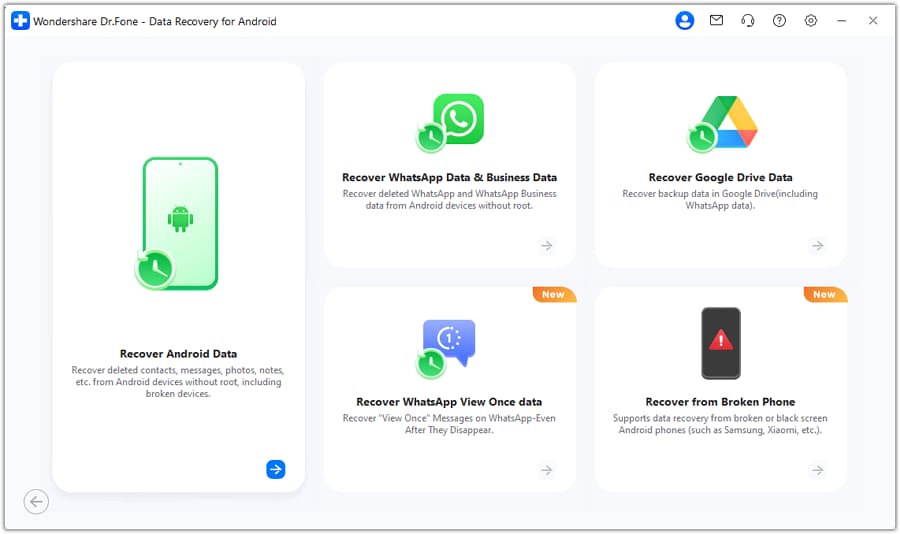
Step 1 Navigate to Recover from Android in Dr.Fone
On a compatible computer, open Dr.Fone and go to Toolbox > Data Recovery > Android > Recover Android Data, then connect the phone with a data-capable USB cable. Follow only the connection and permission prompts shown for your model. If the phone cannot be unlocked or detected, check the separate Google Drive or supported broken-device route rather than assuming a direct scan can access it.
-
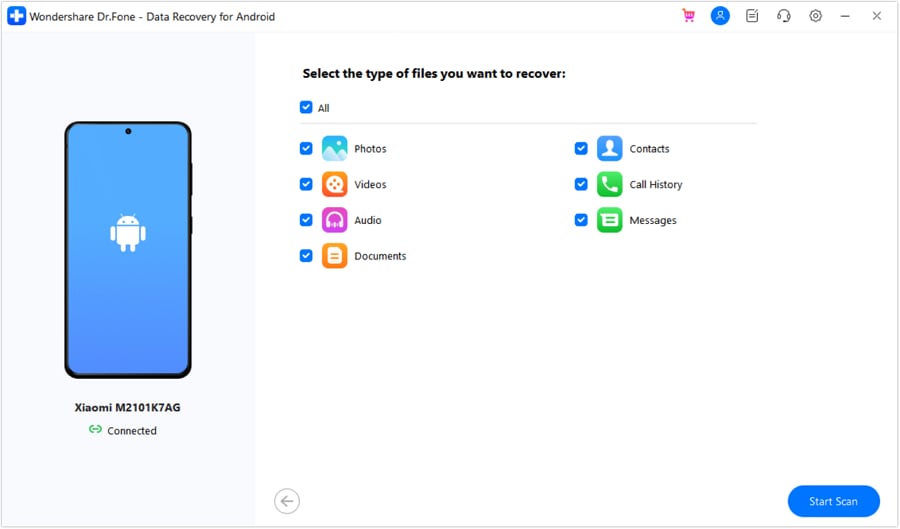
Step 2 Select Messages and Initiate the Scan
Select Messages if the option appears and start the scan. Review the results carefully: existing messages may appear alongside recoverable items, and a scan may find no deleted conversation at all. Do not confuse an SMS result with an RCS chat; confirm the sender, date, message type and preview before paying for export.
-
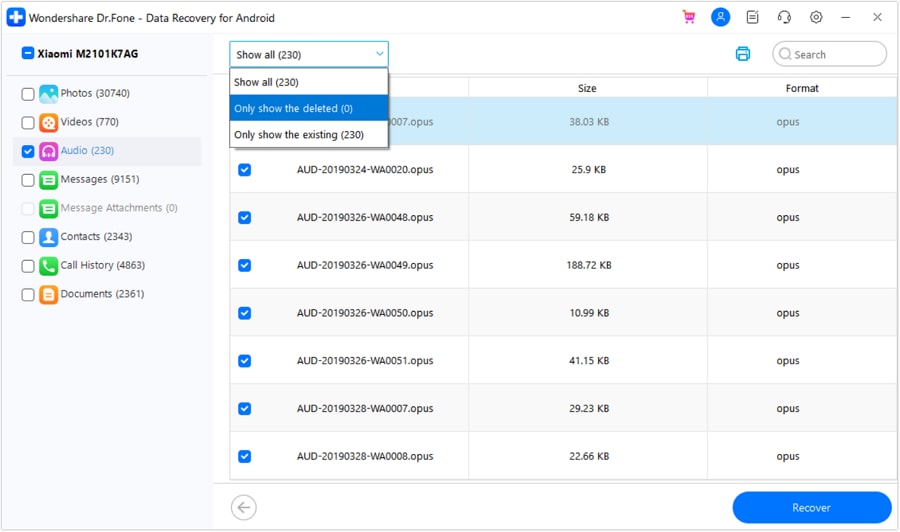
Step 3 Restore the Recovered Messages
If the needed messages appear in the preview, select them and use Recover to save to a secure folder on your computer as shown in the current desktop guide. Review license or export requirements first. Saving a readable copy is different from restoring a thread into the phone’s default inbox; do not assume that a blank preview can be fixed with repeated scans.




Part 3. Method 2: Check Mobile Recovery Options Without a Computer
If you do not have a computer, first check your messaging app’s Archived, Spam & blocked, and Trash views, and any previous backups. The Dr.Fone Android app offers mobile recovery features, but its documented Recover Deleted Messages guide relies on notifications and permissions to capture messages it can observe; it does not establish that it can reconstruct any SMS already permanently erased before installation.
The mobile app also presents file and social-message recovery categories, whose availability and results depend on the device, permissions and feature chosen. A WhatsApp or social-app notification is not the same data source as a carrier SMS/MMS database or an RCS chat. Installing an app after a deletion also writes data to the affected phone; weigh that risk before proceeding.
How to Recover Your Data with the Dr.Fone App:
-
Step 1 Install the Mobile App
Use the official Dr.Fone app listing if you decide to try it. Before installing anything on the affected phone, look for an older device, app Trash, or a backup. Grant only permissions you understand; notification access can expose sensitive incoming messages.
-
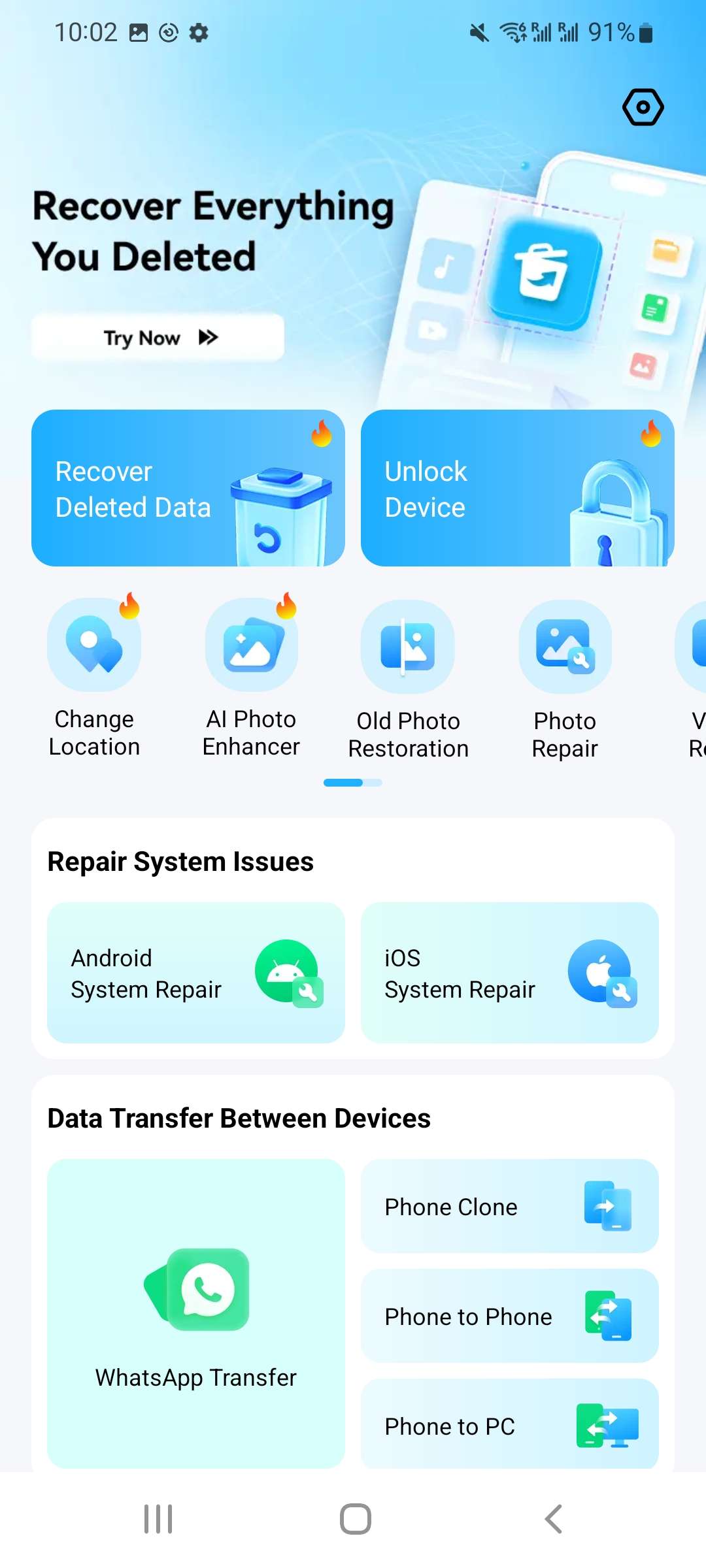
Step 2 Access the Recovery Module
Open the app and select the recovery feature matching the information you need. For deleted-message monitoring, the published guide calls it Recover Deleted Messages; check the on-screen usage guide because the screen and available modules may differ from these illustrations.
-
Step 3 Choose Recovery Parameters
Select the relevant messaging source if offered, such as Google Messages or a social app. The guide requests notification, storage and file permissions for its message-monitoring path. These permissions do not provide a key to permanently deleted, encrypted conversations.
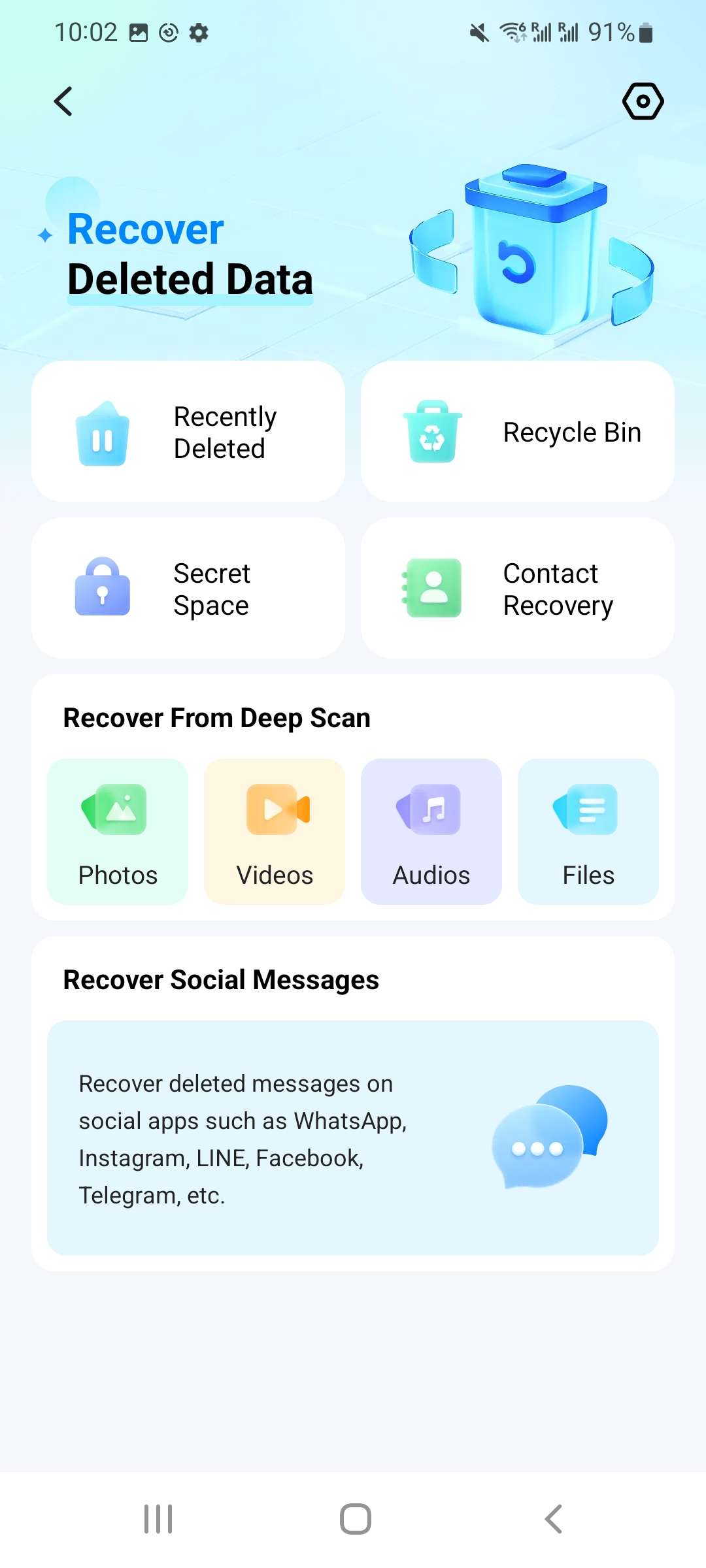
-
Step 4 Scan and Preview
Review any preview or notification history the chosen feature makes available. Notification-derived snippets depend on messages and previews having been captured while the required access was already enabled; they may omit outgoing texts or hidden content. A file scan and a notification-based message feature should not be treated as interchangeable.
-
Step 5 Execute Restoration
If the app displays the conversation you need, follow the actual on-screen export or saving options and verify that the result contains the right sender and timestamp. Do not assume a Recover action can inject old SMS into the default inbox. If it shows nothing, stop rather than granting broader privileges on speculation.
Beyond SMS: Recovering Social App Messages
The app’s documented message guide includes supported social apps and Google Messages, with an example of viewing a message in its Notification tab after the sender deletes it. This is dependent on prior access and captured notifications, not a universal method of recovering previously deleted WhatsApp, Telegram, SMS or RCS databases.

The promotional tip above is not a compatibility or success-rate test. A desktop scan can also return no deleted texts, including after a reset; verify the exact product mode and device before using it, and do not reset a working phone to improve a scan.
Part 4. Method 3: Check Your Messaging App’s Trash or Recycle Bin
Check the app you actually used. In Google Messages, newer versions offer a Trash folder for deleted conversations, normally restorable within 30 days; availability can differ by version or device. Archived and Spam & blocked are separate views, not Trash. Samsung Messages on supported Galaxy models may offer Recycle bin or Trash, but the menu and retention differ by app/version; Google Messages installed on a Samsung phone is not the Samsung Messages app. See the Google Messages Trash instructions and Samsung’s messaging backup and Trash guide for current options.
Instructions:

- Open your actual messaging app. In Google Messages, use the profile/menu to check Archived, Spam & blocked, and Trash if present. In Samsung Messages, check More options for Recycle bin or Trash if your device and version support it.
- Search for the contact and check dates in the relevant folder. A thread in Archived or Spam & blocked was not necessarily deleted. If you cannot find a Trash menu, do not assume one exists on your app/version.
- For a conversation still in Trash/Recycle bin, select it and tap Restore if offered. Follow the app’s instructions before the retention period expires; permanently deleting it from Trash may be irreversible.
Part 5. Method 4: Find Erased Text Messages via Notification History
Notification history can occasionally show a preview of an incoming SMS or chat after the conversation disappears from the inbox. It is a record of notifications, not a backup of the message database; if previews were hidden, notifications were muted, or the relevant history was never retained, it may show nothing.
The notification-history setting generally needs to have been enabled before the notification arrived. Use the following steps to look for a previously captured preview, not to promise restoration of an entire conversation or of sent texts:
Instructions:

- Open Settings > Notifications. The path varies by Android version and phone maker.
- Open Notification history if your device provides it; on some phones it appears under Advanced settings. Check whether it was enabled before the missing message arrived.
- Look for the sender and time. Copy or screenshot any visible snippet if appropriate; this will not put a deleted SMS back into the messaging app, and protected content may not be visible.
Part 6. Method 5: Check and Restore an Earlier Google Backup
Google’s Android device backup can include SMS/MMS and other device data, depending on settings, device and account; verify the actual backup details and timestamp in Settings > Google services > Backup. An older copy must predate deletion and include the needed message. Do not factory-reset a working phone just to retrieve one or two texts. According to Google’s Android backup help, device-data restoration generally happens during setup of a new phone or after a reset, and may take time. RCS and third-party chats require separate verification; a Google backup is not a searchable SMS archive.
-
Step 1 Inspect the Backup Before Any Reset
On the current phone, check Settings > Google services > Backup > Backup details (names vary) for the relevant account, message coverage and the last backup date. Also inspect the old phone and any SMS backup app you used before deletion. The reset-menu screenshot below is illustrative only; viewing backup details does not require entering Reset settings.

-
Step 2 Decide Whether Setup Restoration Is Worth the Risk
If you are already setting up a replacement phone, restoring an eligible earlier backup there is safer than wiping the original. A factory reset erases local data and may replace newer texts with an older snapshot; the reset screen pictured below is not a recommended step for recovering a few messages. If considering a reset for another reason, first preserve current data independently, confirm account access and the older backup’s coverage, and read the device maker’s restore instructions.

-
Step 3 Restore During Eligible Device Setup
During initial setup of a new or already-reset device, sign in to the account holding the backup and select the appropriate earlier backup if offered. Follow your device’s prompts for restoring supported device data; SMS/MMS availability, exact choices and completion time vary. If the necessary messages were never backed up or the only snapshot is from after deletion, this path cannot restore them.

Part 7. Google Messages: Archived, Spam, Trash, and Deleted
Yes, Google Messages can now offer a Trash folder: Google’s current help says conversations kept there can be restored within 30 days. First search the inbox, then check Archived and Spam & blocked; a conversation in those views was not permanently deleted. Check profile/menu > Trash if your app version shows it, select the conversation and restore it. If there is no Trash on your version, or the conversation was permanently deleted from Trash, do not assume the app can retrieve it. See Google’s archive/delete guidance and Trash help.
For deleted Google Messages texts, verify whether the thread is SMS/MMS or RCS and whether an older Android backup contains the SMS/MMS you need. Messages for web or another signed-in device may show a copy, but pairing/sync is not a promise to resurrect deleted history. If built-in views and backups do not help, Dr.Fone - Data Recovery (Android) offers a supported-device scan and preview as an optional check, not guaranteed recovery.
A modern Android device uses protected app storage and encryption; software cannot reliably “bypass” all system restrictions or recreate overwritten message records. Check Dr.Fone’s exact recovery source, model/version compatibility, preview and license terms. Rooting or USB debugging is not a guaranteed fix, and unlocking a bootloader may erase the device. If the message is legally significant, avoid altering the handset and seek qualified advice.
Conclusion
If an Android conversation is missing, begin with the least disruptive steps: search the messaging app, inspect Archived/Spam and any available Trash or Samsung Messages Recycle Bin, then check other devices and backups. Preserve the phone if you may need a specialist. The distinction between SMS/MMS, RCS and social-app messages matters because each can use a different storage and recovery path.
Notification history may contain only earlier previews. Google device backups can include SMS/MMS, but restoring device data usually belongs to new-device or post-reset setup; do not wipe the current phone merely for a few texts. If no earlier copy exists, a compatible Dr.Fone scan may preview available messages, but neither a promotional claim nor a successful connection proves that permanently deleted texts can be retrieved. Prioritize an actual preview and the safety of current data over speculative recovery.
FAQ
-
1. Can I retrieve deleted texts on Android without a backup?
Sometimes: inspect Google Messages Archived, Spam & blocked and Trash if available, or Samsung Messages Recycle bin on supported versions. Another device or previously enabled notification history may retain a copy or snippet. If a text was permanently deleted from encrypted storage, a third-party scan cannot promise to recover it. -
2. How can I recover permanently deleted text messages on Android?
Check whether another device, an export or an older backup still holds the conversation. After a message leaves Trash or is permanently deleted, modern Android encryption and subsequent writes may make direct recovery impossible. Check tool compatibility and an actual preview before buying; do not root or reset on the assumption that deep scanning will work. -
3. Is it possible to retrieve deleted texts without using a desktop computer?
Yes, when the thread is still in an app’s Trash or archive, on another device, or in a usable earlier backup. Notification history may reveal an incoming snippet if enabled in time. Mobile monitoring apps need appropriate access and cannot automatically retrieve SMS deleted before they were installed. -
4. Does the standard Google Messages app have a built-in recycle bin?
Google Messages now offers Trash on supported versions. Google says conversations in it may be restored within 30 days; check the app’s profile/menu for Trash, plus Archived and Spam & blocked. Availability varies by version/device. Older or permanently deleted conversations may not be there.
 Add Wondershare Dr.Fone as a preferred source on Google