Resolve common problems and system crashes on both iPhone and Android devices.


 100% Security Verified | No Subscription Required | No Malware

 :

 ChatGPT
 Perplexity
 Gemini
 Claude
 Grok

Why is my iPhone stuck on 1 percent even though I have been charging it for hours? It shows the lightning bolt but the number never goes up.
Example symptom
An iPhone battery percentage stuck at 1% can mean that charging is not progressing, the displayed reading is wrong, or the battery needs attention. Start with a known-good cable, adapter and wall outlet, let the iPhone charge for 30 minutes, then use the correct restart for your model. A phone that stays at 80% or a chosen charge limit needs a different check.
If your iPhone is stuck on 1 percent and keeps restarting, shows 0% battery health, or started doing this after a repair, use the battery-health and service checks rather than assuming software will fix it. The ten methods below separate these situations and show when an iOS repair option fits.
In this article
- Part 1. Why Does My iPhone Battery Percentage Get Stuck?
- Part 2. How to Fix iPhone Battery Percentage Stuck While Charging?
- Way 1. Inspect the Charging Port and Cable
- Way 2. Check Optimized Battery Charging and Charge Limit
- Way 3. Force Restart the iPhone by Model
- Way 4. Resolve via Dr.Fone - System Repair (iOS)
- Way 5. Check Date & Time Only if the Clock Is Wrong
- Way 6. Try a Different Charger and Power Source
- Way 7. Recheck the Battery Reading Without Deep Discharge
- Way 8. Install a Compatible iOS Update
- Way 9. Check Battery Health and Consider Replacement
- Way 10. Contact Apple Support Center
- Part 3. 5 Helpful Tips to Make Your iPhone Battery Last Longer
Part 1. Why Does My iPhone Battery Percentage Get Stuck?
A battery percentage is an estimate of remaining charge. A number that does not move is a symptom, not a diagnosis. These are the main possibilities:
- Power is not reaching the phone reliably: a damaged cable, loose connection, obstructed port or unsuitable power source can prevent normal charging.
- The display or iOS is not updating normally: a temporary software problem can make the reading appear frozen. A restart is a useful check, not a guaranteed cure.
- Charging is intentionally paused: Optimized Battery Charging, a selected Charge Limit or temperature protection can stop charging near a higher percentage.
- The battery or its reporting path needs service: repeated shutdowns, a replacement-battery warning or an unreliable health reading deserve a hardware assessment.
- The phone is using power while plugged in: heavy use and heat can make charging slower. Test with the screen off and let the device return to a normal temperature.
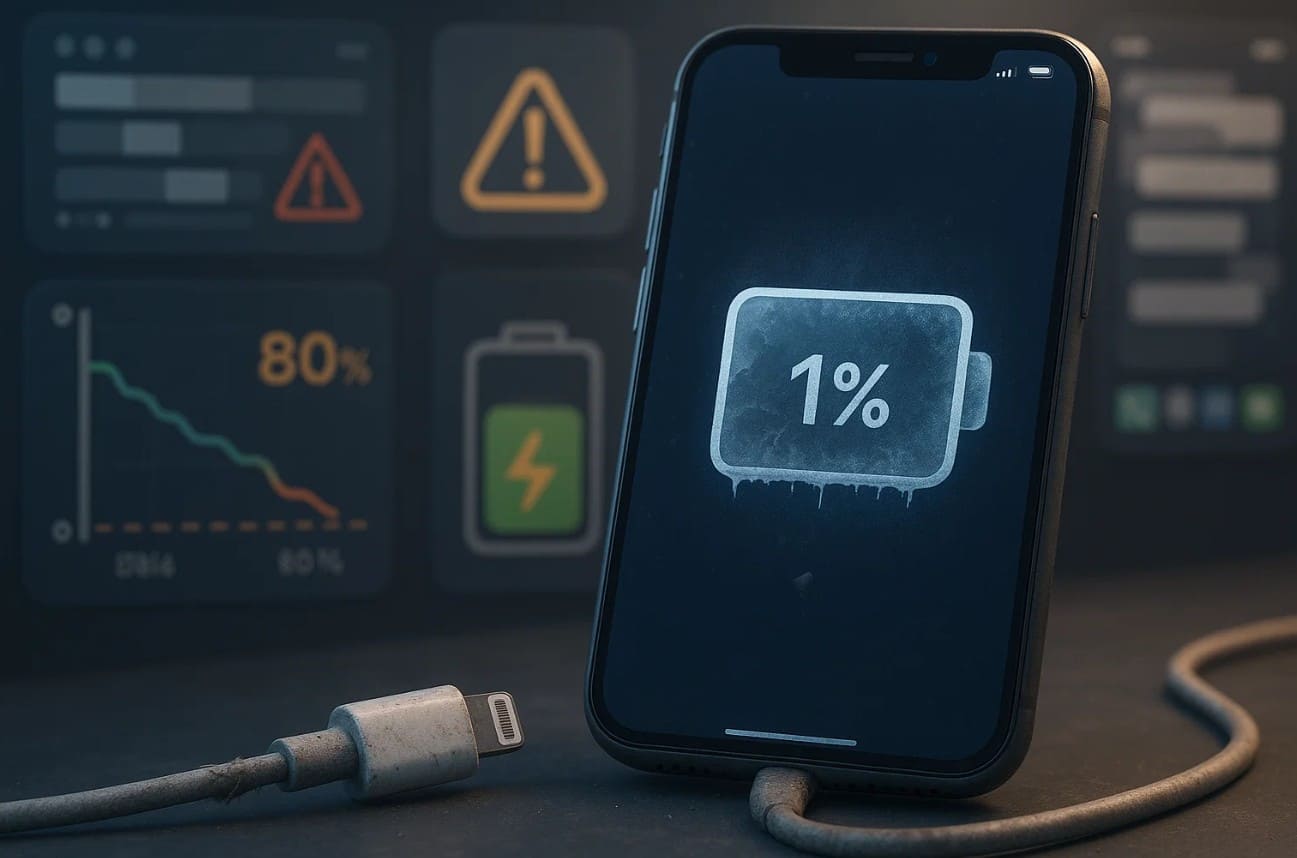
Quick check: A frozen reading or a charging problem?
| What you see | What to check | Next action |
|---|---|---|
| 1% while connected, even with a charging icon | The icon alone does not show that enough charge is being added. | Run the 30-minute power test, then restart by model. |
| 1% plus 0% health, repeated restarts or a recent repair | Battery verification, service messages and the repair history matter more than the number alone. | Check health and replacement history; ask the repair provider to inspect it. |
| 80%, 85%, 90%, 95% or near a selected limit | It may be intentional; heat can also pause charging. | Check Charge Limit and optimization. |
| 100% or another number that stays unchanged during use | A frozen estimate can still be followed by a shutdown. | Recheck the reading without deep discharge. |
| Frozen percentage alongside software crashes or a failed update | Check power stability first; then consider a supported software-repair path. | Install an offered update or review Dr.Fone Standard Repair. |
Apple explains the basic charging checks in what to do when an iPhone will not charge. The table is a troubleshooting decision aid, not a remote hardware diagnosis.
Part 2. How to Fix iPhone Battery Percentage Stuck While Charging?
Choose the method that matches your symptom rather than trying every option in order. For an iPhone stuck at 1 percent while charging, start with the connection and power checks in Ways 1 and 6, then Way 3. For an 80% or selected-limit pause, start with Way 2.
Way 1. Inspect the Charging Port and Cable
Disconnect the cable and inspect the Lightning or USB-C connector, cable ends and adapter for damage. Reconnect firmly only when everything is dry and undamaged. If debris prevents a secure connection, have it removed safely by a service provider rather than probing the port.


If the connection is secure but the percentage still does not rise, continue with the known-good charger test.
Way 2. Check Optimized Battery Charging and Charge Limit
A pause near 80% is not the same as an iPhone battery stuck at 1%. Optimized Battery Charging can delay charging past 80% until the phone expects you to need it. A selected charge limit can also explain a stop near 85%, 90% or 95%.
- iPhone 15 and later: open Settings > Battery > Charging. Charge Limit can be set from 80% to 100% in 5% increments. Select 100% if you need a full charge; Optimized Battery Charging is available at that setting.
- iPhone 14 and earlier: open Settings > Battery > Battery Health & Charging to manage Optimized Battery Charging.
- If an optimized-charging notification is shown: touch and hold it, then tap Charge Now when you need the charge sooner instead of permanently disabling the feature.
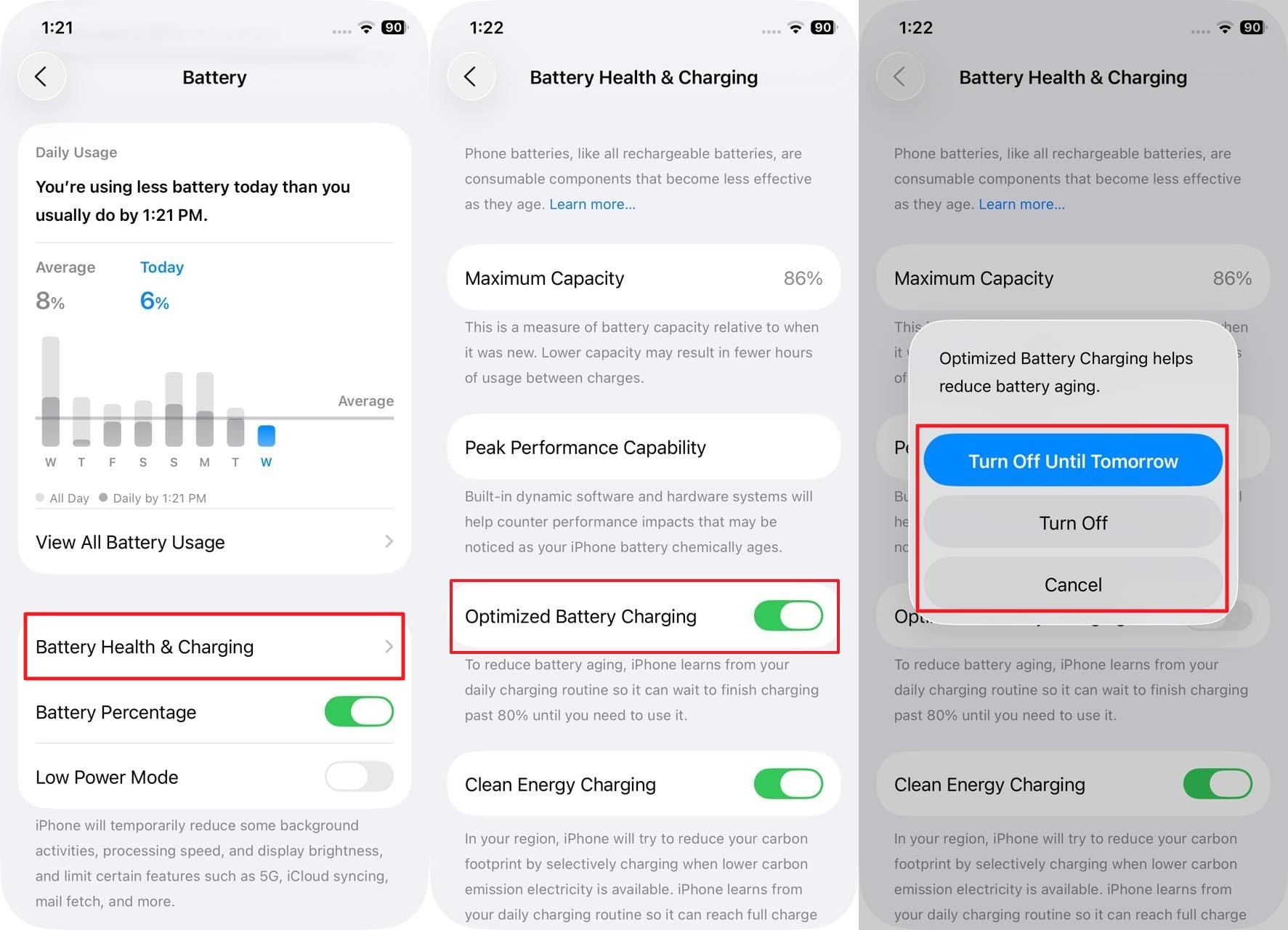
An iPhone can stop within a few percentage points of its chosen limit. A reading near 97% therefore is not automatically a frozen meter. With a limit below 100%, the phone may occasionally charge to 100% to maintain its charge estimate. If the device is warm, let it cool naturally before retesting; changing the limit does not override temperature protection.
See Apple's model-specific Charge Limit and optimization settings. Turning off optimization is not a general fix for a genuine 1% charging failure.
Way 3. Force Restart the iPhone by Model
A force restart does not erase your photos or other stored data. It can clear a temporary software freeze, but it cannot repair a worn battery. The button sequence depends on the iPhone hardware, not simply the iOS version.
- iPhone 8 or later, including iPhone SE (2nd or 3rd generation): quickly press and release Volume Up, then Volume Down. Hold the Side button until the Apple logo appears.
- iPhone 7 or 7 Plus: hold the Side and Volume Down buttons together until the Apple logo appears.
- iPhone 6s or earlier, including iPhone SE (1st generation): hold the Home and Side or Top buttons together until the Apple logo appears.
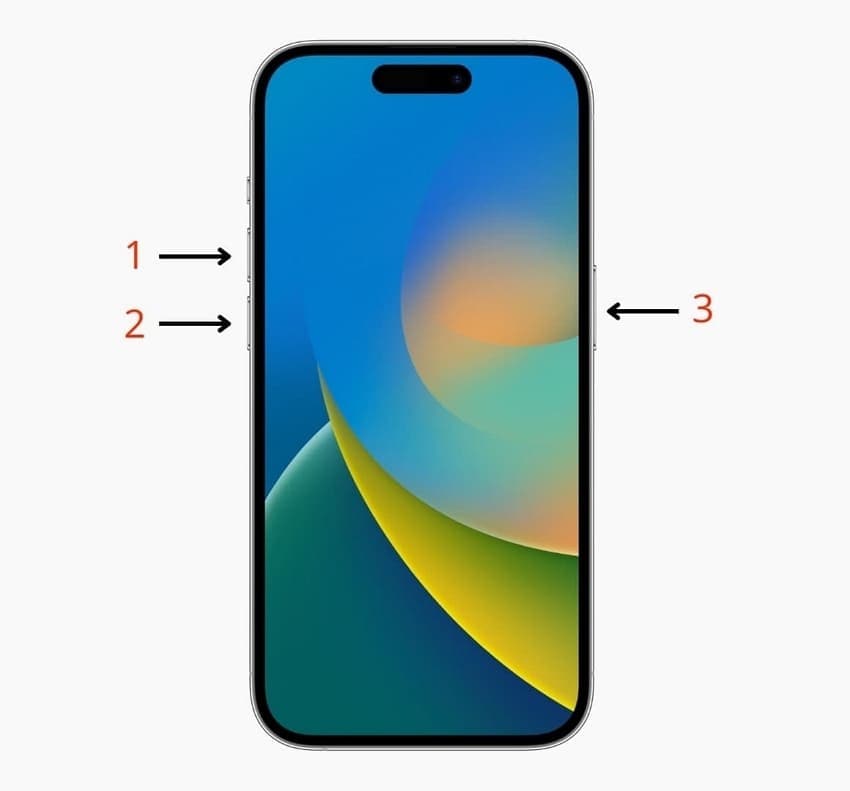
After restarting, reconnect the working charger and recheck the percentage. If the phone still will not charge, finish the charging test; do not repeatedly restart it instead of seeking service.
Way 4. Resolve via Dr.Fone - System Repair (iOS)
If the frozen reading comes with software symptoms such as a boot loop, black screen or failed iOS update, Dr.Fone - System Repair (iOS) offers a guided desktop workflow for supported iOS system problems. It supports 150+ software-related issues and combines device detection, firmware download and repair.
 Repair supported iOS software issues with Standard Repair, designed to retain data.
- Guided repair for issues such as Apple logo, recovery mode and black screen.
- Download and verify supported iOS firmware in one repair workflow.
- Use the desktop repair tool on compatible Windows or Mac systems.
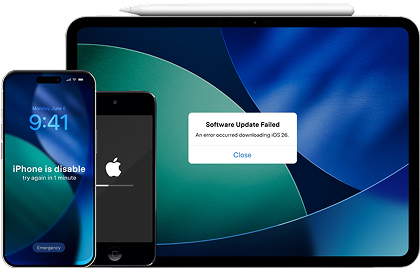
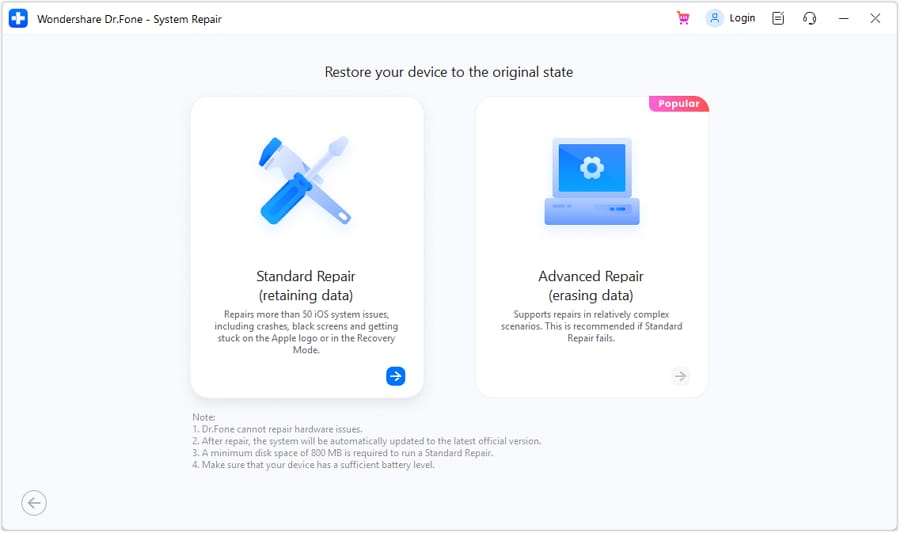
Choose the mode before proceeding: Standard Repair is designed to repair supported issues without erasing data; back up first when the phone is usable. Advanced Repair erases data. A download or trial is not a promise of free licensed repair. The tool cannot replace a defective battery or repair a loose connector, and a battery-percentage fix is not guaranteed. Repair can update iOS and remove jailbreak/unlock modifications.
How to run Standard Repair for a supported iOS problem
-
Step 1 Open the desktop repair tool
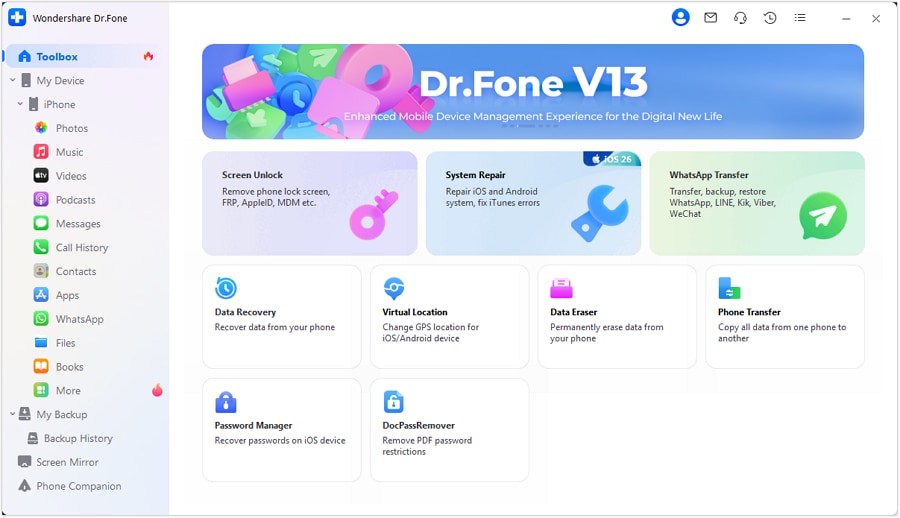
Install and open Dr.Fone on your Windows PC or Mac. Connect the iPhone by USB. In Toolbox, select System Repair, choose iPhone, then select iOS Repair.
-
Step 2 Choose Standard Repair
Select Standard Repair for a supported software issue. Keep the phone connected. The Mac interface may look different from the Windows screens shown here.
-
Step 3 Enter Recovery Mode and download firmware
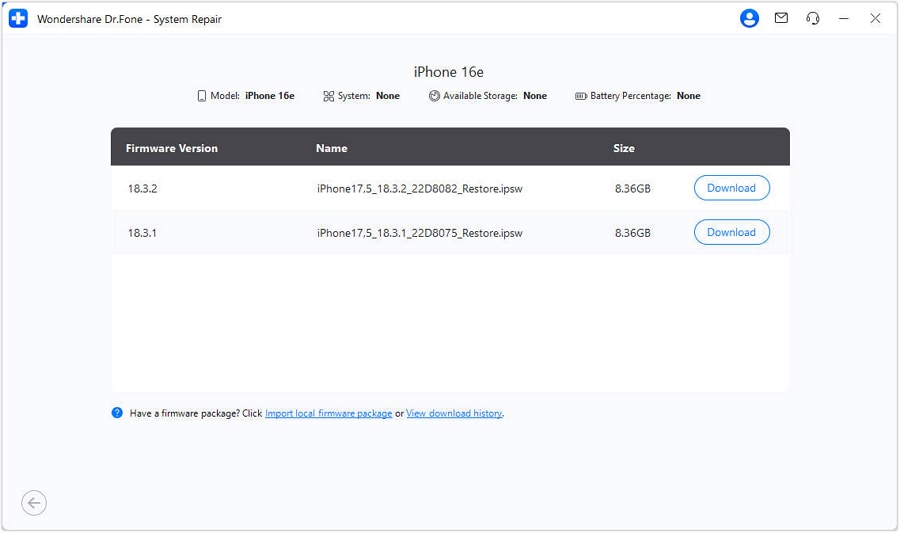
Follow the on-screen Guide for your model to enter Recovery Mode. When the firmware list appears, confirm the detected device and click Download for the supported package. Wait for its download and verification to finish.
-
Step 4 Run the repair and recheck the symptom
Click Repair Now and leave the cable connected until the completion screen appears, then choose Done. After the iPhone restarts, test the reading with the working charger. If 1% or repeated shutdowns persist, use the battery/service branch rather than assuming another software repair will resolve it.
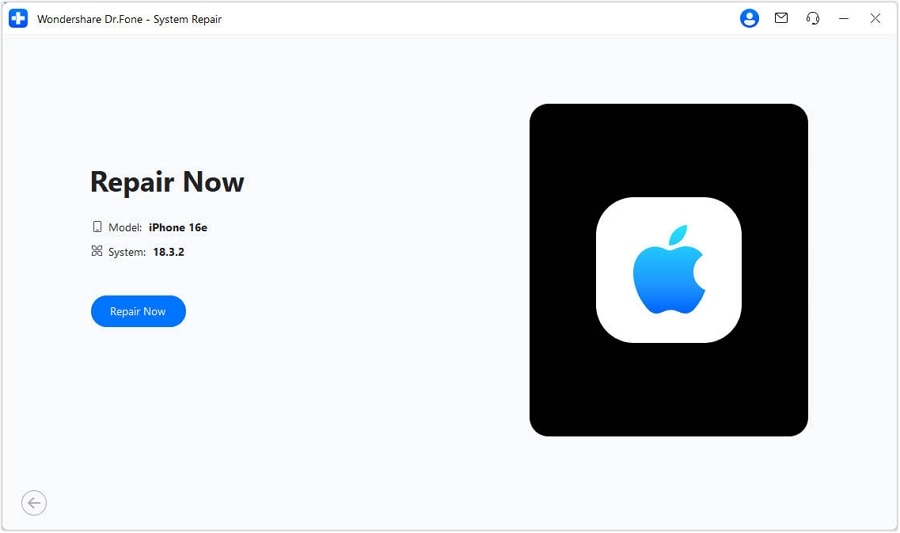




Workflow reference: Dr.Fone's iOS Standard Repair guide. Use the firmware offered for the connected device rather than choosing a package for a different model.
Way 5. Check Date & Time Only if the Clock Is Wrong
If the date or time is visibly wrong, correct it in Settings > General > Date & Time and enable Set Automatically when available. If it is already correct, skip this check.
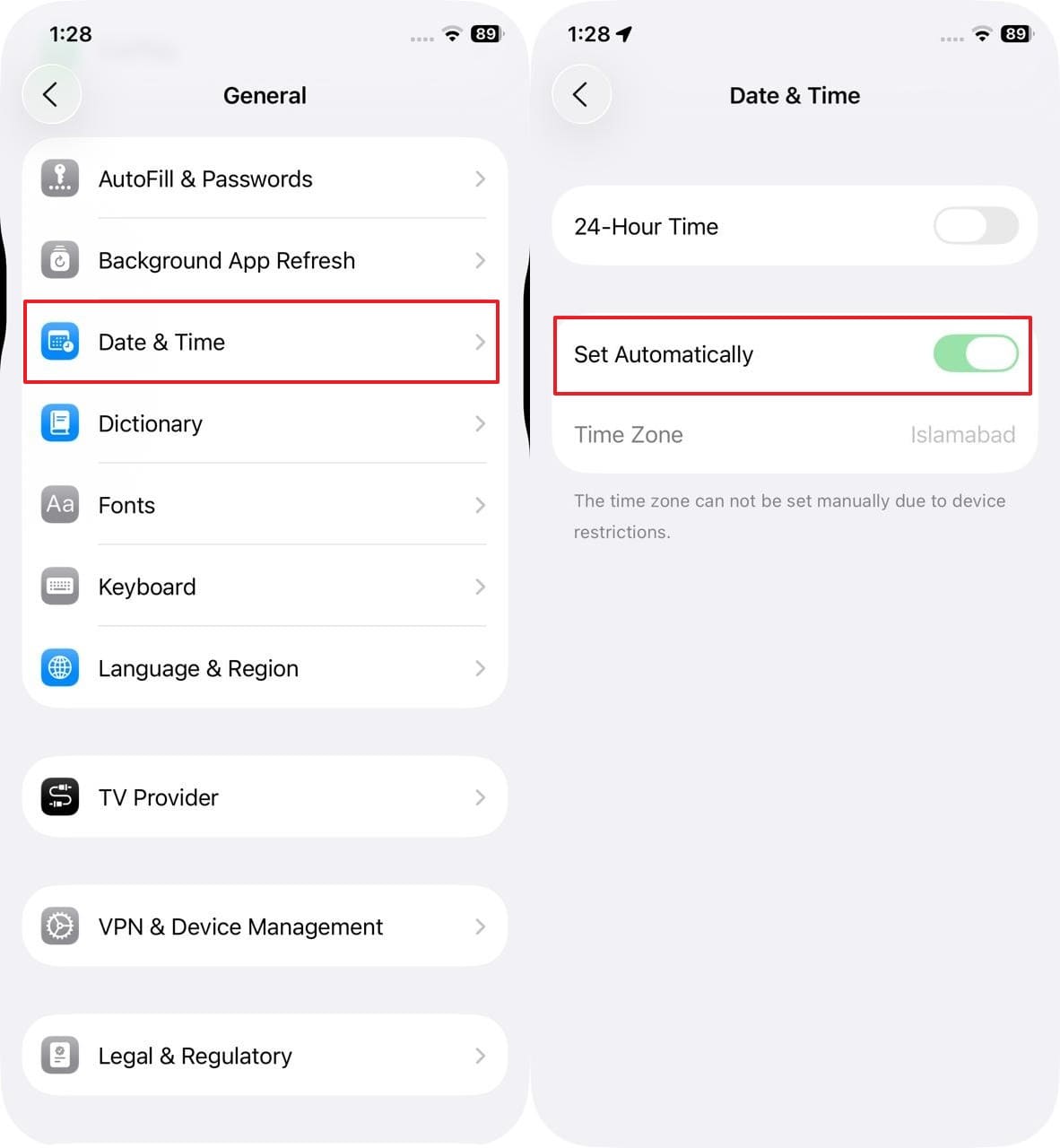
This corrects the clock setting; it does not establish that the battery has been recalibrated. Do not treat a time change as a substitute for the charging, restart or battery-service checks.
Way 6. Try a Different Charger and Power Source
If the iPhone is showing charging but the battery percentage is not increasing, test the whole power path. A charging icon alone does not tell you whether the battery level is rising.
- Use an undamaged, known-good cable and compatible wall adapter. Check firm connections, try another outlet and avoid testing through a loose hub or accessory chain. For Lightning, use Apple or certified accessories.
- If the phone is unusually warm, stop heavy use and let it cool naturally in a well-ventilated place. Do not use a refrigerator or apply heat. Reconnect only when the phone is at a normal temperature and there is no liquid warning.
- Leave it connected for 30 minutes with the screen off. If it still will not start or charge, perform the model-appropriate force restart.
- Let it charge for another 30 minutes. Check whether the number rises and the phone stays on. If it still will not charge or shuts down when unplugged, arrange service.
This follows Apple's charging and restart test; it is a troubleshooting interval, not a promised full-charge time.
Way 7. Recheck the Battery Reading Without Deep Discharge
Do not deliberately drain the iPhone until it shuts down to fix a frozen percentage. Apple says lithium-ion batteries do not need a full discharge before charging. Reaching zero does not prove that a faulty reading or battery has been repaired.
- Check the number in Control Center and compare it with the status-bar display where available. If the number is missing rather than frozen, use the separate battery percentage not showing guide.
- As a display check, you can turn Settings > Battery > Battery Percentage off and back on. This only changes how the number is shown; it does not restore battery capacity.
- Restart by model, then use a working charger and check whether the level changes during the timed charging test. Charge normally instead of forcing a zero-to-full cycle.
You do not need to erase the phone to perform these checks. A force restart is different from a factory reset; it does not erase stored photos or messages.
If your iPhone battery is stuck at 100% during use, do not assume it has unlimited charge. Unexpected shutdowns or a reading that jumps after a restart are reasons to check battery health and seek service. An occasional 100% charge under a lower charge limit, by contrast, can be normal.
Way 8. Install a Compatible iOS Update
An iOS update can address software bugs, but there is no guarantee that it fixes a particular battery reading. A few days of extra background activity after an update can affect heat and battery use; that is not proof of a stuck meter.
- Back up the iPhone if it remains usable. Keep it connected to reliable power and Wi-Fi.
- Open Settings > General > Software Update.
- If a compatible update is offered, choose Download and Install or the displayed update option and follow its instructions.
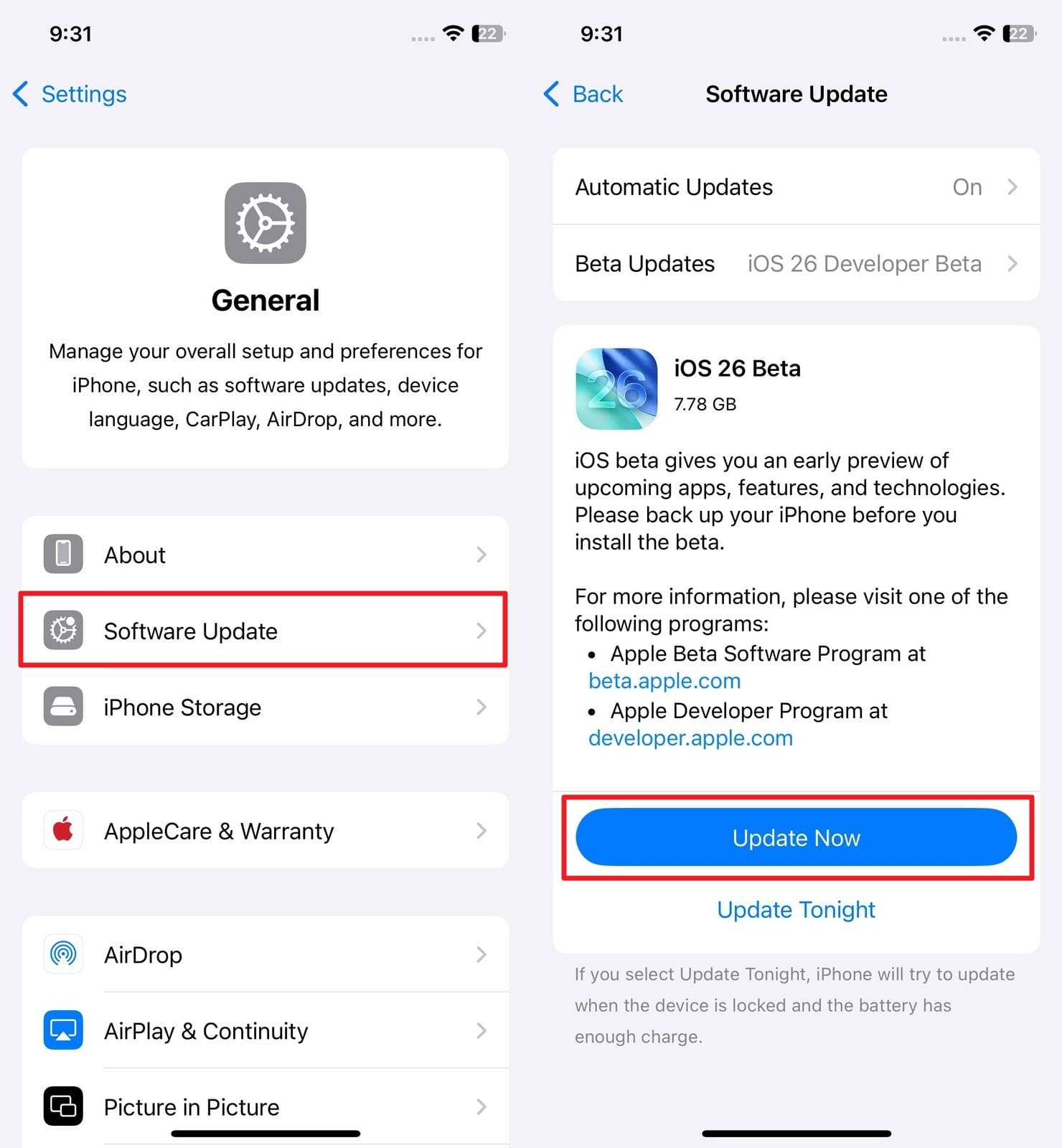
If the phone keeps restarting or cannot stay powered, resolve that problem before starting an update or firmware repair. Follow Apple's update prerequisites; do not assume a newer major iOS release is supported by every iPhone.
Way 9. Check Battery Health and Consider Replacement
Maximum Capacity describes battery health, not the battery's current charge. A reading below 80% can indicate substantial aging, but 80% is not a universal threshold that proves why a percentage is stuck. A Service message, repeated shutdowns and a recent repair provide more useful context.
- iPhone 15 and later: open Settings > Battery > Battery Health. iPhone 14 and earlier: open Settings > Battery > Battery Health & Charging. Note Maximum Capacity and any Service or verification message.
- If the problem began after a battery replacement, check Settings > General > About > Parts and Service History on supported models. An Unknown message can mean a nongenuine, malfunctioning or not-yet-verified part; it does not by itself prove a counterfeit. Finish Repair means the repair process has not been completed.
- If the iPhone shows 1% plus 0% health, frequently restarts, or dies when unplugged, contact Apple or the repair provider and describe those exact symptoms. Do not infer that 0% health measures the actual remaining capacity accurately, and do not open the phone to reseat a connector yourself.
For example, an iPhone 11 stuck at 1% with 0% battery health belongs in this service-check branch. Those two numbers do not identify a specific failed component, and the same model name does not mean every affected phone has the same fault.
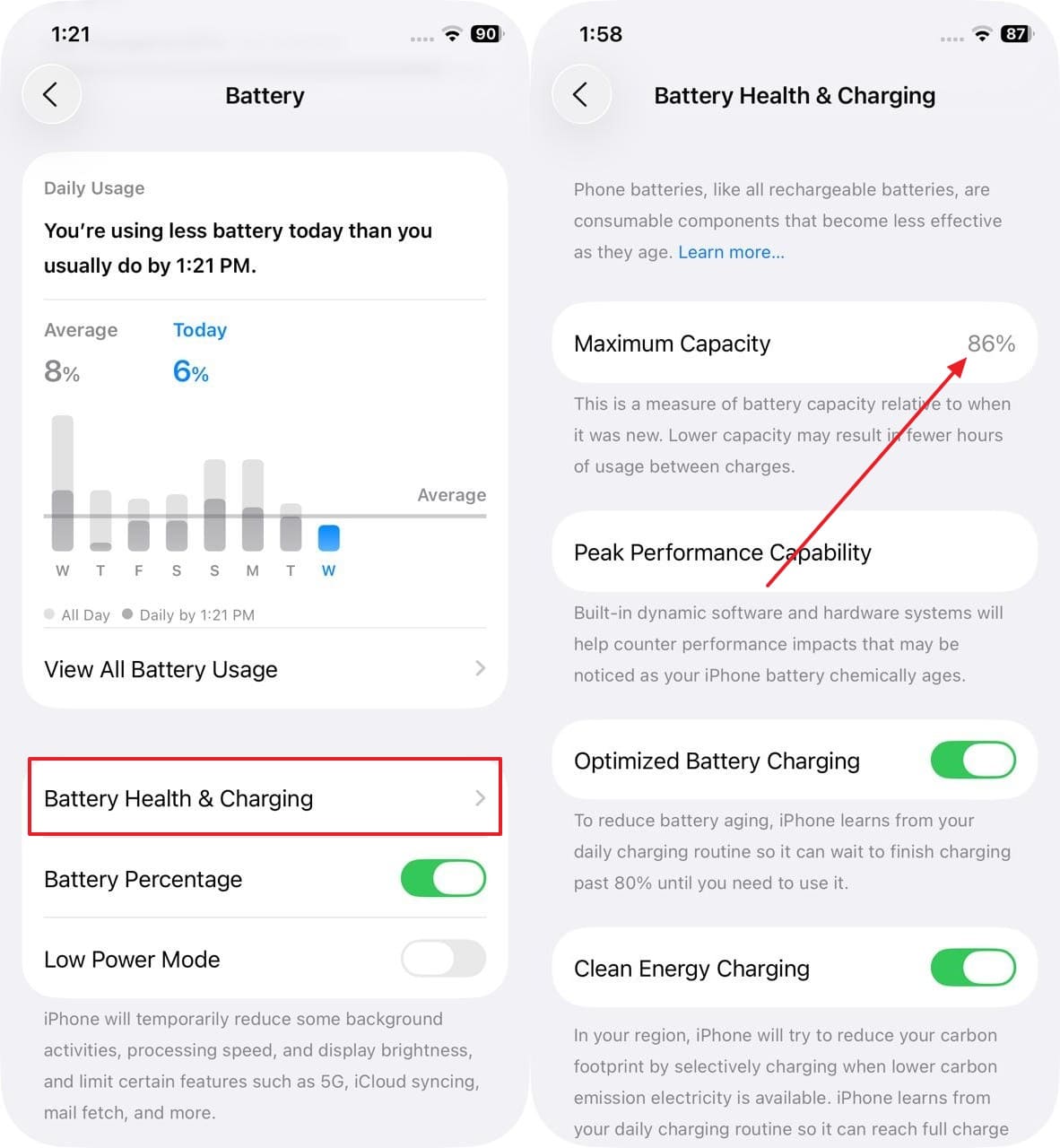
A repair-community report describes 1% readings with a battery-communication problem after repair. That is a reason for an inspection, not a diagnosis of your device. Apple confirms that unverified batteries may report health information inaccurately.
Way 10. Contact Apple Support Center
Arrange service if the known-good charger and restart test fails, the phone repeatedly restarts, it turns off when unplugged, or the problem began after a repair. You do not need to try every software option before a hardware inspection.
Tell the provider your iPhone model, when the issue began, which cable/adapter you tested, whether it stays on unplugged, and any Battery Health or Parts and Service History message. If possible, back up important data before the appointment. Do not charge or continue using a device with swelling, visible damage or unusual heat; seek professional assistance.
Use Apple Support to arrange an inspection, or return to the provider that performed the recent battery repair. A stuck percentage alone cannot identify a failed PMIC, coil or battery connector.
Part 3. 5 Helpful Tips to Make Your iPhone Battery Last Longer
These habits can extend everyday battery life once charging is working. They do not repair a faulty battery or guarantee that a frozen reading will not return.
-
Tip 1 Utilize Low Power Mode Smartly
Turn on Low Power Mode when you need longer runtime. On models with the Power Mode menu, use Settings > Battery > Power Mode; otherwise look for Low Power Mode in Battery settings. It reduces background activity, not a hardware charging fault.
-
Tip 2 Optimize Screen Brightness
Reduce unnecessary screen brightness or use Auto-Brightness in Settings > Accessibility > Display & Text Size. This can reduce display power use.
-
Tip 3 Audit Background App Refresh
Review app use in Settings > Battery. In Settings > General > Background App Refresh, disable refresh for apps that do not need it; avoid changing every app without checking what you use.
-
Tip 4 Manage Location Services
Use Settings > Privacy & Security > Location Services to limit apps to While Using the App when that meets your needs. Keep permissions required for navigation or other essential functions.
-
Tip 5 Control Auto-Lock and AOD
Choose a suitable Auto-Lock interval, such as 30 seconds, in Settings > Display & Brightness. On a model with Always-On Display, you can turn that feature off in the same settings area to reduce display activity.
Conclusion
An iPhone battery percentage stuck at 1% needs a different response from a normal 80% charging pause. Check the connection, use a working power source and restart by model. If the reading is unreliable with shutdowns or repair warnings, choose battery service. For a supported software problem, Dr.Fone - System Repair (iOS) provides a guided repair option; match the method to the symptom rather than expecting one tool to solve every cause.
FAQ
1. Why does my iPhone stay on 1% for a long time before dying?
The displayed percentage can be inaccurate, or the battery may be unable to provide dependable power. A long time at 1% does not prove a calibration error. Save your work, back up if possible, and use the charging/restart test. Repeated shutdowns need a battery and hardware assessment.
2. Can a software update fix a stuck battery percentage?
It can help when a software issue is responsible, but it is not a guaranteed battery fix. Back up, use stable power and install only an update offered for your iPhone in Settings > General > Software Update. Avoid starting an update while the device repeatedly loses power.
3. Does heat affect the battery percentage indicator?
Heat can cause iOS to limit or pause charging, especially above 80%. Stop heavy use and let the phone return to a normal temperature in a ventilated place. A warm phone is not proof that its displayed percentage is frozen.
4. Is it safe to use my iPhone while it is stuck at 1%?
Do not rely on the displayed 1% for important tasks: the phone could shut down unexpectedly. Save your work and back up when possible. If there is swelling, damage, unusual heat or a liquid alert, stop charging and follow the appropriate safety or service instructions.
 Add Wondershare Dr.Fone as a preferred source on Google