
How to Fix Recent Calls Not Showing on iPhone?

Sep 30, 2026 • Filed to: Phone Repair Solutions • Proven solutions
 TL;DR:
Missing iPhone recent calls are typically caused by iOS update bugs, iCloud sync conflicts, or system resource throttling, and can usually be resolved by toggling iCloud call sync, freeing up storage space, or modifying call-filtering settings.
● Maintain at least 1 GB of free internal storage; dropping below this threshold triggers iOS to disable background call-logging processes and prevents new entries from registering.
● If WhatsApp calls are missing on iOS 18, manually enable "Show in Recent Calls" within WhatsApp's notification settings; for regular cellular calls, turn off "Silence Unknown Callers" to stop unfamiliar numbers from being silently rejected and hidden.
● For persistent update bugs like iOS 26 recent calls not showing, Dr.Fone - System Repair (iOS) in Standard mode fixes firmware corruption without data loss, whereas recovering a completely wiped history via iCloud or iTunes backups will permanently overwrite your current device data.
Ask AI for a summary
 ChatGPT
 Perplexity
 Gemini
 Claude
 Grok
Grok
"I have an iPhone 11 Pro Max and for some reason numbers I call or calls I receive are not showing in my "Recents" list. Anyone else having this issue?"
"I have an iPhone Xr with IOS 17.6.1 - 2 days ago my Recent Calls list disappeared and no new calls are being registered since. When i am in my car and phone connects to the car, the Recent Calls are all shown on the car system but nothing on my phone?" --- from discussions.apple.com
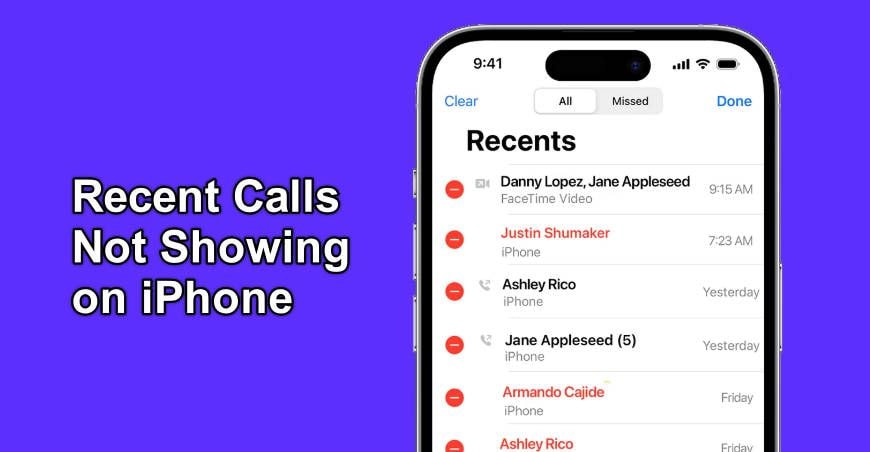
If recent calls are not showing on your iPhone, you're dealing with one of the most commonly reported iPhone issues — and you're not alone. Whether your call history disappeared completely, new calls aren't being logged, or you can see call logs on your car system but not on the phone itself, these are all symptoms of the same underlying problem: your iPhone's call log feature has stopped working correctly.
This issue affects users across all iPhone models and iOS versions. Reports are especially common after major iOS updates — including iOS 26 recent calls not showing complaints and iOS 18 WhatsApp calls not showing in phone recents. In some cases, the call log disappeared entirely; in others, only certain calls (like WhatsApp or FaceTime) are missing from the Recents list. Either way, the fix depends on correctly identifying the root cause first.
This guide covers every confirmed reason why call logs are not showing on iPhone — and walks you through 10 practical, step-by-step solutions to restore your call history. From a simple restart to a full iOS system repair with Dr.Fone, we'll cover every scenario so you can find the fix that works for your specific situation.
- Part 1. Why Recent Calls Are Not Showing on Your iPhone?
- Part 2. Quick Fixes to Restore Recent Calls on iPhone
- Part 3. Adjust iPhone Settings & Network Fixes
- Part 4. Advanced Solution: Repair iOS System Issues Using Dr.Fone - System Repair (iOS)

- Part 5. Restore Missing Call History from iCloud or iTunes Backup
Part 1. Why Are Recent Calls Not Showing on Your iPhone? 9 Common Causes
Before jumping into fixes, it's important to understand why your iPhone call history is not showing. The cause determines which solution will actually work — and skipping this step often leads to trying fixes that don't apply to your situation. Here are the nine most common reasons, explained in detail:
- Software Glitches: iOS bugs or system errors are the most frequent cause of recent calls not showing on iPhone. When a software process responsible for logging call data encounters an error, it can silently fail — meaning your calls complete normally but are never written to the Recents list. This is often resolved by a simple restart or iOS update.
- iOS Update Side Effects: A significant number of users report that their call log disappeared after an iOS update — including after updating to iOS 17, iOS 18, and iOS 26. When iOS rewrites system files during an update, the call history database can occasionally get corrupted or cleared. This is especially common with major version upgrades (e.g., iOS 17 → iOS 18). If your recent calls stopped showing immediately after an update, this is the most likely cause.
- iCloud Call History Sync Issues: If you use iCloud to sync call history across Apple devices, a sync error can cause your Recents list to appear empty on one or more devices. This is why some users see calls on their iPad or MacBook but not on their iPhone — the data exists in iCloud but isn't syncing back to the device correctly.
- Syncing Conflicts Between Devices: When multiple Apple devices share the same Apple ID, call history sync conflicts can occur. If an older device pushes outdated call data to iCloud, it can overwrite or hide newer entries on your iPhone — causing calls to disappear from the call log without any apparent reason.
- Call Filtering or Blocking Settings: If you have call blocking or third-party call-screening apps enabled, certain calls may be silently blocked and excluded from your Recents list. Numbers flagged as spam by your carrier's filter may be rejected before they're ever logged. This is a common reason why specific calls are not showing up on iPhone even though you know you received them.
- Limited Call History Display: By default, iPhone stores and displays up to 100 recent calls. If you make or receive a very high volume of calls, older entries are automatically removed from the visible list as new ones are added. If you're looking for a call from several days ago and your usage is heavy, it may simply have scrolled off the list.
- Incorrect Date and Time Settings: This is one of the least obvious but most impactful causes. When your iPhone's date or time is incorrect, call timestamps become misaligned with the actual log order. In some cases, calls may appear to be from "the future" and get sorted out of the visible range, making it seem like the call log is not showing recent calls on iPhone when they're actually present but displaced in the timeline.
- Low Storage Space: When your iPhone's internal storage is critically full (typically under 1 GB free), iOS may throttle or disable background processes — including the call logging mechanism. If storage has been full for an extended period, call history entries may not have been written at all, resulting in a permanently empty or incomplete Recents list until space is freed.
- Misconfigured Region, Language, or Network Settings: Incorrect language or region settings can interfere with how iOS formats and displays call data. Additionally, faulty cellular or network configuration can prevent your iPhone from properly communicating with your carrier's call logging infrastructure — meaning call logs are not showing on iPhone because the network layer never confirmed the call records to the device.
Identifying which of these applies to your situation is the key to choosing the right fix. The solutions in Parts 2–5 below are organized from simplest to most advanced — work through them in order for the fastest resolution.
📱 iPhone Frozen? Fix It in 3 Steps – No Data Loss!
Struggling with a frozen iPhone screen? 🤔 Our guide covers 6 common causes, step-by-step fixes for all models (iPhone 6s to iPhone 17), and safe data recovery. 98.6% success rate! ✨
Part 2. How to Fix Recent Calls Not Showing on iPhone: 3 Quick Fixes
These three fixes resolve the majority of recent calls not showing on iPhone cases in just a few minutes. Start here before attempting more involved solutions — most users find their call history returns after completing one of these steps.
Fix 1: Restart Your iPhone to Clear Call Log Glitches
A full restart forces iOS to reload all system processes — including the telephony and call history subsystem. If a background process crash or memory overflow caused your call logs to stop showing on iPhone, this is the fastest way to restore them. This applies to all iPhone models: iPhone 16, iPhone 15, iPhone 14, iPhone 13, and earlier.
iPhone X, 11, 12, 13, 14, 15, 16, or any Face ID model:
- Step 1. Press and hold either volume button along with the side button until you see the power OFF slider.
- Step 2. Now drag the slider and wait for the iPhone to turn OFF completely.
- Step 3. To turn it ON, press and hold the side button until the Apple logo appears.

iPhone SE (2nd or 3rd Generation), 8, 7, or 6:
- Step 1. Press and hold the side button until you see the power OFF slider.
- Step 2. Once it appears, drag it and wait for the iPhone to power OFF.
- Step 3. Now press and hold the side button until you see the Apple logo to power ON the device.

iPhone SE (1st generation), 5, or earlier:
- Step 1. Press and hold the top button until the power OFF slider appears.
- Step 2. Now drag the slider and wait for the iPhone to turn OFF.
- Step 3. Now to power ON the device again, press and hold the top button until the Apple logo appears.

After restarting, open the Phone app and check the Recents tab. If your call history has returned, the problem was a temporary software glitch. If the Recents list is still empty or incomplete, proceed to Fix 2.
Fix 2: Check for and Install iOS Updates
Apple releases regular iOS updates that include bug fixes targeting known call history and telephony issues. If your call history is not showing after an iOS update — or if you're running an older iOS version — updating to the latest release is one of the most reliable non-destructive fixes available. This is especially relevant for users experiencing iOS 26 recent calls not showing or call logs disappearing after iOS 18: Apple often patches these bugs in subsequent point releases (e.g., iOS 18.1, iOS 18.2).
- Step 1. Connect your iPhone to Wi-Fi, open Settings, select General, and tap Software Update. Your iPhone will check for available updates automatically.
- Step 2. If an update is available, tap Download and Install. Make sure your iPhone has at least 50% battery or is connected to a charger before proceeding.

Before updating: Back up your iPhone via iCloud (Settings → [Your Name] → iCloud → iCloud Backup → Back Up Now) or via Finder/iTunes on your Mac or PC. This protects your data in the unlikely event the update encounters an error.
Fix 3: Disable and Re-enable iCloud Call Syncing
Your iPhone uses iCloud to sync call history across all your Apple devices. If this sync process encounters an error — for example, after restoring from a backup or changing your Apple ID password — iCloud may stop pushing call data to your device, resulting in an empty or outdated Recents list. Toggling the iCloud call sync off and back on forces a fresh sync cycle, which often resolves the issue immediately.
- Step 1. Navigate to Settings > [Your Name] (Apple ID) > iCloud.
- Step 2. Scroll down to find the Phone option and toggle off the Show in Recents switch. Wait 15–20 seconds, then toggle it back on.
After re-enabling the sync, wait 2–3 minutes for iCloud to repopulate your Recents list. If calls appear from other devices (like your Mac or iPad) but not your iPhone, this fix specifically targets that cross-device sync gap.
Part 3. How to Fix Call History Not Showing on iPhone: Settings & Network Fixes
If the quick fixes above didn't restore your call logs, the problem likely lies in a specific iPhone setting or network configuration. Work through the following seven adjustments — each one targets a distinct cause of call logs not showing on iPhone.
1: Ensure Call History Sync Is Enabled Across All Your Apple Devices
If you use multiple Apple devices on the same Apple ID, the "Calls on Other Devices" feature controls whether call history is shared between them. When this setting is disabled, your iPhone stops syncing call logs — and depending on your configuration, may stop displaying calls made from other devices entirely.
- Step 1. Go to Settings > Phone > Calls on Other Devices.
- Step 2. Toggle on Allow Calls on Other Devices at the top, then individually enable call syncing for each of your connected Apple devices (iPad, Mac, Apple Watch, etc.).
Note: This setting requires that both your iPhone and the other device be signed into the same Apple ID, connected to the same Wi-Fi network, and have Wi-Fi Calling enabled on the iPhone.
2: Reset Network Settings to Fix Carrier-Related Call Log Issues
Your iPhone's call log depends on a stable, correctly configured network connection to receive and record call data from your carrier. If your network settings have become corrupted — due to a carrier update, SIM swap, or iOS change — your iPhone may fail to properly log incoming or outgoing calls, resulting in calls not showing up on iPhone even though they completed successfully.
Resetting network settings clears all saved Wi-Fi passwords, VPN configurations, and cellular settings, then restores them to iOS defaults. This resolves misconfigured APN, DNS, or cellular data settings that can silently interfere with call logging.
- Step 1: Go to Settings and select General. Now go to Transfer or Reset iPhone.
- Step 2: Now select Reset > Reset Network Settings and confirm your action.

What to expect: After the reset, your iPhone will restart. Re-enter your Wi-Fi password and test the phone by making a call — then check if the entry appears in Recents.
3: Free Up iPhone Storage Space
When your iPhone's storage is critically full, iOS restricts background processes to protect system stability — and call logging is one of the functions that gets throttled. If your device has less than 1 GB of free space, recent calls may stop being recorded and displayed. Freeing up storage is a straightforward fix that also improves overall device performance.
- Step 1: Open Settings and go to General. Now select iPhone Storage.
- Step 2: Review the storage usage breakdown. Select any app you no longer need and tap Delete App to erase the app and all its data, or tap Offload App to remove the app while preserving its documents and data. Focus on large apps, old videos, or cached data from streaming apps.

Dr.Fone App - Smart Clean (iOS)
1-Click iPhone Storage Cleanup: Free Up Space Effortlessly
- Smart scan for albums, contacts, and calendars.
- Clean duplicate screenshots, photos/videos, contacts, and expired calendars.
- Choose items to clean freely.
- Fast & user-friendly.



4: Check Call Blocking and Filtering Settings
If only specific numbers are missing from your call history — rather than all calls — the most likely explanation is that those numbers have been blocked or are being filtered by a call-screening app. Blocked calls are silently rejected by iOS and never written to your Recents list, which can make it appear as though certain people never called you at all.
- Go to Settings > Phone > Call Blocking & Identification. Review the list of blocked numbers — if a contact or number you're expecting calls from appears here, tap Edit and remove them from the block list.
- Also check any third-party call-filtering apps (such as Hiya, Truecaller, or your carrier's spam filter app). These apps can intercept and reject calls without logging them to your iPhone's Recents list.

5: Turn Off "Silence Unknown Callers" to Recover Missing Call Logs
The "Silence Unknown Callers" feature — introduced in iOS 13 and enabled by many users for spam protection — silences calls from numbers not in your contacts, recent outgoing calls, or Siri Suggestions. While silenced calls do technically appear in your Recents list, in some iOS versions this feature has been linked to calls disappearing from the call log or failing to register at all under certain carrier configurations. If you're finding that calls from unknown numbers are never showing up, this is the most likely culprit.
- Go to Settings > Phone > Silence Unknown Callers and toggle it OFF.
- After disabling it, ask someone with a number not in your contacts to call you and verify whether the call appears in your Recents list.
Note: If you want to keep spam protection active, consider using a third-party call-filtering app instead, which gives you more granular control over which calls are silenced versus blocked.
6: Set iPhone Date and Time to Automatic Mode
An incorrectly set date or time can cause call history entries to appear out of order, get sorted behind the visible range, or — in some iOS builds — fail to display entirely. This is because iOS uses timestamps to organize and retrieve call log entries; when the system clock is wrong, the timestamp sorting logic can produce unexpected results. Setting your date and time to automatic ensures your iPhone always uses your network's accurate time signal.
- Step 1. Go to Settings and click on General.
- Step 2. Now go to Date & Time and enable the toggle next to Set Automatically.

7: Toggle Airplane Mode to Refresh Network Connection
A brief network interruption can disrupt the data path between your iPhone and your carrier's call logging servers — preventing recent calls from being confirmed and recorded. Toggling Airplane Mode off and back on forces your iPhone to drop and re-establish its cellular connection, which refreshes the network registration and often resolves transient call logging gaps. This is particularly effective when only the most recent calls (from the past few hours) are missing from your Recents list.
- Step 1. Open the Settings app and toggle the Airplane Mode switch to ON. Wait 15–20 seconds for all radios to shut down completely.
- Step 2. Toggle Airplane Mode back OFF and wait for your iPhone to re-connect to the cellular network (you'll see the carrier name and signal bars reappear at the top of the screen). You can also do this directly from the Control Center by swiping down from the top-right corner and tapping the airplane icon.

Part 4. Advanced Fix: Repair iOS System Issues with Dr.Fone - System Repair (iOS)
If none of the previous fixes have restored your call history, the root cause is likely a corrupted iOS system file or a deep-level software fault — not a settings issue you can resolve manually. This is especially common when recent calls stopped showing after an iOS update, when the issue persists after a full restart and iCloud reset, or when multiple users on the same iOS version report the same problem (a known OS-level bug).
In these situations, Dr.Fone - System Repair (iOS) is the most effective solution. It repairs over 150 iOS system issues — including call history not showing, notification failures, and boot loop errors — by replacing corrupted system files with a clean, verified firmware build. Crucially, its Standard Repair mode does this without deleting any of your personal data, making it a far safer option than a factory reset.
Dr.Fone - System Repair (iOS)
Repair iPhone to Fix iPhone Recent Calls not Showing!
- Only fix your iOS to normal, no data loss at all.
- Fix various iOS system issues stuck in recovery mode, white Apple logo, black screen, looping on start, etc.
- Fixes other iPhone errors and iTunes errors, such as iTunes error 4013, error 14, iTunes error 27,iTunes error 9, and more.
- Works for all iPhone models, iPad, and iPod touch.
- Fully compatible with the latest iOS version.

Follow these steps to repair your iPhone and restore your call history with Dr.Fone:
- Step 1: Launch Dr.Fone
Download, install, and launch Dr.Fone - System Repair (iOS) on your Windows PC or Mac. From the main dashboard, select System Repair. Make sure your computer is connected to a stable internet connection — the firmware download in Step 3 requires a reliable connection.
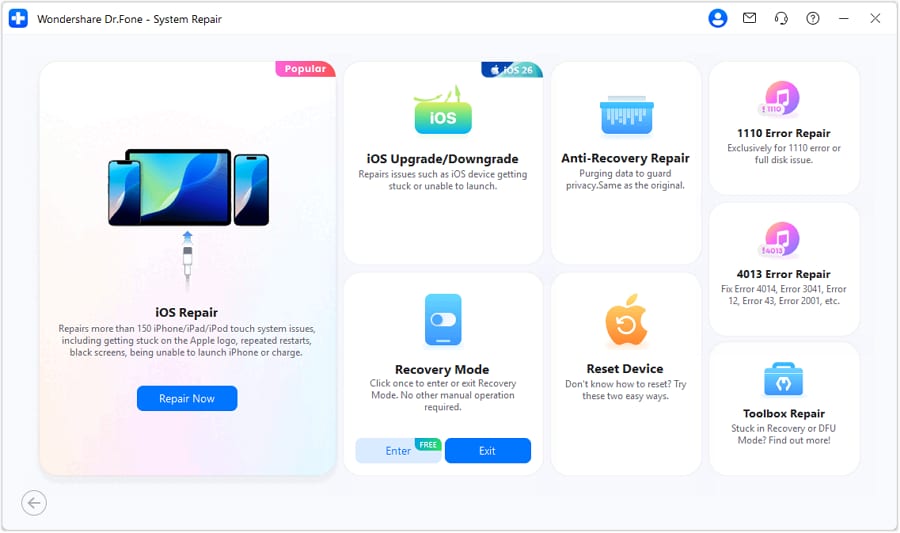
- Step 2: Select the Mode
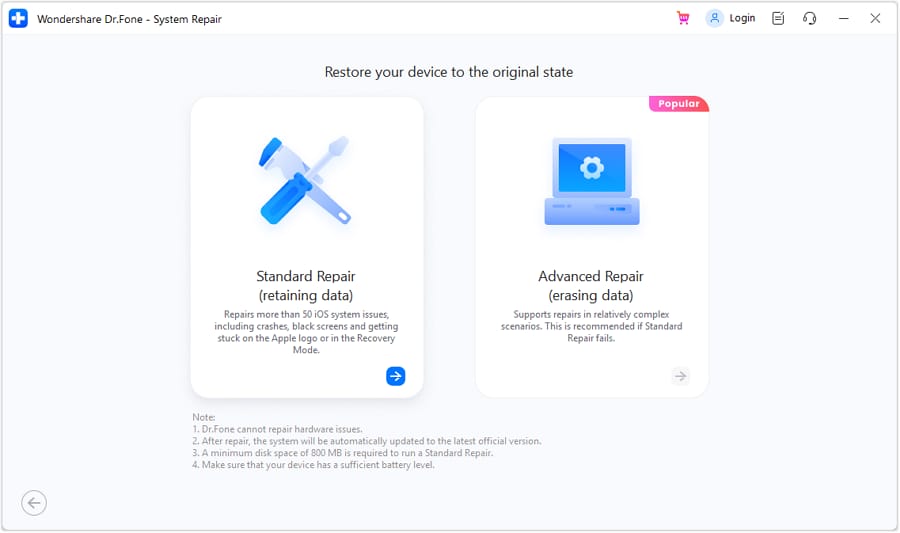
Connect your iPhone to your computer using a USB or Lightning cable. Click iPhone > iOS Repair in the Dr.Fone interface. You will be presented with two repair options:
Select Standard Repair from the given options. Standard Repair is the recommended starting point — it fixes iOS system-level issues, including call history not displaying, without erasing any personal data (photos, messages, apps, or contacts). Only consider Advanced Repair if Standard Repair does not resolve the problem.
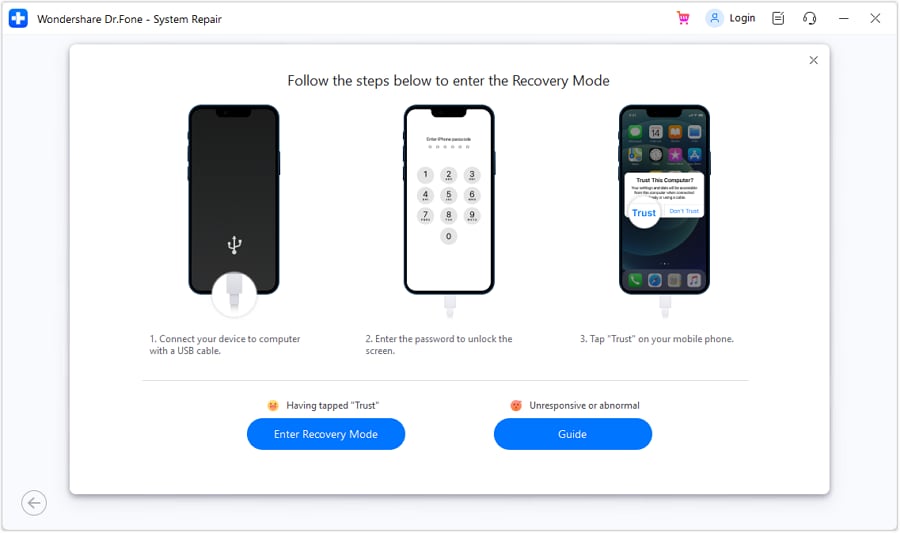
Follow the on-screen instructions to put your iPhone into Recovery Mode. Once in Recovery Mode, Dr.Fone will display all compatible iOS firmware versions for your specific iPhone model. Select the most recent version and click Download to proceed.
The firmware file will begin downloading. Depending on your internet speed, this typically takes 5–15 minutes. Keep your iPhone connected and do not use it during this process.
Note: If the automatic download is slow or fails to start, you can manually download the firmware using your browser by clicking the provided download link, then selecting the downloaded file in Dr.Fone.
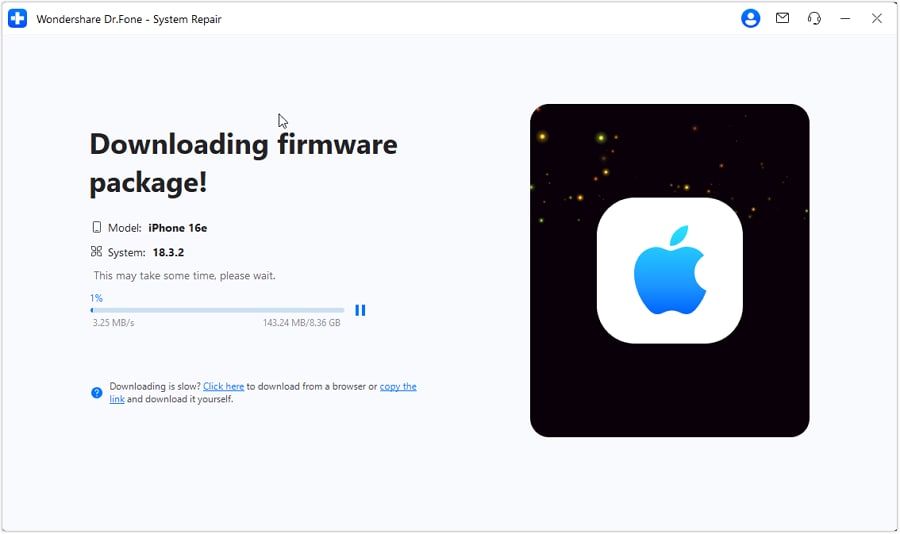
After downloading completes, Dr.Fone will automatically verify the firmware integrity before proceeding.
- Step 3: Fix the Issue
Once verification is complete, a new window will appear. Click Repair Now to begin the iOS system repair process. Dr.Fone will flash the verified firmware to your iPhone, replacing any corrupted system files that were preventing your call log from showing recent calls. The repair process typically takes 5–10 minutes. Keep your device connected throughout.
When the repair finishes, your iPhone will restart automatically. Open the Phone app and check the Recents tab — your call history should now be restored and functioning normally.
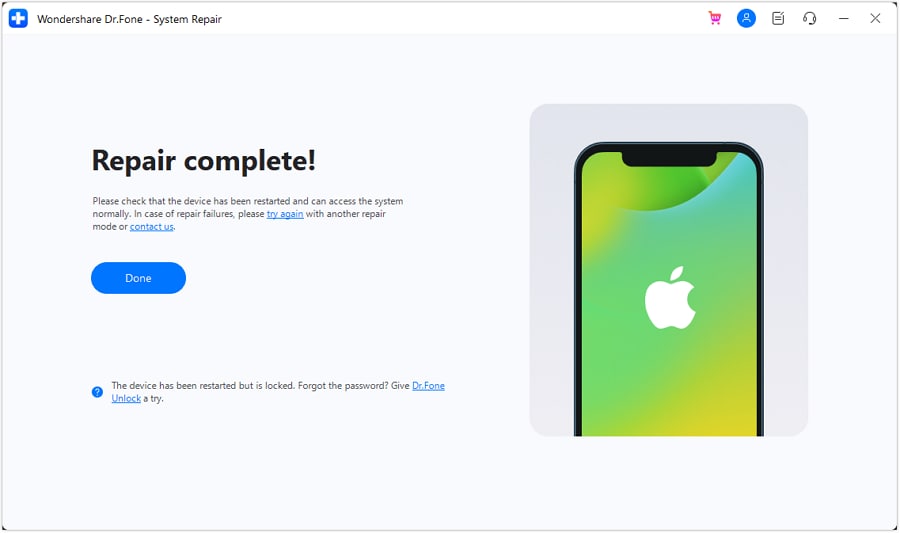
Note: If recent calls on iPhone not showing is still not resolved after Standard Repair, you can use Advanced Repair mode, which performs a deeper firmware reinstallation. Advanced Repair will erase all data on your iPhone, so you must back up your data before using this option.
 safe & secure
When to Contact Apple Support
If Dr.Fone's Standard Repair and all the settings-based fixes above have failed to restore your call history, the issue may involve a hardware fault (such as a damaged cellular modem), a carrier-side account problem, or a complex firmware issue that requires hands-on diagnostics. In this case, contact Apple Support via apple.com/support or visit an Apple Store or Apple Authorized Service Provider for professional assistance. Bring a record of the steps you've already tried — this helps Apple technicians diagnose the issue faster.
Part 5. How to Recover a Disappeared Call Log from iCloud or iTunes Backup
If your call log has completely disappeared from your iPhone — either due to accidental deletion, a failed iOS update, or a restore that wiped your history — recovering from a backup may be the only way to retrieve those records. This section covers three recovery methods: iCloud restore, iTunes/Finder restore, and selective recovery using Dr.Fone Data Recovery (which does not require a backup and does not erase your current data).
1. Restore Call Logs from iCloud Backup
If you had iCloud Backup enabled before your call history disappeared, restoring from iCloud will bring back your call logs along with all other backed-up data. This is the most straightforward method, but it does come with an important caveat: restoring from iCloud backup will erase all current data on your iPhone and replace it with the backup snapshot. Any data created after the backup (messages, photos, new contacts) will be lost unless separately backed up.
- Step 1. Navigate to Settings > General > Transfer or Reset iPhone > Erase All Content and Settings. Confirm the action and wait for your iPhone to reset and display the setup screen.
- Step 2. On the setup screen, choose Restore from iCloud Backup. Sign in to iCloud with your Apple ID and select a backup that was created before your call history disappeared.
- Step 3. Wait for the restore process to complete — this can take 20 minutes to over an hour depending on backup size and Wi-Fi speed. Keep your iPhone connected to power and Wi-Fi throughout.
2. Recover Call Logs from iTunes or Finder Backup
If you regularly back up your iPhone to a Mac or Windows PC using iTunes (Windows/older macOS) or Finder (macOS Catalina and later), this method can recover your complete call history from a local backup. Like the iCloud method, this will also overwrite your iPhone's current state with the backup snapshot.
- Step 1. Connect your iPhone to the computer you use for backups using a USB or Lightning cable.
- Step 2. Open iTunes (on Windows or macOS Mojave and earlier) or Finder (on macOS Catalina and later). Select your iPhone when it appears.
- Step 3. Click Restore Backup. Choose the most recent backup that contains the missing call history, confirm, and wait for the restore to finish.
3. Recover Call Logs Without a Backup Using Dr.Fone - Data Recovery (iOS)
If you don't have a recent iCloud or iTunes backup — or if you want to recover only your call history without overwriting your current data — Dr.Fone - Data Recovery (iOS) is the most powerful available option. It scans your iPhone's internal storage directly for recoverable call log entries and allows you to selectively restore just your call history — leaving all other data untouched. This is the only method that can recover calls that were never backed up.
Dr.Fone - Data Recovery (iOS)
Recover Deleted Photos from iPhone
- Selectively recovers iPhone data from internal memory, iCloud, and iTunes.
- Works perfectly with all iPhone, iPad, and iPod touch.
- Original phone data will never be overwritten during recovery.
- Step-by-step instructions provided during the recovery.
Steps to Recover Call History Using Dr.Fone
- Step 1. Download Dr.Fone - Data Recovery (iOS) from the Wondershare website and install it on your Mac or Windows PC.
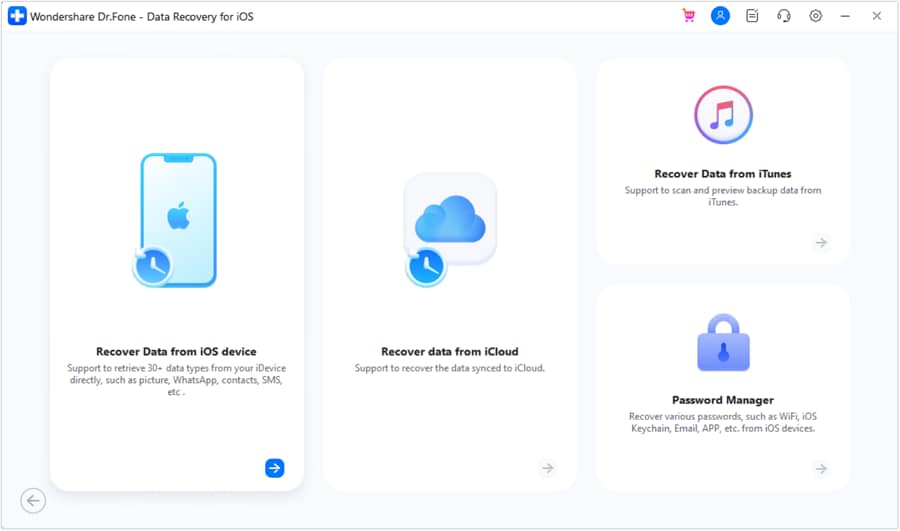
- Step 2. Launch the application and connect your iPhone to the computer via USB. Select Data Recovery from the main menu, then choose Recover from iOS Device (no backup required).
- Step 3. Select Data Recovery from the menu. Choose Recover from iOS Device (No backup required).
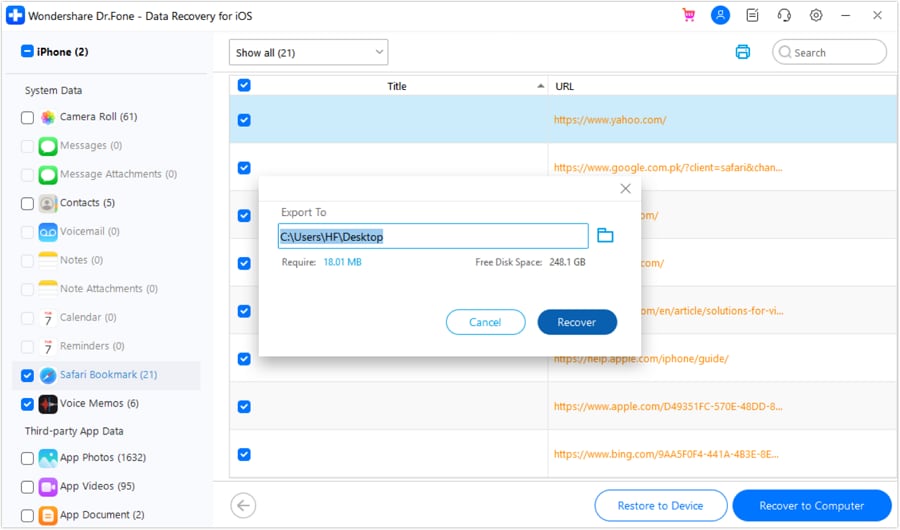
- Step 4. Dr.Fone will scan your iPhone's internal storage for all recoverable data. This scan typically takes 3–8 minutes. Once complete, navigate to the Call History category in the scan results and preview the recoverable entries to confirm they include the calls you need.
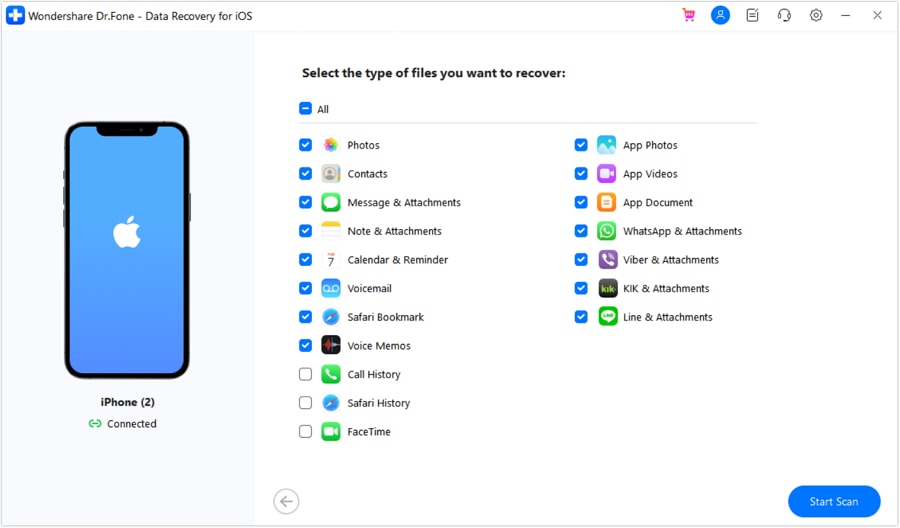
- Step 5. Select the call history entries you want to recover. Click Restore to Device to send them directly back to your iPhone's Recents list, or Recover to Computer to save them as a local file for reference.
 safe & secure
Conclusion: Restore Your iPhone Call History the Right Way
When recent calls are not showing on your iPhone, the fix depends entirely on the root cause — and there are at least nine distinct reasons this can happen, from iCloud sync errors and iOS update bugs to blocked callers and critically low storage. The good news is that the vast majority of cases are completely fixable without data loss, using the steps covered in this guide.
Start with the simplest fixes first: restart your iPhone, check for iOS updates, and toggle iCloud call sync off and on. If those don't work, move on to the settings adjustments in Part 3 — particularly resetting network settings, disabling Silence Unknown Callers, and verifying your date and time configuration. For deeper iOS system issues where call logs stop showing after an update or iOS 26 recent calls not showing persists, Dr.Fone - System Repair (iOS) provides a safe, data-preserving repair. And if your call log has completely disappeared and needs to be recovered from a backup or raw device scan, Dr.Fone - Data Recovery (iOS) offers selective call history restoration without overwriting your current data.
To prevent this issue from recurring: keep your iPhone updated to the latest iOS version, maintain at least 2–3 GB of free storage space, ensure iCloud call sync is always enabled, and make regular backups via iCloud or your computer. With these habits in place, your call history will stay reliable and accessible at all times.
safe & secureFrequently Asked Questions: Recent Calls Not Showing on iPhone
There are several common reasons why recent calls are not showing on iPhone: (1) A software glitch in iOS has caused the call logging process to crash — a simple restart usually fixes this. (2) iCloud call history sync is disabled or has encountered a sync error — go to Settings → [Your Name] → iCloud and toggle "Show in Recents" off, wait 20 seconds, then back on. (3) Your iPhone's storage is critically full (under 1 GB), which can prevent iOS from writing new call entries. (4) A recent iOS update introduced a bug affecting the call log — check Settings → General → Software Update for a patch. (5) Do Not Disturb or a Focus Mode is active, which can prevent certain calls from being logged. Start with a restart and an iCloud sync reset — these two steps resolve the majority of cases.
If your call history stopped showing after an iOS update — including iOS 18 or iOS 26 — the most effective fixes are: (1) Restart your iPhone to clear any post-update process errors. (2) Check for a newer iOS point release (e.g., iOS 18.1 or later) that may include a patch for the call log bug — go to Settings → General → Software Update. (3) Toggle iCloud call sync off and on: Settings → [Your Name] → iCloud → toggle "Show in Recents" off, wait 20 seconds, then back on. (4) If the issue persists, use Dr.Fone - System Repair (iOS) in Standard Repair mode to repair the iOS system files without data loss. Regarding iOS 18 WhatsApp calls not showing in phone recents specifically: this is a known compatibility issue between WhatsApp's call integration settings and iOS. Open WhatsApp → Settings → Notifications → "Show in Recent Calls" and make sure this option is enabled.
A call log that has completely disappeared from iPhone is most commonly caused by one of four things: (1) iCloud sync pushed an older, empty call history snapshot from another Apple device, overwriting your current log. (2) Restoring from an iCloud or iTunes backup that predated your call history. (3) An iOS update that corrupted the call database during installation. (4) Accidental deletion — tapping "Delete All Recents" in the Phone app clears the entire call log immediately. If your call log disappeared and you need to recover it, check your iCloud backup first (Settings → [Your Name] → iCloud → Manage Backups) — if a recent backup exists, restoring from it will bring back your call history. If no backup is available, use Dr.Fone - Data Recovery (iOS) to scan your iPhone's storage for recoverable call log entries and restore them selectively without data loss.
If you know you received calls but they are not showing up on your iPhone, the most likely explanations are: (1) The caller's number is blocked in Settings → Phone → Call Blocking & Identification — blocked calls are rejected silently and never appear in Recents. (2) "Silence Unknown Callers" is enabled (Settings → Phone → Silence Unknown Callers) — this feature can prevent unknown numbers from being logged in certain iOS versions. (3) A Focus Mode or Do Not Disturb schedule is silencing and excluding calls. (4) A third-party call-filtering app (such as a carrier spam filter) intercepted and rejected the call before it reached your iPhone. (5) The calls were made to a different Apple device sharing your Apple ID (such as an iPad or Mac) and were not routed to your iPhone. Check each of these settings in order — in most cases, disabling the relevant filter will immediately allow incoming calls to appear in your Recents list going forward.


iPhone Issues
- iPhone Storage Full
- 1. Stuck on Apple Logo Storage Full
- 2. Erase Content Settings not Working
- 3. iPhone Lagging
- 4. iPhone Running Slow
- iPhone Update Problems
- 1. Stuck on Updating iCloud Settings
- 2. iPhone Frozen During iOS Update
- 3. iPhone Checking for Update Stuck
- 4. iPhone Cellular Update Failed
- 5. iPhone Software Update Failed
- 6. iPhone Stuck on Update Requested
- 7. iPhone Update Error 1110
- 8. iPhone is Findable and Won’t Turn On
- 9. iPhone Won't Update
- 10. Update Server Couldn't Be Contacted
- 8. iPhone & iPad Security Updates
- 9. Update iPhone with/without iTunes
- 10. Can't Download or Update Apps
- iPhone Media Problems
- 1. Apple Music Song Not Available
- 2. iPhone Not Ringing
- 3. iPhone Echo Problem
- 4. iPhone Ringer Problems
- 5. iPhone Plays Music by Itself
- 6. Ringer Volume Changes by Itself
- 7. Music Won't Play on iPhone
- 8. Blurry Photos & Videos on iPhone
- 9. iPhone Volume Problems
- iPhone Sound Problems
- 1. YouTube no Sound
- 2. iPhone Microphone Problem
- 3. Test iPhone Microphone
- 4. Headphones No Sound from iPhone
- 5. No Sound on iPhone Game
- 6. iPhone Sound Not Working
- 7. iPhone Screen Recording no Sound
- iPhone Calling Problems
- 1. iPhone No Sound on Calls
- 2. Screen Goes Black During Call
- 3. iPhone Recent Calls Not Showing
- 4. iPhone Dropping Calls Issue
- 5. iPhone Calling Problem
- iPhone Camera Problems
- 1. iPhone Camera Black
- 2. iPhone Camera Blurry
- 3. iPhone Camera Not Working
- 4. iPhone Front Camera Not Working
- 5. TrueDepth Camera Not Working
- 6.Out-of-Focus Photos on iPhone 15
- iPhone Network Problems
- 1. Airpods Won't Connect to iPhone
- 2. iPhone Disabled Connect to iTunes
- 3. iPhone Not Syncing Problems
- 4. iPhone Internet Not Working
- 5. iPhone Keep Disconnecting from Wifi
- 6. iPhone WIFI Not Working
- 7. PC Not Recognizing iPhone
- 8. iPhone Stuck on Connect to iTunes
- 9. iPhone Not Showing up in iTunes
- 10. iTunes Not Detecting Your iPhone
- 11. iPhone Bluetooth Disconnect
- 12.Apple CarPlay Keeps Disconnecting
- iPhone Screen Problems
- 1. White Spots in iPhone Screen
- 2. iPhone Bleeding Screen
- 3. Turn Off iPhone When Frozen
- 4. Fix Orange Dot on iPhone
- 5. iPhone Green Screen Flickering
- 6. Green Lines in iPhone Screen
- Other iPhone Problems
- ● Manage/transfer/recover data
- ● Unlock screen/activate/FRP lock
- ● Fix most iOS and Android issues
- Free Download Free Download Free Download




Alice MJ
staff Editor
Generally rated4.5(105participated)