
TrueDepth Camera Not Working: 7 Useful Ways for You

Oct 23, 2026 • Filed to: Phone Repair Solutions • Proven solutions
 TL;DR:
Resolving a disabled TrueDepth camera on an iPhone requires a systematic approach of eliminating physical sensor obstructions, clearing iOS software glitches, and identifying potential hardware faults.
● Initiate troubleshooting by removing cases or screen protectors blocking the notch, force restarting the iPhone, executing a "Reset All Settings" command to restore default preferences without data loss, and attempting a fresh Face ID setup.
● If native resets fail to resolve deeper system corruption, putting the iPhone into Recovery Mode and using the Standard Repair function in Dr.Fone - System Repair can reinstall the iOS firmware while preserving your personal files.
● Hardware-level sensor failures require official Apple Support and are typically indicated if the error prevents Face ID setup entirely, returns immediately after a restart, or occurs following physical impact, liquid exposure, or a third-party screen replacement.
Ask AI for a summary
 ChatGPT
 Perplexity
 Gemini
 Claude
 Grok
Grok
"I got my iPhone 12 mini a few months ago refurbished, it came with the Face ID nonfunctional, saying “ a problem was detected with the truedepth camera, Face ID has been disabled. A few days later, the Face ID randomly started working and stayed that way for a while, until a couple days ago, when the issue resurfaced and has not gone yet."---from discussions.apple.com
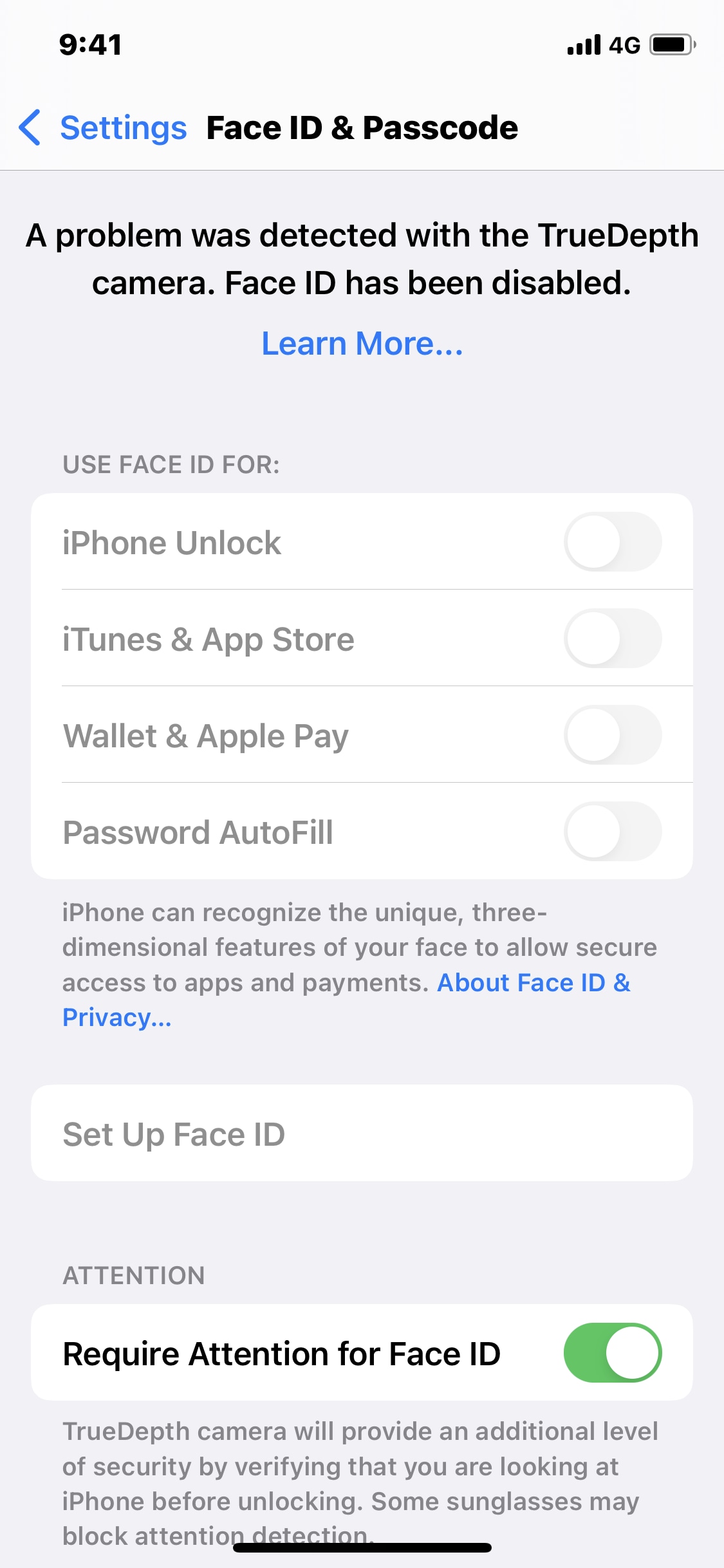
If your TrueDepth camera is not working, Face ID may stop responding, the front camera may behave abnormally, or your iPhone may show the message "a problem was detected with the TrueDepth camera". In many cases, the issue is caused by software bugs, incorrect settings, outdated iOS versions, or temporary camera detection failures. In other cases, it points to a hardware fault that needs professional repair.
This guide explains what the TrueDepth camera is, how it works, why the error appears, and the most effective ways to fix a TrueDepth camera not working on iPhone. If basic troubleshooting does not help, you will also learn when to use a system repair tool and when to contact Apple Support.

Part 1. What Is the TrueDepth Camera?
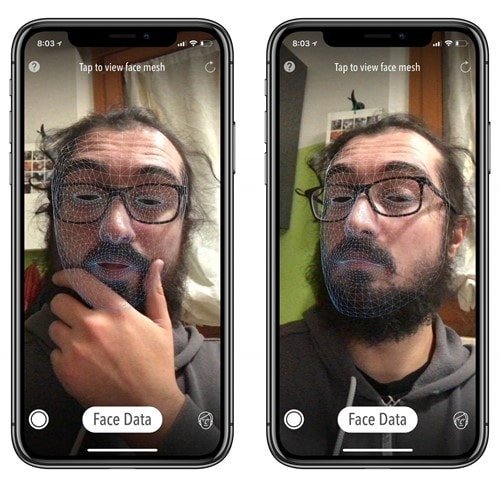
The TrueDepth camera is Apple’s advanced front-facing camera system that powers Face ID, portrait selfies, Animoji, Memoji, and several attention-aware iPhone features. In simple terms, it is not just a selfie camera. It is a sensor system that reads depth, infrared data, and facial details to verify identity and improve on-screen interactions.
How Does TrueDepth Camera Come Into Our Life?
The TrueDepth camera has changed how people unlock, secure, and use their iPhones. Instead of relying only on passcodes, it enables fast biometric authentication through Face ID. It also supports portrait effects, real-time facial tracking, and smart screen behavior such as dimming the display or lowering alert volume when you are looking at the device.
Because this system is involved in security, convenience, and camera functions, even a small malfunction can affect multiple features at once. That is why users often search for terms like “truedepth camera not working” or “iPhone problem with TrueDepth camera” when Face ID suddenly stops working.
Supported devices:
The TrueDepth camera was first introduced with iPhone X in 2017 and has remained part of later Face ID-enabled iPhones and compatible iPad Pro models. If your device supports Face ID, it uses the TrueDepth camera system for facial authentication.
Components:
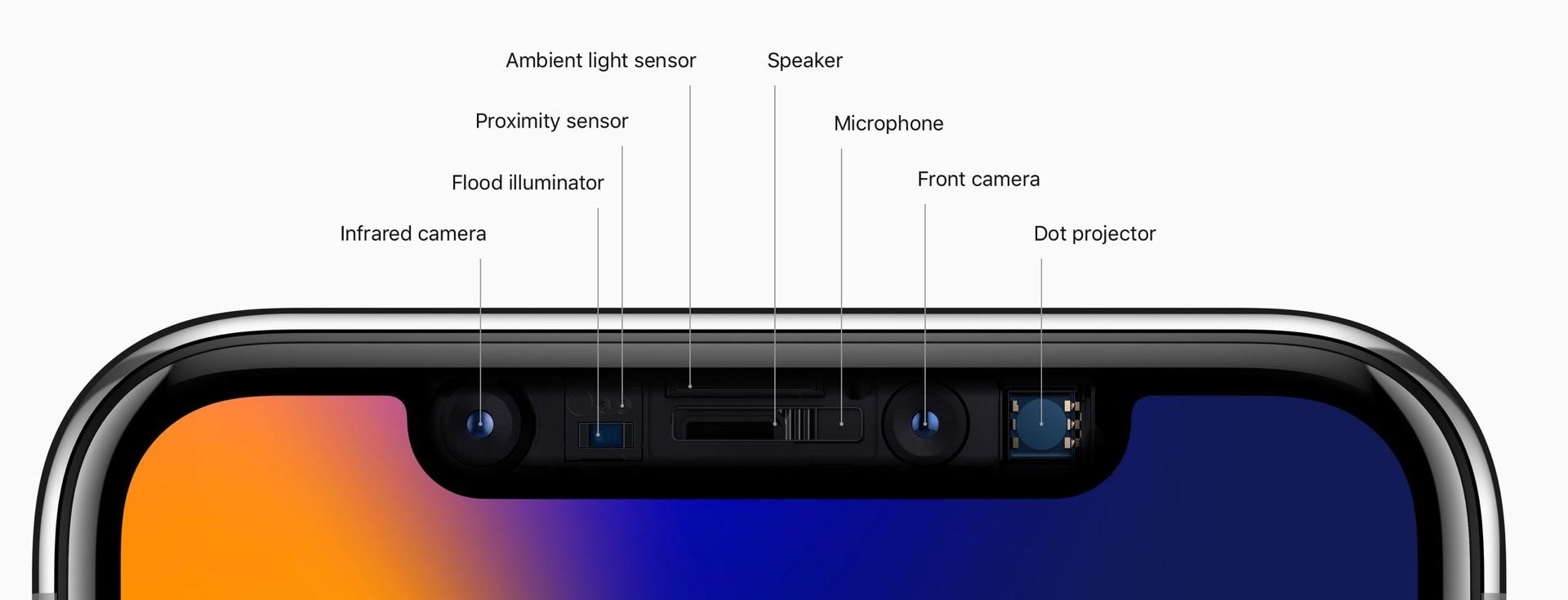
The TrueDepth camera relies on multiple parts working together, including the front camera, infrared camera, dot projector, proximity sensor, and ambient light sensor. These components help your iPhone measure facial depth, detect nearby presence, and respond accurately under different lighting conditions.
Features:
The system projects thousands of invisible dots onto your face and combines that information with an infrared image to build a precise depth map. This makes Face ID more secure than ordinary 2D face recognition and helps the iPhone recognize you under many real-life conditions.
Performance:
In daily use, the TrueDepth camera is designed to adapt to natural appearance changes such as glasses, facial hair, makeup, hats, and scarves. It works indoors, outdoors, and in low light because it relies on infrared depth data rather than only visible light. This combination of hardware and software is why TrueDepth is both convenient and secure—but it also means that a software glitch or damaged sensor can disable Face ID and trigger the warning message.
📱 iPhone Frozen? Fix It in 3 Steps – No Data Loss!
Struggling with a frozen iPhone screen? 🤔 Our guide covers 6 common causes, step-by-step fixes for all models (iPhone 6s to iPhone 17), and safe data recovery. 98.6% success rate! ✨
Part 2. How Does TrueDepth Camera Work?
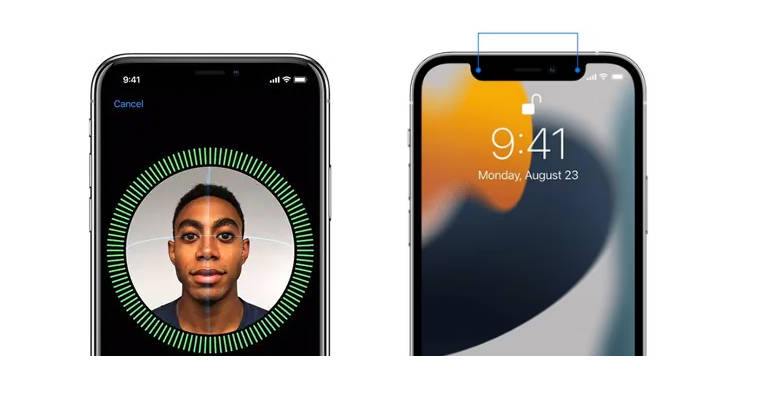
The TrueDepth camera works by combining depth sensing and infrared imaging to verify your face in a secure way. Instead of matching a flat photo, it scans facial depth, converts it into mathematical data, and compares it with the secure Face ID profile stored on your device.
To make the process easier to understand, here is how it works:
- Step 1: The dot projector casts thousands of invisible points onto your face.
- Step 2: The infrared camera captures both the dot pattern and an infrared image.
- Step 3: The iPhone creates a depth map that reflects your facial structure.
- Step 4: The bionic chip processes that information and compares it with your enrolled Face ID data.
- Step 5: If the match is confirmed, your iPhone unlocks or authorizes the requested action.
This is why Face ID is more secure than ordinary front-camera recognition. It is also why the error “a problem has been detected with the TrueDepth camera” can affect security functions immediately. If any sensor in the chain cannot communicate properly, Face ID may be disabled until the problem is fixed.
The system also includes attention awareness. It can detect whether your eyes are open and whether you are looking at the screen, which helps prevent unauthorized unlocking. Because the technology adapts over time, it can continue recognizing you even after moderate changes in appearance.
Tips: Looking for an all-in-one mobile management software? Look no further than Dr.Fone App - the ultimate choice for all your needs:
- For iOS Users: Free up space with Smart Clean, remove any restriction including screen lock, iCloud activation lock, MDM, or Apple ID, and transfer data easily between devices with our all-in-one iOS solution.
- For Android Users: Bypass screen locks and FRP with our Android unlocker, change your location with one click, and repair damaged Samsung devices with ease.
Discover more possibilities for mobile management solutions with Dr.Fone App (iOS) and Dr.Fone App (Android). Don't miss out, try it now and revolutionize your smartphone experience.



Part 3. 7 Easy Ways to Fix TrueDepth Camera Not Working
If your TrueDepth camera is not working, start with simple checks before assuming there is hardware damage. Many users can restore Face ID by removing obstructions, refreshing system settings, or updating iOS. The fixes below move from easiest to more advanced, so you can troubleshoot safely and efficiently.
 safe & secure
1. Check for Obstructions
A blocked or dirty sensor area is one of the easiest causes to overlook. Dust, fingerprints, thick screen protectors, poorly fitted cases, or damage around the notch area can prevent the TrueDepth camera from scanning your face correctly.
Before trying deeper fixes, do the following:
- Inspect the front camera and sensor area carefully.
- Remove any case or screen protector that covers the notch.
- Wipe the area gently with a clean, dry microfiber cloth.
- Make sure nothing is physically blocking the sensors while using Face ID.
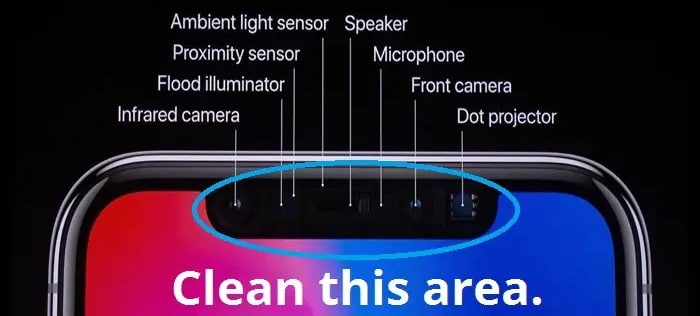
If the issue appeared right after a case change, screen replacement, or accidental drop, the problem may be more than surface dirt.
2. Force Restart Your iPhone
A force restart can clear temporary iOS glitches that interrupt communication between the camera system and Face ID services. It is fast, safe, and often effective when the error appeared suddenly after a freeze, app crash, or abnormal reboot.
To force restart your iPhone:
- Step 1. Press the volume up button for a second.
- Step 2. Press the volume down button for a second.
- Step 3. Next, hold the side button and only release it when the Apple logo appears.
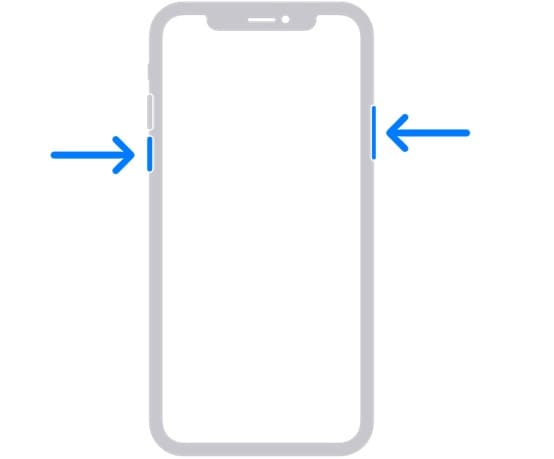
After the iPhone restarts, test Face ID again in a well-lit environment to see whether the TrueDepth camera is detected normally.
3. Select "Reset All Settings"
If system settings have become inconsistent, the TrueDepth camera may stop functioning correctly even though the hardware is still intact. Resetting all settings can resolve misconfigured network, privacy, display, or Face ID-related preferences without erasing your personal files.
- Step 1. You have to go to Settings > General > Transfer or Reset iPhone.
- Step 2. Then, you have to tap Reset > Reset All Settings.
- Step 3. You will be asked to enter the passcode and confirm to proceed.
- Step 4. It should take a few minutes for the reset to be complete.

This option does not remove photos, apps, or documents, but it will restore settings such as Wi-Fi passwords, wallpaper preferences, and accessibility adjustments to default values.
4. Update the iOS Version
An outdated iOS version can contribute to Face ID bugs, sensor communication issues, and camera-related errors. If your iPhone has pending updates, installing the latest iOS release may fix a TrueDepth camera not working problem caused by software instability.
It is relatively easy to update your iOS version. You need to:
- Step 1. Go to Settings > General > Software Update
- Step 2. And select Automatic Updates.
- Step 3. Make sure that you connect to a Wi-Fi connection for a stress-free experience.
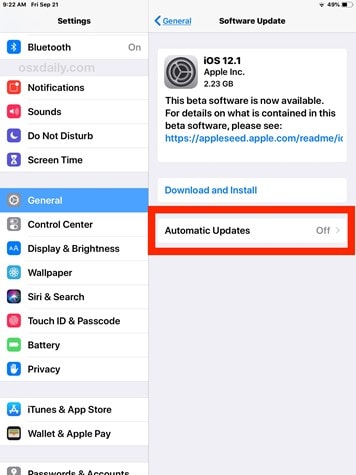
After the update finishes, restart the device and test Face ID again. If the error remains unchanged, continue with the next methods.
5. Reset Your FaceID
If the TrueDepth camera is working intermittently, the issue may be limited to corrupted Face ID enrollment data. Resetting Face ID removes the old facial profile and lets you create a fresh scan under better conditions.
- Step 1. You have to go to Settings > Face ID & Passcode
- Step 2. And select Reset Face ID.
- Step 3. Then, you have to Set Up Face ID again.
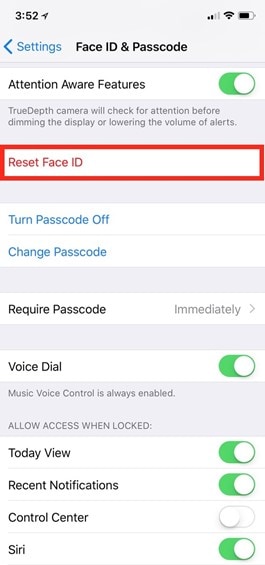
When setting it up again, hold the phone at a natural distance, keep the sensor area unobstructed, and avoid very dim or overly bright lighting. If the iPhone cannot complete enrollment, that is a stronger sign of a deeper software or hardware issue.
6. Dr.Fone-System Repair
If standard troubleshooting does not fix the error, the problem may come from deeper iOS system corruption. In that situation, using a dedicated repair tool can be faster and safer than repeated resets. Wondershare Dr.Fone - System Repair (iOS) is designed to fix many iPhone system issues without data loss, including cases where Face ID or the TrueDepth camera is affected by software abnormalities.
Dr.Fone - System Repair (iOS)
Repair iOS System Issue to Fix TrueDepth Camera Not Working Without data loss.
- Only fix your iOS to normal, no data loss at all.
- Fix various iOS system issues stuck in recovery mode, white Apple logo, black screen, looping on start, etc.
- Downgrade iOS without iTunes at all.
- Works for all models of iPhone, iPad, and iPod touch.
- Fully compatible with the latest iOS version.

After all, it is a highly effective tool and can fix almost every type of iOS issue. To restore the TrueDepth Camera if it is disabled, follow the steps below.
- Step 1. Firstly, you must install Dr.Fone-System Repair on your computer and launch it.
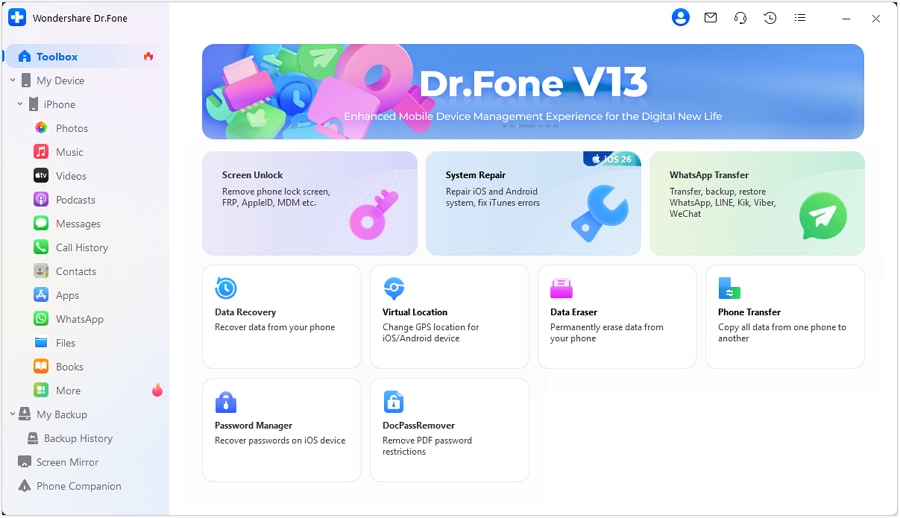
- Step 2. Then, click on System Repair to begin the process.
- Step 3. Now, you will be asked to select your device type. As you are an iOS user, you must select iPhone.
- Step 4. Next, a new screen will appear where you will have to choose iOS Repair to fix TrueDepth Camera not working.
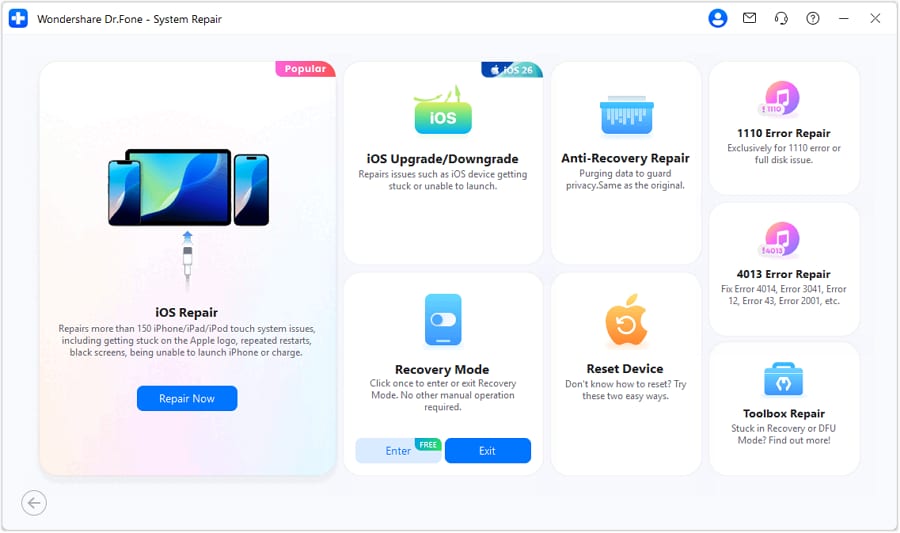
- Step 5. Choose Standard Repair as it should repair your iOS device and keep it secure.
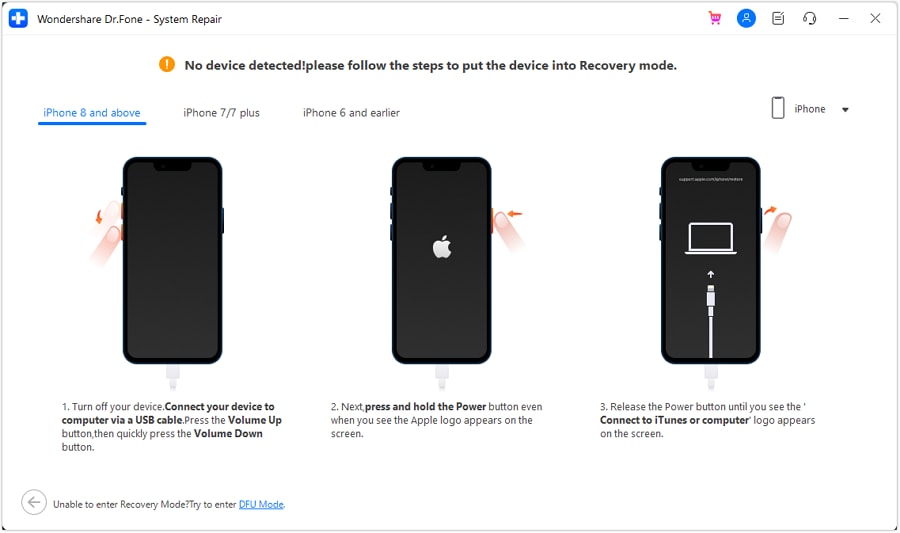
- Step 6. Next, you must place your iPhone in Recovery Mode. As soon as your iOS device is in Recovery Mode, Dr.Fone-System Repair would be able to detect it automatically.
- Step 7. Now, a new window will appear and show you which iOS firmware has to be installed to get the TrueDepth Camera to work. You will need to click Download to proceed. When the download is complete, the software will verify if the firmware has been installed.
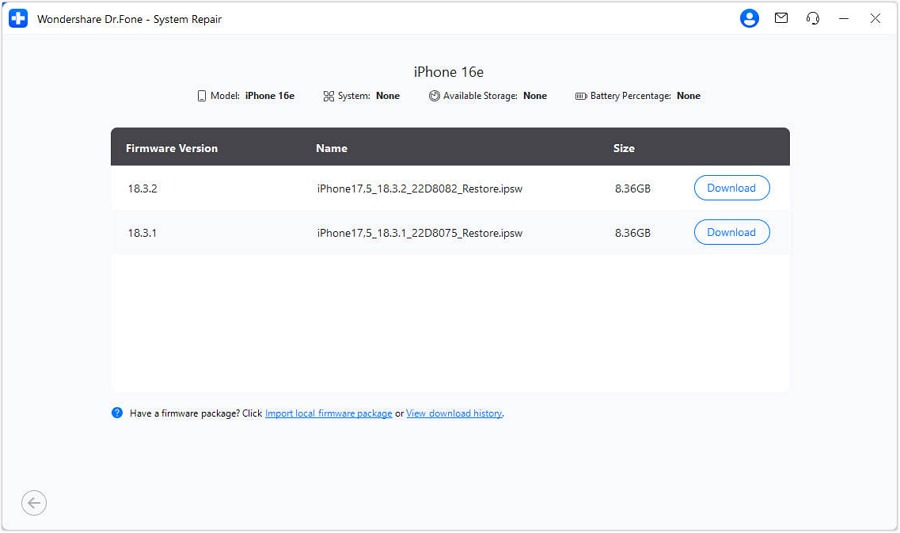
- Step 8. As soon as the iOS firmware is verified, you have to select Repair Now to initiate the iOS system recovery process.
- Step 9. Finally, you will be able to see the progress of the recovery process and just need to click Done when it is complete.
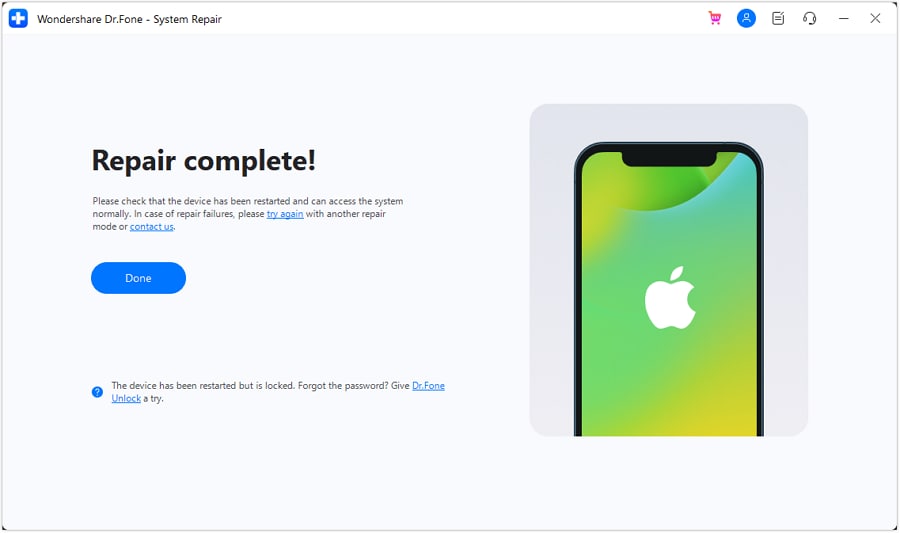
safe & secureThis solution is especially useful if the error began after an iOS update, system crash, boot loop, or abnormal restore. If software repair succeeds but Face ID still cannot be set up, the device may have a hardware-level TrueDepth camera fault.
7. Contact Apple Support with Hardware Failure
If none of the above methods work, and especially if your iPhone was dropped, repaired by a third party, exposed to liquid, or shows the same message repeatedly, the TrueDepth camera may have a hardware failure. In that case, software fixes may no longer be enough.
Contact Apple Support if you notice any of the following:
- Face ID setup cannot be completed at all.
- The TrueDepth camera error returns immediately after every restart.
- The issue started after physical impact or screen replacement.
- The front camera or related sensors behave abnormally in multiple apps.
For those who require personalized assistance or prefer official guidance, seeking Apple Support is a viable option. If you need help with troubleshooting or resolving TrueDepth Camera issues, you can reach out to Apple's technical support team for expert advice and tailored solutions. To get in touch with Apple Support, simply visit Apple's official website, which provides a comprehensive list of worldwide support telephone numbers, as well as online resources and support pages.
The Bottom Line
If your TrueDepth camera is not working, the fastest path is to begin with simple checks, then move to software-level fixes, and finally confirm whether the issue is hardware-related. In many cases, cleaning the sensor area, restarting the iPhone, resetting settings, updating iOS, or re-enrolling Face ID can solve the problem. If the error persists, Dr.Fone - System Repair (iOS) offers a practical way to repair deeper iOS issues without data loss before you turn to Apple service.
safe & secureFAQs
 Q1. What does “a problem was detected with the TrueDepth camera” mean on iPhone?Q2. How do I fix a TrueDepth camera not working issue on iPhone?Q3. Can Face ID be disabled because of a TrueDepth camera error?Q4. When should I contact Apple for an iPhone problem with the TrueDepth camera?


iPhone Issues
- iPhone Storage Full
- 1. Stuck on Apple Logo Storage Full
- 2. Erase Content Settings not Working
- 3. iPhone Lagging
- 4. iPhone Running Slow
- iPhone Update Problems
- 1. Stuck on Updating iCloud Settings
- 2. iPhone Frozen During iOS Update
- 3. iPhone Checking for Update Stuck
- 4. iPhone Cellular Update Failed
- 5. iPhone Software Update Failed
- 6. iPhone Stuck on Update Requested
- 7. iPhone Update Error 1110
- 8. iPhone is Findable and Won’t Turn On
- 9. iPhone Won't Update
- 10. Update Server Couldn't Be Contacted
- 8. iPhone & iPad Security Updates
- 9. Update iPhone with/without iTunes
- 10. Can't Download or Update Apps
- iPhone Media Problems
- 1. Apple Music Song Not Available
- 2. iPhone Not Ringing
- 3. iPhone Echo Problem
- 4. iPhone Ringer Problems
- 5. iPhone Plays Music by Itself
- 6. Ringer Volume Changes by Itself
- 7. Music Won't Play on iPhone
- 8. Blurry Photos & Videos on iPhone
- 9. iPhone Volume Problems
- iPhone Sound Problems
- 1. YouTube no Sound
- 2. iPhone Microphone Problem
- 3. Test iPhone Microphone
- 4. Headphones No Sound from iPhone
- 5. No Sound on iPhone Game
- 6. iPhone Sound Not Working
- 7. iPhone Screen Recording no Sound
- iPhone Calling Problems
- 1. iPhone No Sound on Calls
- 2. Screen Goes Black During Call
- 3. iPhone Recent Calls Not Showing
- 4. iPhone Dropping Calls Issue
- 5. iPhone Calling Problem
- iPhone Camera Problems
- 1. iPhone Camera Black
- 2. iPhone Camera Blurry
- 3. iPhone Camera Not Working
- 4. iPhone Front Camera Not Working
- 5. TrueDepth Camera Not Working
- 6.Out-of-Focus Photos on iPhone 15
- iPhone Network Problems
- 1. Airpods Won't Connect to iPhone
- 2. iPhone Disabled Connect to iTunes
- 3. iPhone Not Syncing Problems
- 4. iPhone Internet Not Working
- 5. iPhone Keep Disconnecting from Wifi
- 6. iPhone WIFI Not Working
- 7. PC Not Recognizing iPhone
- 8. iPhone Stuck on Connect to iTunes
- 9. iPhone Not Showing up in iTunes
- 10. iTunes Not Detecting Your iPhone
- 11. iPhone Bluetooth Disconnect
- 12.Apple CarPlay Keeps Disconnecting
- iPhone Screen Problems
- 1. White Spots in iPhone Screen
- 2. iPhone Bleeding Screen
- 3. Turn Off iPhone When Frozen
- 4. Fix Orange Dot on iPhone
- 5. iPhone Green Screen Flickering
- 6. Green Lines in iPhone Screen
- Other iPhone Problems
- ● Manage/transfer/recover data
- ● Unlock screen/activate/FRP lock
- ● Fix most iOS and Android issues
- Free Download Free Download Free Download




James Davis
staff Editor
Generally rated4.5(105participated)