Resolve common problems and system crashes on both iPhone and Android devices.

 100% Security Verified | No Subscription Required | No Malware

 :
: 
 ChatGPT
 Perplexity
 Gemini
 Claude
 Grok
Grok
Many of us rely on Face ID for quick and secure access to our iPhones. So, when you're suddenly met with a "Face ID not available" message, it can be incredibly frustrating. If you're wondering, "Why is my Face ID not working on my iPhone?", you're not alone. This common issue can stem from a simple software glitch, a hardware problem with the TrueDepth camera, or a deeper iOS system bug.
This comprehensive guide will walk you through the most effective methods to diagnose and resolve your iPhone Face ID not working problem. We'll cover everything from simple checks to advanced system repair solutions, ensuring you have all the tools necessary to restore this essential feature and get back to unlocking your device with just a glance.
In this article
- Part 1. Common Reasons Why Face ID Stops Working
- Part 2. 10 Effective Ways to Fix iPhone Face ID Problems
- Solution 1: Check Your Face and Camera Alignment
- Solution 2: Reset Your Face ID
- Solution 3: Add an Alternate Appearance
- Solution 4: Perform a Force Restart
- Solution 5: Update to the Latest iOS Version
- Solution 6: Make Sure Your Face is Unobstructed
- Solution 7: Clean the TrueDepth Camera System
- Solution 8: Re-enable Face ID for Third-Party Apps
- Solution 9: Confirm Your Face ID Settings Are Correct
- Solution 10: Repair iOS System Glitches with Dr.Fone [Data Safe]
Part 1. Common Reasons Why Face ID Stops Working
When your iPhone's Face ID is not working, it's often due to a specific trigger that disrupts the secure authentication process. Understanding the potential cause can help you find the right solution faster. Here are the most common reasons why you might encounter the "Face ID is not available" error:
- Security Lockouts: Face ID automatically disables after a device restart, 5 unsuccessful scan attempts, or if the iPhone hasn't been unlocked in over 48 hours. In these cases, you must enter your passcode to re-enable it.
- Physical Obstructions: The TrueDepth camera needs a clear view of your face. Dirt, smudges, a poorly placed screen protector, or even a phone case can block the sensors.
- Appearance Changes: While Face ID adapts to minor changes, significant alterations like wearing a mask (if not configured), heavy makeup, or certain types of sunglasses can prevent recognition.
- Software Glitches: Temporary bugs within iOS can interfere with Face ID. These often occur randomly and can sometimes be resolved with a simple restart.
- Outdated iOS: Running an older version of iOS can lead to compatibility issues and bugs that have been fixed in newer releases.
- Incorrect Usage: Holding your iPhone too close, too far, or at an odd angle can prevent a successful scan. Extreme lighting conditions (too dark or direct sunlight) can also cause issues.
- Low Battery: When your iPhone's battery drops below 10%, Face ID may be disabled to conserve power.
- Hardware Damage: If the TrueDepth camera system is damaged, such as from a drop or water exposure, Face ID will likely fail to function permanently.
Part 2. 10 Effective Ways to Fix iPhone Face ID Problems
Before proceeding, ensure your device supports Face ID (iPhone X or newer models and specific iPad Pro models). If the problem persists after checking the basics, here are ten proven solutions to fix why your Face ID isn’t working.
Solution 1: Check Your Face and Camera Alignment
The most basic fix for Face ID not working is often related to how you're using it. The TrueDepth camera needs a clear, direct line of sight to your face. Follow these best practices:
- Optimal Distance: Hold your iPhone at a natural arm's length, which is typically between 10 to 20 inches from your face.
- Proper Orientation: On iPhone 12 and older models, Face ID only works in portrait mode. For iPhone 13 and newer (running iOS 16+), it functions in both portrait and landscape.
- Clear View: Ensure the TrueDepth camera can see your entire face, including your eyes, nose, and mouth. Avoid scanning from an extreme angle.
- Good Lighting: Use Face ID in well-lit environments. Avoid harsh backlighting, direct sunlight, or complete darkness, as these conditions can impair the camera's ability to read your features.
Solution 2: Reset Your Face ID
If you're still seeing the "Face ID not available" error, the stored facial data might be corrupted. Resetting Face ID erases this old data and allows you to set it up from scratch, which can resolve many software-related issues.
-
Step 1Navigate to Face ID Settings
Open the Settings app on your iPhone and scroll down to tap on "Face ID & Passcode." You'll be prompted to enter your passcode.
-
Step 2Reset Face ID
Tap the "Reset Face ID" option. This action will immediately delete all existing facial scan data from your device.
-
Step 3Set Up Face ID Again
Select "Set Up Face ID" and follow the on-screen instructions to perform new facial scans. Once complete, make sure the "iPhone Unlock" toggle is enabled to activate it for unlocking your device.

Solution 3: Add an Alternate Appearance
Face ID is designed to learn and adapt to your appearance over time. However, if your look changes dramatically (e.g., with and without glasses, a beard, or heavy makeup), setting up an alternate appearance can significantly improve recognition speed and accuracy.
-
Step 1Access Face ID & Passcode
Go to "Settings" and select "Face ID & Passcode." Enter your device passcode to proceed.
-
Step 2Choose the Alternate Appearance Option
Tap on "Set Up an Alternate Appearance."
-
Step 3Complete the Scan
Follow the on-screen prompts to scan your face with your alternate look. This gives Face ID another reference point to recognize you.

Solution 4: Perform a Force Restart
A simple restart can clear temporary glitches that may cause Face ID to stop working. A force restart is more powerful than a standard power-off, as it clears the system memory and reloads the operating system from scratch.
-
Step 1Press Volume Up
Quickly press and release the Volume Up button.
-
Step 2Press Volume Down
Immediately after, quickly press and release the Volume Down button.
-
Step 3Press and Hold the Side Button
Press and hold the Side button until the Apple logo appears on the screen, then release it. Your iPhone will restart. You will need to enter your passcode on the first unlock.

Solution 5: Update to the Latest iOS Version
Apple frequently releases iOS updates that include bug fixes and security patches. If your Face ID is not available due to a known software issue, updating your iPhone is a crucial step.
-
Step 1Open Settings
Launch the "Settings" app and tap on "General."
-
Step 2Check for Updates
Select "Software Update." Your iPhone will check for any available updates.
-
Step 3Download and Install
If an update is available, tap "Download and Install." Ensure your device is connected to Wi-Fi and has sufficient battery life to complete the process.

Solution 6: Make Sure Your Face is Unobstructed
The TrueDepth camera needs a clear view of your eyes, nose, and mouth to work correctly. Anything covering these key facial features can lead to recognition failure. If your Face ID isn’t working, double-check for obstructions like sunglasses (which block the infrared light used by Face ID), masks (if the 'Face ID with a Mask' feature isn't set up), or even a hat pulled down too low.
Solution 7: Clean the TrueDepth Camera System
The TrueDepth camera is located within the notch or Dynamic Island at the top of your iPhone's screen. Dust, fingerprints, or debris can easily obstruct the sensors. Use a soft, lint-free cloth to gently wipe this area. Also, inspect your screen protector and case to ensure they are not covering any part of the camera array. A misaligned protector is a common culprit when iPhone Face ID is not working.

Solution 8: Re-enable Face ID for Third-Party Apps
Face ID is not just for unlocking your phone; it also secures third-party apps like banking or password managers. If it fails for a specific app, you may have disabled its access. To fix this:
-
Step 1Go to Settings
Open the "Settings" app and tap "Face ID & Passcode."
-
Step 2Select Other Apps
Tap on "Other Apps" under the "Use Face ID For" section.
-
Step 3Enable the App
Find the app in question from the list and make sure the toggle next to its name is switched on (green).

Solution 9: Confirm Your Face ID Settings Are Correct
Sometimes, the issue is as simple as an incorrect setting. An iOS update or accidental change might have disabled the features you rely on. Here's how to verify:
-
Step 1Open Face ID & Passcode
Navigate to "Settings" > "Face ID & Passcode."
-
Step 2Check Setup Status
If you see a blue "Set Up Face ID" option, it means no facial data is currently stored. You will need to complete the setup process again.
-
Step 3Verify Enabled Features
Ensure the toggles for "iPhone Unlock," "iTunes & App Store," "Wallet & Apple Pay," and "Password AutoFill" are all turned on according to your preferences.

Solution 10: Repair iOS System Glitches with Dr.Fone - System Repair (iOS) [Data Safe]
If you've tried all the above solutions and Face ID still doesn't work, the problem may be a deeper system bug that a simple restart or update can't fix. In this scenario, a specialized tool like Dr.Fone - System Repair (iOS) is an excellent choice. It's designed to fix a wide range of iOS system issues, including those causing Face ID not working, without erasing your personal data. The process is user-friendly and requires no technical expertise.
-
Step 1Launch Dr.Fone and Select System Repair
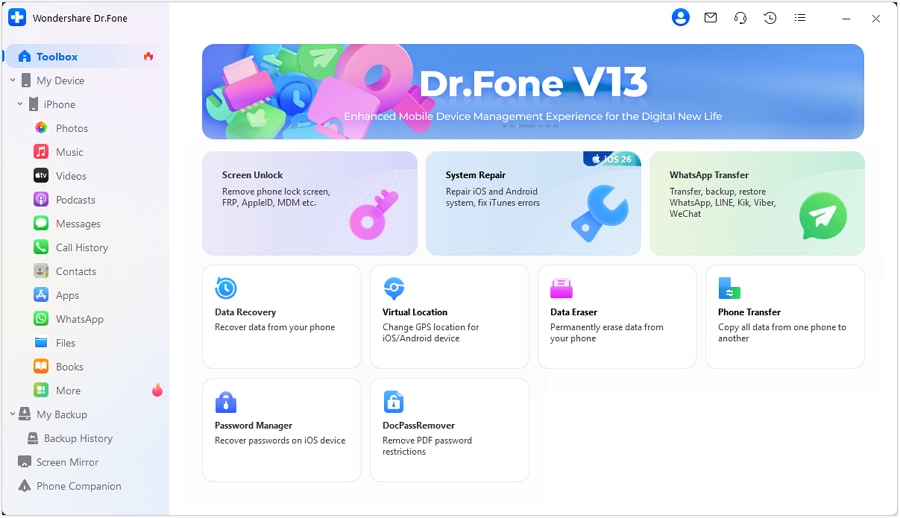
Download and install Wondershare Dr.Fone on your computer. Open the application, go to the "Toolbox" section, and click on "System Repair."
-
Step 2Connect Your iPhone
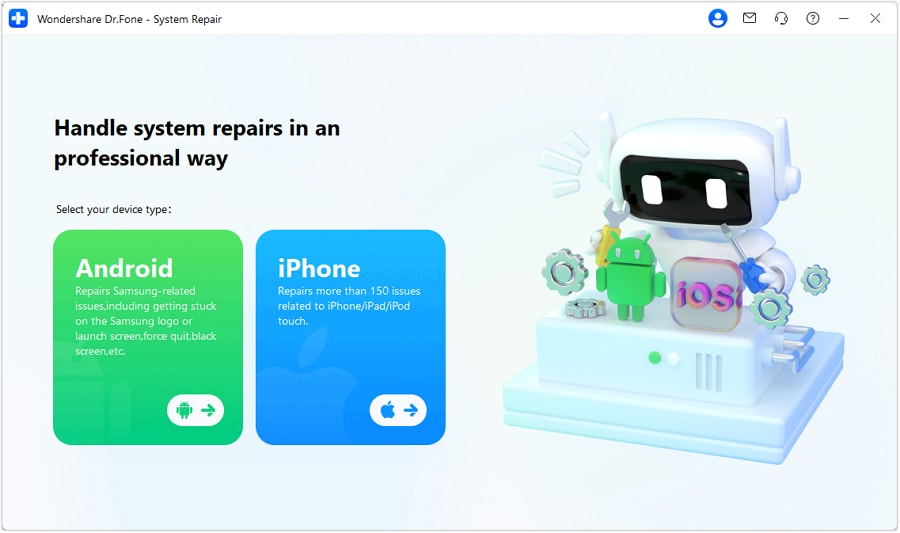
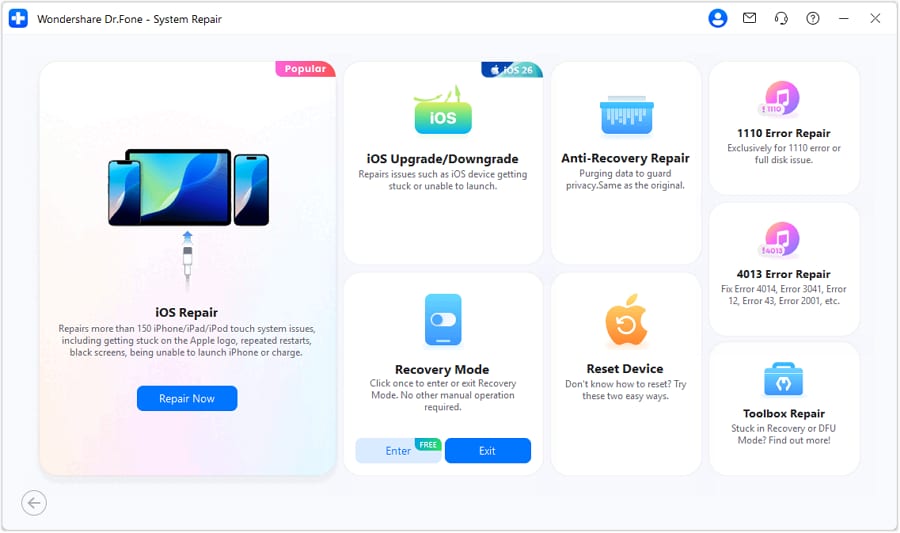
Connect your iPhone to the computer with a USB cable. When prompted, select "iOS" as your device type and then choose "iOS Repair" to proceed.
-
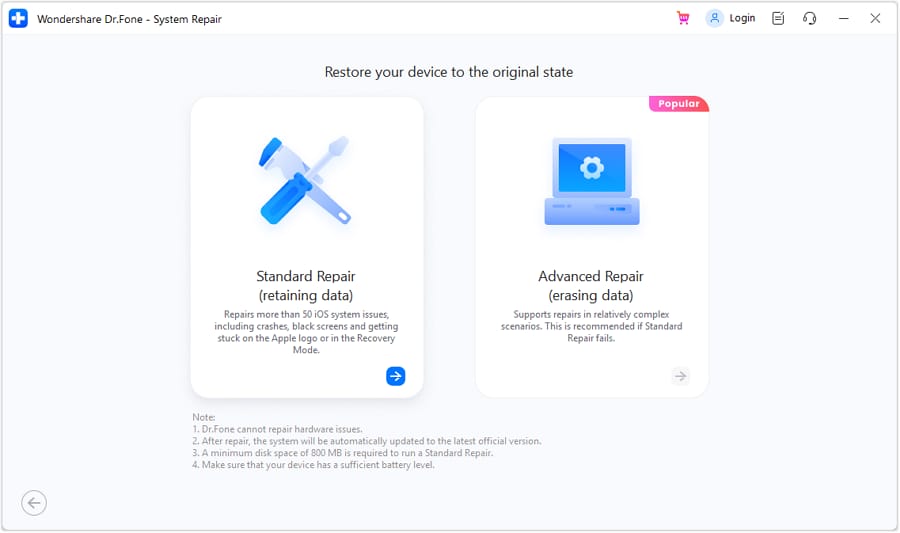
Step 3Choose Standard Repair Mode
On the next screen, select "Standard Repair." This mode is designed to fix most iOS system issues without deleting any of your personal files or data.
-
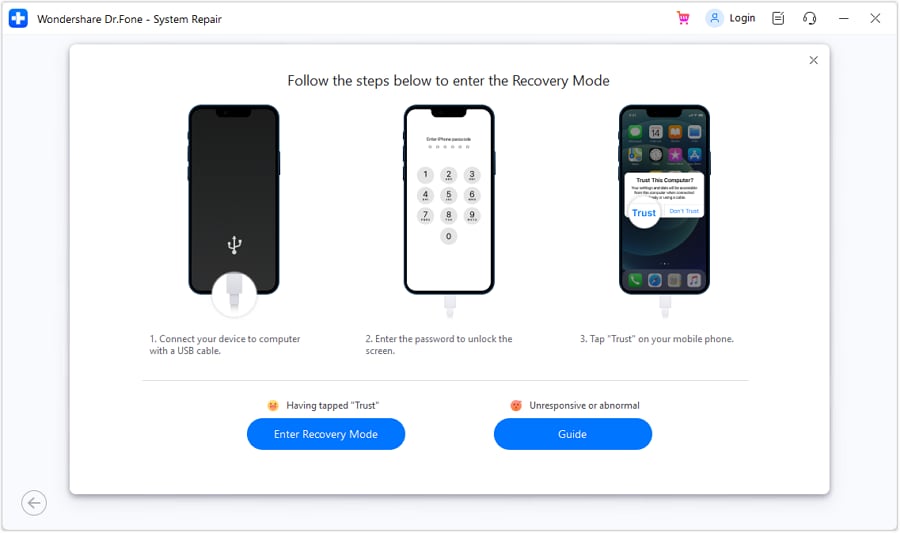
Step 4Enter Recovery Mode
Follow the on-screen instructions to put your iPhone into Recovery Mode. Dr.Fone provides clear visual guides for different iPhone models. Once your device is in Recovery Mode, the software will automatically detect it.
-
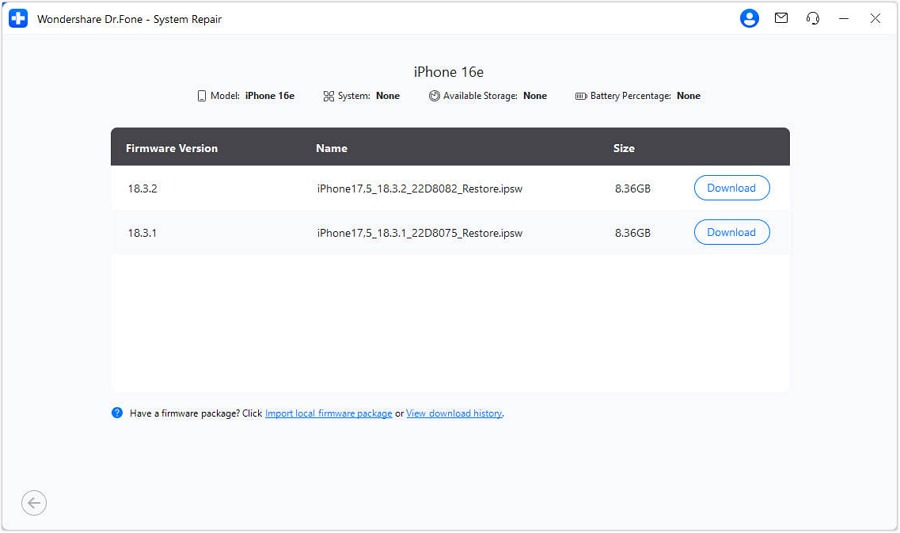
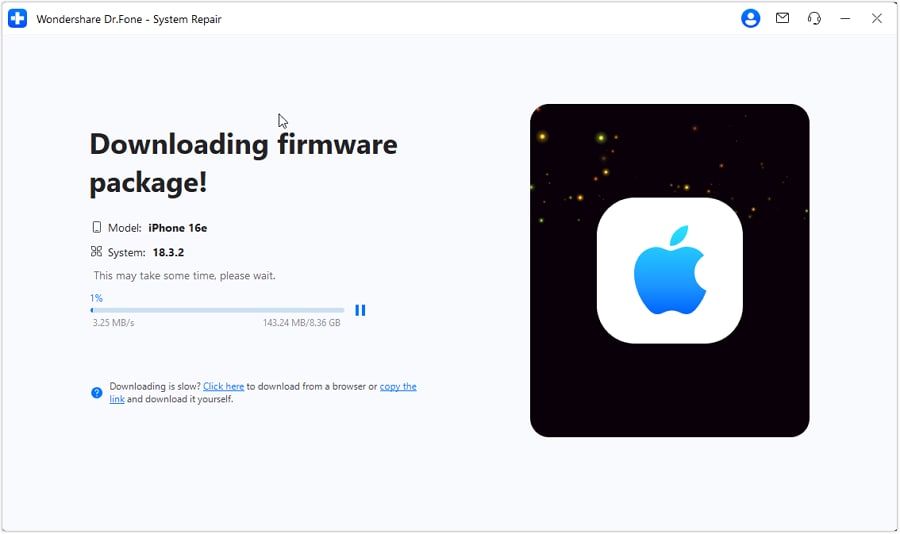
Step 5Download the Correct iOS Firmware
Dr.Fone will identify the correct iOS firmware package for your specific iPhone model. Click "Download" to begin downloading the firmware.
-
Step 6Initiate the Repair Process
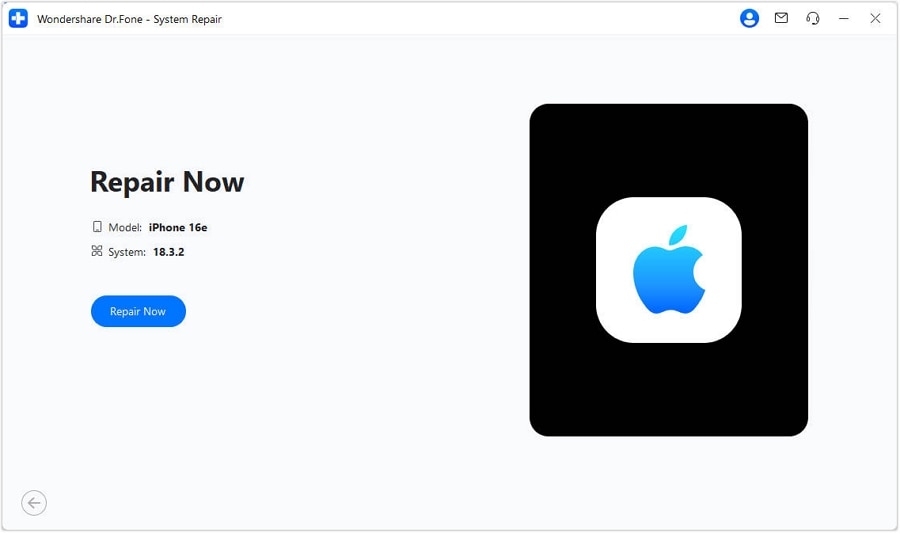
After the firmware is downloaded and verified, click "Repair Now" to start the system repair process. Keep your iPhone connected throughout this stage.
-
Step 7Complete the Repair
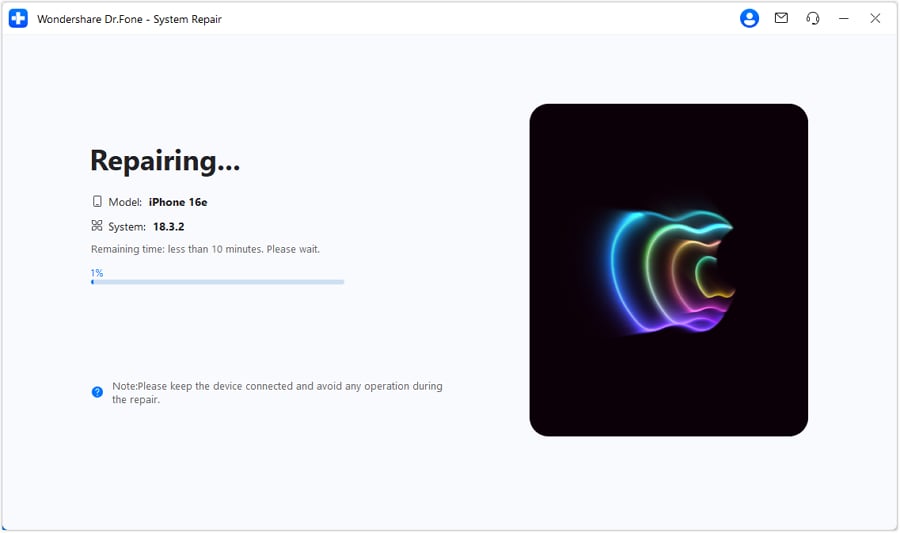
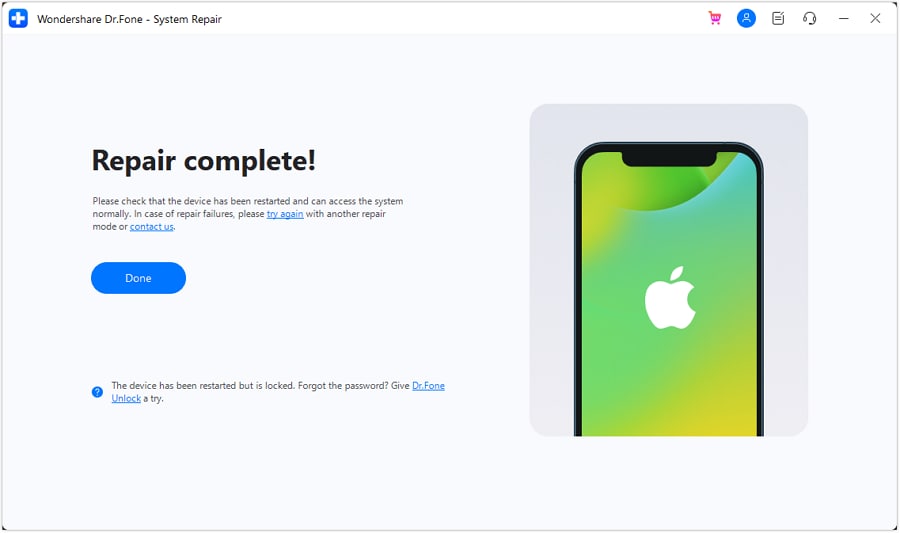
A progress bar will show the repair status. Once it's finished, a confirmation screen will appear. Click "Done" and your iPhone will restart with the Face ID issue resolved.
 Fix iOS issues, no data loss.
- One-click repair for all iOS problems.
- Solve recovery mode, Apple logo, black screen, etc.
- Upgrade or downgrade iOS without iTunes
Conclusion
Face ID is an integral part of the iPhone experience, offering a blend of high security and convenience. When it stops working, it can disrupt your daily workflow. Fortunately, most causes of the "why is my Face ID not working" problem can be resolved with the straightforward troubleshooting steps outlined in this guide. By methodically checking your alignment, settings, and software, you can often restore functionality quickly.
For stubborn issues rooted in the iOS system, a dedicated tool like Dr.Fone - System Repair (iOS) provides a powerful and data-safe solution. By following these strategies, you can effectively tackle any Face ID problem and regain seamless, secure access to your device.




FAQ
-
1. Can a cracked screen cause Face ID to not work?
Yes, absolutely. The TrueDepth camera system is located under the glass at the top of your screen. If the screen is cracked, especially in the notch or Dynamic Island area, it can misalign or damage the delicate sensors required for Face ID, causing it to fail. -
2. Does Face ID work in the dark?
Yes, Face ID is designed to work in low-light and complete darkness. It uses infrared technology to project and analyze thousands of invisible dots to create a depth map of your face. This process doesn't rely on visible light, so it functions just as well in the dark as it does in a well-lit room. -
3. Why does my iPhone say "Face ID is Not Available, Try Setting Up Face ID Later"?
This specific error message usually points to one of three issues: a software glitch, a problem detected during the device's startup diagnostics, or a potential hardware failure with the TrueDepth camera. A force restart or an iOS update can often fix software glitches. If the problem persists, it may indicate a hardware issue that requires professional service. -
4. Will resetting my Face ID delete any other data on my iPhone?
No, resetting Face ID is a safe process that will not affect any of your personal data. It only deletes the encrypted facial map stored on your device. All your photos, apps, contacts, and other information will remain untouched. You will simply need to set up a new facial scan.
 Add Wondershare Dr.Fone as a preferred source on Google