
How to Fix iPhone Stuck on Silent Mode? Step-by-Step Guide

Oct 23, 2026 • Filed to: Phone Repair Solutions • Proven solutions
 TL;DR:
To fix an iPhone stuck on silent mode, verify that Do Not Disturb and Focus modes are disabled, manually increase the ringer volume in settings, or use AssistiveTouch as a software workaround if the physical switch is broken.
● Ensure the ringer volume in Settings → Sounds & Haptics is set above 50%, as this specific audio slider operates independently from the media volume controlled by the physical side buttons.
● If the Ring/Silent switch toggles by itself or lacks a crisp click (common on iPhone 6, 7, and 8 models), the hardware is failing and requires professional replacement; enable AssistiveTouch in Accessibility settings to control the mute state on-screen in the meantime.
● For persistent audio routing bugs that survive a device restart and software updates, running the Standard Repair mode in Dr.Fone - System Repair (iOS) replaces corrupted system firmware without erasing personal data.
Ask AI for a summary
 ChatGPT
 Perplexity
 Gemini
 Claude
 Grok
Grok
"My iPhone is stuck on silent! Even though it is not on silent mode, even when I lock the screen it doesn't make the locking sound and the keys don't make sounds when I type even though the settings are on for the sounds."
If your iPhone is stuck on silent mode and refusing to ring — even when the mute switch appears to be off — you're not alone. Thousands of iPhone users report that their iPhone is on mute without any obvious reason: no ringtone, no notification sounds, and no keyboard clicks. This issue can be caused by a faulty silent switch, an iOS software bug, a misconfigured sound setting, or interference from a third-party app.
The frustrating part? Your iPhone may look like it's set to ring mode, yet you still can't hear your iPhone ring when someone calls. In some cases, the iPhone mute button goes on and off on its own, which points to a hardware issue. In other cases, the fix is as simple as adjusting a setting you didn't know was changed.
This complete troubleshooting guide covers every cause and every solution — from a 10-second toggle fix to a full iOS system repair using Dr.Fone. Whether you have an iPhone 6 with a stuck mute button or the latest iPhone 16 with an unexpected silent mode glitch, the steps below will walk you through exactly what to do.
- Part 1. Common Reasons Why Your iPhone Gets Stuck on Silent Mode
- Part 2. Quick Fixes for an iPhone Stuck on Silent Mode
- Part 3. Adjusting iPhone Sound Settings
- Part 4. Advanced Fix: Repair iOS System Issues Using Dr.Fone - System Repair (iOS)
- Part 5. Hardware Inspection & Professional Repair Options
Part 1. Why Is Your iPhone Stuck on Silent Mode? Common Causes Explained
Understanding why your iPhone is not ringing is the first step to fixing it. The issue can originate from physical hardware, software glitches, system settings, or even a recently installed app. Here are the five most common causes — and what each one means for your fix strategy:
Reason 1: Physical Damage to the Silent Switch
The silent switch (also called the Ring/Silent switch) is a small mechanical toggle on the left side of your iPhone. Because it's used constantly, it's one of the most wear-prone components on the device. When it breaks or gets stuck, your iPhone may remain in silent mode no matter what position the switch appears to be in.
- Wear and Tear: Repeated daily use gradually degrades the switch mechanism. Over months or years, the internal contacts may fail to register a position change, causing the iPhone ringer to be stuck on silent even when flipped to ring mode.
- Dirt and Debris: Dust, lint, and grime can accumulate inside the switch housing — especially if you carry your iPhone in a pocket or bag without a case. Even a small amount of debris can physically block the switch from fully engaging ring mode.
- Hardware Failure: In some cases, the switch's internal spring mechanism breaks entirely, causing it to go on and off randomly or stop responding altogether. This is especially common in older iPhones like the iPhone 6 and iPhone 7.
Reason 2: Interference from Third-Party Apps
If your iPhone went silent after installing an app, the app itself may be the culprit. Some applications request audio session control and can override your iPhone's ringer behavior — particularly media players, VoIP apps, or poorly coded background services.
- Apps that use audio sessions (like music players or call apps) can sometimes lock the device into a low-volume or muted state even after the app is closed.
- While Apple reviews apps on the App Store, some problematic apps do pass review and can interfere with system-level audio routing on your device.
- To identify a culprit app: delete recently installed apps one by one, restart your iPhone after each removal, and test whether sound returns.
Reason 3: iOS Software Bugs or Glitches
iOS is complex software, and occasional bugs can disrupt the audio subsystem — even without any hardware issue. If your iPhone notifications are silenced after an iOS update, a software glitch is the likely cause.
- iOS Bugs: Certain iOS versions have known audio routing bugs that prevent ringtones from playing correctly, even when volume is set to maximum.
- Outdated System: Running an older version of iOS can cause compatibility issues with newer apps or system features that manage audio output.
- Conflicting Settings: Multiple features — such as Focus Mode, Bluetooth audio routing, and Accessibility settings — can interact in unexpected ways to mute your iPhone without you realizing it.
Reason 4: Incorrect Sound Settings
This is the most overlooked cause. Your iPhone may technically be in ring mode, but if the ringer volume is set to zero — or certain system toggles are enabled — it will behave exactly as if it's on mute.
- Ringer Volume at Zero: The ringer volume slider in Settings → Sounds & Haptics is separate from the media volume controlled by the side buttons. It's easy to accidentally drag this slider to zero.
- Do Not Disturb Mode: When DND is active, all incoming calls and notifications are silenced. It can be accidentally enabled through the Control Center or scheduled automatically at certain times.
- Focus Mode: iPhone's Focus feature (introduced in iOS 15) can filter calls and notifications based on your current activity — and if misconfigured, can make your iPhone appear completely silent.
Reason 5: Accessibility Settings Conflict
Certain accessibility features on your iPhone can inadvertently suppress audio output, especially when combined with other active settings.
- AssistiveTouch: If AssistiveTouch is set to control device volume, changes made through it may override the physical side buttons.
- Focus Mode Automation: If Focus Mode was enabled via an automation or shortcut, it may silently activate and mute your iPhone without a visible indicator.
- Sound Recognition: In rare cases, the Sound Recognition accessibility feature (Settings → Accessibility → Sound Recognition) has been reported to interfere with audio routing on certain iOS builds.
Now that you understand the root causes, let's walk through the fixes — starting with the simplest and most effective.
Part 2. How to Fix iPhone Stuck on Silent Mode: 3 Quick Fixes to Try First
Before diving into settings adjustments or advanced repairs, try these three fast fixes first. They resolve the majority of "iPhone not ringing" issues in under two minutes — and require no tools or technical knowledge.
Fix 1: Toggle the Silent Switch Multiple Times
The Ring/Silent switch on the left side of your iPhone is the first thing to check. If the switch is physically stuck, toggling it repeatedly can sometimes dislodge debris or reset the internal contact. This is also the most direct way to verify whether the issue is hardware-related or software-related.
Here's how to do it correctly:
- Step 1: Locate the small toggle switch on the upper-left side of your iPhone (just above the volume buttons).
- Step 2: Flip the switch firmly toward the screen (away from the back of the phone) until you no longer see the orange stripe beneath it. This puts your iPhone in ring mode. You should feel a slight vibration and see a bell icon appear briefly on screen.
- Step 3: Flip the switch back to silent mode (orange stripe visible), then back to ring mode again. Repeat this 4–5 times to help free any stuck mechanism.
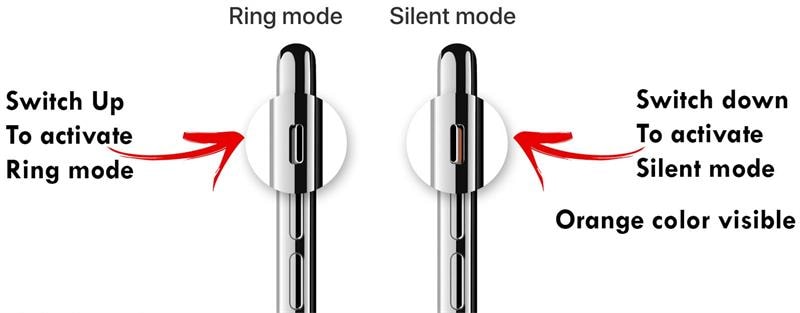
What to look for: When you successfully switch to ring mode, your iPhone should display a bell icon on screen and optionally play a short sound. If there's no response at all — no vibration, no on-screen indicator — the silent switch may have a hardware failure, and you should skip to Part 5 for hardware repair options.
Fix 2: Force Close All Apps and Restart Your iPhone
A background app may be holding an active audio session that overrides your ringer. Force-closing all apps and performing a full restart releases any locked audio state and resets the iOS audio routing system — often resolving cases where the iPhone is on mute for no apparent reason.
- Step 1: Swipe up from the bottom of the screen (or double-press the Home button on older models) to open the App Switcher. Swipe all apps off the screen to close them.
- Step 2: Press and hold the Side button (and Volume Down button on Face ID models) until the "Slide to Power Off" slider appears. Drag it to shut down your iPhone completely.
- Step 3: Wait at least 30 seconds, then press the Side button to turn your iPhone back on. Once it restarts, test if the ringer now works by asking someone to call you or using Settings → Sounds & Haptics to play a test tone.
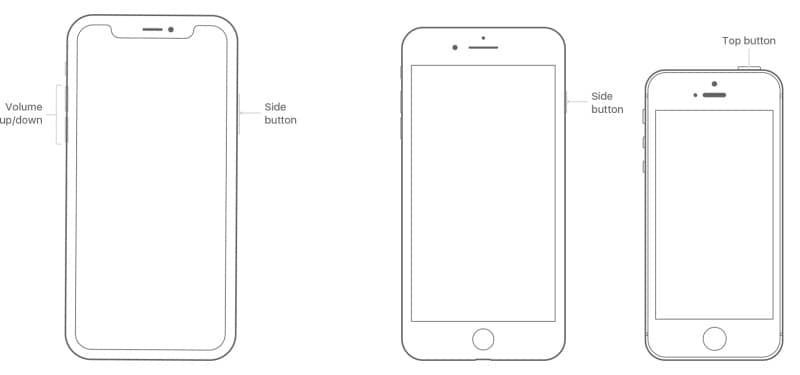
Pro tip: If your iPhone was connected to Bluetooth headphones or a speaker before the issue started, make sure to disconnect all Bluetooth audio devices before restarting. Audio routing to an external device can make your iPhone appear silent even in ring mode.
Fix 3: Check for and Install iOS Updates
If your iPhone is still not ringing after a restart, an outdated iOS version may contain a bug affecting audio. Apple regularly releases updates that patch known audio routing and notification issues. Updating to the latest iOS version is a safe, non-destructive fix that takes about 10–15 minutes.
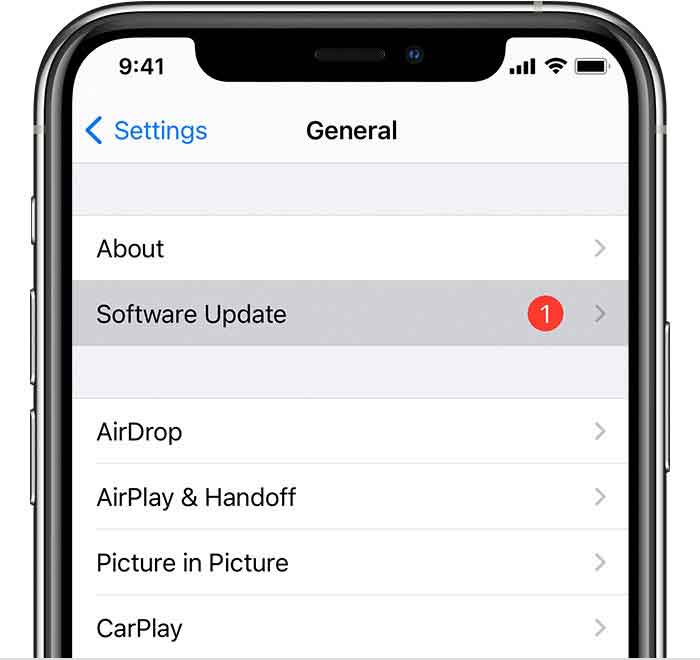
- Step 1: Go to Settings → General → Software Update. Your iPhone will automatically check for available updates.
- Step 2: If an update is available, tap Download and Install. Make sure your iPhone is connected to Wi-Fi and has at least 50% battery (or is plugged in).
- Step 3: After the update completes and your iPhone restarts, test the ringer again.
Important: Before updating, it's always recommended to back up your iPhone via iCloud (Settings → [Your Name] → iCloud → iCloud Backup) or iTunes/Finder on your Mac/PC. This ensures your data is safe in case anything goes wrong during the update process.
Part 3. How to Adjust iPhone Sound Settings to Fix Silent Mode Issues
If the quick fixes above didn't resolve the problem, the issue likely lies in your iPhone's sound and notification settings. iOS has several overlapping audio controls — and any one of them can make your iPhone appear stuck on mute without touching the physical switch. Here's how to check and correct each one:
1. Turn Off "Do Not Disturb" and All Active Focus Modes
Do Not Disturb and Focus Mode are the most common hidden causes of a silenced iPhone. When either feature is active, incoming calls and notification sounds are suppressed — even in ring mode. Many users accidentally enable these via the Control Center swipe and forget about them.
- Step 1: Swipe down from the top-right corner of your screen to open the Control Center. Check if the Focus icon (crescent moon or colored dot) is highlighted. Tap it to disable the active mode.
- Step 2: For a full reset, go to Settings → Focus. Review each Focus profile (Do Not Disturb, Personal, Work, Sleep, etc.) and make sure none are currently enabled. Toggle off any that are active.
- Step 3: Check if any Focus modes are set to activate on a schedule. If so, disable the automation to prevent them from silently activating in the future.
2. Check and Restore Your Ringer Volume in Sound Settings
Your iPhone has two separate volume systems: the media volume (controlled by the side buttons) and the ringer/alerts volume (controlled in Settings). It's entirely possible to have your media volume set high while your ringer is muted — which is why you can't hear your iPhone ring even though music plays fine.
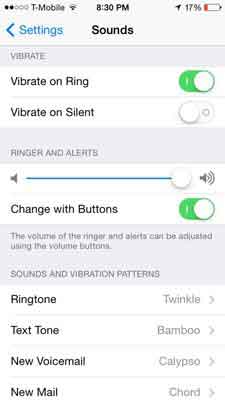
- Step 1: Go to Settings → Sounds & Haptics.
- Step 2: Under "Ringer and Alerts," drag the slider to the right to increase the ringer volume. Make sure it's set above 50% for a clearly audible ringtone.
- Step 3: Enable the "Change with Buttons" toggle. This links your ringer volume to the physical volume buttons, so you can easily adjust it without going into Settings each time.
- Step 4: Also verify the correct ringtone is assigned. Go to Settings → Sounds & Haptics → Ringtone and make sure a valid tone is selected (not "None").
3. Use AssistiveTouch to Unmute Your iPhone Without the Physical Switch
If your iPhone mute button is stuck or unresponsive, AssistiveTouch provides a software-based workaround to control your device's mute state directly from the screen — no physical switch needed. This is especially useful if the hardware toggle is broken and you're waiting for a repair.
- Step 1: Go to Settings → Accessibility → Touch → AssistiveTouch and toggle it ON. A floating white button will appear on your screen.
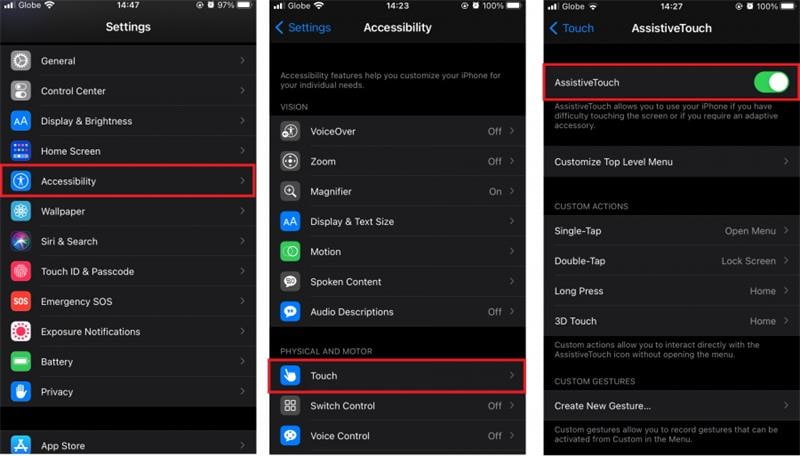
- Step 2: Tap the white AssistiveTouch button → select Device → then tap Unmute. Your iPhone will immediately exit silent mode, regardless of the physical switch position.
- Step 3: To keep AssistiveTouch accessible, you can customize its top-level menu (Settings → Accessibility → Touch → AssistiveTouch → Customize Top Level Menu) to include a dedicated Mute/Unmute button for quick access.
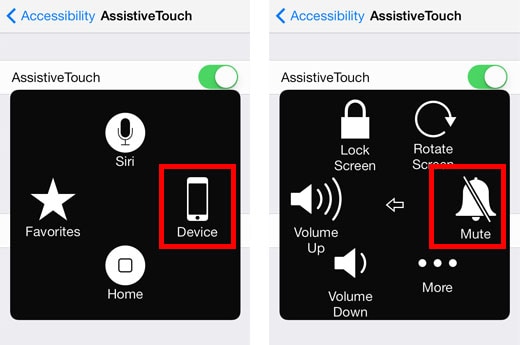
Note: AssistiveTouch is a permanent software workaround for a broken mute switch. However, for a long-term fix, you should still get the hardware repaired — see Part 5 for options.
Part 4. Advanced Fix: Repair iOS System Issues Using Dr.Fone - System Repair (iOS)
If none of the manual fixes have worked, your iPhone likely has a deeper iOS system-level problem — not a settings issue or hardware defect. Corrupted system files, a failed iOS update, or audio subsystem errors can all cause persistent silent mode problems that no amount of toggling or setting changes will fix.
In these cases, the most effective solution is to use a dedicated iOS repair tool. Dr.Fone - System Repair (iOS) is a professional-grade tool developed by Wondershare that can diagnose and repair over 150 iOS system issues — including audio problems, notification failures, and silent mode bugs — without erasing any of your personal data.
Why choose Dr.Fone System Repair over a factory reset? A standard factory reset (via Settings → General → Transfer or Reset iPhone → Erase All Content) will delete all your photos, messages, and apps. Dr.Fone's Standard Repair mode fixes iOS system issues at the firmware level while keeping all your data intact. This makes it the preferred option when manual fixes fail but data loss is unacceptable.
Dr.Fone - System Repair
Fix iPhone Stuck on Silent Mode without Data Loss.
- Only fix your iOS to normal, no data loss at all.
- Fix various iOS system issues stuck in recovery mode, white Apple logo, black screen, looping on start, etc.
- Fixes other iPhone error and iTunes errors, such as iTunes error 4013, error 14, iTunes error 27,iTunes error 9 and more.
- Works for all models of iPhone, iPad, and iPod touch.
- Fully compatible with the latest iOS version.

Follow these steps to repair your iPhone's iOS system with Dr.Fone:
- Step 1: Download and install Dr.Fone - System Repair (iOS) on your Windows PC or Mac. Launch the application and select System Repair from the main dashboard.
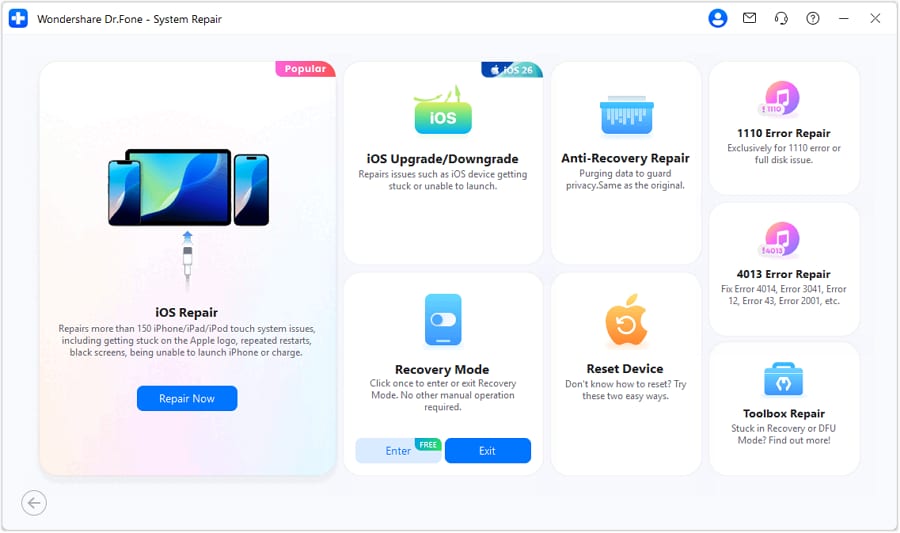
- Step 2: Select iPhone from the device type menu, then choose iOS Repair. Connect your iPhone to the computer using a USB cable. On the next screen, choose Standard Repair — this mode fixes iOS issues without erasing your data.
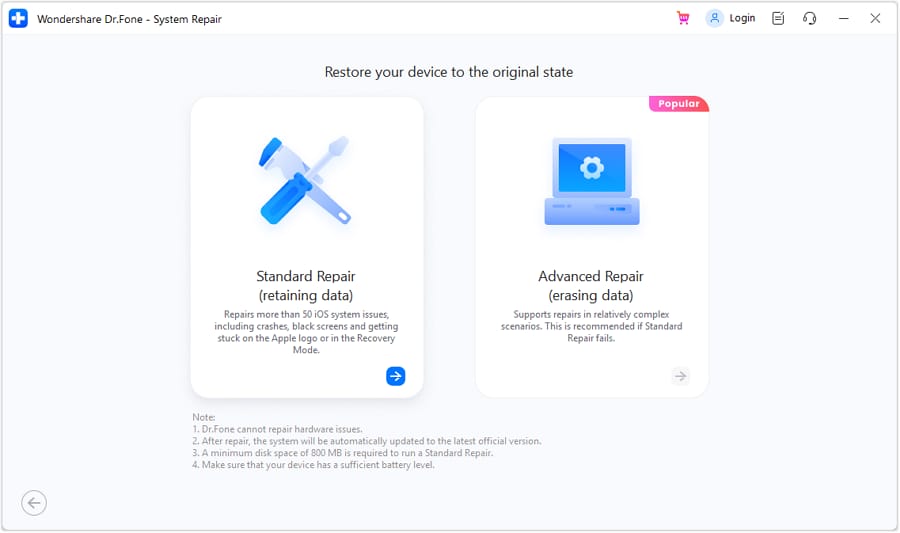
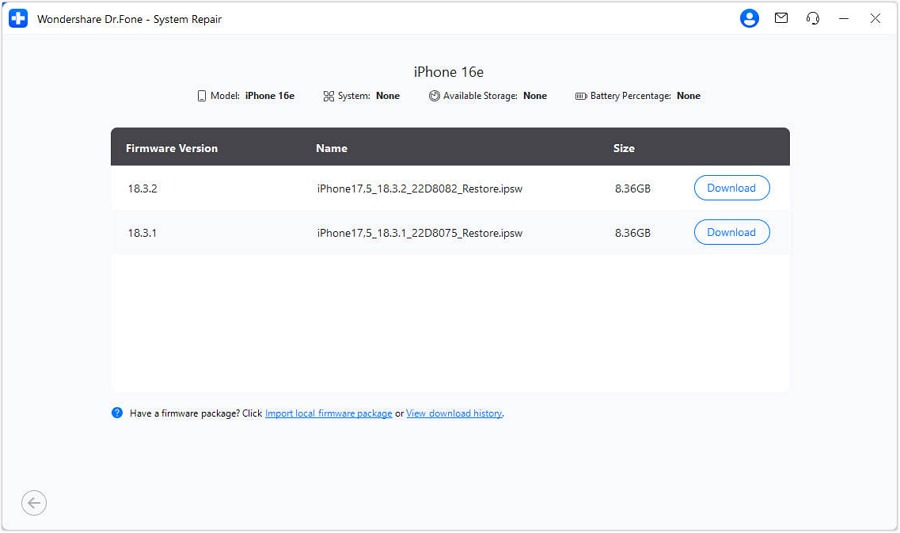
- Step 3: Dr.Fone will automatically detect your iPhone model and current iOS version. Verify the displayed information is correct, then click Download to fetch the appropriate firmware package for your device.
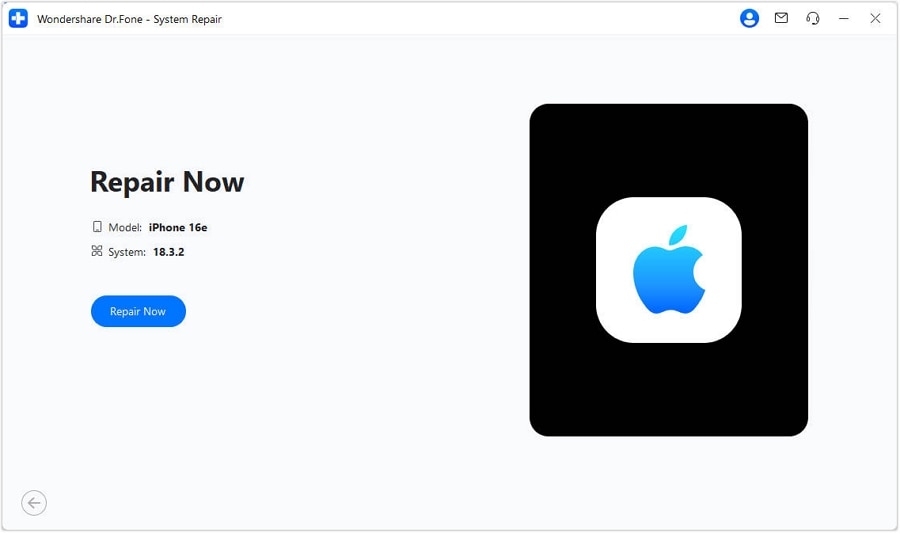
- Step 4: Once the firmware download is complete, click Repair Now. Dr.Fone will flash the firmware to your iPhone, replacing any corrupted system files causing the silent mode issue. Keep your iPhone connected and do not use it during this process.
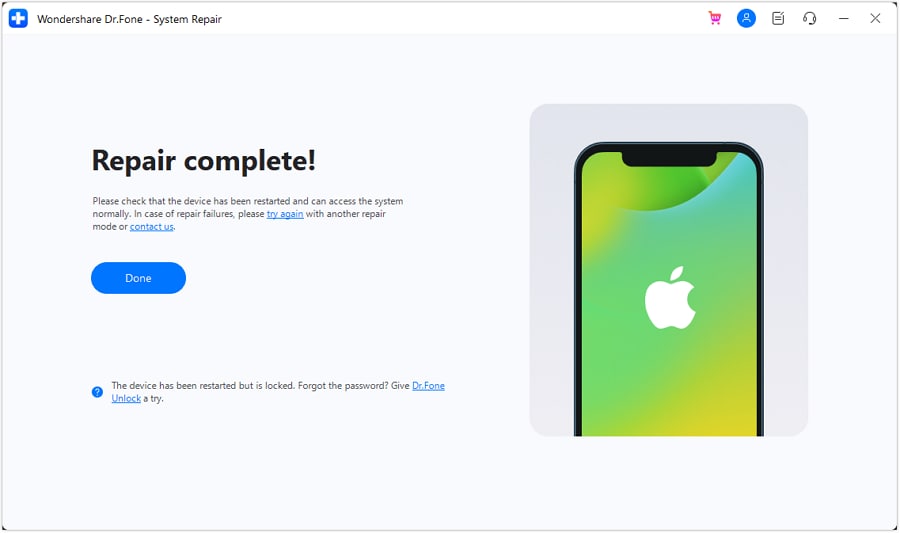
- Step 5: When the repair is complete, Dr.Fone will display a confirmation screen. Your iPhone will restart automatically. Once it boots up, test the ringer — the silent mode issue should now be fully resolved.
4,624,541 people have downloaded it
 safe & secure
Part 5. Hardware Inspection & When to Seek Professional iPhone Repair
If you've tried every software fix above and your iPhone is still stuck on silent mode, the problem is almost certainly hardware-related. A physically damaged or worn-out Ring/Silent switch cannot be fixed through software — it requires physical inspection and, in most cases, component replacement by a qualified technician.
1. How to Inspect the Silent Mode Switch at Home
Before visiting a repair shop, perform a basic visual and tactile inspection of the switch. This takes less than 60 seconds and helps you describe the issue accurately when speaking to a technician.
- Hold your iPhone under bright light and examine the silent switch closely. Look for visible cracks, deformation, or gaps around the switch housing.
- Press the switch firmly with your fingernail in both directions. A functioning switch should feel crisp and have a clear physical "click" in each position. A mushy, loose, or unresponsive feel indicates internal wear.
- Use a soft-bristled toothbrush or a can of compressed air to gently clean around the switch. Sometimes, accumulated debris is all that's blocking it from moving correctly.
- If the iPhone mute button goes on and off unpredictably — toggling silent mode by itself without you touching it — this is a definitive sign of hardware failure and requires professional replacement.
2. When and Where to Get Professional Repair
If the switch is visibly damaged, feels broken, or your at-home cleaning didn't help, professional repair is the next step. Here are your best options:
- Apple Store or Apple Authorized Service Provider: This is the safest option for most users. Apple-certified technicians use genuine parts and can replace a faulty Ring/Silent switch without voiding your warranty. If your iPhone is covered by AppleCare+, the repair may be free or significantly discounted. Book an appointment at apple.com/support or use the Apple Support app.
- Third-Party Repair Shops: Reputable third-party repair services can often replace the switch at a lower cost than Apple, with faster turnaround. Make sure the shop uses quality replacement parts and provides a repair warranty. Avoid very cheap, unverified services — a poor repair can cause further damage.
- iPhone 6 Users — Special Note: The iPhone 6 mute button stuck issue is particularly common due to the phone's age and the original switch design. Parts for iPhone 6 are widely available and inexpensive. However, since iPhone 6 no longer receives iOS updates, this is also a good time to consider upgrading if you rely on your phone for important calls and notifications.
What to expect: A Ring/Silent switch replacement typically takes 30–60 minutes at an Apple Store or repair shop. The cost varies by model and location — generally between $30–$100 at third-party shops, or covered under AppleCare+ at Apple.
Keep Your iPhone Sounding Loud and Clear
An iPhone stuck on silent mode is a frustrating but very fixable problem. Whether the cause is a software glitch, a misconfigured sound setting, or a worn-out physical switch, this guide has covered every solution available — from a 10-second toggle fix to a full iOS firmware repair with Dr.Fone - System Repair (iOS).
Start with the simplest fixes: toggle the silent switch, restart your iPhone, and check that Do Not Disturb and Focus Mode are both off. If those don't work, verify your ringer volume in Settings → Sounds & Haptics and ensure no app is overriding your audio. For persistent iOS system issues, Dr.Fone System Repair offers a safe, data-preserving solution that works across all iPhone models. And if the problem is hardware — especially if the mute button goes on and off on its own — don't hesitate to book a repair appointment with Apple or a certified technician.
To prevent this issue from recurring: keep your iPhone updated to the latest iOS version, use a case that protects the mute switch area, and periodically check your Focus Mode settings to make sure nothing is scheduled to activate unexpectedly.
4,624,541 people have downloaded it
safe & secureTips: Looking for an all-in-one mobile management software? Look no further than Dr.Fone App - the ultimate choice for all your needs:
- For iOS Users: Free up space with Smart Clean, remove any restriction including screen lock, iCloud activation lock, MDM, or Apple ID, and transfer data easily between devices with our all-in-one iOS solution.
- For Android Users: Bypass screen locks and FRP with our Android unlocker, change your location with one click, and repair damaged Samsung devices with ease.
Discover more possibilities for mobile management solutions with Dr.Fone App (iOS) and Dr.Fone App (Android). Don't miss out, try it now and revolutionize your smartphone experience.



Frequently Asked Questions About iPhone Stuck on Silent Mode
If your iPhone ringer is stuck on silent despite the physical switch being in the ring position (no orange stripe visible), the most likely causes are: (1) the ringer volume in Settings → Sounds & Haptics is set to zero; (2) Do Not Disturb or a Focus Mode is active and silencing calls; (3) a Bluetooth audio device is connected and receiving the audio output instead of the iPhone speaker; or (4) there is an iOS software bug affecting audio routing. Try raising the ringer volume slider, disabling all Focus modes, disconnecting Bluetooth devices, and restarting your iPhone. If the problem persists, use Dr.Fone - System Repair (iOS) to fix potential iOS system-level audio issues without data loss.
If your iPhone mute button goes on and off without you touching it, this is a clear sign of hardware failure in the Ring/Silent switch. Over time, the internal spring contact mechanism wears out and can no longer maintain a stable position — causing it to randomly toggle between ring and silent mode. This is particularly common on older iPhones (iPhone 6, 7, and 8 series). The only reliable fix is to have the switch physically replaced by Apple or an authorized repair technician. As a temporary workaround, you can disable the physical switch's function by using AssistiveTouch (Settings → Accessibility → Touch → AssistiveTouch) to control mute/unmute from your screen instead.
If you can't hear your iPhone ring during incoming calls, there are several things to check: First, make sure the Ring/Silent switch shows no orange stripe (ring mode). Second, go to Settings → Sounds & Haptics and ensure the ringer volume slider is above 50%. Third, check that Do Not Disturb is not active in the Control Center. Fourth, verify the contact calling you is not blocked (Settings → Phone → Blocked Contacts). Fifth, check if the caller is being silenced by a Focus Mode that only allows calls from certain people. If all settings look correct but you still can't hear calls, the speaker hardware may be damaged or an iOS system bug may be affecting audio output — in which case Dr.Fone System Repair can help restore normal function.
The iPhone 6 mute button stuck issue is very common due to the phone's age and the wear-prone design of its original Ring/Silent switch. Here's what to try: (1) Clean around the switch with a soft brush or compressed air to remove debris that may be physically blocking movement. (2) Toggle the switch firmly 5–6 times — sometimes stuck debris can be dislodged with repeated use. (3) If the switch is mechanically broken (no click, no response), use AssistiveTouch as a software-based mute control until you can get the phone repaired. (4) Visit an Apple Store or a trusted third-party repair shop for a Ring/Silent switch replacement — this is typically an inexpensive repair on iPhone 6 due to widely available parts. Note: Since iPhone 6 no longer receives iOS security updates, consider upgrading if you rely heavily on your phone for daily communications.


iPhone Issues
- iPhone Storage Full
- 1. Stuck on Apple Logo Storage Full
- 2. Erase Content Settings not Working
- 3. iPhone Lagging
- 4. iPhone Running Slow
- iPhone Update Problems
- 1. Stuck on Updating iCloud Settings
- 2. iPhone Frozen During iOS Update
- 3. iPhone Checking for Update Stuck
- 4. iPhone Cellular Update Failed
- 5. iPhone Software Update Failed
- 6. iPhone Stuck on Update Requested
- 7. iPhone Update Error 1110
- 8. iPhone is Findable and Won’t Turn On
- 9. iPhone Won't Update
- 10. Update Server Couldn't Be Contacted
- 8. iPhone & iPad Security Updates
- 9. Update iPhone with/without iTunes
- 10. Can't Download or Update Apps
- iPhone Media Problems
- 1. Apple Music Song Not Available
- 2. iPhone Not Ringing
- 3. iPhone Echo Problem
- 4. iPhone Ringer Problems
- 5. iPhone Plays Music by Itself
- 6. Ringer Volume Changes by Itself
- 7. Music Won't Play on iPhone
- 8. Blurry Photos & Videos on iPhone
- 9. iPhone Volume Problems
- iPhone Sound Problems
- 1. YouTube no Sound
- 2. iPhone Microphone Problem
- 3. Test iPhone Microphone
- 4. Headphones No Sound from iPhone
- 5. No Sound on iPhone Game
- 6. iPhone Sound Not Working
- 7. iPhone Screen Recording no Sound
- iPhone Calling Problems
- 1. iPhone No Sound on Calls
- 2. Screen Goes Black During Call
- 3. iPhone Recent Calls Not Showing
- 4. iPhone Dropping Calls Issue
- 5. iPhone Calling Problem
- iPhone Camera Problems
- 1. iPhone Camera Black
- 2. iPhone Camera Blurry
- 3. iPhone Camera Not Working
- 4. iPhone Front Camera Not Working
- 5. TrueDepth Camera Not Working
- 6.Out-of-Focus Photos on iPhone 15
- iPhone Network Problems
- 1. Airpods Won't Connect to iPhone
- 2. iPhone Disabled Connect to iTunes
- 3. iPhone Not Syncing Problems
- 4. iPhone Internet Not Working
- 5. iPhone Keep Disconnecting from Wifi
- 6. iPhone WIFI Not Working
- 7. PC Not Recognizing iPhone
- 8. iPhone Stuck on Connect to iTunes
- 9. iPhone Not Showing up in iTunes
- 10. iTunes Not Detecting Your iPhone
- 11. iPhone Bluetooth Disconnect
- 12.Apple CarPlay Keeps Disconnecting
- iPhone Screen Problems
- 1. White Spots in iPhone Screen
- 2. iPhone Bleeding Screen
- 3. Turn Off iPhone When Frozen
- 4. Fix Orange Dot on iPhone
- 5. iPhone Green Screen Flickering
- 6. Green Lines in iPhone Screen
- Other iPhone Problems
- ● Manage/transfer/recover data
- ● Unlock screen/activate/FRP lock
- ● Fix most iOS and Android issues
- Free Download Free Download Free Download




Alice MJ
staff Editor
Generally rated4.5(105participated)