Recover photos, messages, WhatsApp, and more — no backup
needed.
Recover photos, messages, WhatsApp, and more — no backup
needed.

 100% Security Verified | No Subscription Required | No Malware

 :
: 
 ChatGPT
 Perplexity
 Gemini
 Claude
 Grok
Grok
Among the data most frequently erased from mobile devices by mistake, browsing history undeniably stands at the very top. Many iOS users routinely clear their browsers to remove specific websites or free up storage, only to realize they inadvertently wiped out critical research, important web portals, or half-read articles. Consequently, a massive number of users find themselves urgently searching for solutions to retrieve their lost logs. The reassuring news is that understanding how to see deleted Safari history on iPhone is not only entirely possible but also quite straightforward when you employ the right strategies.
Although iOS does not feature a traditional recycle bin for Safari, some of your browsing data may still be recoverable through hidden system logs, synced Apple devices, or previous iCloud backups. Furthermore, utilizing a dedicated data retrieval software can make this daunting process an absolute breeze, bypassing the need for technical expertise. This comprehensive 2026 guide will meticulously explore both manual tricks and advanced tools, helping you master exactly how to see deleted search history on Safari securely and efficiently.
In this article
Part 1. Is It Possible to Recover Deleted Safari History on an iPhone?
A lot of users easily assume that once something is erased from a mobile device, it is gone forever. Fortunately, that is not always the case, especially where browsing history is concerned. Due to the way iOS handles data storage, files are often marked as 'unallocated space' rather than being permanently destroyed immediately. Even though Safari doesn’t include a native “recycle bin” for deleted logs, the phone may still store this information in its internal SQLite database for a limited time. Additionally, using iCloud syncing means some removed data might still exist temporarily on other connected devices within the Apple ecosystem.
Furthermore, parts of your browsing activity could remain hidden securely in device backups you previously created. In more complex situations, advanced data recovery tools can even deeply scan the internal storage to retrieve this residual information directly. So yes, it is entirely possible to recover deleted Safari history on an iPhone. However, the ultimate success heavily depends on how long ago the data was removed, whether new data has overwritten it, the availability of prior backups, and what specific recovery method you opt to use.
Part 2. Recover Deleted Safari History and Other Data from iPhone Without Backup
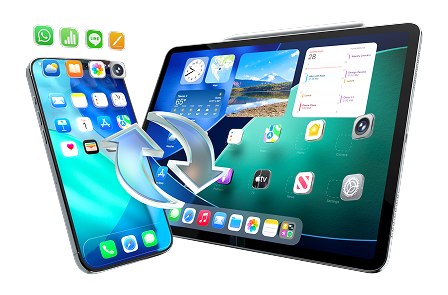
When no iCloud or iTunes backup is available, many users understandably believe all hope is lost. They think there is absolutely no way to retrieve deleted Safari history once the cache is cleared. Yet, with the right approach and technology, direct device recovery is still possible without a backup. In such critical cases, using a highly reliable content retrieval tool like Dr.Fone – Data Recovery (iOS) can make all the difference. It is a comprehensive desktop solution specially designed for iPhones to securely get back permanently lost files.
Developed specifically to help users effortlessly restore lost data, it can safely recover content ranging from Safari history and calendar events to app data and WhatsApp chats. All of that is achievable even if absolutely nothing was backed up beforehand. This professional tool directly scans the internal storage sectors of your phone, searching for any recoverable file fragments that may not be visible through regular iOS settings. It supports a wide range of iOS devices, including the latest iPhone models, and all current firmware versions.
Besides being highly advanced in its underlying technology, Dr.Fone - Data Recovery (iOS) is intuitively designed for people with little to no technical background. It provides crystal-clear on-screen instructions, allowing you to thoroughly preview recoverable items before choosing exactly what to restore. Even if you have thoroughly deleted Safari history, you get a solid, risk-free chance to recover it without a hitch using this advanced program. There are no complicated jailbreaks required, no weird command-line inputs, and no questionable instructions—every aspect is fully valid and protected.
 Recovers data after deletion, crashes, or device damage.
- Supports photos, messages, contacts, WhatsApp, and more.
- Supports all major iPhone, iPad, and iPod models.
- Preview and recover only what you need.
Manual on Recovering Deleted Safari History and Other Data from iPhone Without Backup
As stated before, absolutely no complex steps or confusing technical actions are needed to get back the lost browsing data directly from your iOS device. Follow the detailed steps stated below to quickly learn how to see deleted search history on Safari in no time:
-
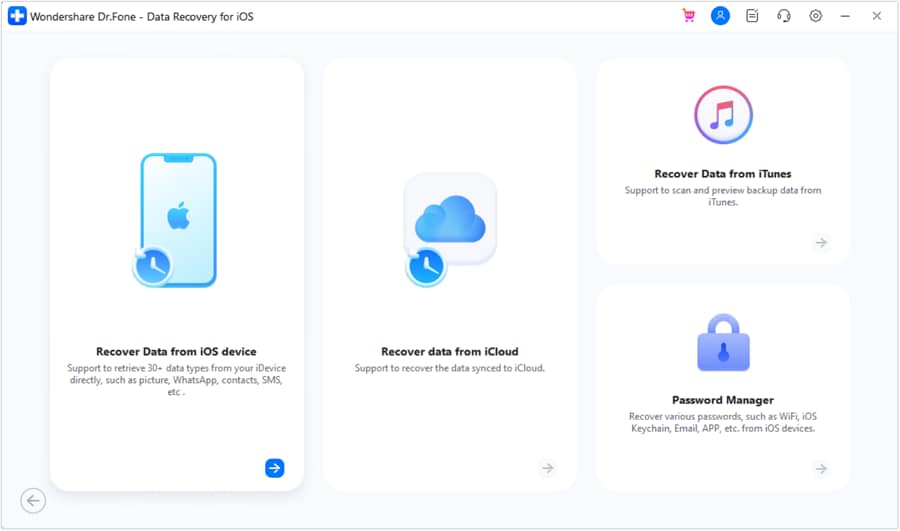
Step 1 Access the Data Recovery Section from the Toolbox
Get the Dr.Fone software up and running on your computer and immediately switch to the “Toolbox” module. Next, select “Data Recovery.” From the available options, choose “iOS” as the primary platform type and opt for the “Recover Data from iOS Device" button to move forward to the device connection phase.
-
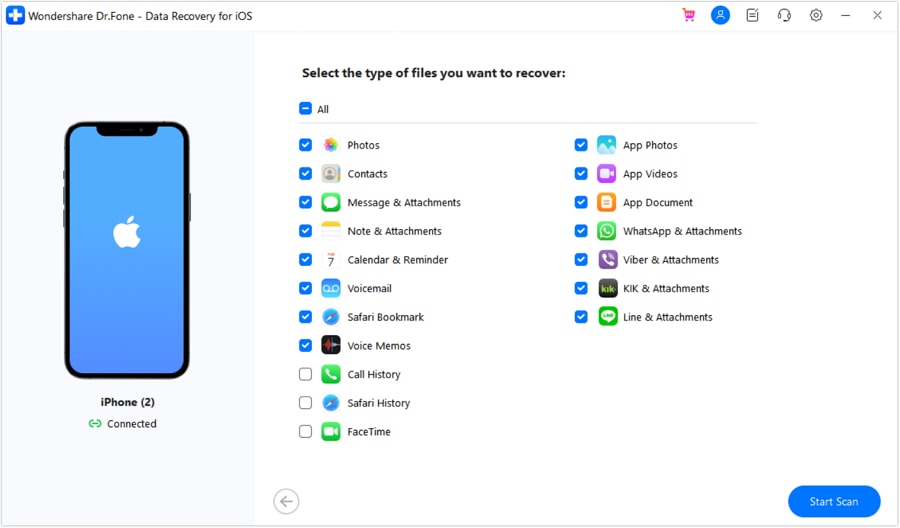
Step 2 Link Your iPhone and Choose the Safari Items to Recover
After that initial setup, properly connect your iPhone to the computer using an MFi-certified USB cable. Wait a few moments for the software to detect the device and for the data category screen to appear. Next, carefully pick both the “Safari Bookmark” and “Safari History” options and confidently proceed by pressing the “Start Scan” button at the bottom right.
-
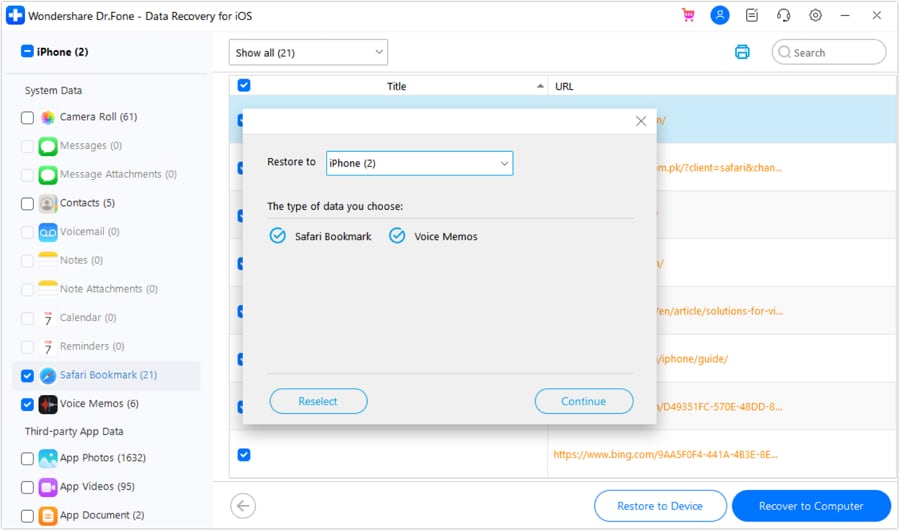
Step 3 Browse the Recovered Results and Choose the Safari Data
With the deep scanning process complete and the extracted results fully loaded on your screen, navigate to the sidebar section labeled “Safari” to meticulously view the available browsing items. At this point, simply select the specific history files or bookmarks you need and confirm the restoration process by clicking “Restore to Device.”
-
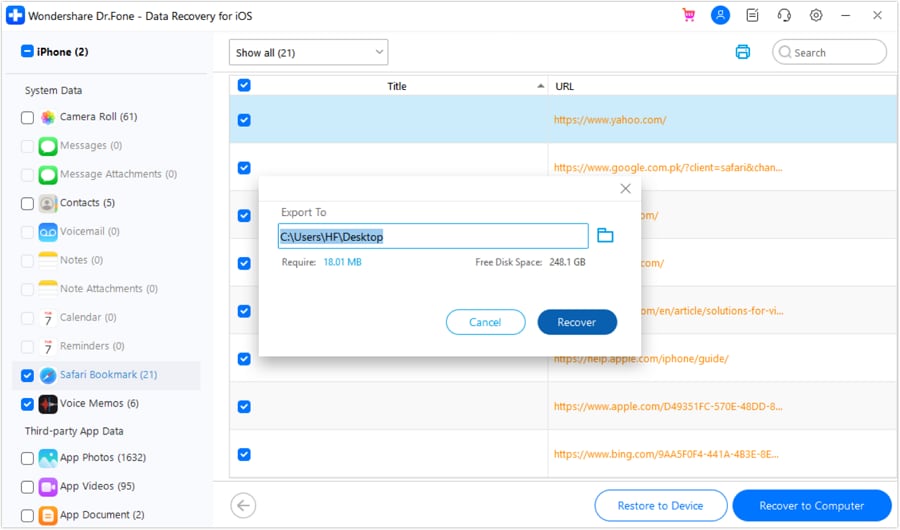
Step 4 Disable Find My Feature or Select Alternate Recovery to Computer
Before finalizing the direct recovery to your mobile, make sure to temporarily turn off the “Find My” option on your iPhone when prompted by the software. Otherwise, you may also opt for the “Recover to Computer” button if you'd rather save the extracted Safari data locally on your system for secure future reference in an HTML or CSV format.
Part 3. How To Find Deleted History on Safari iPhone: 5 Ways
Even if you’re not planning on using any dedicated data recovery software immediately, a lot of practical approaches exist to check for lost browsing logs and web data manually. Some of these effective methods use native iOS features, while others rely heavily on previously saved information across cloud services. The following are 5 practical ways you can try right now to find deleted history on Safari with ease:
Way 1. Check If You Have Exported the Safari Data
iOS devices offer a highly helpful feature that allows you to manually export your entire browsing history. You can use it to securely create a localized copy of the website data and store vital details on your phone or computer. If you systematically exported the data before deleting it from the browser, it can easily be used to get it back. The following steps are needed to learn how to find deleted history on Safari iPhone via this built-in technique:
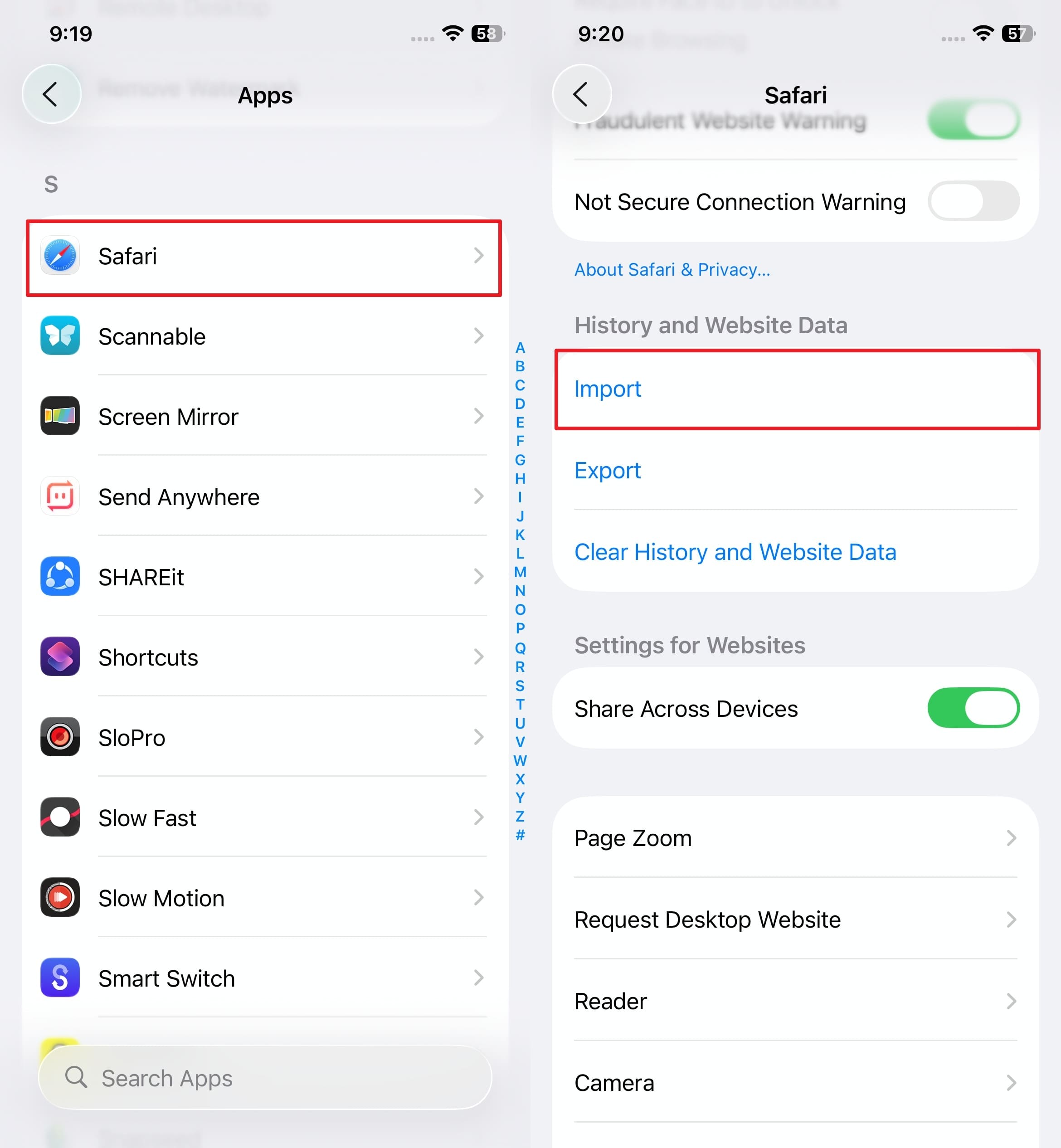
- Step 1. Get to the default Settings app on the iPhone and move smoothly down to the “Apps” section to find and tap the “Safari” option. On the following dedicated Safari screen, scroll downward carefully to find the “History and Website Data” options and press “Import.”
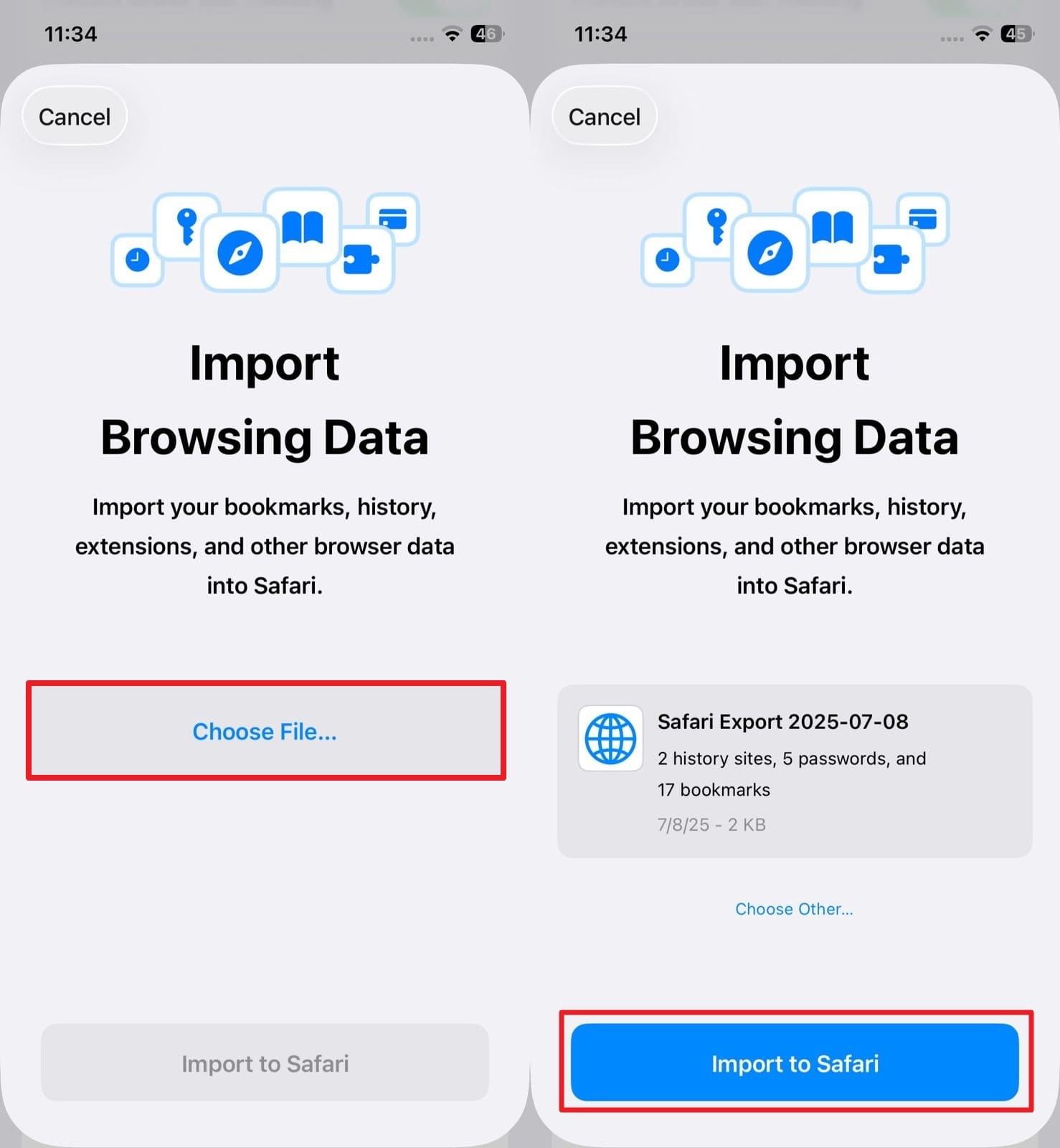
- Step 2. Following that menu prompt, opt for “Choose File” and navigate your local storage to select the Safari web browsing file you exported previously. After going through the requisite phone security check (like Face ID or Passcode), hit the “Import to Safari” button to instantly conclude the task.
Way 2. Access Website Data in iPhone Settings
Despite what it initially seems when you tap 'Clear History', you likely haven’t cleared absolutely all Safari data right away. Some website footprint records might still be securely stored deep within your phone’s configuration settings. While this section doesn’t show full chronological browsing history, it can reveal heavily visited domains, saved caches, and hints of stored logins. It’s a wonderfully simple and native method that doesn’t require any external tools or system backups. The following few taps inside the settings menu let you catch glimpses of deleted Safari history:
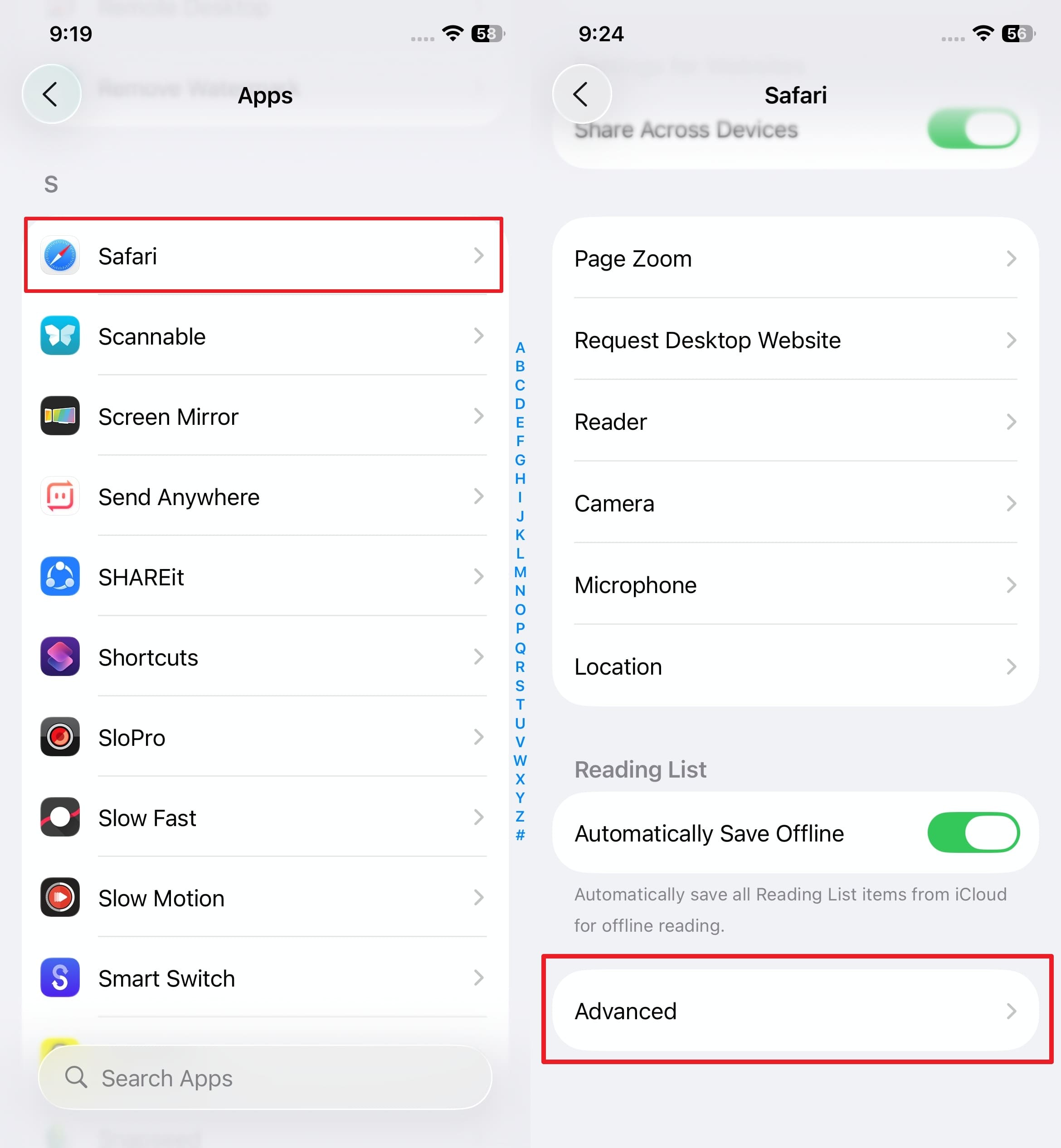
- Step 1. Within the iPhone home screen settings, move towards the very end of the list and tap the “Apps” option. Following that, find the native “Safari” app from the populated list and tap it to access the intricate “Advanced” tab located on the next screen.
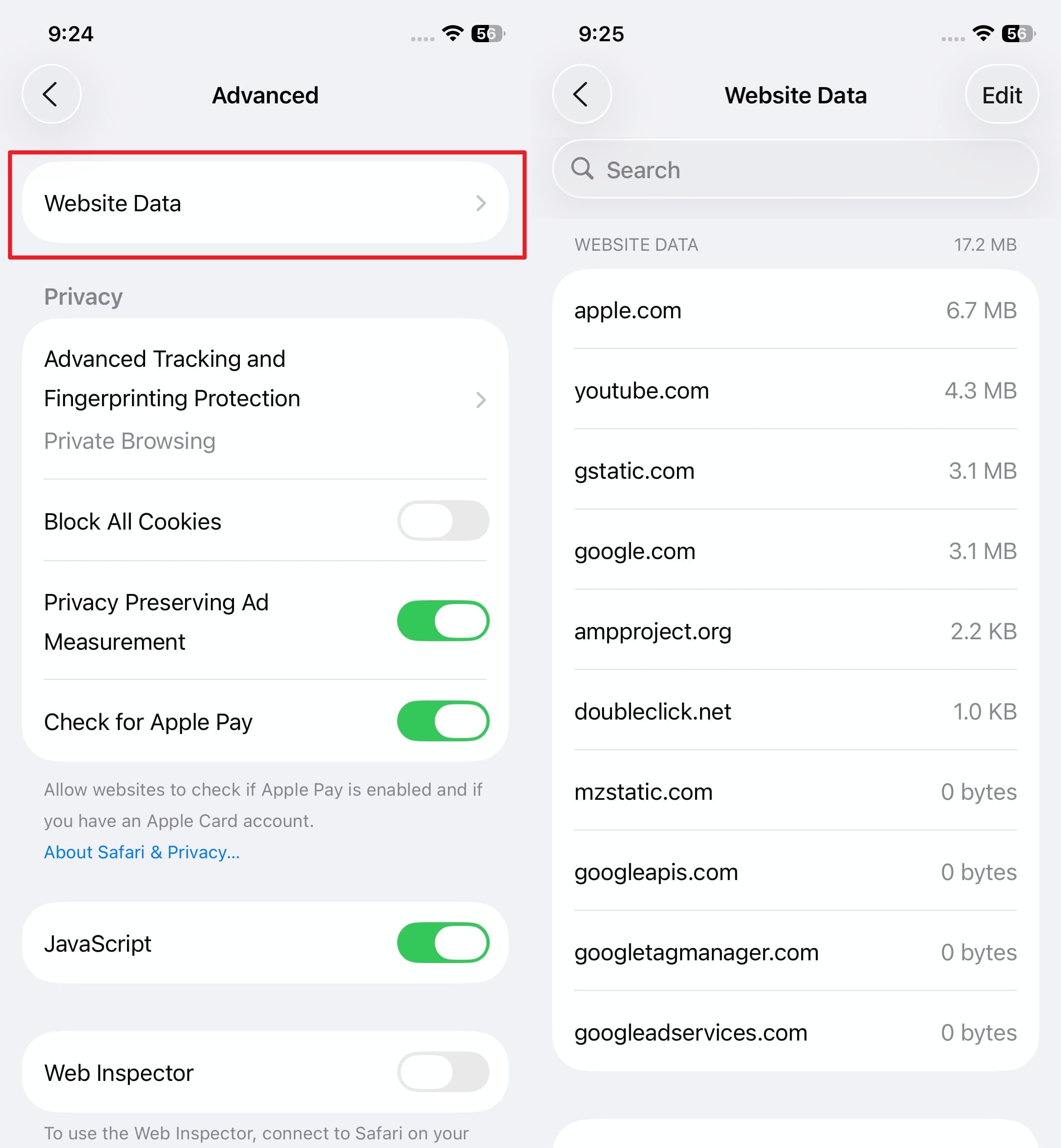
- Step 2. Moving forward, press the “Website Data” option from the very top to meticulously view the currently stored website data on your phone. While it is not a pristine full history link list, it gives you a robust idea of what sites you frequently visited and where the browser stored active logins and other background data.
Way 3. Get Back Safari History from iTunes Backup
The remarkably good news for diligent users is that when you create a local phone backup, the complete browsing history of Safari also securely gets stored. When using iTunes (or Finder on modern Macs) as the backup method, there is a very good chance of you recovering the completely lost content embedded in one of its recent backup packages. Even if it's not a backup from today, restoring it can bring back critical sites you need. Utilizing this aggressive method with these exact steps will completely overwrite your current device data, but it will absolutely let you find deleted history on Safari:
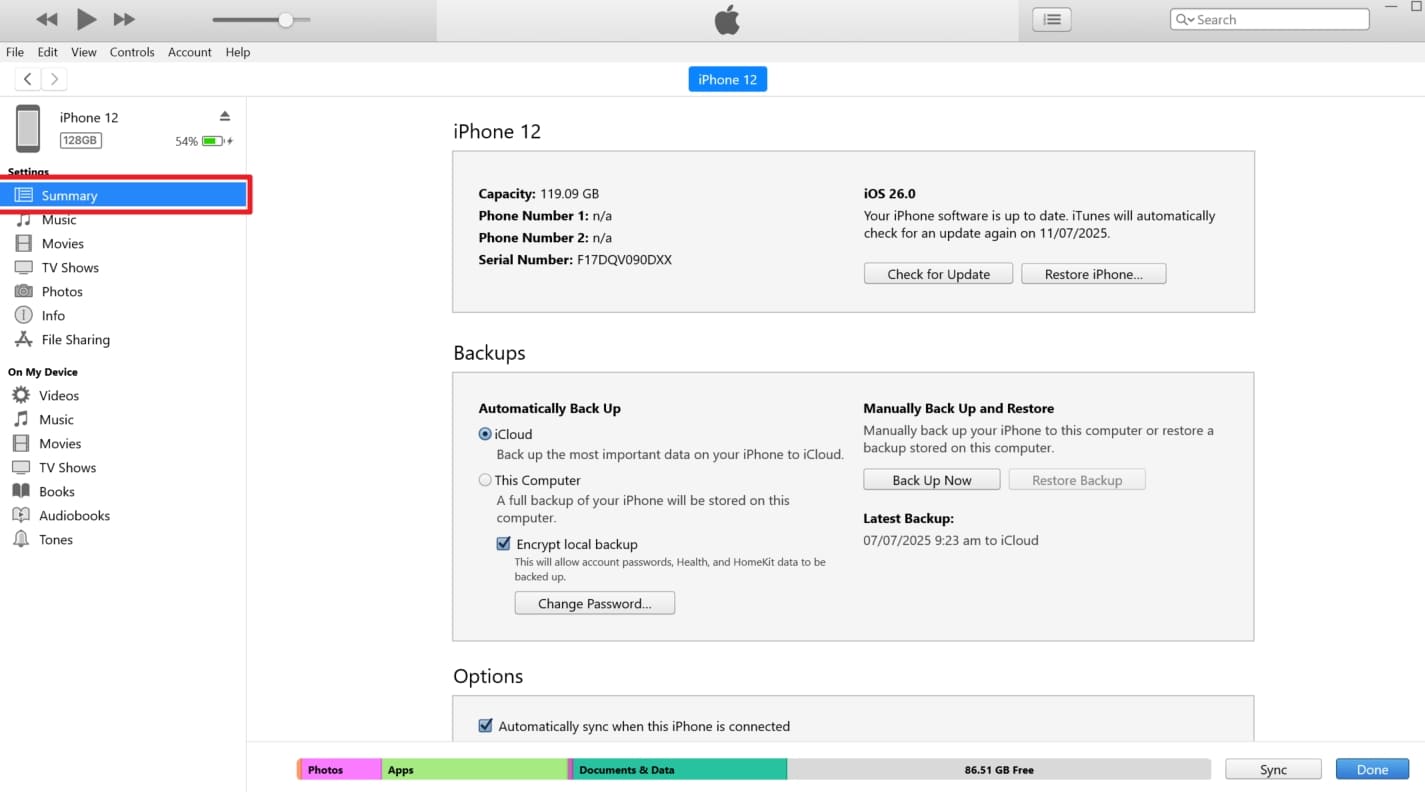
- Step 1. Run the very latest version of iTunes on your Windows computer (or Finder on Mac) and securely link the targeted iPhone using a suitable, high-quality USB cable. As the program fully loads the mobile interface after a successful detection, hit the tiny device icon located in the upper toolbar to move to the “Summary” tab.
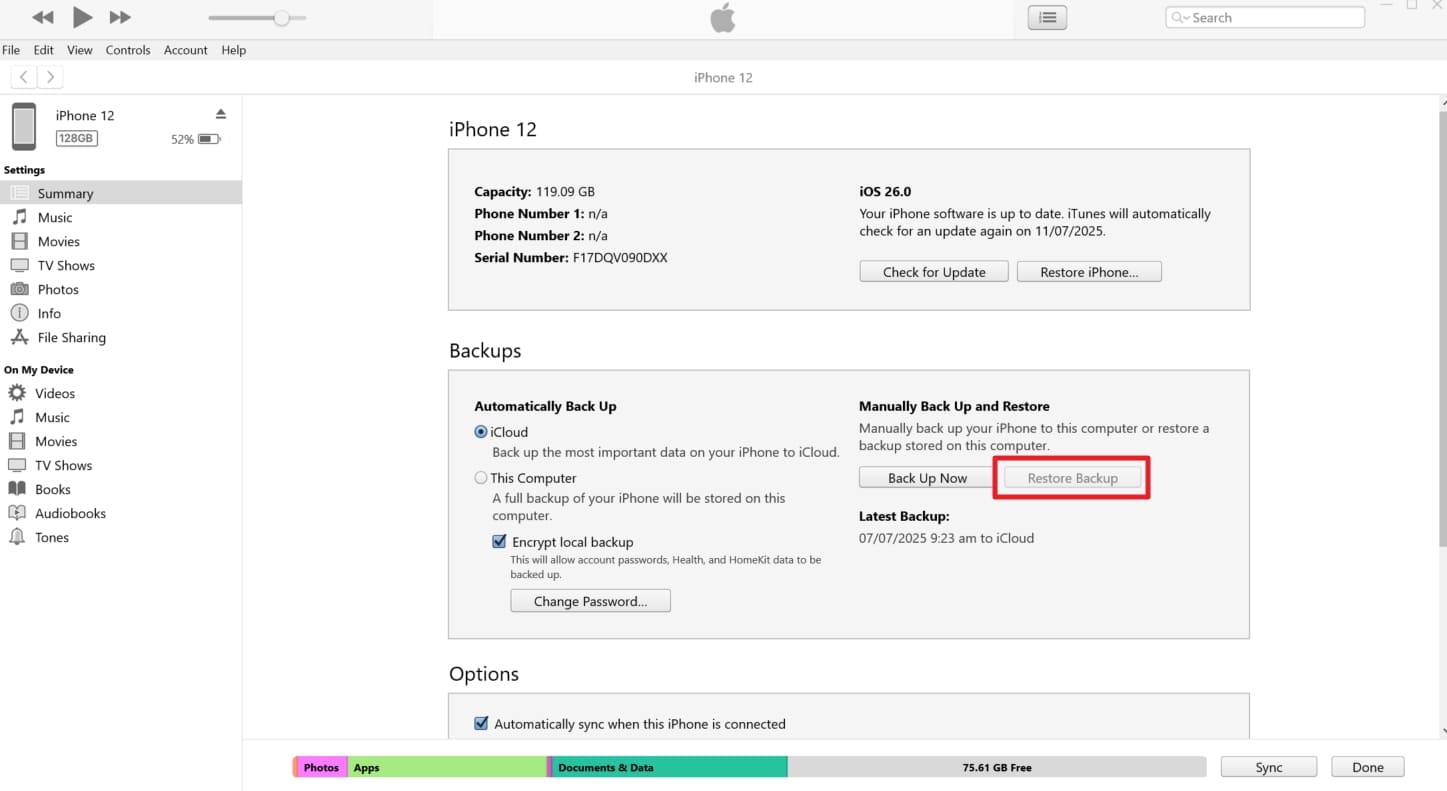
- Step 2. Here, carefully click the “Restore Backup” option situated firmly in the “Backups” section and intelligently choose the archived version that most likely contains the targeted Safari data. At last, utilize the “Restore” button and patiently let the entire restoration process complete before actively accessing the phone.
Way 4. Recover Deleted Safari History with iCloud Backup
Apart from traditional iTunes methods, many modern users have iCloud enabled to seamlessly let the phone create auto-backups on Apple's cloud storage overnight. As this process also meticulously backs up your Safari history and bookmarks, you can use one robust cloud save with the targeted content to get it all back. Opting for this technique drastically means factory resetting your mobile completely, as the iCloud restore prompt won’t organically trigger otherwise. Follow these stringent steps to accurately learn how to recover deleted history on iPhone Safari via an iCloud backup restoration:
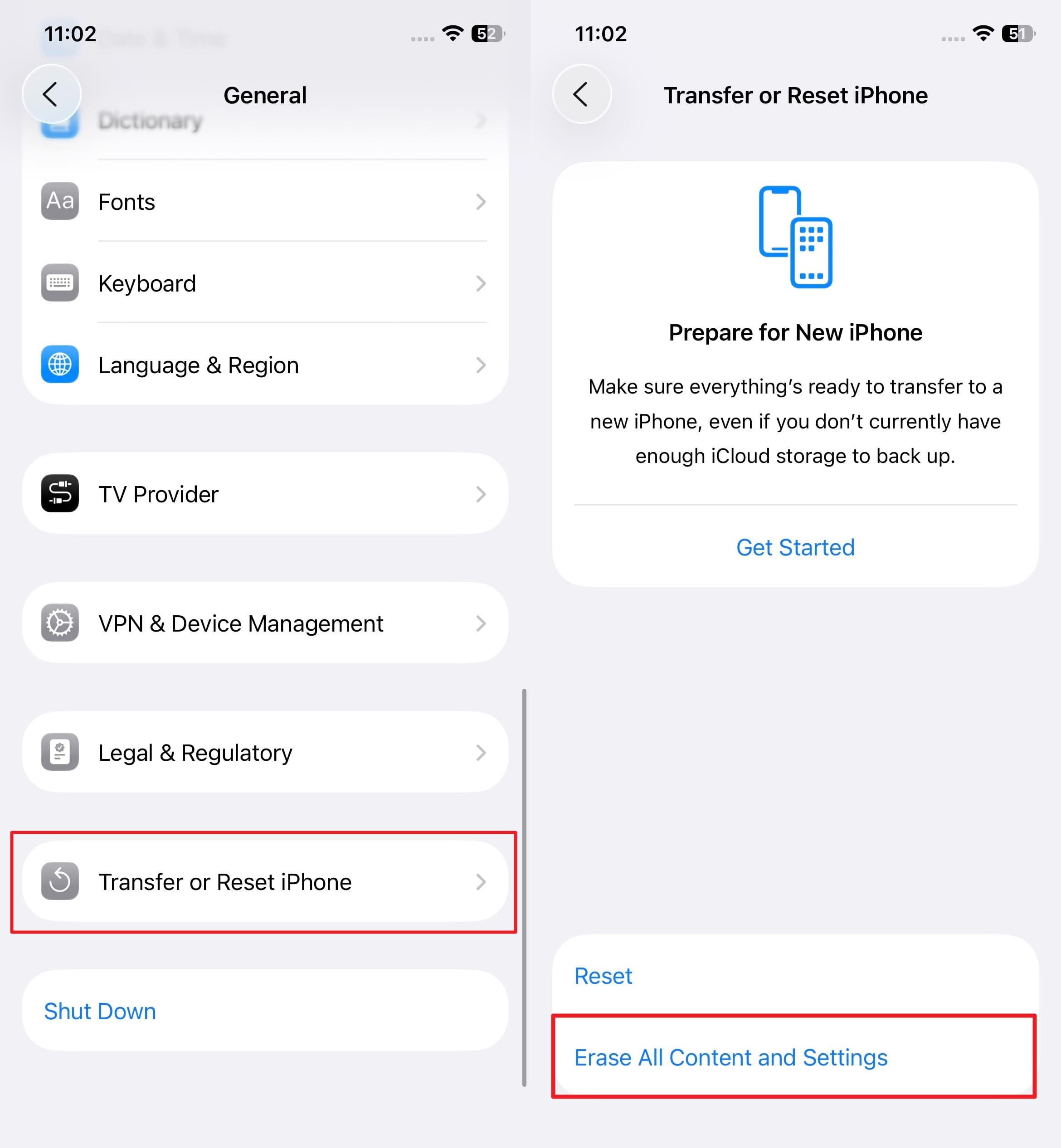
- Step 1. Kickstart this thorough operation by actively accessing the “General” tab in the iPhone settings and heavily scrolling down to select “Transfer or Reset iPhone.” On the subsequent detailed screen, aggressively press the “Erase All Content and Settings” option and faithfully follow each security instruction to securely restore the phone to its blank factory defaults.
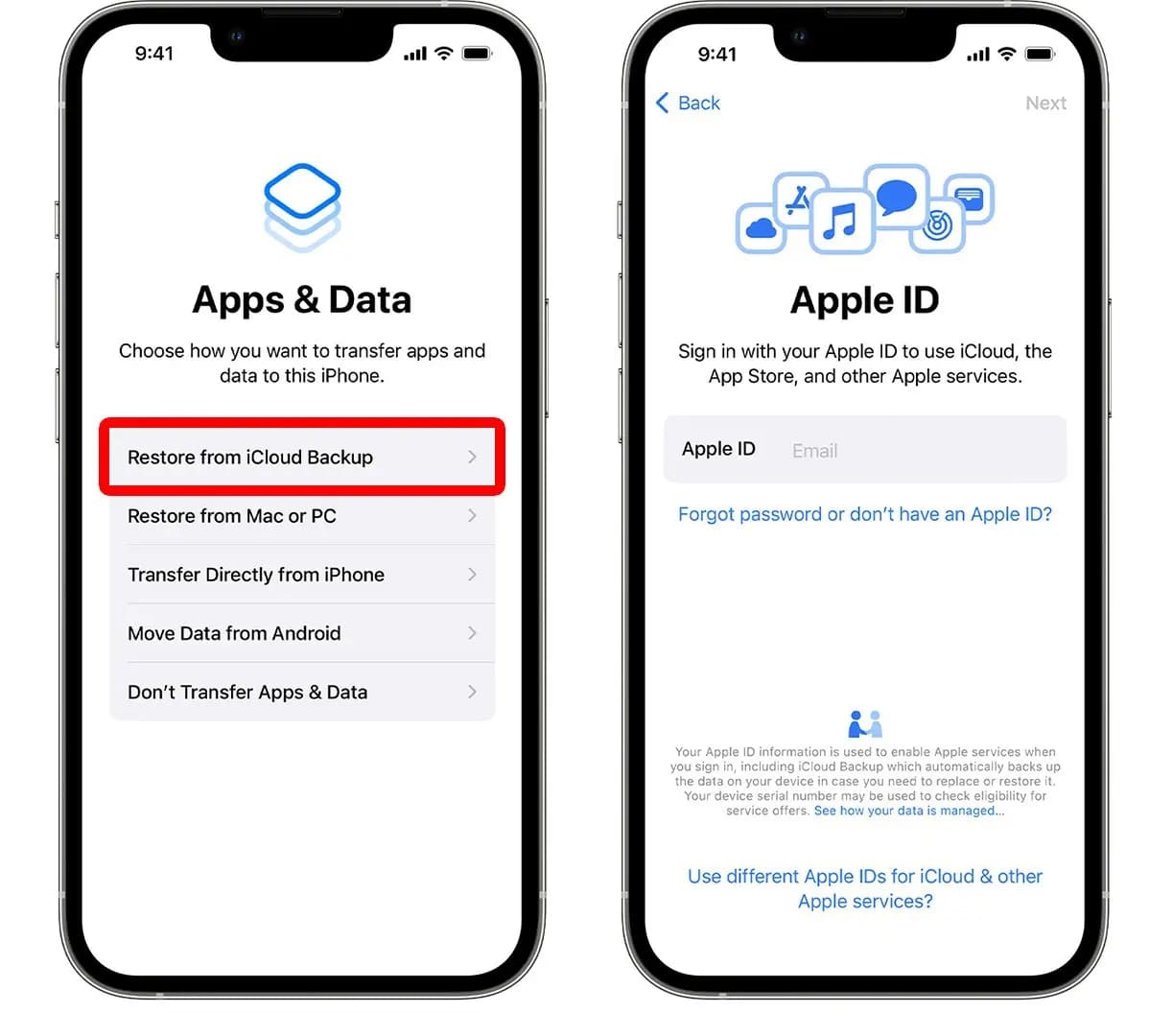
- Step 2. When the wipe is entirely done, wait for the mobile to reboot and start the 'Hello' setup process until you successfully reach the pivotal “Apps & Data” screen. Here, exclusively choose the “Restore from iCloud Backup” option and carefully log in with the targeted Apple ID credentials to continue the data handover.
- Step 3. After authenticating the login, select the most recent backup timestamp that contains the Safari history and other vital content you are eagerly looking for. Lastly, wait for the heavy download restoration to gracefully happen over Wi-Fi and complete the remaining setup steps to access the fully restored browsing history files.
Way 5. Restore Safari Bookmarks from iCloud.com
In some scenarios, your raw browsing history might be irreparably gone from the local device, but some highly important bookmarks can still be secure online despite your recent deletion. If you previously had iCloud sync heavily enabled for Safari settings, those specific bookmarks might still be readily available remotely on iCloud.com. That is especially the likely case if the content was hastily lost in the last 30 days. Apple's iCloud keeps a strict server-side record of deleted bookmarks for that specific timeframe, giving you a short but vital window to recover deleted Safari history elements with these quick desktop steps:
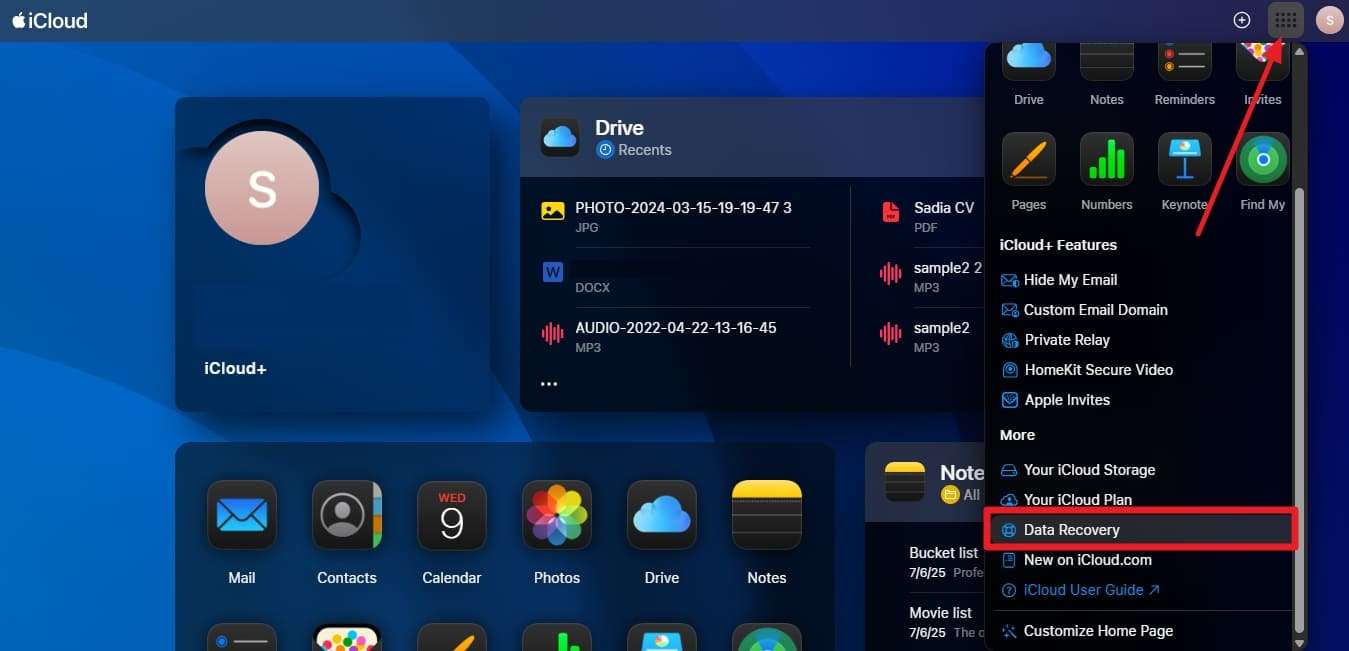
- Step 1. Employ a trusted desktop web browser to rapidly visit the official iCloud.com site and utilize the exact Apple ID associated with the targeted iPhone to gain access. Following that secure login, click the interactive “Grid” icon from the upper right corner to open the web apps and immediately opt for the “Data Recovery” module.
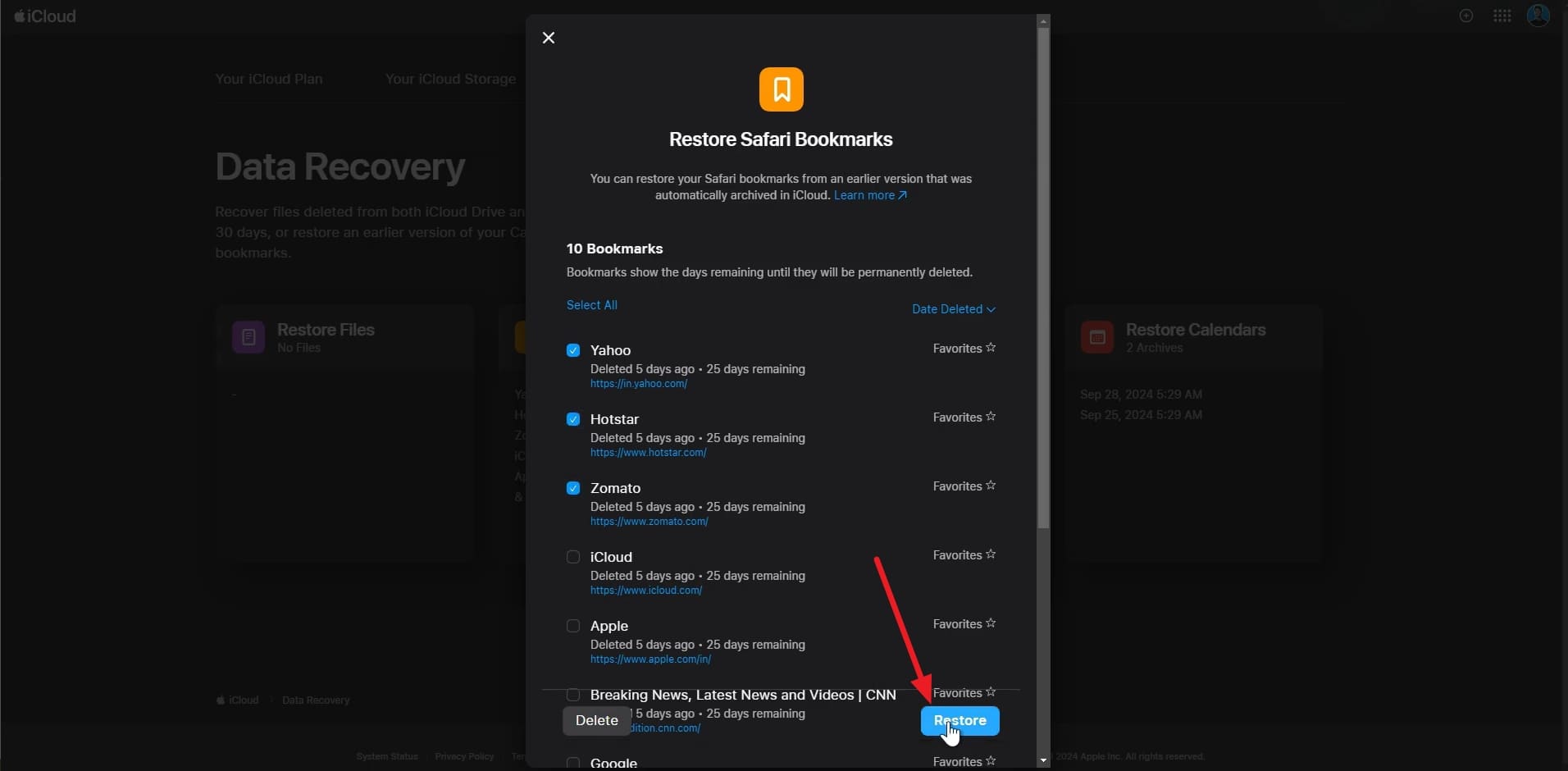
- Step 2. Inside this specialized menu, move to the “Restore Bookmarks” section and double-click to dynamically access the server's list of recently deleted bookmarks. Lastly, thoughtfully choose the particular bookmark archives you want back and firmly hit “Restore” before confidently confirming it again with the final “Restore” prompt to instantly push it back to the synced phone.
Conclusion
In the very end, precisely knowing how to see deleted Safari history on iPhone is an absolute must-have skill for those who routinely have vital personal or professional data stored inside the browser. You may successfully recover it with the proper systematic measures, using resourceful native iOS functions, granular iCloud web tools, or comprehensive iTunes backup rollbacks. All these diverse methods operate in substantially different ways with unique prerequisites. Thus, it is highly advisable to carefully choose the most suitable one that fits your lack of a backup. For a seamless and risk-free extraction of lost logs without wiping your device, using dedicated software like Dr.Fone - Data Recovery (iOS) undeniably helps you achieve the most optimal and stress-free outcome.




FAQ
-
1. Is deleted Safari history completely gone forever from my iPhone?
No, deleted Safari history is not immediately wiped out forever. When you hit clear, iOS marks the storage space as available, but the raw data might still reside in the internal SQLite database until it is overwritten by newly generated web data or cached files. Using specialized recovery tools quickly can often retrieve these hidden logs. -
2. Can I see deleted Safari history if I used Private Browsing Mode?
Generally, no. Safari's Private Browsing mode is specifically engineered not to store search history, cookies, or temporary files locally on your device in the first place. Since the data is never permanently written to the iPhone's database, there is virtually nothing for a standard backup or recovery tool to extract once the private tab is closed. -
3. Why does my restored iCloud backup not show the Safari history I need?
If the restored iCloud backup does not contain your deleted Safari history, it likely means the backup snapshot was taken after you had already cleared your browsing data. iCloud only mirrors the state of your device at the exact moment the backup is triggered. Alternatively, if Safari syncing was turned off in iCloud settings, the history would not be included in the backup package. -
4. Does checking 'Website Data' in iPhone settings show full URL history?
No, checking the 'Website Data' through the native iPhone Settings app will only show the root domain names (like 'apple.com' or 'google.com') and the amount of local storage they are consuming for caches and cookies. It will not display specific article pages, complete URLs, or exact time stamps of your browsing activity.
 Add Wondershare Dr.Fone as a preferred source on Google