Resolve common problems and system crashes on both iPhone and Android devices.

 100% Security Verified | No Subscription Required | No Malware

 :
: 
 ChatGPT
 Perplexity
 Gemini
 Claude
 Grok
Grok
Encountering a situation where your iPad won't charge can be incredibly frustrating, especially when you rely on it for work, entertainment, or staying connected. You plug it in, but the battery icon doesn't show the familiar lightning bolt, or the percentage refuses to increase. This is a common issue, and the good news is that the solution is often simpler than you might think.

Whether your iPad is plugged in but not charging, charging intermittently, or not charging beyond a certain point, there's no need to panic. The problem can stem from various sources, including hardware and software. In this guide, we'll walk you through eight straightforward fixes to diagnose and resolve your iPad's charging problems, getting it back to full power in no time.
In this article
- Part 1. Uncovering the Reasons Your iPad Won't Charge
- Part 2. 8 Proven Methods to Fix an iPad That's Not Charging
- 2.1. Inspect and Clean the iPad's Charging Port
- 2.2. Ensure the iPad is Within an Acceptable Operating Temperature
- 2.3. Thoroughly Check the Lightning Cable
- 2.4. Perform a Force Restart
- 2.5. Verify Your Power Source and Adapter
- 2.6. Avoid Charging Through a Computer's USB Port
- 2.7. Update the iPad's Operating System (iPadOS)
- 2.8. Use an iOS System Repair Tool: Dr.Fone
For a quick overview of how to resolve charging issues, check out the helpful video guide below.
Part 1. Uncovering the Reasons Your iPad Won't Charge
Before diving into the solutions, understanding the potential causes can help you quickly identify the root of the problem. If you're asking, "Why is my iPad not charging?", here are the most common culprits:
- Contaminated Charging Port: Lint, dust, and other debris can accumulate inside the Lightning port, preventing a solid connection with the cable.
- Damaged Charging Accessories: Frayed Lightning cables or faulty power adapters are frequent causes of charging failure.
- Software Glitches: Temporary bugs or errors within iPadOS can interfere with the charging process.
- Insufficient Power Source: Using a low-wattage adapter or a standard computer USB port may not provide enough power to charge an iPad effectively.
- Extreme Temperatures: Both very hot and very cold conditions can cause the iPad's battery management system to pause charging to protect the battery.
- Hardware Damage: Internal issues, such as a damaged charging port, a degraded battery, or liquid damage, can prevent the iPad from charging correctly.
Part 2. 8 Proven Methods to Fix an iPad That's Not Charging
Now that you're familiar with the possible reasons your iPad won't charge, it's time to work through the solutions. Start with the simplest fixes and proceed to the more advanced methods. These techniques do not require any special technical skills.

2.1. Inspect and Clean the iPad's Charging Port
Over time, the charging port can easily become clogged with lint from your pocket, dust, or other debris. This buildup can obstruct the connectors and prevent the Lightning cable from making a proper connection. This is often the primary reason an iPad plugged in is not charging.

To clean it, first, power off your iPad. Use a flashlight to look inside the port. You can use a can of compressed air to blow out loose debris. For more stubborn lint, gently use a non-metallic, pointed object like a wooden or plastic toothpick. Carefully scrape the sides and bottom of the port to dislodge any compacted debris. Avoid using metal objects like paperclips or needles, as they can short-circuit or damage the sensitive pins inside.
2.2. Ensure the iPad is Within an Acceptable Operating Temperature
iPads are designed to operate within a specific temperature range, typically between 32° to 95° F (0° to 35° C). If the device gets too hot or too cold, its internal safeguards may kick in to protect the battery, which often involves slowing down or completely stopping the charging process. This is a protective feature, not a fault.
If you've left your iPad in direct sunlight, in a hot car, or in freezing conditions, move it to a room-temperature environment. Allow it to acclimate for at least 30 minutes before attempting to charge it again. Once it returns to its normal operating temperature, the charging function should resume automatically.
2.3. Thoroughly Check the Lightning Cable
The Lightning cable is another common point of failure. Daily use, including plugging, unplugging, and coiling, can cause wear and tear, especially near the connector ends. Exposed wires or fraying can disrupt the power flow and stop your iPad from charging.

Inspect your cable carefully for any signs of damage. The easiest way to test it is to try charging another Apple device with it. If that device doesn't charge, the cable is likely the problem. Alternatively, try charging your iPad with a different, known-working Lightning cable. If your iPad starts charging, you've found the issue and simply need a new cable.
2.4. Perform a Force Restart
Sometimes, the issue isn't hardware-related at all. A minor software glitch or a background process that has crashed can prevent your iPad from recognizing that it's connected to power. A force restart can clear these temporary errors and often resolves the charging problem immediately.
For iPads without a Home Button (e.g., iPad Pro, newer iPad Air/Mini):
-
Step 1 Press and quickly release the Volume Up button.
-
Step 2 Press and quickly release the Volume Down button.
-
Step 3 Press and hold the Top (Power) button until the Apple logo appears on the screen.
-
Step 4 Once the iPad restarts, try charging it again.

For iPads with a Home Button:
-
Step 1 Press and hold both the Home button and the Top (or Side) button simultaneously.
-
Step 2 Continue holding both buttons until you see the Apple logo appear.
-
Step 3 Release the buttons and let the iPad complete its restart. Then, plug in the charger to see if the issue is resolved.
2.5. Verify Your Power Source and Adapter
The problem might not be with your iPad or cable but with the power source itself. The wall outlet could be faulty, or the USB power adapter could be damaged. First, ensure the power adapter is plugged firmly into the wall socket.

To troubleshoot, try plugging something else, like a lamp, into the same outlet to confirm it's working. If the outlet is fine, inspect the power adapter for any visible damage to the prongs. Try using a different USB power adapter if you have one available. Using an official Apple adapter is always recommended for compatibility and safety.
2.6. Avoid Charging Through a Computer's USB Port
iPads have large batteries and require more power to charge efficiently than an iPhone. While you can sync your iPad with a computer, many older computer USB ports do not supply enough wattage to charge an iPad effectively. When connected to such a port, you may see a "Not Charging" message next to the battery icon.

For the most reliable and fastest charging, always use the USB power adapter that came with your iPad (or a compatible one with sufficient wattage) and plug it directly into a wall outlet.
2.7. Update the iPad's Operating System (iPadOS)
Outdated software can contain bugs that affect your device's performance, including its ability to manage power and charge correctly. Apple frequently releases updates to iPadOS that include bug fixes and performance improvements. Ensuring your iPad is running the latest software version can resolve these frustrating charging issues.

Here's how to check for and install an update:
-
Step 1 Ensure your iPad is connected to a stable Wi-Fi network and has at least 50% battery or is connected to a power source. If it's not charging, try to get enough power for the update process.
-
Step 2 Navigate to Settings > General > Software Update.
-
Step 3 The iPad will check for available updates. If one is found, tap "Download and Install."
-
Step 4 Enter your passcode if prompted and agree to the terms and conditions. Let the update complete. If you need to free up space, you might need to transfer files to a PC or laptop first.
 Fix iOS issues, no data loss.
- One-click repair for all iOS problems.
- Solve recovery mode, Apple logo, black screen, etc.
- Upgrade or downgrade iOS without iTunes
2.8. Use an iOS System Repair Tool: Dr.Fone
If you've tried all the previous steps and your iPad still won't charge, the problem might be a more profound software corruption that a simple restart or update can't fix. In this scenario, a professional system recovery tool like Dr.Fone - System Repair (iOS) can be the most effective solution. It's designed to fix a wide range of iOS system errors without causing any data loss.
Key Features of Dr.Fone - System Repair (iOS):
- Fixes various iOS issues, including charging problems, boot loops, black screens, and being stuck on the Apple logo.
- Repairs the operating system without deleting your personal data.
- Compatible with all iPad, iPhone, and iPod touch models and the latest iOS versions.
- Offers a user-friendly process that fixes complex issues in just a few clicks.
Steps to Fix iPad Charging Issues with Dr.Fone:
-
Step 1 Download and install Dr.Fone on your computer. Launch the application and select the "System Repair" module.
-
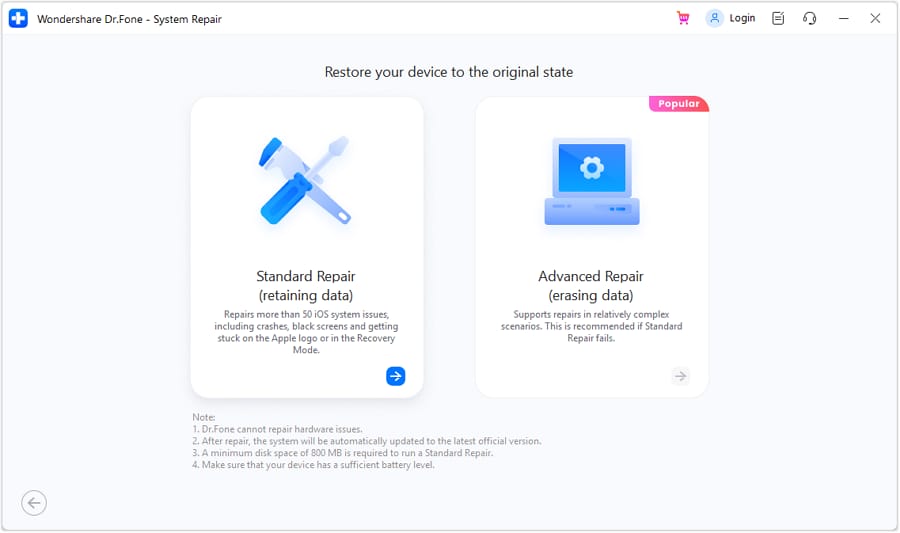
Step 2 Connect your iPad to the computer. Choose "iOS Repair" and then select "Standard Repair." This mode fixes most system issues without affecting your data.
-
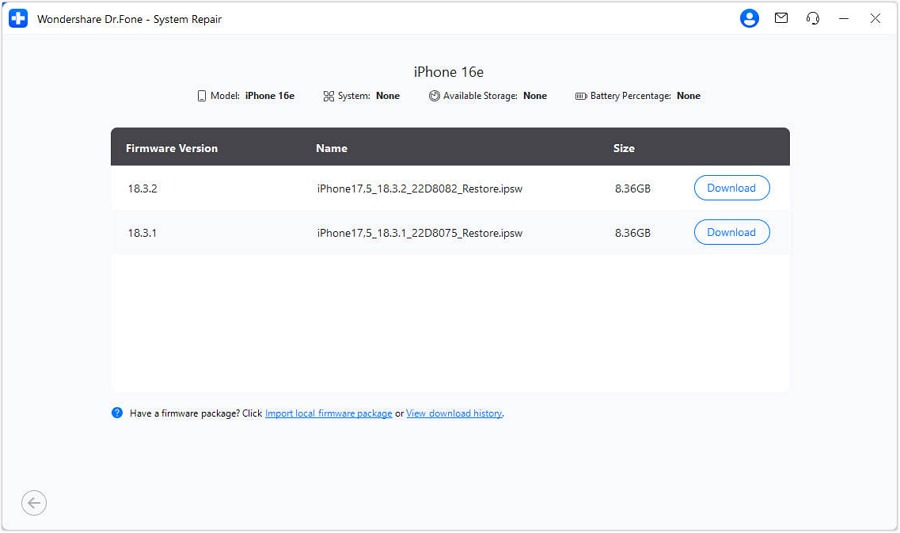
Step 3 The software will detect your iPad model and display the available iPadOS firmware versions. Select the correct version and click "Download" to begin.
-
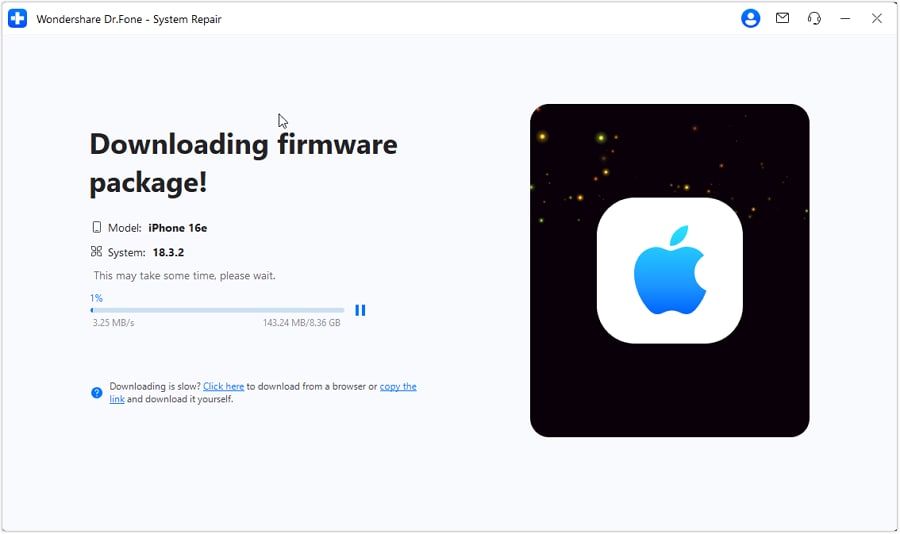
Step 4 Wait for the firmware download to complete. Ensure your computer maintains a stable internet connection.
-
Step 5 Once the firmware is verified, click "Repair Now." Dr.Fone will start repairing your iPad's operating system.

-
Step 6 After the repair process is finished, your iPad will restart. You can then disconnect it and test if the charging issue has been resolved.




Contact Apple Support
If you have diligently worked through all the fixes above and your iPad still refuses to charge, the problem is likely related to internal hardware. This could be a faulty battery that has reached the end of its lifespan, a damaged logic board, or an issue with the physical charging port connector. In these situations, your best course of action is to contact Apple Support or visit an authorized Apple service provider for professional diagnosis and repair.
Conclusion
When your iPad is not charging, it can disrupt your entire day. However, by systematically troubleshooting the issue, you can often find a simple solution. Start by checking the physical components—your charging port, cable, and power adapter. Then, move on to software fixes like a force restart and an iPadOS update. For more persistent software problems, a dedicated tool like Dr.Fone - System Repair (iOS) offers a reliable way to fix the system without losing your data. If all else fails, a hardware problem is the likely cause, and seeking help from Apple Support is the recommended final step.
FAQ
-
1. Why does my iPad say "Not Charging" when plugged into my computer?
This usually happens because standard USB ports on most computers, especially older ones, do not provide enough power (wattage) to charge an iPad's large battery efficiently. For reliable charging, always use the dedicated wall adapter that came with your iPad. -
2. Can a damaged charging cable harm my iPad?
Yes, using a frayed or damaged cable can be risky. It can cause intermittent charging, deliver unstable power that could damage the battery or charging port over time, and in rare cases, create a short circuit. It is always best to replace a damaged cable immediately. -
3. How do I know if my iPad's battery needs to be replaced?
Signs of a failing battery include a significantly shorter battery life than when it was new, the iPad shutting down unexpectedly, or the battery health showing as poor (on newer models, check Settings > Battery > Battery Health). If the battery is degraded, it may also struggle to hold a charge, which can be mistaken for a charging issue. -
4. What should I do if my iPad still won't charge after trying all these fixes?
If you have tried cleaning the port, using different cables and adapters, performing a force restart, updating the OS, and even running a system repair tool, the issue is almost certainly a hardware failure. At this point, you should contact Apple Support or visit an authorized service center for a professional hardware inspection.
 Add Wondershare Dr.Fone as a preferred source on Google