Resolve common problems and system crashes on both iPhone and Android devices.

 100% Security Verified | No Subscription Required | No Malware

 :
: 
 ChatGPT
 Perplexity
 Gemini
 Claude
 Grok
Grok
Samsung Galaxy smartphones are celebrated for their stunning displays and cutting-edge screen technology. However, even these premium devices can experience screen-related malfunctions. These problems can severely disrupt your daily use, ranging from annoying flickers to critical failures like a black screen, even when you know the phone is powered on. Identifying the underlying cause is the first step toward finding a reliable fix.
This guide provides a comprehensive walkthrough of the most common issues, including the dreaded situation where the Samsung screen not working but phone is on. We offer practical, step-by-step solutions to help you resolve these problems, whether they stem from software bugs or minor hardware conflicts. By following our advice, you can potentially avoid costly repairs and restore your Galaxy device to perfect working order.

In this article
Part 1. Common Samsung Galaxy Screen Problems and Their Solutions
A smartphone's display is its primary interface, and when it malfunctions, the entire user experience is compromised. Although Samsung Galaxy devices are known for their quality, they aren't immune to screen issues. This section explores common display problems, such as when touch not working samsung, and provides targeted fixes for each.
1. Flickering Screen
A flickering screen presents as erratic flashes or unstable brightness, making the device difficult to use. This Samsung touch screen problem is often linked to software conflicts, such as issues with third-party apps, buggy firmware, or incorrect display settings. In rare cases, a loose internal display connector could be the culprit.
Solution: Adjust Screen Brightness Settings
A common cause of flickering is the 'Adaptive Brightness' feature malfunctioning. Disabling it can provide a quick fix.
-
Step 1 Open Display Settings
Navigate to the "Settings" app on your Galaxy device and tap on the "Display" menu.
-
Step 2 Disable Adaptive Brightness
Find the "Adaptive Brightness" option and toggle the switch to the "Off" position. Observe your screen to see if the flickering has stopped.

2. Unresponsive Touchscreen
When your phone's screen fails to register your taps and swipes, it becomes nearly impossible to use. This issue of the Samsung phone touch screen not working can be caused by a temporary software crash, insufficient RAM, or corrupted system files. Physical factors like dirt, moisture, or a misaligned screen protector can also interfere with touch input.
Solution: Force Restart the Device
A force restart can clear temporary glitches and memory issues that may be causing the screen to become unresponsive.
Instructions: Press and hold the "Power" button and the "Volume Down" button simultaneously. Keep holding them until the Samsung logo appears on the screen, then release. This will reboot the device and may restore touch functionality.

3. Black Screen of Death
This is one of the most alarming screen issues. The display remains completely black and unresponsive, even though you might hear notifications or feel vibrations, indicating the phone is still on. This problem can be triggered by a critical system error, severe app crash, battery drain, or corrupted firmware. In some instances, it points to a hardware failure like a damaged display.
Solution: Perform a Hard Reset in Recovery Mode
A hard reset can sometimes resolve deep-seated software conflicts that cause the black screen.
-
Step 1 Enter Recovery Mode
First, turn off the device by holding the Volume Down and Power keys. Once off, press and hold the specific key combination for your model (e.g., Volume Up + Home + Power or Volume Up + Power) until the Samsung logo appears. Release the buttons to enter Recovery Mode.

-
Step 2 Reboot the System
Use the Volume keys to navigate the menu and highlight "Reboot System Now." Press the Power button to select it. This will restart your phone normally and may resolve the black screen issue.

4. Ghost Touches (Phantom Touch)
Ghost touches are when your screen registers inputs you didn't make, causing apps to open, text to be typed, or settings to change on their own. This frustrating issue can be due to software bugs, electrostatic interference from a faulty charger, or physical problems like a warped screen or a damaged digitizer that is causing pressure points.
Solution: Disconnect Accessories and Clean the Screen
Start by eliminating external factors. Unplug any chargers, headphones, or other connected accessories. Remove the phone's case and any screen protector to ensure nothing is putting undue pressure on the display. Finally, use a clean microfiber cloth to wipe down the screen and remove any dirt or residue.

5. Screen Freezing
A frozen screen is when the display becomes completely static and stops responding to any input. This common instance of the Samsung phone touch screen not working is typically caused by an app crash, low system memory (RAM), or the device overheating. Malware or incompatible applications can also be the root cause.
Solution: Free Up Internal Storage and RAM
-
Step 1 Access Application Settings
Go to "Settings" on your device, scroll down, and select "Apps." Here, you'll see a list of all installed applications.

-
Step 2 Uninstall Unused Apps
Identify apps you no longer need. Tap on an app, then select "Uninstall" and confirm the action. Removing unnecessary apps, large media files, and clearing cache can free up critical resources and prevent freezes.

6. Green Tint on Screen
A persistent green tint across your display can be alarming. This issue is often related to software glitches, especially at low brightness levels on AMOLED screens, or a misconfiguration in display settings like color balance. While usually a software problem, it can occasionally signal an impending hardware failure of the display panel.
Solution: Restart the Device
A simple restart can often clear the temporary glitch causing the display discoloration.
Instructions: Press and hold the "Power" button until the power menu appears. Tap the "Restart" option and allow your device to reboot completely. Check if the green tint has disappeared.

7. Touchscreen Sensitivity Issues
If your touchscreen is either too sensitive (registering accidental touches) or not sensitive enough (requiring hard presses), it disrupts normal usage. This problem can arise from incorrect screen calibration, outdated software, or environmental factors like moisture. Often, the issue where the Samsung touch screen stopped working properly can be traced back to a simple setting.
Solution: Update Software and Adjust Sensitivity
-
Step 1 Check for Software Updates
Open "Settings," go to "Software Update," and tap "Download and install." If an update is available, your phone will prompt you to download it. Software updates often include patches for known bugs affecting display performance.

-
Step 2 Enable Touch Sensitivity
If you use a screen protector, navigate to "Settings" > "Display" and find the "Touch sensitivity" option. Toggling this on increases the screen's sensitivity to better register touches through the protector.

8. Screen Cracks or Physical Damage
Accidental drops and impacts are a leading cause of screen malfunctions. Physical damage like cracks, chips, or shattered glass can directly impact touch responsiveness, create dead spots, or distort the display. Even a small crack can worsen over time, eventually leading to a completely non-functional screen.
Solution: Prevent Further Damage and Seek Professional Repair
If the damage is minor, applying a high-quality screen protector can help prevent cracks from spreading. Using a durable, shock-absorbent case is essential for protecting against future impacts. However, if the screen is significantly cracked or unresponsive, the only permanent solution is to have it professionally replaced at an authorized Samsung service center.
Part 2. The One-Click Solution for All Samsung Galaxy Screen Problems
While the manual troubleshooting steps can resolve many issues, they can be time-consuming and may not fix deeper system-level problems. For users who need a more powerful and efficient solution, a dedicated system repair tool can be invaluable. Dr.Fone - System Repair (Android) is engineered to simplify the process of fixing complex screen-related issues with just a few clicks.
This powerful software diagnoses and resolves underlying Android system malfunctions that cause problems like the black screen of death, an unresponsive touchscreen, or boot loops, all without requiring any technical expertise. It provides a safe and reliable way to restore your device's functionality when basic fixes fail, making it the ideal choice for anyone facing a persistent Samsung touch screen problem.
 Fix Android instantly – no skills needed.
- Solve boot loop, black screen, won’t turn on, etc.
- High success rate for all system issues.
- User-friendly interface with easy-to-follow steps.
Dr.Fone's advanced algorithms ensure a high success rate in resolving even the most stubborn system errors. Follow these detailed instructions to fix all issues related to an unresponsive touchscreen on your Samsung device:
-
Step 1 Launch System Repair and Enter Device Details
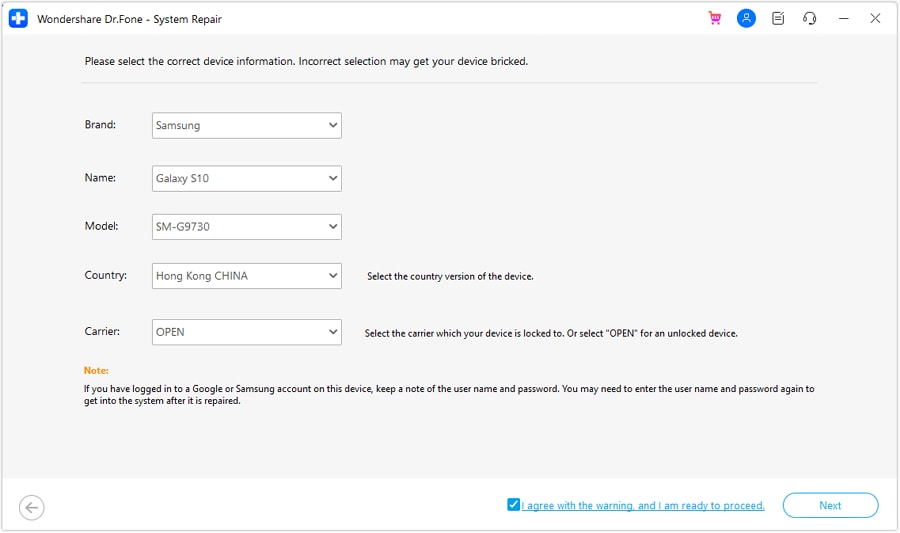
Download and install Dr.Fone on your computer. Launch the application and navigate to the "Toolbox" section. Click on "System Repair," select "Android" as your device type, and connect your Samsung phone. Click "Start" and accurately enter your device's brand, name, model, country, and carrier details.
-
Step 2 Boot Your Phone into Download Mode
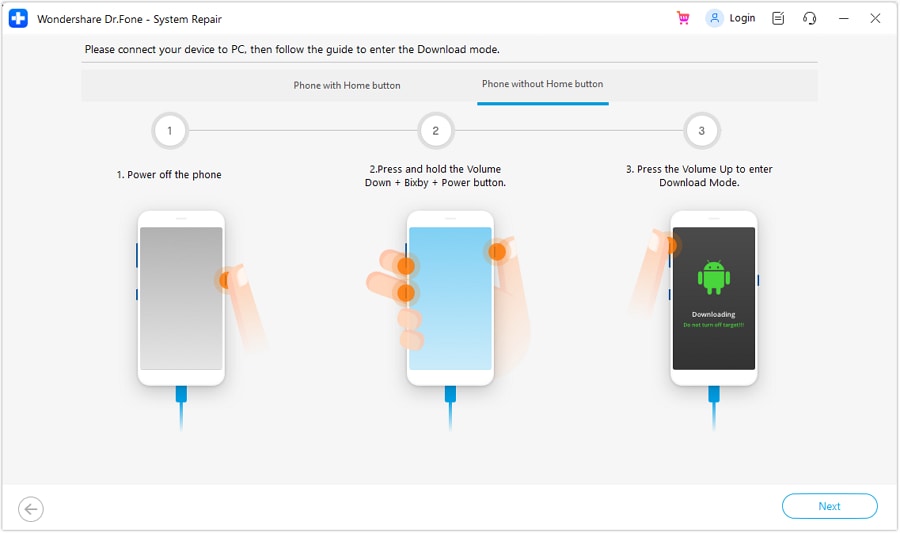
Agree to the warning and click "Next." The software will now provide on-screen instructions specific to your device to put it into Download Mode. Follow these steps carefully. Once in Download Mode, Dr.Fone will automatically begin downloading the appropriate firmware for your device.
-
Step 3 Initiate and Complete the Repair Process
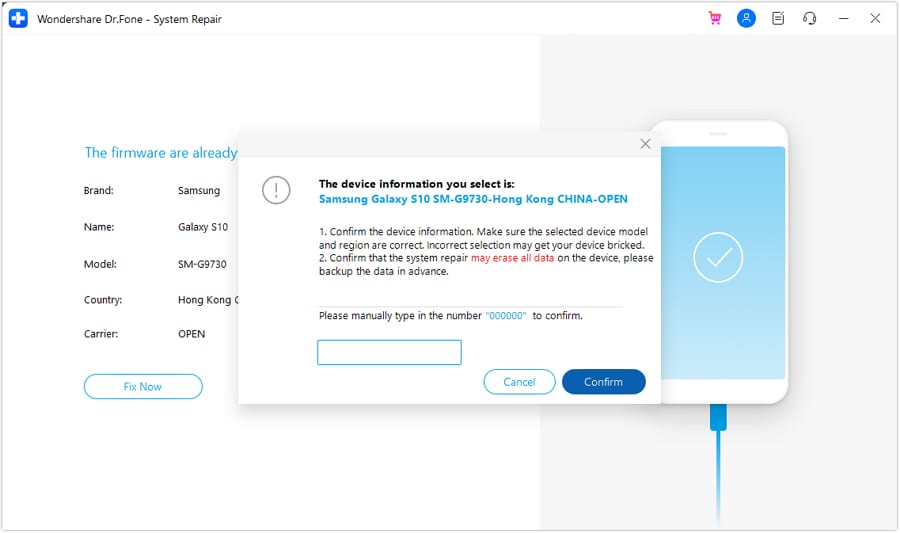
After the firmware is downloaded and verified, click the "Fix Now" button. A prompt will appear asking you to enter a confirmation code to proceed. Type in the code and click "Confirm." The repair process will begin, and it may take a few minutes. Once completed, your phone will restart, and the screen issues should be resolved.
Part 3. How to Recover Data From Your Samsung Before or After Screen Repairs
While fixing your screen is the priority, ensuring the safety of your data is equally critical. Screen problems, especially severe ones, can put your photos, contacts, and messages at risk of being lost, particularly if a factory reset becomes necessary. In situations where your screen is too unresponsive to create a backup, Dr.Fone - Data Recovery (Android) becomes an essential tool.
This software is specifically designed to recover deleted or lost data from Android devices, even those that are broken or unresponsive. It supports a vast range of file types, including photos, videos, contacts, messages, and WhatsApp data. Dr.Fone ensures you can retrieve your important files quickly and safely, providing peace of mind during a stressful device malfunction.
- Scan Android phones and tablets directly.
- Preview and recover only what you want.
- Supports WhatsApp, photos, videos, contacts, and more.
- Works with 6000+ Android devices.
The ability to recover data from devices with broken screens makes this tool indispensable. Follow this guide to recover your crucial data from your Samsung device:
-
Step 1 Launch Data Recovery and Select File Types
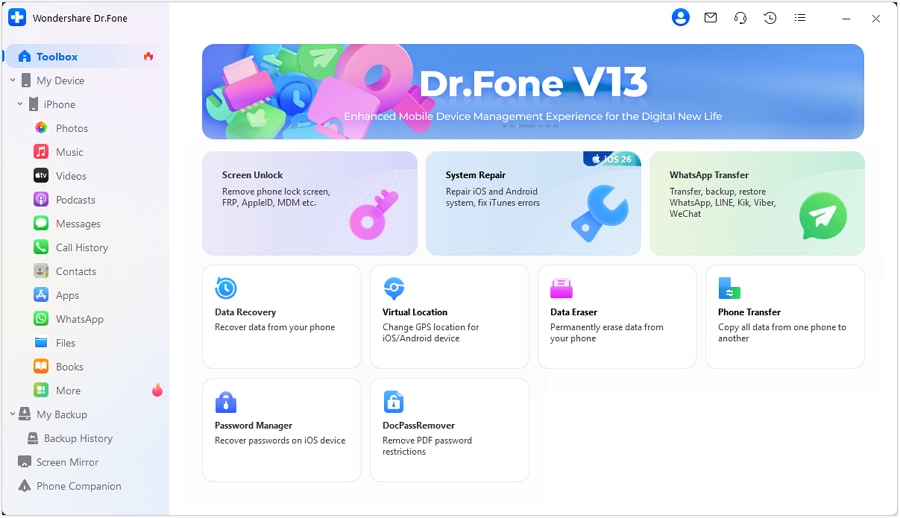
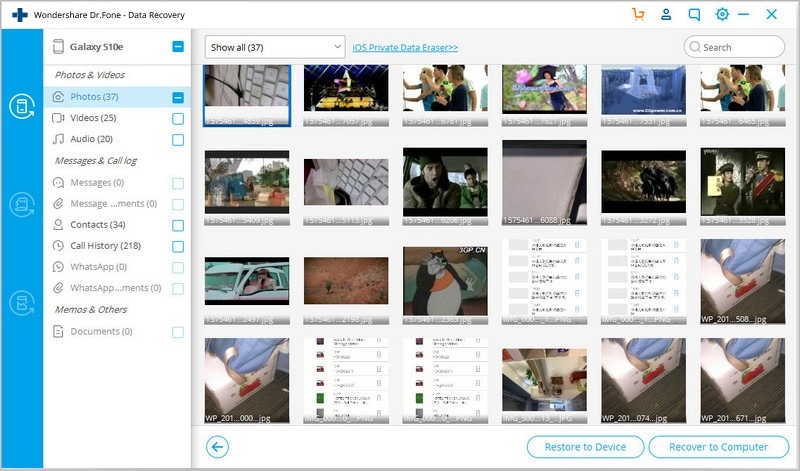
Open Dr.Fone on your computer and connect your Samsung device. From the "Toolbox," select "Data Recovery." Choose "Android" as the device platform. On the next screen, select "Recover Android Data" and then choose the specific types of files you wish to recover, such as contacts, messages, or photos.
-
Step 2 Scan and Recover Your Data
Click "Start Scan" to allow the program to begin analyzing your phone for recoverable data. Once the scan is complete, you can preview all the found files. Select the items you want to retrieve and click the "Recover" button. Choose a location on your computer to save the data, and the recovery process will begin.

Conclusion
Dealing with a situation where your Samsung phone screen not working can be incredibly frustrating, but it's often a solvable problem. This guide has provided a range of effective methods, from simple restarts to more advanced system repairs, to help you diagnose and fix common screen issues. For a comprehensive and hassle-free solution to software-related malfunctions, Dr.Fone - System Repair (Android) stands out as a reliable tool that can resolve even the most stubborn problems.
Furthermore, protecting your data is paramount. Before attempting fixes that could lead to data loss, or when your device is too damaged to access, Dr.Fone - Data Recovery (Android) offers a vital safety net. With these powerful tools at your disposal, you can confidently tackle screen issues and safeguard your digital life.




FAQ
-
1. Why is my Samsung screen not working but the phone is on?
This common issue is usually caused by a software crash or a system glitch. The phone's operating system may have frozen, preventing the display from activating, even though the internal components are still running. A force restart (holding Power + Volume Down) is often the first and most effective solution to clear this temporary error. -
2. How can I fix an unresponsive touch screen on my Samsung?
Start with the basics: clean the screen, remove any screen protector or case, and perform a force restart. If the problem persists, try booting into Safe Mode to see if a third-party app is causing the conflict. For deeper software issues, using a tool like Dr.Fone - System Repair can resolve the underlying OS corruption without data loss. -
3. Can a black screen on a Samsung phone be fixed?
Yes, in many cases. If it's a software issue, booting into Recovery Mode and clearing the cache partition or rebooting the system can work. If those fail, a dedicated repair tool is the next step. However, if the black screen is due to physical damage (like being dropped), it will likely require a professional screen replacement. -
4. What causes ghost touches on a Samsung Galaxy?
Ghost touches can be caused by several factors. Common culprits include a faulty charger creating electrical interference, a dirty or moist screen, a misaligned screen protector, or a software bug. In some cases, it can also be a sign of a failing digitizer, which is the touch-sensitive layer of the screen.
 Add Wondershare Dr.Fone as a preferred source on Google