 Effortlessly manage data through preview, delete, export, etc.

 100% Security Verified | No Subscription Required | No Malware

 :
: 
 ChatGPT
 Perplexity
 Gemini
 Claude
 Grok
Grok
Samsung Kies for Mac is the official desktop software from Samsung, designed for Mac users running OS X 10.5 and later. It was created to help manage music, videos, photos, and other data on older Samsung devices. With Kies, you can transfer files between your Mac and Samsung phone, sync data, back up important information, and even perform firmware upgrades.
While it was a useful tool, it's important to note that Kies is legacy software primarily supporting devices released before September 2013. For newer models, Samsung has transitioned to Smart Switch. If you have an older device and need to use Kies, this guide will walk you through every step, from download and installation to updates and uninstallation.
In this article
Part 1. How to Download and Install Samsung Kies on Your Mac
Before you begin, ensure your Mac and device are compatible. Kies for Mac is designed for older Samsung models and specific versions of macOS. Follow these instructions to get it set up correctly.
1. Check System Requirements and Download Kies
First, visit the Samsung official website to find the Kies download page. Confirm that your device model, typically a feature phone, smartphone, or tablet released before September 2013, is supported. If it is, you can proceed to download the software. Make sure your Mac meets the following requirements:
| Component | Requirement |
|---|---|
| Operating System | OS X 10.5 and later |
| Processor | 1.8GHz Intel or faster |
| Memory (RAM) | 512MB or more |
| Hard Drive Space | At least 100MB of free space |
2. Step-by-Step Installation Guide
Once you've downloaded the `KiesMac.pkg` file, follow these steps to install it on your Mac.
-
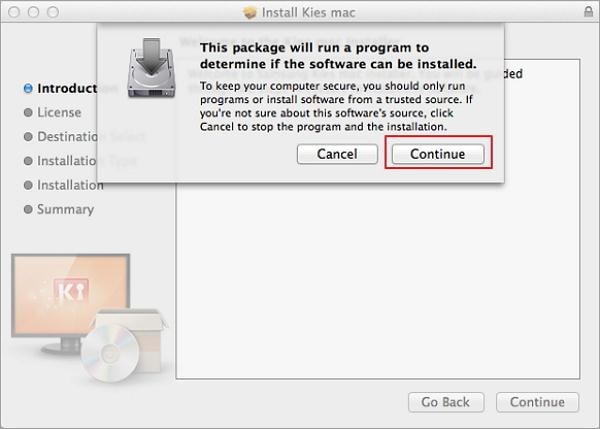
Step 1 Launch the Installer
Locate the `KiesMac.pkg` file in your Downloads folder. Control-click (or right-click) the file and select 'Open'. In the window that appears, click Continue to start the installation process.
-
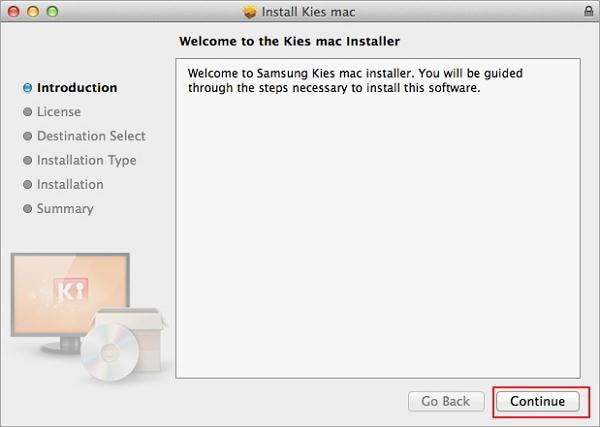
Step 2 Proceed with Installation
The installer will welcome you. Simply click Continue to move to the next step.
-
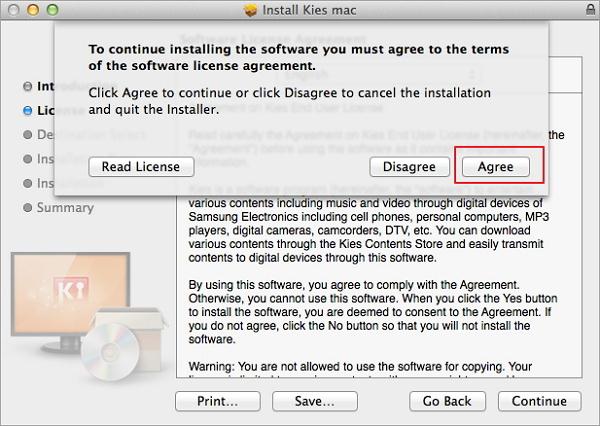
Step 3 Agree to the Software License
You will be presented with the software license agreement. After reviewing it, click Agree to accept the terms and proceed.
-
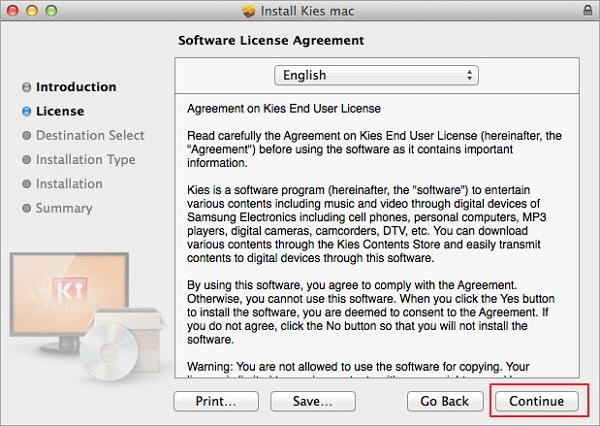
Step 4 Choose Your Language
Select your preferred language for the software from the dropdown menu. English is typically the default. Click Continue after making your selection.
-
Step 5 Select Installation Location
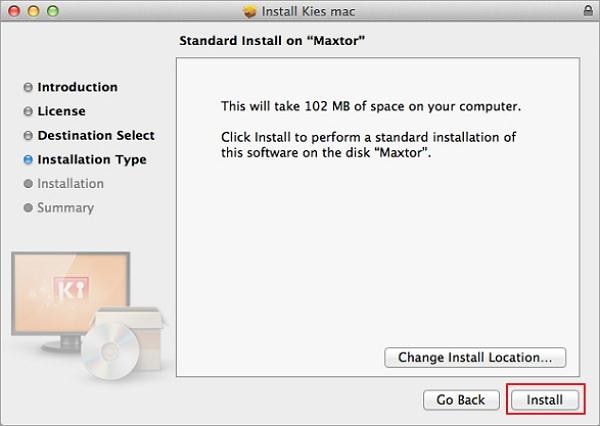
The installer will show you the default installation location. If you wish to change it, click Change Install Location... and choose a different directory. Otherwise, click Install to begin copying the files.
-
Step 6 Wait for Installation to Complete
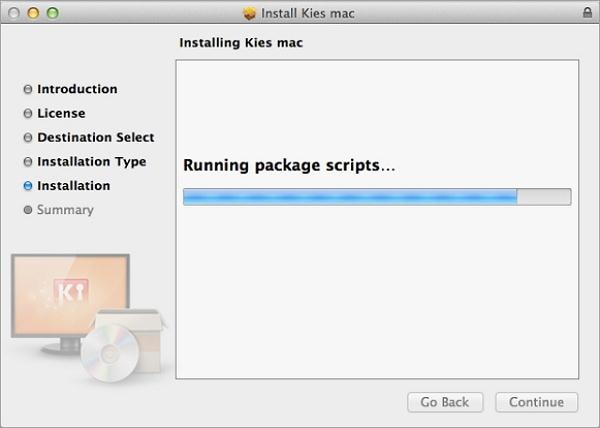
The installation will now proceed. This process may take a few moments. Please wait patiently until the progress bar indicates it is finished.
-
Step 7 Finalize and Restart
Once the installation is successful, a confirmation screen will appear. It is recommended to restart your Mac to ensure the software functions correctly. Click Restart to complete the setup.

Part 2. Connecting Your Samsung Device & Troubleshooting Issues
Once installed, the next step is to connect your Samsung phone or tablet to Kies. Here’s how to do it and what to do if you encounter problems.
1. How to Connect Your Phone to Kies on Mac
You have two primary ways to connect your device:
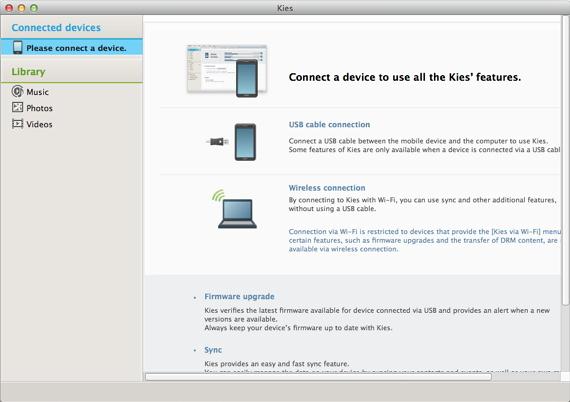
- USB Cable Connection: This is the most common and reliable method. Simply use a compatible USB cable to link your Samsung device to your Mac. This method supports all Kies features.
- Wi-Fi Connection: Some devices support connecting to Kies over Wi-Fi. This is convenient for basic file transfers, but certain features like firmware updates and DRM content transfer may still require a USB connection. To use this, your Mac and Samsung device must be on the same Wi-Fi network.
2. Troubleshooting 'Samsung Kies Not Connecting' Errors
It's not uncommon to face connection issues with Kies, especially on newer versions of macOS. If your device isn't being detected, try these troubleshooting steps:
- Reconnect the USB Cable: Unplug the USB cable from both your Mac and your Samsung device, then plug it back in firmly. Try using a different USB port on your Mac as well.
- Restart Samsung Kies: Quit the Kies application completely and then relaunch it. Sometimes a simple restart resolves temporary glitches.
- Reboot Both Devices: Restart both your Samsung phone and your Mac. This can clear any system-level conflicts that might be preventing the connection.
- Reinstall Samsung Kies: If the problem persists, try uninstalling and then reinstalling Kies on your Mac. This ensures you have a fresh installation without any corrupted files.
- Check for Updates: Make sure you are running the latest available version of Samsung Kies. An outdated version might not be compatible with your device or operating system.
Part 3. How to Update Samsung Kies and Device Firmware
Keeping both the Kies software and your phone's firmware up to date is crucial for performance and security. Here’s how to manage updates through Kies.
1. Updating the Samsung Kies Software
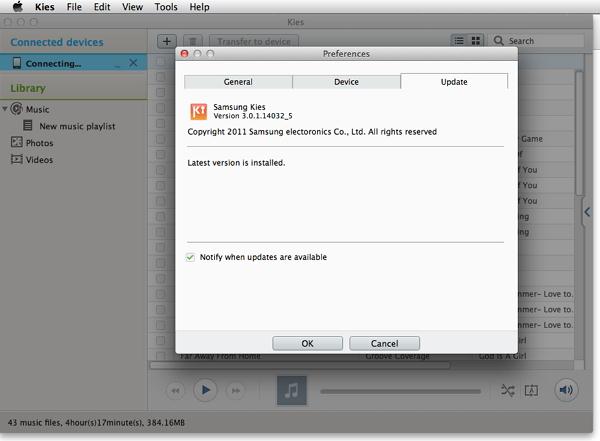
To check for a new version of Kies, open the application and navigate to the menu bar. Click on Kies > Preferences. In the dialog box that appears, select the Update tab. Here, you will see your current version information. You can also tick the box for 'Notify when updates are available' to receive automatic alerts. Click OK to save your settings.
2. Updating Your Samsung Phone's Firmware via Kies
One of the key functions of Kies is updating your device's firmware. Follow these steps carefully to ensure a smooth upgrade.
-
Step 1 Connect Your Device
Launch Samsung Kies on your Mac and connect your Samsung phone using a USB cable. Wait for Kies to recognize your device. The device name should appear in the left sidebar.
-
Step 2 Check for Firmware Updates
Once connected, click on the Basic Information tab. Kies will display details about your device, including its current firmware version. If a new version is available, you will see a notification and an Update button.
-
Step 3 Start the Upgrade
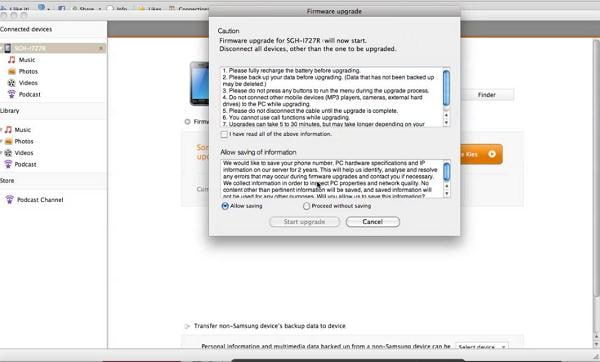
Before proceeding, read the cautionary notes provided by the software. It's crucial to understand the process. Once you're ready, check the box that says I have read all of the above information. You can also choose to allow saving. Finally, click Start upgrade to begin the firmware update process. Do not disconnect your device until the update is complete.

Part 4. Complete Guide to Uninstall Samsung Kies on Mac
If you no longer need Samsung Kies or it's causing issues, you can uninstall it. The process requires using the original installer package, which contains the uninstaller.
-
Step 1 Prepare for Uninstallation
First, ensure your Samsung phone is disconnected from your Mac. If you've deleted the original `KiesMac.pkg` file, you'll need to re-download it from the Samsung website.
-
Step 2 Launch the Uninstaller
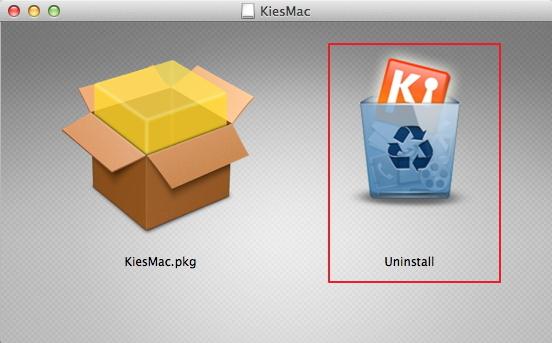
Locate the `KiesMac.pkg` file in your Downloads folder. Double-click to open it. Inside the installer window, you will see an option labeled Uninstall. Click on it.
-
Step 3 Confirm and Complete
A confirmation dialog will appear, asking if you want to proceed. Click Open to start the uninstallation. Once the process is finished, click Complete to close the window.
-
Step 4 Restart Your Mac
To finalize the removal of all components, restart your Mac. For users on OS X 10.8 or newer, security settings may require you to control-click the Uninstall option and then click Open from the context menu to grant access.
Part 5. The Best Samsung Kies Alternative for Mac
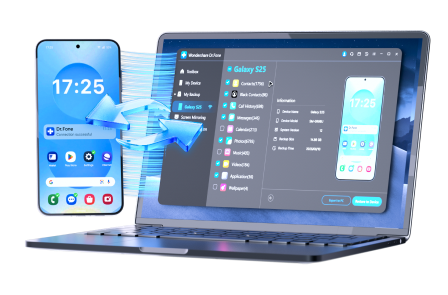
Are you struggling with Samsung Kies not connecting, or are you looking for a more modern and reliable tool? The limitations of Kies, especially with newer operating systems, can be frustrating. A powerful alternative is Dr.Fone - Phone Manager, a versatile Android manager for Mac that simplifies data management.
Dr.Fone - Phone Manager offers a stable connection and a user-friendly interface to manage contacts, SMS, music, videos, photos, and apps on your Mac seamlessly. It supports a wide range of devices and the latest Android versions, making it a superior choice over the outdated Kies software.
 Effortlessly manage data through preview, delete, export, etc.
- Transfer all data between devices.
- Robust backup solutions for reliable data protection.
- Mirror screens to PC for meetings, teaching, and control.
Video Guide: How to Transfer Files with a Samsung Kies Alternative
Conclusion
Samsung Kies for Mac was an essential tool for its time, providing a bridge between older Samsung devices and Mac computers. This guide has provided a comprehensive overview of how to download, install, use, and uninstall it. However, as technology has evolved, Kies has become largely obsolete, facing compatibility issues with modern devices and operating systems.
For a smoother, more reliable experience managing your Samsung device on a Mac, we recommend exploring modern alternatives. Tools like Dr.Fone - Phone Manager offer better compatibility, a wider range of features, and a more intuitive user experience, ensuring your data management tasks are simple and efficient.
FAQ
-
1. What is Samsung Kies for Mac used for?
Samsung Kies for Mac is official software designed to help users manage older Samsung phones and tablets (released before Sept. 2013) on a Mac. Its main functions include transferring data like photos and music, syncing contacts and calendars, backing up the device, and updating its firmware. -
2. Why won't my Samsung phone connect to Kies on Mac?
Connection issues are common with Kies. The problem could be a faulty USB cable or port, a temporary software glitch, or incompatibility with your macOS version. Try restarting both devices, reinstalling Kies, and ensuring you're using a genuine Samsung USB cable. If problems persist, the software may not be compatible with your system. -
3. Can I use Samsung Kies on the latest version of macOS?
Samsung Kies was designed for older Mac operating systems (OS X 10.5 and later). It is not officially supported on the latest versions of macOS, and you are very likely to encounter compatibility issues, connection failures, or unexpected crashes. For modern macOS, Samsung Smart Switch or third-party tools are recommended. -
4. What is a good alternative to Samsung Kies for Mac?
A great modern alternative is Dr.Fone - Phone Manager. It provides a more stable and user-friendly experience for transferring files, managing data, and backing up your device. It supports a wider range of Samsung devices, works flawlessly with the latest macOS and Android versions, and offers features that Kies lacks.
 Add Wondershare Dr.Fone as a preferred source on Google



