Teleport your device anywhere instantly with one click.


 100% Security Verified | No Subscription Required | No Malware

 :

 ChatGPT
 Perplexity
 Gemini
 Claude
 Grok
Samsung does offer people-location sharing through Samsung Find on eligible Galaxy setups. That is different from Apple's Find My service and from third-party apps called Find My Friends. If a Samsung owner and an iPhone owner want to share positions, first choose a service both can actually use rather than assuming matching app names create a connection.
For a quick meetup, a temporary web link may be enough. For an ongoing family arrangement, a private sharing circle can add agreed alerts and history, but everyone must know about and accept the sharing. The three alternatives below are a practical shortlist, not an independently measured ranking or a guarantee of accuracy, safety or identical features on every phone.
On supported Galaxy devices, Samsung's instructions describe Samsung Find > People > Add, followed by selecting a recipient, choosing a duration and sharing. Samsung Account setup and app availability matter. Its People functions should not be confused with the Devices recovery tab, and the website does not necessarily expose the same people-sharing controls.
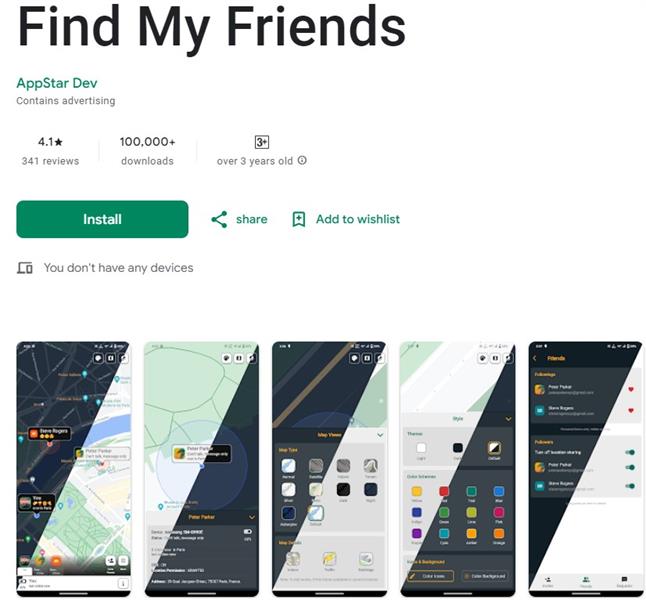
Two similarly named store entries can be misleading. The Android listing below is a third-party product; the Apple link describes Apple's legacy Find My Friends app. They are not a cross-platform pair, and an older listing does not establish current installation eligibility on your phone.
- Third-party Android listing: Find My Friends on Google Play.
- Legacy Apple listing: Find My Friends on Apple App Store.
In this article
Part 1. Compare Three Location-Sharing Alternatives for Samsung
Decide whether you need a single journey link or an ongoing circle before installing another app. Check the current listing for each participant's platform, region, minimum OS and payment conditions. An Android listing alone is not proof of the matching iPhone version's availability or feature parity.
1-1. Glympse for Temporary Links and Meetups

Glympse's current Android listing describes time-limited, real-time sharing through a link. The recipient can open that link on a device or browser without installing the app. This is useful when coordinating arrival with someone who does not want another account or installation just for one meetup.
Set the intended sharing interval and send the link only to the intended people. Automatic expiry reduces the need to remember to stop a temporary share, but it does not prevent a recipient from viewing or forwarding information while it is available. The listing also advertises private groups and paid upgrades, so it should not be described as having no group features or as making every function free.
You can download the Glympse App from Play Store for Free; the free download does not mean every premium feature is included.
- Recipients can view an ordinary share link without the app.
- Time-limited sharing fits a journey or short meetup.
- A browser-view workflow reduces installation friction.
- The listing describes Android and iOS sharing support.
- Link sharing is not the same workflow as a dedicated family-safety plan.
- Some capabilities are paid upgrades; do not assume one share covers every future need.
1-2. Sygic Family Locator and the Current Family Locator Listing

The package linked in the source now presents itself as Find my Phone - Family Locator. Its current listing describes a private map, arrival and departure alerts, an SOS control, private chat, check-ins and location history. The Family Locator website also describes safe and unsafe zones. These are functions to evaluate with your family, not a guarantee of immediate rescue or uninterrupted tracking.
Each participant installs and configures the relevant app, joins an agreed circle and grants the permissions required for the chosen features. Background updates and alerts depend on the phone and connectivity. Test an agreed arrival notification together before relying on it in daily use, and never substitute an app alert for contacting emergency services when needed.
The Google Play Store link identifies the Android package. Read the current plan and subscription terms, including which history or alert features are paid, and verify an appropriate iPhone listing if your group uses both platforms.
- A private circle organizes agreed family sharing.
- Arrival/departure alerts support routine coordination.
- SOS and check-in functions provide additional communication options.
- Private chat keeps the conversation near the sharing context.
- Participants need setup, consent and suitable permissions on their own devices.
- Premium features and subscription conditions require a separate check.
1-3. GeoZilla for an Opt-In Family Circle
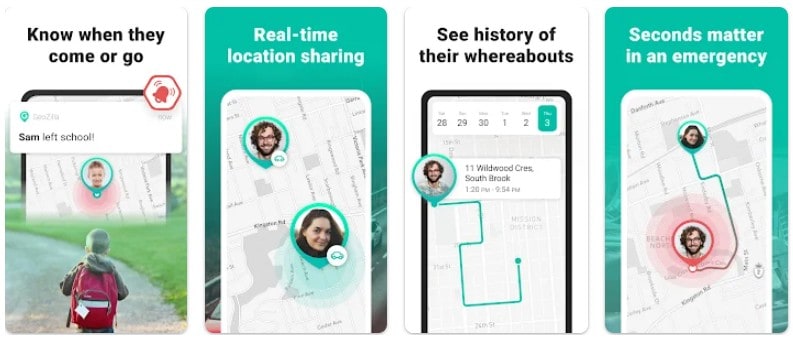
GeoZilla's current Android listing describes live sharing, location history, arrival/departure alerts and battery-related information, alongside additional safety features. The key setup condition is explicit acceptance: sending a phone number or invitation does not secretly activate another person's location.
History deserves its own consent discussion because a timeline reveals more than a single meeting point. Agree who needs access, how long sharing should remain active and how a participant can stop. Feature availability and any paid plan should be checked on the actual device rather than inferred from a screenshot.
Older descriptions of GeoZilla mention location-based errands and Facebook integration. Those particular functions were not confirmed in the current listing reviewed here, so do not choose a subscription on the assumption that they are still included. Instead, compare the current feature description before you download GeoZilla from the Google Play Store.
- Circle membership depends on accepted invitations.
- Location history can help consenting members review a shared journey.
- Place alerts can reduce repeated arrival messages.
- The current listing explains several permissions and sharing requirements.
- Detailed history can feel intrusive without clear boundaries.
- Plan limits and older advertised extras need verification before purchase.
Part 2. Features, Permissions and Invitations to Check
A find friends app for Samsung should fit the relationship and purpose, not simply show the most detailed map. The same label can describe temporary sharing, an ongoing circle, or lost-device recovery. Confirm which one you are setting up, particularly when Samsung and iPhone users are involved.

- Current-position display: inspect the update time and accuracy instead of treating every pin as live.
- Place sharing: some tools support recommendations or saved places; check whether the app actually offers that function.
- Arrival coordination: ETA, directions and alerts differ by product and can depend on a separate navigation service.
- Invitations: a phone number, email, QR code or link can start a request, but cannot bypass consent.
- Duration: prefer a time-limited share for a short event; review ongoing sharing periodically.
- Privacy controls: learn how to stop sharing, remove a participant and review permissions before relying on the service.
General Setup Requirements
Install a current, compatible version from the relevant official store. Review its minimum OS, account requirements, background-location permission, notifications and paid conditions. Being signed in to Google or Apple does not automatically connect you to every third-party sharing circle.
The old Apple Find My Friends listing includes requirements for a legacy app version; those are not universal minimum requirements for today's sharing apps. Apple's current Find My on iPhone and Samsung Find use their own ecosystems and setup rules. For a mixed-phone group, use a genuinely supported common app or a browser-link workflow.
Step 1 Open and configure the chosen app
On your Samsung phone, set up your own account if required. Read why each permission is requested, especially continuous location access.
Step 2 Choose the intended person or circle
Use Add or Invite, check the contact details, and agree on the purpose and duration before sending anything.
Step 3 Send the invitation and verify acceptance
Use the supported contact method, then let the other person accept on their own device. Check together that sharing works and that each participant knows how to stop it.
Some link-viewing scenarios do not require a recipient installation, as with ordinary Glympse shares. That exception does not mean you can remotely enable a friend's GPS. A missing or stale location can reflect permission, battery or connectivity issues and is not proof of where the person currently is.
Part 3. Bonus: Test a Virtual GPS Position Without Confusing It with Privacy
 Set your map route to simulate GPS movement.
- Set your wanted movement speed.
- HD and large map view to check location.
- Fake GPS location to anywhere.
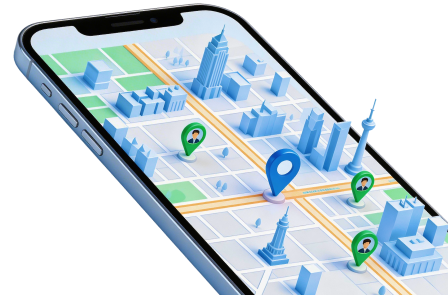
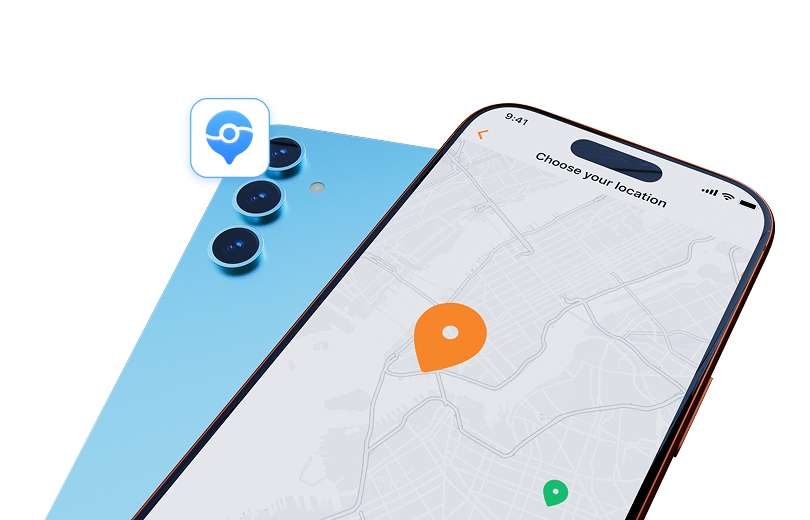
Dr.Fone - Virtual Location offers destination selection and route simulation on supported devices, with movement-speed settings for walking, cycling or driving scenarios. This is relevant when you need to test how your own phone or a compatible map responds to a different coordinate. It is not a Find My Friends account, a way to locate another person, or a switch that revokes their access to your shared position.
Do not assume that every Samsung location-sharing service accepts the same simulated point. Use in-app sharing controls for an actual privacy break. The vendor describes Android GPS-changing scenarios but explicitly excludes Pokémon GO in its Android section; broad game compatibility and guaranteed hidden tracking should not be inferred from the fixed product component.
Two Steps for a Controlled Virtual Location Test
Tell anyone who relies on your shared location that you are testing, or stop sharing first. A simulated pin must not be used as evidence of actual whereabouts, and it should not remain active during navigation or an emergency-related use.
Step 1 Connect your own Samsung phone
Install the appropriate desktop version, launch Virtual Location and connect the phone to your trusted computer. Complete the supported device-recognition and authorization prompts, then select Get Started if that button appears in your version. If a mock-provider setup is required, follow the software's instructions rather than changing unrelated developer settings.
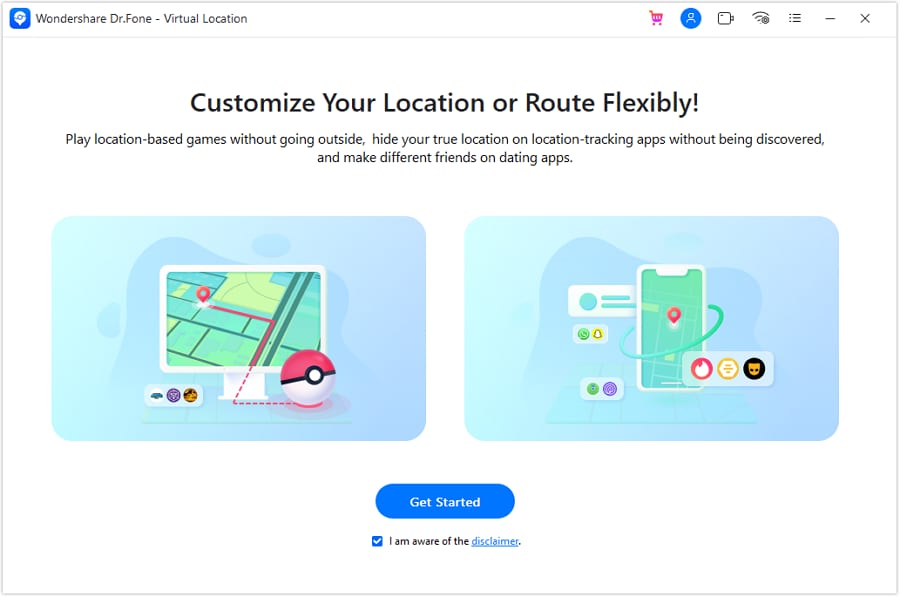
Step 2 Select a test coordinate and inspect the outcome
Choose Teleport Mode by its label, search a location or select a point, and review it before choosing Move Here. Verify the result in a compatible map and, only with consent, in the intended sharing workflow. Do not treat a changed Maps pin as proof that all other services changed.
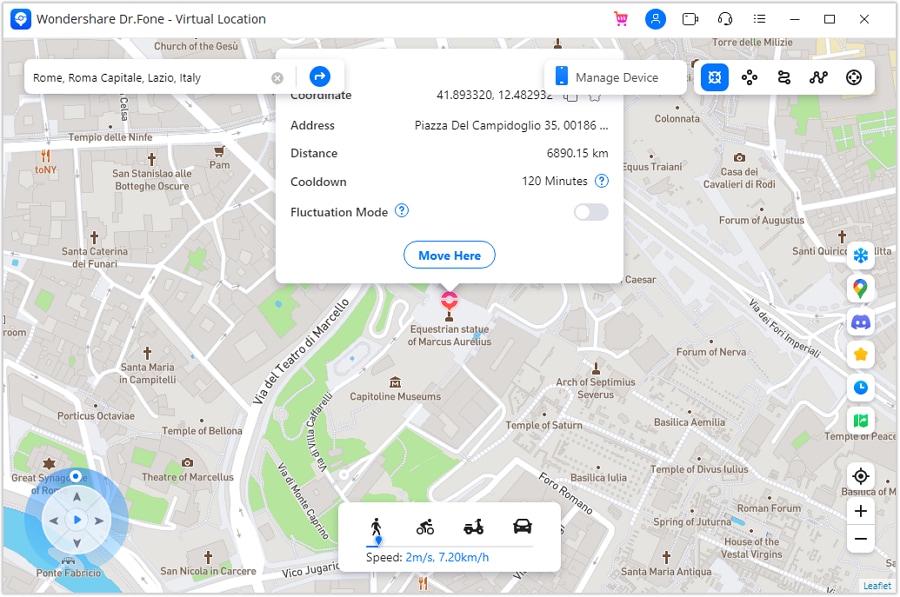
End the test by stopping simulated movement and restoring the actual position according to the software's instructions. Remove any temporary mock provider if applicable, then verify the real point before restarting normal sharing. A virtual coordinate does not guarantee anonymity or complete control over another service's stored information.




Conclusion
Samsung Find provides people sharing on eligible Galaxy setups, while Glympse, Family Locator and GeoZilla offer different third-party workflows to evaluate. Temporary links suit a short meetup; a private circle may suit an ongoing, agreed family arrangement. Check platform support, consent, duration, paid limits and the method for stopping access before sharing.
For GPS-testing needs, Dr.Fone - Virtual Location offers a separate simulation workflow. It should not replace straightforward privacy controls or be used to mislead someone who depends on your actual location. Preserve informed choice for every participant and verify the phone's real position when the test ends.
FAQ
1. Does Samsung have its own Find My Friends equivalent?
Samsung Find includes a People tab for sharing on eligible Galaxy setups. It is not Apple's Find My Friends service, and people sharing is different from lost-device recovery. Check your device, account and regional availability.2. Can a Samsung phone view an iPhone friend's location?
Use a service or link workflow both people can access, with the iPhone owner's informed acceptance and required permissions. Installing a similarly named Android app does not connect it to Apple's Find My network.3. Are all family-location apps end-to-end encrypted and safe?
Do not assume a universal encryption or safety standard. Review the specific privacy policy, permissions, plan and sharing controls. Share only with trusted people and agree separately on any history access.4. Why use a virtual location tool on Samsung?
A compatible tool can help test location-dependent behavior on your own phone. It does not secretly track another person, guarantee a privacy pause, or establish Android Pokémon GO support. Restore actual GPS after the test.
 Add Wondershare Dr.Fone as a preferred source on Google