 Teleport your device anywhere instantly with one click.


 100% Security Verified | No Subscription Required | No Malware


 :

 ChatGPT
 Perplexity
 Gemini
 Claude
 Grok
If you want privacy in Apple's Find My, use its sharing controls before considering a fake location. Simulating GPS, selecting a different sharing device, and changing who can see your position are separate actions. A coordinate shown in an ordinary map does not prove that Find My will show the same coordinate to another person.
The original guide grouped four iPhone approaches and one Android mock-location method under Find My Friends. That name needs clarification: Apple's service is now part of Find My, while Android apps with similar names are separate products. Below, the original methods and their setup details remain in order, but unsupported promises about tracking alerts, compatibility, and hidden location are replaced with clear limits.
In this article
Part 1: Understand which Find My Friends service you use
The older Find My Friends app name is still used in searches about location sharing. On Apple devices, people sharing is handled through Find My. Adding a person to your contacts does not automatically give that person your location; sharing requires the relevant account and permission choices.
A shared position can help friends meet or check an arrival. Location-change notifications can also be configured, subject to the service's conditions. Review those notifications separately from messages: Find My is not a general-purpose chat application, and any contact shortcut should not be confused with a private chat system built into the map.
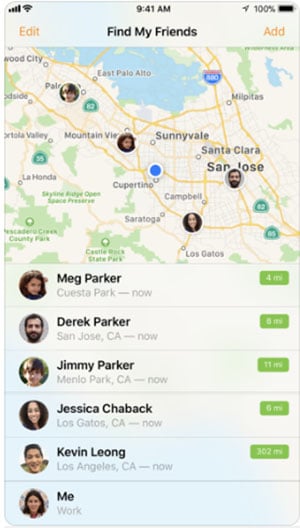
What changed with iOS 13?
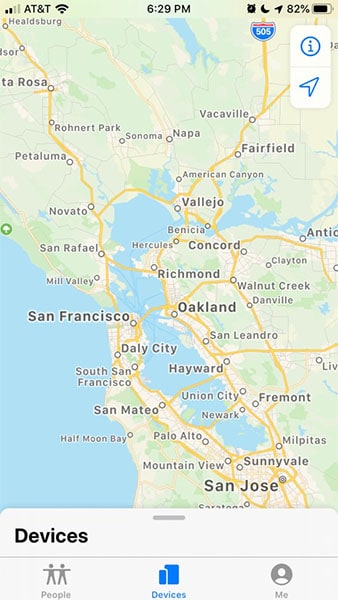
Apple combined Find My Friends and Find My iPhone into Find My with iOS 13. On that system and later versions, open Find My and use People for person-to-person location sharing. The Devices area serves a different purpose: finding hardware linked to your account.
That distinction matters when changing privacy settings. Stopping a person from seeing your shared position is not the same as turning off device-finding protection. It is also not necessary to download an unrelated Android app simply because the old standalone Apple app is no longer visible on your iPhone.
Part 2: Address the real privacy concerns first
Continuous sharing can feel intrusive, particularly when relationships or plans change. The answer is not necessarily to falsify coordinates. First inspect who receives your location, how it is shared, and whether the account or device is controlled by someone else.
- Cost confusion: the original article's blanket 99-cent charge should not be applied to Apple's built-in Find My. A similarly named third-party app can have its own pricing; identify the publisher before evaluating a fee.
- Too much visibility: location sharing is useful only when the audience and duration suit you. Review your People list instead of assuming everyone needs continued access.
- Unwanted requests: you can decline a request. Apple's current guide also describes turning off Allow Friend Requests from Me when you do not want new location-sharing requests.
- Coercive monitoring: in an abusive situation, a sudden settings change may be noticed. Make safety-related decisions from a safe device and seek trusted help; a GPS spoofer is not a dependable safety plan.
- Account exposure: protect account credentials and review devices and sharing arrangements. It is not accurate to say any hacker can automatically access Find My merely because the service exists.
For a direct change, open Find My > People, select the person, and choose Stop Sharing My Location. To stop sharing with everyone, use Me and turn off Share My Location. Where the current interface offers Hide Location for a person, Apple's safety guide says sharing automatically resumes the next day; a temporary pause is not the same as a permanent stop.
People may notice that sharing has stopped, and older operating systems may send a Messages notice. Also keep people sharing separate from the Find My network: compatible devices may remain findable after disconnecting or powering off. Do not promise that closing the app or using a simulated coordinate makes the phone untraceable.
Part 3: Four iPhone approaches and their boundaries
The four methods below do not offer equivalent results. The desktop tool changes a supported phone's reported GPS; a second device changes the sharing source when properly selected; the two tweaks are legacy jailbreak-dependent options. None justifies a blanket guarantee of freezing or secretly replacing another person's Find My view.
3.1 Test GPS coordinates with a virtual-location tool
 Set your map route to simulate GPS movement.
- Set your wanted movement speed.
- HD and large map view to check location.
- Fake GPS location to anywhere.

Dr.Fone - Virtual Location provides a desktop interface for choosing a simulated GPS position and planning routes with adjustable movement speeds. It is relevant when testing location-dependent behavior on your own supported phone.
For Find My specifically, separate a successful local GPS test from a verified sharing result. Apple services can use account, device, and network information in ways that a map screenshot does not establish. The no-jailbreak desktop process below must not be presented as a guarantee of hiding your actual whereabouts or defeating device finding.
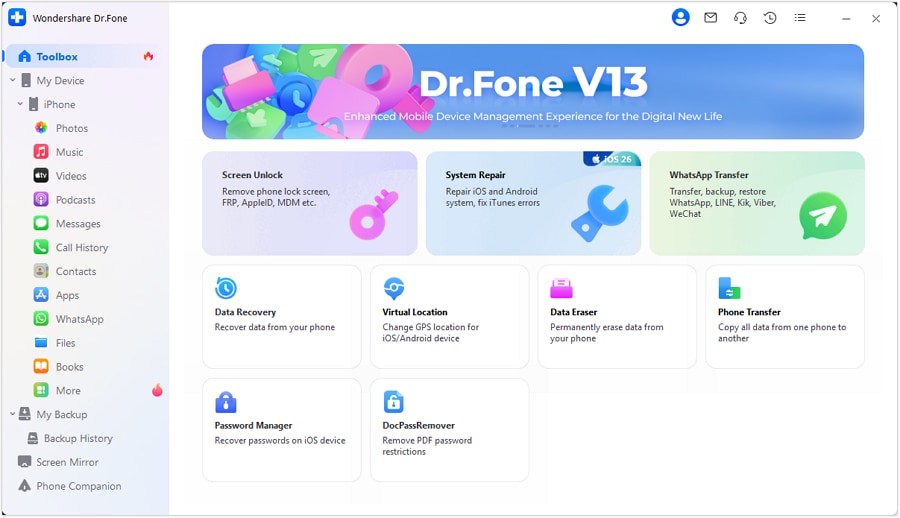
Step 1 Install the matching desktop edition
Confirm current device support, install the Windows or Mac version, and open the Virtual Location module. Use the official product distribution rather than a package from an unrelated website.
Step 2 Connect your iPhone
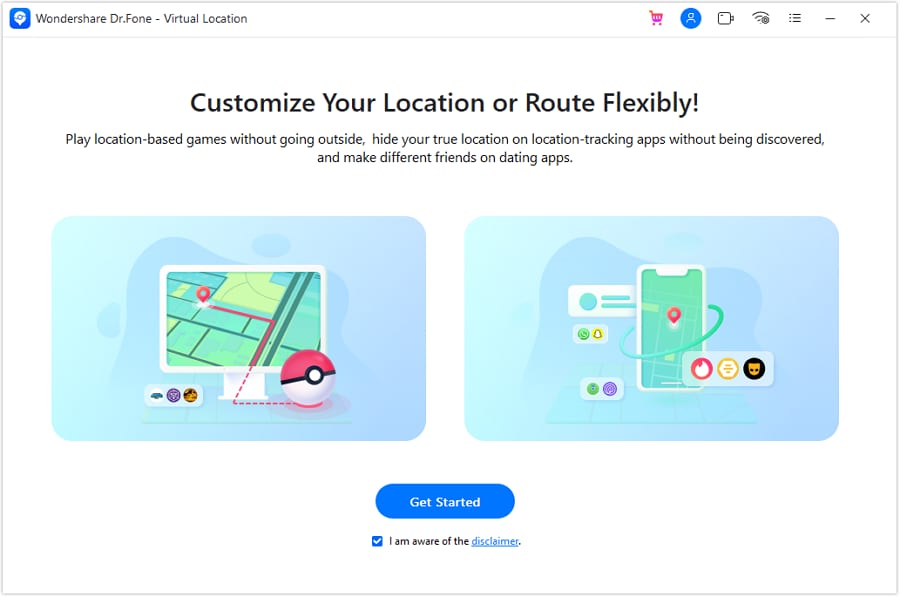
Connect an unlocked phone that you own, approve the required trust prompts, and continue through Get Started. Wait for successful device recognition before applying coordinates.
Step 3 Check the reported starting point
Inspect the map and use its current-location control if the starting point is not centered. The original instructions called this Center On; the official guide uses Current Virtual Location. Identify the function in your installed edition rather than assuming an exact label or corner.
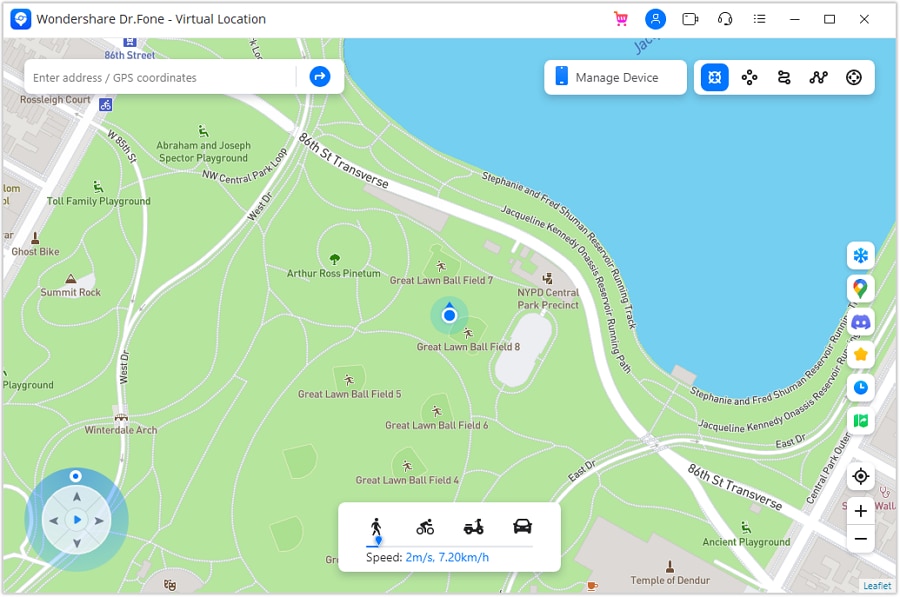
Step 4 Search in Teleport Mode
Select Teleport Mode and search for the target place or coordinates. The current official guide describes it as the first icon from the left in the upper-right group; the older source's third-icon instruction should not be treated as universal.
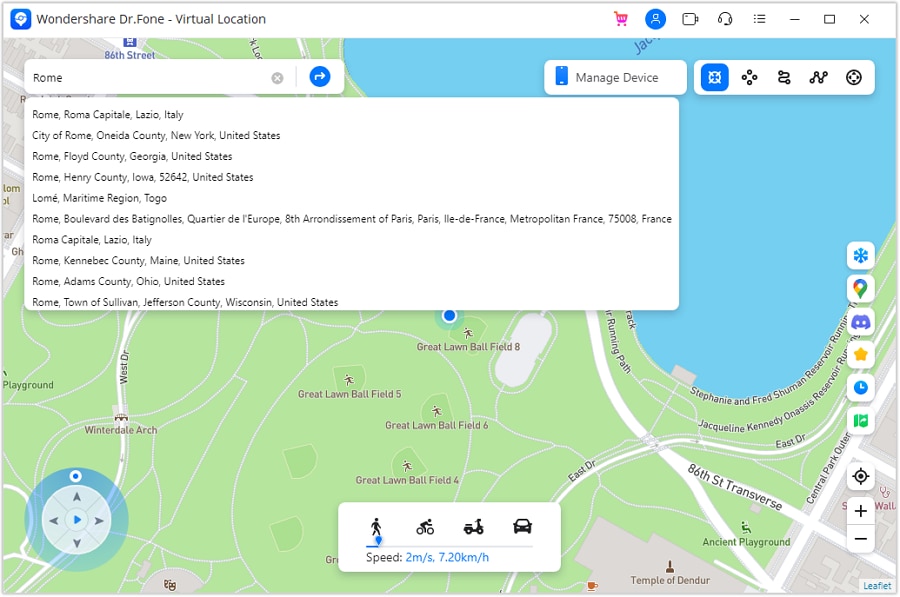
Step 5 Confirm and verify the test
Review the point and choose Move Here. Check an ordinary map on the connected iPhone to inspect its reported position. If you evaluate a sharing service afterwards, observe its actual result and update status separately; do not infer a guaranteed Find My change from the desktop pin.

When testing ends, follow the application's restoration prompts. The official guide advises restarting the phone to return to the actual position. Verify normal location before navigation or safety-related sharing. Route controls can simulate movement, but they do not prove that Find My or another service accepts every supplied coordinate.




3.2 Use a second iPhone as the selected sharing device
The source called this a burner-phone method. A more precise description is sharing from another device that you own and control. Merely signing into a second phone or leaving it somewhere does not establish that it has become the source of your shared location.
Step 1 Review the existing sharing source
On your main device, open Find My > Me and check Sharing From. Do not sign out of your Apple Account just to imitate an older article's app-logout step; account sign-out has broader effects than changing the location source.
Step 2 Select your other device explicitly
On the eligible second device using your account, open Find My and choose Use This iPhone as My Location when available. Apple's current guide says to change the source on the device whose location you want to share.
Step 3 Verify and manage the source
Confirm that Sharing From names the intended device. If it stays in one place, the shared position represents that device rather than your physical movement. Do not use this as a promise of secrecy; people can notice discrepancies, and a paired cellular Apple Watch can affect sharing in supported circumstances.
There are practical drawbacks. A spare phone needs power, account access, and correct configuration, and you may miss communications sent only to that device. The original guide attributed this to an in-app chat; on current Apple devices, check the separate messaging and account setup instead. Revisit the source selection when switching back to your main iPhone.
3.3 FMFNotifier: understand the legacy jailbreak workflow
FMFNotifier is described in the source as a Cydia tweak for a jailbroken iPhone. The claimed features include a notification when someone requests location, configurable notification text, and saved simulated-location presets. Those are source-era descriptions, not independently verified current Find My capabilities.
There is no basis here to promise that the package is currently available, works with your iOS version, or reports every view of your location. Apple's guidance warns that jailbreaking bypasses security protections and can cause instability, service disruption, and inaccurate location data. Do not jailbreak a primary or safety-critical phone merely to pursue an old compatibility claim.
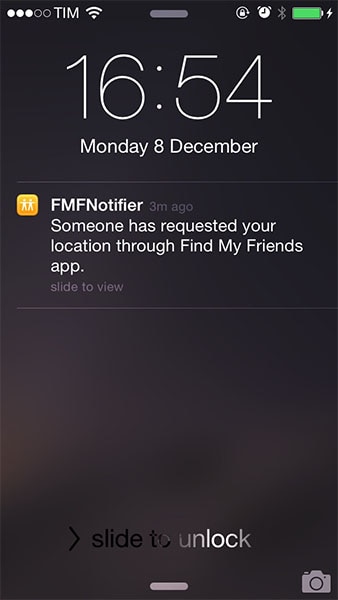
The original three-stage process is retained for understanding an existing compatible setup, not as confirmation that a modern iPhone can follow it:
Step 1 Inspect the package source
On an already compatible test device, the original workflow began in Cydia > Sources. Verify the repository and device requirements before considering any package.
Step 2 Check the named package
The source identified BigBoss as the place to look for FMFNotifier. If the package or a trustworthy compatibility statement is unavailable, stop rather than substituting an unknown similarly named download.
Step 3 Review its settings if already supported
The described configuration entry was Settings > FMFNotifier, with notification text and location presets. An enabled switch or a saved preset does not demonstrate that current Find My requests are intercepted accurately.
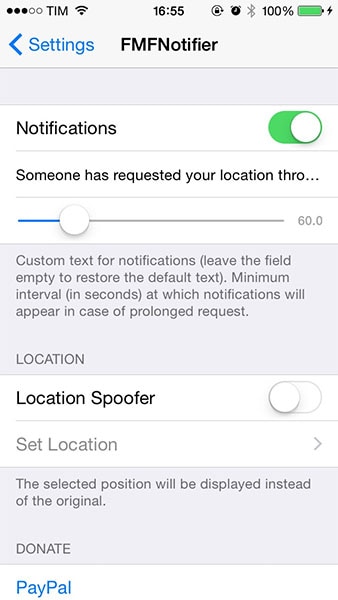
3.4 AntiTracker: distinguish claimed alerts from verified privacy
AntiTracker is the other jailbreak tweak mentioned in the source. It was described as showing a tracking-related notification, including while the screen was locked. A screenshot of that alert is not proof that the tweak sees every location request or provides a complete audit trail on current systems.
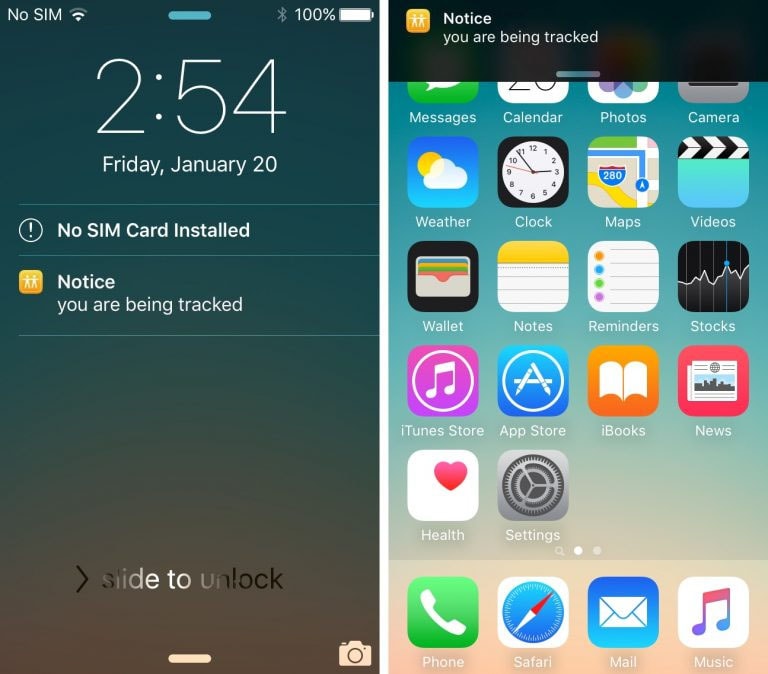
Step 1 Establish compatibility before installation
The source's first step was finding AntiTracker in Cydia's BigBoss repository. It described the package as free, but neither present pricing nor availability is verified here. Do not infer current support from the old package name.
Step 2 Understand the available controls
For a legitimately supported existing installation, the original guide directed users to its Settings entry after installation. Review each control individually instead of treating the presence of the app icon as proof of protection.
- An enable or disable switch for the tweak itself.
- A location-hiding option whose actual effect needs verification.
- A selectable notification sound.
- Custom text for the displayed alert.
- A request log described as recording location pings.
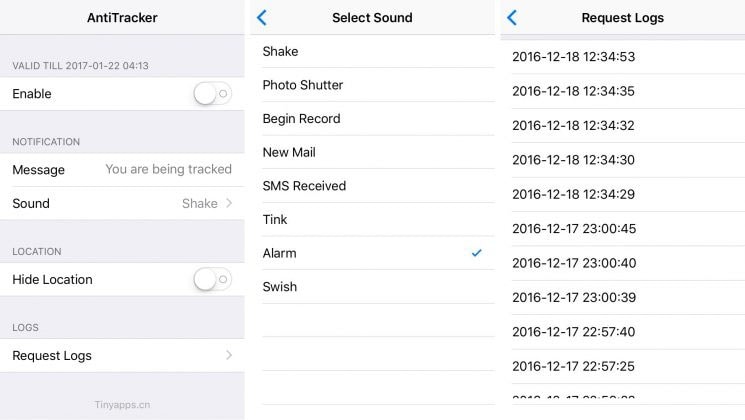
These controls do not replace Apple's sharing settings or an account-security review. If the goal is to stop a person receiving your position, use the direct stop-sharing control rather than waiting for an unverified tweak to announce that they looked.
Part 4: Android mock location is a separate app scenario
Apple's native Find My people-sharing service does not become an Android app merely because another product is called Find My Friends. The following Android process concerns a third-party location-sharing app that accepts Android's test locations. It is not a way to control an iPhone's Find My sharing from an Android phone.
The source names Fake GPS GO Location Spoofer Free, then labels its provider FakeGPS Free in the settings steps. Similar names can identify different apps, so check the publisher and select the actual package you install. Android 6 or later was the source's example environment; current requirements must come from the chosen listing. A standard mock-provider setup does not inherently require root.
Step 1 Enable the developer menu
Open Settings > About phone. On Samsung, continue into Software information to find Build number; other manufacturers use different paths. Tap Build number seven times and complete any credential prompt.
Step 2 Install and inspect the chosen app
Use its legitimate Google Play listing, review permissions and Android support, and open Developer options in Settings. Revealing this menu is not the same as turning off Android security or making every target app accept mock data.
Step 3 Open the mock-provider shortcut
Launch the GPS app and use its Enable shortcut if offered. It should take you to the relevant developer setting; do not grant unrelated permissions merely to reproduce an older screen.
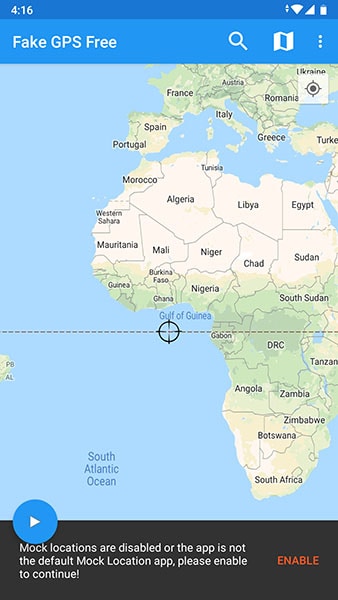
Step 4 Select the installed provider
In Select mock location app, choose the exact app you installed. The original screenshot's FakeGPS Free label is an example, not a reason to choose a different package with a similar name.
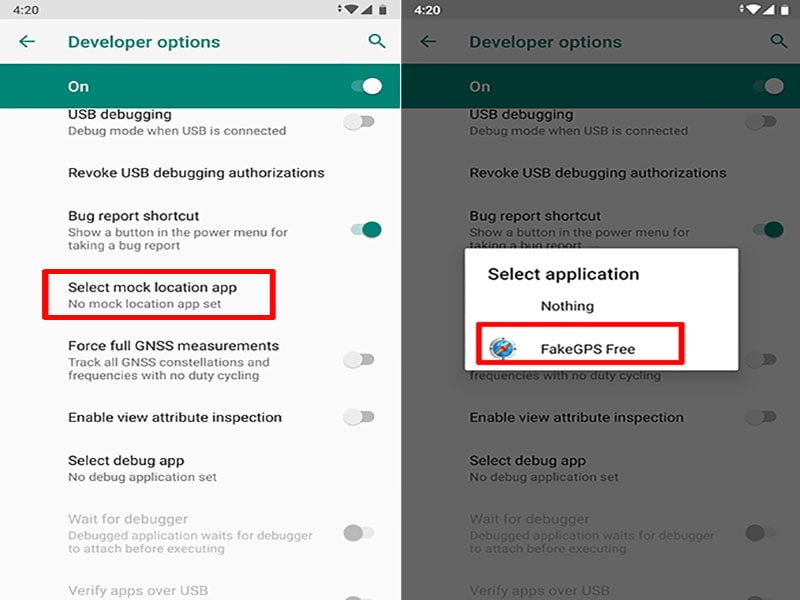
Step 5 Run and end a limited test
Return to the GPS app, choose a point or its supported route controls, and press play. The source described long-pressing two spots for a route; use that only if your chosen app offers the same function. A fake-location-active message confirms the provider's state, not the result in every sharing service.
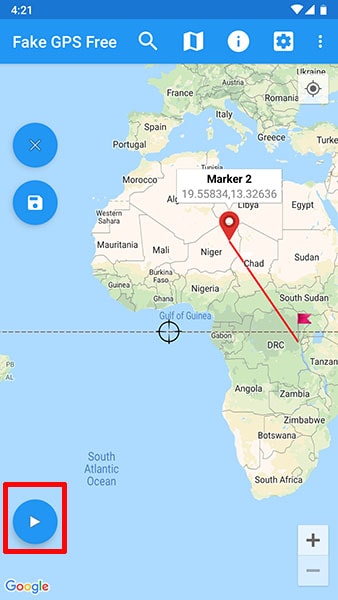
Check a map, then the intended third-party app. Afterwards stop the provider, clear its selection, and verify real positioning. Never rely on an unverified simulated position for a safety check or emergency response.
Conclusion
Find My privacy is best understood as control over sharing, not a promise that a fake coordinate will hide you. Use the current Apple controls for audience and duration, verify which device supplies your position, and treat desktop simulation as a bounded GPS test. Legacy jailbreak tools and Android mock providers have different requirements and cannot be generalized into five guaranteed fixes for Apple's service.
FAQ
1. Where did the iPhone's Find My Friends app go?
Its people-sharing function became part of Find My with iOS 13. Open the People tab for person sharing and use Devices for finding your hardware.2. Does Hide Location stop sharing permanently?
Not necessarily. Apple's current safety guide says the Hide Location pause for a person resumes sharing the next day. Use Stop Sharing My Location when you intend to end sharing rather than pause it.3. Does a changed map pin prove Find My has been spoofed?
No. A local map and Apple's sharing service are not interchangeable tests. GPS simulation must not be sold as a guarantee of freezing Find My or making a device unfindable.4. Are FMFNotifier and AntiTracker current no-jailbreak options?
No. The source describes both as jailbreak-dependent tweaks, and current compatibility is not verified here. Prefer built-in sharing controls over installing unverified packages.
 Add Wondershare Dr.Fone as a preferred source on Google



