Teleport your device anywhere instantly with one click.

 100% Security Verified | No Subscription Required | No Malware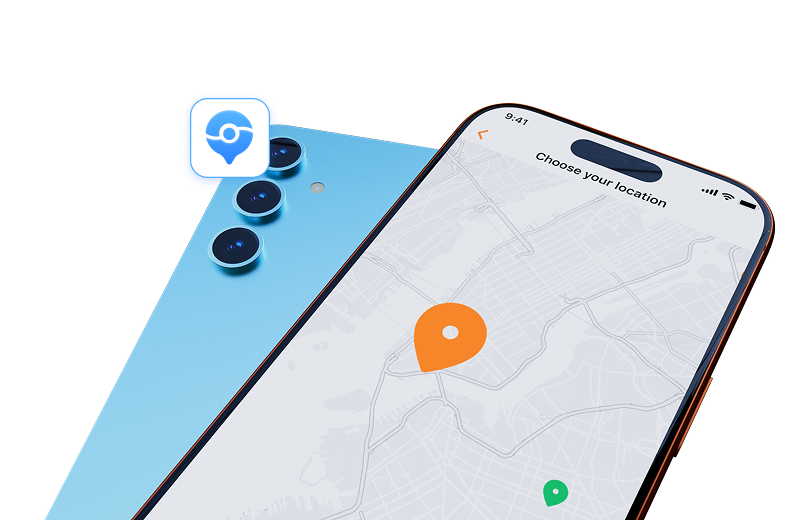

 :
: 
 ChatGPT
 Perplexity
 Gemini
 Claude
 Grok
Grok
A Life360 map can seem simple until a member icon suddenly appears orange, blue, green, or purple. That confusion is real. Life360 users have publicly asked what these changing colors mean because clear answers are not always easy to find. Meanwhile, Life360’s own support pages explain specific indicators, such as a purple map icon for detailed trip history and a greyed-out icon when a member loses connection.
This guide explains how Life360 Circles work, what Life360 circle colors and key tracking signals actually indicate, how to manage a Circle, and what privacy options exist when you want more control over your location.

In this article
Part 1. What Are Life360 Circles And How They Work
Life360 Circles are private groups in the Life360 app. Create different Circles to include your family, friends, partner or any trusted people.
Each Life360 Circle has its own members and sharing settings. This helps keep different groups separate and gives you more control over who receives your location and safety updates.

How Do They Work?
Once a person becomes a member of a Circle, members can send their locations to the group as long as location sharing is enabled. Life360 may also notify you when a member arrives at or departs from a saved location like home, school, or work.
A Circle may include driving activity, safety alerts, crash detection, and roadside assistance depending on the features and plan available.
You are free to join multiple Circles and switch between them in the app. Life360 is great for managing multiple groups and preventing everyone from being in the same location.
Next, we will look at Life360 Circle colors and the key tracking features shown inside the app.
Part 2. What Do Life360 Circle Colors Really Mean?
Life360 uses colors, icons, and status signs to show different types of activity on the map. Their meaning can vary by feature, so they should be read with the icon or message shown beside them.

What Do Life360 Circle Colors Mean?
According to the Life360 map-icon guide:
- Purple: Opens location or trip history for a Circle member.
- Green: Has been linked with Drive Detection being active.
- Orange: Older versions used it to mark areas with recent crime reports.
- Spinning circle: Usually means Life360 cannot get a reliable location, often because of a weak connection.
Because Life360 has changed its interface over time, these colors should not be treated as one fixed universal code.
The Tracking Features That Matter More Than Color
Life360 uses GPS, Wi-Fi, cellular signals, and internet access to update a Circle member’s location. Strong signals usually give faster and more accurate updates, while weak coverage can delay the position shown on the map.

Key tracking features include:
- Live location updates: Shows a member’s current or latest available position on the map.
- Location and trip history: Lets users review recent movement and driving details where available.
- Place Alerts: Sends a notification when a member enters or leaves a saved place, such as home, school, or work.
- Driving activity: Can provide driving-related information when supported features such as Drive Detection are active.
- Bubbles: Shows a broader location area instead of the exact point, giving members more privacy while keeping general location awareness.
These features help Circle members follow movement and important location changes without checking the map all the time.
Part 3. How to Create, Manage, or Leave a Life360 Circle
Once you understand how Circles work, you can create separate groups and control who manages them. Life360 keeps most Circle controls under Circle Management.
How to Create a Life360 Circle
To make a new Circle:
-
Step 1 Open Life360 and tap the Circle Switcher at the top.
-
Step 2 Select Create a Circle.
-
Step 3 Choose a suggested name or enter your own.
-
Step 4 Tap the plus (+) sign beside the name.
-
Step 5 Select Send Code and share the invite with the people you want to add.

Anyone you invite will need Life360 and their own account before joining the Circle.
How to Manage a Circle
Admins have more control than regular members. They can remove members, edit the Circle, and manage certain settings.
To give or remove Admin access:
-
Step 1 Go to Settings.
-
Step 2 Tap Circle Management.
-
Step 3 Select Change Admin Status.
-
Step 4 Use the toggle beside a member’s name to add or remove Admin rights.

Every Circle must have at least one Admin. If you are the only Admin and plan to leave, assign someone else first. Otherwise, Life360 can choose another Admin automatically.
How to Delete or Leave a Circle
Life360 currently provides a Leave Circle option rather than a standard Delete Circle control.
To leave:
-
Step 1 Open Settings.
-
Step 2 Choose Circle Management.
-
Step 3 Tap Leave Circle.
-
Step 4 Select Yes to confirm.
If you manage a Circle that you no longer need, you can remove members first through Circle Management > Delete Circle Members, then leave the Circle yourself. Only an Admin can remove another member, and Life360 notifies the person who is removed.

Part 4. Why Users May Want More Privacy
Location sharing can answer useful questions. Did someone reach home? Has a family member left work? Is a new driver still on the road?
But continuous Life360 location tracking can also reveal a detailed picture of someone's routine. A location history may show where a person spends time, when they travel, and which Places they visit.
That is why privacy should be discussed inside the Circle rather than assumed. Life360 itself describes the service as opt-in and states that users can turn Location Sharing off.
Option 1: Pause Location Sharing
You can select a specific Circle and switch Location Sharing off.
The important point is visibility: other members see Location Sharing Paused rather than a normal live position.
Option 2: Use a Life360 Bubble
A Bubble gives you more privacy without fully ending location sharing.
Instead of showing your precise position, it shows that you are somewhere within a wider area. Life360 lets the creator adjust the Bubble size and duration. Current support says a Bubble can cover up to 25 miles and remain active for up to six hours.

Members can see that a Bubble is being used. A safety event may also burst it, and Circle members can burst one if they are concerned about the person's safety.
For many users, these built-in options should be considered before changing GPS data.
Part 5. How To Fake Location On Life360 With Dr.Fone - Virtual Location
Sometimes pausing location is not the goal. A user may need a virtual GPS position for app testing, location-based services, privacy testing, gaming, or another legitimate use.
In that case, GPS spoofing for Life360 works differently from simply pausing sharing.
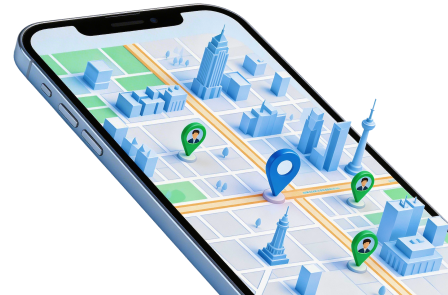
A GPS location changer replaces the coordinates reported by the device with a selected virtual position. As a result, apps using the phone's GPS may read the new position instead.
Dr.Fone - Virtual Location is one option for users who want to change Life360 location on supported iOS or Android devices. Wondershare says its software provides instant teleporting, route simulation, joystick movement, and customizable movement speeds without requiring a jailbreak or root on supported setups. Its current product page also lists Life360 among supported location-sharing use cases.
 Set your map route to simulate GPS movement.
- Set your wanted movement speed.
- HD and large map view to check location.
- Fake GPS location to anywhere.
How to Fake Location on Life360 With Dr.Fone - Virtual Location
-
Step 1 Open Dr.Fone and Connect Your Phone
Install and launch Dr.Fone on your computer. Open Virtual Location and connect your iPhone or Android phone.
Wondershare supports USB connections and provides Wi-Fi connection options for supported setups.
-
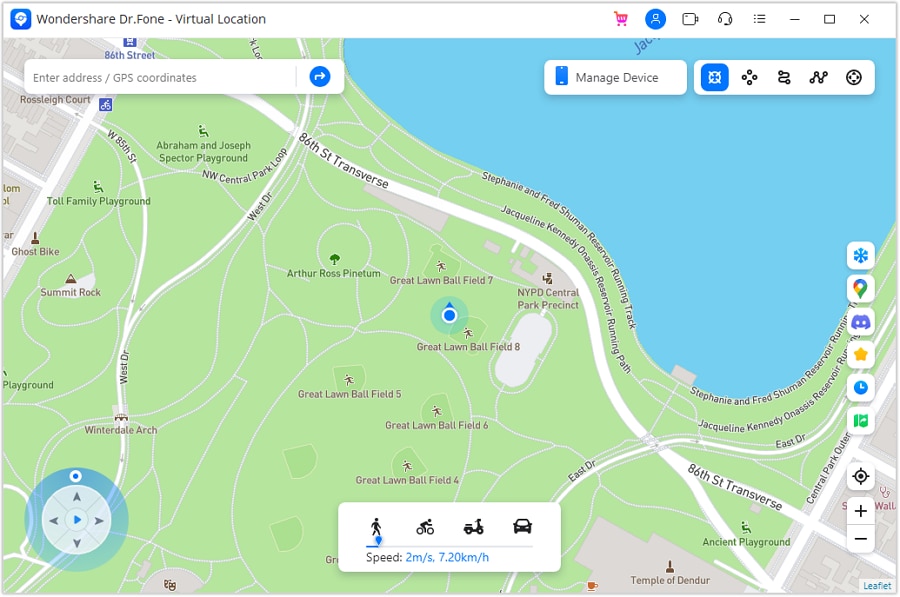
Step 2 Open Teleport Mode
After the device is connected, choose Teleport Mode from the controls at the top-right of the Virtual Location map. This mode moves the reported GPS position directly to another location.
-
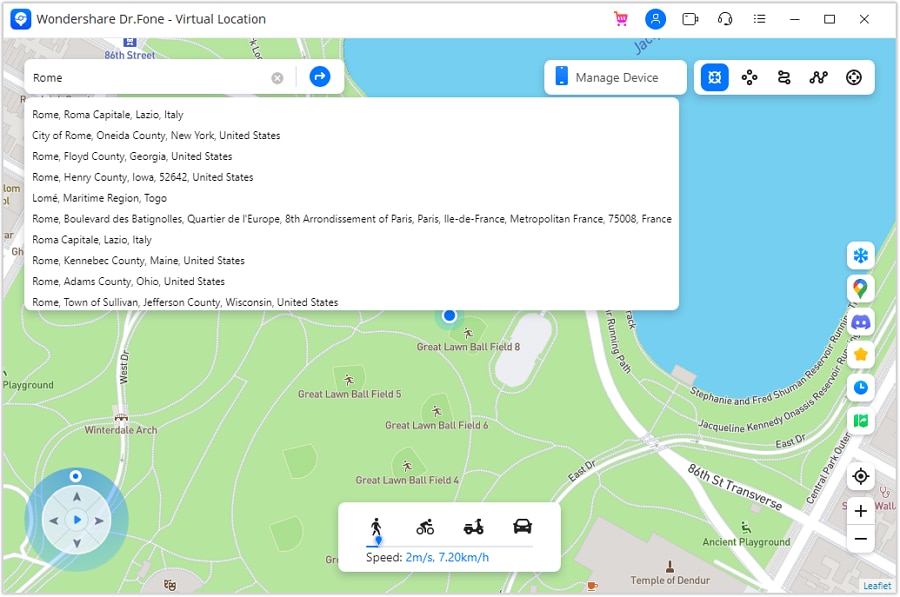
Step 3 Search for Your Virtual Location
Use the search field and enter the city, street, landmark, or other destination you want. Dr.Fone will move the map to that area so you can check the selected point before applying it.
-
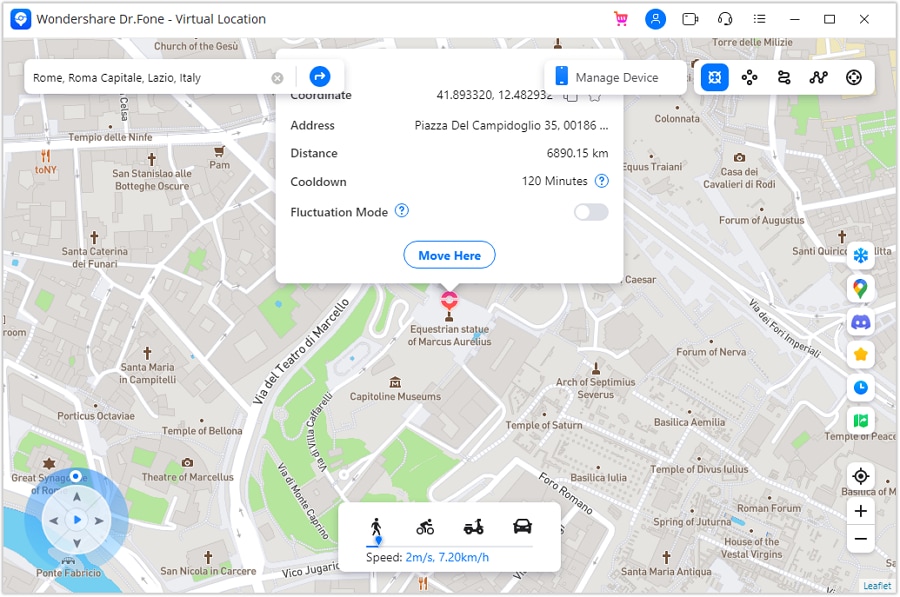
Step 4 Click “Move Here”
Once the location is correct, select Move Here.
The software then changes the phone's reported GPS position to the selected point. Open a map app on the phone to confirm the virtual location is being reported.
-
Step 5 Add Movement if Needed
A fixed pin can look different from normal travel. If your use case requires movement, Dr.Fone also offers:
- One-Stop Route for movement between two points.
- Multi-Stop Route for a route with several points.
- Adjustable travel speed.
- Loop or round-trip movement.
- Joystick control for manual direction changes.
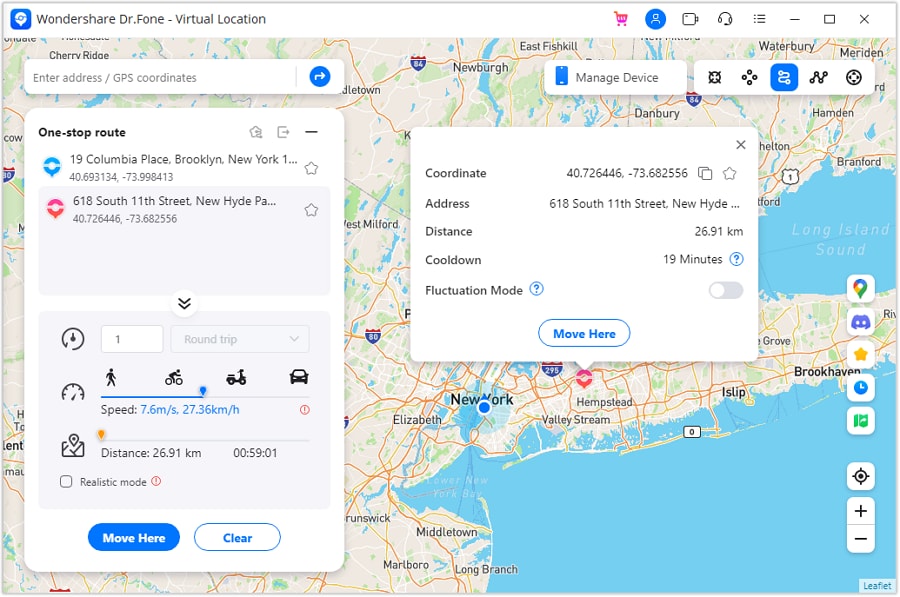
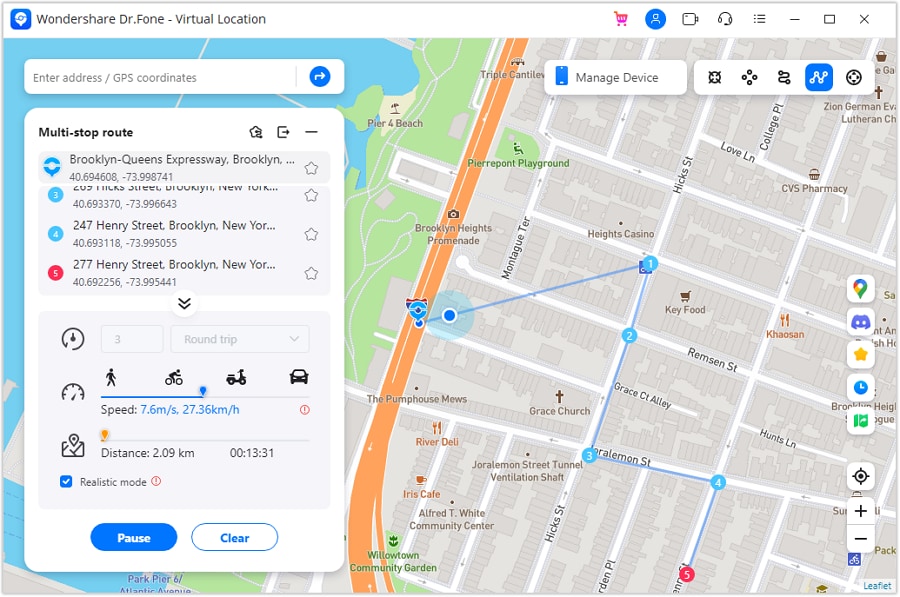
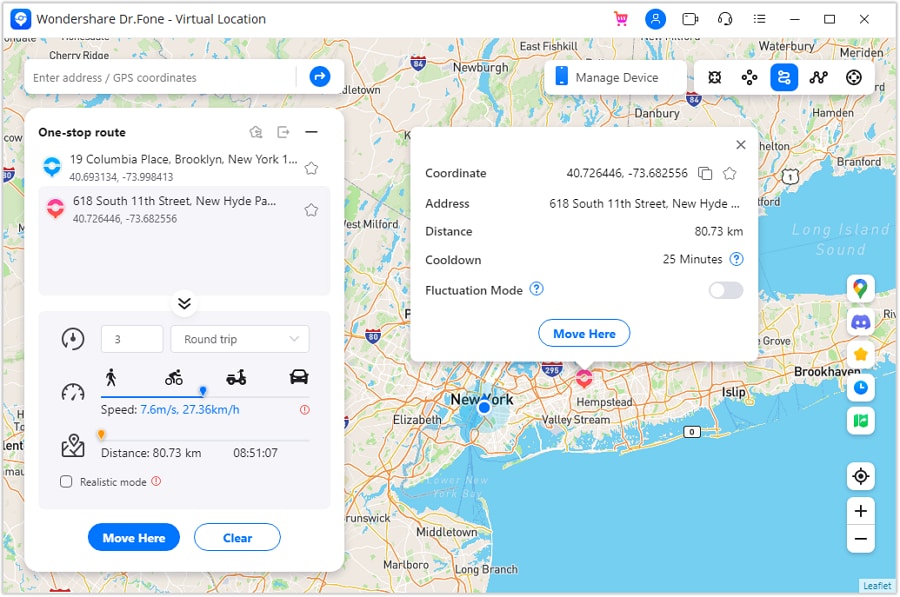
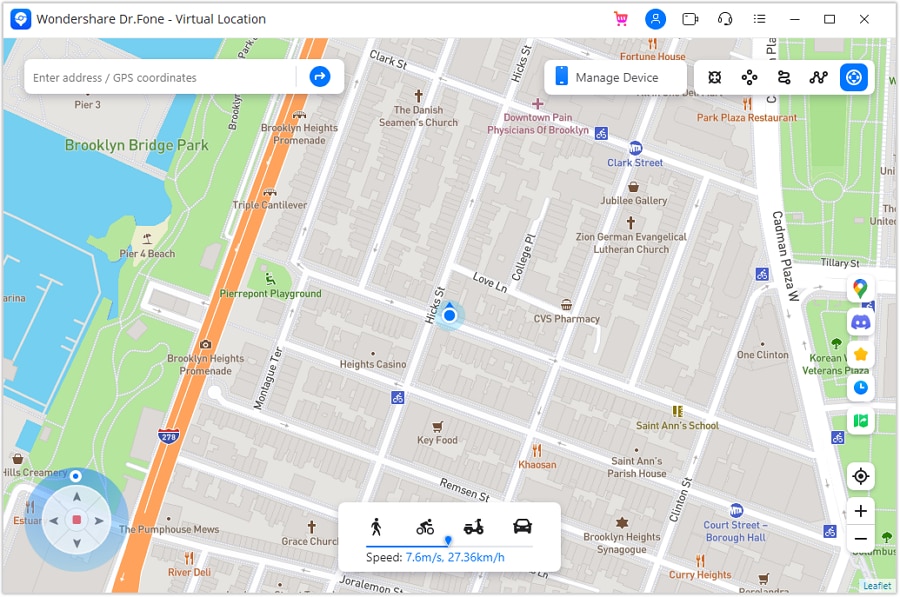
For example, One-Stop Route lets you choose a destination, set the number of trips, select a speed, and start simulated movement. Multi-Stop Route lets you join several map points into one simulated path.
How Do You Return to Your Real Location?
Wondershare's Teleport Mode guide says restarting the connected phone restores its actual location after using a virtual location. The software also reminds you to restart when you close Virtual Location.




Conclusion
Life360 Circles can make family location sharing more useful by combining live updates, Places, driving information, and privacy controls in one group. Still, Life360 Circle colors should be read with the icon or message beside them, since their meaning can change by feature. If you want less precise tracking, Life360 already offers options such as pausing sharing or using Bubbles.
For users who specifically need to change Life360 location for testing or other legitimate purposes, Dr.Fone - Virtual Location offers teleport and route-simulation tools on supported devices. Use any virtual location carefully, especially when others depend on accurate safety or arrival information.
FAQs about safety, visibility, and location changes
-
1. Can Everyone in Life360 See My Location?
No. Only members of the Life360 Circles where location sharing is enabled can normally see your location. -
2. Does Life360 Show When Location Sharing Is Turned Off?
Yes. Life360 shows “Location Sharing Paused” to that Circle. -
3. Can I Be in More Than One Life360 Circle?
Yes. You can join multiple Circles and switch between them using the Circle Switcher. -
4. Are Life360 Circle Colours Always Reliable Status Indicators?
No. Life360 does not use one fixed color code for every status. Always check the icon or message shown with the color. -
5. Can Life360 Track Me if I Log Out?
No. Your location stops updating after you log out. Other members may see a “Logged out of Life360” message. -
6. Is GPS Spoofing for Life360 the Same as a VPN?
No. A VPN changes your IP-based location, while GPS spoofing for Life360 changes the GPS coordinates reported by the device. -
7. Can Dr.Fone Simulate Movement Instead of One Fixed Location?
Yes. Dr.Fone - Virtual Location supports One-Stop Route, Multi-Stop Route, adjustable speed, and joystick movement. -
8. Is Changing a Life360 Location Completely Undetectable?
No method should be considered completely undetectable or guaranteed. App and system updates can affect how virtual GPS tools work.
 Add Wondershare Dr.Fone as a preferred source on Google