 Teleport your device anywhere instantly with one click.


 100% Security Verified | No Subscription Required | No Malware


 :

 ChatGPT
 Perplexity
 Gemini
 Claude
 Grok
You cannot reliably find someone on Tinder by name alone. Tinder's official help says it does not offer a search for a specific person. Public web results, a profile link someone has chosen to share, or third-party identity tools may provide clues, but none is a complete directory of current Tinder members.
If you met someone and want to reconnect, asking them for their preferred contact or profile link is the clearest option. The four approaches below explain what public searches can and cannot show, how the original steps work, and why an empty result never proves that somebody is not on Tinder. Respect private profiles, boundaries, and a person's decision not to respond.
In this article
Method 1: Check Public Tinder Links and Search Results
A search engine can sometimes surface a publicly accessible Tinder-related page. This is a search of indexed web content, not a way to query Tinder's complete membership. If someone has voluntarily shared a profile link, use that link rather than trying to infer a private account from a common name.
Step 1 Open a web-search page
Use a search engine in your browser. Chrome is a browser, while Google Search is the search service; the original instruction used the two names interchangeably.
Step 2 Limit the search to public Tinder pages
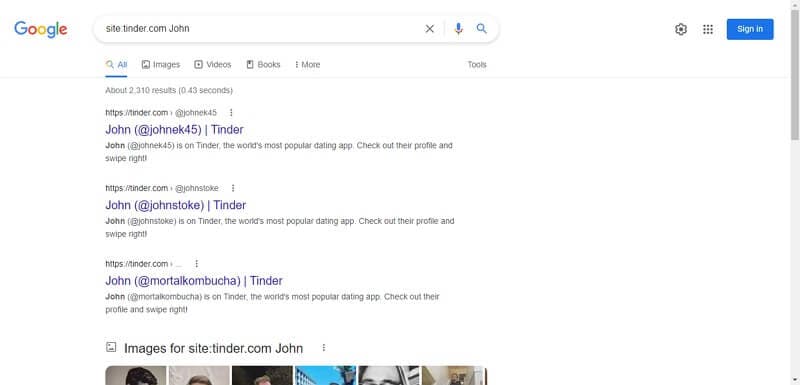
Enter
site:tinder.comfollowed by the name or public username that the person has chosen to use. This narrows the indexed pages searched; it does not unlock hidden profiles or establish that a matching result exists.
Step 3 Assess any result cautiously
Open only a relevant public result or a shared link, and compare the information with details the person has willingly provided. Names and photographs can be duplicated or outdated. A result is not proof of identity, current activity, relationship status, or consent to contact.
Notice: Correct Spelling Does Not Guarantee a Match
Wrong spelling can reduce relevant results, but even a perfectly spelled name may return nothing. Search engines do not index every page, profiles can use different display names, and links may no longer be accessible. Do not treat either a matching name or a missing result as a conclusive answer about a person's Tinder use.
Method 2: Understand What PeopleFinders Can Actually Show
PeopleFinders is described in the original article as a public-record people-search service. A public-record match is not a verified Tinder account, and the source supplies no evidence that PeopleFinders has direct access to a complete or current Tinder database. Use such tools only for lawful, appropriate identity checks, not to circumvent privacy settings.
Step 1 Review the service before searching
Visit its official site, inspect the current terms and pricing, and select the name-search option if available. Enter only information you are entitled to use. Do not mistake a request for more personal details or payment for a promise of a Tinder result.
Step 2 Compare candidate records, not assumptions
Submit the search and examine any candidate matches with caution. A common first and last name can represent several people. Before drawing conclusions, distinguish the service's reported public records from anything a person has directly confirmed.

Potential benefits
- A people-search interface can organize public-record information that would otherwise be scattered.
- Candidate records may help compare basic identity details, but no accuracy rate is established by the original article.
- Some reports may contain contact, relationship, or court-record categories; their presence does not establish a Tinder profile or that every record belongs to the same person.
Main limitation
Reviewing ambiguous results can take time and may involve payment. Check the current offer and cancellation terms, and do not purchase a report on the assumption that it will confirm someone's Tinder activity.
Method 3: Evaluate Third-Party Social-Profile Search Tools
Third-party search services may aggregate public records and online profiles. That is different from Tinder's own Discovery feature or authenticated access to a person's account. Their coverage, freshness, and matching criteria vary, so treat results as leads to verify rather than answers that establish identity or membership.
1. Tinder Profile Finder Tools and Location Filters
The original article suggests setting your Tinder location near the place where you met someone. Geography may affect Discovery recommendations, but it does not turn Tinder into a name-search engine or guarantee that a specific person appears. Tinder offers its own paid Passport Mode for choosing another city; current purchase and account conditions should be checked in the app.
Be wary of services that promise to reveal every Tinder profile, require another person's password, or claim to bypass private settings. Discovery preferences, public-link searches, and a third-party matching report are different tools. None should be used to pursue someone who has blocked contact or made clear that they do not want it.
2. Social Catfish
The original reference is "https://socialcatfish.com/". Social Catfish describes a people-search service using details such as names, phone numbers, emails, usernames, or photos to look for matching public information. Its own site notes that results depend on the public data available and can vary by person and location.
Step 1 Select an appropriate search type
On the official site, choose the relevant search option and supply only information you are authorized to use. Read any price and subscription disclosures before proceeding from a preview to a full report.

Step 2 Verify candidate information
Review possible matches without assuming a shared name or image proves identity. A linked public profile is not proof of current Tinder use. If you already communicate with the person, ask them directly to clarify inconsistencies rather than treating an automated match as a verdict.

Potential benefits
- Different search inputs can help compare public-facing identity information when checking an online introduction.
- Comparing photos and claimed details may reveal inconsistencies that deserve a careful conversation.
- Organized results can reduce manual browsing, but the article supplies no measured speed or success rate.
Main limitation
Limited previews and paid reports are different products. Social Catfish says fuller results may require a paid plan; examine the current price, renewal terms, and available preview before paying. No fee guarantees a Tinder match.
3. Spokeo
Spokeo's website describes public-record and social-profile searches using inputs such as a name, phone number, email, or address. Its membership description emphasizes coverage of adults in the United States. That is a scope limitation to consider, not evidence that the site contains every US resident's dating profile.
Step 1 Review the official name-search interface
Visit the official site, inspect what is included, and enter an appropriate name query. The original screenshots show a Search Now button; labels and subscription offers can change.

Step 2 Separate public-record matches from account claims
Compare any candidate results with information legitimately available to you. A report may list public social information, but it is not a Tinder activity log. Do not infer a current dating account or relationship behavior from a similar name, an old link, or an incomplete result.

Potential benefits
- A single search form can organize several categories of public information.
- The source describes straightforward navigation and sign-up, but ease of use should be judged in the current interface.
- Check any available preview before choosing a paid report; the original article does not establish a current universal price.
Main limitation
US-focused data coverage may be unsuitable for an international query. Even within the covered region, missing or stale information can produce false negatives or misleading matches.
Method 4: Check the Name on Other Public Social Profiles
Facebook, Instagram, and Twitter/X may contain profiles someone has chosen to make public. If you want to reconnect appropriately, compare a public username or details shared in your conversation, rather than collecting unrelated personal information. A public profile on one service does not establish an account on another.
The original article suggests that unsuccessful searches make Tinder use unlikely. That conclusion is not supported. Display-name differences, limited indexing, privacy settings, and simple non-participation can all lead to few results. No result should be treated as a relationship test, and an ambiguous result should not be used to accuse someone of hidden activity.
Notice: Respect Missing Information and Personal Boundaries
People may use a nickname, keep accounts private, or avoid public social media entirely. Do not create impersonation accounts, evade a block, or pressure someone to explain a private profile. Where contact is welcome, asking for a preferred profile link is more accurate and respectful than escalating a speculative search.
Wondershare Dr.Fone: Location Testing, Not a People Finder
 Set your map route to simulate GPS movement.
- Set your wanted movement speed.
- HD and large map view to check location.
- Fake GPS location to anywhere.

Dr.Fone - Virtual Location offers a computer-based map for Teleport Mode and simulated routes on supported iOS and Android devices. Its relevance to a location-based app is the device position supplied during an authorized test, not access to names, private profiles, messages, or another person's account.
Changing a GPS point does not guarantee a Tinder Discovery result or override account settings, checks, or service terms. For browsing another city within Tinder, review the app's own Passport Mode first. If you instead need to test location behavior on your own supported phone, keep the GPS workflow and its limitations explicit.
Step 1 Connect your own supported device
Launch the desktop module, attach the phone, and complete the legitimate connection and trust prompts. Check current system support before proceeding.
Step 2 Confirm a test destination
Select Teleport Mode, search for a destination, inspect the map pin, and choose Move Here. This selects coordinates; it does not search for a person.

Step 3 Verify and end the simulation
Inspect the phone's map app and conduct only authorized tests. Follow the software's restoration instructions afterwards; its official guide describes restarting the device to restore the actual position.
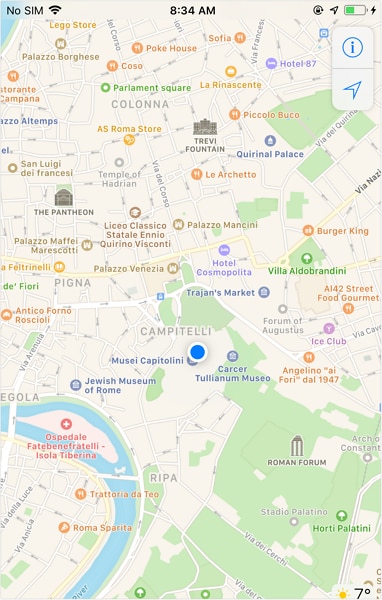
Restore the genuine location before navigation or other location-critical tasks. Do not use a simulated location as evidence that another person is nearby or as a way to pursue unwanted contact.




Conclusion
The honest answer to how to find someone on Tinder by name is that no method here offers a reliable membership search. Public links and third-party tools have limited coverage, and Tinder says users cannot search for a specific person. Treat matches cautiously, never treat absence as proof, and prioritize a consensual exchange of contact details. If your separate requirement concerns a supported phone's GPS test location, Dr.Fone - Virtual Location addresses that signal rather than identifying Tinder members.
FAQ
1. Can I search Tinder for an exact name?
Tinder's official help says you cannot search for a specific person. Discovery preferences influence recommendations, but are not an exact-name directory.2. Does no search result prove someone is not on Tinder?
No. Public indexing and third-party data are incomplete, and a person may use a different display name or keep information private.3. Can PeopleFinders, Social Catfish, or Spokeo prove current Tinder activity?
Not from a name match alone. A public-record or social-profile result can be incomplete, stale, or attributed to a different person. None is established here as a live Tinder membership database.4. Will changing my GPS find a particular Tinder user?
No. A GPS tool changes a device signal, not Tinder's search capabilities. It cannot reveal private profiles or guarantee that anyone appears in Discovery.
 Add Wondershare Dr.Fone as a preferred source on Google



