 Teleport your device anywhere instantly with one click.


 100% Security Verified | No Subscription Required | No Malware


 :

 ChatGPT
 Perplexity
 Gemini
 Claude
 Grok
The best dating apps like Tinder differ in how they introduce people, not simply in how their screens look. CoffeeMeetsBagel, Hinge, Bumble, OkCupid and Happn are five alternatives worth comparing when Tinder's familiar swipe-based experience no longer fits your priorities. A useful choice starts with the kind of connection you want and the conversations you prefer having.
A larger selection of profiles does not automatically produce a better relationship. Matching preferences, local participation, communication rules and subscription costs all affect the experience. This 2026 comparison keeps those practical questions separate from marketing promises, so you can narrow your shortlist without expecting any platform to guarantee a compatible partner.
In this article
Part 1. How to Choose the Best Tinder Alternative?
Tinder makes discovering potential dates approachable: browse a profile, indicate interest and see whether the other person reciprocates. That low-friction format is appealing, but it does not suit every personality or dating goal. Someone who enjoys a quick introduction may want a different app from someone who prefers detailed answers before starting a conversation.
Rather than installing every suggested service, evaluate each candidate against the same five criteria below. Keep your own non-negotiables clear, including the relationship you are seeking, how much location information you want to share and whether you are comfortable paying for particular controls. The right alternative should make those decisions easier, not pressure you into a subscription.
Compare compatibility tools and the matching process

Start by checking what happens between seeing a profile and exchanging messages. Tinder's standard swipe flow uses mutual interest to create a match. Other services emphasize comments on photos, responses to prompts or curated recommendations. Those differences influence how much context you have when you introduce yourself.
If you like a simple yes-or-no browsing rhythm, a familiar format may be comfortable. If repeated swiping feels uninformative, look for fuller profiles or ways to explain why someone caught your attention. Read the actual messaging rules, since sending a like or an introductory comment is not necessarily the same as opening an unrestricted conversation.
Choose an app that reflects your dating goals

Decide whether you are seeking a committed partnership, meeting new people or exploring what kind of relationship suits you. Then inspect the app's profile fields and filters. A service that helps members describe their intentions can make it easier to recognize mismatches early, although an account setting cannot verify another person's sincerity.
Your own profile matters as much as the platform. State your intentions respectfully, choose accurate photographs and discuss expectations before assuming that a match wants the same thing. Even an app marketed toward serious dating contains people with different priorities, so treat its positioning as a starting point rather than a promise.
Check regional access and the local dating pool

A popular recommendation may not be available in your country, and an available app may have few active members near you. Confirm that you can download and legitimately use the service where you live before investing time in a profile. Also consider the distance you are realistically willing to travel for a date.
Regional restrictions are different from a narrow search radius. Changing a location preference does not necessarily change account eligibility, billing territory or the people who are actually active nearby. Prefer the app's supported discovery settings and avoid interpreting a technical location change as permission to bypass its rules.
Compare free access with the subscriptions you would use

Many dating platforms allow a basic account while charging for additional discovery or visibility features. Identify which tools are genuinely important to you before comparing prices. A lower fee has little value if the plan omits your essential filter, while a more expensive tier may include extras you would never use.
Check the current purchase screen for the billing period, renewal terms and cancellation process; offers can vary by region and account. Try the free experience where practical. Paying may unlock functions, but it does not buy compatible dates, reliable replies or a successful relationship.
Use recent reviews as evidence, not a final verdict

Read several recent reviews instead of treating a single enthusiastic or angry account as representative. Look for repeated observations about usability, unexpected charges, reporting tools and the local member base. A review from another country may describe a very different experience from the one available in your city.
Friends can add useful context, especially when they share your goals and live nearby. Still, their results are personal experiences, not forecasts of your own. Combine those recommendations with the app's published rules and your comfort with its privacy settings, then make the final decision yourself.
Part 2. 5 Best Dating Apps Similar to Tinder
These five options offer different reasons to move beyond Tinder. The list is a comparison of approaches rather than a universal ranking: an app that suits one person's communication style may frustrate another. Assess the features available to your account, and use the original service links below to check current regional access before joining.
CoffeeMeetsBagel

Consider it for a relationship-focused introduction. CoffeeMeetsBagel describes itself as a service for serious daters. Its emphasis on preferences and suggested connections can appeal to people who want a more deliberate alternative to browsing an open-ended stream of profiles.
Use your profile to explain the relationship you are seeking and review the available preferences carefully. Recommendations are suggestions, not proof that someone meets every condition or shares your intentions. Ask meaningful questions and assess the person independently instead of assuming that an algorithm has already established compatibility.
Hinge

Consider it when profile details help you start a conversation. Hinge allows interest to be attached to a particular part of a profile, such as a photograph or prompt, with an accompanying comment. That gives an introduction more context than an unexplained swipe alone.
The useful distinction is the opportunity to respond to something specific before a match develops. It does not mean you can disregard the other person's choice to engage. Treat an initial comment as an invitation, and respect the platform's matching, messaging and moderation boundaries.
Bumble

Consider it for more control over how an introduction begins. Bumble is associated with women shaping the start of heterosexual conversations. However, the old blanket statement that a man can never initiate is incomplete: its Opening Moves feature lets women set a question or prompt that a match can answer.
Bumble's official guidance also explains that either person can set and respond to an Opening Move in same-gender and non-binary connections. Check the rules shown in your own match rather than relying on an outdated women-must-always-message-first summary. The relevant benefit is a structured way to start talking, not a judgment about who should use the app.
OkCupid

Consider it when detailed compatibility information matters. OkCupid's profiles and questions provide material for comparing values, interests and relationship preferences. This can be helpful when you want more substance than a short photograph-led introduction.
The service also offers ways to describe identity and relationship preferences. Review the options available in your region and decide what you are comfortable disclosing publicly. A compatibility indicator can suggest topics to discuss; it cannot substitute for your own assessment of honesty, safety or mutual respect.
Happn

Consider it when local, crossed-path encounters appeal to you. Happn centers its discovery experience on people whose paths have crossed nearby. Its location-led approach differs from choosing profiles without that shared geographic context. Expressing mutual interest can provide the starting point for a conversation.
Do not confuse approximate encounter information with a right to track another person. Review location permissions and the service's privacy controls before enabling discovery. A profile appearing in a local feed does not establish that someone is currently at a particular address, available to meet or willing to disclose their movements.
Wondershare Dr.Fone: distinguish toolkit functions from location simulation
 Set your map route to simulate GPS movement.
- Set your wanted movement speed.
- HD and large map view to check location.
- Fake GPS location to anywhere.

The original toolkit recommendation covers separate tasks such as device management, transfer, mirroring, recovery, repair and unlocking. Those are not all functions of the location module. For the specific task of testing GPS-based discovery on a supported device, Dr.Fone - Virtual Location provides a map interface for selecting a simulated position and configuring route movement.
Use it only where the app's terms permit location simulation. It does not create local users, change relationship preferences, provide VPN protection or override a dating service's eligibility checks. Official travel or discovery controls are preferable when available; be transparent about where you actually live when talking to a potential date.
-
Step 1 Connect a supported phone
Open the desktop program, enter Virtual Location and follow the connection and device-authorization prompts. Confirm compatibility for your exact device and system version before using a location test.
-
Step 2 Select a test location
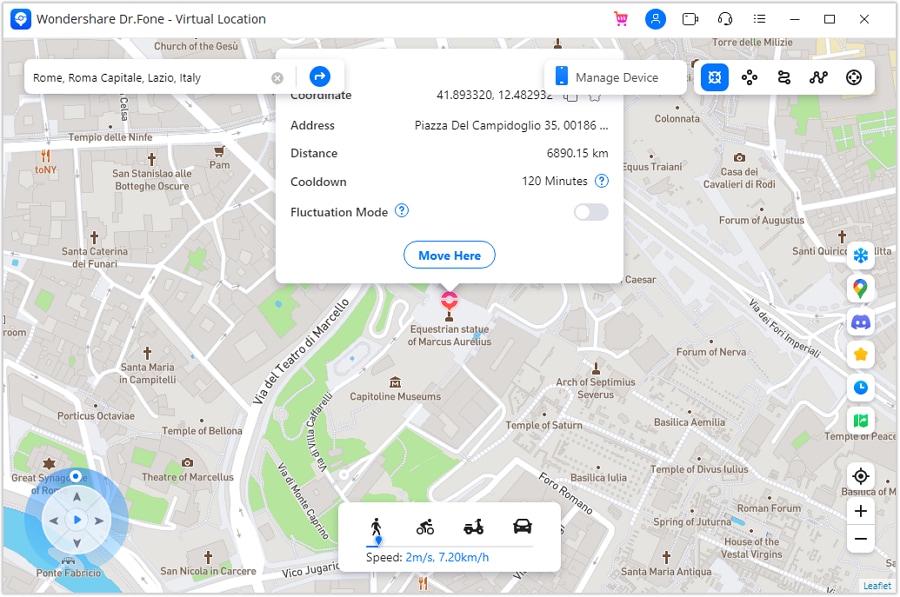
Choose Teleport Mode, search for the intended place and inspect the map pin. Confirm with Move Here only after verifying that the result is the place you intended to select.
-
Step 3 Verify and restore
Check the reported position in the phone's maps app first. A dating app may handle location differently. When the test is over, follow the program's restoration prompt or restart the device as described in its official guide.
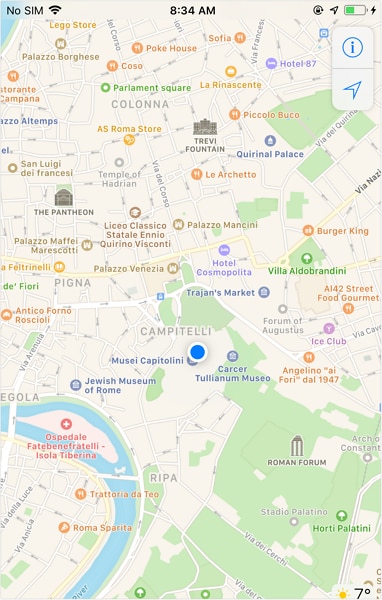
A GPS test changes a location signal, not another person's consent or your account's permitted features. Stop the simulation and confirm your real position before relying on maps, location sharing or a real-world meeting.




Conclusion
There is no single Tinder replacement that wins for everyone. Shortlist CoffeeMeetsBagel for serious-dating positioning, Hinge for profile-led introductions, Bumble for its conversation-opening choices, OkCupid for detailed compatibility context and Happn for local crossed-path discovery. Then compare availability, costs and privacy before spending money or sharing more information.
For a separate GPS-testing task, Dr.Fone - Virtual Location is a location tool, not a dating app or a guarantee of better matches.
FAQ
-
1. Which Tinder alternative is best for serious dating?
CoffeeMeetsBagel explicitly targets serious daters, while other services also let people describe relationship goals. Choose based on available preferences and actual conversations; no app guarantees commitment. -
2. Does Bumble always require women to send the first message?
No. Opening Moves lets a woman set a question that her match can answer. Bumble also describes different opening options for same-gender and non-binary connections. -
3. Should I subscribe immediately after joining a dating app?
First check the free experience, local participation and the exact features in the plan. Review renewal and cancellation terms, and do not assume payment guarantees replies or dates. -
4. Will changing GPS unlock every regional dating feature?
No. Account eligibility, regional availability and app-specific checks can remain unchanged. Location simulation also does not replace privacy controls, honest communication or compliance with the service's rules.
 Add Wondershare Dr.Fone as a preferred source on Google


