 Teleport your device anywhere instantly with one click.


 100% Security Verified | No Subscription Required | No Malware


 :

 ChatGPT
 Perplexity
 Gemini
 Claude
 Grok
To change where LinkedIn looks for jobs, update the Jobs location filter and your job preferences; edit your profile location only when that profile information needs changing. Those settings are separate from the GPS coordinates reported by a phone.
If you are moving to another city or country, you can research its jobs before arriving and tell recruiters where you are willing to work. Accurate location information and a clear relocation timeline are more useful than pretending a GPS change has already moved your professional profile. The desktop and mobile methods below explain the distinction.
In this article
Set a Preferred LinkedIn Job Location with the Appropriate Control
First identify what is wrong. The country or city displayed beneath your name belongs to your profile. The place used for a particular vacancy search belongs to the Jobs search. Preferred locations shared through Open to Work help describe the opportunities you want.
If LinkedIn is showing jobs in the wrong location, do not immediately rewrite your public profile or simulate GPS. Review the search location, job preferences, remote-work filters, and any saved searches or alerts associated with the old area.
Method 1: Update LinkedIn Profile Location on Windows or Mac
Use a desktop browser when you need to correct the profile's introduction details. These are account fields, so you do not need to be physically standing in a city to view its name in the location selector. Keep the saved information accurate and explain a planned move separately.

Step 1Open your account profile
Sign in to LinkedIn and select Me from the homepage navigation.
Step 2Edit the introduction
Choose View Profile, then use the edit control in the introduction section near the top.
Step 3Find the location fields
In the editing window, scroll to Country/Region or the equivalent location section.
Step 4Enter the appropriate details
Select the country or region and complete the city, district, or postal-code fields requested for that selection. Field availability can differ by place.
Step 5Save and inspect the profile
Confirm with Save, then check the displayed location for accuracy. This changes the profile field, not every existing job alert.
Choose Where the Job Search Looks
For a vacancy search, open Jobs, enter a job title or keyword, and type the destination city or country in the location field. Review the available remote, hybrid, or on-site filters before running the search. If you want more than one destination, use the location options offered by that interface or keep separate searches and alerts.
Also review Jobs > Preferences > Open to Work where available. Add or edit preferred locations, location types, and other relevant job preferences, then save them. LinkedIn's help information distinguishes these recommendation preferences from profile information. Review visibility separately before sharing that you are looking.
Method 2: Update Profile Location on iPhone or Android
The mobile application exposes the same kind of profile information through a smaller editing screen. Use it to correct the account field, not as evidence that the phone's GPS controls the country displayed on your profile.
Step 1View your mobile profile
Open LinkedIn, tap your profile picture, and choose View Profile.
Step 2Open the introduction editor
Use its edit icon and scroll to the Country/Region or location section.
Step 3Complete the location details
Select the appropriate country or region, then enter the city and postal code when required by the selected format.
Step 4Save the change
Tap Save and return to the profile to check the result. Menu wording may change between app versions.
To change the mobile job search instead, open Jobs and edit its Location field. Select a destination explicitly if that is where you want to search. The optional Current Location choice relies on device permission; an explicitly entered city is a different input and does not require pretending you are already there.
Method 3: Understand What Dr.Fone - Virtual Location Changes
Dr.Fone - Virtual Location works with a supported device's reported GPS position. It is not a LinkedIn profile editor and should not be presented as a way to rewrite saved job preferences, establish residence, or obtain authorization to work in another country.
The relevant use case here is a controlled test of location-aware behavior on your own supported phone. LinkedIn's Current Location search option uses location services when available, but a GPS change alone does not guarantee how that service interprets your position or chooses recommendations.
Dr.Fone - Virtual Location: Device GPS Setup and Verification
 Set your map route to simulate GPS movement.
- Set your wanted movement speed.
- HD and large map view to check location.
- Fake GPS location to anywhere.

Dr.Fone - Virtual Location provides map-based teleporting and supported route simulation with configurable movement. Choose a destination from the desktop to test the coordinates reported by a connected device, and verify the result on the phone rather than assuming a desktop pin proves the behavior of another app.
The original related examples include Pokemon Go, Snapchat, Instagram, and Facebook. Their inclusion does not mean every feature works on every platform or account. Confirm compatibility, use only a device you control, and keep professional information truthful when looking for work.
Step 1Open the desktop location module
Install the appropriate desktop edition and launch Virtual Location. The desktop home layout may differ by version; follow the equivalent entry point in your installed version.
Step 2Connect and authorize the device
Attach your supported iPhone or Android phone using a data cable. Complete its required trust or debugging prompts and continue with Get Started where shown.
Step 3Check the detected position
Wait for the connected device's map view to load and confirm that the correct device is selected.
Step 4Activate Teleport Mode
Choose the teleport control in the map interface. Its icon position can differ between releases.
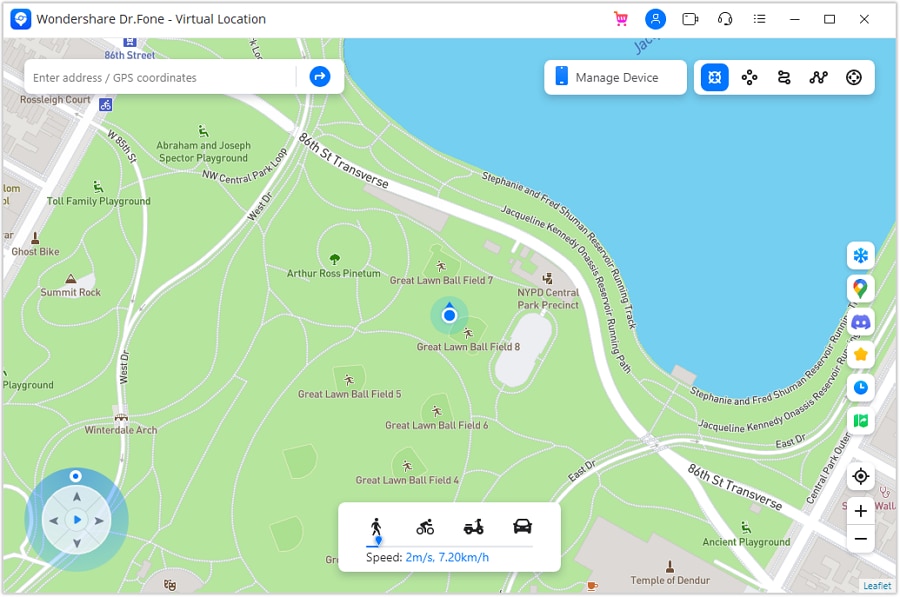
Step 5Search for the destination
Type the intended place in the search field and choose the matching result. Use the displayed search or confirmation control to inspect the pin before applying it.
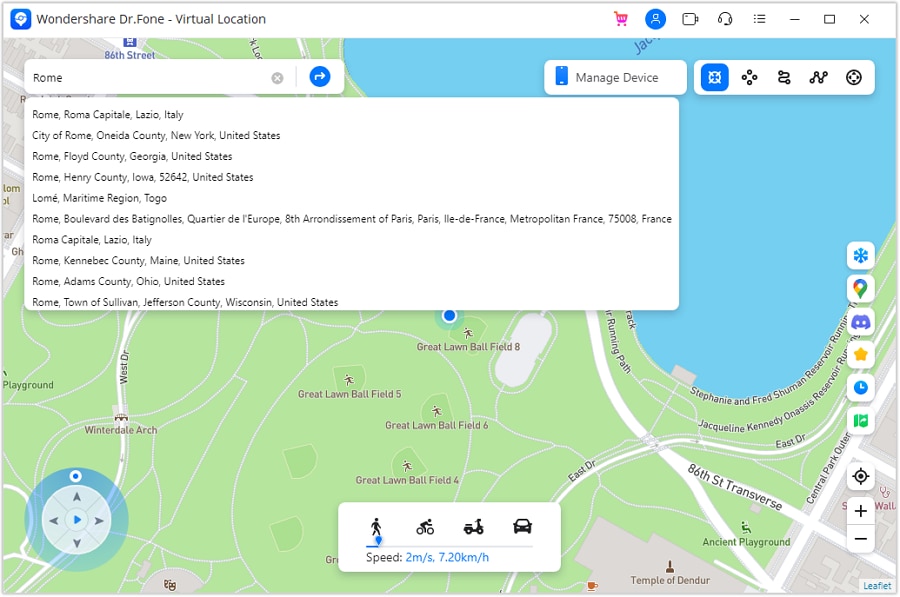
Step 6Confirm and verify the simulation
Select Move Here, then open a maps app on the phone to inspect its reported position. If you test LinkedIn's location-aware search, evaluate that result separately. Saved profile fields and preferred job locations still require their own LinkedIn controls.
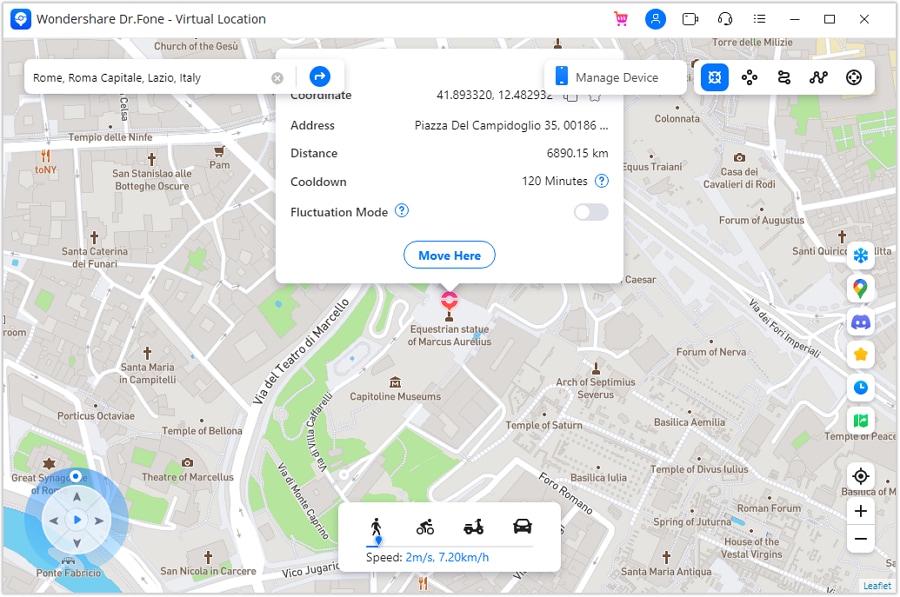
When the test is over, follow the software's restoration prompt or restart the device to return to its actual position. A successful GPS simulation is not proof of a LinkedIn account-location change.




Benefits and Limits of Setting Relevant LinkedIn Locations
Location preferences can make a job search more focused when they reflect where you can realistically work. The original three benefits need appropriate limits: better targeting is possible, but salary, eligibility, and hiring decisions are not created by editing a city field.
- Prepare for a new job market before a move: Search destination vacancies and share accurate relocation interests early. This can give you more time to compare employers and requirements before arrival, without telling recruiters that the move has already happened.
- Compare compensation realistically: A different market may have different pay levels, but a location edit does not guarantee a raise. Work permits, residence, taxation, relocation support, and the employer's salary policy remain separate questions. Do not imply those requirements disappear because the profile names a local city.
- Broaden relevant opportunities: Additional preferred locations can reveal roles that an overly narrow search misses. However, each employer still sets qualifications, workplace expectations, and legal requirements. Being shown a vacancy does not establish that you are eligible for it.
If recommendations remain mismatched, inspect the saved preferences and alert criteria as well as the profile. For remote roles, read the posting: remote work can still be restricted to a particular country or region.
Conclusion
Use LinkedIn's Jobs filters and job preferences for the places where you want to work, and use the introduction editor for accurate profile information. Dr.Fone - Virtual Location serves a separate GPS-simulation purpose on a supported device. It cannot replace those account controls or turn an edited location into proof of residence, work authorization, or hiring eligibility.
FAQ
1. Should I change my LinkedIn location before I relocate?
You can search a destination and express willingness to relocate before you move. Keep your current circumstances accurate and explain the intended city and timing in your profile or recruiter communications instead of implying you already live there.
Preferred job locations and Open to Work interests can communicate the destination without treating a planned move as a completed one.
2. How can I reduce public visibility of my LinkedIn location?
Review public-profile visibility rather than entering false location information. Restricting what an unsigned visitor can see is different from hiding every profile field from every signed-in member.
- Sign in to LinkedIn.
- Open Settings & Privacy and inspect the Visibility controls.
- Open Edit Your Public Profile or its equivalent public-profile setting and review the available visibility choices.
Check what the setting actually changes. Open to Work sharing is separate: LinkedIn notes that its recruiter-only option cannot guarantee complete privacy from your current employer.
3. Why do job results still use the old city after a profile edit?
The profile location, active search field, preferred job locations, and saved alerts are separate inputs. Edit the Jobs location and relevant preferences, then review the filters or alerts associated with the old destination.4. Does changing phone GPS update my LinkedIn profile automatically?
No automatic profile update is established by changing the device's coordinates. GPS can be relevant to an optional Current Location search, but saved profile and job-preference fields must be reviewed through LinkedIn's own interface.
 Add Wondershare Dr.Fone as a preferred source on Google



