 Teleport your device anywhere instantly with one click.


 100% Security Verified | No Subscription Required | No Malware


 :

 ChatGPT
 Perplexity
 Gemini
 Claude
 Grok
You cannot use Tinder as a directory to look up a particular person by name or phone number. Changing Discovery preferences affects recommendations; it does not produce a verified account search. If someone wants to connect with you, asking them to share their own profile through an available official sharing option is more direct than trying to force their card into your feed.
This 2026 guide reviews the four approaches in the source article without treating them as guaranteed workarounds. The guidance applies to your own account, a publicly shared page you are entitled to view, or a connection made with the other person's consent. It does not provide a way to monitor someone secretly, bypass a block, inspect private messages, or prove that a partner has an active dating account.
In this article
Part 1. Specific-Person Lookup Is Different from Discovery Search
Tinder's help article about finding a specific person says that you cannot search for a particular individual and instead points users toward Discovery preferences. That confirms the practical limitation, but it does not establish every explanation the source offers about the company's motives or the exact ranking algorithm.

There is an important current distinction: Tinder also documents an interest-based Search test for iOS users in selected markets. Its Search help page describes looking for shared interests and lifestyles, not entering someone's identity. It explicitly excludes searches for a specific person's name or social handle. Seeing a magnifying-glass icon therefore does not mean you have gained a people-finder feature.
Your recommendations can reflect settings and other app signals, while visibility and privacy choices affect who is available to see. You do not control the entire candidate pool. Narrowing a range cannot compel a hidden, unavailable, blocked, or otherwise ineligible profile to appear, and a missing result does not tell you why it is absent.
Tinder's Community Guidelines require respect for boundaries and prohibit harassment, impersonation, and technology used to unlock features or game the system. Keep those rules separate from any third-party site's claims about finding people.
Part 2. Four Approaches, with Their Actual Limits
The original methods range from ordinary app preferences to external lookup claims. They are not equally reliable, and none establishes a complete, current list of Tinder accounts. Use them only for legitimate self-management or consensual connection, and stop if a person has blocked you or declined contact.
Method 1: Adjust Your Own Discovery Preferences
Discovery settings let you describe the people you want to meet. They are useful for choosing a suitable age range, distance, and other available preferences, not for tracking someone at a home or workplace. Avoid treating the smallest radius as an identity filter: even an apparently matching card may belong to a different person.
Step 1 Open your profile controls
Sign in to your own Tinder account and tap the profile icon. The exact placement can change across versions; use the current screen labels rather than assuming an old screenshot matches every device.

Step 2 Enter Settings
Open the gear or Settings control associated with your profile. Review your own account's preferences; no other person's account access is needed or appropriate.

Step 3 Set a practical discovery range
Choose the available age, distance, and preference controls according to your dating intentions. Save the settings and return to normal Discovery. Do not expect a narrow selection to guarantee a particular card or to reveal someone's precise position.


Method 2: Check a Link the Profile Owner Shared
The source describes a username URL such as https://tinder.com/@username. Treat that as a legacy URL format to check only when the owner has actually supplied it, not evidence that every user has a public handle. A display name, phone contact, or username on another platform does not establish a matching Tinder address.
The least ambiguous approach is to ask the person to share their profile using an option available in their current app. A shared URL may require the app, sign-in, or a fresh link. It can stop working and still tell you nothing conclusive about the person's activity or relationship status.
Step 1 Obtain the owner's current link
Use a link the person voluntarily sent you, or your own link when checking your account. Do not generate batches of guessed handles or attempt to circumvent an unavailable profile.
Step 2 Check the destination before opening it
Inspect the actual domain and avoid lookalike pages that request a password, payment, or verification code. The source screenshot illustrates a typed address, not proof that its example account exists or remains reachable.

Step 3 Respect what the official page allows
Follow the ordinary app or browser flow. If the link is unavailable, ask the owner to send a new one instead of treating an error as proof of deletion, a hidden account, or an invitation to bypass access controls.
Method 3: Understand What Google Can Index
A free Tinder profile search through Google is simply a search of pages Google has indexed. It is not a request to Tinder's private account database. Results can be incomplete, stale, unrelated, or entirely absent, even when an account exists.
For a legitimate use case, check how your own voluntarily public page appears, or inspect a public reference the owner has agreed to share. Do not combine private phone numbers, work addresses, or other identifying details to investigate someone who has not agreed to contact.
Step 1 Open the search engine directly
Visit the Google website rather than a paid service claiming to reproduce its results.
Step 2 Limit the domain for your own public reference
The operator
site:tinder.comrestricts results to that domain. Add only a public identifier from your own page or one the owner has willingly provided. This narrows indexed web results; it does not unlock a profile or establish complete coverage.
Step 3 Verify the actual page, not just its snippet
Check whether a result is genuinely an official, accessible page and whether it refers to the intended shared profile. A snippet can outlive a page, and a matching display name does not verify identity. No results means only that the query returned no indexed matches.
Method 4: Evaluate Third-Party Claims Without Uploading Private Data
Services advertising a Tinder account search by email or phone number may imply access they cannot substantiate. Tinder's own specific-person limitation is not removed because another website charges a fee. A preview result or payment screen does not prove a current match, ownership, or account activity.

Do not enter another person's private identifiers, upload their contacts, or pay for a covert investigation. Never provide a Tinder password, one-time code, or remote access to your phone. A legitimate account-security problem should be handled through Tinder support and your own account controls, not a purported profile-finder.
If you are reviewing a service for your own public-information exposure, examine its data source, privacy terms, deletion process, refund conditions, and recurring charges before sharing anything. Unexplained data access and guaranteed-match language are reasons to stop. This guide does not endorse a third-party lookup provider or confirm that phone-number searches work.
Part 3. Location Changes Cannot Pinpoint Another User
The inherited contents label suggests pinpointing profiles with a location changer. That premise needs correction: changing your GPS does not reveal someone else's live position or force their Tinder card to appear. Do not set locations around another person's home, work, or routine to monitor them or evade a block.
For ordinary discovery in another city, Tinder's own Passport Mode is the documented route. Its help page describes city search or map-pin selection, available through a standalone purchase or supported subscriptions. Current availability, eligibility checks, and terms should be confirmed in your own account; it is not a specific-person finder either.
 Set your map route to simulate GPS movement.
- Set your wanted movement speed.
- HD and large map view to check location.
- Fake GPS location to anywhere.

Dr.Fone - Virtual Location is a separate GPS simulation utility. It offers location selection and movement simulation on supported devices, but it does not search Tinder's database, identify hidden profiles, read conversations, or unlock Passport or any paid feature.
Use it only for authorized location testing that the receiving app permits. Tinder's guidelines prohibit third-party technology used to unlock features or game its system, so this is not a recommendation to replace its paid tools. An app may reject simulated coordinates or rely on other information; no result, match, privacy status, or account-safety outcome is guaranteed.
Step 1 Confirm the permitted test before installation
Review the supported phone and desktop requirements and the intended app's terms. If your purpose is exploring Tinder in another city, use its official options instead of treating external GPS software as a feature bypass.
Step 2 Connect your own supported phone
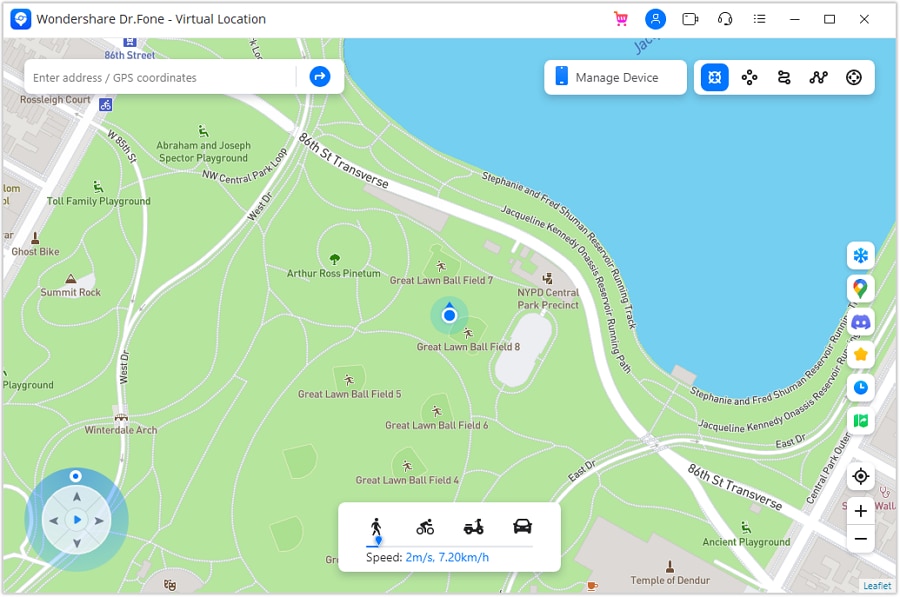
Open the desktop Virtual Location module, connect the device, and follow its current connection prompts. Check that the selected phone belongs to you and that the starting point on the map is correct.
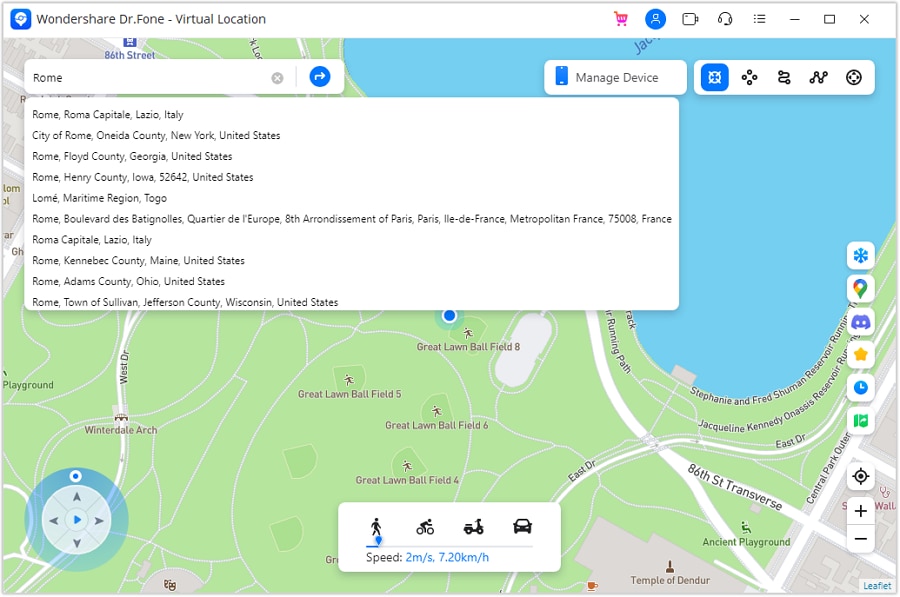
Step 3 Preview a destination for an authorized scenario
Select Teleport Mode by its label and search for the intended test location. The source's fixed icon position may not match the installed release. Do not use another person's private address as a targeting instruction.
Step 4 Apply, observe, and restore
Use the illustrated Move Here control only for the permitted test, then stop simulation and confirm that real positioning returns. The test establishes what your own device reports, not the identity or whereabouts of anyone using Tinder.

GPS simulation changes a device input, not another user's visibility or consent. Keep a location-testing workflow separate from dating-account discovery and use the platform's official features for normal dating activity.




Conclusion
Specific-person Tinder search, preference-based Discovery, a shared profile link, and Google's public index are different things. Start with a consensual profile share when you want to connect with someone you know. For your own dating preferences, use Discovery or the app's documented location features without expecting them to identify a particular account.
No phone-number claim, narrow radius, or location utility can prove someone's account status. Respect blocks and privacy choices, do not infer identity from a name alone, and avoid spending money on guaranteed-lookup promises that are not supported by a verifiable source.
FAQ
1. Can I find a Tinder profile with only a phone number?
Tinder does not provide that lookup. A third-party claim does not establish authorized or accurate access to its accounts. For a consensual connection, ask the person to share their current profile instead of uploading their phone number elsewhere.2. Which Tinder search options are free?
Ordinary Discovery preferences and a public web search do not inherently require a profile-finder fee, but neither guarantees a person will appear. A shared link may require the official app or sign-in. Check paid location and subscription terms separately in your account.3. Can I rely on anonymous profile viewing?
Do not treat viewing as a guaranteed anonymous investigation. Visibility, notifications, and interactions can change with app features; a Like or other action is different from passively opening a page. Respect privacy and consent rather than relying on an assumed lack of alerts.4. Why might a shared or expected profile not appear?
The link may be unavailable, Discovery eligibility may differ, or the owner may have changed visibility or stopped using the account. Blocking and other privacy controls can also matter. Absence is not evidence of one specific explanation, and you should not try to bypass those controls.
 Add Wondershare Dr.Fone as a preferred source on Google



