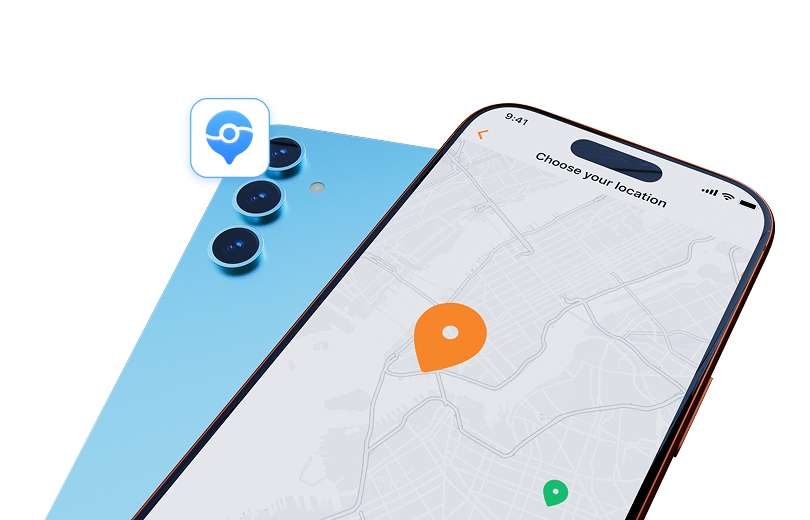
Teleport your device anywhere instantly with one click.


 100% Security Verified | No Subscription Required | No Malware

 :

 ChatGPT
 Perplexity
 Gemini
 Claude
 Grok
To share location on Android, open the app you and the recipient already use, choose its location attachment or sharing tool, and check whether you are sending a single map pin or an updating live location. Google Maps, Google Messages, Telegram, and WhatsApp provide useful options; emergency-sharing features serve a different purpose and need advance setup.

A one-time pin helps someone find a meeting point. A live share is more appropriate when they need to follow your progress. Before sending either, confirm the recipient, allow the necessary location access, and check that the map marker is reasonably accurate. The instructions below retain all five approaches while distinguishing ordinary sharing, emergency response, and optional GPS simulation.
In this article
Part 1. Five ways to share location on Android
You do not need to use the same method for every situation. A static map link can be sent in a normal conversation, while a live-sharing session keeps updating for its chosen duration. Live sharing generally needs an internet connection and suitable permissions; a typed address alone does not provide continuing movement updates.
Share with people you trust, use the shortest duration that meets your need, and check how to stop before starting. Menu labels differ by phone brand, app release, and account eligibility, so the source screenshots are visual references rather than a guarantee of identical controls.
1. Google Maps: choose a recipient and sharing period
Google Maps offers real-time location sharing for supported accounts. Many Android phones include Maps, but it is not installed on every device. Open it, confirm the correct account, and use the blue location dot or your profile's Location sharing menu to begin.
Step 1Check your position
Turn device location on and open Maps. Wait for the blue marker to settle; poor signal or nearby buildings can reduce accuracy.
Step 2Set the audience and duration
Choose the location-sharing control, select how long to share, and pick a person or the sharing method offered by the app. Review exactly who can access a link before sending it.
Step 3End access when finished
Return to Location sharing, select the active recipient, and stop the share. A previously sent static place pin is different from this updating session.

Maps sharing may also expose your name, profile photo, and battery information. Do not treat it as anonymous. Supervised accounts, managed accounts, and regional availability can affect the controls you see.
2. Google Messages: inspect the location attachment
Open the intended conversation in Google Messages and tap the attachment or + control. If a location attachment offers a current position or pin, inspect the preview before sending; that message should not be assumed to keep tracking your movement.
Current Google Messages also supports Real-time location where available. Select it from the attachment menu, sign in to your Google Account if asked, accept the location-sharing settings, and choose a duration. The available choices include an hour, the rest of the day, a custom period, or sharing until you turn it off.
To end that live session, open its location message, tap Stop beside your name, and confirm Stop sharing. If your version does not show real-time location, use another supported sharing app rather than assuming an ordinary SMS contains a live feed.
3. Telegram: send a pin or an updating location
In Telegram, enter the private conversation or group, open the attachment menu, and choose Location. Review the map and select the current-location option for a one-time pin. This is useful when the destination stays the same even if you leave it afterward.
Choose the live-location option when the group needs your changing position. Select an available duration and confirm the share. Keep an eye on Telegram's active-sharing indicator and use its stop control when you no longer want updates sent. Every participant in the destination group may be part of the audience, so check the chat before confirming.

4. WhatsApp: distinguish current from live location
Open the contact or group chat in WhatsApp, tap the Android attachment icon, and select Location. After granting the required access, choose Send your current location for a one-time snapshot of your position.
For continuing updates, select Share live location, choose the time offered, and send it. End the session from the live-location message using Stop sharing, or let its selected period expire. The original article conflated these modes: sending your current position does not itself start an indefinite live session.

If the map preview is wrong, do not send it simply because a location option is available. Wait for a better estimate or send a clearly labeled meeting-place pin instead. Tell the recipient whether the location is your current position or an agreed destination.
5. Emergency sharing: separate contacts from responders
Android emergency features are not a single universal location-sharing switch. On supported phones, the Personal Safety app or Safety & emergency settings can configure emergency contacts and location sharing. Availability depends on the device, account, country, and feature.
Step 1Prepare trusted contacts
Open the Safety app or your phone's Safety & emergency settings. Add the people you want contacted and review the emergency-sharing setup and location permissions.
Step 2Review activation behavior
Read how Emergency SOS or emergency sharing starts on your particular phone. Configure it before you need it, without placing an unnecessary emergency call.
Step 3Understand the separate responder service
Android Emergency Location Service can send your position to emergency responders when you call or text a supported emergency number. Its availability depends on your region and mobile network; it is not the same as sending friends a map link.
Emergency sharing with personal contacts requires the relevant connection and permissions. Do not rely on an unconfigured feature as your only safety plan. During a real emergency, contact the appropriate local emergency service and communicate your location directly if you can.
Optional GPS simulation with Dr.Fone - Virtual Location
 Set your map route to simulate GPS movement.
- Set your wanted movement speed.
- HD and large map view to check location.
- Fake GPS location to anywhere.
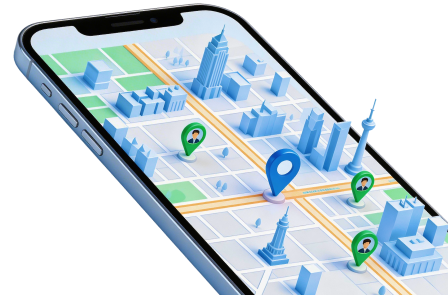
Dr.Fone - Virtual Location is relevant when you need to test a supported device's reported coordinates, not when you simply want to send your real position to a friend. Its map-based controls can select a destination and simulate a route with configurable movement.
Simulated GPS data is not a privacy permission, a VPN connection, or evidence that every sharing app will accept the new position. Do not use it to mislead emergency responders or people depending on your real location. For ordinary privacy, stop the sharing session or adjust the appropriate settings instead.
Step 1Connect your supported Android phone
Open the appropriate desktop version, select Virtual Location, and follow its device-connection prompts. Use your own device and review the setup requirements shown for it.
Step 2Select a test position
Activate Teleport Mode, search for the intended place or coordinates, and confirm the map position with Move Here. Do not assume a location-sharing app has updated until you inspect it.
Step 3Finish and restore the actual position
Verify the result in your own map app, then follow the restart prompt when you finish the test. Recheck real coordinates before using navigation or sharing your whereabouts.
Third-party services may reject simulated locations or restrict accounts under their rules. Use this workflow for permitted testing, not as a guarantee of hidden movement or universal app compatibility.




Part 2. Turning location off on Android
To stop an ordinary app from obtaining the device's location, open Settings > Location and turn off Use location. You can also use the Location tile in Quick Settings when your phone provides it. Older devices may place the switch under Personal, Security & location, or Location access.
Step 1Find the device location setting
Open Settings and search for Location if the menu arrangement differs from the source screenshot or an older Android guide.
Step 2Choose the appropriate scope
Disable Use location for the whole device, or manage an individual app's permission if you only want to restrict that app. Navigation and other location-dependent features can be affected.
Step 3Stop active sharing separately
Use the active app's Stop sharing control. For Google Location Sharing, open Location > Location services > Google Location Sharing and stop the recipient or pause Use Location Sharing where available.
Google explicitly notes that changing a single Google app's location permission does not itself stop Google Location Sharing. Previously shared locations are not erased by turning sharing off. Emergency services or your carrier may still provide location to responders during an emergency call or text.
A VPN primarily changes the network route and IP-based location; it does not switch off Android GPS permissions. Likewise, mock-location tools are not substitutes for stopping a share. Some sites may still estimate your area from an IP address even with device location disabled.
Part 3. Changing Android coordinates for permitted testing
Android provides a developer setting for selecting a mock-location app. This is intended to help test behavior in another location; merely enabling Developer options does not create simulated coordinates. You need a suitable app and must select it explicitly.

Step 1Enable Developer options
Find Build number under About phone, sometimes within Software information, and tap it seven times. Authenticate if prompted, then locate Developer options in Settings.
Step 2Choose the mock-location provider
Install a reputable mock-location app appropriate for your test. In Developer options, open Select mock location app and choose that app. Current Android versions use this selection rather than a universal switch simply labeled Mock location.
Step 3Run a controlled test and clean up
Set a position in the selected app, check the result, and stop simulation when finished. Clear the mock-app selection if it is no longer needed, then verify the real position before relying on maps or location sharing.
Applications can detect or reject mock positions, and using them may violate a service's terms. No free or paid utility guarantees that every app will accept a simulated location or that an account will avoid restrictions.
Conclusion
The best way to share location on Android depends on whether someone needs a fixed meeting point, continuing progress, or emergency assistance. Choose the correct mode, limit the audience and duration, and stop live sessions explicitly. Keep emergency responder services separate from ordinary chat sharing, and use GPS simulation only for permitted testing rather than as a replacement for privacy controls.
FAQ
1. Does a current-location message keep updating?
Not necessarily. A current-location pin is a snapshot. Choose an explicitly labeled live or real-time option if the recipient needs ongoing updates.2. Can Google Messages share real-time location?
Yes, on supported setups its attachment menu includes Real-time location. Sign in, choose the duration, and send. Stop the session from the location message when finished.3. Will turning off one app's permission stop every Google share?
No. Google advises stopping recipients or pausing Use Location Sharing in Google Location Sharing settings rather than relying solely on an individual Google app's permission.4. Is emergency location sharing available on every Android phone?
No. Personal Safety features and responder-location services have different device, account, region, network, and permission requirements. Configure supported features in advance.
 Add Wondershare Dr.Fone as a preferred source on Google