 Teleport your device anywhere instantly with one click.


 100% Security Verified | No Subscription Required | No Malware


 :

 ChatGPT
 Perplexity
 Gemini
 Claude
 Grok
To share location between iPhone and Android, choose a cross-platform service such as Google Maps rather than assuming Apple's Find My works as an Android friends app. Each person must knowingly enable the share. A phone number, contact entry or invitation by itself does not grant access to someone's position.
'Find My Friends Android iPhone' can describe a task, Apple's older app name or an unrelated third-party product. Those meanings are not interchangeable. For a mixed-device group, the practical choice depends on sharing duration, recipient access, update reliability and whether the service stores movement history.
In this article
Part 1. Choose a shared service for iPhone and Android
First agree whether you need a single meeting point, live progress during a trip or ongoing family sharing. A pinned location is static; a live share can update as the sender moves. Neither is permission to monitor someone after the agreed purpose ends.
Apple's Find My People feature is not a native Android people-sharing client. Google Maps and compatible messaging or family apps offer a more direct mixed-device workflow. Google account, age, managed-account and region restrictions can affect availability, so confirm the feature on both phones before depending on it.
| Option | Duration to inspect | Useful scenario |
|---|---|---|
| Google Maps | Choose a timer or an available until-stopped account share; link rules can differ. | A flexible live share between consenting users on different phones. |
| Google Find Hub | Current controls include one hour, end of day, until stopped or a custom duration; links cannot use until stopped. | An Android sender managing Google Location Sharing. |
| Messaging and social apps | Use the timer shown in the specific conversation or map setting. | A temporary share with people already in a chat. |
| Dedicated location apps | Can remain active; history and alerts depend on plan and permissions. | A group that explicitly agrees to ongoing sharing. |
1.1. Use Google Maps for a cross-platform live share
Maps lets the sender choose recipients and duration rather than making the entire contact list eligible. People you share with may also see information such as your name, photo, recent device position and battery status. Review the disclosure shown by the app instead of treating a map pin as the only data involved.
Create the share and confirm the recipient
Step 1 Open Maps on the sending phone
Use your own signed-in account on either supported platform and allow the necessary location access.
Step 2 Open the current-position controls
The blue dot can offer a sharing shortcut. The profile menu's Location sharing page is another route if the shortcut is absent.
Step 3 Select the live-sharing option
Choose Share location or New share. Do not confuse sending a place pin with broadcasting future movement.
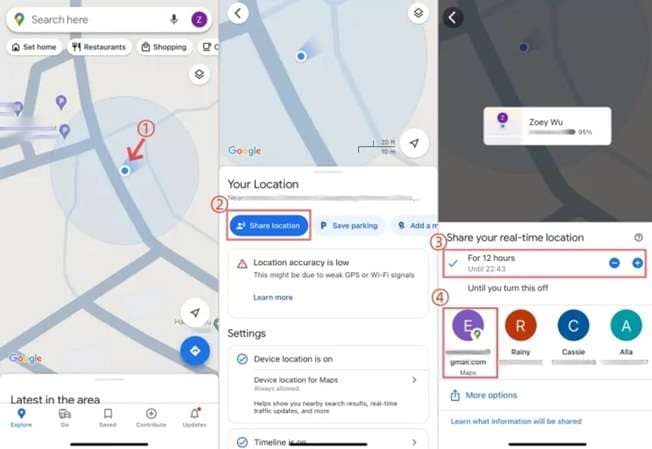
Step 4 Set an appropriate expiry
Choose the duration offered for the sharing method. Prefer a limited session for a meetup rather than an indefinite share.
Step 5 Review the selected person
Check the actual account or contact before sending. If using a link, remember that someone who obtains the link may be able to view the information.
Step 6 Send and verify the share
Have the intended recipient open it and inspect the timestamp. Return to Location sharing to stop access early when needed.
Account sharing and link viewing have different requirements. Do not assume the receiving person can start a reciprocal share merely because they can open a link. Google Location Sharing may surface an existing account share in other supported Google products.
Diagnose a position that has stopped refreshing
Look at the last-update time before assuming the dot is live. Check the sender's connection, battery restrictions and location permission, including the background access required for the chosen feature. A powered-off or offline phone may leave an older position visible.
If the app appears stuck, restart it or the phone. On Android, clearing the app cache can be a further troubleshooting step; iPhone does not offer that same generic cache button. Stop and recreate the share only with both people's awareness, then verify the new session instead of repeatedly sending more links.
1.2. Manage an Android sender's share through Google Find Hub
Find Hub, the service formerly called Find My Device, now includes people-sharing controls as well as device-finding functions. That does not turn it into Apple's Find My network or a way to locate an unconsenting iPhone. Google says existing shares from supported Google apps, including Maps, can appear automatically.
Start the share from Android
Step 1 Sign in to Find Hub
Use the Google account whose location-sharing relationships you intend to manage.
Step 2 Open the people or sharing view
Inspect which contacts are sharing with you and which can see you; these are not necessarily the same list.
Step 3 Start a new share
Use Start share, New share or the plus control available in your interface.
Step 4 Choose the duration
Google currently documents one hour, end of day, until stopped and a custom duration. Check the actual selector rather than assuming a universal one-minute minimum.
Step 5 Select accounts or send a timed link
Confirm the recipient and disclosure before creating the share. Google explicitly says an until-stopped share cannot be created as a link.
An iPhone recipient can use the appropriate Google Maps account share or the compatible viewing experience opened by the link. Verify the supported browser interface rather than assuming every Find Hub web screen has the same People controls as Android. Start the sender's share in the supported mobile workflow, not by borrowing someone else's account credentials.

1.3. Use a familiar chat app for a temporary session
If everyone already uses the same messenger, a chat-based share may avoid another account or installation. Check that the selected feature is live location, not a one-time map pin, and examine the expiry before sending.
- WhatsApp: The source's example includes an eight-hour option. Use the current timer displayed in your conversation and stop the session early when appropriate.
- Telegram: Extended or until-stopped sharing may be offered. An open-ended option requires an explicit decision about when to revoke it.
- Messenger: The source describes a one-hour session. Confirm that live sharing is available in your present app and conversation; do not assume every client exposes it.
- Snapchat: Inspect Snap Map audience settings and any separate live-location session. Ghost Mode is not a blanket guarantee that every location-related feature or previously shared item disappears.
Within the relevant conversation, open its location control, select a duration and send only to the intended participants. Revisit that exact conversation to stop the session. For Snapchat, separately review live sharing and Snap Map rather than relying solely on a Ghost Mode toggle; public map submissions have their own visibility.
Part 2. Compare ongoing group trackers with location utilities
A dedicated tracker can be appropriate when a consenting family or friend group wants continuing updates, place alerts or retained journeys. That is a larger privacy commitment than sharing a single trip. Discuss whether history is necessary, how long it remains visible and which features cost extra.
Do not confuse a location changer with such a tracker. A tool that changes your own reported coordinate does not create a mutual family-sharing service or make another person's route history available.
1. Life360 for a consenting Circle
Life360 supports shared group locations across supported iPhone and Android installations. Place alerts and movement history depend on permissions, the service and the membership. The source's 'up to 30 days' must not be read as a free-tier guarantee: Life360's current indexed help distinguishes 2 days on Free, 7 on Silver and 30 on Gold/Platinum, with regional plan differences possible.
Its Bubble feature can provide a less precise shared area where available. It is an app setting with its own behavior, not an assurance that all stored history or emergency features become anonymous.
Step 1 Install and sign in independently
Each participant should control their own account and understand the requested permissions.
Step 2 Open the invitation control
Use Add a person or the Circle invitation option shown in the current app.
Step 3 Obtain the invitation code
Review the Circle before copying its code.
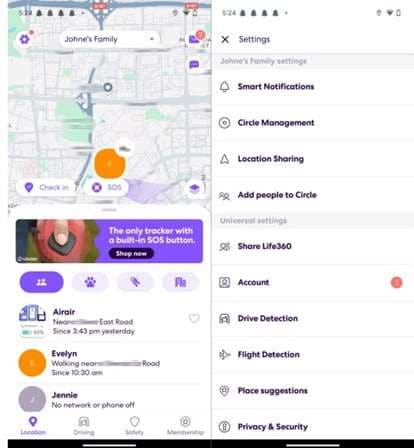
Step 4 Send it privately
Invite the intended person through a direct channel, not a public post.
Step 5 Confirm voluntary participation
The invited person joins, reviews permission and enables sharing knowingly. Check the displayed position and timestamp together.
Use a group service when the continuing relationship is genuinely useful to everyone. Membership and installation do not justify covert tracking or demanding another person's login.
2. Dr.Fone App and the separate Virtual Location workflow
Dr.Fone App combines Android device utilities rather than providing the same Circle functionality as Life360. The supplied material describes location changing, supported lock-related maintenance, file cleanup, recovery features and private-content management. Availability and results depend on the specific feature, device and edition.
- Change a supported Android device's reported coordinates for a permitted test.
- Use lock-related tools only on a device you own or are authorized to service.
- Review unwanted files before any cleanup action.
- Assess recovery support without assuming deleted data can always be restored.
- Manage private content with the app's applicable controls.
For its mobile location feature, open Change Location, inspect the map, select an address or point and apply the change if the device is supported. A saved destination can make a repeated test easier. None of these actions subscribes you to someone else's live position.

 Set your map route to simulate GPS movement.
- Set your wanted movement speed.
- HD and large map view to check location.
- Fake GPS location to anywhere.

For a computer-based coordinate test, Dr.Fone - Virtual Location is the relevant desktop module. It provides a map, destination selection, route simulation, adjustable speed and directional controls on supported devices. It is not Apple's Find My, a Google account-sharing bridge or a tool for finding someone from a phone number.
On your own supported phone, connect to the desktop module, review the starting location, search the intended test point and confirm Move Here. If testing movement, choose the route and speed deliberately. Verify behavior in the supported test app rather than sending misleading coordinates to contacts.
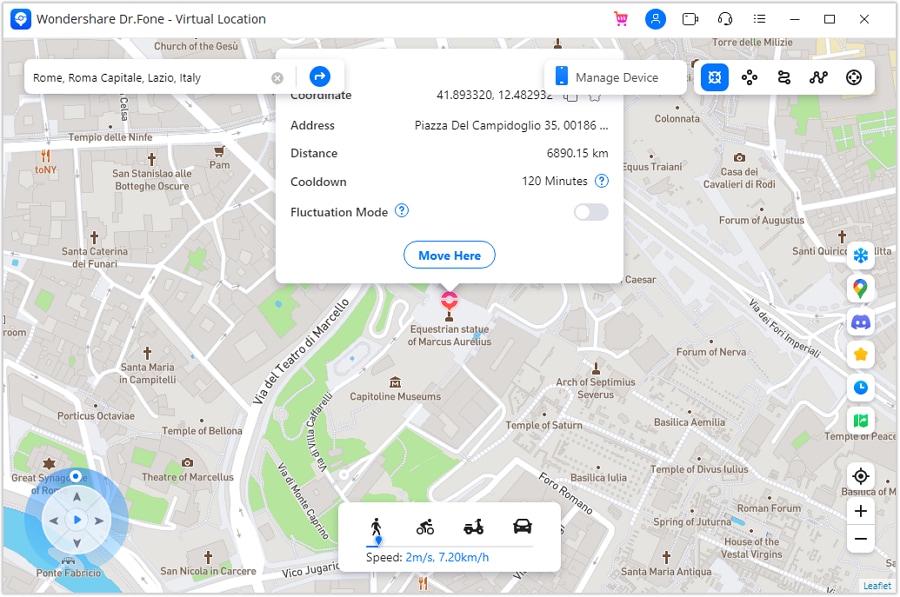
End the simulation and restore real positioning before navigation or genuine live sharing. To stop another person's access, revoke the share inside Google Maps, Find Hub or the relevant messenger. Simulating GPS does not guarantee a frozen Find My position, hide all location signals or change your IP address.




Part 3. Keep location sharing limited and understandable
A share created for a short meeting can outlast the reason it was created. Agree on the audience and expiry first, then verify how to revoke it. An old timestamp is not proof of where someone is now, and the absence of an update is not evidence that they deliberately concealed their location.
- Share only with the intended trusted person or group, with explicit agreement.
- Review both the app's recipient list and any active live links.
- Use an expiry when possible and stop access after the trip or meeting.
- Understand what an until-stopped selection exposes over time.
- Keep live links out of public pages and broad groups; forwarding can expand the audience.
- Read the app's privacy policy and permissions. Advertising alone is not proof of abuse, but unclear data practices deserve caution.
Choose built-in stop and permission controls over attempts to mislead the map. A good cross-platform arrangement makes consent and the end of access as clear as the location itself.
Part 4. Review three app options without confusing their identities
The original shortlist includes a generically named Find My Friends app, Familo and Glympse. Their names and screenshots do not prove equal functionality, current store availability or the same privacy policy. Verify the actual developer and listing on both platforms before installing.
4.1. Find My Friends: verify which product the name refers to
Apple's former Find My Friends branding and unrelated third-party apps can be easy to confuse. The source describes a separate product with a shared map, chat and group alerts containing location, time and battery information, but does not identify a current developer or store listing sufficiently to verify those promises.
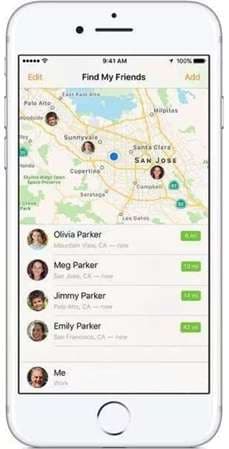
Decision: Treat those features as unverified until the exact app is identified. Legacy BlackBerry compatibility in the source is not evidence of present-day support. Do not install an imitation or grant extensive background access on the strength of the name alone.
4.2. Familo for a private, opt-in group
Familo's official site describes creating groups, inviting members, sharing live positions, place notifications, chat and an alert button. These are appropriate to an agreed group relationship, not a way to locate any phone number entered into a search box.
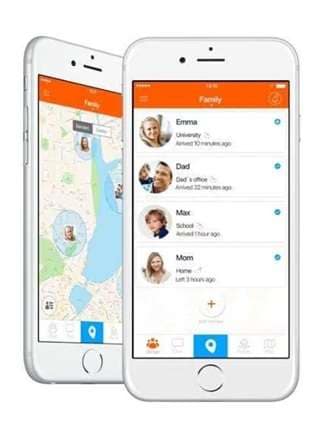
The source describes phone-number registration; confirm the current sign-in flow and membership details in the store version available to you. Create the group, invite participants privately and let each person decide whether to share. Best fit: family or friend groups that want continuing visibility and understand how to switch it off.
4.3. Glympse for a time-limited trip or meetup
Glympse emphasizes temporary sharing through a link that can be viewed across devices. The recipient may not need the app simply to open that link. This is a useful distinction when arranging a short visit with someone who does not want another ongoing tracking service.
The source's four-hour ceiling should not be treated as a universal current limit: the provider's indexed FAQ describes a timer extending from five minutes to twelve hours. Inspect the timer in your installed version and any applicable edition instead of relying on the older number. Sender-account requirements can also differ from viewer access.
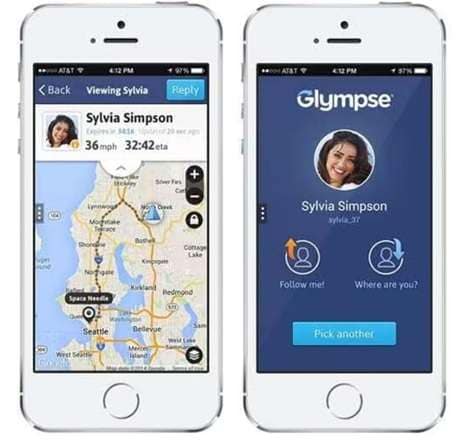
Best fit: a bounded journey or meeting with an intentional expiry. Send the link privately, test that the recipient can open it and end the session early if the purpose finishes sooner.
Conclusion
For Find My Friends between iPhone and Android, the shared service matters more than the phone brand. Google Maps offers a straightforward starting point; Find Hub helps an Android sender manage Google shares, while chat and family apps serve different durations and privacy needs.
Use a tracker for consensual sharing and a location utility only for its separate, supported task. The Android Dr.Fone app's device-management tools and the desktop Virtual Location module do not replace recipient permission, sharing controls or real-location accuracy. Confirm the audience, check update times and revoke access when it is no longer needed.
FAQ
1. Can an Android user join Apple's Find My People directly?
Apple's People workflow is not a native Android friends-sharing service. Choose Google Maps or another mutually supported app rather than confusing it with device-finding or tracker-detection features.2. Can I locate someone just by entering their phone number?
No. A contact or phone number can help address an invitation, but the person must knowingly enable the applicable share. It does not reveal their private position by itself.3. Why is my friend's pin still visible but not moving?
Inspect the timestamp. The sender may be offline, have restricted location access or have ended sharing. Ask them to check their settings; do not interpret an old pin as a live position.4. Is GPS simulation the same as stopping a live share?
No. Revoke the session through the sharing app to stop access. Simulating a coordinate does not remove recipients, guarantee anonymity or reliably freeze an Apple Find My location.
 Add Wondershare Dr.Fone as a preferred source on Google



