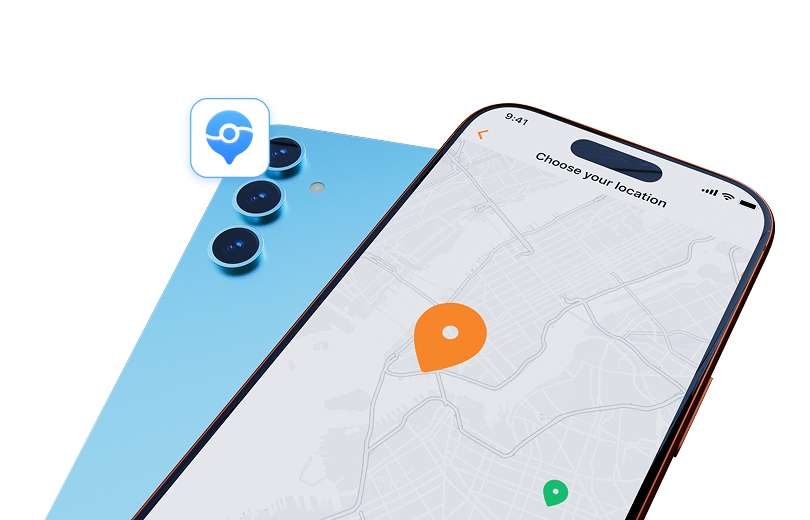
Teleport your device anywhere instantly with one click.


 100% Security Verified | No Subscription Required | No Malware

 :

 ChatGPT
 Perplexity
 Gemini
 Claude
 Grok
To find a friend's location on iPhone, ask that person to share it with you, then open the shared position in Find My or Messages. For a one-time meeting point, they can send a location pin from Maps. A contact name or phone number alone does not grant access to someone's whereabouts, and these tools are not permission to track a person secretly.
First decide whether you are finding a person who has agreed to share, or helping the owner recover a missing device. Find My separates those tasks into People and Devices. The methods below explain that distinction, how to request a share, and why an ordinary map link should not be mistaken for an always-updating location feed.

In this article
Dr.Fone - Virtual Location: Optional GPS Testing, Not Friend Tracking
 Set your map route to simulate GPS movement.
- Set your wanted movement speed.
- HD and large map view to check location.
- Fake GPS location to anywhere.
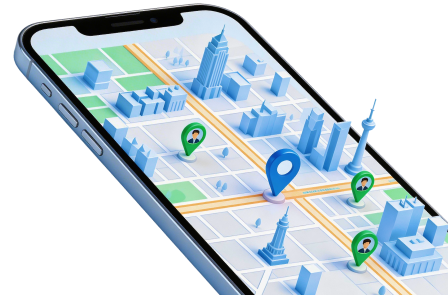
Dr.Fone - Virtual Location is a separate tool for simulating a supported connected phone's GPS position. Its map controls let the device owner select a point or simulate movement along a route. It does not retrieve another person's private location, grant permission to follow someone, or replace Apple's sharing controls.
If you are testing a location-aware app on your own device, make sure anyone involved knows that a simulated location is being used. GPS simulation must not be presented as a guarantee that Find My will freeze at a chosen point, hide your activity without notice, or protect you from all other location signals. For ordinary privacy, manage sharing directly in Apple's settings instead.
Step 1 Prepare an authorized test
Open Virtual Location on a computer, connect your own supported phone, and complete the device's displayed connection and trust prompts.
Step 2 Choose the simulated position
Activate Teleport Mode and search for the intended place or coordinates. Review the pin and choose Move Here only when the test destination is correct.
Step 3 Check and restore
Inspect the position in the phone's map app. End the test and follow the restoration prompt or restart the device, then confirm the actual position before sharing a real meeting point.
This testing procedure does not tell you where a friend is. For that purpose, use the consent-based sharing workflows below, and treat any unavailable or old map reading as uncertain rather than proof of a person's movements.




Three Built-In Ways to View a Friend's Shared Location
The person whose location you want to view must choose to share it. Sending your own location does not automatically make their position visible, and membership in a family group does not remove the need for the relevant sharing permissions. Choose a duration and audience that fit the meetup rather than enabling open-ended sharing by default.
Find My and Messages are useful for ongoing sharing between supported Apple devices. Maps can send a fixed place or display an existing shared position where supported. Always inspect the label and timestamp: a person may have stopped sharing, lost connectivity, or left the location represented by a one-time pin.
1. Find My: Use People for Friends and Devices for Missing Hardware
The current Find My app combines the older Find My iPhone and Find My Friends roles. Its People tab is for location sharing between people. Its Devices tab, along with Find Devices on iCloud.com, helps an owner locate devices associated with their Apple Account. These are related features, not a reason to sign in to a friend's account to follow them.

When helping with a missing iPhone, let the owner control the account. They should already have enabled Find My iPhone under Settings, their name, Find My, and Find My iPhone before the device went missing. Turning on an option on your own phone cannot retroactively enable finding on someone else's missing handset.
Step 1 Have the owner open Find Devices
The owner can use their Find My app or open Find Devices on iCloud.com in a browser. If they use your phone's browser, they should sign in themselves rather than disclose their password to you.
Step 2 Select the missing iPhone
From the devices associated with that owner's account, choose the correct handset. Check whether a position is available and whether it is current or a last-known reading.
Step 3 Use the appropriate recovery action
Follow the displayed options for locating or protecting the device. Sign out of a borrowed browser afterward. If theft is suspected, use the proper reporting channels rather than confronting someone at a map pin.
Do not assume Find My provides a complete history of every place a friend has visited. A current or last-known map reading is not a continuous travel log. Accuracy also varies with device conditions and available location signals; it is incorrect to describe Find My as never precise, just as it would be incorrect to promise exact readings in every situation.
For finding a consenting friend instead of a missing device, use People:
Step 1 Review your sharing settings
Open Find My, select Me, and check Share My Location and the device shown as Sharing From. If needed, review Settings, Privacy & Security, Location Services, and Find My.
Step 2 Start the chosen share
In People, use the add or Share My Location control, select the intended friend, and choose a duration. First-use wording can differ from an already-configured app.
Step 3 Request their location separately
Select the person's entry and use Ask to Follow Location when offered. Your friend must accept and choose to share; an invitation by itself provides no access.
Step 4 View and end the arrangement
After they share, select their name in People to view the available position. To stop sharing your own location with a person, open their entry and use Stop Sharing My Location.
Some current software offers a separate Hide Location pause. Apple's safety guidance says that temporary hiding can resume the next day; do not confuse it with stopping the share. The other person may notice that location is no longer available, so neither the native control nor a GPS tool should be described as guaranteed undetectable.
2. Messages: Open a Shared Position or Send a Request
Messages provides a convenient view when a friend has already shared through Apple's location-sharing system. It does not show the current location of every person you have messaged. A normal conversation, text delivery, or contact photo does not establish a location-sharing relationship.
Step 1 Open the friend's conversation
Select the correct chat in Messages and tap the person's name or contact icon at the top. Older interfaces may label this area with an information button.
Step 2 Inspect the shared map
If a location is available, tap the map to open the details. Distinguish an ongoing shared position from a pin sent earlier, and check whether the location information is recent.
Step 3 Request access when no share exists
In a supported one-to-one conversation, tap the plus control, choose Location, and select Request. Send the request and wait for the other person to decide whether to share.

For their reply, the friend can use the location-sharing control to choose a duration or send a fixed pin instead. Messages uses Find My for ongoing location sharing; the exact options depend on the devices and software. Do not treat an SMS map link as automatic access to Apple's ongoing Live Location.
3. Apple Maps: Open a Shared Place or an Existing Shared Position
Maps is useful when your friend wants to tell you where to meet. Ask them to send their current position or a selected place from their own iPhone. The ordinary place link represents the chosen point; it does not become a live tracking link merely because it was sent from a navigation app.

Step 1 Have your friend choose the place
On their iPhone, they open Maps and select their position or the intended meeting point. They should verify the pin before sharing it.
Step 2 Send the place link
They use the Share control in the place card, or touch and hold a location and choose Share Location where available, then send it through a message or email.
Step 3 Open and confirm the point
Tap the received link on your iPhone and inspect the address or pin. Confirm with your friend whether it is their current meeting point, a future destination, or a place they have already left.
Maps can also display an existing Find My shared position when you search for a sharing contact's name. That depends on the underlying permission; it is not permission created by a place link. Navigation ETA sharing is another distinct feature and should not be confused with the simple pin workflow above.
If an older guide tells you to install Find My Friends, use the People functionality in the current Find My app instead. Friends can opt into sharing with selected people, and each person retains control of their own participation. You do not need an additional app to bypass those choices.
Conclusion
Find My's People tab is the direct choice for a friend's voluntarily shared position, Messages is convenient for viewing or requesting it in a conversation, and Maps is useful for a fixed meeting point. Use the owner's device-recovery workflow only for a missing device with authorization. Respect a declined request or stopped share, check the freshness of the map reading, and never present GPS simulation as a way to gain private tracking access.
FAQ
1. Can I locate a friend with only their phone number?
Not through these Apple sharing workflows alone. The person must choose to share their location with you; knowing their number is not authorization or technical access.2. Should I use People or Devices in Find My?
Use People for consensual location sharing with friends. Devices is for locating hardware associated with the relevant Apple Account or an authorized family arrangement.3. Does a Maps location link keep updating as my friend moves?
A normal shared-place link is a fixed point. Use an actual ongoing share in Find My or Messages when the friend agrees to provide updates.4. Can a GPS changer guarantee that Find My stays frozen?
No. A supported-device simulation is not a guarantee of Find My behaviour, secrecy, or access to anyone else's location. Use Apple's sharing controls when you want to manage who sees your whereabouts.
 Add Wondershare Dr.Fone as a preferred source on Google