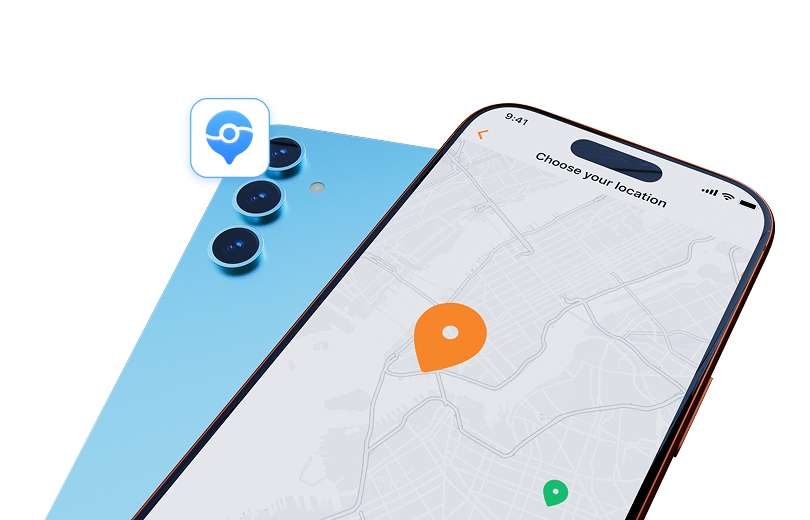
Teleport your device anywhere instantly with one click.


 100% Security Verified | No Subscription Required | No Malware

 :

 ChatGPT
 Perplexity
 Gemini
 Claude
 Grok
To find your iPhone's last known location, open Find My on another device signed in to your Apple Account, or use icloud.com/find in a browser. Select the missing iPhone and inspect both the map pin and its update time. An older pin identifies a last report, not a guarantee that the phone is still there.
If it is missing now, mark it as lost promptly and enable a found notification if offered. The preparation sections below explain settings that must have been enabled before the loss; they cannot be switched on remotely after a phone disappears. Google Maps Timeline is only a possible record of earlier travel, not a replacement for Apple's lost-device service.

In this article
- Part 1. Reasons Why You Should Know How to Find the Last Location of Your iPhone
- Part 2. Set a Passcode on Your iPhone
- Part 3. Enable the Find My App
- Part 4. Find the Location of Your Phone Using Find My
- Part 5. Find the Location of Your iPhone Using iCloud
- Part 6. Use Google Maps to Find the Last Location of Your iPhone
- Part 7. Enable the Notify When Found Feature
- Part 8. Enable Lost Mode
Part 1. Why preparation and a location timestamp matter
A misplaced phone may be under a seat, left at a venue or taken by someone else. The useful first distinction is whether you have a current report, an older report or no available location. Only then can you decide whether to play a sound nearby, contact a venue or secure the missing device.
Find My depends on prior configuration and the device's reporting conditions. Enabling Find My, its network option and Send Last Location in advance improves the information that may be available later, but no setting guarantees recovery. If Find My was not enabled before the loss, installing a new app elsewhere cannot retroactively add the missing iPhone.
Save the time shown with a location and avoid interpreting a precise-looking pin as certainty. Indoor positioning and stale reports can be misleading. If theft is suspected, share relevant information with local law enforcement rather than confronting someone or visiting an unfamiliar private address yourself.
A location changer is not a lost-phone locator
 Set your map route to simulate GPS movement.
- Set your wanted movement speed.
- HD and large map view to check location.
- Fake GPS location to anywhere.
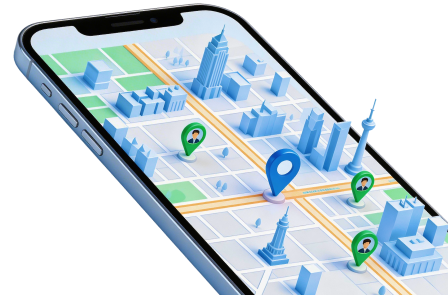
Dr.Fone - Virtual Location changes or simulates GPS coordinates on a supported device that you can connect and control. It does not retrieve the whereabouts of a disconnected, stolen iPhone, recover past Find My reports or turn on Find My after a loss.
Its separate role is location testing while your own phone is in your possession. To run such a test, connect the supported device to the desktop application, complete authorization, choose Teleport Mode and search for a destination. Inspect the map and confirm Move Here, then check the position in a maps app. Do not use a simulated location while assessing a missing-device report.
End the test and restore the real position before relying on navigation, Find My or location sharing. The official product guide describes restarting the device to restore actual positioning. None of these test steps replaces Apple's recovery and protection controls below.




Part 2. Set a passcode before a phone goes missing

A passcode helps protect access to personal information when the phone is no longer with you. It does not prevent physical theft, establish the phone's location or eliminate every possible security risk. Use it alongside Find My rather than treating it as a tracking feature.
Step 1 Open the appropriate security menu
In Settings, choose Face ID & Passcode on a Face ID model, or Touch ID & Passcode on a Touch ID model. Older devices can use a Passcode label. Choose by hardware and displayed menu, not a blanket claim that every newer iPhone uses Face ID.
Step 2 Turn on the code
Select Turn Passcode On if it has not already been set. If the device already has a code, review its strength instead of disabling it.

Step 3 Choose and confirm a strong option
Enter the requested six-digit code, or open Passcode Options to choose an available custom numeric or alphanumeric code. A four-digit option may also be offered, but it is less resistant to guessing. Re-enter the selected code to confirm.
Set up Face ID or Touch ID where supported for convenient authentication. Do not share the underlying passcode with someone who claims to have found your phone. The passcode remains important even when biometric unlocking is enabled.
Part 3. Enable Find My and its last-location options
Find My handles device location and protection across supported Apple hardware, including iPhone, iPad, Mac and Apple Watch. Available functions vary by device. For the iPhone you want to protect, configure the following while it is still accessible:
Step 1 Open your Apple Account settings
In Settings, tap your name and confirm that you are signed in to the intended Apple Account, formerly called Apple ID.
Step 2 Review Find My settings
Tap Find My. Share My Location controls personal sharing with people; it is not the same switch as locating your own iPhone.
Step 3 Enable device finding
Open Find My iPhone and turn on Find My iPhone. The screenshot shows the core device-protection setting.

Step 4 Enable the Find My network
Turn on Find My network where available. Nearby Apple devices can help report an approximate position even when the missing phone lacks its own internet connection, subject to supported hardware and conditions.
Step 5 Enable Send Last Location
Turn on Send Last Location so the device can send its position when the battery becomes low. Also review Settings > Privacy & Security > Location Services and the permissions needed by Find My.
Offline or powered-off finding is conditional; it is not permanent tracking after the battery has been exhausted. Apple also notes that Find My availability and capabilities can vary by region. Check the settings actually offered by your iPhone rather than assuming a model name alone guarantees every feature.
Part 4. Inspect the missing iPhone in the Find My app
Use another Apple device already signed in to the same account. A Family Sharing member may also be able to help where sharing has been configured. Avoid signing out of a friend's entire iCloud account just to search; the browser method in the next section is often simpler.
Step 1 Open the device list
Launch Find My and choose Devices, not People. The latter is for personal location sharing and does not provide the same lost-device controls.

Step 2 Select the correct iPhone
Check its name, location status and the time associated with the report. If no location can be found, look for Notify When Found rather than assuming the map is live.
Step 3 Use the appropriate next action
Choose Directions if a location is available and it is safe to travel there. If the phone is likely nearby, use Play Sound; an online device can sound even when normally silenced. An offline sound request may remain pending until connection returns.
Apple's iCloud guide distinguishes the app from the website: with the Find My network enabled, a last known position can be stored in the Find My app for up to seven days. This is a maximum availability window, not a promise of continuous updates or successful recovery throughout that period.
Part 5. Use iCloud Find Devices from a browser
The correct address is icloud.com/find. The shortened 'com' text in the original walkthrough was incomplete. You can use a browser on a borrowed phone, tablet or computer, but type the official address yourself and sign out when finished.
Step 1 Open the official Find Devices page
Sign in with the Apple Account used on the missing iPhone. Do not enter credentials into a page reached through an unsolicited 'phone found' message.
Step 2 Use the device-finding sign-in option
Apple says a verification code is not required for icloud.com/find. If the general sign-in screen requests one, choose Find Devices instead. The old two-factor screenshot below does not mean you must receive a code on the missing phone.

Step 3 Select and inspect the phone
Open All Devices, choose the missing iPhone and read the map status and timestamp. Use its available sound, notification and lost-device controls as appropriate.

On iCloud.com, Apple describes displaying an unavailable device's last known location for up to 24 hours. Do not apply that website window universally to the Find My app or to Google Maps. A blank or offline view can reflect an old report, a lack of connectivity or earlier configuration, not proof that the phone has been destroyed.
Part 6. Treat Google Maps Timeline as a limited historical clue
Timeline can help only if it was enabled and relevant records were saved before the loss. It records visits and routes, not a dedicated live lost-iPhone feed. Google's current system stores Timeline on devices, and its help says Timeline is no longer available in Maps on a computer.
The original Google Maps Timeline link and screenshot are retained for context, but the old 'sign into a browser, click Today and see the phone' procedure is not a dependable current recovery method.

Step 1 Check whether an accessible copy exists
Open the Google Maps app on an available mobile device with the relevant account. Timeline being off by default means there may be no recorded journey to inspect.
Step 2 Import a backup only if one was enabled
Google allows a previously enabled encrypted Timeline backup to be imported onto another device. In Your Timeline, use the cloud control, select the relevant device backup and follow Import. Without an existing backup or accessible record, a new sign-in cannot reconstruct the missing phone's local history.
Step 3 Review the relevant day
Inspect the last recorded visits and their times as possible places to contact or retrace. Backup changes may take days to appear, and location records can contain mistakes. They do not prove the phone's present position.
Use a saved journey as supplementary evidence while continuing the Find My and account-protection steps. Do not delay Lost Mode because a Timeline backup is incomplete or still being imported.
Part 7. Request a notification when the device is found
If a current position is unavailable, Notify When Found can alert you when a new usable report becomes available. The trigger is device location or connection status, not proof that a person has physically found and picked up the phone.
Step 1 Open the missing device
Use Find My > Devices, or sign in at icloud.com/find and select the iPhone from All Devices.
Step 2 Enable the available notification
In the app, turn on Notify When Found under Notifications. On the website, select Notify me when found when that option is offered for an offline device.

Step 3 Continue protection measures
The app can issue a notification, and iCloud can email you when the device is online again. Continue with Lost Mode and any theft report instead of merely waiting for someone to turn it on.
Check any alert by opening Find My or typing the official site yourself. Apple warns that it will not contact you claiming to have found the phone and ask for your passcode, password or verification codes.
Part 8. Activate Lost Mode to protect the phone
Lost Mode locks the device with its passcode, suspends payment cards and passes used with Apple Pay, and can display your chosen contact information. It helps secure the device and lets an honest finder contact you, but does not guarantee its return.
Step 1 Select the iPhone
Open its entry in Find My or icloud.com/find. Find My must have been enabled before it went missing.
Step 2 Start the lost-device action
Choose Mark As Lost, Lost Mode or the equivalent control. In a newer app layout it can be under More, then Lost [Device].
Step 3 Supply a safe contact method
Enter a reachable alternative number and a short message if you want them shown on the locked screen. Avoid including sensitive account information.
Step 4 Confirm and check the status
Activate Lost Mode and read whether the action is pending. An offline phone receives applicable remote commands after it is powered on and reconnects.

If you suspect theft, contact local law enforcement and your carrier. Do not remove the device from Find My merely because recovery is slow: removing it can remove Activation Lock. Remote erasure is a separate, irreversible decision, and an insurance claim may require keeping the device on your account.
Conclusion
Start with Find My or icloud.com/find, read the timestamp and protect the device with Lost Mode. A current pin, an old report and no location require different expectations. Prior settings determine what can be recovered, while Google Timeline is only a possible historical aid with device and backup limitations. Keep account credentials private and do not risk your safety to follow a map marker.
Use official account pages and trusted software sources; a download security label does not establish a lost-device recovery capability.
FAQ
1. Can I check a last location after the battery dies?
 Possibly, if a report was saved and the required features were enabled. Apple describes up to 24 hours for the last known location on iCloud.com and up to seven days in the Find My app with the network enabled; neither is a guaranteed current position.
2. Can Find My locate an iPhone that is switched off?
Supported iPhones can use offline-finding capabilities when the necessary Find My settings were enabled. Availability depends on hardware, power, nearby network conditions and region, so not every switched-off phone remains locatable.3. What should I do first when my iPhone is missing?
Select it in Find My or icloud.com/find, inspect the location time and mark it as lost. Enable a found notification if offered, and contact the carrier and law enforcement if theft is suspected.4. Can a GPS changer or Google Maps locate it instead?
A GPS changer is not a remote lost-phone locator. Google Timeline may preserve an earlier journey only when recording and an accessible device record or prior backup exist; it is not a live replacement for Find My.
 Add Wondershare Dr.Fone as a preferred source on Google