Teleport your device anywhere instantly with one click.


 100% Security Verified | No Subscription Required | No Malware

 :

 ChatGPT
 Perplexity
 Gemini
 Claude
 Grok
To hide your location from people you share with on iPhone, use Find My > Me > Share My Location, or stop sharing with an individual in the People tab. To restrict apps instead, review Settings > Privacy & Security > Location Services. Airplane Mode, a VPN, and a simulated GPS position are different tools; none is a universal off switch for every form of location use.
The right method depends on who or what you want to limit. A friend receiving live updates is different from a weather app requesting an approximate area. Stop the relevant sharing relationship or permission rather than relying on a changed network connection, and remember that a recipient may notice when updates disappear.

The five approaches below preserve the original guide's coverage while explaining their limits. Apple's built-in sharing and permission controls do not require a separate subscription. Optional VPN services and third-party location software may have paid plans, so a free settings change should not be confused with unlimited free third-party features.
In this article
Optional GPS simulation: what it changes and what it does not
 Set your map route to simulate GPS movement.
- Set your wanted movement speed.
- HD and large map view to check location.
- Fake GPS location to anywhere.
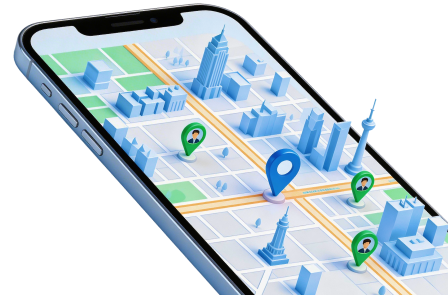
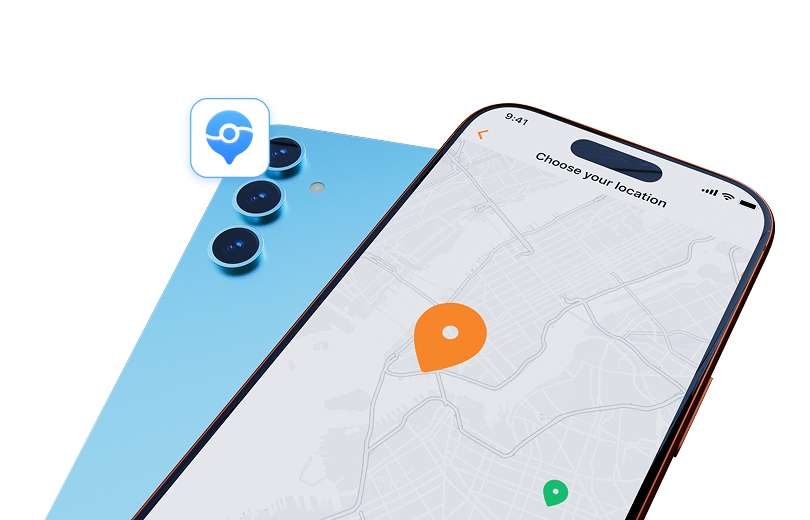
Dr.Fone - Virtual Location offers a map interface for setting a simulated GPS position and defining routes on supported devices. It can be useful for permitted testing of location-dependent behavior, but it does not revoke permissions or remove people from an Apple sharing list.
Do not use a simulated pin as proof that Find My is frozen or that another person cannot locate you. Apple services, app versions, device settings, and other information sources can affect what is reported. If privacy is the goal, the sharing and permission controls in the main guide are the more direct tools.
Step 1Connect a supported device
Open the desktop software, select Virtual Location, and connect your own phone using its supported setup and trust prompts.
Step 2Set a permitted test position
Choose Teleport Mode, search for the destination or coordinates, inspect the map marker, and select Move Here only after confirming the intended place.
Step 3Verify and finish the test
Check the reported position in your map app. When finished, follow the tool's restart prompt to restore the actual location, then check it again before navigation or sharing your real whereabouts.
GPS simulation is neither VPN encryption nor a guarantee of invisible movement. Test only on your own supported device and follow the rules of the apps involved.




Five iPhone location approaches and their limits
Some methods change connectivity, some change sharing with people, and others affect system features. The distinctions below are essential: disabling one service does not automatically disable all of the others.
For app access, the broad control is Settings > Privacy & Security > Location Services. You can turn the main switch off, select Never for an individual app, or reduce precision for a permitted app where available. These options remain separate from the five source approaches discussed here.
1. Airplane Mode: a connectivity change, not guaranteed location privacy
Airplane Mode is quick to enable, but the original claim that it reliably switches off GPS, Bluetooth, and all tracking was too broad. It changes wireless connectivity; it does not itself revoke Location Services permissions or end a Find My sharing relationship.
Step 1Open Control Center
On an iPhone with Face ID, swipe down from the top-right corner. On a model with a Home button, swipe up from the bottom edge.
Step 2Enable the airplane control
Tap the airplane symbol. You can also open Settings and enable Airplane Mode there if the Control Center layout is unfamiliar.
Step 3Review connectivity and sharing separately
Check the actual Wi-Fi and Bluetooth state. Apple allows them to be used in Airplane Mode, and Bluetooth normally remains on unless you have changed that behavior. Use the sharing controls below if stopping location updates is your objective.

Cellular calls and mobile data are affected, while Wi-Fi can be enabled again. Location information may remain cached, and supported devices can participate in offline finding. Do not rely on being disconnected as evidence that the phone is unfindable, and do not cut off communication you need for safety.
2. Turn off Share My Location in Settings
Use this option to stop sharing your whereabouts with people through Apple's location-sharing features while keeping the phone online. This is different from stopping every app from requesting Location Services.
Step 1Open your Apple Account settings
Go to Settings, tap your name, and choose Find My. On older software the menu organization can differ.
Step 2Disable person-to-person sharing
Turn Share My Location off. Read the setting label carefully so you do not accidentally change Find My iPhone, which protects device recovery.
Step 3Check the sharing state
Open Find My and review Me and People to confirm the intended scope. If you later enable sharing again, inspect the recipients rather than assuming old relationships have been removed.
The source article gave conflicting notification claims. Apple states that people may notice when you stop sharing, and earlier operating systems may send a Messages notification. Neither 'everyone is always notified' nor 'nobody can know' is a reliable promise.
3. Use Find My's People and Me controls
Current iPhones use the Find My app for the sharing functions associated with the older Find My Friends name. You do not need to turn off or delete an entire app merely to stop one recipient. Deleting the app should not be assumed to cancel an active share.
Step 1Choose the recipient
Open Find My > People, then select the person whose access you want to stop. If the app is missing, restore the official Find My app and review the settings rather than guessing that removal ended sharing.
Step 2Stop that share explicitly
Tap Stop Sharing My Location and confirm. Repeat for another person only if that is your intention. For everyone at once, use the Me tab's Share My Location switch.
Step 3Distinguish a temporary hide from stopping
Where your version provides Hide Location for an individual, Apple describes it as a pause that automatically resumes the next day. Choose the stop-sharing command instead if you do not want that resumption.

Keep Find My iPhone and the Find My network in mind as separate device-finding features. Apple notes that a supported phone may remain findable after it is offline or powered down. Disabling device finding reduces recovery options and is not normally required just to stop sharing with a friend.
4. Review System Services and Significant Locations
System Services is a settings list, not a separate app. It lets you review location-dependent system functions individually. Turning off Significant Locations affects a particular location-history and personalization feature; it does not completely cut off all app access or cancel Find My sharing.
Step 1Reach the system list
Open Settings > Privacy & Security > Location Services, then scroll to System Services.
Step 2Inspect the feature you want to limit
Select Significant Locations or Significant Locations & Routes, depending on your version. Authenticate if requested and review the switch.
Step 3Make a targeted change
Disable that feature if you do not want its location-based personalization. Review other system entries separately, understanding their effects instead of treating one switch as a device-wide privacy reset.
Apple describes significant-location information as end-to-end encrypted. That protection is different from choosing whether to use the feature. Likewise, a system setting does not remove copies of information another app or person already received.
5. Use a VPN for IP-based location, not GPS sharing
A virtual private network can encrypt and route certain internet traffic through another server, which may change the IP address websites see. It does not replace the coordinates supplied by iPhone Location Services and does not itself stop a Find My share.
Step 1Evaluate a provider
Review its privacy practices, ownership, permissions, and any independent evidence supporting its claims. Neither a free price nor a paid subscription proves that a provider handles data safely.
Step 2Install and inspect the configuration
Install the chosen app from a trusted source and allow a VPN configuration only after understanding the request. Your provider may be able to observe traffic that passes through its service.
Step 3Choose and connect the intended VPN
Use the provider's app or inspect Settings > General > VPN & Device Management > VPN. If multiple configurations exist, select the intended one and verify its connection state.
A site may still learn your area through a permitted GPS request, your account details, or other signals. Apple also notes that some essential system traffic can remain outside a VPN. If your concern is a person's live-location access, return to Find My instead of assuming a connected VPN solved it.
Conclusion
For iPhone location privacy, use the control that matches the audience: app permissions for apps, Share My Location for people, and specific System Services entries for particular features. Airplane Mode and VPNs affect connectivity and network identity, not every location source. Check whether a temporary hide will resume, keep needed communications available, and avoid promises that nobody can notice a change.
FAQ
1. Can I hide my location without turning off mobile data?
Yes. Stop a Find My share or change the relevant location permission while keeping your connection. Choose the control that matches the person or app you want to limit.2. Does Airplane Mode guarantee that my iPhone cannot be found?
No. It changes connectivity, not all sharing or device-finding settings. Wi-Fi and Bluetooth behavior, cached information, and supported offline finding require separate consideration.3. Will someone know that I stopped sharing?
They may notice the absence of updates, and Apple says earlier operating systems may send a Messages notification. Do not rely on a promise of invisible changes.4. Does a VPN change the GPS location shown to Find My?
Not by itself. A VPN can change IP-based network location, while GPS data and Find My sharing are separate. Use Apple's sharing controls to stop a live share.
 Add Wondershare Dr.Fone as a preferred source on Google