Teleport your device anywhere instantly with one click.


 100% Security Verified | No Subscription Required | No Malware


 :

 ChatGPT
 Perplexity
 Gemini
 Claude
 Grok
Not every app advertised under fake GPS for Pokemon GO on iOS actually runs on an iPhone. The five names in the original comparison include desktop utilities, loosely identified apps, and names associated with Android mock-location software. Comparing them requires checking the publisher and platform before looking at map controls.
This 2026 review preserves all five entries and the illustrated iPhone walkthrough, while separating a GPS-simulation feature from game approval. No app is guaranteed undetectable, and a working map demonstration does not establish a safe or authorized way to play Pokemon GO remotely.
In this article
Part 1: Compare the five GPS-tool names and their platform limits
Start with three checks: whether the exact software still has a trustworthy publisher, whether its location feature supports your phone/system combination, and whether your intended use is permitted. A familiar product name or a paid licence does not answer all three questions.
App 1: iSpoofer as a legacy desktop reference
The original description refers to a Windows-based iSpoofer application connected to an iPhone. That is different from assuming that any website using the same name distributes an authentic, currently maintained iOS app. The old screenshot is retained to explain the reference, not to endorse a new download mirror.
- The source workflow installed a desktop program first, then connected the iPhone. A browser page claiming to replace that step should be evaluated separately.
- It required keeping the phone unlocked during setup. Device trust and cable requirements depend on the actual release in use.
- The location point was selected through a map interface; that does not prove the interface runs natively on the iPhone.
- A no-jailbreak design does not establish account safety, software authenticity, or a guarantee against detection.
The source mentioned premium features without establishing current terms. Do not purchase or install an unverified package based solely on that old reference; confirm the publisher, maintenance status, and supported device requirements first.

App 2: Dr.Fone - Virtual Location
 Set your map route to simulate GPS movement.
- Set your wanted movement speed.
- HD and large map view to check location.
- Fake GPS location to anywhere.

Dr.Fone - Virtual Location is a desktop GPS-simulation tool with a map-based destination workflow. Its relevant controls include searching by place or coordinates and simulating movement between selected points. These features describe reported device location, not a way to make Pokemon GO approve spoofing.
Check your exact iPhone and system release before starting. The product's Android support information explicitly says Pokemon GO is not supported on Android; general Android GPS capabilities do not override that restriction. iOS game behaviour must also be assessed separately from whether the simulator connects successfully.
- Connect a supported, unlocked phone to the computer and open the location workspace.
- Use an address or coordinate search to identify a map point, then inspect it before confirmation.
- Review route endpoints and the speed setting for a permitted movement demonstration.
- Verify the result in Maps and restore the actual position when the session is finished.

This completes the comparison entry's setup overview. The detailed illustrated walkthrough appears in Part 3; neither version guarantees unlimited use, compatibility with every app, or protection from game penalties.




App 3: Fake GPS Location requires an exact publisher and platform
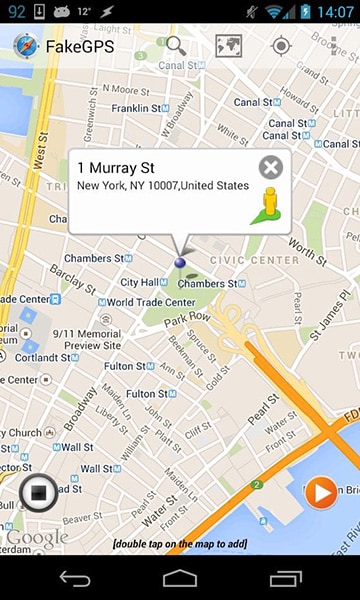
'Fake GPS Location' is a generic-looking name used by different listings. The source did not identify a publisher or verified iOS product page, so its screenshot cannot support a blanket iPhone recommendation. Lexa's similarly named listing, for example, is distributed through Google Play for Android; that does not make it an iPhone app.
The described feature is manual latitude/longitude entry followed by a simulated point. When evaluating any app with that feature, check coordinate order, valid ranges, location permissions, and a clear way to stop the simulation. A precise-looking marker does not establish that Pokemon GO accepts the value or cannot detect falsification.
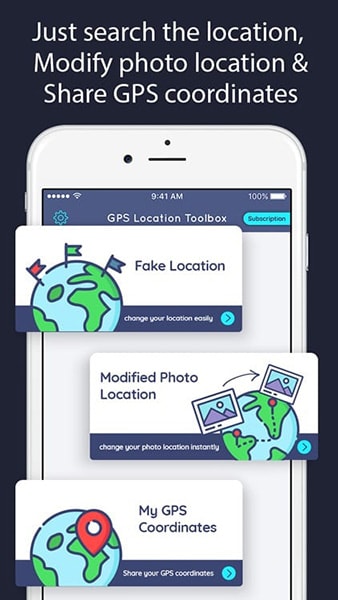
App 4: iTools and its feature-specific requirements
iTools is a desktop device-management utility associated with a Virtual Location control. Its management functions and its location-simulation feature should be checked independently: a phone can be recognized by a management program without every feature supporting its system release.
- Connect the supported iPhone to the appropriate desktop edition and complete the genuine trust prompt.
- Open the location map if available, choose a point, and start the simulation using that edition's controls.
- Stop the simulation deliberately and check the phone's real position when finished.
- Review current licence terms; the source's three-use trial statement is not verified as a current entitlement.
Backup and restore functions are separate device-management tasks, not evidence that the game will accept a simulated location. Avoid interpreting the tool's broader feature list as game-specific certification.

App 5: Fake GPS GO Location Spoofer is not established as an iOS desktop app
The source classified this name as a desktop utility, but the corresponding IncorporateApps-related Google Play listing describes Android location simulation. The publisher listing discusses Android permissions and mock locations, not an iPhone desktop connection. That platform mismatch must be resolved before treating it as an iOS option.
Its documented map functionality uses internet access to display the map and location permissions for simulation. Permission requests still need review, and game compatibility is a separate issue. The publisher states that cheating misuse is not supported, so lack of secrecy is not the only drawback to consider.
Part 2: Understand the risks before changing reported GPS
The game's fairness policy identifies GPS location spoofing and unauthorized access through third-party software as cheating. Buying a more expensive tool or choosing a well-known brand does not remove that rule. Restrictions can affect encounters or account access, and the published policy allows some misconduct to result in immediate termination without earlier warnings.
Device security is a separate concern. A modified client, unknown profile, or unofficial installer can expose the phone or account even before any location change takes effect. Do not enter credentials into an unverified game client or grant unrelated permissions because a download page promises 'safe spoofing'.
Location simulation can also affect ordinary applications that read device position. End the session deliberately and confirm the real position afterward rather than assuming that closing a window restores everything. Respect regional availability and legal restrictions; a GPS utility does not grant authorization to bypass them.
Part 3: Follow the illustrated desktop GPS-simulation workflow
- Set your map route to simulate GPS movement.
- Set your wanted movement speed.
- HD and large map view to check location.
- Fake GPS location to anywhere.
Dr.Fone - Virtual Location uses a computer map to select a reported location for a compatible connected phone. The original Rome example demonstrates point selection and phone-side verification, not a special Pokemon location or proof of game support.
Before starting, confirm the installed software's requirements and use the workflow only for permitted location testing. The original video and screenshots remain below, but old interface positions can differ from a current build. Choose controls by their labels instead of relying on an outdated numbered-icon instruction.
Step 1 Install and open the desktop edition
Choose the appropriate installer for your Windows or Mac computer and complete installation. Launch the application only after checking that you have the expected publisher and supported edition. Prepare a working phone cable and unlock the device before connecting it.
Step 2 Set, confirm, and inspect a virtual point
Connect the iPhone, accept the legitimate trust prompt, and choose Virtual Location from the available desktop modules.
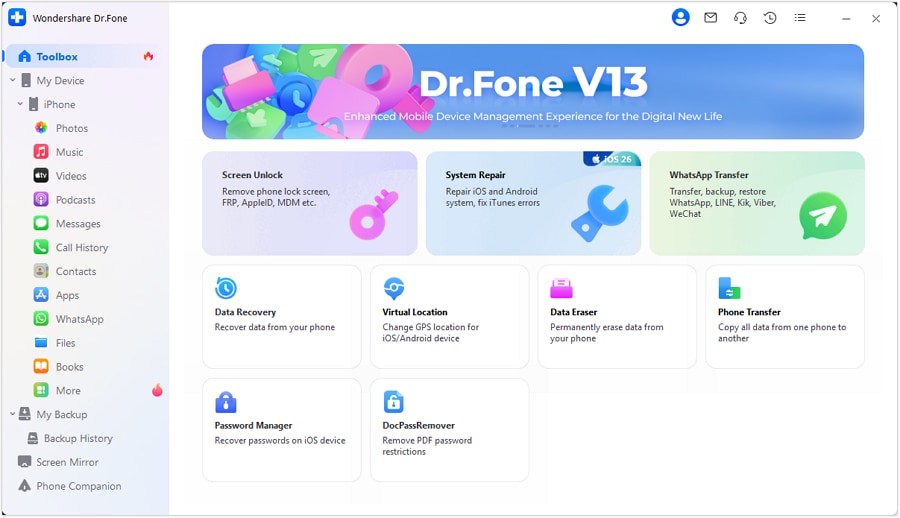
Continue through Get Started after reviewing the connection state and terms. Wait for the map to become available instead of changing unrelated phone settings.
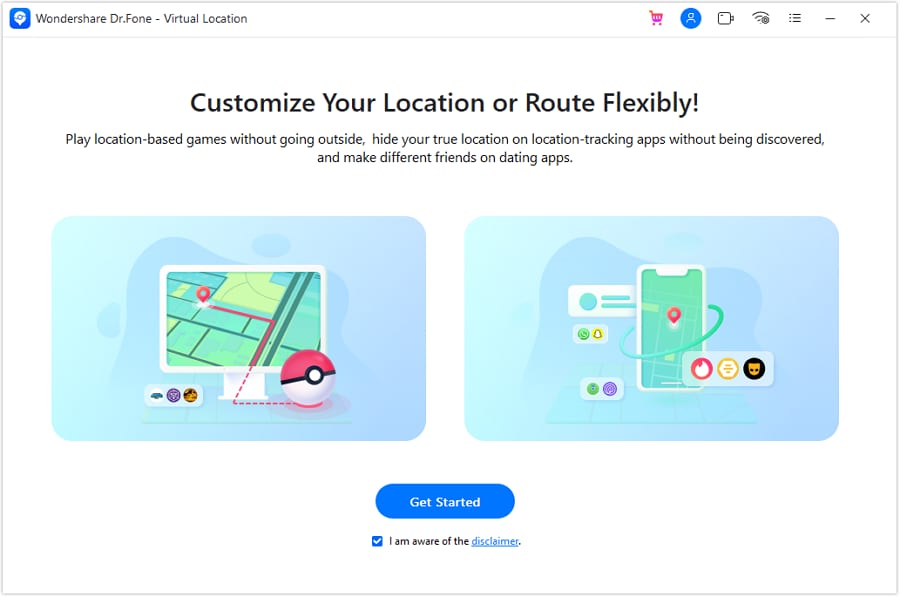
Inspect the starting point using the current-location or centering control. Choose Teleport Mode, type the intended place in the search bar, and submit the search. The source's 'third icon' instruction is not a reliable identifier across versions.
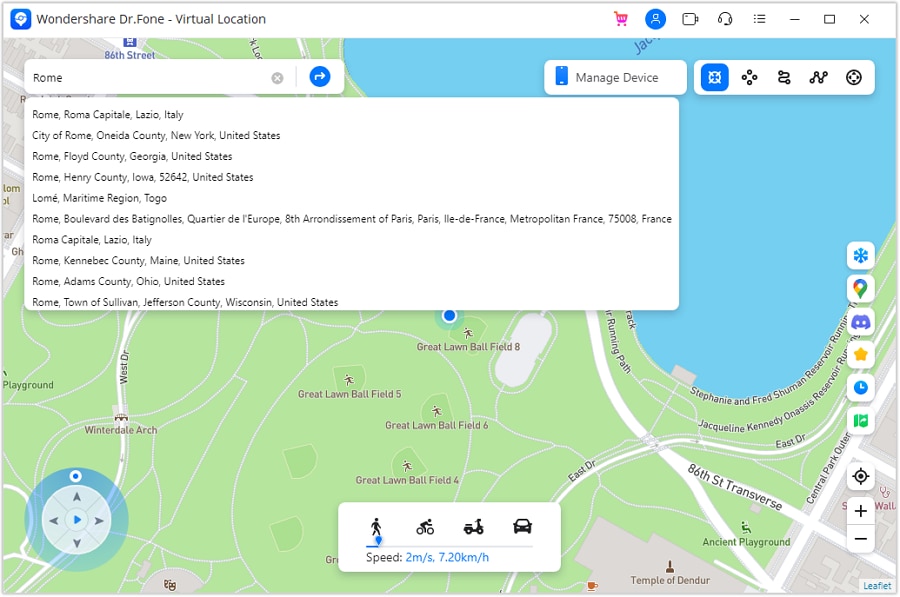
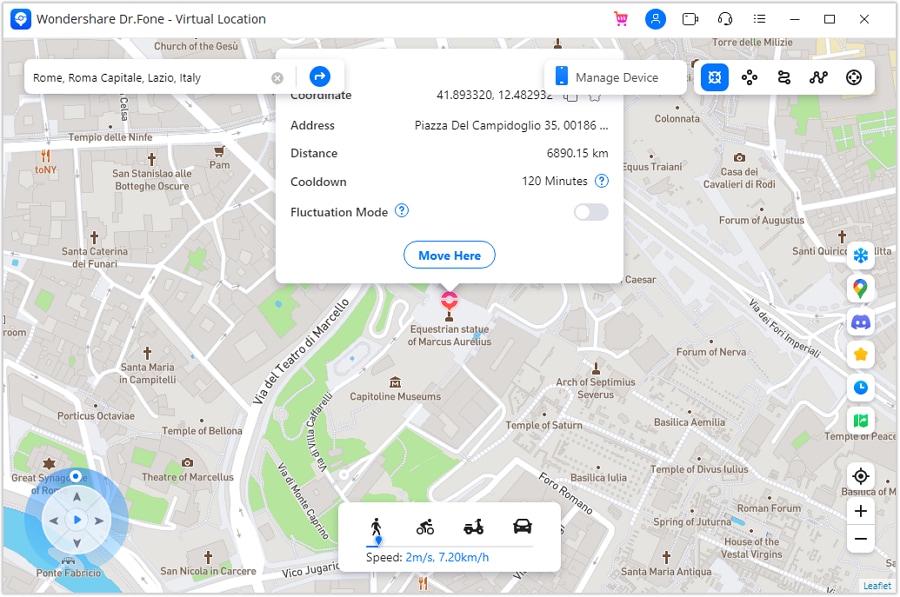
In the illustrated example, the destination is Rome. Check the returned marker, then use Move Here to apply the selected point. A similarly named result in another region should be corrected before confirmation.
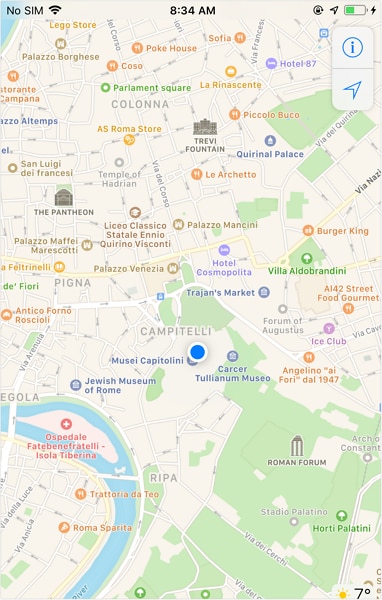
Open Maps on the iPhone and compare its reported location with the desktop view. This verifies a device-location test only. If the point is wrong or does not update, check compatibility and the connection rather than assuming the game needs an additional bypass.
When the test is complete, follow the product's restoration prompt; the official guide describes restarting the device to restore actual location. Confirm the result in Maps before relying on other location services. Game acceptance and enforcement are not determined by whether this map test succeeds.
Conclusion
The five names should not be treated as five equally verified iPhone apps. Check publisher identity, platform, maintenance, and feature-specific requirements before considering a tool. The retained reference about changing your location for the Pokemon Go is further reading, not an exception to the game's rules. Desktop map controls can demonstrate GPS simulation on a supported setup, but neither a selected point nor a premium licence guarantees compatibility, secrecy, or account safety.
Use authentic software sources and do not confuse a download badge with independent safety certification.
FAQ
1. Are all five listed tools native iPhone apps?
No. The source mixes desktop workflows and generic app names. The relevant Fake GPS GO listing describes Android, and a similarly named Google Play app does not establish iOS support.2. Does a no-jailbreak tool prevent a Pokemon GO ban?
No. Device modification requirements and game rules are different questions. Location falsification can violate the rules regardless of whether a jailbreak is involved.3. What does the Rome screenshot actually demonstrate?
It illustrates searching for a point, applying it with Move Here, and comparing the phone's reported location. It does not show a guaranteed Pokemon encounter or verified compatibility with every game version.4. Is Android GPS support the same as Android Pokemon GO support?
No. The product's current Android information explicitly excludes Pokemon GO, so its general GPS-simulation capabilities must not be presented as support for that game on Android.
 Add Wondershare Dr.Fone as a preferred source on Google