Teleport your device anywhere instantly with one click.


 100% Security Verified | No Subscription Required | No Malware


 :

 ChatGPT
 Perplexity
 Gemini
 Claude
 Grok
For iSpoofer direct download searches in 2026, an old installation tutorial is not evidence that a compatible, supported installer is currently available. The supplied article describes a legacy desktop-to-iPhone setup and reports that its iSpoofer services had ended. That report should not be turned into either a confirmed current download offer or a universal claim that every similarly named site is fraudulent.
Pokémon GO is built around real-world places, regional encounters, research, and shared activities. A simulated position can change reported GPS coordinates, but it does not grant event access, guarantee regional encounters, or override the game's rules. Its official fairness policy prohibits location falsification and unauthorized clients or add-ons. The first contents entry below retains the original article's dated return question as a historical reference, not a current recommendation.
In this article
Part 1: Is the Original iSpoofer Installation Still a Current Option?
The original page's return question belongs to its legacy iSpoofer discussion. It states that applications, websites, and related services had been terminated, then presents instructions only for readers who already possessed an older installer and a compatible older iOS device. Those statements explain the page's context; they do not establish support for modern iPhones or a current operating-system release.
Similarly, the source names Pokémon GO version 0.195.0 while discussing detection. That is a version reference from the original account, not the current game release or a verified explanation of how today's enforcement works. There is no need to rely on that unsupported per-version detection claim: the official policy itself makes clear that GPS spoofing can lead to disciplinary action, including account termination.
Before trusting a direct-download result, verify the publisher, the exact product, and current documentation. A familiar name is not proof of continuity with the original project. Do not install an unknown file merely to see whether it works, and do not assume that a website failure proves a permanent global shutdown. This guide provides no verified current iSpoofer installer.
Part 2: Understand the Legacy iSpoofer for PoGo Installation
The three original stages are retained below to explain the screenshots and existing installations. They are a legacy workflow, not a recommendation to obtain an old executable or bypass current security checks. A file that ran on an earlier setup is not automatically compatible with current iOS, desktop software, or Pokémon GO.
-
Step 1 Identify the existing desktop setup
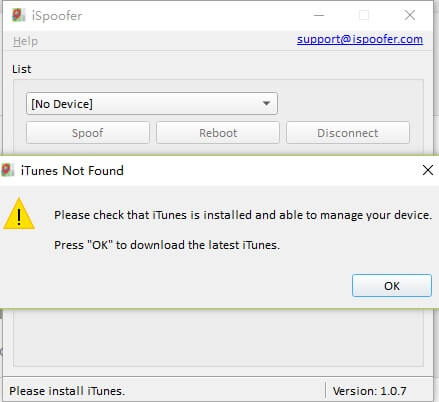
The original process began by installing desktop iSpoofer and ensuring the required iTunes components were present. Preserve that dependency when interpreting an old setup; do not rewrite it as a phone-only installation. Before running any retained installer, confirm its provenance and vendor documentation. A copied screenshot is not an authenticity check.
-
Step 2 Understand the connection and trust prompt
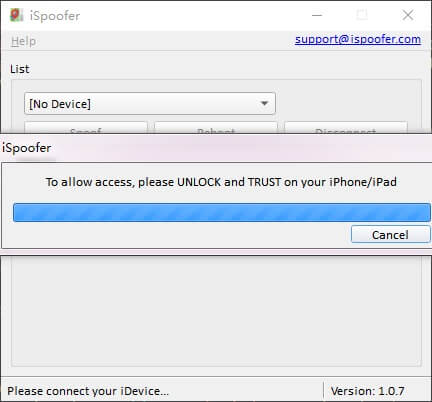
The documented sequence connected an unlocked iPhone to the computer and selected Trust. Apple explains that trusting a computer permits access to device content, so only approve a computer you recognize and intend to authorize. The source also describes a developer-file download; that old behavior is not a reason to trust an unidentified package today.
-
Step 3 Interpret the desktop map result
The old interface showed a map on which a user entered or selected a place and pressed MOVE. That action represented the intended GPS simulation; it was not proof that the phone had physically moved, that every app accepted the coordinates, or that a game account was safe. When examining an existing setup, verify the reported position separately in a maps app.
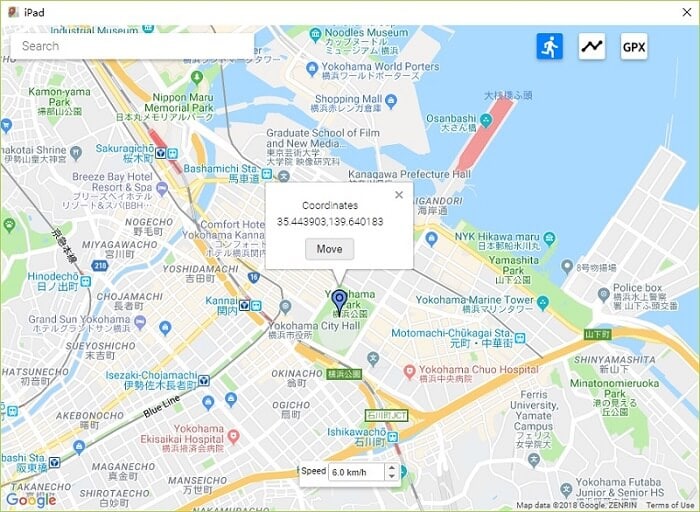
If a retained setup fails to connect or asks for unexpected credentials, stop rather than following an unofficial repair script. Installing a newer iTunes package cannot guarantee that discontinued third-party software becomes supported again. A trust prompt authorizes the computer; it does not certify the software's safety.
Part 3: What the Original Pokémon GO Joystick Workflow Did
After its map stage, the source described a phone reporting the selected mock position. The original game screenshot illustrates that claimed result; it is not a demonstration of a working current client, a measured compatibility test, or evidence that account enforcement has been avoided.

The next source instruction was to disconnect the phone and open the game, then use a joystick for direction or a .gpx file for a preset route. Manual steering and importing route coordinates are different actions, and neither guarantees that an application keeps the simulated position after disconnection. This sequence is retained as an explanation of the old guide, not as an account-safe way to play.
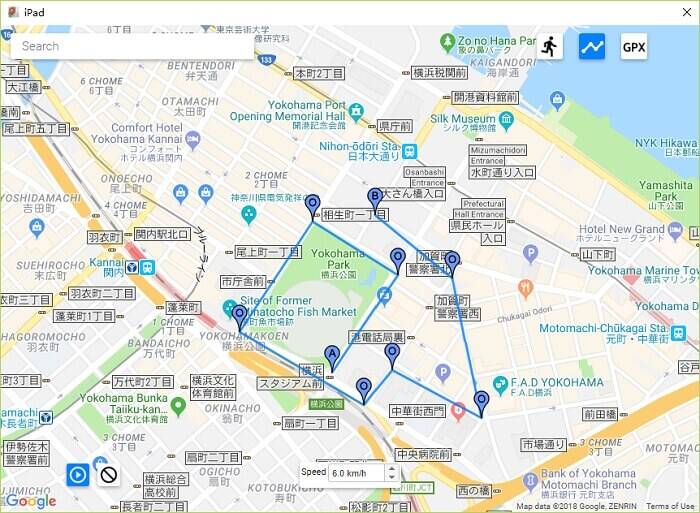
Consider each limitation separately when assessing an existing installation:
- Desktop dependency: The source workflow relied on iTunes components rather than being an independent on-phone utility.
- Account exposure: False gameplay locations remain prohibited. A successful connection does not prevent warnings, suspension, or termination.
- Movement limitations: Abrupt coordinate changes and route behavior can differ from real travel; no speed setting provides a ban-free guarantee.
- Troubleshooting burden: Device trust, connection components, permissions, and old software requirements can all affect operation.
- Stability: The source reports crashes and difficulty handling repeated location changes, but supplies no current reliability measurements.
For ordinary Pokémon GO play, use the official client and real location. If the actual need is testing a location-aware app you are authorized to test, evaluate a maintained tool's current support requirements independently of the old iSpoofer screenshots.
Dr.Fone - Virtual Location for a separate GPS test
 Set your map route to simulate GPS movement.
- Set your wanted movement speed.
- HD and large map view to check location.
- Fake GPS location to anywhere.

Dr.Fone - Virtual Location supports map-based location simulation and movement controls on supported configurations. Its current device requirements must be checked before connecting a phone. It does not repair an obsolete iSpoofer installation, provide a Pokémon GO license, or guarantee that the game will accept a simulated location without consequences.
The official teleport guide describes a computer-controlled sequence and a device restart to restore real location afterward. Use that procedure for an authorized test and confirm the result in a maps app. Do not mistake a successful location change for a change of IP address or comprehensive protection against tracking.
-
Step 1 Connect a supported device
Start the desktop program, connect the phone, and complete its displayed connection and permission prompts.
-
Step 2 Inspect the destination
Select Teleport Mode, search for the intended place, and check the map before choosing Move Here.
-
Step 3 Verify and end the test
Check the phone's maps app for the selected position. When finished, follow the official guide's restart instruction to restore the actual location.
This completes the separate location-testing procedure. Other apps can have their own compatibility checks and restrictions, regardless of which simulator is used.




Conclusion
The original iSpoofer for PoGo installation sequence explains a legacy product, not a verified current direct download. Keep its three setup stages and joystick or GPX concepts separate from claims about modern compatibility. If you need a separate GPS testing workflow, review Dr.Fone - Virtual Location on its own terms rather than treating it as an iSpoofer revival or an exception to game rules.
FAQ
-
1. Is there a verified current iSpoofer direct download in this guide?
No. The source describes legacy software and reports terminated services. It does not establish a current authenticated installer or current device support. -
2. Does the old setup still depend on iTunes?
The documented desktop workflow did. That historical dependency does not mean installing current iTunes will make an old third-party program compatible with modern devices. -
3. What did a GPX file do in the original workflow?
It supplied a preset route for simulated movement, while the joystick allowed manual direction. Neither route data nor a realistic pace guarantees acceptance by Pokémon GO. -
4. Is trusting a computer proof that its software is safe?
No. Apple's trust prompt controls access to the device's content. Authorize only a computer you recognize, and assess the software's publisher and requirements separately.
 Add Wondershare Dr.Fone as a preferred source on Google